Article Contents:
- Saint Petersburg: A City of Architectural Challenges
- Climate Characteristics and Their Impact on Material Selection
- Architectural Heritage as a Source of Inspiration
- Modern Districts: New Challenges
- Polyurethane: The Material of the 21st Century for the Eternal City
- Scientific Foundations of Superiority
- Production Technology: From Idea to Masterpiece
- Advantages for Petersburg Conditions
- Geography of Purchases: Where to Find Quality Decor in St. Petersburg
- Industrial Districts: Sources of Production
- Shopping Centers and Specialized Stores
- Online trade: a revolution in accessibility
- Classification of Decorative Elements
- Moldings: Universal Soldiers of Architecture
- Cornices: The Crown of the Building
- Window Sills: Framing the Architectural Soul
- Pilasters and Columns: Vertical Accents
- Decorative Panels and Rosettes
- Stylistic Directions in St. Petersburg Facade Decor
- Petersburg Classicism: The Standard of Harmony
- Neoclassicism: Traditions in Modern Interpretation
- Modernism: Northern Romanticism
- Constructivism: Functional Beauty
- Modern minimalism: beauty of simplicity
- Technical Aspects of Selection and Application
- Calculating Required Material Quantity
- Transportation and storage
- Foundation Preparation
- Installation: The Art of Precision
- Economic aspects of purchase
- Cost of Ownership Analysis
- Seasonal price fluctuations
- Wholesale and Retail Purchases
- Installation in St. Petersburg Conditions
- Seasonal Restrictions
- Specifics of Working at Heights
- Permits and Approvals
- Market Trends and Development Prospects
- Technological Innovations
- Ecological requirements
- Digitalization of processes
- Frequently Asked Questions
- What is the service life of polyurethane decoration under St. Petersburg conditions?
- Can polyurethane decoration be installed in winter?
- How to distinguish quality polyurethane from counterfeit?
- How much does polyurethane decoration installation cost?
- What guarantees does the manufacturer provide?
- Conclusion

Saint Petersburg — a city where every building tells its story through stone, plaster, and decorative elements. Here, among palaces and mansions, you especially realize: without quality facade decoration, architecture is dead. When you needbuy facade decoration in St. PetersburgIn front of you opens a world of possibilities — from classic solutions to ultra-modern interpretations.
Why does the choice of architectural decoration matter especially in the Northern capital? The city’s climate is treacherous: humidity, temperature fluctuations, aggressive urban environment — all of this tests materials for durability. Traditional plaster here quickly deteriorates, natural stone costs astronomical sums, and wood requires constant care. Under these conditionsmodern polyurethane productsbecome a real salvation for architects and property owners.
Imagine: you walk along Nevsky Prospekt and admire the facades of historic buildings. But do you know that many of those elements that seem like centuries-old stone carvings are actually made from modern materials? Quality polyurethane decoration imitates traditional materials so skillfully that even an experienced eye may not always distinguish a counterfeit from the original.

Saint Petersburg: a city of architectural challenges




Climate-Specific Features and Their Impact on Material Selection
The Baltic Sea breathes moisture into the face of every building in the city. Here, air humidity often reaches 90%, and the number of rainy days per year exceeds 200. Forfacade decorationthis means constant battle against corrosion, mold, and temperature deformation.
Winter frosts down to -30°C alternate with spring thaws, creating freeze-thaw cycles that destroy porous materials from within. Summer heat up to +30°C combined with high humidity creates a greenhouse effect, accelerating aging processes of most traditional materials.
But there is also a positive side: the northern climate practically eliminates intense ultraviolet radiation, which destroys polymers in southern regions. This means thatpolyurethane decorative elementsin St. Petersburg last longer than in Krasnodar or Sochi.
Our factory also produces:


Architectural Heritage as a Source of Inspiration
The Hermitage, St. Isaac's Cathedral, the palaces of Tsarskoye Selo — these architectural gems set the highest standards of quality and detail. When you decidebuy facade decoration in St. Petersburgyou inevitably compare modern products with masterpieces of the past.
Saint Petersburg classicism requires strict adherence to proportions. Each element must be in harmony with the overall facade composition. Modern manufacturing technologiesarchitectural decorationallow reproducing historical profiles with precision down to the millimeter.
Northern capital’s modernism — it is a special style where natural motifs intertwine with geometric strictness.Relief Decorationin the modern style requires special craftsmanship — every line must be smooth, every swirl organic.
Get Consultation
Modern districts: new challenges
Residential areas and business centers of St. Petersburg set their own requirements for facade decoration. Here, simplicity, functionality, and durability are valued.Modern facade systemsmust not only decorate the building but also protect it from aggressive urban environment.
Industrial areas require especially durable materials resistant to chemical pollution. Polyurethane here demonstrates its best qualities — chemical inertness makes it practically immune to acid rain and industrial emissions.
Polyurethane: the material of the 21st century for the eternal city
Scientific foundations of superiority
What makes polyurethane so attractive for St. Petersburg conditions? The answer lies in the molecular structure of this remarkable material. Polyurethane is formed as a result of polymerization reaction between polyisocyanates and polyols. The resulting three-dimensional polymer possesses a unique combination of properties.
Density of qualitypolyurethane decorDensity of quality constitutes 400-800 kg/m³, which is several times less than natural stone at comparable strength. The surface layer has a density up to 1200 kg/m³, ensuring excellent detail and resistance to mechanical impacts.
The coefficient of thermal expansion of polyurethane is 70×10⁻⁶ m/(m·K), which is close to the values of most construction materials. This eliminates the appearance of cracks during temperature fluctuations — a critically important property for the St. Petersburg climate.
Production technology: from idea to masterpiece
Modern productionfacade decorationModern production is a high-tech process where each parameter is controlled with the precision of Swiss watches. Two components — polyol and isocyanate — are mixed in strictly defined proportions at a temperature of 40-60°C.
Pouring occurs into precision molds under pressure up to 5 atmospheres. The polymerization reaction is accompanied by foaming, resulting in the material filling all the finest details of the mold. The curing time ranges from 10 to 30 minutes depending on the thickness of the item.
A distinctive feature of the technology is the creation of a gradient structure. The surface layer becomes dense and smooth, providing excellent relief detail. The inner part is more porous, reducing the overall weight of the item and improving its thermal insulation properties.
Advantages for St. Petersburg conditions
The water absorption of quality polyurethane does not exceed 1.5% by volume — this is dozens of times less than that of plaster or porous concrete. The closed-pore structure prevents moisture penetration, preventing damage from water freezing in pores.
The material's biostability prevents mold and mildew — a plague of the humid St. Petersburg climate. Unlike wood, polyurethane does not become a nutrient medium for microorganisms, preserving its original appearance for decades.
Chemical inertness protects against acid rain and industrial pollution. Even if the surface layer is damaged, the internal structure of the material remains stable, not subject to corrosion or degradation.
Geography of purchases: where to find quality decor in St. Petersburg
Industrial areas: sources of production
Leningrad Oblast has become the center of production of construction materials for the entire Northwest of Russia. Here are located the largest factories producingpolyurethane moldingof world-class quality.
Kirovsky and Krasnoselsky districts concentrate the main production capacities. Proximity to the ports of the Baltic Sea ensures access to high-quality imported raw materials — polyisocyanates and polyols from leading European manufacturers.
Vyborg district specializes in high-tech equipment for the production of architectural decor. Here operate representative offices of leading European companies, supplying casting machines, presses, quality control systems.
Shopping centers and specialized stores
Sadovaya Street and adjacent districts traditionally concentrate the trade in construction materials. Here you can find both large chain stores and specialized boutiques offering exclusive collectionsfacade decoration.
Moskovsky Prospekt has become a new center of attraction for buyers of premium finishing materials. Modern showrooms offer not only a wide range of ready-made items, but also services for custom decor production.
Vasilievsky Island attracts designers and architects with specialized galleries of architectural decor. Here you can find both classic collections reproducing historical samples, as well as avant-garde solutions for modern architecture.
Online trade: a revolution in accessibility
Digital revolution has fundamentally changed the ways of purchasing construction materials. Now, tobuy facade decoration in St. Petersburgbuy, it takes just a few mouse clicks. Online stores offer catalogs with thousands of items, detailed technical specifications, and high-resolution photographs.
Virtual reality allows you to "try on" decor on your facade even before purchase. Special programs simulate the appearance of the building with various design options, helping you make the right decision.
Online consultation systems connect buyers with professional designers and technical specialists. You can obtain expert evaluation of your project, recommendations on material selection, and calculation of the required number of elements.
Classification of decorative elements
Moldings: universal soldiers of architecture
Moldings made of polyurethaneThey are the foundation of any decorative composition. They serve as a connecting element between different facade components, create rhythm, and define the proportions of the entire building.
Moldings with rounded edges, shelves, and gussets create a rich play of light and shadow on the facade. Classic profiles — cove, gusset, and bead — have been tested over centuries and harmoniously fit into St. Petersburg's historic architecture.
Classic profiles — Doric, Ionic, Corinthian — reproduce historical samples with museum-level accuracy. Modern molding technologies allow for the precise reproduction of all nuances of ancient profiles.
Complex moldings combine several simple profiles into a single composition. They allow creating expressive cornices, window frames, and decorative bands without additional elements.
Cornices: the crown of the building
A cornice is not just a decorative element — it is an architectural necessity. It protects walls from rain, creates an expressive finish to the facade, and emphasizes the horizontal division of the building.Polyurethane cornicesThey combine functionality with aesthetic perfection.
Simple rectangular cornices are ideal for modern architecture. Clear lines, minimal details, maximum functionality — this approach aligns with the spirit of the times.
Profiled cornices with classical profiles — Doric, Ionic, Corinthian — reproduce historical samples with museum-level accuracy. Modern molding technologies allow for the precise reproduction of all nuances of ancient profiles.
Modular cornices consist of several elements, simplifying the transportation and installation of large items. The connection system ensures a perfectly flat joint without visible seams.
Sill: framing the architectural soul
Windows are the eyes of the house, and sills are their framing. QualityPolyurethane trimThey can transform the most ordinary facade, giving it individuality and expressiveness.
Flat sills are minimalist and universal. They suit modern buildings where form simplicity is important. Width from 50 to 200 mm allows selecting proportions to fit any window.
Profiled sills create rich light-and-shadow modeling. Various profiles — from simple bevels to complex classical profiles — allow realizing any architectural idea.
Figurative sills with floral ornaments, geometric patterns, and stylized motifs turn ordinary windows into works of art. Modern technologies allow reproducing the most complex forms with jewel-like precision.
Vertical elements create grandeur, emphasize the height of the building, and organize the rhythm of the facade.
Vertical elements create grandeur, emphasize the height of the building, and organize the rhythm of the facade.Polyurethane pilastersThey weigh dozens of times less than stone analogs, without creating additional load on the structure.
Tuscan pilasters are distinguished by simplicity and strictness of form. Smooth shaft, simple base, and capital make them universal for various architectural styles.
Ionic pilasters with characteristic volutes on capitals introduce elegance and refinement. Fluted shaft creates expressive play of light and shadow.
Corinthian pilasters are the peak of ornamentation. Richly ornamented capitals with acanthus leaves require the highest level of craftsmanship, which modern technologies provide.
Decorative panels and rosettes
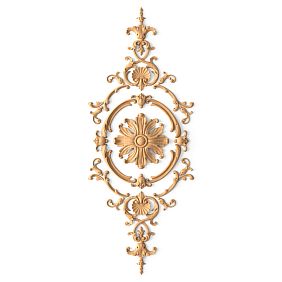
Flat decorative elements allow creating rich compositions on smooth walls.decorative panelsThey can imitate stone masonry, brick, wood, or represent original artistic compositions.
Geometric panels with simple forms — squares, rhombuses, polygons — create a strict, modern appearance of the facade. Various sizes and proportions allow creating unique compositions.
Plant panels with floral motifs, leaves, grapevines introduce natural organic elements into architecture. Such elements are especially popular in suburban construction.
Historical panels reproduce samples from various epochs — from antiquity to modernism. Museum-grade accuracy in reproduction allows their use in restoring historical buildings.
Stylistic directions in St. Petersburg's facade decoration
St. Petersburg Classicism: the standard of harmony
St. Petersburg Classicism has its own features, distinguishing it from Moscow or European styles. The strictness of the northern character left its mark on architectural forms, making them more restrained and monumental.
Main principles of St. Petersburg Classicism: symmetry, proportionality, use of the order system, restrained color palette.Classical decorationrequires strict adherence to canonical proportions and profiles.
The color scheme of classical facades is based on the combination of light walls and white decoration. Traditional St. Petersburg colors — ochre, terracotta, gray-blue — create the distinctive appearance of the city's historic center.
Materials for classical decoration must imitate natural stone. ModernPolyurethaneallows achieving full similarity to sandstone, limestone, marble at significantly lower costs.
Neoclassicism: traditions in modern interpretation
Neoclassical style adapts classical principles to modern needs. While preserving recognizable forms, it simplifies details and makes compositions more concise.
Characteristic features of Neoclassicism: clear proportions, symmetry, use of classical elements in simplified form, modern materials and technologies.Neoclassical decorationcombines recognizability with practicality.
The color palette of Neoclassicism is more diverse than that of strict Classicism. Various shades of gray, beige, and cream are permitted. Contrasting combinations are used to highlight architectural accents.
Modernism: Northern romance
St. Petersburg Modernism is a unique phenomenon in Russian architecture. It combines European influences with local traditions, creating a unique style without analogues.
Main features: smooth, natural lines, asymmetrical compositions, vegetal ornamentation, use of new materials and structures.Decoration in the Modern stylerequires special craftsmanship in production.
The color palette of Modernism is rich and diverse. Natural tones — green, brown, gold — are combined with more vivid accents. Effects such as patina, gilding, and aging are popular.
Constructivism: functional beauty
Although Constructivism proclaimed the rejection of decoration, in practice architects created expressive compositions from simple geometric forms.Modern decorationcan reproduce the aesthetics of Constructivism.
Main principles: functionality, simplicity of forms, absence of ornamentation, expressiveness of proportions. Decorative effect is achieved through the combination of various textures and materials.
The color scheme of Constructivist facades is based on contrasts. White, gray, and black colors create a strict, minimalist composition. Bright accents are used very sparingly.
Modern minimalism: beauty of simplicity
Modern architecture tends toward maximum simplicity and functionality.Minimalist decorationFeatures clean lines, absence of excess, high-quality materials.
Main elements: simple geometric shapes, high-quality materials, precision execution, thoughtfully designed proportions. Decorative effect is achieved through play of light and shadow, contrast of textures.
Minimalism's color palette is extremely restrained. White, gray, and black colors create a noble, elegant atmosphere. Color accents are used very rarely and very thoughtfully.
Technical aspects of selection and application
Calculation of required materials quantity
Purchase planningfacade decorationIt begins with precise calculation of material requirements. Errors at this stage may lead to significant financial losses or construction delays.
Facade measurement must be performed with maximum accuracy. Every element — windows, doors, protrusions, niches — must be accounted for in calculations. Modern laser rangefinders allow measuring distances with millimeter precision.
Element layout scheme is developed according to the building's architectural logic. The modularity of modern systems allows creating complex compositions from standard elements, reducing cost and simplifying installation.
Material reserve should be 10-15% of the calculated quantity. This compensates for possible measurement errors, damage during transportation and installation, and the need to replace elements during operation.
Transportation and storage
polyurethane productsRequire special transportation and storage conditions. Non-compliance may result in damage that becomes apparent only after installation.
Packaging must protect items from mechanical damage, moisture, and ultraviolet radiation. Modern packaging materials — polyethylene film, polystyrene, cardboard — provide reliable protection.
Transportation is carried out using specialized vehicles with shock absorption systems. Long elements are transported on special trailers, preventing sagging and deformation.
Storage must be in dry, well-ventilated areas at temperatures from +5°C to +25°C. Direct exposure to sunlight is not allowed — ultraviolet radiation may alter surface color.
Foundation Preparation
The quality of installation largely depends on proper preparation of the base. The surface must be flat, clean, dry, and strong.
Cleaning includes removing dust, dirt, remnants of old coatings, efflorescence. Mechanical methods — scrapers, brushes, sanders — and chemical agents are used to remove stubborn contaminants.
Unevenness is leveled using plaster or putty. Permissible deviations from flatness must not exceed 3 mm per 1 meter of length.
Priming improves adhesion of adhesive compositions and strengthens the surface layer of the base. The choice of primer depends on the type of base — concrete, brick, plaster require different compositions.
Installation: the art of precision
Installationdecorative elementsRequires high skill of installers and adherence to technical regulations.
Marking is performed using laser levels and metal rulers. All horizontal elements must be strictly horizontal, vertical elements — vertical. Marking accuracy is critically important for achieving quality results.
Fastening is performed using a combined method — adhesive bonding with additional mechanical fastening. Special polyurethane adhesives provide strong bonding and compensate for temperature deformations.
Joint sealing is performed using elastic sealants that retain flexibility under temperature fluctuations. Quality sealing is the guarantee of the entire system's longevity.
Economic aspects of purchasing
Analysis of ownership cost
When selecting materials for facade decoration, one must consider not only initial cost but also expenses over the entire service life. Cheap materials may prove more expensive in the long run.
polyurethane decorHas a higher initial cost compared to polystyrene, but significantly surpasses it in durability. The service life of quality polyurethane is 25-30 years versus 5-10 years for polystyrene.
Operating expenses include periodic repainting, minor repairs, and replacement of damaged elements. Polyurethane requires minimal maintenance — only periodic cleaning and repainting every 10-15 years.
Impact on property value is an important factor in economic evaluation. Quality architectural finishing can increase the market value of a property by 15-25%, significantly exceeding decoration costs.
Seasonal Price Fluctuations
The construction materials market is subject to seasonal fluctuations. Understanding these patterns will help optimize purchase expensesfacade decoration.
Spring demand peak occurs in April-May, when the active construction season begins. During this period, prices reach their maximum, and delivery times increase due to high demand.
Summer period is characterized by stable prices and good material availability. This is the optimal time for large purchases, when discounts can be expected for bulk orders.
The autumn decline begins in September–October. Manufacturers and trading companies strive to clear their warehouses before the winter period, offering significant discounts.
The winter minimum occurs in December–February. During this period, materials can be purchased at minimum prices, but with the condition of spring delivery.
Wholesale and retail purchases
The volume of purchase significantly affects the final cost of materials. Wholesale discounts can reach 30–40% of the retail price, which is especially important for large-scale construction projects.
The minimum order amount to qualify for a wholesale discount is usually 50–100 thousand rubles. Some manufacturers set a minimum in natural units—for example, 100 linear meters of molding.
Group purchases allow private individuals to obtain wholesale prices. Organizing such purchases through internet forums and social networks is becoming increasingly popular.
Loyalty programs of large retail chains offer regular customers additional discounts, free delivery, and priority service.
Installation in Saint Petersburg conditions
Seasonal restrictions
The climatic characteristics of the Northern capital impose certain restrictions on the timing of facade works. Understanding these restrictions will help properly plan the project.
The optimal season for installation is May–September, when air temperature consistently exceeds +5°C and humidity is relatively low. During this period, adhesive compositions gain strength under normal conditions.
Winter installation is possible using special frost-resistant adhesives and constructing temporary shelters. However, this significantly increases costs and requires high skill from workers.
Spring works are complicated by high humidity and temperature fluctuations. Particularly dangerous are periods when daytime temperature rises above zero, while nighttime temperatures drop below it.
Autumn works require special caution due to short daylight hours and frequent rains. All works must be completed before the onset of stable frosts.
Specifics of working at height
Facade works in the densely built-up areas of Saint Petersburg require special safety measures and specialized equipment.
Scaffolds and staging must be securely anchored and designed to withstand wind loads. Winds in Saint Petersburg can be very strong, especially near water bodies and open areas.
Protection from atmospheric precipitation includes installing temporary canopies, using fast-drying materials, and organizing shelters for work areas.
Workplace lighting is especially important during the autumn-winter period, when daylight hours are short. Quality lighting not only ensures safety but also affects the quality of work.
Permits and Approvals
Facade works on buildings in Saint Petersburg’s historic center require obtaining permits from various authorities.
The State Committee for State Control, Use, and Protection of Historical and Cultural Monuments (KGIOP) controls all changes to monuments and protected zones. The approval procedure may take several months.
Management companies and housing cooperatives also have the right to control changes to the exterior appearance of buildings. Obtaining their consent is a mandatory step before starting work.
Architectural and urban planning services of district administrations issue permits for construction work and monitor compliance with urban planning regulations.
Market trends and development prospects
Technological Innovations
Development of production technologiespolyurethane decoropens new opportunities for architects and designers.
3D printing allows creating unique elements according to individual projects. Although this technology cannot yet compete with casting in terms of cost, it is indispensable for custom-made items.
Nanotechnologies open opportunities to create materials with fundamentally new properties. Self-cleaning surfaces, antimicrobial coatings, and color-changing materials—these are gradually entering practice.
Composite materials reinforced with various fibers combine the lightness of polymers with the strength of metals. Such materials are especially promising for large-scale elements.
Ecological Requirements
Growing ecological requirements affect all aspects of production and application of construction materials.
Biodegradable polymers allow the creation of environmentally friendly materials. Although their use for facade decoration is currently limited, this technology is actively developing.
Waste recycling has become an essential part of the production cycle. Modern technologies enable the recycling of polyurethane waste into new raw materials.
Energy efficiency in production is an important indicator of environmental friendliness. Leading manufacturers invest in solar power stations, heat recovery systems, and energy-saving equipment.
Process digitization
Digital technologies fundamentally change all aspects of working withfacade decoration— from design to installation.
BIM technologies (Building Information Modeling) allow creating detailed three-dimensional building models with precise positioning of each decorative element. This eliminates design errors and simplifies installation.
Virtual reality helps clients make decisions by allowing them to "walk" through the future building and evaluate different decoration options.
Mobile applications for builders include product catalogs, material consumption calculators, installation instructions, and quality control systems.
Frequently asked questions
What is the service life of polyurethane decoration under St. Petersburg conditions?
Qualitypolyurethane decorIn St. Petersburg climate, it serves 25-30 years without major repairs. Humidity and temperature fluctuations practically do not affect the material due to its closed-pore structure and chemical inertness.
The main factor affecting durability is the quality of the paint coating. Repainting is required every 10-15 years depending on paint quality and operating conditions.
Can polyurethane decoration be installed in winter?
Installation is possible at temperatures not lower than -10°C using special frost-resistant adhesives. However, winter installation is significantly more expensive and requires creating heated shelters for the most critical areas.
The optimal temperature for installation is +5°C and above. At this temperature, adhesive compositions achieve maximum strength, and the risk of condensation formation is minimal.
How to distinguish quality polyurethane from counterfeit?
Quality polyurethane has a uniform structure without voids or inclusions. The surface is smooth, without bubbles or runs. The color is even, without spots or streaks.
The density of quality material is 400-800 kg/m³. Lighter products usually have a porous structure and low strength.
Certificates of conformity and test results are mandatory documents for quality products. Serious manufacturers provide complete technical documentation.
How much does polyurethane decoration installation cost?
Installation cost depends on the complexity of elements, height of work, and season of execution. On average, installation costs 30-50% of material cost.
Simple elements — moldings, casings — are installed at a price of 200-400 rubles per linear meter. Complex elements — capitals, rosettes — at 1000-3000 rubles per piece.
Works at heights over 10 meters increase installation cost by 20-30% due to the need for special equipment.
What warranties does the manufacturer provide?
Leading manufacturers provide a 10-15 year warranty on the material if installation and operating conditions are met. The warranty covers material defects but does not cover damage from mechanical impacts.
Installation companies usually provide a 2-3 year warranty on completed work. This warranty covers installation defects — delamination, cracks at joints, geometric distortions.
Extended warranty may be provided when purchasing a comprehensive solution — materials plus installation from one company.
Conclusion
When you face the task ofbuy facade decoration in St. Petersburgyou are choosing not just a material, but the architectural future of your building. In a city where every stone breathes history, it is especially important to find a solution that harmoniously fits into the surrounding environment and will serve for decades.
Modernpolyurethane systemsThey offer a unique combination of aesthetic and technical qualities. They allow reproducing historical samples with museum accuracy, creating original compositions of any complexity, ensuring durability in aggressive conditions of the northern climate.
Choosing the right supplier is no less important than choosing the material. Manufacturer's reputation, product quality, service level — all this affects the final result. Cutting corners on material quality inevitably leads to additional expenses in the future.
Technologies are not static. New materials, innovative production methods, digital design tools — all this makes architectural decoration more accessible, higher quality, and more diverse. But the core principles remain unchanged: material quality, professional execution, alignment with the architectural concept.
Saint Petersburg deserves only the best. In a city of palaces and cathedrals, bridges and embankments, every building must meet high aesthetic standards.Modern facade decorationhelps maintain these standards, making beauty accessible for any budget.
For many years, STAVROS has remained one of the leaders of the Russian architectural decoration market. Premium product quality, innovative production technologies, professional service — all this makes STAVROS a reliable partner for architects, builders, and private clients. When you choose STAVROS, you choose quality proven over time and innovations aimed at the future.