Article Contents:
- Polyurethane in architecture: from chemical laboratory to building facades
- Technological advantages of polyurethane production
- Physical and mechanical properties: science behind beauty
- Climate resistance and durability
- Mechanical loads and their perception
- Aesthetic possibilities: from classic to avant-garde
- Imitating Natural Materials
- Modern design trends
- Installation technology: from project to implementation
- Mounting systems
- Joint Processing and Finishing
- Economic advantages of polyurethane decoration
- Reduction of loads on structures
- Operational Economy
- Application in various climatic zones
- Features of application in different climates
- Ecological Aspects and Safety
- Fire safety
- Innovations and development prospects
- Smart Materials of the Future
- Comparative Analysis with Traditional Materials
- Technical comparisons
- Practical recommendations for selection and application
- Design recommendations
- Frequently Asked Questions

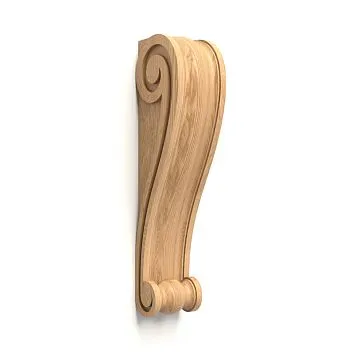
Imagine a material that combines the elegance of classical stucco, the strength of modern composites, and universal applicability — this is exactly whatFacade decoration made of polyurethane for exterior finishingThis innovative material has fundamentally changed approaches to architectural decoration, providing designers and builders with a tool capable of realizing the most daring creative concepts at reasonable costs.
In the world of modern construction, where aesthetics must harmoniously combine with practicality, polyurethane decoration occupies a special place. It allows creating facades indistinguishable from expensive stone carving, while being dozens of times lighter and significantly more affordable. But the main advantage lies not only in cost savings — it is the ability to realize architectural ideas of any complexity.


Polyurethane in architecture: from chemical laboratory to building facades
The history of polyurethane began in 1937 in the laboratories of German chemist Otto Bayer, but it took several decades for this material to find application in architecture. The first experiments with polyurethane decoration date back to the 1970s, when American and European manufacturers began searching for alternatives to traditional materials.
What makes polyurethane so attractive for creating architectural elements? The secret lies in its molecular structure. Polyurethane is a polymer formed by the reaction of polyols with diisocyanates. This chemical reaction, called polymerization, allows creating a material with specified properties: from soft and elastic to hard and strong.
In the context of facade decoration, rigid polyurethane foams and compounds with high density and strength are used. Modern compositions include various modifying additives: UV stabilizers prevent degradation from solar radiation, flame retardants increase fire resistance, biocides protect against microorganisms.




Technological Advantages of Polyurethane Production
Productionpolyurethane productsIt is based on the casting technology, which ensures unparalleled accuracy in reproducing details. Silicone molds are capable of capturing the finest texture nuances, creating elements indistinguishable from hand-carved stone or wood.
The process begins with creating a master model — a reference sample of the future product. This model can be made from any material: wood, clay, plasticine, wax. Modern technologies allow creating master models using 3D printing or CNC milling, ensuring perfect geometric accuracy.
The next stage is mold making. Liquid silicone is poured around the master model, and after curing, a negative mold is obtained, precisely reproducing all details of the original. High-quality silicone molds withstand thousands of casting cycles while maintaining initial accuracy.
Casting itself involves mixing polyurethane components in precise proportions and pouring them into the prepared mold. The polymerization reaction occurs quickly — usually within a few minutes — ensuring high process efficiency.
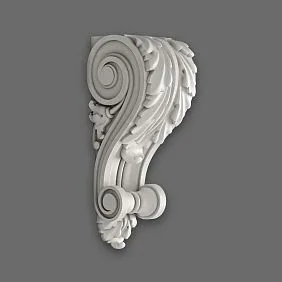
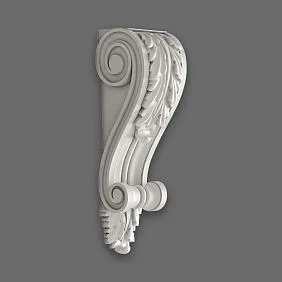
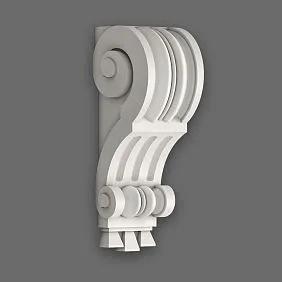
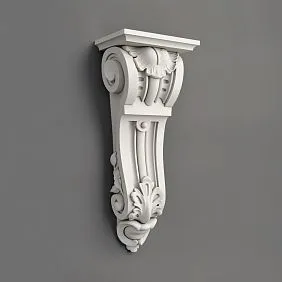
Our factory also produces:


Physical and mechanical properties: science behind beauty
WhyFacade decoration made of polyurethane for exterior finishingIt surpasses traditional materials in operational characteristics? The answer lies in the unique combination of physical and mechanical properties of this material.
The density of quality polyurethane for facade decoration is 600-800 kg/m³, which is 3-4 times less than the density of plaster and 8-10 times less than natural stone. At the same time, compressive strength reaches 40-60 MPa, comparable to the characteristics of many construction materials.
Particular attention should be paid to the linear expansion coefficient of polyurethane — approximately 6×10⁻⁵ 1/°C. This value is close to the expansion coefficient of concrete and brick, eliminating the occurrence of thermal stresses at the attachment points of decorative elements to the base.
Get Consultation
Climate Resistance and Durability
The Russian climate imposes strict requirements on exterior finishing materials. Temperature fluctuations from -40°C to +40°C, high humidity, ultraviolet radiation, acid rain — all these factors must be withstood by qualitypolyurethane decor.
Polyurethane's frost resistance exceeds 300 freeze-thaw cycles without visible changes in structure or appearance. This means that elements will retain their properties for decades of operation under the harshest climatic conditions.
The water absorption of quality polyurethane does not exceed 2-3% by volume, which prevents material destruction due to water freezing in pores. The closed-cell structure of polyurethane foam prevents moisture penetration into the material's bulk.
UV resistance is provided by special additives — UV stabilizers. Modern compositions retain color and surface structure even under intense solar exposure for many years.
Mechanical loads and their perception
Facade elements are subjected to various mechanical impacts: wind loads, vibrations from traffic, accidental impacts.decorative elementsPolyurethane elements demonstrate excellent resistance to such impacts due to their elasticity.
The modulus of elasticity of polyurethane is 1500-2500 MPa, providing sufficient rigidity of elements while maintaining the ability to undergo elastic deformation. This is especially important for long elements — cornices, moldings — which may be subjected to significant thermal deformations.
The impact toughness of polyurethane is several times higher than the corresponding value of gypsum or artificial stone. This means that polyurethane elements can withstand accidental mechanical impacts without cracking or chipping.
Resistance to abrasion makes polyurethane decoration suitable for use in areas where contact with people is possible — foundation parts of buildings, entrance elements, terraces and balconies.
Aesthetic possibilities: from classic to avant-garde
One of the main advantages of polyurethane is its ability to accurately reproduce any shapes and textures. Modern molding technologies allow creating elements indistinguishable from those made of traditional materials, yet surpassing them in performance characteristics.
Classic order systems find new embodiment in polyurethane. Doric, Ionic, Corinthian capitals are reproduced with precision down to the finest details. Meanwhile, polyurethane columns weigh dozens of times less than their stone counterparts, enabling their use in lightweight frame structures.
Imitation of Natural Materials
Texturing the surface of polyurethane elements allows them to imitate various natural materials.Facade DecorationIt can reproduce the texture of sandstone, travertine, wood of various species, creating a full illusion of using expensive materials.
Particularly noteworthy are the possibilities of imitating aged surfaces. Patina, wear, traces of time — all these effects are created already during the mold-making stage, allowing to obtain elements with 'history' immediately after production.
Color solutions for polyurethane decoration are practically limitless. Coloring in mass ensures color stability even under mechanical damage to the surface. Surface coloring allows creating complex color effects — gradients, transitions, multi-layer coatings.
Metallic coating of polyurethane elements creates the effect of expensive metallic details. Bronze, copper, gold, silver — all these coatings are applied to the polyurethane base using special compositions, creating an astonishingly realistic effect at minimal cost.
Modern design trends
Parametric architecture sets new tasks for manufacturers of decorative elements. Polyurethane allows creating elements with continuously changing profiles, complex curved surfaces, biomorphic forms.
Integration of technical systems into decorative elements is becoming increasingly relevant. Polyurethane boxes can conceal engineering communications, include LED lighting, climate system sensors. The material is easy to process, allowing to create channels and cavities of any configuration in it.
Modularity of modern construction requires standardization of decorative elements. Polyurethane is ideally suited for creating modular decoration systems, where standard elements can be combined in various combinations, creating individual compositions.
Installation technology: from project to implementation
Installation of polyurethane decoration requires understanding the material's characteristics and adherence to certain technological requirements. Proper installation is the guarantee of long-term durability and aesthetic appeal of the facade for many years.
Preparation of the base plays a critical role in installation quality. The surface must be flat, strong, dry, cleaned from dust, dirt, remnants of old coatings. Irregularities exceeding 5 mm must be eliminated by spackling or sanding.
Mounting Systems
Adhesive mounting is the primary method for installing lightweight polyurethane elements. Modern polyurethane adhesives provide strong bonding with various bases: concrete, brick, blocks, plaster. The setting time of quality adhesives is 5-10 minutes, allowing adjustment of element positions.
Mechanical mounting is used for heavy and large-sized elements.Moldings and cornicesLong elements require additional fixation with self-tapping screws or anchors. Fasteners are embedded into the material and masked with spackling.
Combined mounting combines adhesive and mechanical connections, ensuring maximum reliability. The adhesive fixes the element and distributes loads, while mechanical fasteners bear the main forces.
Mounting foam is used to fill gaps between elements and the base. Expanding foam compensates for surface irregularities and provides additional thermal insulation. Excess foam is trimmed after curing.
Joint treatment and finishing
Joints between elements require careful treatment to create a unified surface. Acrylic sealants fill gaps and provide elastic connections. The sealant color is matched to the base material.
Arming joints with fiberglass mesh prevents crack formation during thermal deformations. The mesh is embedded into the adhesive or spackling layer, creating a strong connection between adjacent elements.
Priming the surface of polyurethane decoration improves adhesion of finish coatings. Special polyurethane primers ensure reliable bonding of paints and protective compositions to the base.
Polyurethane elements are painted with acrylic paints for exterior use. Modern compositions have high coverage, resistance to weathering, and breathability. Application in two layers ensures even coverage and longevity.
Economic advantages of polyurethane decoration
Economic efficiency of usingpolyurethane facade decoration for exterior finishingis evident at all stages of the building's life cycle: from design to operation.
The cost of the material constitutes only part of the total expenses for facade decoration. Polyurethane elements cost 2-3 times less than similar items made of natural stone with comparable appearance. Savings become even more significant when transportation and installation costs are taken into account.
Reduction of loads on structures
The low weight of polyurethane decoration allows its use in buildings with limited load-bearing capacity. This is especially relevant during the reconstruction of historical buildings, where additional loads may damage existing structures.
Reducing loads on the foundation decreases requirements for its design and construction. In some cases, this allows applying more economical structural solutions, further reducing the overall project cost.
Simplified installation work due to the lightness of elements reduces requirements for lifting equipment. Many polyurethane elements can be installed manually, without cranes or aerial work platforms.
Operational Economy
The durability of polyurethane decoration eliminates the need for frequent repairs and replacements. The warranty service life of quality products is 25-30 years, and the actual service life may be even longer if operating conditions are met.
Minimal maintenance requirements reduce operating expenses. Polyurethane elements require no special care; periodic washing with water and cleaning agents is sufficient.
Repairability of the material allows eliminating local damage without replacing the entire element. Scratches and chips are easily filled and painted, restoring the original appearance.
Application in various climatic zones
The versatility of polyurethane allows its use in any climatic conditions. From Arctic regions to subtropics —Polyurethane Itemsdemonstrate stable characteristics over a wide range of temperatures and humidity.
Northern regions of Russia impose special requirements for frost resistance of materials. Polyurethane retains elasticity even at temperatures below -40°C, preventing cracking due to thermal stress.
Features of application in different climates
Arctic conditions require the use of special polyurethane compositions with modified formulations. Reduced plasticizer content prevents their migration at extremely low temperatures.
Marine climate is characterized by high humidity and aggressive effects of salt fogs. Polyurethane with anti-corrosion additives successfully resists these effects, preserving original properties.
Continental climate with sharp temperature fluctuations creates special requirements for thermal stability of the material. The linear expansion coefficient of polyurethane minimizes thermal stresses.
Tropical conditions with high temperatures and intense ultraviolet radiation require the use of light-stabilized compositions. Special additives prevent polymer degradation under sunlight exposure.
Ecological aspects and safety
Ecological safety of building materials is becoming an increasingly relevant topic. Modernpolyurethane compositionsare developed in accordance with strict ecological requirements.
The absence of toxic emissions during operation is confirmed by appropriate certificates. Fully polymerized polyurethane is a chemically inert material that does not emit harmful substances.
Fire safety
Modern polyurethane compositions for facade decoration belong to the flammability group G1-G2, meeting fire safety requirements for exterior building finishes. Special flame retardants in the material prevent fire spread.
The toxicity of polyurethane combustion products does not exceed similar indicators for most construction materials. When properly applied, polyurethane decoration does not create additional fire safety risks for the building.
The self-extinguishing property of the material upon removal of the fire source prevents further flame spread. This property is especially important for high-rise buildings, where evacuation may take a significant amount of time.
Innovations and development prospects
The polyurethane decoration industry continues to develop, offering increasingly advanced solutions. Nanotechnology opens new possibilities for modifying material properties at the molecular level.
Self-cleaning surfaces with photocatalytic properties are capable of decomposing organic contaminants under light exposure. Such coatings retain their original appearance without additional maintenance.
Smart materials of the future
Thermochromic additives allow creating elements that change color depending on temperature. Such solutions are especially interesting for creating dynamic facades that respond to environmental changes.
Piezoelectric installations can generate electricity under mechanical deformation of elements caused by wind or vibrations. The obtained energy can be used to power LED lighting or sensors.
Materials with shape memory can restore their original geometry after deformation upon heating. This property can be used to create adaptive facade systems.
Integrated electronics convert decorative elements into functional systems. Built-in temperature, humidity, and light sensors can transmit data to building management systems.
Comparative Analysis with Traditional Materials
Objective assessment of the advantages and disadvantages of polyurethane decoration requires comparison with traditional materials across all significant parameters.
Natural stone remains the benchmark for durability and prestige, but its high cost, processing complexity, and heavy weight limit its application. Polyurethane, visually similar to stone, surpasses it in many operational characteristics.
Technical Comparisons
| Parameter | Polyurethane | Gypsum | Concrete | Natural Stone |
|---|---|---|---|---|
| Density, kg/m³ | 600-800 | 1200-1500 | 2200-2500 | 2600-2800 |
| Freeze resistance, cycles | >300 | 25-50 | 100-200 | >300 |
| Water absorption, % | 2-3 | 6-12 | 4-8 | 0.5-3 |
| Compressive strength, MPa | 40-60 | 20-30 | 20-40 | 100-200 |
| Service life, years | 25-30 | 10-15 | 20-25 | 50-100 |
Wood, as a traditional decorative material, possesses natural beauty but requires constant maintenance and protection against biological damage. Polyurethane can precisely mimic wood texture without its drawbacks.
Decorative metallic elements are characterized by high strength but are susceptible to corrosion and have significant weight. Polyurethane imitations of metal retain their appearance with minimal weight and without corrosion.
Practical recommendations for selection and application
Selection of specific items from the extensivepolyurethane decoration catalogmust be based on a comprehensive analysis of project requirements, operating conditions, and budgetary constraints.
Climate conditions of the region determine requirements for freeze resistance, moisture resistance, and UV stability of the material. For northern regions, freeze resistance is critical, while for southern regions, UV resistance is key.
Design Recommendations
The architectural style of the building should determine the selection of profiles and forms of decorative elements. Classical styles require adherence to historical proportions, while modern architecture allows for more flexible interpretation.
The scale of the building affects the size of decorative elements. Large structures require appropriately sized decoration, while low-rise buildings harmonize with delicate elements.
Color solutions must consider the orientation of facades relative to cardinal directions. South-facing facades are exposed to intense solar radiation, which may affect the durability of certain pigments.
Structural features of the building determine methods of attaching decorative elements. Suspended facades require special solutions, while monolithic structures allow the use of any attachment system.
Frequently asked questions
How long does polyurethane facade decoration last?
QualityFacade decoration made of polyurethane for exterior finishingIt lasts 25–30 years without loss of appearance or operational properties. Most manufacturers' warranty periods are 10–15 years, but actual service life typically exceeds warranty. Durability is ensured by the material's high resistance to atmospheric effects, freeze resistance exceeding 300 cycles, and stability against UV radiation.
Can polyurethane elements be painted?
Polyurethane elements are well-suited for painting with exterior acrylic paints. The surface is pre-treated with a special primer to improve adhesion. Painting can be done either during production or on-site after installation. Modern paints provide long-lasting color for many years of service.
Can polyurethane withstand Russian winters?
Modern polyurethane compositions for facade decoration are specifically designed for Russian climate conditions. The material retains elasticity and strength at temperatures down to -50°C. Freeze resistance exceeds 300 freeze-thaw cycles, guaranteeing durability in the harshest conditions. Low water absorption (2–3%) prevents damage from water freezing within the material's pores.
How is polyurethane decoration attached to the facade?
The main method of attachment is adhesive, using special polyurethane adhesives that ensure strong bonding with various substrates. For large elements, a combined fastening method is used: adhesive plus mechanical fasteners (screws, anchors). The lightweight nature of the material allows for simple fastening systems without special equipment.
Does polyurethane decor require special care?
Polyurethane elements do not require special maintenance. Regular washing with water and mild cleaning agents is sufficient to remove surface dirt. Repainting may be needed every 10-15 years of use. The material is resistant to biological damage, does not crack, and does not flake.
Is polyurethane safe for health and the environment?
Fully polymerized polyurethane is a chemically inert material that does not emit toxic substances under normal operating conditions. The material has all necessary sanitary-epidemiological certifications for use in construction. Modern formulations are developed with environmental requirements in mind and are safe for humans and the environment.
What is the difference between polyurethane decor and polystyrene?
These are fundamentally different materials. Polyurethane for facade decor is a dense, strong material with a closed-cell structure, offering high mechanical strength and resistance to atmospheric effects. Polystyrene (expanded polystyrene) is a lightweight thermal insulation material with low mechanical strength. High-quality polyurethane decor surpasses polystyrene in all operational characteristics.
Can polyurethane decor be used in historical buildings?
Polyurethane is ideally suited for restoring historical objects due to its ability to precisely reproduce any shapes and textures. The lightweight nature of the material does not impose additional loads on old structures. Many restoration workshops use polyurethane to recreate lost decorative elements, indistinguishable from historical counterparts.
Modern architecture is unthinkable without high-quality decorative finishes, andFacade decoration made of polyurethane for exterior finishingrepresents an optimal solution for creating expressive and durable facades. The unique combination of aesthetic and operational qualities makes this material an indispensable tool in modern architectural design.
Technological progress in polymer materials continues to expand the possibilities of using polyurethane in construction. New formulations, innovative additives, and improved production technologies — all contribute to further industry development and the emergence of even more advanced solutions.
STAVROS Company is at the forefront of this development, offering the construction market a wide range of high-quality polyurethane decor. The combination of advanced production technologies, strict quality control, and deep understanding of architects' and builders' needs enables STAVROS to create products meeting the highest standards of modern construction. Choosing STAVROS products means investing in the longevity, beauty, and reliability of your architectural project.