Article Contents:
- Heritage of wooden architecture in Northern Palmira
- Features of St. Petersburg's climate for wooden decoration
- Modern wood processing technologies for St. Petersburg conditions
- Revolutionary methods of wood stabilization
- Protective systems of the new generation
- Wood species for St. Petersburg facade decoration
- Northern conifers: reliability proven over centuries
- Exotic solutions for elite projects
- Broadleaf Species: Nobility and Durability
- Stylistic directions of wooden decoration in St. Petersburg
- Imperial classicism: grandeur in details
- Northern modernism: natural motifs in urban environment
- Production and technologies: from sketch to finished element
- Modern Interpretation: Minimalism and Functionality
- Modern woodworking equipment
- Design and modeling
- Quality and control systems
- Installation of wooden decoration under St. Petersburg conditions
- Seasonality of work and weather limitations
- Fastening systems for humid climate
- Maintenance and restoration of wooden decoration
- Sealing and Protection of Joints
- Economic efficiency of wooden decoration
- Preventive maintenance
- Restoration technologies
- Trends in the development of the wooden decoration market in St. Petersburg
- Innovative Trends and Future Development
- Regional pricing characteristics
- Choosing a contractor and supplier
- Growing demand for natural materials
- Technological Innovations
- Integration with modern architectural solutions
- Criteria of professionalism
- Technical Support and Service
- Wooden decoration in energy-efficient construction
- Ecological aspects of wood usage
- Combination with modern materials
- Frequently asked questions about wooden facade decoration in St. Petersburg
- Sustainable forestry
- Secondary Use and Disposal
- Is wooden decoration suitable for St. Petersburg's climate?
- Which wood species are best suited for St. Petersburg?
- Which wood species are best suited for St. Petersburg?
- How long does it take to manufacture wooden decoration?
- Does wooden decoration require special care?
- Can wooden decoration be used on historical buildings?
- Does wooden decoration affect property value?
- How to choose a reliable manufacturer in St. Petersburg?
- Is wooden decoration compatible with modern facade systems?
- Can unique elements be manufactured according to an individual project?
- Is wooden decoration eco-friendly?
- Conclusion: wooden decoration as an expression of St. Petersburg's soul

Northern Venice, a city of bridges and palaces, white nights and architectural masterpieces — St. Petersburg dictates special rules for facade decoration.Wooden facade decoration in St. PetersburgIt is not merely a fashion trend or desire to adorn a building, but a deep understanding of the city's spirit, where every architectural detail must harmonize with the majestic symphony of imperial heritage and the modern needs of the residents of the northern capital.
What makes wooden decoration in St. Petersburg special? Primarily — climatic challenges. Humidity reaching 85-90% during autumn-winter, frequent temperature fluctuations, short summers, and long winters create conditions where only the highest quality materials survive. Modern wood processing technologies have enabled the creation of decorative elements that not only withstand St. Petersburg’s weather but also retain their beauty for decades.


St. Petersburg’s traditions of wooden architecture: from historical roots to modernity




The wooden heritage of Northern Palmyra
Paradoxically, but factually: a city built on marshland and renowned for stone architecture has deep traditions of wooden decoration. Even during the time of Peter I, when stone was expensive and difficult to obtain, craftsmen created wooden elements imitating stone carving. These traditions did not disappear with the arrival of the stone age in St. Petersburg’s architecture — they transformed and enriched with new techniques.
Historic districts of the city still preserve samples of wooden decoration from the 18th-19th centuries. Vasilievsky Island, Petrograd Side, city outskirts — here you can see how masters of the past solved the challenge of creating durable and beautiful decoration from a fickle material.Solid Wood ItemsThe craftsmanship of that time is impressive not only for its execution, but also for its understanding of the laws of wood.
Our factory also produces:


Features of the St. Petersburg climate for wooden decoration
Why does wooden decoration in St. Petersburg require a special approach? The city is located in a zone of excessive moisture, where annual precipitation exceeds evaporation. Baltic cyclones bring not only rain but also sharp changes in atmospheric pressure, affecting the wood structure. Proximity to the sea adds salt to the air, accelerating corrosion processes in metal fasteners.
The short summer with its white nights creates unique lighting conditions. The sun in St. Petersburg never rises high, creating a special interplay of light and shadow on facades. Wooden decoration must be designed specifically for this lighting, where protection from scorching rays is less important than the ability to reveal its beauty under the diffused light of the northern city.
Winter thaws — another peculiarity of the St. Petersburg climate. When temperatures fluctuate around zero, moisture alternately freezes and melts, creating extreme conditions for any material. Modern wood processing takes into account these cyclic loads, creating decoration capable of enduring hundreds of such fluctuations.
Get Consultation
Modern wood processing technologies for St. Petersburg conditions
Revolutionary wood stabilization methods
What has changed in wood processing technologies over the past decade? Modern wood stabilization methods have fundamentally solved the main problem of wooden decoration — instability in dimensions due to humidity changes. Vacuum-barometric drying allows reducing wood moisture to 6-8%, practically eliminating further deformation.
Thermomodification at 160-220°C in superheated steam environment alters the molecular structure of wood. Cellulose partially decomposes, lignin polymerizes, making wood more stable and less attractive to microorganisms. This treatment is especially effective for St. Petersburg conditions, where high humidity promotes mold growth.
Impregnation with stabilizing polymers — another innovative technology. Special compositions penetrate deeply into the wood structure, filling pores and creating a three-dimensional network of polymer bonds. This not only stabilizes dimensions but also significantly increases material strength.
Protective systems of the new generation
Moldings, cornices, pilastersModern production elements are protected by multi-component systems specifically designed for harsh climatic conditions. The first layer — a deep-penetration primer with biocidal additives. It not only strengthens the surface layer of wood but also creates a barrier against mold and fungi.
Intermediate layers contain water-repellent components, UV filters, antioxidants. Each layer performs a specific function, but together they create reliable protection for decades. The finish coating determines not only the appearance but also provides primary protection against atmospheric effects.
Special attention is paid to the ends of wooden elements — the most vulnerable areas of any product. Special end sealants create a reliable barrier against moisture penetration, preventing cracking and rot.
Wood species for St. Petersburg facade decoration
Northern conifers: reliability proven over centuries
Which wood species are best suited forfacade decoration in Saint Petersburg? Traditionally, in northern regions, coniferous species — pine, spruce, larch — are preferred. The high resin content provides natural protection against moisture and pests.
Pine is the most accessible and widespread material. Karelian pine is especially prized for its dense structure and beautiful texture. Properly dried and treated pine can last for decades, acquiring a noble patina over time. Spruce is less resinous than pine but has a more uniform structure without large knots.
Larch is the elite among coniferous species. Its wood contains a large amount of gum — a natural polymer — making the material practically resistant to decay.Decorative InsertsElements made from larch can be used without protective treatment, acquiring over time a beautiful silver-gray hue.
Broadleaf Species: Nobility and Strength
Oak rightfully is considered the king among species for outdoor use. Its dense structure, high tannin content, and natural resistance to decay make it ideal for St. Petersburg conditions. Oak elements not only outlast one generation of owners — they will serve for centuries.
Ash has a beautiful texture and high strength, but requires more careful protective treatment. Its light tones are perfect for creating contrasting compositions on facades. Birch, despite its low moisture resistance in its natural form, becomes a worthy material for decoration after modern treatment.
Exotic solutions for elite projects
Tropical species — teak, ipe, cumaru — represent the elite segment of materials for facade decoration. Their natural properties were formed under conditions of constant high humidity and temperature, making them exceptionally resistant to St. Petersburg’s climate.
Teak contains natural oils that not only protect against moisture but also repel insects. Ipe surpasses many metals in hardness, while cumaru combines a beautiful chocolate color with exceptional longevity. Using exotic species requires a special approach to design, but the result justifies all the costs.
Stylistic directions of wooden decoration in St. Petersburg
Imperial Classicism: grandeur in details
St. Petersburg Classicism requires a special approach to wooden decoration. Here, every element must conform to the canons developed by great architects of the past. Strict proportions, mathematically precise relationships, noble restraint — these are the principles of the imperial style.
Classic casings must have a clear structure: base, main body, finishing cornice. Each element serves not only a decorative but also a protective function. Profiles must be precisely reproduced — even the slightest deviation from the canons is immediately noticeable.
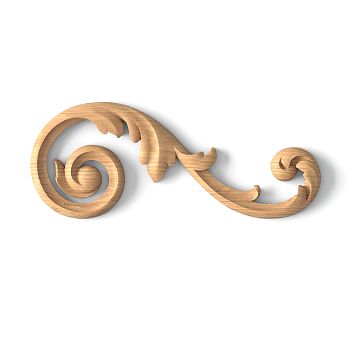
Decor collectionsIn the classic style, elements include varying degrees of complexity — from simple profiled planks to complex multi-element compositions with pilasters, cornices, and pediments. The color palette is limited to traditional shades — from white to dark brown.
Northern Modernism: natural motifs in an urban environment
St. Petersburg Modernism at the turn of the 19th and 20th centuries created a unique interpretation of the European style. Here, natural motifs were adapted to the northern climate and urban environment. Botanical ornaments became more stylized, lines — more graphic.
Wooden decoration in the style of Northern Modernism often imitates northern flora — spruce branches, cones, rowan leaves. Asymmetric compositions create a sense of naturalness, but are carefully planned for functionality and longevity.
The color palette of modernism leans toward natural tones. Green, brown, ochre shades create harmony with the surrounding environment. Elements tinted to match various wood species — from light maple to dark walnut — look especially striking.
Modern interpretation: minimalism and functionality
Modern St. Petersburg architecture requires a new approach to wooden decoration. Minimalism does not mean the absence of decoration — it requires particular expressiveness of each element. Simple geometric forms must be flawlessly executed, surface quality becomes critically important.
Modern wooden decoration is often integrated with engineering systems. Gutters are hidden in cornices, lighting elements are embedded in casings, ventilation systems are installed in window sills. Such an approach requires careful coordination between architects, engineers, and decorative element manufacturers.
Production and technologies: from sketch to finished element
Designing and modeling
Creating quality wooden decoration begins long before the first cut of a board. Modern design uses 3D modeling, allowing precise calculation of all dimensions, checking element connections, and optimizing the structure for specific operating conditions.
BIM technologies allow integrating decorative elements into the building’s overall information model. This eliminates design errors, optimizes production and installation processes. Virtual reality allows the client to "see" the future decoration even during the design phase.
Parametric modeling allows quickly generating solution variants, adapting standard elements to specific opening dimensions. Automatic drawing generation accelerates production preparation.
Modern woodworking equipment
Modern wooden decoration production is unthinkable without high-tech equipment. CNC machines allow processing parts of complex geometry with precision down to fractions of a millimeter. Multi-axis machining centers perform milling, drilling, and groove cutting in a single setup.
Laser cutting opens new possibilities for creating delicate elements. A laser beam of a fraction of a millimeter allows cutting extremely fine details unattainable with mechanical processing. Laser cutting is especially effective for creating complex ornaments and patterns.
Modern drying chambers provide controlled moisture removal from wood. Microprocessor control maintains the optimal drying regime for each wood species. Vacuum drying can reduce the process time by several times.
Quality and control systems
The quality of wooden decoration is established at every stage of production. Incoming inspection of raw materials includes checking moisture, density, and defects. Only wood meeting strict requirements is allowed into production.
Intermediate control is performed at each technological operation. Dimensions of parts are checked using coordinate-measuring machines, surface quality — using optical systems. Deviations from specified parameters lead to automatic adjustment of equipment settings.
Final control includes checking geometry, quality of protective treatment, and packaging. Each batch is accompanied by a quality certificate specifying all product characteristics.
Installation of wooden decoration in St. Petersburg conditions
Seasonality of work and weather limitations
When is the best time to install wooden decoration in St. Petersburg? The optimal period is from May to September, when air temperature is consistently positive and humidity relatively low. However, the peculiarities of the St. Petersburg climate require readiness to work under any conditions.
Modern adhesive compositions allow installation at temperatures down to -5°C, but require special moisture protection measures. Fast-setting compositions allow completing installation before rain begins, but require high skill from installers.
Works in the city’s historical center present particular difficulty, where access to machinery is limited and requirements for preserving surrounding buildings are especially strict. Manual methods of lifting and installing elements are often required.
Fastening systems for humid climates
The wooden decoration fastening system must account for the peculiarities of the St. Petersburg climate. Constant humidity requires using corrosion-resistant materials — stainless steel, galvanized alloys, and special coatings.
Hidden fastening is preferable to exposed fastening not only aesthetically but also technically. Absence of visible fastening elements eliminates potential moisture accumulation and corrosion development.
Elastic joints allow compensating for temperature and humidity deformations without damaging elements. Special polymer gaskets retain their properties over a wide range of temperatures and humidity levels.
Sealing and protection of joints
Quality sealing of joints is the key to long-term durability of wooden decoration in St. Petersburg conditions. Moisture penetration into joints may cause wood swelling, peeling of protective coatings, and mold growth.
Modern sealants based on modified silicones and polyurethanes retain elasticity from -40°C to +80°C. They not only protect against moisture but also ensure vapor permeability of joints.
Special attention is paid to roof junctions, where maximum moisture concentration occurs. Here, multi-level protection systems are applied using waterproof membranes, drainage elements, and ventilation gaps.
Maintenance and restoration of wooden decoration
Preventive Maintenance
Even the highest-quality wooden decoration requires periodic maintenance. In St. Petersburg conditions, preventive inspections are recommended twice a year — in spring after snowmelt and in autumn before the winter period begins.
Main preventive tasks include checking the integrity of protective coatings, cleaning from contaminants, and monitoring the condition of fastening elements. Modern coatings last 7–10 years without renewal, but in particularly aggressive conditions may require more frequent repairs.
Cleaning of wooden decoration should be performed using gentle methods. Use of high pressure or aggressive chemical compositions may damage the protective layer. The optimal method is soft brushes and special cleaning agents.
Restoration technologies
Restoration of historical wooden decoration in St. Petersburg is an art requiring deep knowledge of traditional techniques and modern materials. Often, lost elements must be recreated based on archival drawings and photographs.
3D scanning of preserved elements allows creating accurate digital models for reproduction. Modern machines can cut copies with micron-level precision, but final finishing is often done manually.
Conservation of old wood requires special technologies. Damaged areas are reinforced with special compositions and restored using modern materials as close as possible in properties to the original.
Economic efficiency of wooden decoration
Cost and Benefit Analysis
Investments in high-quality wooden decoration should be viewed in terms of long-term efficiency. Initial cost may seem high, but with proper approach, it pays off through longevity and minimal operating expenses.
Comparison with alternative materials shows advantages of wood in the long term.Polyurethane Itemsmay have lower initial cost, but lack the unique aesthetics of natural material.
Impact on property value is an important economic factor. In St. Petersburg, where architectural value is particularly appreciated, high-quality wooden decoration may increase property value by 15–25%.
Regional pricing features
Cost of wooden decoration in St. Petersburg is influenced by several factors. Proximity to Karelian and Leningrad region forests makes raw materials relatively accessible. Developed industrial base ensures availability of modern equipment.
High local craftsmanship qualifications are the result of centuries-old woodworking traditions. St. Petersburg craftsmen understand the specifics of working with wood under local climatic conditions, enhancing product quality and longevity.
Transport costs are minimal when working with local manufacturers. This is especially important for large elements, the transportation of which over long distances can constitute a significant portion of the cost.
Trends in the development of wooden decor market in St. Petersburg
Growing demand for natural materials
Modern trends in architecture and design demonstrate increasing interest in natural materials. People are tired of the artificiality of urban environments and seek to incorporate natural elements into their lives. Wood, as a material with a multi-thousand-year history of human use, evokes special emotions.
The ecological component is becoming increasingly important. Wood is the only building material that absorbs carbon dioxide during growth. Using wood from responsibly managed forests contributes to preserving the planet's ecological balance.
Psychological studies confirm the beneficial effect of natural materials on human well-being. The presence of wood in the surrounding environment reduces stress, improves mood, and creates a sense of comfort and safety.
Technological Innovations
The development of technologies opens new opportunities for wooden decor. Digital design allows creating unique elements for each object. Robotic manufacturing increases precision and speed of production.
New protective coatings extend the service life of wooden decor. Nanotechnologies allow creating coatings with specified properties — self-cleaning, antibacterial, color-changing depending on conditions.
Integration with "smart" building systems opens prospects for interactive decor. Built-in sensors can monitor the condition of elements, warning of the need for maintenance.
Choosing a contractor and supplier
Criteria of professionalism
How to choose a reliable supplier of wooden decor in St. Petersburg? The first and foremost criterion is the presence of its own production. Brokerage companies cannot guarantee stable quality or adherence to deadlines.
Experience working with wood in local climatic conditions is critically important. The manufacturer must understand the specific behavior of different wood species in the humid St. Petersburg climate, know effective protection methods.
The portfolio of completed projects demonstrates the supplier's skill level and reliability. Particularly valuable are objects that have been in operation for several years — they show the actual quality of the product.
Wooden facade decoration in Saint Petersburg embodies the harmony of northern architecture and traditional carving craftsmanship. Wooden columns, ornaments, and carved elements create a unique aesthetic, preserving architectural heritage and highlighting the beauty of facades.
A quality supplier provides not only the product but also comprehensive technical support. This includes assistance in design, calculation of required material quantities, recommendations for installation and maintenance.
Warranty obligations must be clearly stated in the contract. A responsible manufacturer provides warranty not only on the material but also on the quality of processing and durability of protective coatings.
After-sales service includes consultations on operation, supply of materials for repair, restoration services. Long-term relationships with the supplier ensure stability and predictability.
Integration with modern architectural solutions
Wooden decor in energy-efficient construction
Modern requirements for building energy efficiency influence approaches to designing facade decor. Wooden elements can be integrated with insulation systems, creating not only aesthetically pleasing but also functional solutions.
Ventilated facades with wooden decor provide optimal microclimate in buildings. Wood regulates humidity, provides additional thermal insulation, and improves sound insulation.
Integration with engineering systems requires a special approach to design. Wooden elements can conceal utilities, house "smart home" components, and integrate lighting systems.
Combination with modern materials
Wood combines beautifully with modern materials — glass, metal, composites. The contrast between the warmth of wood and the coldness of glass creates expressive architectural compositions.
When designing, it is important to consider different coefficients of thermal expansion of materials. Properly designed connection nodes ensure the longevity of the entire structure.
Color solutions must take into account the characteristics of all materials. Wood can be tinted in any color, but it looks most expressive in natural shades.
Ecological aspects of wood usage
Sustainable Forestry
Choosing wooden decor imposes responsibility for sustainable use of forest resources. FSC certification guarantees that the wood is sourced from responsibly managed forests, where ecological and social standards are observed.
Using local wood reduces the product's carbon footprint. Transporting materials over short distances requires less energy consumption and supports the local economy.
Recycling wood processing waste is an important aspect of ecological responsibility. Sawdust is used to produce fuel briquettes, and offcuts are used to manufacture small architectural forms.
Secondary use and disposal
Wooden decor at the end of its service life can be fully disposed of without harming the environment. Wood is biodegradable and can be used as biomass or composted.
The possibility of restoration and reuse makes wood especially attractive from an ecological standpoint. Antique decorative elements are valued not only for their beauty but also for their historical significance.
Frequently Asked Questions about wooden facade decor in Saint Petersburg
Is wooden decor suitable for the Saint Petersburg climate?
Modern wood treatment technologies make wooden decor ideally suited to the Saint Petersburg climate. Thermomodification, stabilizing impregnations, and multi-layer protective coatings ensure longevity under high humidity and frequent temperature fluctuations. Properly treated wooden decor can last 30-50 years without losing its aesthetic qualities.
Which wood species are best suited for Saint Petersburg?
For Saint Petersburg conditions, the optimal use is local species — spruce, pine, larch. They are adapted to the northern climate and are cost-effective. For luxury projects, oak, beech, and exotic species are suitable. The choice depends on budget, stylistic requirements, and usage conditions.
How long does it take to manufacture wooden decor?
Manufacturing times depend on the complexity of elements and order volume. Simple profiles from standard species are produced in 1-2 weeks. Complex carving or unique elements may require 4-8 weeks. Exotic species increase lead times due to the need for special material orders.
Does wooden decoration require special care?
Modern wooden decor requires minimal maintenance. Preventive inspections twice a year, cleaning with mild agents, checking fasteners. Reapplication of protective coating — every 7-10 years depending on usage conditions. This is significantly less than traditional materials require.
Can wooden decor be used on historical buildings?
Using wooden decor on historical buildings requires approval from the State Historical and Cultural Heritage Preservation Committee. It is important to accurately reproduce historical forms and proportions. Modern technologies allow creating elements indistinguishable from historical ones, yet surpassing them in durability.
Does wooden decoration affect property value?
Quality wooden decor significantly enhances the attractiveness and value of real estate. In Saint Petersburg, where architectural traditions are especially valued, a unique facade can increase property value by 15-25%. This is particularly noticeable in the historic center and prestigious districts.
How to choose a reliable manufacturer in Saint Petersburg?
When choosing a manufacturer, pay attention to the presence of an in-house production facility, experience working in local conditions, portfolio of projects. Quality, ecological certifications, and warranty obligations are important. It is recommended to visit the production facility and examine product samples.
Is wooden decor compatible with modern facade systems?
Modern wooden decor is fully compatible with any facade systems — plaster, suspended, or combined. It is important to properly resolve junction details, ensure ventilation, and eliminate cold bridges. Professional design guarantees successful integration.
Can unique elements be manufactured according to an individual project?
Modern technologies allow manufacturing any elements according to individual sketches. CNC equipment reproduces complex shapes, while manual finishing adds uniqueness. The cost of individual elements is higher, but the result justifies the investment.
Is wooden decoration eco-friendly?
Wood is the most eco-friendly building material. It is renewable, absorbs CO2, and does not require energy-intensive production. Using certified wood ensures sustainable forestry. Elements at the end of their service life are fully biodegradable or can be used as biomass.
Conclusion: Wooden decor as an expression of Saint Petersburg’s soul
Wooden facade decoration in St. Petersburg— it is not just an architectural decoration element, but a way to express a deep connection between the city and its residents, between historical heritage and modern needs. In a city where every building tells its own story, wooden decor becomes the living thread that connects the past with the future.
Modern technologies have solved the main problem of wooden decor in the northern climate — its short lifespan. Today, we can enjoy the beauty of natural wood without worrying about its preservation. Thermomodification, stabilizing impregnations, and modern protective coatings have turned wood from a fussy material into a reliable architectural companion for decades.
Choosing wooden decor in Saint Petersburg is choosing in favor of traditions, quality, and ecological responsibility. It is understanding that beauty must not only be visible but also tangible, that the material must not only please the eye but also create a sense of warmth and coziness. In a world where artificial materials dominate construction, wood remains a symbol of connection with nature, with the roots of human civilization.
Investing in quality wooden decor is investing in the future. A properly chosen and professionally installed decor will serve for decades, becoming more beautiful over time, acquiring a noble patina of age. This is the choice of those who understand that true beauty is not subject to fashion, that quality items never go out of style.
In Saint Petersburg, a city with the richest architectural traditions, wooden decor finds special understanding and application. Here, every facade detail is considered through the prism of the overall architectural context, and each element must harmonize with the city’s architectural symphony. Wooden decor plays a special role in this symphony — it brings warmth and humanity to the majestic architecture of the imperial capital.
STAVROS understands the special responsibility borne by manufacturers of architectural decor in Saint Petersburg — a city where architectural traditions have a multi-century history and unique value. Deep knowledge of Saint Petersburg’s architectural styles, understanding of the specific requirements of the local climate, and long experience working with various wood species enable STAVROS to create wooden decor that seamlessly integrates into the unique environment of the northern capital. STAVROS’s own production facilities, equipped with the most modern woodworking equipment, including precision CNC machines and innovative wood drying and stabilization systems, ensure the production of high-quality items capable of withstanding the harsh conditions of the Saint Petersburg climate. STAVROS’s team combines experienced master carpenters preserving traditional craftsmanship secrets with young specialists skilled in modern digital design and production technologies. A strict quality control system at every stage — from raw material selection to final finishing — guarantees that each item meets the highest standards of strength, durability, and aesthetic perfection. A wide range of solutions covers all architectural styles present in Saint Petersburg — from strict imperial classicism to modern minimalism — allowing to find the ideal solution for any project. Individual approach to each client, possibility of creating unique elements based on historical samples or author sketches, professional technical support, and reliable warranty obligations make cooperation with STAVROS a guarantee of successful implementation of the most ambitious architectural projects. Choosing STAVROS, clients receive not just quality products, but a partner in preserving and developing Saint Petersburg’s architectural traditions, guaranteeing that every wooden decor element will be a worthy addition to the great architectural heritage of Russia’s northern capital.