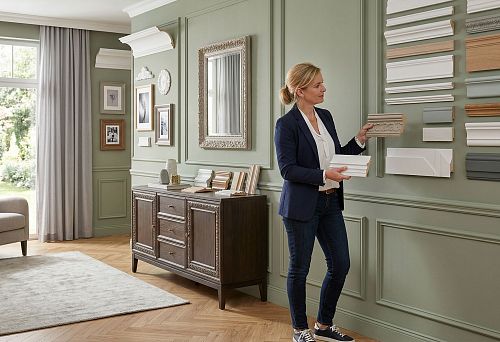
Article Contents:
- Architectural Psychology: Why Corners Are So Important
- Technical Necessity as the Basis of Aesthetics
- Material Basis of Modern Facade Decoration
- Innovative Composite Solutions
- Production Technologies: From Craft to High Technology
- Individual Design and Mass Production
- Installation: The Art of Precision and Reliability
- Seasonal Characteristics of Installation Work
- Bio-tech: Organic forms of the future
- Regional Traditions and Modern Interpretations
- Economic Efficiency and Long-Term Perspective
- Ecological aspects and sustainable development
- Conclusion

Imagine a house without corners. Impossible? Now imagine a house with corners, but poorly finished, without attention to detail. Such buildings surround us everywhere — faceless boxes that evoke neither admiration nor a desire to stop and examine the details. But there are other houses — those that make you raise your head, slow your pace, feel a connection to something greater than mere utilitarian shelter.
Facade Corner Elements These are precisely the details that transform architectural necessity into a work of art. They simultaneously solve multiple tasks: protect the most vulnerable parts of the structure, create visual completeness of the composition, form the character of the building and its emotional impact on those around it.
In today's world, where functionality is often prioritized over aesthetics, returning to architectural decoration is not a fashion trend, but a conscious necessity. Humans need beauty no less than warmth and dryness. And it is precisely facade corner elements that can satisfy this need, creating architecture that speaks to us through forms, proportions, and textures.


Architectural Psychology: Why Corners Are So Important
Corners in architecture are not merely the intersection of two planes. They are psychologically significant points where the observer’s attention concentrates. Studies show that the human eye naturally follows lines and stops at their intersections, especially at corners.
Incomplete or poorly finished corners create a sense of discomfort at a subconscious level. The brain perceives such architecture as unfinished, temporary, and unreliable. Conversely, beautifully finished corner zones evoke feelings of stability, craftsmanship, and attention to detail.
decorative gable Above an entrance or window, it functions as an architectural gesture of welcome. It shows that the homeowners care not only about functionality but also about the impression their home makes on those around them. This is a form of architectural courtesy, a way to say: 'Welcome to a space where beauty is valued.'
Cultural context also plays an important role in the perception of facade elements. In Russian tradition, richly decorated facades have always been a symbol of wealth and good taste. Carved pediment On a wooden house or stone corner elements on a mansion — this is a connection to history, to the traditions of craftsmanship passed down from generation to generation.




Technical Necessity as the Basis of Aesthetics
Facade corner elements did not arise as purely decorative solutions. Their emergence was dictated by technical requirements: the need to protect the most vulnerable parts of the building from atmospheric influences, ensure proper water runoff, and reinforce the structure at points of stress concentration.
Building corners are subjected to the maximum loads from wind, the most intense effects of rain and snow, and here cracks and other damage occur most frequently. Properly designed corner elements take on these effects, protecting the main structure and extending the lifespan of the entire building.
Cornice in architecture It performs the function of a protective overhang, diverting water from the wall. But at the same time, it creates an expressive play of light and shadow, forms the rhythm of the facade, and emphasizes horizontal or vertical divisions of the building.
Thermal calculations show that properly executed corner elements can significantly improve the energy efficiency of a building. They create an additional insulation layer in critical zones, eliminate cold bridges, and promote proper air circulation in ventilated facades.
Modern building codes and regulations increasingly pay attention not only to the strength and durability of structures, but also to their aesthetic qualities. It is acknowledged that beautiful architecture contributes to people’s psychological comfort, improves the quality of the urban environment, influences social behavior, and affects the economic development of territories.
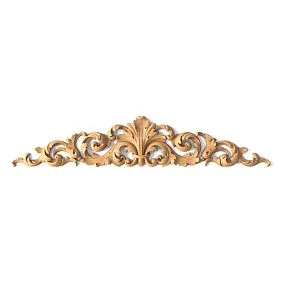
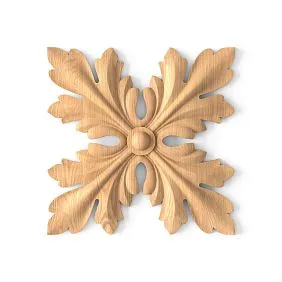
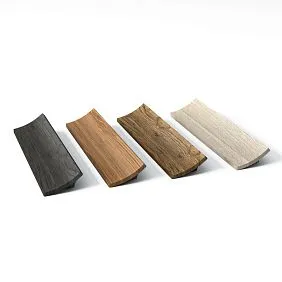
Our factory also produces:

Material Basis of Modern Facade Decoration
Choosing a material for facade corner elements is a complex multifactorial decision, where technical characteristics must be combined with aesthetic qualities and economic feasibility. Each material has its unique properties, determining its area of application and methods of processing.
Natural stone remains the benchmark of prestige and durability in facade architecture. Granite can serve for centuries, retaining its aesthetic and technical characteristics. Its high strength and frost resistance make granite elements ideal for the Russian climate. Marble possesses unique decorative qualities but requires more delicate handling and regular maintenance.
Sandstone and limestone offer more accessible options for natural stone with good performance characteristics. They are easier to process, allowing for complex profiles and ornamentation. Travertine creates a distinctive texture with natural pores and inclusions, giving facades a unique character.
Ceramic materials are experiencing a new rebirth thanks to modern manufacturing technologies. Hand-formed clay brick creates a rich palette of colors and textures. Architectural ceramics allow for the realization of the most complex decorative concepts with high detail and durability.
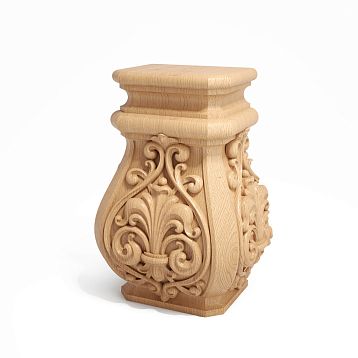
Wooden Corner Elements Open up boundless creative possibilities. Modern wood protection technologies ensure the longevity of wooden facades even in harsh climatic conditions. Different wood species — oak, larch, cedar, teak — have their unique characteristics and aesthetic qualities.
Get Consultation
Innovative composite solutions
Modern composite materials combine the best qualities of traditional materials with the capabilities of modern technologies. Glass fiber reinforced concrete (GRC) allows creating lightweight, strong elements of complex shapes with high detail. Polymer concrete has improved properties compared to ordinary concrete and can imitate any natural materials.
Fiberboard panels based on wood chips and mineral binders combine the ecological properties of wood with the strength and fire resistance of mineral materials. They have good thermal insulation properties and are easily machinable.
Polymer composites based on glass or carbon fiber provide exceptional strength at minimal weight. They are corrosion-resistant, require no regular maintenance, can be painted in any color or imitate various materials.
Sandrok cornice Modern composite materials can combine classical proportions with innovative performance characteristics. Such elements are not susceptible to atmospheric influences, do not require regular painting, and retain their geometry and color for decades.
Nanotechnologies introduce fundamentally new properties into facade material production. Self-cleaning coatings break down contaminants under ultraviolet radiation and wash them away with rainwater. Hydrophobic coatings create an invisible barrier against moisture, preventing its penetration into the material.
Photocatalytic coatings not only clean the facade surface but also help purify the surrounding air from harmful impurities. This is especially relevant for urban areas with heavy traffic.
Thermochromic materials change color depending on temperature, creating dynamic facades that respond to weather changes. Such solutions are especially effective when combined with architectural lighting.
Production technologies: from craftsmanship to high technology
Modern production of facade corner elements represents a synthesis of traditional craftsmanship methods with high-tech processes. Each material requires its specific processing technologies, but general principles remain unchanged: precision, quality, attention to detail.
Stone processing today uses diamond tools, waterjet cutting, ultrasonic processing. Computer programming of machines allows reproducing the most complex historical samples with mathematical precision or creating fundamentally new forms impossible with manual processing.
Woodworking combines traditional carving methods with modern CNC milling machines. carved wooden gables Can be created according to historical samples or individual projects. Laser engraving allows applying delicate ornaments and inscriptions.
Molding of composite materials requires high-precision molds and strict adherence to technological regimes. Modern silicone and polyurethane molds allow reproducing the finest details of the original. Vacuum molding eliminates the formation of bubbles and voids in the material.
Quality control at all production stages ensures compliance of finished products with technical specifications and project requirements. 3D scanning allows checking the geometric accuracy of complex elements. Climatic tests in special chambers simulate long-term effects of atmospheric factors.
Individual design and mass production
The modern facade element market develops in two directions: mass production of standard elements and individual manufacturing of exclusive items. Each approach has its advantages and area of application.
Standard elements ensure accessibility of quality facade solutions for a wide range of consumers. Serial production allows optimizing costs and offering products at competitive prices. Standardization of sizes and profiles simplifies design and installation.
Individual design opens up boundless creative possibilities. Cornice elements Can be developed specifically for a particular architectural project, taking into account the building's characteristics, its style, proportions, and climatic conditions.
Hybrid approach combines the advantages of both methods. Basic elements are produced in series, while their combinations and modifications are created for specific projects. Modular systems allow creating unique compositions from standard parts.
Digital design has fundamentally changed the process of creating facade elements. 3D modeling allows seeing the future facade even before production begins. Virtual reality enables the client to "walk around" the building and evaluate architectural solutions.
Parametric design automates the creation of variants and optimization of solutions. Changing one parameter automatically recalculates the entire system, significantly speeding up the design process and improving its quality.
Installation: the art of precision and reliability
The quality of facade corner element installation largely determines the durability and aesthetic qualities of the entire facade. Even the most perfect items may not realize their potential if improperly installed. Professional installation requires deep knowledge in construction physics, materials science, and engineering systems.
The preparatory stage includes detailed inspection of the foundation, checking wall geometry, identifying deviations from project dimensions. Laser measuring devices allow determining the actual geometry of the building with millimeter precision. These data are used to adjust element sizes or plan compensatory measures.
Fastening systems must ensure reliable connection of elements to the base under any operational loads. Mechanical anchors, chemical anchors, combined systems — each type of fastening has its area of application. Load calculations take into account the self-weight of elements, wind loads, thermal deformations, and seismic loads where applicable.
SANDRIK buy Quality is only half the success. The other half is installing it correctly. Horizontal elements require special attention to ensure water drainage. Even the slightest deviation in slope may lead to water stagnation and premature destruction of the structure.
Hydroinsulation of mounting points is critically important for the longevity of the facade system. Modern sealants and membranes provide reliable protection against moisture penetration. However, their proper application requires knowledge of material compatibility and adherence to technological procedures.
Seasonal characteristics of installation work
The Russian climate imposes special requirements on the organization of installation work. Temperature restrictions, air humidity, atmospheric precipitation—all these factors affect the quality of installation and must be considered when planning work.
Winter installation work requires special measures to protect adhesive compositions and sealants from freezing. Thermal blowers, protective tarps, special frost-resistant materials—all this increases the cost of work, but ensures its quality.
Summer work in hot weather also has its own characteristics. Rapid drying of adhesive compositions may lead to poor-quality joints. Thermal deformations of materials must be taken into account when marking and installing elements.
Interseasonal periods with frequent precipitation require organizing reliable protection of the installation zone from moisture. Quality hydroinsulation of temporary connections prevents damage to structures during installation.
Sash Rail for Door Is mounted with special care, as this area is subjected to increased mechanical loads from door slamming, vibrations from passing people. Mountings must be designed to withstand dynamic loads.
Acceptance of completed work includes checking the quality of mounting, geometric accuracy of installation, tightness of joints, compliance with project requirements. Photodocumentation of all work stages creates a documented basis for warranty service.
Stylistic Directions: From Classicism to Avant-Garde
Facade corner elements can support any architectural style—from strict classicism to the boldest avant-garde. Each style imposes its own requirements on forms, proportions, materials, and surface treatment methods.
Classic styles—Baroque, Empire, Classicism—require precise adherence to canonical proportions and traditional profiles. Sundial above the door In the classical style, it must correspond to the order system, where each element has its place and significance. Modern technologies allow reproducing historical samples with museum-level accuracy.
Modern and Art Nouveau create fundamentally new forms inspired by natural motifs. Asymmetric compositions, floral ornaments, smooth lines characterize this style. Decorative corner elements In the modern style, may include stylized images of flowers, leaves, animals.
Art Deco combines geometric strictness with decorative luxury. Step-like forms, contrasting material combinations, metallic inserts create the recognizable image of the jazz and technical progress era.
Minimalism requires extreme simplicity and functionality. Corner elements in minimalist buildings should be practically invisible, performing purely technical functions without drawing unnecessary attention. But this does not mean the absence of quality—on the contrary, every line must be flawless.
Modern hi-tech architecture uses the latest materials and technologies to create innovative facade solutions. Metal, glass, composites allow creating elements that were unimaginable in traditional architecture.
Deconstructivism destroys traditional notions of form and function. Corner elements in deconstructivist buildings may have the most unexpected shapes, creating a sense of movement, instability, dynamism.
Regional traditions and modern interpretations
Russia has rich architectural decoration traditions, formed under the influence of Byzantine culture, Western European styles, and local characteristics. decorative wooden gable In the Russian style, combines functionality with rich ornamentation, creating a unique national character.
North Russian traditions of wooden architecture gave the world unique examples of facade decoration. Chelkis, curtains, studded moldings created a complex symbolic system, where each element had its meaning.
Moscow Baroque of the 17th-18th centuries created its own interpretation of European styles, adapted to Russian conditions and traditions. White stone carving, colored tiles, gilded details created a unique appearance of Russian palaces and churches.
St. Petersburg Classicism introduced the strictness and monumentality of European models, but adapted them to the northern climate and local construction traditions. Use of local materials—Pudost stone, granite—created a distinctive character of the northern capital.
Modern interpretations of historical styles allow preserving a connection with traditions, adapting them to modern requirements of functionality, energy efficiency, and ecological sustainability. Decorating the house facade gable with decorative elements Today may include modern materials and technologies while preserving traditional forms.
Economic efficiency and long-term perspective
Investments in high-quality facade corner elements should be considered in the context of the building's entire life cycle. Initial costs for quality materials and professional installation are many times recouped through increased property value, reduced operating expenses, and creation of a comfortable living environment.
Market analysis of real estate shows that buildings with high-quality facades have significantly higher value and better liquidity. Buyers are willing to pay extra for aesthetically appealing architecture, understanding that such property better preserves and increases its value.
Operational costs for maintaining high-quality facade systems are minimal. Properly selected materials and professional installation ensure decades of trouble-free operation. Regular cleaning and periodic renewal of protective coatings — that’s the entire scope of required maintenance.
Energy efficiency of buildings with high-quality facade systems contributes to reduced heating and air conditioning costs. Mold Corner Element may include an additional insulation layer, contributing to the overall improvement of the building's energy efficiency.
Buildings with high-quality facade systems are insured under more favorable terms, as the risk of damage from external factors is reduced. Insurance companies take into account the quality of construction and materials when calculating insurance premiums.
The social significance of quality architecture cannot be precisely calculated economically, but its impact on the quality of life and psychological well-being of people is undeniable. Beautiful buildings create a favorable urban environment, promote tourism, and increase the investment attractiveness of territories.
Ecological aspects and sustainable development
Modern requirements for the ecological safety of construction materials and technologies change approaches to the production and use of facade elements. The concept of sustainable development requires consideration of ecological factors at all stages of the product's life cycle.
The carbon footprint of production has become an important criterion for selecting materials. Natural materials — wood, stone — have advantages in terms of ecological safety, especially when using local raw materials and renewable energy sources in production.
The recycling and disposal of facade elements at the end of their service life should be planned already during the design stage. Materials that can be recycled or safely disposed of are preferred over those that create waste problems.
The durability of materials directly affects their ecological efficiency. Elements capable of serving for centuries without loss of quality exert significantly less environmental impact per year of operation.
Energy efficiency of buildings with high-quality facade systems contributes to reducing greenhouse gas emissions from heating and air conditioning. This is an important contribution to combating climate change.
Local production of facade elements reduces transportation costs and associated emissions. Supporting local manufacturers contributes to regional economic development and preservation of traditional crafts.
Conclusion
Facade corner elements are more than just construction details. They are carriers of cultural memory, express aesthetic ideals, and tools for creating a comfortable living environment. In an era of standardization and uniformity, they enable the preservation of individuality and the creation of a unique architectural image.
Modern technologies open up unprecedented opportunities for creativity, but they must be grounded in a deep understanding of traditions, knowledge of materials, sense of proportion and scale. The synthesis of tradition and innovation — this is the path to creating architecture that will serve not only our generation, but also those who come after us.
Investments in high-quality facade elements are investments in the future. They create values that outlast their creators, become part of cultural heritage, and serve as a source of pride and inspiration for new generations of architects and builders.
Choosing quality requires knowledge, experience, and understanding of long-term perspectives. But the result is worth all the effort — architecture that pleases the eye, serves people, and beautifies our world.
STAVROS combines long-standing traditions of craftsmanship with modern manufacturing technologies, creating facade elements that meet the highest standards of quality and aesthetics. Each product is the result of careful material selection, precise adherence to technology, and attention to detail. From consultation on optimal solutions to professional installation — a full range of services ensures the realization of the most ambitious architectural projects, creating facades that become ornaments of the urban environment and sources of pride for their owners for decades.