Article Contents:
- Architectural Philosophy of Framing
- Psychology of First Impression
- Cultural Codes and Symbolism
- Evolution of Styles: From Antiquity to Modernity
- Classical tradition
- Gothic Reinterpretation
- Revival of Classicism
- Baroque Expression
- Material Embodiment of Beauty
- The nobility of natural wood
- Innovative Compositional Materials
- Polyurethane revolution
- Stylistic Diversity of Modernity
- Technological processes: from concept to realization
- Modern style: natural organic
- Minimalism: beauty of simplicity
- Technological Aspects of Creation
- Design and 3D modeling
- High-Precision Mechanical Processing
- Artistic Handcrafted Processing
- Installation Technologies and Solutions
- Comparative Economic Analysis
- Care and longevity: preserving beauty for years
- Finishing Finishes and Coatings
- Integration into Modern Interiors
- Stylistic Compatibility
- Color solutions
- Operation and maintenance
- Preventive care
- Restoration and repair
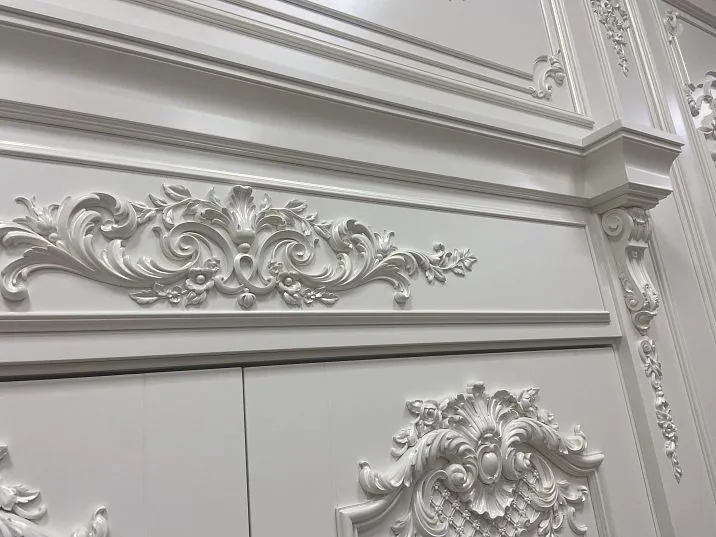
Why do we stop before some doors and walk past others? What makes an entrance truly attractive? The secret lies in the art of creating doorway framing — refined architectural detail, capable of transforming an ordinary opening into a grand portal. Each element of this composition tells its own story about taste, status, and understanding of beauty.
In the world of modern architecture, where minimalism often dominates over ornamentation, quality door framing becomes a true oasis of beauty and refinement. This is not merely a functional element — it is the philosophy of space, materialized in wood, stone, or modern composite materials.
Architectural Philosophy of Framing
Human perception of space is structured such that we instinctively focus on boundaries and transitions. A door opening represents a symbolic portal between different zones of life, and its decoration carries a tremendous psychological load.




Psychology of First Impression
When we approach a door, our subconscious instantly analyzes visual information, forming an opinion about what lies beyond the threshold. door frame trim It acts as a silent intermediary that can inspire trust, admiration, respect—or, conversely, leave an indifferent impression.
Neuropsychology confirms that the human brain processes visual information in fractions of a second, and the first impression is the most enduring. That is why investing in quality entrance design is not luxury, but a rational necessity for those who understand the power of visual impact.
Studies show that buildings with thoughtful architectural decoration are valued by potential buyers 15–25% higher than similar properties without decorative finishes. Door Frame Trim It becomes an investment that pays off not only in aesthetic pleasure but also in real increases in property market value.
Our factory also produces:


Cultural Codes and Symbolism
Each culture has developed its own traditions for decorating entrance areas. In European architectural tradition, ornate door framing symbolizes hospitality and prosperity. Chinese feng shui philosophy assigns sacred significance to the entrance door, considering it the mouth of the house through which life energy flows.
Russian architectural school created a unique tradition of carved door decoration, where each element carried not only aesthetic but also protective function. Modern and frames create a home atmosphere, making it truly cozy and individual. This is an investment in beauty, which pays off every day through aesthetic pleasure from admiring the beautiful. continue these traditions, adapting them to modern materials and technologies.
Get Consultation
Evolution of Styles: From Antiquity to the Present
Classical Tradition
Ancient architecture laid the foundations that still define our understanding of beauty in architectural decoration. The Doric, Ionic, and Corinthian orders created a system of proportions that became the standard of harmony. Every element of classical door framing—from base to capital—was subject to strict mathematical laws.
The Roman Empire added to Greek strictness an element of grandeur. Roman architects created complex multi-level compositions, where Doorway Molding and Framing became true architectural symphonies. Triumphal arches, palace portals, temple entrances—all demonstrated the empire's power through the perfection of architectural forms.
Byzantine tradition introduced Eastern motifs into European architecture, creating a unique synthesis of Western rationality and Eastern ornamentation. Byzantine masters paid special attention to the symbolic program of decoration, where each ornament carried deep religious meaning.
Gothic Reinterpretation
Gothic style revolutionized the understanding of architectural space, directing it upward. Door frames of Gothic cathedrals impress not only by their size, but by their complex iconographic program. Thousands of sculptural figures, vegetal ornaments, and architectural details created 'stone books' that even illiterate parishioners could read.
Gothic masters developed unique stone carving technologies, enabling the creation of incredibly complex lace-like structures. Corner decorative elements Gothic portals demonstrated the virtuosity of medieval stonemasons.
Renaissance Classicism
The Renaissance era marked a return to ancient ideals, reinterpreted through the prism of new artistic concepts. Italian masters of the 15th–16th centuries created a new aesthetic of door framing, combining classical rigor with Renaissance plasticity.
Palladio, Bramante, Michelangelo—each of these great Renaissance masters contributed to the development of architectural decoration. Their palace and church projects demonstrated a new understanding of space, where door frame trim played a key role in organizing architectural composition.
Baroque Expression
Baroque transformed architecture into a theater, where each element played its part in a grand spectacle of power and faith. Baroque door frames impress with their rich decorative ornamentation, dynamic forms, and theatrical overall impression.
Bernini, Borromini, Rastrelli—Baroque masters created architectural works where the boundary between architecture and sculpture blurred. Their door portals became stage decorations, where dramas of power and religion unfolded.
Material Embodiment of Beauty
The nobility of natural wood
Wood remains one of the most sought-after materials for creating door frames due to its natural beauty, tactile qualities, and ability to undergo fine artistic processing. Each wood species possesses unique characteristics that determine its application in architectural decoration.
Oak—the king among hardwoods—possesses exceptional strength, beautiful grain, and noble color. Oak frames serve for centuries, acquiring a distinctive patina over time that only accentuates their aristocracy. High wood density allows for the creation of delicate carved details that retain sharp contours for decades.
Walnut is renowned for its decorative qualities—rich wood grain patterns, warm chocolate tones, and excellent workability make it ideal for creating prestigious interiors. Walnut frames often become a central element of design compositions.
Larch possesses natural resistance to decay, making it indispensable for outdoor applications. Siberian larch, hardened by harsh climates, demonstrates unique performance characteristics, combining beauty with practicality.
Innovative Compositional Materials
Modern technologies offer alternatives to traditional materials, often surpassing them in performance characteristics. Paintable Molding MDF offers an optimal price-to-quality ratio for many projects.
MDF (Medium Density Fiberboard) is manufactured from wood fibers bonded with natural resins under high pressure and temperature. The result is a material with uniform structure, stable dimensions, and excellent workability.
Advantages of MDF include the absence of knots, cracks, and internal stresses typical of solid wood. The MDF surface is ideal for painting, allowing for a flawless finish. MDF skirting board for painting can imitate any wood species when the color and finish of the coating are properly selected.
Polyurethane Revolution
Polyurethane brought a true revolution to architectural decoration production, offering a unique combination of aesthetic and performance qualities. This material opened possibilities previously unattainable when working with traditional materials.
Injection molding technology allows reproducing the finest details of historical samples and creating new original compositions of any complexity. Polyurethane frames do not fall short of wood carving in detail, while possessing significantly better performance characteristics.
Moisture resistance, resistance to temperature fluctuations, immunity to biological damage — these qualities make polyurethane an ideal material for humid areas, outdoor use, and objects subjected to high operational loads.
Stylistic diversity of modernity
Neoclassicism: returning to origins
Modern neoclassicism revives the best traditions of classical architecture, adapting them to contemporary needs and possibilities. decorative doorway framing In the neoclassical style, it combines strict proportions with modern materials and technologies.
Characteristic elements of neoclassical framing include fluted pilasters, an entablature with frieze and cornice, rosettes, palmettes, and other motifs of ancient decoration. The color palette tends toward noble light tones — white, ivory, light gray.
Modern technologies allow creating neoclassical frames indistinguishable from historical samples, yet surpassing them in durability and ease of maintenance. Polyurethane elements accurately reproduce the texture of marble, carved wood, and stucco, without requiring complex care.
Modern: Natural Organic Forms
The modern style fundamentally changed approaches to architectural decoration, offering an alternative to classical canons. Modern door frames draw inspiration from natural forms — plants, waves, clouds — creating organic, living architecture.
Asymmetric compositions, smooth lines, plant ornaments — all of this creates a sense of naturalness and harmony with nature. Window and Door Framing In the modern style, they may have different widths on different sides, creating a dynamic asymmetric composition.
Color solutions of modernism include natural shades — various tones of green, brown, ochre. Gradient transitions are often used, imitating natural color transitions in nature.
Minimalism: beauty of simplicity
The minimalist approach to door frames is based on the principle 'less is more'. Simple geometric forms, absence of decorative elements, clean lines create a sense of modernity and functionality.
Minimalist frames are often made from modern materials — metal, glass, composites. They can be concealed, integrated into the wall, or, conversely, contrastingly emphasized, creating a graphic accent in the interior.
The color palette of minimalism is limited to neutral tones — white, gray, black. Bright color accents are sometimes used, but they must be extremely concise and precise.
Technological aspects of creation
Design and 3D modeling
Modern production of architectural decoration begins with detailed design using computer technologies. Computer-aided design (CAD) systems allow creating precise technical drawings, while 3D modeling programs enable visualizing the future product.
Parametric design allows creating families of products, where changing one parameter automatically adjusts all related dimensions. This is especially important when working with buy door frames different sizes for one object.
Virtual reality (VR) opens new possibilities for presenting projects. The client can "enter" a virtual interior and evaluate how the door frame will look in real scale, under different lighting, combined with other interior elements.
High-precision mechanical processing
Computer numerical control (CNC) machines have revolutionized the production of architectural decoration. Modern machining centers are capable of creating items of the most complex shapes with precision down to hundredths of a millimeter.
Multi-axis machining allows creating complex curved 3D surfaces in a single setup. 5-axis milling centers can process elements of virtually any geometric complexity, including recesses and internal cavities.
Automated tool change and adaptive control systems ensure optimal processing modes for each material and type of operation. Modern machines operate continuously with minimal operator involvement.
Artistic handcrafting
Despite the high level of automation, manual work remains indispensable for creating truly artistic products. Experienced master carvers impart vitality and individuality to machine-made blanks, which cannot be achieved mechanically.
Traditional carving techniques — relief, incised, three-dimensional — each has its own area of application and artistic possibilities. Modern electric tools significantly speed up the process without reducing the artistic value of the products.
Decorative Accents for Furniture Often created exclusively by hand, which gives each item uniqueness and irreplaceability. Hand-carved decoration becomes a work of decorative-applied art.
Installation technologies and solutions
Hidden Fastening Systems
Modern installation technologies involve using hidden fasteners that ensure reliability without any visible fastening elements. This is achieved through special grooves and milling performed on the backside of elements.
Clamping systems ensure even load distribution along the entire length of the element, eliminating stress concentration. Adjustable brackets allow precise positioning of elements relative to base surfaces.
Magnetic mounting systems using powerful neodymium magnets ensure fast and accurate installation of elements. This is especially convenient for demonstration purposes and cases requiring periodic disassembly.
Sealing and protection
Quality sealing of all joints and connections is the foundation of the door frame's longevity. Modern sealants have high elasticity, adhesion to various materials, and resistance to atmospheric influences.
Structural sealants create strong joints capable of withstanding significant loads. Silicone compounds provide excellent moisture resistance while maintaining elasticity across a wide temperature range.
Special wood mastics take into account the characteristics of wood — its ability to swell and shrink, the need for vapor permeability, and compatibility with various finishes.
Final finishing and coatings
The quality of final finishing determines not only the appearance but also the longevity of the door frame. Modern paint systems significantly surpass traditional coatings in all parameters.
Primer compositions provide strong adhesion of the coating to the substrate, level the absorbency, and may contain fungicidal and insecticidal additives for wood protection.
Base coatings create the primary color and texture, can imitate various materials — wood, metal, stone. Lacquer coatings provide protection against mechanical damage, UV radiation, and moisture.
Integration into modern interior
Stylistic compatibility
Successful integration of the door frame into the interior requires careful analysis of the existing style and thoughtful selection of decorative elements. door frame trim It must harmoniously blend with the architecture of the room, furniture, textiles, and lighting.
Eclectic interiors offer greater freedom for creativity, allowing the combination of elements from different styles. However, certain compositional rules must still be followed, avoiding chaos and lack of taste.
Monochromatic interiors require strict adherence to the canons of the chosen style. Every detail must conform to stylistic requirements, creating a unified artistic impression.
Color solutions
The color solution of the door frame can radically change the perception of the entire interior. Contrasting solutions create striking accents, attract attention, and emphasize the architectural structure of the space.
Subtle color solutions create a more calm, harmonious impression. Adjacent shades, differing in saturation or lightness, create refined tonal transitions.
Monochromatic solutions are based on using various shades of one color. This approach creates an elegant, refined atmosphere, especially effective when combined with quality lighting.
Operation and maintenance
Preventive care
Proper care of the door frame significantly extends its service life and preserves its original appearance. Regular cleaning of dust and dirt should be performed using soft materials that do not damage the surface.
Periodic renewal of protective coatings prevents moisture penetration into the base material, protects against UV radiation and mechanical damage. Modern coatings allow for localized repair of damaged areas.
Regular inspection of fastening elements is required, especially in the first years after installation. Loosening of fasteners may lead to deformation of elements and disruption of the overall composition's geometry.
Restoration and Repair
In case of serious damage, partial or full restoration of the door frame may be required. Modern restoration technologies allow for restoring even significant damage.
Local restoration includes repairing damaged areas using compatible materials and technologies. It is important to ensure the repair is not noticeable, achieved through precise material selection and the skill of the craftsman.
Full restoration may be required for extensive damage or changes in the interior's stylistic concept. In such cases, new elements can be created based on historical analogs or original sketches.
In today's world, where technology develops at dizzying speed, door frame trim it remains an island of stability and beauty. This is an investment in quality of life that pays off not only financially, but also emotionally, creating an atmosphere of comfort and harmony.
Choosing quality door framing is choosing in favor of durability, beauty, and functionality. Modern materials and technologies allow creating products that will serve for decades without losing their appeal and without requiring complex maintenance.
STAVROS brings to life the boldest design concepts, combining traditional craftsmanship with innovative technologies. Our team of professionals creates door frames that become not just functional interior elements, but works of architectural art. We understand that every detail matters in creating a perfect space, and we are ready to realize any of our clients' ideas with flawless execution.