Article Contents:
- Anatomy of Door Hardware: From Essential to Elegant
- Hinges: invisible guardians of reliability
- Locks and Latches: Security and Functionality
- Handles: Ergonomics and Aesthetics in Every Touch
- Door Closers: The Culture of Quiet Closing
- Materials and Finishes: Durability in Every Detail
- Metals and Alloys: The Foundation of Reliability
- Finishes: Protection and Decoration
- Non-metallic Materials: New Possibilities
- Stylistic Solutions: Hardware as a Design Element
- Classic Styles: Timeless Elegance
- Manufacturing and Installation Technologies for Fireplace Surrounds
- Ethnic and Thematic Styles: Character and Individuality
- Technical Aspects of Selection: Functionality Above All
- Component Compatibility: The Foundation of a Reliable System
- Installation Features: Proper Installation is the Key to Longevity
- Operational Characteristics: Durability in Action
- Where to Buy Door Hardware: Choosing a Reliable Supplier
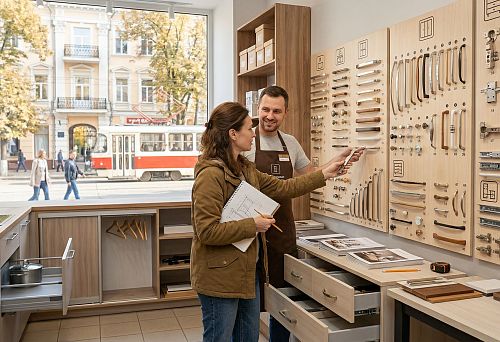
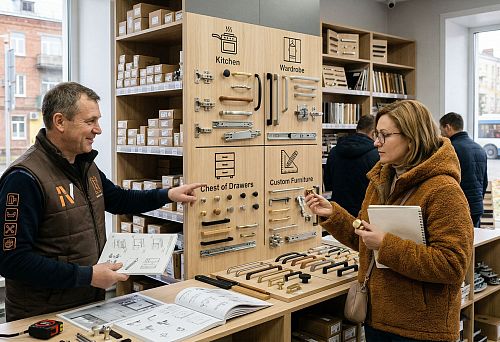
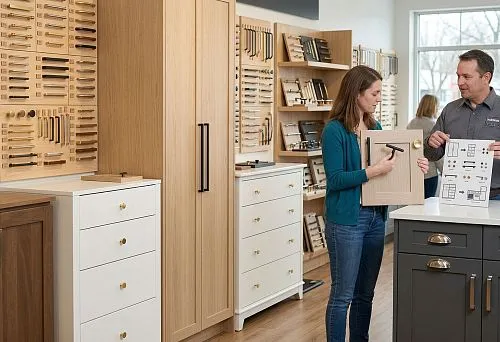
- Specialized Stores: Expertise and Assortment
- Online Stores: Convenience and Wide Selection
- Manufacturer's Stores: Guarantee of Authenticity
- Construction Hypermarkets: Accessibility and Comprehensive Solutions
- Innovations and Trends: The Future of Door Hardware
- Smart Technologies: Door Hardware in the Age of IoT

Doors are more than just openings in walls. They are the first thing guests see as they step into your home. They are the boundary between private and public space. They are an element we use daily, often without even realizing how crucial a role it plays in our lives. And it is precisely the hardware that transforms an ordinary door structure into a functional work of art, capable of serving for decades while retaining its original appearance and flawless performance.
In this article, we will delve into the wonderful world of door hardware, reveal the secrets of choosing ideal components, and tell you, where to buy door hardware, which will become a true gem of your interior.


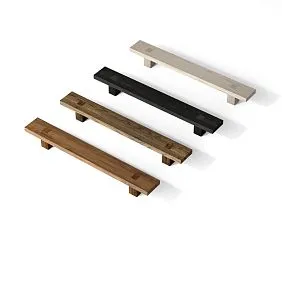


Anatomy of Door Hardware: From Essential to Elegant
Door hardware is not just a set of metal parts. It is a complex system of components, each performing its unique function to ensure the reliability, security, and aesthetic appeal of the door structure.




Hinges: invisible guardians of reliability
Hinges are the foundation of any door's functionality. They ensure smooth opening and closing, support the weight of the door leaf, and distribute the load. The modern market offers an impressive variety of hinges, each with its own features and advantages.
Surface-mounted hinges are a classic option used for several centuries. Their main advantage is visible decorative appeal, which can become a design accent. Modern surface-mounted hinges are made from high-quality alloys with various finishes: from classic brass to antiqued bronze and chrome-plated steel. They can withstand a load of up to 80 kg per pair, making them an ideal choice for heavy wooden doors in classic style.
Hidden hinges are an innovative solution that allows the mechanism to be completely concealed within the door and frame. These hinges provide clean design lines and are especially popular in modern minimalist interiors. Technologically advanced models feature three-dimensional adjustment, allowing the door leaf to be perfectly aligned even with minor frame deformations. The load capacity of hidden hinges can reach 60 kg per pair, and the opening angle can be up to 180 degrees.
Butterfly hinges - a compromise between surface-mounted and concealed hinges. They are partially visible when the door is closed, but have a more compact and modern design compared to surface-mounted hinges. Such hinges are often used for mid-range price-point interior doors and can withstand a load of up to 40 kg per pair.
Spring hinges - a specialized solution for doors that must close automatically. The built-in spring mechanism ensures the door returns to its original position after being opened. Such hinges are especially in demand in public spaces, but can also be used in residential interiors for bathroom or kitchen doors.
When selecting hinges, several key parameters must be considered:
- Door leaf weight - determines the required load capacity
- Frequency of use - affects the required mechanism durability
- Opening direction - right or left
- Door and frame material - determines the mounting method
- Interior design style - affects the choice of design
Our factory also produces:


Locks and latches: safety and functionality
Locks are not just a means of protection, but also an important functional element that determines the ease of use of the door. Modern locks are high-tech devices combining reliability, ergonomics, and aesthetic appeal.
Inset locks - the most common type, installed within the door leaf. They are virtually invisible and do not disrupt the door's design. Modern inset locks may have various security mechanisms:
- Cylinder locks - with a replaceable cylinder, allowing easy replacement of the key system without replacing the entire lock
- Disc locks - with a high level of security and resistance to break-in
- Electronic locks - controlled via card, code, or smartphone
Magnetic latches - an innovative solution that ensures silent door closure. Instead of a traditional mechanical latch, a magnetic element is used, which attracts to the corresponding part in the frame. Such latches have no protruding parts, making them ideal for doors with minimalist design.
Locks-invisible - a specialized solution for sliding doors. They are fully integrated into the door's end and activate only when the door leaf is closed. Such locks can be either mechanical or electronic, with the option of smartphone control.
Multi-point locks - a locking system that secures the door at several points around the perimeter. Such locks provide maximum protection against break-ins and are especially recommended for entrance doors. Modern multi-point locks may have up to 7 locking points and can be operated with one key or an electronic system.
When selecting a lock, consider:
- Door purpose - entrance, interior, or technical
- Required security level - from basic to maximum
- Frequency of use - affects the required mechanism durability
- Compatibility with other systems - for example, with a "smart home" system
- Ergonomics of use - ease of opening and closing
Get Consultation
Handles: ergonomics and aesthetics in every touch
Door handles are hardware elements with which we interact most frequently. They should not only be beautiful but also comfortable to use, durable, and match the overall interior style.
Push handles - a classic option used for most hinged doors. They can have various shapes and designs:
- Lever handles - traditional form with a horizontal lever
- Round handles - minimalist design in the form of a sphere or cylinder
- Decorative handles - artistic models with decorative finishes
- Ergonomic handles - anatomical shape for maximum comfort
Hooks and buttons - an alternative option for doors that do not require a latch mechanism. They can be used independently or in combination with a lock. Hooks are especially popular for sliding doors and loft-style doors.
Built-in handles - a minimalist solution that fully integrates into the door panel. They create clean design lines and are especially popular in modern interiors. Built-in handles can have various shapes: from simple geometric to complex curved forms.
Automatic systems - an innovative solution that allows opening doors without physical contact. These systems can be activated by motion, voice command, or via smartphone. They are especially relevant in environments with heightened hygiene requirements and for people with disabilities.
When selecting handles, consider:
- Ergonomics - ease of grip and use
- Material and finish - affect durability and appearance
- Compatibility with lock - center-to-center distance and mounting method
- Stylistic harmony - coordination with the overall door and interior design
- Special requirements - for example, antibacterial coating for medical facilities
Door closers: the culture of quiet closing
Door closers are mechanisms that ensure smooth and controlled door closure. They not only enhance user comfort but also extend the lifespan of the door structure, preventing impacts and deformations.
Surface-mounted closers - a classic option installed on the top of the door and frame. They are visible when the door is open but can be matched to the hardware color for harmonious integration. Modern surface-mounted closers feature adjustable closing speed and final impact, allowing customization to specific operating conditions.
Hidden closers - an innovative solution that fully integrates into the door panel and frame. They remain invisible regardless of the door's position, making them ideal for designer interiors. Hidden closers can operate both for closing and opening the door, providing full control over the door panel's movement.
Floor-mounted closers - a specialized solution for heavy and glass doors. They are installed in the floor and connected to the door via a special hinge. Such closers can withstand loads up to 300 kg and provide an opening angle up to 180 degrees.
Integrated-in-hinges closers - a compact solution combining hinge and closer functions. These systems are especially convenient for lightweight interior doors and furniture facades. They are nearly invisible and require no additional space for installation.
When selecting a closer, consider:
- Door weight and width - determine the required mechanism power
- Usage intensity - affects required resource
- Operating conditions - temperature regime, humidity, presence of drafts
- Aesthetic requirements - visibility or concealment of the mechanism
- Additional features - latching in open position, coordination of double doors
Materials and finishes: longevity in every detail
The quality of door hardware is determined not only by its construction and functionality, but also by the materials from which it is made. Modern technologies allow creating products that retain their original appearance and flawless performance for decades.
Metals and alloys: the foundation of reliability
Metals remain the primary material for manufacturing door hardware due to their strength, durability, and ability to create complex shapes.
Brass - a classic material used for hardware manufacturing for several centuries. It has high corrosion resistance, excellent machinability and polishing properties. Brass items can have various finishes: from natural golden color to artificially aged patina. Brass density is approximately 8.5 g/cm³, giving items a pleasant weight and solidity. Hardness on Brinell scale - 70-100 HB, ensuring good wear resistance during daily use.
Stainless steel - a modern material distinguished by exceptional strength and corrosion resistance. Stainless steel hardware is especially in demand in humid environments and for entrance doors. Stainless steel density is approximately 7.9 g/cm³, and hardness on Brinell scale can reach 200 HB, making it one of the most wear-resistant materials for hardware.
Zinc alloys - an economical alternative to brass and steel. They have good casting properties, allowing the creation of complex shapes with high detail. Modern zinc alloys (e.g., ZAMAK) have a density of about 6.7 g/cm³ and hardness of 80-110 HB. With proper coating, they can serve for decades without losing appearance or functionality.
Aluminum - a lightweight and corrosion-resistant material especially in demand for sliding system hardware. Its density is only 2.7 g/cm³, significantly reducing load on mechanisms. Hardness of aluminum alloys can vary from 20 to 150 HB depending on composition and heat treatment. Modern anodizing technologies allow creating aluminum hardware in various colors with high resistance to abrasion.
Bronze - a premium material used for exclusive hardware. It has high corrosion resistance, excellent casting properties, and a noble appearance. Bronze density is approximately 8.8 g/cm³, and hardness can reach 100-120 HB. Bronze hardware is especially in demand for restoring historical buildings and creating interiors in classical style.
Finishes: protection and decoration
Finishes play a key role in ensuring the longevity and aesthetic appeal of door hardware. Modern technologies allow creating finishes that retain their original appearance throughout the product's entire service life.
Chromating is the process of applying a thin layer of chromium to the surface of an item. Chromium-plated hardware has a characteristic silver sheen and high resistance to corrosion. The thickness of the chromium coating is usually 0.3-0.5 micrometers, but due to a nickel underlayer (10-20 micrometers), it provides high wear resistance. The hardness of the chromium coating can reach 1000 HV, making it one of the most abrasion-resistant coatings.
PVD coating (Physical Vapor Deposition) is an innovative technology that allows creating ultra-thin (1-5 micrometers) metallic coatings with exceptional adhesion and wear resistance. PVD coatings can mimic various metals—from gold to titanium—while maintaining their original appearance for decades. The hardness of such coatings can reach 2000-3000 HV, which is several times higher than that of chromating.
Powder coating is an environmentally friendly technology that allows creating strong and durable coatings in various colors. The thickness of the powder coating is 60-120 micrometers, providing good protection against mechanical damage. Modern powder paints have high UV resistance and do not fade in sunlight.
Patination is a process of artificially aging metal to create an antique effect. Patina can have various shades—from light brown to black-green—depending on the chemical compositions used. The thickness of patina is usually 5-15 micrometers, but it integrates with the metal surface, forming a strong bond. Patinated hardware is especially popular for retro, vintage, and classic interior styles.
Anodizing is an electrochemical process used for aluminum hardware. It creates a strong oxide layer (10-25 micrometers) that protects the metal from corrosion and can be colored in various hues. The hardness of the anodized layer can reach 400-500 HV, providing high resistance to abrasion.
Non-metallic materials: new possibilities
Modern technologies allow using not only metals but also other materials for manufacturing door hardware, expanding design possibilities and functionality of the products.
High-strength polymers are modern plastics that closely resemble metals in their properties. They have low density (1.1-1.5 g/cm³), reducing load on door structures, while maintaining high strength and wear resistance. Some polymers have hardness up to 120 HB and can withstand loads up to 100 kg. They are corrosion-resistant, require no additional protection, and can have various colors and textures.
Tempered glass is a premium material used for manufacturing designer handles and decorative elements. It has high strength (5-7 times higher than regular glass) and resistance to scratches. The thickness of glass elements is usually 8-12 mm, providing necessary strength while preserving an aesthetic appearance.
Natural leather is an exclusive material used for covering handles and decorative elements. It provides tactile comfort and a unique appearance to hardware. The thickness of leather coating is usually 1.2-1.8 mm, and for increased wear resistance, special impregnations and coatings are applied.
Ceramics is an innovative material beginning to be used for manufacturing designer hardware. It has high hardness (up to 700 HV), is corrosion-resistant, and can have various colors and textures. Ceramic elements usually have a thickness of 5-10 mm and are mounted on a metal base to ensure required strength.
Composite materials are modern developments that combine advantages of various materials. For example, carbon inserts in metal handles reduce weight while maintaining strength, and combinations of metal and wood create a unique aesthetic effect.
Stylistic solutions: hardware as a design element
Door hardware is not just a functional element, but also an important part of interior design. Properly selected hardware emphasizes the style of the room and creates a harmonious look.
Classic styles: timeless elegance
Classic interior styles are characterized by symmetry, proportionality, and use of traditional materials. Hardware in such interiors plays an important decorative role, emphasizing the status and sophistication of the space.
Neoclassicism requires hardware with clear geometric forms, symmetrical patterns, and noble materials. The ideal choice is brass or bronze items with polished or slightly patinated surfaces. Handles often have lever shapes with decorative rosettes adorned with floral or geometric patterns. Hinges are chosen as card-style with decorative ends. The color palette usually includes golden, bronze, and silver tones.
Empire is a more pompous style requiring luxurious hardware with imperial symbolism and abundant decoration. Characterized by massive handles with depictions of lions, eagles, laurel wreaths. Materials—gilded bronze, high-quality brass. Hinges and lock cylinders also become decorative elements and are often adorned with engraving or relief images.
Baroque and Rococo require hardware with lavish decoration, curved forms, and abundant ornamentation. Handles may have the shape of shells, flowers, or fantastical creatures. Materials—bronze with gilding, silver, mother-of-pearl inlays. The color palette includes gold, silver, ivory. Hinges are often decorated and become a noticeable design element of the door.
Neoclassicism is a more restrained version of classic style, implying the use of hardware with clear lines and moderate decoration. Characterized by lever handles with geometric rosettes, hinges with simple ends. Materials—brass, bronze, nickel. The color palette includes golden, silver, bronze tones with matte or polished surfaces.
Modern styles: functionality and minimalism
Modern interior styles are characterized by clean lines, functionality, and use of innovative materials. Hardware in such interiors is often minimalist and emphasizes the technological aspect of the space.
Minimalism requires hardware with extremely simple forms, without decoration or unnecessary elements. The ideal choice—hidden hinges, magnetic catches, recessed handles, or minimalist brackets. Materials—stainless steel, aluminum, tempered glass. The color palette usually includes silver, black, white tones with matte surfaces to prevent fingerprints.
High-tech is a technological style requiring hardware with an industrial character and innovative functions. Characterized by geometric-shaped handles, often with electronic components, hidden hinges with automatic closers, automatic opening systems. Materials—stainless steel, aluminum, carbon, tempered glass. The color palette includes cool metallic tones, often with contrasting accents.
Scandinavian style requires hardware with simple organic forms and natural materials. Handles may be metallic or wooden, with minimalist design. Hinges are often hidden to preserve clean lines. Materials—stainless steel, aluminum, natural wood. The color palette includes white, gray, black, natural wood tones.
Loft is an industrial style requiring hardware with a rugged character and visible mechanical elements. Characterized by massive lever handles, visible hinges with industrial design, decorative overlays mimicking rivets or screws. Materials—black metal, aged copper, rough brass. The color palette includes black, graphite, copper, aged metallic tones.
Ethnic and thematic styles: character and individuality
Ethnic and thematic styles allow creating interiors with clearly expressed character and individuality. Hardware in such interiors often becomes a key element emphasizing the chosen theme.
Provence requires hardware with a romantic character and an aged effect. The ideal choice—handles with floral ornamentation, ceramic inserts, hinges with decorative elements. Materials—brass or iron with patina, ceramics, porcelain. The color palette includes white, cream, olive, lavender, aged gold and silver.
Country—rural style, requiring hardware with a rustic character and simple forms. Characterized by wrought iron lever handles, hinges with decorative elements, visible lock cylinders with overlays. Materials—wrought iron, aged copper, natural wood. The color palette includes black, brown, copper, aged metallic tones.
Oriental style requires hardware with an exotic character and abundant ornamentation. The ideal choice—handles with arabesques, floral or geometric ornamentation, decorative overlays with oriental motifs. Materials—brass, bronze, mother-of-pearl or semi-precious stone inlays. The color palette includes gold, copper, bronze, often with blackening to emphasize ornamentation.
Marine style implies the use of marine-themed hardware and resistance to humid environments. Characteristic handles are shaped like ropes, anchors, steering wheels, and loops with marine motifs. Materials include high-corrosion-resistant brass, stainless steel, and chrome-plated alloys. Color palette includes brass, chrome, and antiqued copper.
Technical aspects of selection: functionality is paramount
Although aesthetic aspects are important, door hardware must primarily ensure reliable and comfortable door operation. Proper technical selection guarantees the longevity and safety of the entire door assembly.
Component compatibility: foundation of a reliable system
Door hardware is a system of interrelated elements that must ideally match each other to ensure flawless operation.
Compatibility of hinges with door type and weight is one of the key aspects. For a standard interior door weighing 30-40 kg, two hinges with a load capacity of 20-25 kg each are usually sufficient. For heavy doors weighing 60-80 kg, three hinges with a load capacity of 30-40 kg each are recommended. For doors with high usage intensity (more than 50 open-close cycles per day), hinges with a safety margin of 20-30% are recommended.
Compatibility of lock and handle - an important technical aspect. It is necessary to consider the center-to-center distance (standard - 72 mm for cylinder locks, 85 mm for disc locks), the shape of the spindle (8×8 mm or 9×9 mm square), and door thickness (standard - 40-45 mm). For doors of non-standard thickness, a special set of extended screws or adapters may be required.
Compatibility of door closer with door parameters - guarantee of its effective operation. Door closers are classified by power (EN1-7), which is determined by door width and weight. For a standard interior door up to 950 mm wide and up to 60 kg, a closer EN2-3 is suitable. For an entrance door up to 1100 mm wide and up to 80 kg, a closer EN3-4 is recommended. For heavy doors up to 120 kg, a closer EN5-6 is required.
Compatibility of hardware with door material - an important aspect that affects the reliability of mounting and the longevity of the structure. For wooden doors, almost any hardware with appropriate mounting elements is suitable. For glass doors, special hardware with clamping mechanisms or UV adhesive is required. For metal doors, reinforced mounting elements and special gaskets are needed to prevent electrochemical corrosion.
Standardization of key systems - a convenient solution for rooms with multiple doors. Modern cylinder locks can be integrated into master systems, where one master key opens all doors, and individual keys open only specific rooms. Such systems can include up to 1000 different combinations with access hierarchy up to 5 levels.
Installation features: correct installation - guarantee of longevity
Even the highest quality hardware will not function properly if improperly installed. Understanding installation features helps avoid problems during operation.
Accuracy of marking - the foundation of correct installation. For hinges, it is critically important to maintain vertical alignment (tolerance - no more than 0.5 mm per 100 mm height) and equal distance from the door edge (standard - 22-25 mm). For locks, precise alignment of the mechanism and strike plate is required (tolerance - no more than 1-2 mm).
Quality of mortise hole preparation - an important aspect of installing recessed hardware. For hinges, precise drilling of the cup (diameter 35 mm, depth 11-13 mm) and mounting plate (depth 1.5-2 mm) is required. For locks, precise drilling of the lock body (depth 65-85 mm depending on model) and face plate (depth 3-4 mm) is required.
Correct selection of mounting elements - guarantee of secure fixation. For wooden doors, screws 25-35 mm long with full thread are recommended. For MDF and particleboard doors, special screws with sparse thread are recommended to prevent material delamination. For metal doors, metric screws with appropriate nuts or welded studs are required.
Adjustment after installation - a necessary step in installation. Modern hinges have adjustment in three planes (±2 mm horizontally, ±3 mm vertically, ±1 mm for latch pressure), allowing perfect alignment of the door leaf. Door closers require adjustment of closing speed and final impact depending on operating conditions.
Corrosion protection during installation - an important aspect for metal hardware. It is recommended to use tools with protective coatings, avoid contact with aggressive construction materials, and after installation, remove construction dust and dirt with a soft cloth.
Operational characteristics: durability in action
Quality door hardware should maintain its functional and aesthetic properties throughout the door's service life, which is typically 15-20 years.
Open-close cycles - key indicator of durability. Quality hinges should withstand at least 200,000 cycles without loss of functionality (equivalent to 25-30 years of use in a residential setting). Premium models undergo testing for 500,000 cycles or more. Locks should withstand at least 100,000 open-close cycles and 200,000 key-turn cycles.
Corrosion resistance is an important aspect for hardware, especially in rooms with high humidity or aggressive environments. Quality hardware undergoes salt spray testing (96-240 hours depending on protection class) and retains its properties at relative humidity up to 95%.
Operating temperature range - a critical parameter for entrance doors and doors separating rooms with different temperature regimes. Standard hardware is designed for operation from -15°C to +50°C. Specialized models for extreme conditions can operate from -40°C to +80°C.
UV resistance - an important parameter for hardware installed on doors exposed to direct sunlight. Quality coatings do not fade or change color under prolonged UV exposure (testing is conducted for 1000-2000 hours, equivalent to 5-10 years of natural exposure).
Acoustic characteristics - an additional parameter becoming increasingly important in modern interiors. Quality hardware with closers and seals ensures silent door closure and contributes to room sound insulation (noise reduction of 2-5 dB compared to a door without specialized hardware).
where to buy door hardware: choosing a reliable supplier
Choosing where to purchase hardware is no less important than choosing the products themselves. The reliability of the supplier affects not only product quality but also service level, warranty support, and technical support.
Specialized stores: expertise and assortment
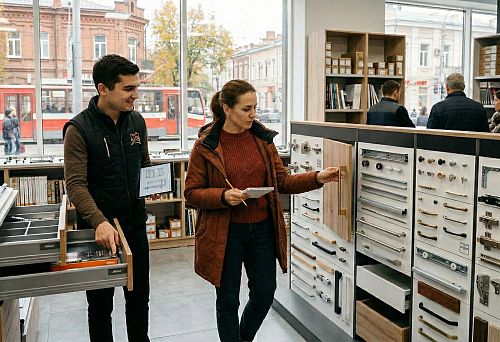
Specialized door hardware stores offer the widest range and professional consultation, which is especially important when selecting technically complex products.
Advantages of specialized stores:
- Wide product range from various manufacturers and price categories
- Professional consultants knowledgeable about technical nuances and installation specifics
- Opportunity to see and test the hardware before purchase
- Presence of demonstration stands with installed samples
- Additional services: component selection, key manufacturing, system setup
Criteria for selecting a specialized store:
- Presence of official certificates from manufacturers (authorized dealer, official representative)
- Experience in the market (at least 3-5 years to build reputation)
- Presence of an exhibition hall with demonstration samples
- Technical competence of staff (ability to provide detailed consultation)
- Warranty Obligations and After-Sales Service
Online stores: convenience and wide selection
In the era of digital technology, online stores are becoming an increasingly popular channel for purchasing door hardware, especially for standard items and repeat purchases.
Advantages of online stores:
- Ability to compare prices and features of different models
- Access to real customer reviews
- Convenience of ordering anytime of day
- Delivery directly to home or site
- Often lower prices due to absence of costs for maintaining retail spaces
Criteria for choosing an online store:
- Completeness of product information (technical specifications, dimensions, materials, photos)
- Presence of installation and operation instructions
- Transparent return and exchange policy
- Various payment and delivery options
- Prompt technical support (ability to receive consultation by phone or online)
Brand stores: guarantee of authenticity
Brand stores and showrooms offer the most complete range of products for a specific brand and guarantee the authenticity of items.
Advantages of brand stores:
- Complete range of brand products, including new and exclusive models
- Guarantee of authenticity and factory quality
- Professional consultants trained by the manufacturer
- Ability to order non-standard items and components
- Direct contact with the manufacturer to resolve technical issues
Criteria for choosing a brand store:
- Official status (confirmed by certificates and documents)
- Presence of demonstration stands with full range
- Technical competence of staff (knowledge of all product nuances)
- Ability to organize delivery and installation
- Full warranty and post-warranty service
Construction hypermarkets: accessibility and comprehensive solutions
Construction hypermarkets offer a wide range of basic hardware and the opportunity to purchase all necessary materials in one place.
Advantages of construction hypermarkets:
- Ability to purchase hardware together with doors and other construction materials
- Accessibility (wide network of stores in most cities)
- Regular promotions and discounts
- Convenient operating hours (often 24/7)
- Ability to return goods to any store in the network
Construction hypermarket limitations:
- Limited assortment (usually only basic models)
- Consultants' competence is not always sufficient
- No opportunity to test hardware under real conditions
- Limited selection of premium and specialized solutions
- Assortment may not always be current (outdated models may be offered)
Innovations and trends: the future of door hardware
The world of door hardware is constantly evolving, offering increasingly sophisticated solutions that combine innovative technologies, eco-friendliness, and unique design.
Smart Technologies: Door Hardware in the Age of IoT
Integrating door hardware into the "smart home" ecosystem opens new possibilities for enhancing security, comfort, and energy efficiency.
Biometric locks - an innovative solution that allows doors to be opened via fingerprint, eye retina scanning, or facial recognition. Modern systems offer identification accuracy up to 99.9% and recognition speed under 0.5 seconds. They can store up to 100 fingerprints and integrate with access control systems.
Smartphone-controlled locks - a convenient solution that allows remote access control. They operate via Bluetooth (range up to 10 m) or Wi-Fi (unlimited range with internet) and enable creation of temporary access codes for guests or service staff. Some models integrate with voice assistants (Amazon Alexa, Google Assistant) and can be part of "smart home" scenarios.
Automatic door closers with presence sensors - a system that opens the door when a person approaches and smoothly closes it after passage. Particularly convenient for people with disabilities and in high-traffic areas. Modern models feature adjustable detection zones (0.5 to 2.5 m) and can distinguish movement direction to avoid false triggers.
Integrated access control systems - a comprehensive solution combining lock, intercom, video surveillance, and smartphone control functions. They not only control access but also maintain visitor logs, send notifications about unauthorized entry attempts, and integrate with security systems.
Energy-efficient solutions - hardware that promotes energy savings. For example, smart closers ensuring tight door-to-frame sealing, or systems that integrate with climate control and alert users about doors left open for extended periods. Such solutions can reduce heating and air conditioning costs by 10-15%.