












































































Article Contents:
- Majestic Beauty of Oak Structures
- Unique characteristics of oak wood
- Aesthetic Value of Carved Elements
- Constructive Diversity: From Classic to Avant-Garde
- Helical Stairs: Elegance in Motion
- Straight Stairs: Classical Perfection
- Console Stairs: Modern Architecture
- Artistic Mastery: Carving as Art
- Classic Ornaments and Patterns
- Balusters from Natural Wood: Architectural Poetry
- Novorossiysk Columns: Monumental Beauty
- Technological Aspects of Manufacturing
- Preparation and Processing of Wood
- Modern processing methods
- Elite Stairs: Quality Control at Every Stage
- Individual and authorial solutions
- Classic Luxury: Palace Elegance
- Modern Eclecticism: Bold Solutions
- Scandinavian minimalism: natural harmony
- Installation and Setup: Professional Approach
- Preparation Work and Planning
- Solid Wood Stairs: Assembly Stages
- Final Finishing and Protective Coatings
- Operation and maintenance: secrets of longevity
- Regular Maintenance and Cleaning
- Protection from Mechanical Damage
- Restoration and Renewal of Coatings
- Economic Aspects and Investment Appeal
- Pricing factors
- Long-Term Return on Investment
- Ecological Advantages and Sustainable Development
- Renewability of resources
- Recycling and disposal
- Innovations and technologies of the future
- Integration with Smart Systems
- New Materials and Processing Technologies
- Conclusion: STAVROS — Craftsmanship Proven by Time

In the modern world of architectural art, an oak staircase embodies the pinnacle of elegance and durability. By choosing to order an oak staircaseyou are selecting not just a functional interior element, but a true work of art capable of transforming space and becoming the hallmark of your home for decades.
Oak is a material that nature has perfected over centuries. Its density reaches 750 kg/m³, providing incredible strength and stability to structures. Each fiber is infused with tannins — natural preservatives that protect wood from pests and extend the lifespan of products to 100–150 years.


The majestic beauty of oak structures




Unique characteristics of oak wood
Oak possesses exceptional properties, making it an ideal material for stair constructions. The moisture absorption coefficient is only 12%, ensuring geometric stability of steps even under high humidity conditions.
The texture of oak wood captivates with its expressiveness. Clearly defined annual rings create a unique pattern that cannot be artificially replicated. Ranging from golden-honey to rich brown tones, oak’s color palette offers limitless possibilities for design creativity.
Oak’s compressive strength reaches 58 MPa, which is 1.5 times higher than that of pine. This allows for the creation of slender, elegant elements without compromising structural reliability.
Our factory also produces:



Aesthetic value of carved elements
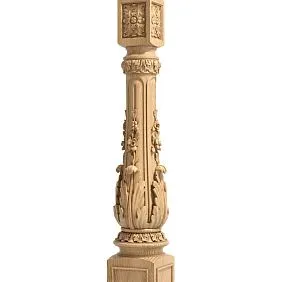
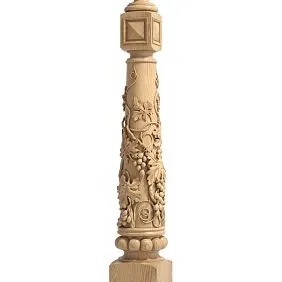
Carved wooden staircases They are a symphony of craftsmanship, where each element is created with special care. Carved balusters transform an ordinary staircase into an architectural work of art.
Hand-carving oak is an art requiring years of experience and boundless patience. A master carver can bring the most complex ornaments to life in wood: from classical botanical motifs to modern geometric compositions.
Patina and artificial aging give carved elements a noble antique appearance. Special techniques allow creating an effect of centuries-old history, as if the staircase adorned the palaces of famous aristocrats.
Get Consultation
Constructive diversity: from classic to avant-garde
Helical staircases: elegance in motion
Helical oak staircases embody the triumph of engineering thought and artistic taste. The smooth spiral shape saves space and creates a sensation of lightness while ascending.
The central column with a diameter of 200-300 mm ensures flawless structural stability. Steps made from solid oak blocks 40-50 mm thick can withstand a load of up to 400 kg per square meter.
Custom wooden staircases allow realizing the most daring architectural concepts. The radius of a helical staircase can vary from 900 mm for compact spaces to 2500 mm for grand halls.
Run staircases: classical perfection
Straight run staircases embody classical elegance and functional reliability. A run width of 1000-1200 mm ensures comfortable movement for two people simultaneously.
A riser height of 160-180 mm and a tread depth of 280-300 mm create an optimal incline angle of 30-35 degrees. These proportions comply with ergonomic standards and ensure safe usage.
Landing platforms allow changing the staircase direction by 90 or 180 degrees, adapting the structure to room layout. Platform dimensions should be at least equal to the run width to ensure comfortable turning.
Console staircases: modern architecture
Console oak staircases represent a triumph of modern engineering. Steps are attached to a load-bearing wall without visible supports, creating an effect of floating in the air.
The thickness of oak steps increases to 60-80 mm to ensure the necessary rigidity of the console structure. Hidden metal anchors 200-250 mm deep securely fix the steps to the wall.
The minimalist design of console staircases perfectly complements modern architecture. The absence of bulky support elements visually expands the space and creates a sense of lightness.
Artistic craftsmanship: carving as art
Classical ornaments and patterns
Botanical ornaments are the hallmark of classical oak staircases. Grapevines, oak leaves, roses, and lilies are rendered in wood with remarkable detail.
Geometric patterns highlight the structural beauty of oak texture. Diamonds, ovals, spirals, and meanders create a rhythmic composition harmoniously blending with interior architecture.
Coat of arms compositions turn the staircase into a family heirloom. Family crests, monograms, commemorative dates — all of this can be rendered in carved decoration with jewel-like precision.
Balusters made of natural woodArchitectural Poetry
Balusters are vertical support elements that ensure safety and simultaneously serve as the main decorative accent of the staircase. Their shape can vary from simple cylinders to complex sculptural compositions.
Turned balusters are created on a lathe with subsequent hand finishing. A classic profile includes a base, shaft, and capital, each of which can be adorned with individual ornamentation.
Carved balusters are miniature sculptures, each unique. A master carver invests not only technical skills but also artistic vision into the work, creating true works of art.
Novorossiysk columns: monumental beauty
Support columns are the foundation of any staircase structure, which must combine functionality with an impressive appearance. Column diameter varies from 100 mm for small staircases to 300 mm for grand structures.
Carved capitals of columns can reproduce classical orders: Doric, Ionic, Corinthian. Each order has its own proportions and decorative elements, creating a specific stylistic atmosphere.
Original compositions allow for an absolutely unique design. Floral motifs, animalistic scenes, abstract forms — possibilities are limited only by the customer's imagination and the carver's skill.
Technological aspects of manufacturing
Preparation and processing of wood
A quality oak staircase begins with proper selection of raw material. The wood should be prepared during winter, when sap movement is minimal, ensuring better material stability.
Kiln drying is a critically important process determining the longevity of the structure. The wood moisture content should be reduced to 8-12%, which takes 30 to 60 days depending on the thickness of the blanks.
Wood stabilization prevents deformation and cracking during use. Special compounds penetrate into the wood structure up to 50 mm deep, creating internal protection.
Modern processing methods
CNC machines provide micron-level accuracy when manufacturing complex elements. Programmable trajectories allow creating identical parts with an error of no more than 0.1 mm.
5-axis milling centers open new possibilities for creating three-dimensional carved compositions. Computer modeling allows calculating all technological operations in advance.
Laser engraving adds delicate details inaccessible by traditional processing methods. Engraving depth can vary from 0.1 to 5 mm, creating a relief effect.
Elite StairsQuality control at every stage
Multi-stage quality control ensures finished products meet the highest standards. Incoming raw material inspection includes checking moisture content, density, and absence of defects.
Intermediate control at each processing stage allows identifying and eliminating the slightest deviations from the technology. Special measuring tools control geometric parameters with micron accuracy.
Final inspection of finished products includes checking the strength of joints, finish quality, and compliance with design documentation. Each staircase undergoes test loads exceeding operational loads by 2.5 times.
Stylistic solutions for various interiors
Classic luxury: palace elegance
Classic oak staircases embody centuries-old traditions of European furniture art. Massive balusters with floral ornamentation, wide handrails, carved newel posts — every element is meticulously detailed down to the smallest details.
Dark tones of staining highlight the nobility of oak and give the staircase a monumental quality. Gold patination of individual elements creates an antique and luxurious effect.
Velvet treads on steps not only ensure comfort while walking but also add aristocratic elegance to the interior. The tread color is chosen to match the overall color scheme of the room.
Modern eclecticism: bold solutions
Modern oak staircases successfully combine traditional materials with avant-garde forms. Simple geometric lines emphasize the natural beauty of wood without excessive ornamentation.
Combining oak with metal, glass, or stone creates unique compositions. Glass balusters on oak handrails, metal inserts in carved elements — all this opens new design possibilities.
Hidden LED lighting is integrated into the staircase structure, creating an eye-catching interplay of light and shadow. Lighting can be both functional and purely decorative.
Scandinavian minimalism: natural harmony
Scandinavian style implies maximum preservation of the natural beauty of oak wood. Light tones, simple forms, absence of excessive decoration — all this highlights the natural aesthetics of the material.
Oil finishes preserve the tactile sensation of wood and allow it to 'breathe'. Matte surface eliminates glare and creates a comfortable atmosphere.
Functionality is paramount — every element of the staircase must bear practical load. Built-in storage systems in the space under the stairs maximize usable area.
Installation and mounting: professional approach
Preparation and planning
Quality installation of an oak staircase begins with detailed room measurements. Laser scanning allows creating an accurate 3D model of the space, taking into account all architectural features.
Engineering calculations determine optimal structural parameters: number of steps, incline angle, load-bearing capacity. All calculations are performed with multiple safety factors.
Foundation preparation includes leveling the floor, reinforcing floors if necessary, and laying out communications for built-in lighting. The quality of the foundation critically affects the longevity of the entire structure.
Solid wood staircasesAssembly stages
Assembly begins with installing the load-bearing frame — stringers or treads. These elements must be secured with maximum precision, as they determine the geometry of the entire staircase.
Staircase installation is performed from bottom to top with control of each element's levelness. Joints are made using wooden dowels with metal fasteners for reinforcement.
Installation of railings completes the assembly process. Balusters are attached to treads and handrails using concealed fasteners, ensuring an aesthetic appearance and structural reliability.
Final finishing and protective coatings
All surfaces are sanded in multiple stages, gradually reducing abrasive grit down to P320. Final sanding is done by hand to achieve perfect smoothness.
Protective coatings are applied in factory conditions, adhering to all technical requirements. Polyurethane varnishes create a durable film that preserves the beauty of oak for many years.
Coating quality control includes checking layer thickness, adhesion, and absence of defects. Each staircase undergoes testing under conditions simulating long-term use.
Operation and maintenance: secrets of longevity
Regular maintenance and cleaning
Daily care of an oak staircase involves removing dust and dirt with soft cloth. Cleaning agents used are specially formulated to not damage the protective coating.
Periodic wet cleaning is performed with slightly damp cloth without using aggressive cleaning agents. Excessive moisture may cause wood deformation.
Polishing with special compounds restores the coating's gloss and provides additional wear resistance. Polishing frequency depends on the intensity of staircase use.
Protection from mechanical damage
Felt pads on furniture legs prevent scratches during rearrangement. Areas of high traffic — first and last steps — require special attention.
Carpet runners not only protect steps from wear but also enhance staircase comfort. Runners must be removable for easy cleaning.
Controlling indoor air humidity prevents wood deformation. Optimal levels are 45–65% at a temperature of 18–24°C.
Restoration and updating of coatings
Minor scratches and scuffs are removed by local sanding followed by application of repair compound. Repair compound color is matched to the base coating.
Major restoration includes complete replacement of protective coating after preliminary sanding of all surfaces. This procedure restores the staircase to its original appearance.
Modernization may include adding new decorative elements, replacing individual parts, or integrating modern technologies. Beautiful wooden staircases can evolve alongside changes in interior design.
Economic Aspects and Investment Attractiveness
Pricing Factors
The cost of an oak staircase is determined by multiple factors: construction complexity, number of carved elements, wood quality, and finish type. Custom design increases cost by 30–50%.
The thickness of elements significantly affects final cost. Thick treads, wide handrails, and large balusters require more material but provide visual grandeur.
The complexity of carving work exponentially increases labor costs. Simple geometric patterns require 2–3 times less time compared to detailed floral compositions.
Long-term return on investment
An oak staircase significantly increases property value — by 25–40% for luxury housing. This makes it not just a functional element, but a profitable investment.
The service life of a quality oak staircase is 100–150 years without major repairs. Annual maintenance costs are minimal compared to alternative materials.
The possibility of restoration and modernization allows adapting the staircase to interior changes without full replacement. This ensures investment relevance for decades ahead.
Ecological advantages and sustainable development
Renewability of resources
Oak is a renewable natural resource provided responsible forestry practices. FSC certification guarantees wood origin from sustainably managed forests.
The carbon footprint of an oak staircase is significantly lower compared to metal or concrete structures. Wood continues to sequester carbon even in finished products.
Regional suppliers of raw materials minimize transportation costs and support local economies. This is especially relevant for Russia with its vast forest resources.
Recycling and disposal
Oak staircases are fully recyclable at the end of their service life. The wood can be used to manufacture new products or converted into biofuel.
Production waste does not accumulate in landfills but is processed into useful products: sawdust is used to make fuel briquettes, wood shavings are used in agriculture.
The durability of oak structures reduces the frequency of replacement, thereby decreasing the overall environmental impact. One oak staircase can replace several structures made from less durable materials.
Innovations and technologies of the future
Integration with smart systems
Modern oak staircases can be integrated with "smart home" systems. Motion sensors automatically turn on lighting, creating a safe path in the dark.
Climate control systems maintain optimal humidity for wood preservation. Hidden sensors monitor the condition of the structure and alert users to the need for maintenance.
Wireless charging for mobile devices can be integrated into handrails, providing additional functionality without compromising aesthetics.
New materials and processing technologies
Nanocoatings provide self-cleaning surfaces and antibacterial properties. This is especially relevant in environments with heightened hygiene requirements for residential spaces.
Hybrid technologies combine traditional carving with laser processing, creating previously unattainable levels of detail. Computer modeling allows for predicting the outcome in advance.
3D printing with wooden composites opens possibilities for creating complex geometric forms impossible with traditional processing.
Conclusion: STAVROS — craftsmanship proven by time
In an era of mass production and synthetic materials, an oak staircase remains a symbol of true luxury and enduring values. Choosing an oak staircase is a choice in favor of quality, beauty, and longevity — an investment in the future of your home and family.
Each staircase is a unique work of art, where modern technologies harmoniously blend with centuries-old craftsmanship traditions. From the first sketch to the final installation — the entire process is infused with a pursuit of perfection and attention to the finest details.
An oak staircase becomes not merely a means of moving between floors, but a central element of interior design, around which the entire architectural composition is formed. It creates a unique atmosphere in the home, filling it with the warmth of natural wood and the energy of nature.
Ecological and sustainable qualities make oak staircases a choice for the future. In an era of growing environmental awareness, natural materials become not a trendy fad, but a conscious necessity for creating a healthy living space.
Investments in a high-quality oak staircase are repeatedly repaid through increased property value, the longevity of the structure, and the incomparable pleasure of daily use of a true work of art.
For 23 years, STAVROS has created staircases that become the pride of homes and a source of admiration for guests. Our rich experience, modern technologies, and sincere dedication to our craft enable us to bring to life the boldest dreams of a perfect home.
STAVROS is not just a manufacturer — it is a team of masters, artists, and engineers united by a common goal: creating unparalleled wooden products. Every project for us is an opportunity to surpass ourselves and deliver the client something truly unique and beautiful. Entrusting STAVROS with creating your dream staircase means choosing a partner who shares your values of quality, beauty, and pursuit of perfection.


