Article Contents:
- Philosophy of the estate residence: more than architecture
- Genesis of estate culture: from imperial palaces to noble nests
- The soul of the estate: what makes a house truly Russian
- Architectural poetics: language of forms and symbols
- Compositional principles: harmony in symmetry
- Decorative system: from modesty to grandeur
- Color palette: colors of the Russian estate
- Planning culture: the art of space organization
- Grand entrance gallery: theater of everyday life
- Living area: privacy and comfort
- Service areas: invisible infrastructure
- Interior stylistics: creating the atmosphere of an era
- Architectural Interior Elements
- Furniture furnishings: noble simplicity
- Textile furnishings: softness and coziness
- Landscape surroundings: house in dialogue with nature
- Principles of estate park design
- Small architectural forms: poetry in stone and wood
- Utility buildings: function in beautiful shell
- Technological innovations in historical forms
- Modern materials in traditional aesthetics
- Engineering systems: comfort without compromise
- Energy Efficiency and Ecology
- Psychology of estate space: home as reflection of soul
- Scale and proportions: comfort of perception
- Color psychology: harmony and tranquility
- Symbolic aspect: home as cultural code
- Economic aspects: investment in eternal values
- Cost of implementation: what makes up the price
- Operating expenses: long-term savings
- Investment attractiveness: value growth
- Modern trends: the estate of the 21st century
- Ecological approach: green technologies in historical forms
- Technological comfort: smart systems in classical interiors
- Multifunctionality: adaptation to modern lifestyle
- Conclusion: heritage made contemporary
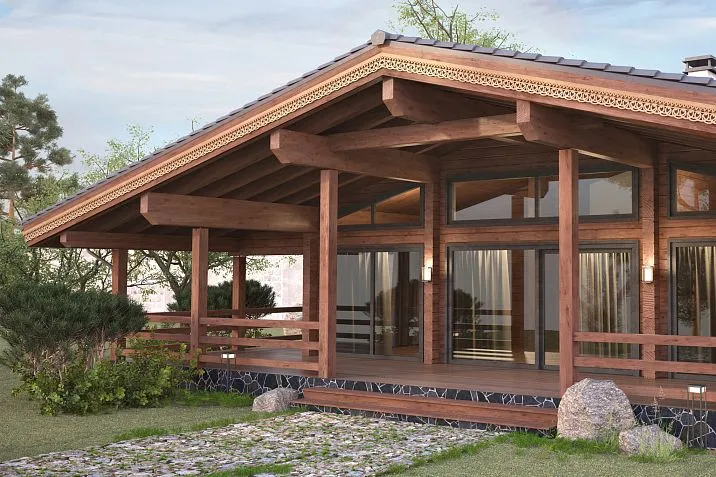
There is something inexplicably attractive in the Russian soul to the image of an old estate — that particular world where time seems to stand still in the lace of carved moldings and majestic colonnades. When a modern person dreams of a house in the style of a Russian estatethey are not merely seeking beautiful architecture, but reconnecting with lost harmony, returning to a world where beauty was a natural part of everyday life.
What compels us, residents of the 21st century, to turn to the architectural traditions of the 18th-19th centuries? Perhaps it is that the estate style embodies the ideal of home as a family nest, a place where generations weave their stories into a single family chronicle. Here, every detail is imbued with meaning, and each decorative element carries a fragment of the creators' souls.
Modern interpretation of a house in the style of a Russian estate is not blind copying of the past, but a creative reinterpretation of the best traditions of national architecture through the lens of contemporary needs and possibilities. It is a house that breathes history, yet lives in the present.


Philosophy of the estate residence: more than architecture
When we speak of a Russian estate, we are not merely referring to a stylistic direction, but to a complete philosophy of organizing living space. A house in the style of a Russian estate was always considered the center of a special world, where architecture, landscape, and lifestyle merged into a single harmonious whole.




Genesis of estate culture: from imperial palaces to noble nests
The history of Russian estates goes back centuries, when the first wooden palaces of ancient Russian princes laid the foundation for the tradition of creating country residences. The Peter the Great reforms of the 18th century gave a powerful impetus to the development of estate culture — the nobility received not only land, but also the opportunity to realize their ideas of an ideal home.
It was precisely then that the main principles of estate architecture were formed: harmonious connection with the natural surroundings, thoughtful planning of the building complex, rich decorative furnishings, and mandatory elements emphasizing the owner's status. Each estate became a unique work reflecting the personality and tastes of its owners.
The golden age of Russian estates — the 19th century — has bequeathed us examples that remain benchmarks of beauty and harmony. Abramtsevo and Polenovo, Muranovo and Ostafyev, Arkhangelskoye and Kuskovo — these names resonate like music for anyone who is not indifferent to Russian culture.
Our factory also produces:


The soul of the estate: what makes a house truly Russian
A house in the style of a Russian estate is distinguished by a special atmosphere created by the combination of many factors. It is not only architectural forms, but also a unique understanding of space, light, and the connection between the interior and exterior worlds.
The central element of an estate house was always the grand hall — a spacious room with high ceilings, large windows, and rich decoration. It was here that guests were received, balls and family celebrations were held. The modern interpretation of this space — the living room-hall, combined with the entrance area and creating an impression of grandeur from the first steps into the house.
The antifocal planning principle allowed creating impressive perspectives, when doors of all grand rooms were aligned on a single axis. This technique visually expanded the space and gave the house a special grandeur. In a modern house in the style of a Russian estate, this principle can be adapted through a system of arched openings and zoning of open space.
Get Consultation
Architectural poetry: language of forms and symbols
Creating an authentic house in the style of a Russian estate requires a deep understanding of the architectural language of the era. Each element of the facade had its own meaning and place in the overall composition, creating a visual symphony where each note resonated in harmony with the others.
Compositional principles: harmony in symmetry
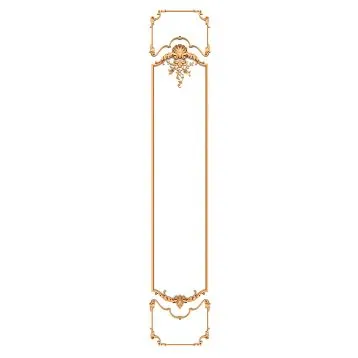
The main facade of an estate house was always based on strict symmetry. The central axis, passing through the main entrance, became the backbone of the entire composition. Symmetrical elements — windows, Carved wooden elementsdecorative details.
The rhythm of window openings played a special role. In a classical house in the style of a Russian estate, windows were arranged with mathematical precision, creating a musical rhythm of the facade. The sizes of windows adhered to strict proportional relationships — windows on the second floor were always higher than those on the first, creating a sense of upward movement.
The cornice served not only as protection for the walls from rain, but also as a key compositional element. Its profile, degree of projection, presence or absence of supporting brackets in the Russian style — all of this influenced the overall perception of the building.
Decorative System: From Modesty to Grandeur
Decorative furnishings of a house in the style of a Russian manor evolved from the relatively modest early examples to the lavish grandeur of mature classicism and Empire. Yet even in the most richly decorated houses, the principle of subordination was maintained — each decorative element had its place in the hierarchy and did not contradict the overall concept.
Porticos and colonnades — the hallmark of manor architecture. Classical orders — Doric, Ionic, Corinthian — were used not only in their canonical form but also in free interpretations adapted to local conditions and traditions.
Carved window decoration Played a special role in creating the image of the manor house. Sill caps, sash rails, window sills — all these elements not only protected the structure from weather, but also created a rich play of light and shadow on the facade.
Color Palette: Paints of the Russian Manor
The color scheme of a house in the style of a Russian manor traditionally relied on the combination of light wall tones with contrasting architectural details. Favorite colors — various shades of yellow, from delicate cream to rich ochre — created a sense of sunny warmth even on cloudy days.
White was used to highlight columns, cornices, sills, and other decorative elements. This classical scheme created a noble and solemn appearance, emphasizing the architectural merits of the building.
Less frequently, but no less effectively, pink, blue, and light green tones were used. Such color solutions gave the house a distinctive individuality and often reflected the personal preferences of the owners.
Spatial Culture: The Art of Space Organization
The internal organization of a house in the style of a Russian manor reflected the complex social structure of noble life. Clear division into formal and residential areas, male and female quarters, service and guest rooms created a complex yet logical system of spaces.
Grand Gallery: Theater of Everyday Life
The heart of the manor house was always the grand gallery — a chain of interconnected representative rooms. Starting from the vestibule, it passed through the drawing room, dining room, and hall, creating a ceremonial route for receiving guests.
Each room in the gallery had its own functional purpose and corresponding decor. The drawing room was intended for informal conversation, the dining room for formal dinners, the hall for balls and large receptions. Such specialization of rooms allowed creating different scenarios for using the house depending on circumstances.
A modern interpretation of this principle may include an open floor plan with zoning achieved through columns, arches, different floor and ceiling levels. It is important to preserve the sense of grandeur and spatial continuity.
Living Area: Privacy and Comfort
The residential part of a house in the style of a Russian manor was designed according to principles of maximum comfort and privacy. Bedrooms, offices, boudoirs were located in less formal parts of the house, often on the second floor or in side wings.
Special attention was paid to the library — a room that served not only for storing books but also as the owner’s study, a place for intellectual pursuits and contemplation. The library often became the most cozy and lived-in room in the house.
Ladies’ rooms — boudoir, bedroom, drawing room — were decorated in a more intimate, chamber-like manner. Here, lighter tones, elegant furniture, and a large amount of textiles were used.
Service Areas: Invisible Infrastructure
Comfortable functioning of a house in the style of a Russian manor was ensured by a developed system of service rooms. Kitchen, storerooms, servant quarters were arranged so that the service staff could perform their duties without intersecting with the owners and guests.
In a modern house, these principles can be adapted by creating a separate work zone with a kitchen, laundry, technical rooms, having independent access. This ensures comfort in daily life without disrupting the ceremonial atmosphere of the formal part of the house.
Interior Styling: Creating the Atmosphere of the Era
The interior furnishings of a house in the style of a Russian manor should harmoniously continue the architectural theme of the facade. This does not mean creating a museum exhibit — a modern interior can be very relevant while preserving the spirit and character of the historical style.
Architectural Elements of the Interior
The interior architecture of a manor house was distinguished by richness and variety of decorative elements. balusters for staircases Executed as miniature columns with capitals and bases, creating an elegant vertical composition.
Doors in a house in the style of a Russian manor were masterpieces of carpentry. Panelled constructions with carved inserts, bronze hardware, glass inserts created a solemn frame for transitions between rooms.
Ceilings were often adorned with coffers, rosettes, stucco. In a modern interior, these elements can be reproduced using polyurethane appliqués Russian styleFurnishings: noble simplicity
Furnishings in the estate interior were characterized by solidity and quality. Preference was given to natural materials — solid wood, natural leather, fine fabrics. Furniture forms adhered to the architectural principles of the era — strict proportions, classical details, high-quality craftsmanship.
Items emphasizing the owners' education and cultural refinement — writing desks, bookcases, musical instruments — played a special role. These elements not only fulfilled practical functions but also created the necessary atmosphere of an intellectual home.
In a modern home in the style of a Russian estate, furniture can combine historical forms with contemporary functionality. It is important to preserve the sense of solidity and durability characteristic of estate life.
In a modern house in the style of a Russian estate, furniture can combine historical forms with contemporary functionality. It is important to preserve the sense of solidity and reliability characteristic of estate life.
Textile decoration: softness and coziness
Textiles in the estate interior played an important role in creating an atmosphere of comfort and coziness. Drapes, upholstery, and carpets were selected in a unified color palette, creating a harmonious composition.
Traditionally, expensive natural fabrics — silk, velvet, brocade for formal rooms, linen and cotton — were used for living rooms. Fabric patterns followed the fashion trends of the era — stripes, floral ornaments, classical motifs.
In a modern interior, one can use either authentic historical fabrics reproduced according to old patterns or modern materials styled to resemble historical aesthetics.
Landscape surroundings: the house in dialogue with nature
A house in the style of a Russian estate is unthinkable without appropriate park surroundings. A Russian estate was always considered as a single architectural-landscape complex, where buildings and nature were in harmonious dialogue.
Principles of estate park design
Russian park design of the 18th-19th centuries evolved from regular French gardens to picturesque English parks. As a result, a unique style emerged, combining the geometric clarity of parterres in front of the house with the naturalness of landscape compositions deeper in the park.
The formal courtyard in front of the main facade of the house was usually designed in a regular style. A circular or oval area for turning carriages was framed by trimmed shrubs, flowerbeds, sometimes adorned with a fountain or sculpture.
Behind the house, a picturesque park with winding paths, scenic water bodies, and groups of trees of various species was laid out. Such a layout created diverse natural scenes, changing depending on the season and lighting conditions.
Small architectural forms: poetry in stone and wood
Estate parks were adorned with numerous small architectural forms — gazebos, pavilions, bridges, grottos. Each of these structures had its own purpose and place within the overall park composition.
Gazebos served as places for rest and contemplation of nature. They were located at the most picturesque points in the park — on elevated areas, near water bodies, deep in alleys. The architecture of gazebos was usually coordinated with the style of the main house, but was lighter and more elegant.
Bridges over streams and ravines became important compositional elements, connecting different parts of the park. Their construction could be either simple wooden or stone with decorative elements.
Utility buildings: function in beautiful form
The estate complex included not only formal but also utility buildings — stables, carriage barns, greenhouses, and servant quarters. These buildings were designed in a unified style with the main house, creating architectural unity throughout the entire complex.
Greenhouses occupied a special place — glass buildings for cultivating exotic plants. They often became true architectural gems of the estate, combining functionality with refined beauty.
In a modern interpretation of houses in the style of a Russian estate, utility buildings may include garages, workshops, guest houses, designed in a unified style with the main building.
Technological innovations in historical forms
A modern house in the style of a Russian estate must combine historical authenticity of its exterior appearance with the most advanced technological solutions. This allows creating a residence that looks like an architectural monument but functions according to the requirements of the 21st century.
Modern materials in traditional aesthetics
Using modern materials allows significantly increasing the durability and operational characteristics of a house in the style of a Russian estate, while preserving its historical authenticity.
Composite materials for facade elements enable precise reproduction of complex architectural details while maintaining high resistance to atmospheric influences. Columns, capitals, cornices made from modern composites serve for decades without losing their original appearance.
Modern insulation and vapor barrier materials allow creating effective thermal insulation of enclosing structures, ensuring a comfortable microclimate and economical operation of the house.
Engineering systems: comfort without compromise
Modern engineering systems are integrated into the house in the style of a Russian estate so as not to disrupt its historical appearance. Heating radiators are concealed behind decorative grilles designed in accordance with the overall interior style.
The "smart home" system allows for automated control of lighting, heating, and security, creating maximum comfort for residents. All control elements are selected to harmoniously blend with the historical interior.
Modern ventilation and air conditioning systems provide a healthy microclimate in all rooms of the house while remaining practically unnoticed by residents and guests.
Energy efficiency and ecology
A modern house in the style of a Russian estate must be energy-efficient and eco-friendly. Using renewable energy sources — solar panels, geothermal systems, heat pumps — significantly reduces operating costs.
Heat recovery systems, "green" roofs, rain gardens, and other ecological technologies seamlessly integrate into the concept of an estate house, traditionally closely linked to nature.
The use of natural, eco-friendly materials not only meets modern requirements for healthy living but also supports the authenticity of the historical style.
Psychology of the estate space: home as a reflection of the soul
A house in the style of a Russian estate has a special effect on a person's psyche, creating a sense of stability, continuity, and connection to cultural roots. This is not accidental — estate architecture was developed as an ideal of human habitation, taking into account deep psychological needs.
Scale and proportions: comfort of perception
The proportional system of an estate house is based on harmonious relationships that humans perceive as natural and comfortable. Room heights, window sizes, corridor widths — all these parameters are governed by a single logic, creating a sense of psychological comfort.
The axial arrangement of space creates a sense of grandeur without causing feelings of oppression. A person feels part of a majestic whole, yet remains the measure of all things.
The connection between interior space and the natural environment through large windows, terraces, and verandas creates a sense of unity with nature, which is especially important in today's urbanized world.
Color psychology: harmony and calm
The traditional color palette of a house in the style of a Russian estate promotes psychological balance and emotional comfort. Warm, natural tones create a sense of coziness and security, while contrasting accents add dynamism and prevent monotony.
The abundance of white in decorative elements creates a sense of purity and light, which is especially important in the Russian climate with long winters and short daylight hours.
The use of natural materials — wood, stone, metal — satisfies the deep human need for connection with nature, creating a sense of reliability and stability.
Symbolic aspect: home as a cultural code
A house in the style of a Russian estate carries a powerful symbolic load associated with cultural memory and national identity. For a Russian person, such a house is not merely an attractive building, but a manifestation of ideals of perfect housing, linked to literary images and historical associations.
Living in such a house, a person feels like an heir to a great cultural tradition, a guardian of values accumulated by generations of ancestors. This creates a special sense of responsibility and pride, positively affecting self-esteem and life goals.
Economic aspects: investment in eternal values
Creating a house in the style of a Russian estate requires significant investments, but these investments are repaid not only materially but also emotionally. Such a house becomes a family heirloom, passed down from generation to generation.
Cost of implementation: what makes up the price
The cost of building a house in the style of a Russian estate is determined by many factors. Architectural complexity of the project, quality of materials, skill of the craftsmen, degree of detail in decorative elements — all of this affects the final price.
The most expensive elements are carved decorative elements, columns, moldings, high-quality roofing materials, natural stone for foundation and terrace cladding. However, it is precisely these details that create the unique appearance of an estate house.
Cutting costs on decorative elements can significantly reduce the artistic value of the project, so it is important to find a balance between budget and quality of execution.
Operating expenses: long-term savings
A correctly designed and built house in the style of a Russian estate is economical to operate. High-quality materials, thoughtful layout, efficient engineering systems ensure minimal maintenance costs.
The use of natural materials — wood, stone, metal — ensures the longevity of structures with minimal technical maintenance. Regular painting of facade elements, updating protective coatings on wooden parts — these are the main expenses for maintaining the house in ideal condition.
Investment attractiveness: increase in value
Homes in the style of a Russian estate are in steady demand in the luxury real estate market. Their uniqueness, connection to cultural traditions, and quality craftsmanship ensure stable value growth.
Objects with rich history, high-quality decorative finishes, and developed infrastructure are especially valued. Such homes often become family heirlooms, passed down from generation to generation.
Modern trends: the estate of the 21st century
Modern interpretations of the Russian estate-style home take into account the changed needs and possibilities of 21st-century residents. While remaining faithful to historical principles, contemporary projects incorporate innovative solutions to enhance comfort and functionality.
Ecological approach: green technologies in historical forms
A modern estate home must and should be ecologically responsible. Using renewable energy sources, rainwater collection and purification systems, "green" roofs and walls do not contradict historical aesthetics; on the contrary, they emphasize the traditional connection of the estate to nature.
Organic farming on the estate plot, private apiaries, greenhouses with exotic plants — all this corresponds to traditional estate lifestyle while simultaneously meeting modern ecological living standards.
Technological comfort: smart systems in classic interiors
Integrating modern technologies into a home in the Russian estate style requires a special approach. "Smart home" systems, multimedia complexes, and modern communication tools must be organically integrated into the historical interior without compromising its integrity.
Hidden wiring, disguised speakers, control panels styled as historical elements allow one to enjoy all the benefits of civilization while preserving the atmosphere of a bygone era.
Multifunctionality: adaptation to modern lifestyle
A modern home in the Russian estate style must consider the changed needs of the family. Home office, gym, wine cellar, home theater — all these spaces can be organically integrated into the structure of an estate home.
Flexible floor plans allow adapting space to various usage scenarios — from family routines to large celebrations, from business meetings to creative activities.
Conclusion: heritage made contemporary
A home in the Russian estate style today is not nostalgia for the past, but a conscious choice of people striving for a harmonious, meaningful life. It is a home where history becomes part of everyday life, where beauty is not luxury, but a natural need of the human soul.
Creating such a home is a complex creative task requiring deep knowledge, impeccable taste, and high craftsmanship. Every detail, every element must be thoughtfully designed and executed with love, for a home in the Russian estate style is built not for decades, but for centuries.
In such a home, every day becomes a touch of beauty, every minute an opportunity to feel part of a great cultural tradition. It is a home where children are not merely raised, but heirs to a multi-century culture, where values are formed and passed down from generation to generation.
Choosing a home in the Russian estate style means choosing not just an architectural solution — but a philosophy of life based on harmony with nature, respect for traditions, and a pursuit of beauty. It is the choice of those who understand that true wealth lies not in the number of square meters, but in the quality of living space.
STAVROS Company possesses unique experience in creating homes and interiors in the Russian estate style. Our masters masterfully handle traditional woodworking and stone processing techniques, while also utilizing the most modern technologies and materials. We do not merely build homes — we bring to life dreams of a true family home, where every detail serves beauty and harmony. Entrusting STAVROS guarantees quality based on years of experience and boundless love for Russian architectural tradition.