Article Contents:
- Carving: Art with a Multi-Century History
- How Did the Tradition of Decorating Houses with Carvings Originate?
- POPULAR LEG DESIGNS 220 MM:
- Why Does a House Adorned with Carvings Always Attract Attention?
- Elements of a House Adorned with Carvings
- Why Are Door and Window Casings Important?
- Examples of use:
- Role of Cornices:
- Examples of use:
- Advantages of Brackets:
- Examples of use:
- Features of Decoration:
- Examples of use:
- Features of Carved Doors:
- Examples of use:
- Advantages of Carved Facade Decoration
- Example:
- Example:
- Example:
- Example:
- Example:
- Example:
- Modern Applications of Carving in Architecture and Design
- Where Is Carving Used on Facades?
- Example:
- Carving in Interior Design:
- Example:
- Examples of Carved Accessories:
- Example:
- Examples of Modern Solutions:
- Example:
- Advantages of Restoration:
- Example:
- Why Choose a House Adorned with Carvings?
- How Does Carving Highlight Uniqueness?
- Example:
- Why Does Carving Add Expressiveness?
- Example:
- Why Is It Important to Preserve Traditions?
- Example:
- What Advantages Does Modern Wood Processing Provide?
- Example:
- How Is Carving Used in Different Styles?
- Example:
- 6. Carving as a Means of Zoning and Accentuation
- What Elements Help with Zoning?
- Example:
- Examples of Accentuation:
- Example:
- How Does It Work?
- Example:
- Advantages of Carved Wooden Elements:
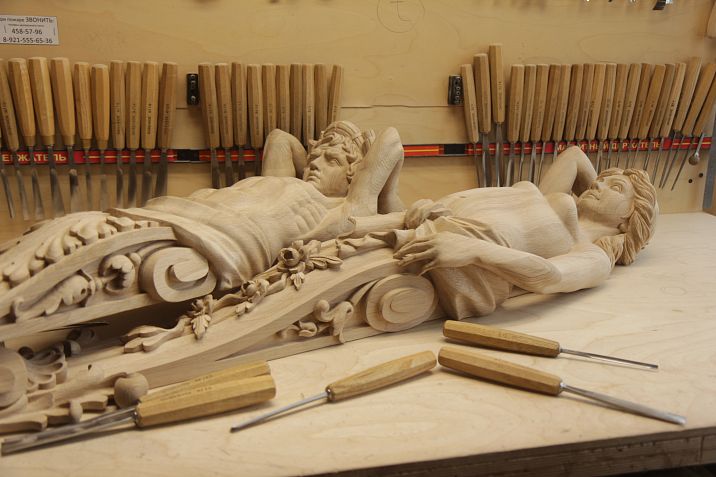
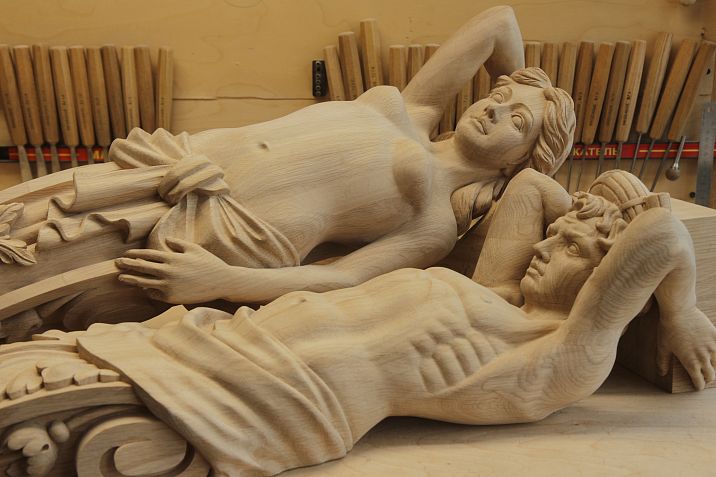
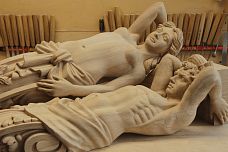
A house adorned with carvings is not merely a dwelling, but a reflection of cultural heritage and the refined taste of its owner. Every carving element—from window casings to decorative cornices—transforms the facade into a work of art, emphasizing the uniqueness of the structure. Decorating houses with carved elements originated in ancient times, and today this art continues to inspire and captivate, remaining relevant in the modern world.
But what makes carving so significant in architectural decoration? Why do houses adorned with carved elements invariably attract attention? It all comes down to the fact that carving not only decorates, but also brings deep symbolism, aesthetic richness, and a connection to traditions. Let's explore why decorating a house with carving is so valuable, starting with its historical roots.


Carving: An Art with a Multi-Century History
Wood carving is the oldest craft that has accompanied humanity for millennia. From the beginning, it served not only a decorative but also a protective function, as carved patterns often had sacred significance. In Rus', the art of wood carving reached its peak, becoming an indispensable part of folk architecture and daily life.
How did the tradition of decorating houses with carving originate?
- Ancient Russian wooden houses
In traditional Russian settlements, wooden houses were not just dwellings—they were considered symbols of family prosperity and reflections of a family's status. Decorating facades with carved elements carried not only aesthetic but also spiritual significance. For example:
○ Window casings symbolized protection of the house from evil spirits. The patterns carved into them, resembling sun rays or the Tree of Life, were meant to bring happiness and good fortune.
○ Eaves and gables were adorned with geometric and plant motifs that emphasized harmony between humans and nature.
○ Brackets and beams were decorated with intricate carving, adding both stability and decorative appeal to the structure.
- Symbolism of Patterns
Wood carving employed motifs with deep symbolic meaning. Geometric ornaments symbolized order and stability, while plant patterns represented renewal and growth. Many of these motifs remain relevant today, staying current due to their universal beauty. - Evolution of the Art
Over time, carving became increasingly complex. While ancient times used simple geometric patterns, during the Baroque and Classicism eras, wood carving included detailed figurative elements such as angels, animals, and mythological creatures. - Carving as Family Heritage
In Rus', decorating a house with carving was often a family affair. Each element was handcrafted and passed down from generation to generation, strengthening ties among relatives and creating a unique family history.
Why has carving become an important element in architecture?
- Material Accessibility
Wood was the primary building material in Rus'. It was easy to work with, allowing craftsmen to create complex patterns that were impossible to achieve in stone or metal. - Aesthetic Expressiveness
Carved houses immediately stood out against other buildings. Each carved element, whether a window casing, eave, or decorative gable, attracted attention with its elegance and detail. - Protective function
Carving on house facades not only decorated but also served as a kind of 'protective charm'. Motifs carved into wood were considered protective symbols that safeguarded the house from misfortune. - Transmission of Traditions
The art of carving was passed from master to master, preserving traditions and expanding them. This ensured the continuity of cultural heritage and the development of decorative and applied arts.
Company STAVROS preserves and develops the traditions of wood carving, offering products that combine historical significance with modern technologies. Learn more about the collection in the section “House Carving”.
How is carving used today?
Wood carving continues to play an important role in architecture and interior design. Modern technologies allow for the creation of items that combine traditional aesthetics with functionality and durability. In the 21st century, carved elements are used not only for facade decoration but also for interior space design.
Main Areas of Application:
- Building facades
○ Carved window casings make windows more expressive, emphasizing their shape and style.
○ Carved eaves give the facade a finished look, drawing attention to its architectural lines.
○ Brackets adorned with patterns add depth and complexity to the facade.
- Interiors
Carved panels are used to decorate walls and ceilings, adding texture and depth to the space.
Furniture elements adorned with carving, such as tables, cabinets, and chests, become focal points in the interior.
- Furniture and Accessories
Decorative lighting fixtures, mirrors, and frames with carved elements add elegance and coziness to the room.




Why is a house adorned with carving always eye-catching?
A house adorned with carving invariably evokes admiration. Such buildings stand out for their expressiveness and uniqueness, becoming striking examples of the combination of craftsmanship and artistic taste. The question of why carving remains so popular lies in its ability to unite functionality, aesthetics, and symbolism. Let us consider what qualities make carved houses especially attractive.
Individuality: each house is a work of art
One of the main reasons for the popularity of carving is its ability to give a house uniqueness. Unlike mass production, carving always retains an individual character. Each pattern carved by the artisan becomes a reflection of their creative approach and cultural traditions.
Carved window casings with floral or geometric patterns emphasize the building’s style and make it recognizable.
Gables and cornices adorned with carving create complex compositions that attract passersby’s attention.
Carved panels on the facade may include unique motifs inspired by nature, history, or mythology.
Example: a house with window casings featuring images of the sun and stars immediately stands out against standard buildings. Such elements give the building character and highlight the taste of its owner.
Aesthetic expressiveness: art that brings the facade to life
Carving adds volume and depth to architectural forms, making the facade more complex and interesting. Carved elements create play of light and shadow, which especially looks striking under natural lighting.
Decorative brackets accentuate balconies, adding elegance to the entire structure.
Cornices with carving create a smooth transition between walls and roof, visually completing the composition.
Window casings with delicate patterns decorate windows, emphasizing their shape and size.
Example: sunlight playing on the surfaces of carved elements creates the impression of a living, 'breathing' facade. This is especially important for wooden houses, where the texture and patterns of wood complement the overall design.
Preservation of traditions: connection with the past
Wood carving is not only decoration but also a way to preserve cultural heritage. Houses adorned with carving serve as reminders of how highly craftsmanship and manual labor were valued over centuries.
- Transmission of knowledge
Wood carving traditions are passed down from generation to generation, preserving unique techniques and motifs. - Embodiment of culture
Ornaments carved on facades often have regional characteristics. For example, complex geometric patterns are popular in northern Russia, while floral motifs are common in the central regions. - Modern adaptation
Today, artisans are inspired by traditional motifs, adapting them to modern architectural styles. This allows traditions to be preserved while remaining relevant.
Warmth and coziness: a home that evokes emotions
Houses adorned with carving are distinguished by their 'soulfulness.' Natural wood combined with finely carved patterns creates an atmosphere of coziness and harmony that immediately invites one in.
Carved elements highlight the natural beauty of wood, creating a sense of warmth and coziness.
Facades adorned with carving evoke associations with traditional wooden houses, which have always symbolized reliability and comfort.
Example: a cozy wooden house with carved window casings and brackets immediately evokes the feeling that a family lives here, valuing traditions and comfort.
Symbolism and meaning: more than decoration
Carved elements on the facade of a house often carry hidden meanings that add additional value to the building. In Rus, it was believed that certain patterns could protect the house and its inhabitants from misfortune and evil spirits.
● Sun symbols on window casings attract luck and happiness.
● Tree of life symbolizes growth, prosperity, and connection across generations.
● Geometric ornaments are associated with harmony and stability.
A carved facade becomes not only an aesthetic accent but also part of symbolic heritage, conveying important messages.
Durability: beauty that lasts
Modern wood processing technologies make carved elements not only beautiful but also resistant to environmental effects. Proper wood treatment provides protection against moisture, sunlight, and temperature fluctuations.
- Strength and stability
Natural wood with protective coatings retains its shape and texture even for decades. - Minimal maintenance
To maintain an attractive appearance, periodic cleaning and treatment with special products are sufficient. - Ecological safety
Carved wooden elements are a safe and eco-friendly solution for decorating a home.
Our factory also produces:


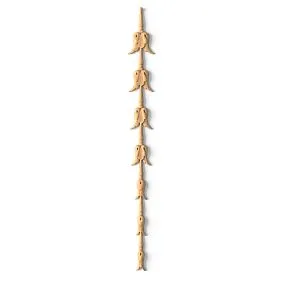

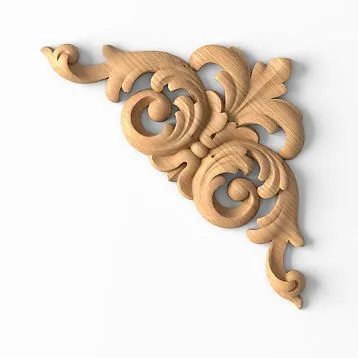
Carved decorative elements of a house
A house adorned with carving is a harmonious combination of many decorative elements that together create a unique appearance of the building. Each of these elements performs not only an aesthetic but also a functional role, transforming a simple facade into an exquisite architectural masterpiece.
Let's examine in detail the key elements most commonly used for carving house decorations, their features, and their role in creating the overall visual image.
1. Window casings: accent on windows
Window casings are one of the most recognizable elements decorating a house facade. They frame windows, highlighting them against the wall, and create a sense of compositional completeness. Carved window casings play a central role in decorative design, drawing attention to the shape and placement of windows.
Why are window casings important?
- Aesthetic Expressiveness
Carved window casings add depth and dimension to the facade. They create a play of light and shadow, making the window visually appealing. - Functional protection
Window casings protect the edges of window frames from moisture and wind, increasing their durability. - Symbolic Meaning
Ornaments on window casings can be protective symbols. For example, patterns in the shape of the sun, stars, or plants protect the house from evil spirits.
Examples of use:
● Simple geometric window casings suit minimalist facades.
● Complex floral ornaments emphasize a classical or traditional style.
● Window casings with sun and tree of life symbols decorate houses in the spirit of Russian traditions.
2. Eaves: completion and accent
Eaves are decorative elements located along the top of the wall under the roof or between floors. They create a smooth transition between architectural forms, emphasizing the lines of the building and adding elegance.
Role of eaves:
- Structural completeness
Eaves visually separate the roof from the wall, creating a harmonious completion of the facade. - Functional protection
They help divert water from walls, protecting them from moisture. - Decorativeness
Carved cornices with geometric or floral patterns make the facade expressive and attractive.
Examples of use:
● Simple cornices with plain patterns suit modern facades.
● Complex carved elements with grapevine or floral motifs decorate classical and traditional homes.
3. Brackets: Utility and Style
Brackets are supporting elements used to support balconies, cornices, or shelves. When carved, they become decorative accents, emphasizing the overall style of the building.
Advantages of brackets:
- Aesthetic Refinement
Carved brackets add individuality to the facade, making the structure light and elegant. - Utilitarian Function
Brackets provide reliable support for projecting facade elements such as balconies and cornices. - Harmony with other elements
They beautifully complement carved door and cornice elements, creating a unified composition.
Examples of use:
● Simple carved brackets are used for modern buildings.
● Detailed brackets with floral or geometric patterns emphasize the classical style.
4. Gables and Balconies: Expressive Accents
Gables and balconies adorned with carving become central elements of the facade. They attract attention with their expressiveness and highlight the architectural features of the house.
Features of decoration:
- Gables
○ Carved patterns on gables emphasize the roof's shape and make it visually more complex and interesting.
○ Such elements are especially popular in traditional Russian houses, where gables are decorated with complex ornaments.
- Balconies
○ Decorative railings with carving add lightness to the structure.
○ Balconies adorned with carved brackets create an impression of luxury and elegance.
Examples of use:
● Geometric patterns on gables emphasize a modern style.
● Floral motifs and ornate forms add richness and refinement to classic styles.
5. Doors and Gates: First Impression of the House
Doors and gates adorned with carving create the first impression of the house. They are the 'calling card' of the building, emphasizing its character and style.
Features of carved doors:
- Aesthetics and Safety
Carved patterns make doors visually attractive while maintaining their strength and reliability. - Symbolism
Door ornaments often reflect traditional motifs and convey images of protection and hospitality.
Examples of use:
● Doors with elegant carved panels are ideal for homes in the classical style.
● Minimalist geometric patterns emphasize the minimalism of modern constructions.
Get Consultation
Advantages of carved facade decoration
A facade adorned with carving is not just a visually appealing element, but a full architectural concept combining aesthetics, functionality, and durability. Such a house invariably stands out among others, demonstrating the owner's attention to detail and respect for traditions. Let us examine in detail what advantages carved facade decoration brings.
1. Uniqueness and aesthetic expressiveness
Each carving element, whether a door casing or cornice, is created with a unique design. Carved facades are distinguished by individuality, making the house memorable and unique.
● Details that attract attention: Carving creates a play of light and shadow, making the facade come alive under natural lighting. Windows framed by carved casings immediately become an accent part of the building.
● Accents on architectural features: Carved cornices emphasize the smooth lines of the roof, making it visually complete. Decorative carvings on brackets and balconies add depth and expressiveness to the facade.
Example:
Imagine a house with plain smooth walls and the same house adorned with carved casings, cornices, and decorative gables. The first looks functional but dull, while the second becomes a true work of art, highlighting the owner's individuality.
2. Preservation of traditions and cultural heritage
Wood carving is not just decoration, but also a way to preserve historical traditions. A house adorned with carving becomes part of cultural heritage, which is especially important in the era of mass standardization.
● Historical value: The ornaments used in carving often have roots in folk traditions. Geometric patterns and floral motifs convey the spirit of the past, connecting us with our ancestors.
● Regional characteristics: Carved elements can reflect unique architectural features of a particular region. For example, in Russian villages, motifs of the sun and tree of life are popular, symbolizing happiness and prosperity.
Example:
A house facade adorned with casings featuring traditional motifs not only attracts attention but also tells a story, connecting modern technology with cultural heritage.
3. Improvement of facade functionality
Wood carving not only decorates but also performs practical tasks. Decorative elements can protect walls and windows from atmospheric influences, extending the lifespan of the house.
● Casings: Protect the edges of window frames from moisture and wind, preserving their integrity and preventing premature aging.
● Cornices: Prevent water from seeping onto walls, diverting precipitation away from the facade. Their decorative carving makes this function aesthetically appealing.
● Brackets: Provide reliable support for protruding parts of the facade, such as balconies or ledges, while adding architectural expressiveness.
Example:
A decorative cornice with carving not only emphasizes the upper part of the facade but also protects walls from water ingress during rain, preserving their appearance for many years.
4. Warmth and coziness
Wood is a material associated with nature, warmth, and coziness. Houses adorned with carving appear lively and soulful, evoking associations with traditional dwellings where comfort and harmony prevail.
● Cozy effect: The natural texture of wood and detailed carving patterns create an atmosphere that invites relaxation.
● Connection with nature: Wooden carving elements emphasize eco-friendliness and naturalness, which is especially important in today's world where eco-friendly solutions are popular.
Example:
A wooden house with carved elements evokes warm emotions, creating the impression that it is 'alive.' It is always comfortable and pleasant to be in such a house.
5. Durability and reliability
Modern wood processing technologies make carved facade elements not only beautiful but also durable. They retain their properties and appearance for many years.
● Protection from moisture and ultraviolet radiation: Wooden elements are coated with special treatments that prevent their destruction under environmental exposure.
● Resistance to temperature fluctuations: Carved elements retain their properties even in harsh climatic conditions, whether heat or frost.
● Easy maintenance: To maintain an attractive appearance, it is sufficient to periodically treat the wood with special compositions.
Example:
Cornices and moldings coated with protective lacquer retain their beauty even after decades. This makes wood carving one of the most durable solutions for facade decoration.
6. Adaptation to modern design
Wood carving integrates perfectly into modern architectural solutions. It can be used in both classical and minimalist styles, enhancing and enriching the building's exterior appearance.
● Classical style: Complex patterns and decorative elements emphasize the luxury and richness of architecture.
● Modern minimalism: Simple carved details add elegance to the facade without overloading it.
Example:
A house with smooth walls, enhanced by carved cornices and brackets, looks modern and stylish. This combination of minimalism and tradition creates a harmonious architectural appearance.
Modern applications of wood carving in architecture and design
In the modern world, wood carving is widely used not only in architecture but also in interior design. It harmoniously combines with various design styles, enriching and complementing them. Carved elements can transform ordinary spaces into unique ones, adding individuality and expressiveness.
Let us examine in detail where and how wood carving is used today, as well as its role in creating aesthetically pleasing and functional spaces.
1. Carved facade of buildings
The facade of a building is its face, which first attracts attention. Decorating facades with carving allows a structure to acquire an elegant appearance and highlight its architectural style.
Where is carving used on facades?
● Moldings — highlight windows and make them visually more expressive.
● Cornices — create a finished look for the facade and protect walls from external influences.
● Brackets — decorate protruding elements such as balconies and awnings.
● Gables — add decoration to the upper part of the building and emphasize the roof shape.
Example:
A modern house with carved moldings and cornices becomes an example of harmonious combination of traditional elements with modern architectural solutions. Such houses always look original and elegant.
2. Decorative interior design
Wood carving is actively used to decorate interiors, adding volume, texture, and refinement to the space. Inside the house, carved elements can become central accents or complement the overall style.
Wood carving in interiors:
- Ceiling panels
Carved ceiling panels make the space more complex and refined. They can be used to create accent zones or for visual zoning of rooms. - Walls
Decorative carved panels adorn walls, adding texture. They are ideal for living rooms, offices, and other rooms where emphasis on style is important. - Furniture
Tables, chairs, cabinets, and chests with carved elements become not just functional items, but works of art. They highlight the owner's status and add elegance to the interior. - Doors and partitions
Carved doors create a sense of luxury and coziness, while decorative partitions with patterns help zone the space while maintaining visual lightness.
Example:
A living room with carved ceiling panels and furniture adorned with carving looks luxurious and cozy. Such elements make the interior more complex and attractive.
3. Decorative accessories
In addition to large elements, carving is used to create small decorative accessories that complement the interior and draw attention to details.
Examples of carved accessories:
● Mirror and picture frames
Carved frames emphasize the significance of objects and integrate them into the overall design.
● Lamps and sconces
Decorative bases for lamps and sconces adorn the space, adding individuality.
● Boxes and shelves
Carved small accessories become refined decorative elements.
Example:
A carved mirror frame in the entryway attracts attention and sets the tone for the entire interior. It is not merely a functional item, but an element that decorates and completes the space.
4. Carving in modern architecture
Modern architecture often turns to traditional carving, adapting its elements for new concepts. Minimalist forms and geometric patterns have become a popular solution for minimalist and eco-friendly buildings.
Examples of modern solutions:
- Minimalist carved elements
Simple patterns on door casings and cornices emphasize strict lines and add texture. - Facades with wooden carving
Fully wooden walls with decorative patterns become a central element of architectural style. - Eco-Friendly Materials
The use of natural wood combined with carving highlights the pursuit of harmony with nature.
Example:
A house with a facade of natural wood, adorned with minimalist carving, fits perfectly into the surrounding landscape, emphasizing the eco-friendliness and modernity of the design.
5. Preservation and restoration
Carving is also used in projects restoring historical buildings. Restoring carved elements allows preserving cultural heritage and returning buildings to their original appearance.
Advantages of restoration:
● Preservation of history: Carved elements help restore the uniqueness and beauty of historical buildings.
● Use of modern technologies: Today, carving can be restored with high precision, allowing it to retain its original appearance.
Example:
A historical building with restored carved door casings and pediments becomes not merely an architectural monument, but a symbol of cultural heritage.
Why choose a house adorned with carving?
A house adorned with carving is more than just an architectural solution. It becomes a reflection of the owners' taste and individuality, a symbol of their respect for traditions and love of aesthetics. Such a house not only pleases the eye but also attracts attention, becoming the central object of admiration in any setting. Let us examine in detail what advantages a house adorned with carving has, and why this solution remains relevant.
1. Unique exterior appearance
Wood carving makes a house unique, distinguishing it from other buildings. Each pattern carved by a master has its own characteristics that cannot be replicated exactly. This makes every house a true work of art.
How does carving emphasize uniqueness?
● Individual patterns
Decorations on window casings, cornices, and other elements are created taking into account the building's style, size, and proportions.
● Aesthetic Harmony
Carved elements help unite all architectural details into a single composition, emphasizing their interrelation.
● Focus on Details
Even a small carved element can become a striking accent, drawing attention to key parts of the facade, such as windows or balconies.
Example:
A house with carved window casings adorned with sun and vine motifs looks completely different from a building with smooth frames. Such details emphasize the style and uniqueness of the architectural solution.
2. Aesthetic Expressiveness
Carved elements add visual depth and expressiveness to the facade or interior. They make the building 'alive,' creating play of light and shadow on its surface. This is especially noticeable in sunlight, when shadows from patterns begin to change depending on the time of day.
Why does carving add expressiveness?
- Texture Depth
Carving creates a complex texture that makes the facade multi-layered and rich. - Detailed Patterns
Each carving element, whether a window casing or cornice, contains numerous small details that attract attention and evoke admiration. - Creating Accents
Carving helps highlight key building elements, such as doors, windows, or gables, making them central compositional points.
Example:
A window framed by carved wooden casings with plant motifs becomes not just part of the facade, but its ornament. It attracts attention and highlights the refined taste of the owners.
3. Connection to Traditions
Wood carving is an art with deep historical roots. A house adorned with carving becomes a keeper of traditions and cultural heritage, which is especially important in the era of mass production and standardization.
Why is it important to preserve traditions?
● Historical Value
Carved elements executed in a traditional style reflect the rich history of decorative and applied arts.
● Respect for Culture
Using traditional ornaments demonstrates respect for cultural roots and a desire to preserve them for future generations.
● Creating Continuity
A house adorned with carving becomes a link between the past and the future, uniting modernity with traditions.
Example:
A house with window casings carved in motifs of traditional Russian wood carving becomes not only a functional dwelling but also an important symbol of preserving cultural heritage.
4. Durability and Reliability
Modern wood processing technologies make carved elements resistant to external influences, ensuring their longevity and preservation of aesthetic appeal for many years.
What advantages does modern wood processing provide?
- Protection from Moisture and Sun
Special coatings prevent wood deformation and protect it from sun bleaching. - Resistance to temperature fluctuations
Carved elements retain their shape and strength even in harsh climate conditions. - Simple maintenance
It is enough to periodically renew the protective coating to maintain the original appearance of the carving.
Example:
A facade with carved cornices and sills, coated with special lacquer, retains its beauty even after decades, remaining as attractive as on the day of installation.
5. Universality of application
Wood carving harmoniously integrates into any architectural style, from classic to modern minimalism. Its elements can be adapted to the needs of a specific project, creating solutions that perfectly suit each building.
How is carving used in different styles?
● Classic: Complex ornaments, rich details, and refined patterns highlight luxury and elegance.
● Minimalism: Simple geometric shapes and minimalist patterns add texture and visual interest.
● Eco-style: Natural wood with carved elements perfectly complements the concept of eco-design.
Example:
A house with a minimalist-style facade, enhanced with simple carved cornices and sills, looks modern and stylish without losing its individuality.
6. Carving as a means of zoning and accentuation
Wood carving is used not only for decorating facades and interiors, but also for creating visual accents and zoning spaces. Carved elements help highlight important parts of the building, give them greater expressiveness, and harmoniously integrate them into the overall design.
Zoning facades with carving
Different zones on the house facade can be highlighted using decorative carved elements. This makes the building more structured and attractive.
What elements help with zoning?
- Baseboards and Window Frames
Carving emphasizes windows, making them key accents of the facade. Each sill can be executed in a unique style that harmoniously complements the overall design. - Cornices and dividing panels
Carved cornices visually separate floors, creating a clear structural division. This is especially important for multi-story buildings. - Gables and upper decorative elements
Carved gables draw attention to the upper part of the building, making it expressive and complete.
Example:
A facade with carved sills, cornices, and gables, where each zone is visually highlighted, looks harmonious and attractive. Such zoning makes the facade more dynamic and lively.
Using carving for accenting interiors
Inside the house, carving helps highlight important zones or objects, adding decorative appeal. These can be large elements or small details that emphasize the interior style.
Examples of accenting:
- Decorative panels on walls
Carved panels placed in the central part of the wall attract attention and become the visual center of the room. - Mirror and Picture Frames
Carved frames emphasize the importance of objects and add elegance to the interior. - Doorway decoration
Doors and arches with carved elements become accent zones that highlight the style and concept of the interior.
Example:
In a living room with a high ceiling, you can use carved panels to accent one of the walls. This will add depth and make the room visually more interesting.
Creating dynamics through carving
Carving helps create dynamic compositions that make facades or interiors more expressive. This is achieved through the play of light and shadow provided by the details of patterns.
How does it work?
● Three-dimensional carving elements reflect light at different angles, creating complex shadow patterns.
● Material contrast: combining natural wood with other materials (e.g., glass or metal) makes decorative elements more noticeable.
● Multi-layered patterns: carving executed in multiple layers adds depth to the composition.
Example:
A facade with deep carved patterns on window sills and cornices looks especially striking under sunlight, when shadows enhance the visual complexity of the patterns.
7. Ecological and natural qualities
In today's world, ecological materials are gaining increasing importance, and carved wood perfectly aligns with this trend. Homes adorned with carving harmoniously blend into the natural landscape, creating a sense of unity with the environment.
Advantages of carved wooden elements:
- Natural material
Wood is safe for health and the environment, making it an ideal choice for those concerned about ecology. - Versatility of use
Carving in wood is suitable for &