Article Contents:
- History of the evolution of kitchen space
- From hearth to separate room
- Industrialization and functional approach
- Modern: aesthetics + functionality
- Classic style
- Modern (modern) and minimalism
- Country (Provence)
- Provence and Country: Rustic Romance
- Types of layouts
- Ergonomic principles
- Details that matter
- Wood and its derivatives
- Plastic, glass, and metal
- Latest technologies in kitchen production
- Light color palettes
- Dark and saturated shades
- Vibrant Accents
- Color combinations
- Backsplash: aesthetics and protection
- Hardware and handles
- Textiles
- Lighting and decor
- Open layout
- Dining area as a focal point
- Zoning and personal space
- Natural materials
- Energy-saving technologies
- Sustainable interior approach
Kitchen furniture design is an endless and captivating topic, as the kitchen has long ceased to be merely a place for food preparation. It is the heart of the home, where the family gathers for morning coffee or hosts friendly get-togethers, where culinary masterpieces are born and cherished recipes of several generations are preserved. It is no wonder that modern furniture design increasingly focuses on creating a functional, aesthetic, and yet unique kitchen space.
Sometimes designers call us to challenge routine, choosing vibrant colors and innovative technologies. At other times, they call for calmness and restrained forms to preserve a tranquil home atmosphere. And in this diversity, one thing remains constant: a good kitchen should serve not merely as a backdrop to our daily lives, but to highlight our individuality, making everyday life more convenient and holidays more vibrant.
The kitchen theme is always relevant, but each decade shifts its emphasis. While some chase ultra-modern solutions and bold palettes, others choose stability and elegance, which they receive fromClassic FurnitureThe choice is vast, sometimes even intimidating. But this is precisely the charm: you can find a design that reflects your personality and lifestyle. Let’s dive into the main aspects of kitchen furniture design, examine trends, materials, ergonomics, and unique ideas that allow you to create your dream space.


The Evolution of Kitchen Space
It is worth considering the history of the kitchen not out of mere curiosity, but to understand how the approach to this space has evolved. Once, the kitchen was merely a utilitarian zone, hidden from outsiders' eyes, but today its functional and aesthetic value is difficult to overestimate.




From Hearth to Separate Room
In ancient times, when people still lived in caves, the main task was to start a fire and prepare food. Although it was not possible to speak of 'design' back then, early experiments with space arrangement were already underway: people sought convenient places to store firewood, adapted stone or clay structures for cooking. Over centuries, the hearth moved to the centers of peasant cottages and aristocratic estates, where the first prototypes of kitchen zoning appeared. In medieval castles, the kitchen was located downstairs, closer to service areas, so that smoke would not fill living quarters. Convenience for cooks was paramount, while luxury and decorative elements were usually transferred to formal halls.
But real changes began when homes were designed with separate kitchens. With the development of cities, technological progress, and the increasing role of women in household management, the kitchen began to acquire the status of a full-fledged room, rather than a hidden closet behind the scenes of the domestic theater. The first cabinets, built-in shelves, and functional furniture for storing utensils appeared. Gradually, ergonomics began to be considered in kitchen design: it was noticed that the placement of the stove, sink, and work surface affects the speed and convenience of food preparation.
Our factory also produces:


Industrialization and Functional Approach
The 20th century became an era of mass production and standardized solutions. Factories and plants began producing ready-made kitchen sets corresponding to typical layouts. Functionality took precedence: rooms in multi-story buildings were relatively small, so furniture had to be as compact and spacious as possible. It was precisely then that the idea of the 'working triangle' emerged, according to which the stove, sink, and refrigerator should be located at a certain distance and at the correct angle to avoid unnecessary effort and time for the housewife.
The design of those years may have been somewhat 'boring' from the standpoint of bright ideas, but it established the basic planning foundation. With the advent of new materials (MDF, laminate, plastics) and affordable finishing methods widely available, furniture of various types and qualities emerged. Thanks to this innovation, kitchens became more accessible, and module manufacturing became faster and cheaper.
Get Consultation
Contemporary: Aesthetics + Functionality
Finally, in the late 20th and early 21st centuries, a large number of furniture brands entered the market, designers began to integrate the kitchen with the living room, and in addition to functional features, more attention was paid to the visual aspect. Consumer demands also changed: people began to understand that a kitchen can be not only a 'laboratory' for preparing food, but also a social space where it is pleasant to gather the whole family and receive guests.
Today, kitchen furniture design is a vast field where engineering, architecture, fashion, and psychology intertwine. We can choose from dozens of styles: from high-tech and minimalism to country and Victorian luxury, where it is appropriateClassic FurnitureAll of this encourages us to view the kitchen as part of an individual world, rather than just a 'cabinet with a stove'.
Main Styles in Kitchen Furniture Design
Choosing a style is a key moment when planning kitchen space. Each style has its principles, aesthetics, and materials that shape the overall atmosphere of the room. Below, we will examine the most popular directions, but do not forget that sometimes the most interesting results arise precisely at the intersection of different styles.
Classic style
Classic is always in fashion, and the kitchen is no exception. Solid wood, carved facades, elegant hardware, soft pastel tones or deep noble shades — these are its defining features. Classic Furniture For a kitchen, it can transform an ordinary space into a corner of an aristocratic country estate. But remember that a classic set often requires a spacious room, high ceilings, and sufficient natural lighting. In a small kitchen, classic style may 'weigh down' the interior if details are not thoughtfully considered.
The main feature of classic style is attention to finishing: moldings, cornices, balustrades, gilded elements, stained glass on cabinet doors. If all this is properly integrated, the result will delight the eye for decades. It is difficult to say that a classic kitchen lags behind in functionality: modern mechanisms for pull-out drawers, built-in appliances, and storage systems perfectly complement the traditional look. The most important thing is to find the right balance between grandeur and convenience for daily use.
Modern (Moderne) and Minimalism
If classicism looks to the past, modernism looks to the future. Clean lines, smooth facades without excessive decoration, minimalist forms, and monochromatic color palettes — these are the main features of modern style. MDF, plastics, glass, and metal are widely used. Often, facades with glossy or matte surfaces are applied, which visually expand the space and give the kitchen a technological look.
Minimalism goes even further, removing any 'unnecessary' details. Here, everything is oriented toward functionality and freeing space from clutter. In such a kitchen, there is a sense of order and lightness. However, some may find this approach too 'sterile' and cold, especially if there are children in the family or if you enjoy spending a lot of time cooking with friends. Nevertheless, for small apartments, a compact modern design often becomes the optimal solution.
Country (Provence)
Country and its variant Provence — styles for those who appreciate coziness, natural materials, and the warm atmosphere of a countryside home. Here, light pastel wooden facades (beige, lavender, white), floral textiles, ceramic inserts dominate. Such a kitchen suits open shelves, where you can place dishes or decorative elements. Rustic charm and romantic notes — these are what captivate the Provence style. And even if someone considers it somewhat 'sentimental' or even naive, the feeling of coziness is guaranteed.
If desired, you can adapt country style to more modern conditions, for example, using new finishing materials while preserving the overall style. The key is not to overdo decoration and maintain harmony in details: if you have a small space, it is advisable to limit yourself to a few bright elements to avoid 'visual noise'.
Loft and industrial chic
Industrial chic is not only about 'brutality', but also about practicality. Open shelves, metal hanging systems, and maximum open space — all contribute to the idea of functionality without unnecessary embellishments. However, like classic style, loft looks best in spacious rooms with high ceilings; otherwise, it may feel cramped and gloomy.
In the spirit of castles from the past century – the key is that it should meet your inner needs and bring genuine enjoyment to every moment spent in the kitchen.
Layout and ergonomics: how to turn the kitchen into a comfortable space
Style is only half the story. The other half is rational space organization, which will allow you to cook, store dishes, and spend time as comfortably as possible. Kitchen furniture must be thought out in detail: from countertop height to storage systems.
Types of layouts
- Linear layout
Suitable for narrow and long rooms. All furniture and appliances are placed along one wall. This option is simple and economical, but often requires additional solutions for storage organization. - Parallel (two-line) layout
Used when the room has a corridor shape: cabinets and appliances are placed along two opposite walls, leaving a passage in the middle. It has greater capacity but requires a width of at least 2.4–3 meters. - L-shaped layout
One of the most common options. Furniture is placed along two perpendicular walls, forming a 'corner'. This is convenient for any kitchen size and allows creating a dining area in the center or against the opposite wall. - P-shaped layout
Suitable for spacious rooms. Furniture and work surfaces form the letter 'P', providing maximum opportunities for storage and appliance placement. However, movement space is reduced, so it's important to ensure that passageways remain comfortable. - Island layout
The most striking, but also the most 'space-consuming' option. In the center of the kitchen is an 'island' — this can be a work surface with a sink or stove, and the rest of the furniture is installed around the perimeter. The island often becomes an accent, where cooking and entertaining guests take place.
Ergonomic principles
The kitchen is an active-use space, so it's important to consider human physical characteristics here. Ergonomics helps arrange elements so as to minimize strain on the back and legs, and reduce unnecessary movements.
● Work triangle: the stove, sink, and refrigerator should form a triangle. The optimal distance between them ranges from 1.2 to 2.7 meters, so the cook doesn't have to make unnecessary steps.
● Countertop height: usually 85–90 cm, but if you are above average height, it's better to choose 95–100 cm to avoid bending while cooking.
● Cabinet depth: standard depth for lower cabinets is 60 cm, for upper cabinets — 30 cm. But you can increase or decrease these numbers for more convenient placement of appliances and dishes.
● Storage systems: convenient pull-out drawers, trays, and carousel systems in corner cabinets will allow you to maximize space and quickly find needed items.
Details that matter
● Hardware: the quality and convenience of handles, guides, and hinges determine how smoothly cabinets and drawers will open. Saving money on hardware often backfires, so it's better to choose reliable brands.
● Lighting: properly organized lighting is key to comfortable kitchen work. In addition to central chandeliers or recessed ceiling lights, be sure to include under-cabinet task lighting.
● Dining area: the table, chairs, or bar counter should be positioned so that during meals, it doesn't interfere with the person cooking, while still allowing comfortable enjoyment of food. In small kitchens, folding tables and stools become lifesavers.
Materials and technologies for kitchen furniture
Material selection directly affects the appearance, durability, and cost of the kitchen set. The modern market offers many options — from budget to premium — each with its own pros and cons.
● Wood and its derivatives
● Solid wood: ideal for those who appreciate naturalness and beauty of natural texturesClassic Furniture Made from oak, beech, or ash, it can last for decades and gives the kitchen a unique charm. Minus: high cost, need for careful maintenance (wood is sensitive to moisture and temperature changes).
● MDF (fine particle board): popular material for fronts. Due to its dense structure and ability to be shaped, MDF is often used for both classic and modern kitchens. Easy to paint and cover with film.
● Particle board (wood chipboard): the most budget-friendly option. It may have a laminate coating to increase water resistance. If choosing quality particle board, it can handle kitchen loads well, but it is less durable than MDF or solid wood.
Plastic, glass, and metal
● Plastic: fronts based on MDF or particle board, covered with plastic, are a common choice for modern kitchens. Plastic coating is resistant to moisture, easy to maintain, has a rich color palette, and diverse textures.
● Glass: used for inserts in fronts, backsplashes, and shelves. Tempered glass is strong and low-maintenance, and gloss enhances the visual space.
● Metal: aluminum frames for fronts, stainless steel for backsplashes or countertops — all actively used in industrial and high-tech projects. With proper care, metal lasts a long time, but requires constant cleaning since fingerprints and water droplets are visible on its surface.
Latest technologies in kitchen production
● Fronts without handles: opening cabinets and drawers by pressing. This creates a "continuous surface" effect and gives the kitchen a minimalist look.
● Automation: sensor systems that raise doors, built-in lighting that responds to movement — all of this simplifies interaction with furniture.
● Artificial stone countertops: strong, moisture-resistant, and hygienic material that visually rivals natural stone, yet is easier to process and repair.
● Smart appliances: built-in ovens and stoves with Wi-Fi, refrigerators with self-analysis function, and other "smart" solutions have become reality. The designer’s task is to harmoniously integrate them into the overall ensemble.
Color solutions and their impact on kitchen atmosphere
The role of color in design cannot be underestimated. A well-chosen color palette can visually enlarge the room, create a sense of warmth and coziness, or, conversely, add dynamism and boldness.
Light palettes
White, beige, pastel tones will always remain relevant. They make the space feel more spacious and bright. If you want to add a "touch" of personality, you can use several bright accents: for example, colorful chairs or decorative elements. A kitchen in white tones is an ideal choice for minimalist or Scandinavian styles. It seems to breathe freshness and cleanliness, and against its backdrop, it’s easy to experiment with decor and tableware.
Dark and saturated tones
Black, dark gray, dark blue, or burgundy — colors that give the kitchen depth and charm. However, they should be used carefully. They look best in spacious, well-lit kitchens. Interestingly, dark fronts are currently in fashion: they are often combined with wood grain or metal to achieve a luxurious and cozy effect. However, on glossy surfaces of dark shades, stains and fingerprints are noticeable, so more time will be needed for maintenance.
Vibrant accents
To avoid the kitchen appearing monotonous, you can introduce several saturated accents: red, yellow, turquoise, or salad-colored details. These can be upper cabinet fronts, backsplash, kitchen appliances, or chairs. Bright colors uplift the mood and make the interior more "lively." However, ensure the main background remains neutral to avoid overloading the space.
Color combinations
Combining two or more colors in fronts has become a popular solution. Upper cabinets can be light, while lower ones are dark. This provides visual "grounding" and makes the design more dynamic. You can also play with textures: wood grain combined with solid color looks noble and modern.
Important details and accessories
Even the most thoughtfully designed kitchen will not look complete without appropriate accessories. It is precisely the details that give the interior individuality and warmth.
Backsplash: aesthetics and protection
The backsplash is the area between the countertop and upper cabinets. It protects the wall from splashes and grease, but can also become a striking decoration. Choose ceramic tiles, glass, or decorative panels. In classic style, patterned tiles or mosaic are suitable, while for modern style — solid color or glass backsplashes with photo prints.
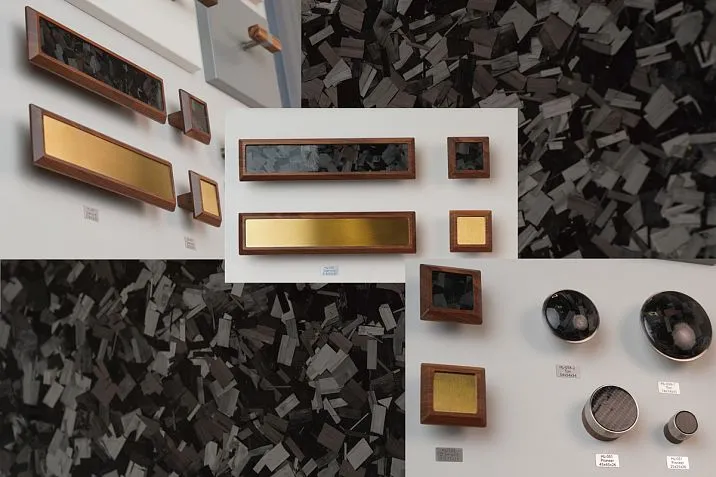
Hardware and handles
In the same way,classic furniturehandles play a huge role in conveying a "historic" atmosphere: ornate, with carved elements and patterns, sometimes with a patina finish. In modern sets, straight rectangular handles are often used, or sometimes they are omitted altogether. Sometimes, even a single change in hardware can transform the kitchen’s appearance!
Textiles
Curtains, tablecloths, pot holders, napkins — all of this is important for creating coziness. In classic or country-style kitchens, good linen and cotton fabrics with embroidery or subtle patterns look great. In modern style, plain minimalist curtains or roller blinds are suitable.
Lighting and decor
In addition to functional lighting for the work area, pay attention to decorative lighting. This can include pendant lights over the bar counter or island, recessed LED lighting inside shelves with glass doors. Live plants, vases with flowers, various wall panels — all these 'details' make the kitchen atmospheric. But it's important not to clutter the space, otherwise the effect will be the opposite.
Kitchen as a social space: comfort and communication
Modern kitchens are increasingly becoming places where people not only cook but lead an active social life. That's why the idea of combining the kitchen with the living room is so popular: walls disappear, and there's a sense of spaciousness and togetherness.
Open floor plan
If you want to fully integrate the kitchen into the living area, consider an island or peninsula layout. The island can serve as a 'barrier' between the cooking zone and the relaxation zone, while also promoting interaction. Guests can sit at the bar counter or on a comfortable sofa, watching the cooking process and chatting with the host. This approach is great for friendly parties and family evenings, but you'll need to ensure a high-quality range hood to prevent cooking odors from spreading throughout the house.
Dining area as a focal point
If space allows, set up a full dining area: a large table and comfortable chairs or armchairs create a welcoming atmosphere. This is an excellent place for heartfelt conversations and family dinners. In small apartments, you can use foldable tables or a 'G-shaped island' combined with a dining table. The key is to ensure free access from all sides and leave enough space for movement.
Zoning and personal space
An open kitchen-living room layout may not appeal to everyone. Some people need a separate room for cooking, especially if there are noisy children or many guests in the family. In such cases, you can use sliding partitions, screens, or glass doors to isolate the kitchen zone when needed, while still maintaining visual lightness.
Ecological and future kitchen design
Today, the issue of ecology is becoming increasingly relevant. The kitchen is where we prepare food and store products, so using safe materials that do not emit harmful substances is extremely important.
Natural materials
Wood, stone, ceramic — the ideal choice for those seeking an ecological environment.Classic Furniture is often made from such materials, and this is one of the reasons why it remains popular. Wooden facades 'breathe', and natural paints and varnishes do not create a sharp odor in the room.
Energy-saving technologies
Choose appliances with a high energy efficiency rating (A++ and above), as well as LED lighting. This not only reduces electricity bills but also lowers environmental impact. Modern range hoods, refrigerators, and dishwashers are equipped with energy-saving features and can be connected to smartphones, allowing you to control their operation remotely.
Sustainable interior approach
Solid wood, quality mechanisms, and durable finishes — all of this increases the lifespan of the kitchen set. It's better to invest once in durable materials than to spend money and resources every few years replacing worn-out components. Also, pay attention to repairability: removable parts, access to internal mechanisms, availability of spare parts from the manufacturer.
Conclusion: how to find 'your' kitchen and make it special
Designing a kitchen cabinet is a symphony where every note matters: from choosing style and materials to organizing space and lighting. There is no universal answer to which design is best — it all depends on your taste, lifestyle, habits, and budget. Some people don't dream of ultra-modern glossy facades, others dream of a warm family kitchen in the country style, and others preferclassic furniturewhich, like from a fairy-tale mansion, gives a sense of luxury and stability.
To create 'your' ideal kitchen:
- Define your priorities: how much do you cook, how many people will spend time in this space, and whether you need to combine the kitchen with the living room.
- Choose a stylistic direction: classic, modern, country, loft — or their combined variations.
- Consider the layout: think about the most convenient placement of zones, taking into account ergonomics and space.
- Plan materials and hardware: base your decision on your budget, but don't cut corners on key components to ensure the kitchen lasts long.
- Pay attention to accessories and details: aprons, handles, textiles, and lighting set a unique atmosphere.
- Set accents: use color schemes, unusual textures, and designer elements for visual interest.
- Don't be afraid to consult professionals: a designer will help you think through all aspects, saving you time and stress.
Finally, remember that the kitchen is not only about aesthetics or technical novelties, but above all about your life and family. Choose what reflects your personality, brings joy and comfort. Only then will the kitchen become the place you look forward to returning to after a long workday — to brew aromatic coffee, bake homemade pies, or simply sit in quietness, enjoying the harmony and warmth of your own home. And there's no difference whether it's minimalist high-tech orClassic Furniture In the style of castles from the past century — the main thing is that it meets your inner needs and brings true enjoyment to every moment spent in the kitchen.