Article Contents:
- From Baroque to Neoclassicism: The Logic of Simplification
- Baroque: From Opulence to Delicacy
- Classicism: Strictness as the Foundation
- Neoclassicism: Synthesis of Past and Present
- Decor Simplification: From Ornament to Graphics
- From Deep Carving to Low Relief
- Geometrization of Ornament
- Accent Placement of Decor
- Working with Scale: Adaptation to Real Meters
- Reducing Element Height
- Refinement of Proportions
- Reducing Depth of Case Furniture
- Integration into Neoclassical Interiors: Moderate Decor
- Moldings: Structure Without Overload
- Overlays: Accents, Not Coverage
- Color Palette: Light, Pastel
- Lighting: Soft, Layered
- Materials: Natural, Refined
- Solid Wood: Foundation of Quality
- Painting and Patination: Creating Depth
- Upholstery: Natural Fabrics, Neutral Colors
- Production technologies: traditions and innovations
- CNC Milling: Precision and Repeatability
- Laser Cutting: Detailing and Cleanliness
- Hand Carving: The Soul of the Piece
- Integration Examples: Furniture and Decor in Dialogue
- Living Room: Symmetry and Airiness
- Bedroom: Coziness and Restraint
- Office: Status and Functionality
- Integration mistakes: what to avoid
- Over-Decorating
- Mismatched Scale
- Color dissonance
- Ignoring lighting
- STAVROS: Creating Neoclassical Spaces

Simplifying decor, working with scale, integrating into neoclassical interiors through moderate decoration — these are the three pillars on which the modern interpretation of classicism stands. It's a balance between the desire to surround oneself with beauty of forms tested by centuries and the necessity to live comfortably without turning an apartment into a museum. Understanding how classical forms adapt to contemporary projects opens the way to creating interiors that don't go out of fashion, that work for decades, that please the eye without tiring with excess.


From Baroque to Neoclassicism: The Logic of Simplification
Classical style is a broad concept encompassing Baroque, Rococo, Classicism, Empire, each with its own degree of decorativeness, its own proportions, its own philosophy. The modern reinterpretation of classicism follows the path of simplification, selecting the most expressive elements, rejecting the excess characteristic of historical styles.




Baroque: From Opulence to Delicacy
17th-century Baroque is horror vacui, fear of emptiness, when every centimeter of furniture surface is adorned with carving, gilding, inlay. The modern interpretation of Baroque preserves the main forms — curved legs, wave-like cornices, rich armrests — but simplifies the ornament. Instead of a dense layer of acanthus leaves covering the entire leg of an armchair, one expressive curl remains at the junction of the leg and the apron. Instead of solid gilding — accent gilding in the recesses of the carving, emphasizing the form but not dominating.
Such simplification makes Baroque furniture less oppressive, more adapted to modern spaces where walls can be neutral, where palace grandeur isn't required. The carving becomes more graphic, clearer, there's less of it in area, but it's more expressive, working on the silhouette rather than filling the space.
Our factory also produces:




Classicism: Strictness as Foundation
18th-19th century Classicism is more restrained than Baroque — straight lines, columns, pilasters, symmetry, order system. The modern reading of Classicism is even more laconic — forms become simpler, carving is minimal or absent, emphasis is on proportions, material, quality of execution. A table with a rectangular top on four conical legs with fluting — that's Classicism, but if you remove the fluting, leaving smooth conical legs with a slight thickening at the top — you get Neoclassicism, where the form is readable but decoration is minimized.
Classicism sets the structure that Neoclassicism inherits — symmetry, vertical and horizontal divisions, golden ratio proportions. But decorativeness is reduced, which allows classical furniture not to conflict with modern materials — glass, metal, concrete — which are often present in contemporary interiors.
Get Consultation
Neoclassicism: Synthesis of Past and Present
Neoclassicism is a 21st-century style that takes structure from classicism and laconicism from modernity. Moldings are thinner, profiles simpler, appliqués more delicate. Instead of a carved acanthus leaf — a stylized flat ornament; instead of a lush rosette — a geometric circle with minimal relief. Furniture in Neoclassicism has recognizable classical silhouettes, but detailing is reduced.
An armchair with a high back, curved armrests, carriage-style upholstery — a classical form. But if the frame is painted in neutral gray, without gilding, carving is minimal, upholstery is solid-colored, without pattern — that's Neoclassicism. The form works, creates presence, elegance, but doesn't overload the space. Such furniture easily integrates into interiors where walls are white or light gray, where decoration is moderate, where air, spaciousness, and light are valued.
Simplifying Decoration: From Ornament to Graphics
Furniture designof classical tradition traditionally abounded in ornaments — floral motifs, scrolls, cartouches, mascaron. Modern reinterpretation follows the path of reducing ornamental density, transitioning from three-dimensional carving to graphic lines.
From Deep Carving to Low Relief
Deep carving — high relief — creates powerful plasticity, where elements protrude 5-10 cm from the surface, creating shadows, volume. Such carving requires scale — large furniture, high ceilings, appropriate surroundings. In modern interiors where ceilings are 2.7-3 m, where rooms aren't huge, deep carving can look excessive, oppressive.
Low relief — bas-relief — creates decorativeness but more delicately. The ornament protrudes 1-3 cm, creates play of light and shadow but doesn't dominate. Low relief is easier to perceive in compact spaces, doesn't overload visually, allows furniture to remain elegant. The transition from high relief to bas-relief is one of the key techniques for simplifying classical decoration for modern interiors.
Geometrization of Ornament
Classical ornament is organic — acanthus leaves, roses, grapevines, scrolls imitate natural forms, their lines are smooth, curves complex. Modern Neoclassicism geometrizes ornament — instead of an acanthus leaf there may be a stylized form where curves are simplified to arcs; instead of a rose — a round rosette with radial lines; instead of a garland — a repeating geometric motif.
Geometrization makes decoration more graphic, less overloaded with details, which corresponds to the minimalist aesthetics of modernity. Geometric ornament is easier to combine with modern materials, doesn't look alien next to chrome metal, glass, concrete.
Accent Placement of Decoration
Instead of solid coverage with carving, modern classicism uses accent placement — decoration concentrates at key points, leaving most of the surface smooth. On a cabinet facade, a carved appliqué may be only in the center of the upper part; on table legs — only in the upper third where they connect to the apron. The rest is smooth surface that gives the eye rest, creates balance between decorated and neutral zones.
Accent placement saves craftsmen's time, reduces cost, but most importantly — creates visual lightness, doesn't overload furniture, allows it to work in minimalist interiors without standing out of context.
Working with Scale: Adaptation to Actual Square Footage
Palace furniture of the 17th-19th centuries was created for rooms with ceilings 4-6 meters high, room areas from 30 square meters. Modern apartments, even spacious ones, rarely have such parameters. Adapting classical furniture to modern scales is a critical task on which depends whether furniture will look harmonious or oppressive.
Reducing Height of Elements
A classic display cabinet can be 2.5 meters tall, which looks proportional with a 4-meter ceiling, leaving air above. With a 2.7-meter ceiling, such a cabinet would reach the ceiling, create pressure, and visually lower the room's height. Modern neoclassicism reduces furniture height — cabinets 2-2.2 meters, dressers 90-100 cm instead of 120 cm, chair backs 90-100 cm instead of 120-130 cm.
Reducing height does not mean sacrificing functionality — modern storage systems are more efficient, allowing more to be placed in a smaller volume. But visually, the furniture becomes less massive, does not overwhelm the space, leaves air, which is critical for creating a sense of spaciousness.
Refinement of proportions
Classical furniture is massive — thick legs, wide rails, deep cornices create a sense of solidity, monumentality. Modern classicism refines proportions — legs become more elegant, rails narrower, cornices less deep. Refinement does not reduce strength if the design is well thought out, materials are of high quality, but visually the furniture becomes lighter, more elegant.
Refined proportions make furniture more feminine, which corresponds to neoclassical aesthetics, where elegance is valued, not power. A thin tapered leg 3-4 cm at the base looks more elegant than a massive leg 8-10 cm, especially if the room is small.
Reduction of depth of case furniture
A classic chest of drawers can have a depth of 60-70 cm, which, with a height of 120 cm, creates a massive object that occupies significant space. Modern neoclassicism reduces the depth to 40-45 cm, which is sufficient for storage but visually makes the chest less bulky. Reducing the depth allows the furniture to be placed in narrow spaces—hallways, small bedrooms—where deep furniture would block the passage.
Working with scale is the mathematics of proportions, where every centimeter matters. The difference between a depth of 60 cm and 45 cm seems insignificant, but visually and functionally these are completely different objects.
Integration into neoclassical interiors: moderate decor
Furniture in InteriorFurniture does not exist separately — it is part of a composition where walls, ceiling, floor, lighting work together. A neoclassical interior requires a balance between furniture and architectural decor, where no element dominates, but all enhance each other.
Moldings: structure without overload
Moldings in neoclassicism are thinner than classical ones — instead of 12-15 cm width, profiles of 6-8 cm are used, creating wall structure without overloading them. The molding profile is simplified — one or two elements instead of multi-tiered Baroque forms. A torus and fillet or ogee and scotia — sufficient profile complexity.
Moldings create rectangular panels on walls, which work as visual frames for furniture, linking it with architecture. Panels behind a sofa, armchair, dresser make the furniture not freestanding, but integrated into the composition. But moldings do not dominate — they are delicate, create structure without attracting unnecessary attention.
Appliqués: accents, not coverage
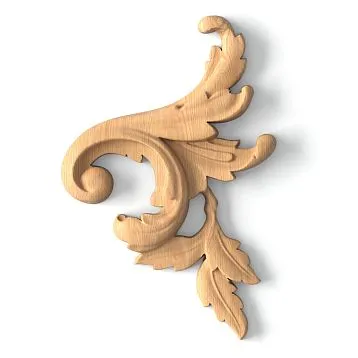
Carved appliqués in neoclassicism are used moderately — in the corners of main panels, possibly in the center of long moldings. The ornament is restrained — rosettes, palmettes, laurel wreaths in shallow relief. Bas-relief is preferable to high relief. Appliqués create accents but do not dominate, do not turn the wall into a continuous carved surface.
The number of appliqués is critical — one or two per wall is enough to create decorativeness without overloading. If every corner of every panel is decorated with an appliqué, the decor becomes excessive, the eye gets tired. Moderation is the key to neoclassicism.
Color palette: light, pastel
Neoclassicism gravitates towards light colors — white, cream, light gray, pale blue, soft green. A light palette creates a sense of spaciousness, air, light, which is critical for modern urban apartments where natural light is often insufficient. Moldings are painted to match the wall or a tone lighter, creating structure through shadows, not through contrast.
Furniture in a neoclassical interior is also light — white, cream, gray, with accent gilding or patina in the recesses of carving. Dark furniture — walnut, mahogany — is possible, but then the walls should be light to create contrast, preventing the interior from becoming gloomy.
Lighting: soft, multi-layered
Neoclassicism avoids harsh contrast lighting, preferring soft, multi-layered — a chandelier provides general light, sconces highlight walls, floor lamps create local zones. Hidden lighting behind cornices, inside niches adds atmosphere, makes decor voluminous, reveals the relief of moldings, carving on furniture.
Light color is warm — 2700-3000K — creates coziness, makes white and cream surfaces warm, alive. Cold light is inappropriate in neoclassicism — it makes the interior sterile, deprives it of soul.
Materials: natural, refined
Classical furniture is traditionally made from natural wood — oak, beech, walnut, mahogany. Modern neoclassicism maintains a commitment to natural materials but processes them with modern methods that improve performance properties.
Solid wood: the foundation of quality
Solid wood is the frame of quality classical furniture. Oak is strong, texture expressive, color varies from light golden to dark brown. Beech is denser, lighter, good for carving, but less moisture-resistant. Ash is strong, elastic, texture contrasting, impressive.
Modern processing technologies — thermal modification, oil impregnation, water-based varnishes — improve wood properties, making it more stable, resistant to moisture, temperature fluctuations. Solid wood remains an expensive material, but its durability, eco-friendliness, tactile qualities justify the price.
Painting and patination: creating depth
Neoclassical furniture is often painted — white, gray, cream paint hides wood texture, creating a uniform surface on which form and carving are more expressive. Patination — applying dark or gold paint into carving recesses, followed by sanding protruding parts — creates an antique effect, depth, emphasizes relief.
Patina can be graphite, gold, silver, copper — the choice depends on the overall palette of the interior. Gold patina adds luxury, but delicate, not flashy. Graphite creates restrained elegance, suitable for modern interiors where obvious gilding is avoided.
Upholstery: natural fabrics, neutral colors
Upholstery for neoclassical furniture uses natural fabrics: linen, cotton, wool, velvet, leather. Synthetic materials are avoided, even if more practical, because the tactile feel and breathability of natural fabrics are critical for comfort. Colors are neutral — beige, gray, cream, soft blue — without bright prints, at most a delicate stripe, diamond, or geometric pattern.
Button tufting is a classic upholstery technique creating a diamond-shaped relief — in neoclassicism it is more restrained than in Baroque: buttons are covered with the same fabric, without shiny capitonné, the tufting depth is less, the relief is more delicate.
Production technologies: traditions and innovations
Modern production of classical furniture combines the manual labor of craftsmen with the use of high-precision equipment, achieving quality unattainable by purely manual methods.
CNC milling: precision and repeatability
Computer Numerical Control (CNC) allows cutting complex shapes and ornaments with precision down to fractions of a millimeter, which is critical for symmetrical elements — legs, balusters, overlays that must be absolutely identical. CNC machines are programmed once and can then produce dozens, hundreds of identical parts, ensuring quality in serial production.
However, CNC does not completely replace manual work — finishing, fitting, patination are done by hand, preserving the individuality of each piece.
Laser cutting: detail and cleanliness
Laser cutting is used to create complex flat ornaments — overlays, inlays requiring high detail and clean edges. The laser cuts wood, plywood, MDF with a minimal heat-affected zone, producing a clean edge that requires no additional processing.
Laser cutting opens possibilities for creating modern geometric ornaments difficult to achieve with traditional methods, expanding the palette of decorative solutions in neoclassicism.
Hand carving: the soul of the piece
Despite technology, hand carving remains in demand for creating unique, authorial elements where individuality, not repeatability, is important. A master carver creates depth and plasticity that a machine cannot replicate — living curves, variations in details that make a piece not stamped, but alive.
Hand carving is more expensive than machine carving, but its value lies precisely in its uniqueness — each acanthus leaf is slightly different from the next, creating an organic quality inherent to natural forms.
Integration examples: furniture and decor in dialogue
Living room: symmetry and airiness
A neoclassical living room is a symmetrical composition where a central sofa is flanked by two armchairs; behind the sofa on the wall is a rectangular molding panel, with delicate carved overlays in the panel corners. An 8 cm wide ceiling cornice with a simple profile completes the walls; a central 60 cm diameter rosette from which a crystal chandelier hangs — not a lavish Baroque one, but more laconic, with straight pendants.
Furniture — the sofa and armchairs are upholstered in light gray velvet; the frame is painted cream with gold patina in the recesses of the carving. The coffee table has a glass top on wooden legs with fluting, adding lightness and transparency. A chest of drawers against the wall has facades with delicate central carving, matte brass handles.
Color palette — white, cream, light gray, gold accents. Lighting — chandelier, two floor lamps on either side of the sofa, hidden lighting behind the cornice. There is enough air — furniture does not fill all space, leaving the center of the room free, creating a sense of spaciousness.
Bedroom: coziness and restraint
A neoclassical bedroom — a bed with a high headboard upholstered in fabric with button tufting, but restrained, delicate. Behind the headboard on the wall is a molding panel repeating the bed's contour, linking furniture with architecture. Symmetrical bedside tables with one drawer, tapered, elegant legs.
A chest of drawers opposite the bed — wide, low, with five drawers, smooth facades, carving only on the center of the top row of drawers. Above the chest, a mirror in a frame with a simple profile, without excessive carving. Curtains — natural ivory-colored linen, without drapes, simple, straight, aligning with the minimalist aesthetic of neoclassicism.
Lighting — central chandelier, two sconces on either side of the bed at 160 cm height, table lamps on bedside tables. Color palette — white, beige, soft blue, gold accents. Atmosphere — coziness, calm, restrained elegance.
Office: status and functionality
A neoclassical study — a substantial but not bulky desk, rectangular top, tapered legs with fluting, apron with delicate carving. Behind the desk, a high-back chair upholstered in cognac-colored leather, frame painted dark brown, creating contrast with the overall light palette.
Bookcases on either side of the window — open shelves in the center, closed cabinets below, facades with simple framing, without excessive carving. Wall moldings create vertical panels that structure the space, making it architectural. Ceiling cornice, central rosette, chandelier — all laconic but expressive.
Color palette — white, gray, dark brown, brass accents. Lighting — chandelier, desk lamp on the table, sconces by the bookcases. Atmosphere — status, seriousness, but not oppressive, motivating, where functionality is not sacrificed for aesthetics.
Integration mistakes: what to avoid
Over-decorating
The main mistake — wanting to use everything at once: lavish carving on furniture, continuous moldings on walls, multi-tiered cornices, an abundance of overlays. Result — visual overload where the eye doesn't know where to rest, all elements compete rather than enhance each other.
Rule — if furniture is decorative, walls should be more restrained. If walls are actively decorated, furniture should be more laconic. Balance is critical.
Mismatch in scale
Large, massive furniture in a small room with thin moldings creates imbalance — furniture overwhelms, moldings get lost. Or vice versa — delicate furniture against powerful, wide moldings looks fragile, insufficient.
The scale of furniture and decor must correspond — large furniture requires expressive decor, delicate furniture requires delicate decor.
Color dissonance
Dark furniture in a light interior can work as an accent, but if there is a lot of furniture and the contrast is sharp, the interior falls apart into pieces, not reading as a whole. The color palette must be thought out — main tone, secondary, accent — and all elements must fit into it.
Gilding on furniture requires gold accents in the decor — door handles, mirror frames, lighting details. If gilding is only on the furniture, it looks isolated, unsupported.
Ignoring lighting
Carving, moldings, and relief are only visible under proper lighting. Flat overhead lighting kills relief, making decor unexpressive. Lighting should be multi-layered, with side sources that create shadows and reveal volume.
Ignoring lighting is a common mistake when the entire budget goes to furniture and decor, and lighting fixtures are chosen as an afterthought. The result is that the decor is not visible, the furniture doesn't stand out, and the interior appears flat.
STAVROS: creating neoclassical spaces
The company STAVROS creates classic furnitureandinterior decorationwhere traditions are reinterpreted through the lens of modern requirements.classic furniture designSTAVROS is a balance between historical form and contemporary aesthetics, where carving is delicate, proportions are adapted to modern dimensions, materials are natural, and finishing is modern.
The furniture collection includes tables, chairs, armchairs, dressers, wardrobes, and beds in neoclassical style, where each piece can be adapted to a specific project—size, paint color, and level of decorativeness can be modified. Made from solid oak, beech, and ash, ensuring strength, durability, and eco-friendliness. Painting according to the RAL catalog, patination with gold, silver, or graphite creates individuality and harmony with the interior.
interior decoration— moldings, cornices, trims, baseboards, carved overlays, rosettes, pilasters — are manufactured in the same styles as the furniture, ensuring compositional unity. Molding profiles are designed for neoclassicism—concise, expressive, and scaled for modern ceilings of 2.7–3 m. Wooden overlays with delicate relief create accents without overwhelming.
In-house production using high-precision equipment—CNC machines, laser cutting—is combined with the manual work of craftsmen, ensuring quality unattainable by purely industrial methods. Each carved detail is finished by hand and patinated, adding depth and individuality.
STAVROS professional designers help plan a neoclassical interior—select furniture and decor, calculate proportions, and create 3D visualizations that allow you to see the result before production and adjust details. Consultations on material selection, colors, and level of decorativeness help avoid mistakes and create a space where tradition and modernity work in harmony.
A stock program ensures quick shipment of popular items, while custom manufacturing allows for creating unique pieces to individual dimensions with exclusive carving. Delivery across Russia, installation by experienced teams, quality guarantee—a full cycle from project to implementation.
Choosing STAVROS means choosing craftsmanship, the quality of natural wood, a balance between tradition and modernity, and the opportunity to create a space whereClassic Furniture Designit is not a museum artifact but a living, functional aesthetic, where every day begins with joy from the surrounding beauty, where the interior never goes out of style, where forms tested by centuries are adapted to your life, where luxury is restrained, elegance is natural, where home is not just a place to live but a space reflecting your taste, status, and understanding that true luxury does not shout but confidently whispers, speaking the language of impeccable proportions, quality materials, and a precise balance between decor and space, between tradition and modernity.