Article Contents:
- Magic of Transformation: When Wood Becomes Art
- Psychology of Perceiving Relief Surfaces
- Technological Evolution: Traditions Meet Innovations
- Modern Equipment Serving Ancient Craft
- Precision Calculations and Artistic Intuition
- Variety of Styles: From Classic to Avant-Garde
- Geometric Carving: Triumph of Mathematical Harmony
- Floral Motifs: Nature in the Home
- Baroque Opulence: Theatricality in Interior Design
- Functional Application: Beauty in Every Detail
- Furniture Decor: Transforming the Ordinary
- Architectural Elements: Creating Atmosphere
- Space zoning
- Material Science: Choosing Wood for Carving
- Hardwood species
- Soft Woods for Fine Work
- Coniferous Species: Northern Beauty
- Regional Traditions in Modern Interpretation
- Russian Folk Arts
- European Schools of Carving
- Technical Aspects of Production
- Material preparation
- Carving Technology
- Protective Treatment
- Design Solutions: Integration into Modern Interiors
- Accent elements
- Color solutions
- Lighting: play of light and shadow
- Practical aspects of installation
- Foundation Preparation
- Mounting methods
- Final processing of joints
- Maintenance and operation
- Regular Maintenance
- Prevention of Damage
- Economic Aspects
- Investment attractiveness
- Impact on property value
- Trends of development
- Ecological requirements
- Decor Personalization
- Integration with smart technologies
- Manufacturer selection: quality criteria
- Production capacities
- Quality Control
- Service Maintenance
- Conclusion: Art That Lives for Centuries
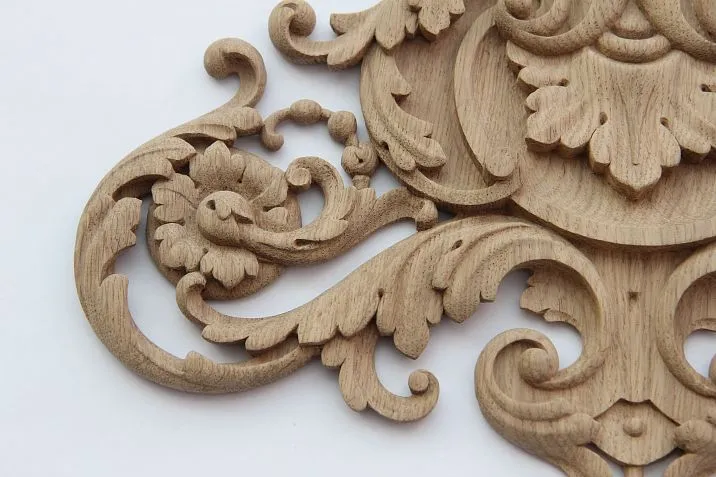
Is there anything more captivating than touching the carved surface of natural wood? When fingers glide over elegant ornament swirls, feeling every edge, every transition from light to shadow — at that moment, time seems to stand still. Carved Wooden Decor transforms an ordinary dwelling into a temple of beauty, where every detail carries the soul of the master and the memory of wood fibers.
Why, in the age of digital technology and synthetic materials, do we so strongly yearn for handcrafted beauty? What drives designers around the world to incorporate carved elements into the most modern projects? The answer lies in the very nature of this art — in the ability of wood to breathe, to live, and to create a unique aura in space.





Magic of Transformation: When Wood Becomes Art
In the hands of a true master, an ordinary wooden blank transforms into a work of art. Each stroke of the chisel releases the beauty contained in the material, each line tells its own story. Modern wooden decorative inlays are not merely decoration — they are a way to infuse soul into lifeless surfaces.
Imagine a kitchen where every facade is adorned with elegant inlays featuring floral ornamentation. Morning light streaming through the window creates a play of shadows on the relief surface, turning breakfast preparation into an aesthetic experience. Or a living room where a carved panel above the fireplace becomes a compositional focal point, drawing attention and creating an atmosphere of coziness.




Psychology of Perception of Relief Surfaces
The human brain is evolutionarily tuned to perceive natural forms and textures. We subconsciously seek a connection with nature, especially when in enclosed urban spaces. Carved inlays for furniture satisfy this need, creating tactile and visual sensations impossible to achieve with smooth artificial surfaces.
Relief carving stimulates the production of serotonin — the happiness hormone. This is not mysticism, but a scientifically proven fact. Touching natural wood reduces stress levels, normalizes heart rhythm, and creates a sense of harmony and calm.
Our factory also produces:


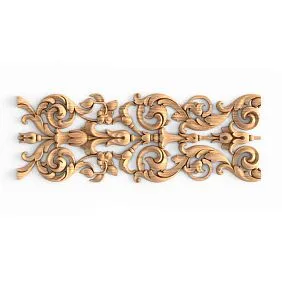


Technological evolution: traditions meet innovations
Get Consultation
Modern equipment at the service of ancient craftsmanship
Today's production of decorative wooden items combines centuries-old traditions with advanced technologies. High-precision CNC machines allow creating elements of jewel-like accuracy, unattainable through manual processing.
Laser scanning of wood reveals hidden defects even at the material preparation stage. Computer modeling allows calculating stresses in complex carved structures, preventing cracking and deformation.
However, no technology can replace final hand finishing. It is precisely the touch of human hands that imparts the elusive vitality that distinguishes a work of art from an industrial product.
Accuracy of calculations and artistic intuition
3D modeling has opened new possibilities for creating complex compositions. The designer can experiment with forms, calculate the play of light and shadow, adapt ornamentation to specific dimensions and proportions.
Carved wooden panels are created taking into account all the features of the room — ceiling height, window placement, overall stylistic concept. Each panel becomes part of the architectural concept, not merely a decorative element.
Variety of styles: from classic to avant-garde
Geometric carving: triumph of mathematical harmony
Geometric ornaments attract with their strictness and logic. Triangles, rhombuses, circles combine into complex patterns, where each element is precisely mathematically aligned with the whole. Such artistic wood carving is ideally suited for modern interiors, where minimalism and functionality are valued.
Geometric inlays look especially striking under side lighting. Each facet creates its own line of light or shadow, transforming a flat surface into a dynamic composition.
Floral motifs: nature in the home
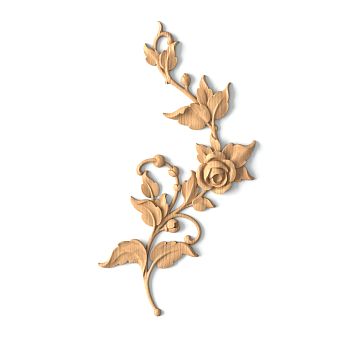
Floral ornaments remain the most popular in the world of carved decoration. Oak leaves symbolize strength and longevity, grapevines — abundance and fertility, roses — beauty and perfection. Each motif carries deep symbolic meaning, transforming decoration into a kind of visual language.
Modern masters are not limited to copying natural forms. They create stylized compositions where recognizable plant elements acquire a new sound, adapted to contemporary aesthetics.
Baroque opulence: theatricality in interiors
Baroque compositions with cherubs, cartouches, acanthus leaves — the choice of those who are not afraid of luxury and grandeur. Carved items in solid wood in the Baroque style require appropriate surroundings, yet can transform an ordinary room into palace chambers.
Modern interpretations of Baroque take into account the characteristics of contemporary housing. Scales are adapted to standard apartments, while preserving the recognizability and expressiveness of the style.
Functional application: beauty in every detail
Furniture decoration: transforming the ordinary
Furniture inlays are the most accessible way to introduce elements of carved art into an interior. Simple furniture becomes a piece of antique art, standard facades acquire individuality and character.
Wooden carved trim allows creating a unified stylistic concept, linking various interior elements together. Baseboards, door casings, cornices with the same ornamentation create a sense of cohesion and thoughtful design.
Architectural elements: creating atmosphere
Capitals, pilasters, friezes create architectural logic in a room. They transform an ordinary room into a space with its own history and character. Carved balusters for staircases not only serve a protective function but also become a vertical gallery of art.
Ceiling rose fixtures solve several tasks at once: they conceal the point of chandelier attachment, create a compositional center, and visually increase the room's height. A properly chosen rose fixture can dramatically alter the perception of the entire interior.
Space Zoning
Carved elements can serve a zoning function without compromising the openness of modern layouts. Decorative partitions, arched openings with carved frames, columns with capitals help create private zones in studio spaces.
Material science: choosing wood for carving
Hardwood Species
Oak remains the king among wood species for carving. Its density of 690 kg/m³ allows creating the finest details that will retain clarity for centuries. Oak inlays darken over time, acquiring a noble patina.
Beech attracts craftsmen with its uniform structure and excellent working properties. Its light shade is ideally suited for staining in any color. Beech products hold protective coatings well.
Ash combines the strength of oak with a beautiful contrasting texture. Its annual rings create an expressive pattern even without additional processing.
Softwoods for fine work
Linden is favored by carvers for its softness and uniformity. Intricate compositions of jewel-like precision can be created in linden blanks. However, this species requires mandatory protective treatment against moisture and pests.
Poplar shares similar properties with linden but has greater resistance to rot. It is often used to create elements in rooms with high humidity.
Coniferous species: Northern beauty
Spruce and fir bring a special northern charm to decoration. Resin pockets and contrasting texture create a unique pattern. Carved capitals made from coniferous species look especially harmonious in Scandinavian-style interiors.
Siberian cedar is valued not only for its beauty but also for its natural antiseptic properties. Cedar products create a special microclimate in the room, beneficial to health.
Regional traditions in modern execution
Russian folk crafts
Bogorodskaya carving, with its characteristic three-dimensional figures, finds new expression in modern interiors. Stylized animals and birds become original decorative elements for children's rooms.
Gorodets painting inspires creators of applied wooden decor to produce bright, cheerful compositions. Traditional motifs are adapted to modern aesthetics while preserving recognizability and uniqueness.
Khokhloma swirls with their characteristic golden background fit beautifully into luxurious interiors, creating an atmosphere of Russian baroque.
European schools of carving
The German school is renowned for technical perfection and precision of geometric ornaments. Gothic rosettes, with their strict beauty, are ideally suited for modern minimalist interiors.
Italian masters brought a special elegance to plant compositions in carving. Grapevines, acanthus leaves, and rosettes in Italian style are distinguished by particular plasticity and expressiveness.
French decorative schools are characterized by refinement and elegance. Baroque and rococo motifs executed by French masters acquire a special sophistication.
Technical aspects of production
Material Preparation
Quality carved decoration begins with proper wood preparation. Drying must be carried out according to special regimes ensuring even moisture removal without cracks or deformations.
Modern drying chambers allow precise control of temperature and humidity, bringing the material to optimal 8-12% moisture. Such wood is dimensionally stable and does not deform after manufacturing the items.
Carving technology
Modern carving combines machine and hand processing. CNC machines perform rough material removal and create basic ornament contours. This ensures high precision and repeatability of elements.
Hand finishing gives the item liveliness and individuality. The craftsman emphasizes the play of light and shadow, smooths transitions, and adds fine details that cannot be achieved by machine methods.
Protective treatment
Modern protective coatings not only protect wood from external influences but also highlight its natural beauty. Special oils penetrate deeply into the wood, protecting it from within.
Lacquer coatings create a strong protective film on the surface. Modern formulations do not yellow over time, retain the original wood color, and are resistant to ultraviolet light.
Design solutions: integration into modern interiors
Accent elements
It is not necessary to fill the entire room with carved elements. Often, just a few accent points are enough to radically change the character of the interior. Decorative wooden elements should function like jewelry — accentuating beauty without overwhelming the design.
A carved mirror frame in the hallway can become the home's calling card. A decorative appliqué on the office door will emphasize its status. Such solutions are effective and economically justified.
Color Solutions
Modern staining technologies allow achieving any shade — from the natural color of wood to exotic tones. It is possible to imitate valuable species, create aging effects, emphasize or neutralize natural texture.
White tinting is especially popular in Scandinavian interiors. It preserves the wood's texture but lightens it, creating a sense of airiness and purity.
Lighting: Play of Light and Shadow
Proper lighting can significantly enhance the effect of carved decoration. Side lighting creates dramatic shadows, highlighting the ornament's relief. Every recess and every protrusion begins to live its own life.
Hidden LED backlighting turns carved panels into independent sources of soft light. This solution is especially effective at night, when natural lighting is replaced by artificial lighting.
Practical Installation Aspects
Foundation Preparation
The quality of installation of carved decoration largely determines its durability and aesthetic effect. The base must be perfectly flat, clean, and dry. Any irregularities will be noticeable after mounting the overlays.
For wooden bases, it is recommended to pre-treat with antiseptics. This prevents mold and mildew development at the contact points of elements.
Methods of mounting
Adhesive bonding is the most common method of attaching decorative overlays. Modern adhesive compositions provide connection strength for decades. It is important to correctly choose the type of adhesive depending on the operating conditions.
Mechanical fastening is used for large elements bearing significant load. Hidden self-tapping screws and dowels allow ensuring reliable connection while preserving the item's aesthetics.
Final processing of joints
After installation, all joints must be carefully processed. Small gaps are filled with special wood-colored putty. After drying, repair areas are sanded and coated with a protective finish.
Care and Maintenance
Regular Maintenance
Carved decoration requires minimal but regular maintenance. Removing dust with a soft brush or vacuum cleaner with a brush attachment is the main maintenance procedure. It is important not to allow dust to accumulate in the recesses of the carving.
Periodic treatment with special wood compositions maintains the protective properties of the coating and highlights the beauty of the material.
Damage Prevention
Sharp temperature and humidity fluctuations may cause deformation of wooden elements. It is important to maintain a stable microclimate in the room, especially during the heating season.
Direct sunlight may cause uneven fading of wood. In rooms with large windows, it is recommended to use protective films or curtains.
Economic Aspects
Investment Appeal
Quality carved decoration is a long-term investment in the beauty and comfort of the home. Unlike trendy finishing materials that quickly become outdated, classical carving remains relevant for decades.
Antique carved elements only increase in value over time. Works by renowned masters become collector's items, and their cost may increase several times.
Impact on property value
Well-chosen carved decoration can increase property value by 7-15%, especially in the premium segment. Unique interiors are always valued higher than standard solutions.
This is especially relevant for suburban real estate, where individuality and exclusivity play an important role in evaluating the property.
Trends in development
Ecological Requirements
Modern consumers are increasingly paying attention to the ecological safety of materials. Certified wood from sustainably managed forests has become a standard of quality.
Safe coatings free of formaldehyde and other harmful substances are a mandatory requirement for products intended for residential use.
Decoration Personalization
Consumers increasingly demand individual solutions. Family crests, monograms, and personal symbols find expression in carved decoration. This transforms decoration into part of family history.
Modern technologies allow creating unique items without significant cost increases. 3D modeling makes personalization accessible to a wide range of customers.
Integration with smart technologies
Carved decoration is beginning to integrate with smart home elements. Hidden lighting with adjustable brightness and color temperature, built-in motion sensors — all this finds application in traditional carving art.
Choosing a Manufacturer: Quality Criteria
Production Facilities
Modern production of quality carved decoration requires significant investments in equipment and technology. The presence of CNC machines, drying chambers, and painting lines indicates the seriousness of the manufacturer's intentions.
Staff qualification plays an equally important role. Experienced master carvers are the main asset of any workshop producing Carved Wooden Decor.
Quality control
Multi-stage quality control must accompany every stage of production — from raw material acceptance to packaging of finished products. This ensures stable characteristics and absence of defects.
Product certification confirms compliance with established quality and safety standards. The presence of certificates is an important indicator of manufacturer reliability.
Service Maintenance
Quality service includes consultations on selecting items, assistance in calculating the number of elements, installation and maintenance recommendations. Professional manufacturers provide warranties on their products.
Conclusion: An Art That Lives for Centuries
In a world of rapidly changing technologies and fleeting fashion trends, wooden carved decoration remains an island of constancy and authentic beauty. This art unites generations, connects the past with the present, and creates a bridge between tradition and modernity.
Choosing carved elements for your home, we choose not just decoration. We choose a philosophy of life where beauty and quality are valued above fleeting gain. We create a space that will delight us and our descendants, passing down the warmth of natural wood from generation to generation.
Each carved element is a story told in the language of wood fibers. A story of the master who infused a piece of soul into the work. A story of the tree that grew under sun and rain, absorbing the energy of the earth. A story of the home that becomes not merely a place of habitation, but a temple of beauty and harmony.
In a modern world where artificial increasingly replaces natural, STAVROS remains a guardian of traditions of quality carved decoration. Decades of experience, deep understanding of the material, modern technologies, and unwavering dedication to craftsmanship allow us to create pieces that will become ornaments of any interior and a source of pride for the owner for many years.