Article Contents:
- Revolution in interior finishing: why wood beats plastic
- Psychology of perception of natural materials
- Tactile qualities and sensory perception
- Practical application in modern design
- Zoning space through vertical accents
- Horizontal compositions for expanding space
- Accent walls and focal points
- Materials and their unique characteristics
- Oak: the king of trees in interior design
- Beech: the standard of stability and elegance
- Ash: modern classic with character
- Exotic species: exclusivity in every detail
- Technical solutions and production innovations
- Precision processing: accuracy down to the micron
- Innovative drying technologies
- Ecologically clean coatings of the new generation
- Installation and mounting: art in details
- Preparation stage: foundation of quality
- Mounting methods: reliability and aesthetics
- Joint and Connection Processing
- Styles and Design Directions
- Classic interiors: the grandeur of traditions
- Modern minimalism: beauty of simplicity
- Scandinavian Style: Harmony with Nature
- Loft: industrial aesthetics
- Economic benefits and long-term investments
- Impact on property value
- Energy efficiency and ecological benefits
- Durability and possibility of restoration
- Care and maintenance: preserving beauty for decades
- Preventive care and cleaning
- Controlling microclimate
- Periodic Coating Renewal
- Integration with modern technologies
- Built-in lighting systems
- Hidden communications and storage
- Integration with climate control systems
- Trends in development and the future of the material
- Ecological certification and sustainable development
- Digital Technologies and Personalization
- Hybrid materials and composites
- About the Company STAVROS
- Frequently Asked Questions

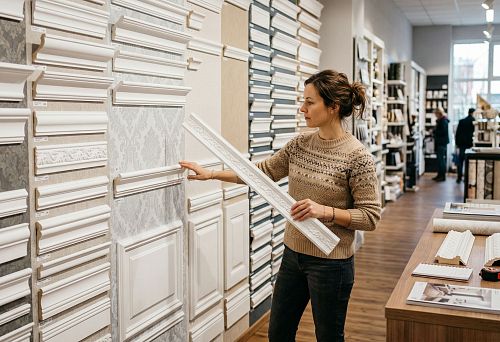
How to turn ordinary walls into a work of architectural art? The answer lies in one simple, yet brilliant solution — usingwooden wall profileThis material is capable of radically changing the perception of space, creating volume, texture, and a unique character where there were once merely flat surfaces. But what lies behind this magical transformation, and why is wood still the unrivaled choice for discerning homeowners?
A true revolution is taking place in the world of finishing materials. Synthetic analogs offer convenience and affordability, but only natural wood provides the depth of sensation that turns a home into a true hearth of family comfort. Every fiber of wood carries the story of the tree’s growth, its struggle against the elements, its slow maturation under sun and rain.



Revolution in interior finishing: why wood beats plastic
Why, in the age of high technology, designers increasingly turn to ancient materials? The secret lies in wood’s unique ability to create an emotional connection with people.Trimming ItemsMade from natural solid wood possess a special energy that cannot be imitated by artificial materials.




Psychology of perception of natural materials
The human brain is evolutionarily wired to perceive natural textures as safe and comfortable. Studies show that people surrounded by natural materials experience less stress and feel more relaxed. Wooden wall profiles activate these ancient mechanisms, creating a subconscious sense of safety and harmony.
Modern neuroscience explains this phenomenon through the concept of 'biophilia' — a built-in human need for contact with nature. Even processed wood retains its natural characteristics — a unique grain pattern, the ability to 'breathe', natural aromas.
Our factory also produces:




Tactile qualities and sensory perception
Touching a wooden surface evokes a whole range of positive sensations. The warmth of the material, its natural texture, barely perceptible roughness — all of this creates a rich sensory experience.wooden wall profileTransforms a wall from a purely visual element into a multidimensional object that can be seen and felt.
This tactility is especially important in children’s rooms, where little explorers learn about the world through touch. Natural wood is safe, eco-friendly, and provides correct sensory signals for a developing organism.
Get Consultation
Practical application in modern design
Modern designers view wooden wall profiles not merely as a finishing material, but as an architectural modeling tool. With it, you can visually alter the proportions of a room, create zones of different functional purposes, and add dynamism to static architecture.
Zoning space through vertical accents
Vertically installedWooden planksCreate a powerful visual effect of increasing ceiling height. This technique is especially effective in rooms with standard heights of 2.5–2.7 meters, where every centimeter of visual space counts.
Rhythmic placement of vertical elements creates musicality in architecture. Different plank widths, variable gaps between them, interplay of light and shadow — all of this transforms the wall into a complex composition that lives and breathes with the lighting.
Horizontal compositions for expanding space
Horizontal placement of profiles produces the opposite effect — visually expands the room, making it appear more spacious. This technique is indispensable in narrow corridors, small rooms, and elongated spaces.
Combining horizontal and vertical elements allows creating complex geometric compositions. Intersections of planks form a modular grid that can serve as a base for placing decorative elements, paintings, and lighting fixtures.
Accent walls and focal points
Fully covering one wall with a wooden profile creates a powerful accent that immediately attracts attention and becomes the compositional center of the room. Such an accent wall can serve as a backdrop for a fireplace, TV, headboard, or workspace.
It is important to choose the right wall for accenting. The best options are surfaces visible upon entering the room, or those illuminated by natural light from windows. Side lighting highlights the profile’s relief, creating a dynamic interplay of light and shadow.
Materials and their unique characteristics
Choosing the wood species for profile manufacturing is an art requiring deep understanding of the properties of different types of wood. Each species possesses a unique set of characteristics affecting the appearance, durability, and performance of the finished product.
Oak: the king of trees in interior design
Oak profiles embody strength, reliability, and nobility. The dense oak structure with characteristic large pores creates an expressive texture that especially looks striking under proper lighting. Natural tannins in the wood structure provide inherent protection against rot and insects.
The color palette of oak is remarkably rich — from light golden tones of young wood to deep brown shades of mature wood. Stained oak, with its noble dark hue, is especially prized in classic and modern premium interiors.
Beech: the standard of stability and elegance
Beech wood is renowned for its uniform structure and dimensional stability. This quality makes beech ideal for creating profiles of complex geometry, where precise dimensions and minimal deformation are critical.
Beech’s soft pinkish tone is versatile and easily harmonizes with various interior color schemes. Fine-grained texture creates a delicate surface that beautifully accepts various finishing treatments — from transparent varnishes to opaque paints.
Ash: modern classic with character
Ash profiles represent the ideal balance between the traditional qualities of natural wood and modern aesthetics. The contrasting texture with clearly defined growth rings creates a dynamic pattern that particularly stands out in contemporary interiors.
The high strength and elasticity of ash allow for the creation of thin, elegant profiles that would be impossible with other species. The light color with a characteristic greenish tint harmonizes beautifully with modern finishing materials — concrete, metal, glass.
Exotic Species: Exclusivity in Every Detail
Exotic species are used to create truly unique interiors — wenge, zebrawood, merbau, teak. Each of these species possesses unique characteristics — from the almost black color of wenge to the golden-brown tones of teak, with its natural oily finish.
Exotic species require a special approach to processing and installation. Their high density and natural oil content may complicate the finishing process, but the result justifies all the effort — such profiles become true works of art.
Technical solutions and production innovations
Modern production of wooden wall profiles is a symbiosis of traditional craftsmanship and advanced technologies. Computer-controlled machines, laser measurement systems, robotic sorting complexes — all serve one purpose: creating products of impeccable quality.
Precision processing: accuracy to the micron
Modern CNC milling centers can process wood with precision unattainable by manual labor. Dimensional deviations do not exceed tenths of a millimeter, ensuring ideal profile geometry and flawless connections.
Multi-spindle machines allow creating complex profiles with multiple radii, chamfers, and grooves in a single pass. This not only increases productivity but also guarantees identical elements in each batch, which is critically important for creating harmonious compositions.
Innovative drying technologies
Proper wood drying is the foundation of quality for any wooden product. Modern drying complexes use vacuum technologies that reduce drying time without compromising wood quality.
Gradient drying ensures even moisture removal throughout the cross-section of the blank, eliminating internal stresses. This guarantees dimensional stability of finished profiles during operation.
Eco-friendly coatings of the new generation
Modern water-based protective-decorative coatings contain no harmful solvents or formaldehyde. They are safe for human health and the environment, while providing reliable protection for wood against moisture, UV radiation, and mechanical damage.
Nanotechnology has enabled the creation of coatings with unique properties — self-cleaning surfaces, antibacterial compositions, coatings with variable light reflection coefficients. These innovations open new possibilities for designers and architects.
Installation and mounting: art in details
The quality of mounting wooden wall profiles largely determines the final result. Even the most perfect materials can be ruined by unskilled installation, whereas skilled mounting can transform simple elements into works of art.
Preparation stage: foundation of quality
Preparing walls for profile installation requires special attention to details. The surface must be perfectly flat, dry, and free of dust and contaminants. Even the slightest irregularities will be noticeable after profile installation, especially under side lighting.
Wall marking is a critically important stage that determines the quality of the entire composition. Laser levels and measurement systems ensure precise marking, but require the installer to understand principles of visual perception and work with perspective.
Mounting methods: reliability and aesthetics
The choice of mounting method depends on the type of wall, weight of profiles, and operating conditions. Mechanical mounting with self-tapping screws ensures maximum reliability, but requires subsequent concealment of screw heads.
Adhesive mounting creates a cleaner appearance without visible mounting marks. Modern polyurethane adhesives provide strong bonding and compensate for minor temperature-induced wood deformations.
Hidden mounting systems using special guides and clamps allow creating "floating" structures, where profiles can be removed for maintenance or replacement without damaging the wall.
Joint and connection processing
The quality of corner joints is a true measure of the craftsman's skill. Precise "on the nose" trimming, perfect fitting of elements, filling micro-gaps with special compounds — all these operations require experience and patience.
Modern corner milling cutters allow creating complex interlocking joints that ensure strength and precision of the joint. Such joints are practically invisible and do not require additional fasteners.
Styles and design directions
wooden wall profileCapable of realizing any stylistic direction — from classic luxury to ultra-modern minimalism. The key to success lies in the correct choice of wood species, profile geometry, and its placement method.
Classic interiors: the grandeur of traditions
In classic interiors, wooden profiles play the role of architectural elements that create the impression of palace luxury. Complex multi-tiered compositions withwooden moldingsColumns, cornices transform an ordinary room into a grand hall.
Gilding, patination, carved elements add additional luxury to profiles. It is important to observe classical proportions and canonical forms — any deviation from the rules may destroy the composition's harmony.
Modern minimalism: beauty of simplicity
In minimalist interiors, wooden profiles serve as a means of organizing space and creating clear geometric forms. Simple rectangular cross-sections, monochromatic finishes, and perfect geometry — these are the main principles of this style.
Asymmetric compositions, play of scales, contrasting combinations of different wood species create dynamic, modern interiors. It is important not to overload space with details — each element must have a functional justification.
Scandinavian style: harmony with nature
Scandinavian design tends toward light wood species — pine, birch, beech. Natural tones, simple forms, matte finishes create a sense of freshness and purity.
Wooden planksIn Scandinavian style, they are often left in natural color or painted white. Horizontal placement emphasizes the connection with the natural landscapes of northern countries.
Loft: industrial aesthetics
In loft style, wooden profiles contrast with rough industrial materials — brick, concrete, metal. Weathered surfaces, visible traces of processing, deliberate roughness create an atmosphere of old factories and workshops.
Dark wood species — walnut, wenge, stained oak — look especially striking against light brick walls. Metal fastening elements may remain visible, becoming part of the decorative composition.
Economic benefits and long-term investments
Investing in high-quality wooden profiles for walls is an investment in long-term beauty and comfort of the home. With proper selection and installation, such finishing lasts for decades, recouping initial costs through improved quality of life and increased property value.
Impact on property value
Quality finishing with natural materials significantly increases the market value of real estate. Buyers are willing to pay extra for homes and apartments with thoughtful design and premium finishing materials.
Statistics show that usingof wooden skirting boardsand other elements made from natural solid wood increases property value by 15-25%. These investments are fully recouped upon selling the property.
Energy efficiency and ecological benefits
Wooden profiles have natural insulating properties, helping to reduce heat loss through walls. In cold climates, this results in noticeable savings on heating.
Wood's ability to regulate air humidity reduces the load on air conditioning systems and creates a more comfortable microclimate in rooms. This is especially important for people with allergic conditions and respiratory problems.
Durability and the possibility of restoration
Unlike synthetic materials, wooden profiles can be restored and renewed. Minor damage is removed by sanding and re-finishing; major defects are addressed by replacing individual elements.
The ability to change color and type of finish allows adapting the finish to interior changes without fully replacing profiles. This significantly reduces long-term maintenance costs.
Care and maintenance: preserving beauty for decades
Proper care of wooden profiles ensures preservation of their original appearance and protective properties for many years. Different types of finishes require specific maintenance approaches.
Preventive care and cleaning
Regular dry cleaning with soft cloth or vacuum cleaner with soft attachment removes surface dust and prevents its accumulation in profile relief. Wet cleaning is done with slightly damp cloth using special wood cleaning agents.
Avoid aggressive cleaning agents containing ammonia, chlorine, abrasive particles. These substances may damage the finish and alter the wood color. For removing complex stains, use specialized wood cleaners.
Microclimate control
Stable air temperature and humidity minimize wood deformation and extend the lifespan of finishes. Optimal air humidity is 45-65%, temperature — 18-24°C.
Using humidifiers during heating season prevents wood from drying out and cracking. Avoid placing profiles near heat sources — radiators, fireplaces, heating appliances.
Periodic coating renewal
Even the highest quality finishes wear out over time and require renewal. The frequency of renewal depends on usage intensity, environmental conditions, and type of finish.
Oil-based finishes require renewal every 3-5 years; varnish-based finishes — every 5-7 years. Early signs of wear — loss of gloss, appearance of micro-cracks, color change — indicate the need for preventive maintenance.
Integration with modern technologies
Modern wooden profiles for walls can be integrated with smart technologies, creating functional interior elements of the next generation. Built-in lighting systems, concealed communications, microclimate sensors transform decorative elements into active components of a smart home.
Built-in lighting systems
Special profiles with grooves for LED strips create striking wall backlighting. Concealed light sources highlight profile relief, creating dynamic interplay of light and shadow. Dimmable systems allow adjusting brightness according to time of day and mood.
Colorful RGB strips open up possibilities for creating color scenarios suited to different room functions. Warm white light for evening relaxation, cool white for work-related activities, and colorful effects for festive occasions.
Hidden communications and storage
Large-section hollow profiles can be used for laying electrical cables, internet cables, and other communications. This is especially relevant during the renovation of old buildings, where laying new communications may be difficult.
Special profiles with hinged panels create hidden niches for storing documents, keys, and other small items. Such solutions are especially popular in entryways and offices.
Integration with climate control systems
Wooden profiles can be integrated with ventilation and air conditioning systems. Special perforated elements provide discreet fresh air supply or exhaust removal.
Built-in temperature and humidity sensors allow smart home systems to automatically maintain optimal microclimate. These data are also used to monitor the condition of wooden elements and predict maintenance needs.
Trends in development and future of the material
The market for wooden wall profiles is constantly evolving, offering new solutions and technologies. Ecological requirements, digitalization of production, and individualized consumption are shaping trends for the near future.
Ecological certification and sustainable development
Growing consumer ecological awareness stimulates the development of "green" technologies in wood processing. FSC and PEFC certification is becoming a standard for responsible manufacturers.
New waste recycling technologies allow using nearly 100% of raw material volume.Wooden moldingand other small items are made from production waste.
Digital technologies and personalization
3D modeling and virtual reality allow customers to see the result even before work begins. Parametric design opens up possibilities for creating unique profiles tailored to specific architectural tasks.
Digital printing technologies on wood allow applying any images and ornaments to profile surfaces. This opens up limitless possibilities for interior customization.
Hybrid materials and composites
Advancements in technology enable the creation of hybrid materials combining the advantages of natural wood with the practicality of synthetic additives. Wood-polymer composites offer enhanced moisture resistance while retaining the aesthetics of natural wood.
Nanotechnologies allow modifying the wood surface, imparting new properties — self-cleaning, antibacterial characteristics, and variable texture.
About the company STAVROS
STAVROS is a recognized leader in the Russian market for premium wooden trim products. Over the years, the company has built a reputation as a reliable supplier of high-quality products for the most demanding projects.
STAVROS specializes inproducing trim itemsfrom premium wood species. Own production facilities equipped with modern European equipment allow quality control at every stage — from raw material preparation to packaging of finished products.
STAVROS philosophy is based on combining the best traditions of Russian carpentry craftsmanship with innovative wood processing technologies. Each product undergoes a multi-stage quality control, guaranteeing compliance with the strictest standards.
The STAVROS team includes experienced technologists, designers, and master carpenters capable of solving any complexity of tasks. Individual approach to each project, possibility of manufacturing custom items according to author's drawings, flexible discount system make cooperation with STAVROS beneficial and comfortable.
Frequently asked questions
Which wood species are best suited for making wall profiles?
The choice of wood species depends on interior style, usage conditions, and project budget. Oak provides maximum strength and prestige, beech offers dimensional stability, ash provides modern aesthetics, and pine offers optimal price-to-quality ratio. For humid areas, species with natural moisture resistance or special treatment are recommended.
Can wooden profiles be installed in bathrooms and kitchens?
Yes, but under certain conditions. Special moisture protection treatment, quality ventilation, and avoiding direct contact with water are required. It is recommended to use stable species — oak, teak, merbau — and modern water-resistant coatings.
How much does installation of wooden wall profiles cost?
Installation cost depends on configuration complexity, type of fastening, wall condition, and region. On average, installation accounts for 40–80% of material cost. Simple horizontal or vertical compositions are cheaper to install, while complex geometric patterns require more time and skilled labor.
How to properly care for wooden profiles?
Regular dry cleaning with soft cloth, periodic wet cleaning with special wood cleaning agents, control of indoor microclimate. Avoid aggressive cleaning agents and abrasive materials. Periodically renew protective coating according to manufacturer's recommendations.
Can the profile color be changed after installation?
Yes, wooden profiles can be repainted and stained. Surface preparation is required — removal of old coating, sanding, priming. The choice of new coating must match the operating conditions and compatibility with the substrate.
What tools are needed for self-installation of profiles?
Basic set includes a circular saw or miter gauge, drill, level, tape measure, pencil. For quality work, laser level, square, clamps, sander are desirable. Complex profiles may require specialized tools — router, laminate router, pneumatic stapler.