Article Contents:
- Anatomy of price: what determines the cost of wooden skirting board
- Species hierarchy: from pine to exotic
- Profile complexity — art in numbers
- Processing quality — details that form the price
- Production factors in pricing
- Drying technology — foundation of stability
- Dimensional stability — investments in quality
- Production volumes — economies of scale
- Regional pricing characteristics
- Logistical costs
- Seasonal price fluctuations
- Finishing Coatings and Their Impact on Cost
- Oil-based coatings (price increase by 15-25%)
- Lacquer coatings (price increase by 25-40%)
- Branding and its impact on price
- Premium brands (markup of 50-100%)
- Local manufacturers (base price)
- Hidden costs when purchasing skirting board
- Trim elements
- Fastening systems
- Cost optimization strategies
- Wholesale Purchases
- Seasonal Offers
- Direct supplies from manufacturer
- Calculating total project cost
- Room measurement
- Additional work
- Investment attractiveness of quality skirting board
- Long-Term Economic Efficiency
- Impact on property value
- Technological innovations and their impact on price
- Thermo-modification of wood
- Glued constructions
- Digital technologies in production
- Ecological aspects and their impact on price
- Certified wood
- Ecologically clean coatings
- Comparative Analysis of Alternatives
- MDF with coating (200-800 rubles per linear meter)
- Polyurethane (300-1200 rubles per linear meter)
- Solid wood (800-5000 rubles per linear meter)
- Practical Recommendations for Selection
- Budget determination
- Style Compatibility with Interior
- Conditions of use
- Future pricing trends
- Production Automation
- Logistics development
- Ecological requirements
- Digitalization of trade
- Frequently Asked Questions
- Conclusion

Have you ever wondered whyWooden baseboard pricewhich can differ by dozens of times? Why can one linear meter cost 200 rubles, while another — 5000? Behind these numbers lies an entire system of factors, understanding which will help you make a truly informed decision and get maximum value for every ruble invested.
In the world of finishing materials, price is not just a number on a tag. It is encoded information about the quality of raw material, complexity of production, durability of the product, and brand prestige. Understanding pricing mechanisms allows you not only to save money, but also to invest with maximum efficiency.


Anatomy of price: what determines the cost of wooden skirting board




Species hierarchy: from pine to exotics
The main factor influencingWooden baseboard priceis the wood species. Each species has its unique characteristics, which are directly reflected in the cost.
Coniferous species (150-400 rubles per linear meter)
Pine and spruce are the most accessible options. Low wood density (400-500 kg/m³) makes it easy to process, but less durable. The resinous nature of coniferous species requires special surface preparation before final finishing.
European hardwood species (800-2500 rubles per linear meter)
Oak, beech, ash — the golden middle ground between price and quality. Density of 600-750 kg/m³ ensures excellent strength and durability. Beautiful texture and noble tones make these species universally suitable for most interiors.
Exotic species (3000-8000 rubles per linear meter)
Walnut, teak, wenge, merbau — materials for luxury interiors. Unique colors, expressive texture, exceptional strength, and rarity of raw material form high cost.
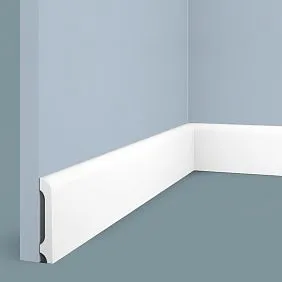
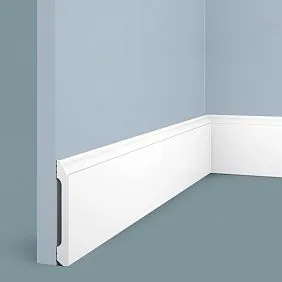
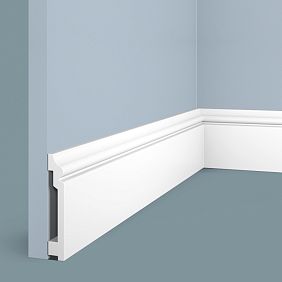
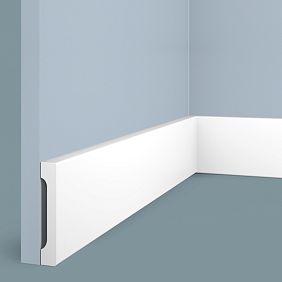
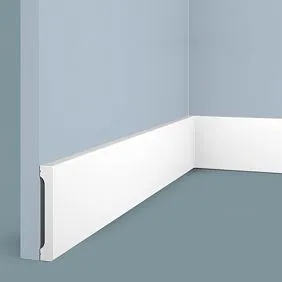
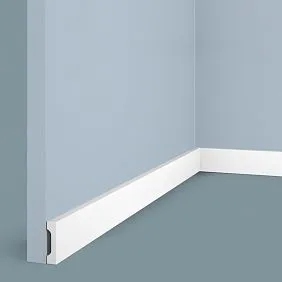
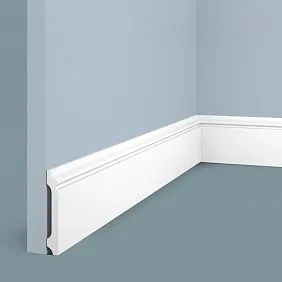
Our factory also produces:

Profile complexity — art in numbers
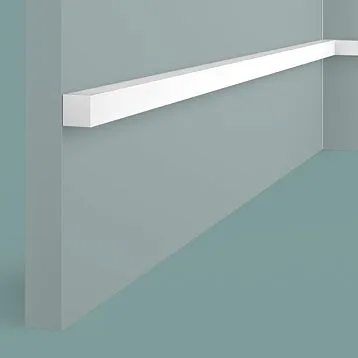
A simple rectangular profile is the base from which the surcharge for complexity is calculated.Wooden moldingsComplex configurations require special router bits, precise equipment setup, and higher operator skill.
Simple profiles (coefficient 1.0)
Rectangular cross-section, minimal rounded corners. Suitable for modern interiors in minimalist, high-tech, and loft styles.
Classic profiles (coefficient 1.3-1.7)
Two- or three-step profiles with smooth transitions. Require more complex processing, but create an elegant appearance.
Complex carved profiles (coefficient 2.0-3.5)
Multi-step profiles with decorative elements. Each transition requires a separate pass on the machine, significantly increasing production time.
Get Consultation
Processing quality — details that form the price
The level of surface processing directly affects the final cost of the product. Quality multi-stage sanding with gradually decreasing abrasive grit can increase the cost by 20-40%.
Basic processing
Milling with surface roughness Ra 6.3-12.5 μm. Requires additional sanding before final finishing.
Standard processing
Final milling followed by sanding to Ra 3.2-6.3 μm. Surface ready for protective coatings.
Premium processing
Multi-stage polishing to mirror finish Ra 0.8-1.6 μm. Such a surface highlights every nuance of wood texture.
Production cost factors
Drying technology — the foundation of stability
Production of trim elementsBegins with proper wood drying. This process may take from several days to several months, significantly affecting cost.
Natural drying (coefficient 0.8)
Drying outdoors for 1-3 years. The cheapest, but unpredictable method. Wood moisture may vary from 15% to 25%.
Kiln drying (coefficient 1.0)
Controlled process in special chambers. Allows achieving 8-12% moisture in 2-4 weeks. Standard industrial method.
Vacuum drying (coefficient 1.5)
Drying in vacuum chambers at reduced pressure. Most gentle moisture removal without internal stresses. Achieves 6-8% moisture.
Dimensional stability — investment in quality
Geometric accuracy of products is determined by equipment quality and staff expertise. Tolerances ±0.5 mm are standard, ±0.1 mm — premium.
Modern four-sided CNC planers allow achieving accuracy ±0.05 mm, but such equipment costs millions of rubles, reflected in product price.
Production volumes — economies of scale
Batch production reduces cost through process optimization and bulk raw material purchases. Individual orders always cost more.
Mass production
Standard profiles, large runs. Cost reduced by 30-50% compared to individual orders.
Batch production
Limited runs of popular profiles. Compromise between price and assortment variety.
Custom production
Unique profiles made to order. Requires manufacturing special tooling, increasing cost by 2-3 times.
Regional pricing features
Logistical costs
Transportation of wooden products — a significant component of final cost.Wooden Skirting BoardsHave relatively low unit cost at high volumes, making delivery expensive.
Local production
Logistics savings may amount to 15-25% of final cost. Additional benefit — opportunity for personal quality control.
Import from neighboring regions
Cost increases by 10-20%. Compensated by broader assortment and manufacturer specialization.
Long-distance import
Cost increases by 30-50%. Justified only for exclusive species or unique profiles.
Seasonal Price Fluctuations
The construction industry has pronounced seasonality, which affects pricing.
Winter period (December - February)
Reduced demand leads to price reductions of 10-15%. Optimal time for purchasing.
Spring-summer period (March - August)
Peak construction activity. Prices are at maximum, possible delivery delays.
Autumn period (September - November)
End of the construction season. Moderate prices, good product availability.
Finish coatings and their impact on cost
Oil-based coatings (cost increase by 15-25%)
Natural oils highlight the natural beauty of wood, but require proper surface preparation and multiple layers of application.
Linseed oil
Classic coating with deep penetration into wood. Polymerization time — 24-48 hours between layers.
Tung oil
More durable and water-resistant coating. Ideal for humid areas.
Wax-based compositions
Create a silky surface with a slight sheen. Require regular reapplication.
Varnish coatings (cost increase by 25-40%)
Polyurethane varnishes provide maximum protection and durability, but require professional application.
One-component varnishes
Easy to apply, but less durable. Suitable for residential areas with low traffic.
Two-component varnishes
Maximum strength and wear resistance. Used in commercial spaces.
Water-based varnishes
Ecologically safe, odorless. Ideal for children's rooms and bedrooms.
Branding and its impact on price
Premium brands (price increase of 50-100%)
Well-known manufacturers invest in technology development, quality control, and marketing. These costs are included in the product price.
European brands
Highest quality, innovative technologies, but maximum cost.
Domestic premium brands
Combination of high quality with more affordable pricing. Adaptation to Russian conditions.
Local manufacturers (base price)
Small-scale manufacturers often offer the optimal price-to-quality ratio for standard solutions.
Hidden costs when purchasing baseboards
Fitting elements
A complete baseboard system includes not only main strips but also connecting elements.
Internal corners (50-150 rubles per piece)
Pre-fabricated elements ensure perfect connection geometry.
External corners (80-200 rubles per piece)
More complex to manufacture due to greater material consumption.
Connectors (30-80 rubles per piece)
For joining strips on straight sections.
End caps (20-50 rubles per piece)
For neat finishing of baseboards in doorways.
Fastening systems
Traditional mounting (10-25 rubles per linear meter)
Screws, anchors, filler for covering mounting points.
Hidden mounting (50-120 rubles per linear meter)
Special clips and mounting strips. Ensure perfect appearance.
Adhesive mounting (15-35 rubles per linear meter)
Special polyurethane adhesives. Suitable for flat walls and light profiles.
Cost Optimization Strategies
Wholesale purchases
Most manufacturers offer discounts for orders of 500 linear meters or more. Discount may be 15-25%.
Material storage
Requires special conditions: temperature 18-22°C, humidity 45-60%, horizontal storage.
Joint purchasing
Combine with neighbors or colleagues to achieve bulk order volume.
Seasonal offers
Planning purchases during the winter period can ensure significant savings.
Pre-orders
Placing orders during off-season with a 10-20% discount off future price.
Promotional offers
Clearance of remaining stock, collection changes, anniversary discounts.
Direct deliveries from the manufacturer
Excluding intermediaries may reduce the cost by 20-35%.
Factory showrooms
Opportunity to see the entire assortment and receive professional consultation.
Production tours
Some manufacturers organize tours that allow you to assess the production quality.
Calculation of the total project cost
Measuring the Room
Accurate material quantity calculation — the basis for proper budgeting.
Room perimeter
Base value for calculation. Take into account all protrusions, niches, columns.
Door openings
Standard width 80-90 cm. In multi-room apartments, savings can be significant.
Allowance for trimming
5-10% for simple rooms, 15-20% for complex geometry.
Additional work
Demolition of old skirting board (50-150 rubles per linear meter)
Depends on the method of mounting and the condition of the base.
Wall leveling (200-500 rubles per square meter)
Required if deviations exceed 5 mm over the length of the skirting board.
Painting or staining (100-300 rubles per linear meter)
If planning to change color or add additional protection.
Investment attractiveness of quality skirting boards
Long-term economic efficiency
QualityWooden baseboard pricewhich may seem expensive, but in the long run proves to be a more cost-effective investment.
Service Life
Cheap MDF — 5-7 years
Quality solid wood — 30-50 years
Premium materials — 50-100 years
Cost of one year of operation
When calculated over the entire service life, a quality skirting board often proves cheaper than cheaper alternatives.
Impact on property value
Quality finishing increases the attractiveness of real estate to potential buyers.
Economy segment
Minimal impact, but meticulous finishing is appreciated.
Mid-range segment
Quality materials may increase cost by 3-5%.
Premium segment
Finishing details are critically important. Cost increase may be 10-15%.
Technological innovations and their impact on price
Thermo-modification of wood
Processing at 160-220°C improves performance characteristics, but increases cost by 40-60%.
Advantages
-
Enhanced dimensional stability
-
Improved biostability
-
Beautiful dark color
-
Reduced moisture absorption
Glued constructions
Glued boardfor baseboards provides maximum stability, but requires special equipment.
Production Technology
Lamellas 10-20 mm thick are glued under pressure. Minimal deformation, no internal stresses.
Increased cost
25-40% compared to solid wood, but significantly higher stability.
Digital technologies in production
CAD/CAM systems allow creating unique profiles and optimizing material usage.
Custom design
Creating profiles for a specific interior. Design cost: 15,000–50,000 rubles.
Cutting optimization
Computer programs minimize waste, reducing cost by 5-10%.
Environmental aspects and their impact on price
Certified Wood
FSC or PEFC forest certification confirms sustainable forestry, but increases cost by 10-20%.
Benefits of certification
-
Reproduction of forest resources
-
Social responsibility
-
Compliance with international standards
-
Opportunity to participate in "green" projects
Ecologically Safe Coatings
Water-based varnishes and natural oils cost 15-30% more than traditional ones, but ensure health safety.
Comparative analysis of alternatives
MDF with finish (200-800 rubles per linear meter)
Advantages
-
Affordable price
-
Wide selection of finishes
-
Easy to install
Disadvantages
-
Formaldehyde content
-
Low moisture resistance
-
Not restorable
-
Short service life
Polyurethane (300-1200 rubles per linear meter)
Advantages
-
Moisture resistance
-
Ease of maintenance
-
Possibility of painting
Disadvantages
-
Artificial appearance
-
Color stability
-
Disposal issues
Solid wood (800-5000 rubles per linear meter)
Advantages
-
Naturalness and eco-friendliness
-
Longevity
-
Restoration possibility
-
Improved microclimate
-
Increase in property value
Disadvantages
-
High initial cost
-
Requirements for operating conditions
-
Need for periodic maintenance
Practical Recommendations for Selection
Budget Determination
Minimal budget (up to 500 rubles per linear meter)
Coniferous species, simple profiles, basic treatment. Suitable for cottages and technical rooms.
Optimal budget (500-1500 rubles per linear meter)
Oak, beech, ash. Classic profiles, quality treatment. Universal solution for most interiors.
Premium budget (over 1500 rubles per linear meter)
Exotic species, complex profiles, exclusive finish. For status-oriented interiors.
Style compatibility with interior design
Classical styles
Complex multi-step profiles from premium wood species.
Modern styles
Simple geometric profiles, possibly tinted in current colors.
Eco-styles
Natural tones, oil-based finishes, highlighting wood texture.
Conditions of use
Dry rooms
Any species and finishes.
Moderate humidity
Stable species with moisture-resistant finishes.
High humidity
Larch, thermowood, special impregnations.
Future pricing trends
Production automation
Introducing robotic lines will reduce manual labor share, which may stabilize prices for standard products.
Logistics development
Improving transportation infrastructure will reduce logistics costs, especially for remote regions.
Ecological Requirements
Stricter environmental standards may lead to higher prices for certified products.
Trade Digitization
Development of e-commerce will reduce showroom maintenance costs, which may affect prices.
Frequently asked questions
Why is the price of wooden skirting board so different?
Price is formed by many factors: wood species, profile complexity, processing quality, production volume, branding. A difference of 10-20 times between the cheapest and exclusive options is normal for this market.
Which wood species offers the best price-to-quality ratio?
For most interiors, European hardwoods such as oak, beech, and ash are optimal. They provide good strength, attractive appearance, and reasonable cost.
Is it worth buying the cheapest skirting board?
The cheapest options often have hidden drawbacks: low drying quality, large size tolerances, poor processing. It is better to choose the mid-price segment.
How does skirting board length affect price?
Standard length is 2-3 meters. Longer boards cost more due to production and transportation complexity, but they allow fewer joints.
Can you save money on trim pieces?
Saving on corners and connectors may result in poor installation. It is better to include their cost in the overall project budget.
When is the best time to buy skirting board to save money?
Winter months (December–February) are periods of minimal demand and maximum discounts. Savings may amount to 10–20%.
Does the region affect skirting board price?
Yes, logistics costs may account for 15–30% of the price. Buying from local manufacturers is often more cost-effective.
Is it worth buying skirting board with a reserve?
It is recommended to purchase with a 5–10% reserve for trimming and potential damage during installation. Buying the exact same material later may be difficult.
How to check quality when purchasing?
Pay attention to moisture content (should be 8–12%), geometry (deviations no more than ±0.5 mm), surface quality (no scratches, chips).
What hidden costs should you consider?
In addition to the skirting board cost, consider: trim pieces (10–15% of main material cost), fasteners (5–10%), delivery (3–8%), installation (50–100% of material cost).
Conclusion
Wooden baseboard pricewhich is formed under the influence of many factors — it is not just a decorative element, but a complex system requiring a thoughtful approach to selection. Understanding pricing mechanisms allows making balanced decisions and getting maximum value from every invested ruble.
The modern market of wooden skirting boards offers solutions for any budget — from simple coniferous profiles to exclusive exotic wood products. The key is to correctly define your needs and find the optimal balance between cost, quality, and aesthetic preferences.
Investing in quality wooden skirting board is investing in long-term prospects. A properly chosen material will serve for decades, creating a comfortable and healthy atmosphere in the home, increasing its market value, and bringing aesthetic pleasure every day.
In the era of mass production and synthetic materials, natural wood remains a symbol of genuine quality, ecological responsibility, and connection to natural traditions. Each element made from solid wood is unique — with its own distinctive texture, tone, and character — making interiors alive and individual.
Choosing wooden skirting board means choosing not just a decorative material, but a philosophy of life where quality matters more than quantity, durability over temporary savings, and the beauty of natural materials over artificial shine of synthetics.
The company STAVROS, with extensive experience in producing premium solid wood items, offers a full range of solutions for the most discerning clients. Our production combines traditional woodworking methods with modern technologies, ensuring unparalleled quality of every item.
STAVROS's transparent pricing system is based on objective factors: quality of raw materials, complexity of processing, and level of service. We do not inflate prices for a loud name, but invest in technologies, staff qualifications, and quality control. This allows us to offer premium products at reasonable prices.
The STAVROS team of specialists is ready to provide detailed consultation on forming a project budget, help choose optimal solutions for specific tasks, ensure quality logistics, and offer comprehensive after-sales service. Choosing STAVROS products means you receive not only high-quality materials, but also expert support at every stage of project implementation.