Article Contents:
- 1. Why you need a ceiling skirting board and why it's important
- 1.1 Functional tasks
- 1.2 Aesthetic tasks
- 1.3 Why choose wood
- 2.1 Solid block
- 2.2 MDF with veneer finish
- 2.3 Combined profiles
- 2.4 Flexible wooden skirting boards
- 2.5 Skirting boards with cable channels
- 3.1 Oak
- 3.2 Ash
- 3.3 Beech
- 3.4 Walnut
- 3.5 Birch and pine (veneer)
- 4.1 Skirting board width
- 4.2 Thickness and depth
- 4.3 Profile shape
- 4.4 Expansion gaps
- 6.1 Specialized stores
- 6.2 Online stores with delivery
- 6.3 Hardware hypermarkets
- 6.4 Choosing a supplier
- 7.1 Tools and materials
- 7.2 Surface preparation
- 7.3 Marking and 'dry' fitting
- 7.4 Cutting and end processing
- 7.5 Attaching strips
- 7.6 Final finishing
- 8.1 Daily care
- 8.2 Periodic restoration
- 8.3 Climate control
- 8.4 Professional servicing
- 9.1 Contrasting solution
- 9.2 Monochromatic scheme
- 9.3 Integration of lighting
- Ceiling skirting board — one of those finishing elements without which an interior appears unfinished and incomplete. At first glance, it may seem merely a decorative overlay, but in practice, the quality of the material, the correct profile, and precision of installation affect not only the appearance of the room but also the durability of wall and ceiling coverings. In the context of modern construction technologies and a wide range of materials, a wooden ceiling skirting board deserves close attention: it creates a smooth transition between the wall and ceiling, hides imperfections and seams, protects joints from dust and moisture, and, with a thoughtful choice of wood species and finish, becomes a striking accent in any interior.

If you are looking for a reliable and beautiful way to finish the ceiling, we recommend
in the online store Stavros. Here you will find a wide selection of profiles, wood species, and finishing options suitable for any style — from classic to modern.Buy wooden baseboard for ceiling In the Stavros online store. A wide selection of profiles, wood species, and finishing options are available to suit any style—from classic to modern.


1. Why is a ceiling skirting board needed and why is it important




1.1 Functional tasks
- Hiding gaps and joints.
After installing a tension or suspended ceiling, a small gap remains between the wall and the ceiling panel. If left uncovered, dust accumulates in the gaps, wall irregularities and trim edges become visible. A skirting board allows you to hide this technical gap, giving the surface a neat, finished look.
- Protection of joints from moisture and dirt.
In bathrooms, kitchens, and hallways, a ceiling skirting board protects joints from water splashes and grease vapors, protecting materials and extending the lifespan of paint or decorative plaster.
- Masking defects.
In older buildings, walls and ceilings often have level discrepancies and roughness. A wooden skirting board helps conceal imperfect angles, small cracks, and deviations.
- Edge protection.
External corners and joints are most susceptible to mechanical impacts, for example, during furniture rearrangement or cleaning. The skirting board takes on the main load, preserving the decorative finish in its original state.
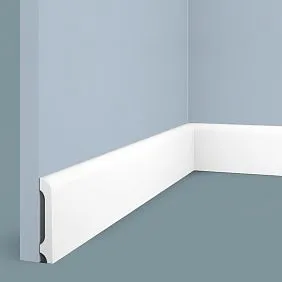
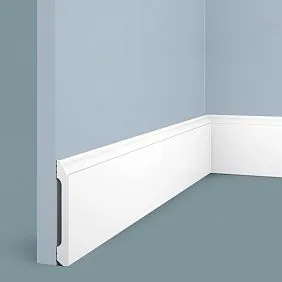
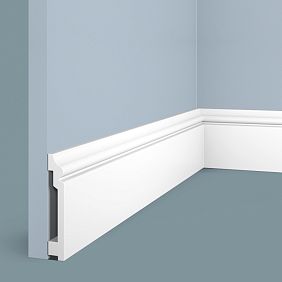
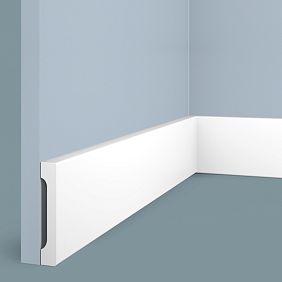
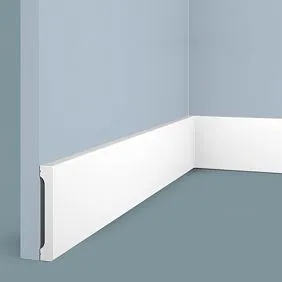
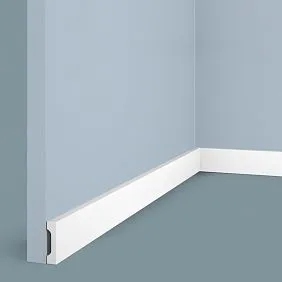
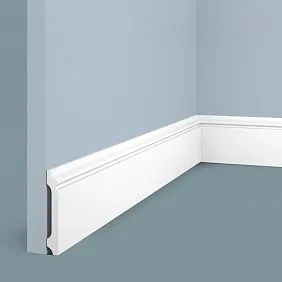
Our factory also produces:

1.2 Aesthetic tasks
- Creating a unified style.
Selecting a skirting board to match the color and texture of the floor covering or furniture allows you to unify different interior elements and set an overall mood.
- Design completion.
Without a skirting board, the boundary between the ceiling and wall appears unfinished, lacking a neat frame. A skirting board, however, defines a clear boundary and emphasizes the architecture of the room.
- Visual effects.
A wide profile with rounded edges or grooves plays with light and shadow, creating additional depth and volume. Contrasting skirting board coloring is often used to visually expand or zone the space.
Get Consultation
1.3 Why choose wood
● Ecological safety. Natural wood is completely safe for health when certified (E0/E1 for formaldehyde).
● Durability. Solid wooden profiles withstand impacts and protect corners from damage.
● Restorability. If chips or scratches appear, the wooden surface can be sanded and re-coated with varnish or oil.
● Natural texture. Wood gives the interior warmth and coziness; its pattern is unique and irreplaceable.
● Microclimate regulation. Wood 'breathes,' absorbing and releasing moisture, which helps maintain a comfortable humidity level.
If you want your renovation to combine practicality, aesthetics, and longevity, we recommendBuy wooden baseboard for ceiling at the Stavros store — this is a guarantee of quality and a wide selection of classic and exclusive solutions.
2. Materials for wooden ceiling skirting boards
2.1 Solid Block
Description. Fully natural profile, made from a solid layer of hardwoods: oak, beech, ash, walnut.
Advantages:
● Maximum strength and wear resistance.
● Ability to be sanded multiple times and fully restored.
● Ecological and free of synthetic additives.
Disadvantages:
● High cost (from 1200 ₽/linear m and above).
● Sensitivity to changes in humidity and temperature, requires microclimate control.
● Installation with expansion gap to prevent warping.
2.2 MDF with veneer finish
Description. Frame made of moisture-resistant MDF, front part veneered with natural veneer 1–3 mm thick.
Advantages:
● Price accessibility (from 400 ₽/linear m).
● Stable geometry despite humidity fluctuations.
● Variety of shades and textures to mimic different wood species.
Disadvantages:
● Veneer susceptibility to scratches and chips.
● No possibility of local restoration — damaged plank must be fully replaced.
2.3 Composite Profiles
Description. Bottom part made of MDF or PVC, front panel — solid wood or veneer.
Advantages:
● Natural appearance of solid wood.
● Increased moisture resistance and dimensional stability.
● Lower price compared to solid wood.
Disadvantages:
● More complex installation due to multi-layered construction.
● Entire profile must be replaced if front part is damaged.
2.4 Flexible Wooden Skirting Boards
Description. Made from flexible composites with added wood fibers.
Advantages:
● Follows curved walls and arched openings.
● Conceals unevenness up to 10 mm.
● Easy to install without complex joints.
Disadvantages:
● Limited selection of natural wood textures.
● Flexibility may decrease over time.
2.5 Plinths with cable channel
Description. Profile contains a hidden cavity for cable routing.
Advantages:
● Convenient hidden routing for electrical and media cables.
● Clean and neat appearance.
Disadvantages:
● Limited capacity for number and thickness of cables.
● Slightly higher price compared to similar products without cable channel.
3. Wood species and their characteristics
3.1 Oak
● Hardness: very high, around 7.5–8 on the Janka scale.
● Color: from light beige to rich brown.
● Features: resistant to abrasion and impacts, retains texture when sanded.
● Price: premium segment — from 1500 ₽/linear m.
● Usage: luxury interiors, living rooms, offices.
3.2 Ash
● Hardness: slightly lower than oak, around 6.5–7.
● Color: cream-white, sometimes with a grayish undertone.
● Features: elastic structure, suitable for modern styles.
● Price: high segment — 1200–1800 ₽/linear m.
● Usage: Scandinavian style, minimalism.
3.3 Beech
● Hardness: medium, around 6 on the Janka scale.
● Color: warm pinkish-brown.
● Features: uniform structure, economical.
● Price: mid segment — 1000–1400 ₽/linear m.
● Usage: living rooms, bedrooms.
3.4 Walnut
● Hardness: medium, around 6–6.5.
● Color: rich chocolate-brown, with streaks.
● Features: luxurious appearance, often used in offices.
● Price: premium — from 1800 ₽/linear m.
● Usage: luxury projects, relaxation zones.
3.5 Birch and pine (veneer)
● Hardness: low to medium, 3–4.
● Color: light, yellow.
● Features: good for painting, budget option.
● Price: low segment — 400–700 ₽/linear m.
● Usage: secondary rooms, for painting.
4. Profile parameters: width, thickness, shape
4.1 Baseboard Width
● 60–80 mm — classic baseboards for standard ceilings up to 2.7 m.
● 80–100 mm — universal solutions for ceilings 2.7–3 m.
● 100–120 mm — for rooms with ceilings 3–3.2 m.
● 120–150 mm and above — for high halls and studios.
4.2 Thickness and Depth
● Thickness (across the wall) is usually 18–30 mm.
● Depth (projection from wall) — 15–24 mm.
● Increased dimensions provide a more pronounced decorative effect and enhanced corner protection.
4.3 Profile Shape
● Straight — minimalism, loft, high-tech.
● With a slight bevel — universal Scandinavian style.
● With grooves — classic and neoclassical styles.
● With a recess for lighting — modern interior with a "floating ceiling" effect.
4.4 Expansion Gaps
● During installation, leave a 2–3 mm gap between the wall and the skirting board to allow for natural wood expansion.
● For ceiling skirting boards, the gap is less critical, but it is recommended to leave it to avoid gaps and warping.
5. Calculating Required Quantity
To avoid shortages or excesses, follow the step-by-step algorithm:
- Measure the room’s perimeter along the inner corner.
- Subtract the width of large door and window openings deeper than 2 cm.
- Add an 8–12% allowance for cutting corners and defects.
- Confirm the package length with the manufacturer (usually 2.4–2.7 m).
- Divide the total length by the length of one plank and round up.
Example
Perimeter: 20 m; door opening: 0.8 m → 19.2 m;
Allowance of 10% → 21.12 m;
At a package length of 2.5 m → 21.12 ÷ 2.5 ≈ 8.45 → 9 packages.
In rooms with complex angles or curved walls, we recommend increasing the allowance to 15%.
6. Where and howBuy wooden baseboard for ceiling
6.1 Specialized stores
● Advantages: wide range of profiles and wood species, demonstration samples, consultations with technicians and designers.
● Disadvantages: prices may be 10–20% higher, and prepayment is often required.
6.2 Online stores with delivery
● Advantages: convenient search by parameters, promotions and discounts, delivery to Krasnoyarsk and its region.
● Disadvantages: without samples, the color may not match, delivery times depend on availability.
Tip: order free or inexpensive demo samples of veneer or painted skirting boards.
6.3 Building material hypermarkets
● Pros: low price, self-pickup, availability of all accessories.
● Cons: limited selection of wood species and profiles, no designer support.
6.4 Choosing a supplier
When choosing, pay attention to:
● Quality certificates (E0/E1, FSC/PEFC, GOST).
● Reviews from real customers on independent platforms.
● Return and exchange conditions for defective items.
● Availability of measurer and installation crew in services.
7. Installation Technology
7.1 Tools and Materials
● Level and painter's string for precise marking.
● Tape measure and marker for measurements.
● Miter saw or miter gauge for 45° cuts.
● Clips and guides or construction adhesive for mounting.
● Decorative-headed screws.
● Lacquer or oil for treating ends.
● Gloves and safety glasses for safety.
7.2 Surface Preparation
- Remove old baseboard and clean wall from dust and adhesive residue.
- Level walls where deviation exceeds 5 mm over 2 meters.
- Prime surface to improve adhesion of adhesive compounds.
7.3 Marking and "dry" fitting
- Apply guiding line using painter's string.
- Lay out all segments without mounting and check angles and lengths.
- Mark cutting and mounting locations.
7.4 Cutting and End Treatment
- Make 45° cuts using a miter saw.
- For non-standard angles, use a universal miter gauge or template.
- Immediately after cutting, treat ends with protective lacquer or oil.
7.5 Installing Planks
● Clips: install guide, snap plank into place.
● Construction adhesive: apply adhesive, press plank, and secure with supports until dry.
● Screws: screw into pre-drilled holes, cover with decorative caps.
7.6 Final Finishing
- Remove excess adhesive and dust.
- Wipe baseboard with a soft dry cloth.
- Apply anti-static agent or protective wax as needed.
8. Care and Maintenance
8.1 Daily Care
● Wipe with a soft dry or slightly damp cloth without abrasive agents.
● Immediately remove water and household chemical splashes.
8.2 Periodic Restoration
● Apply varnish or oil every 6–12 months according to the manufacturer's instructions.
● Remove minor scratches with fine-grit sandpaper and renew the finish.
8.3 Climate Control
● Maintain humidity at 40–60% and temperature at +18…+24 °C.
● Use humidifiers during heating season and dehumidifiers in summer.
8.4 Professional Maintenance
● When heavily worn, invite professionals for sanding and application of a new protective layer.
● Check fasteners and tighten or replace clips as needed.
9. Design Techniques
9.1 Contrast Solution
Use baseboard 2–3 tones darker or lighter than the ceiling fabric to emphasize architectural lines.
9.2 Monochromatic
Baseboard in the same tone as the ceiling or walls 'melts' into the space and visually expands the room.
9.3 Integration of Lighting
Install LED strips in recessed profiles for soft background lighting and to create a 'floating ceiling' effect.
9.4 Zoning
In large rooms, combine different profiles or wood species to divide functional zones without walls.
Choosing and installing wooden ceiling baseboard is a responsible and meticulous process requiring knowledge of materials, precise measurements, quality surface preparation, and proper fastening. Following the recommendations in this guide, you will be able to create an elegant and durable decorative element that highlights your interior style and lasts for many years. To avoid mistakes and ensure guaranteed quality, we recommendBuy wooden baseboard for ceiling in the verified online store Stavros, with a wide selection, accessible samples, and professional support at every stage of purchase and installation.