Article Contents:
- Role of Wooden Baseboard: Aesthetics, Protection, and Technical Solution
- In Saint Petersburg, there are three main sales formats:
- Criteria for Choosing a Reliable Supplier
- Step-by-step installation guide
- Care and Extending Lifespan
- Frequently Asked Questions
- Conclusion

If you have already decided that you want a natural material — long service life, possibility of restoration, and consistently pleasant tactile effect — we recommendBuy wooden skirting boards for floors in St. Petersburg from a reliable supplier with a proven reputation, to be sure of the wood quality, absence of hidden defects, and strict adherence to profile geometry during manufacturing.


Role of Wooden Baseboard: Aesthetics, Protection, and Technical Solution
Such a miniature detail as a baseboard can not only complete the renovation but also set the mood for the entire room. When choosing floor finish, you can carefully plan the parquet pattern or laminate texture, but without a properly selected baseboard, the junction line between wall and floor will appear as an unfinished stroke, lacking neat framing and visual completion.
● Aesthetics and Visual Frame. Thanks to natural wood tones, the baseboard creates a seamless transition between the floor covering and walls, forming an optical boundary that emphasizes the texture of parquet or laminate and makes the interior more balanced. The play of light on the relief surface of the wood introduces additional nuances: under artificial lighting, wood fibers take on warm caramel tones, while in daylight — noble amber hues. The baseboard profile can be chosen as classic with a soft rounded edge or more pronounced with grooves and flutes, setting an architectural accent depending on the room’s style — from minimalist Scandinavian to refined historical classicism.
● Protection and Durability. The lower part of the wall and the edges of the floor covering are often subjected to mechanical loads: vacuum cleaner impacts, scratches from furniture during rearrangement, water droplets during cleaning. The wooden strip acts as a damper — it absorbs most of the impact load, prevents scratches on the wall’s paint finish, and protects the parquet edge from delamination. In case of damage, it is sufficient to perform local sanding and renew the lacquer layer, instead of replacing the entire component, which saves time and budget during regular maintenance.
● Technical Gap and Microclimate. Natural wood, as well as composite coverings based on it, react to seasonal fluctuations in humidity and temperature, which is expressed in micrometer-scale expansion and contraction of the material. Without sufficient space for compensation, bumps, gaps, and even bulging of the covering may appear, leading to rapid wear and the need for major repairs. A quality wooden baseboard covers the compensatory gap while simultaneously allowing the floor to 'breathe' and regulate humidity levels in the adjacent zone. This function is especially important in rooms with heated floors and air supply-exhaust ventilation systems.
Think about it: when was the last time you seriously evaluated the flatness and neatness of the baseboard line in your home? This seemingly invisible element is precisely what creates the feeling of renovation completion and protects your floor covering.
Types of Wooden Baseboards: Materials, Profiles, and Features
When choosing a baseboard, it is important to clearly understand what tasks it is expected to perform: decorative, protective, or engineering. In Saint Petersburg, the market offers four main groups of materials and constructions, each with its own advantages and usage nuances.
- Solid Block
Baseboards made from solid boards of hardwood species (oak, beech, ash, walnut) remain the standard of naturalness and durability. Solid wood withstands multiple sanding and restoration cycles, making it not just a decorative element but a full-fledged engineering solution that retains its original appearance for decades. With careful maintenance and a humidity level of 40–60%, solid wood can serve for more than 50 years without replacement. The cost of solid wooden baseboards is usually 30–50% higher than MDF analogs, but the investment pays off through the absence of the need for full replacement upon the appearance of scratches or wear marks.
- MDF with Veneer Finish
The body is made of moisture-resistant MDF, covered with a natural veneer layer (1–3 mm thick). This combination ensures geometric stability (practically zero 'play' in dimensions with humidity changes) and a realistic appearance of expensive solid wood. The price of such baseboards is approximately 40% lower than solid wood, and the color palette allows you to easily select a wood species 'to match oak' or 'to match wenge'. The main drawback is that veneer is more susceptible to damage during improper installation, and local restoration is difficult: in case of serious scratches, the entire strip must be replaced.
- Combined Profiles
Lower part made of MDF, front panel — solid wood or veneer. This approach allows achieving the natural appearance of solid wood while saving budget thanks to the MDF body, as well as increasing moisture resistance and geometric stability. Installation of combined profiles requires more precise fitting due to multi-layer construction, and in case of serious damage to the front panel, the entire element must be replaced, not just the decorative layer.
- Special Solutions
○ Flexible Baseboards. Made from elastic composite materials, they follow wall curvature and conceal unevenness up to 10 mm, which is indispensable for old buildings with misaligned openings.
○ Baseboards with Cable Channels. The internal hollow profile allows laying electrical wiring, internet cables, and TV cords without visual cluttering of the space.
○ White MDF Baseboards for Painting. Budget option, ready to be painted in any shade, ideal for modern minimalist interiors.
Designer’s Tip: Combine different types of baseboards in one project: solid wood in the living room, veneer in the bedroom, flexible profile in the hallway and entryway for maximum functionality and stylistic diversity.
Calculating Required Quantity: Error-Free Algorithm
There is no more unpleasant situation than running out of material at the end of renovation or, conversely, having leftover baseboard pieces occupying space in the storage. To avoid errors, follow this step-by-step algorithm:
- Measure the room’s perimeter along the inner side.
Use a long straightedge and tape measure, taking precise measurements of each wall, including niches, protrusions, and recesses under radiators. Do not rely on old drawings — actual values may differ due to tolerances during wall construction.
- Subtract the width of large-format openings.
Subtract the width of door and window openings deeper than 2 cm from the perimeter — baseboards are not installed under them. Small protrusions up to 10 cm can be trimmed using the standard method without adjusting the total length.
- Check the package length with the manufacturer.
Usually it is 2.4 m, 2.5 m, or 2.7 m. The length may vary between different models and brands, which affects the calculation of the required number of packages.
- Add a technological allowance.
Add 5–10% to the calculated perimeter for cutting corners, possible defects, and adjustments for geometry when joining.
- Calculate the number of packages.
Divide the corrected perimeter by the length of one package and round up.
Example calculation:
— Original perimeter: 20 m.
— Door opening: 0.8 m → 20 − 0.8 = 19.2 m.
— Allowance of 8%: 19.2 × 1.08 = 20.736 m.
— Package length: 2.5 m → 20.736 ÷ 2.5 = 8.2944 → 9 packages.
Reliable places where you canBuy wooden skirting boards for floors in St. Petersburg




In St. Petersburg, there are three main sales formats:
● Specialized stores.
They offer dozens of wood species, profiled solutions, decorative overlays, and accompanying fittings. In showrooms, you can view samples from different angles under natural and artificial lighting, touch them by hand, and receive professional consultation from a technician or designer. Prices are usually 10–20% higher than average market rates, but they include the service of on-site measurement and an additional warranty on profile geometry.
● Online stores.
Convenient search, filters by species, profiles, and shades, promotions and discounts, free delivery for orders above a certain amount. The only downside — without a physical sample, the shade may slightly differ from expected, so many stores offer the service of free shipping 1–2 strips of veneer or ready-made baseboard for preliminary checking before the main order.
● Hypermarkets and construction markets.
Affordable prices, self-pickup, and the possibility of negotiation for bulk purchases. The assortment is limited to standard MDF models and inexpensive veneered solutions, and on-site service and consultations are minimal.
Professional recommendation: the optimal balance of price/quality/service will be achieved by ordering through a reliable online store with a full showroom and the option to receive free samples, where you canBuy wooden skirting boards for floors in St. Petersburg without extra charges and with full warranty of compliance with stated specifications.
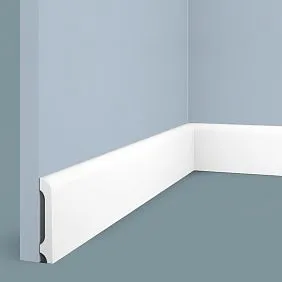
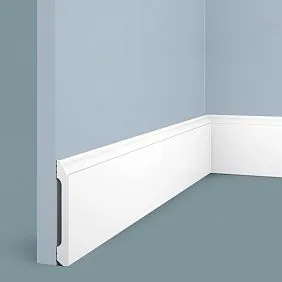
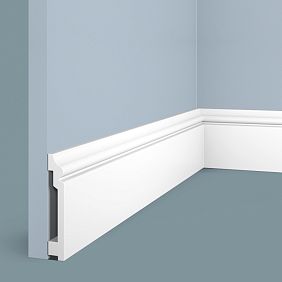
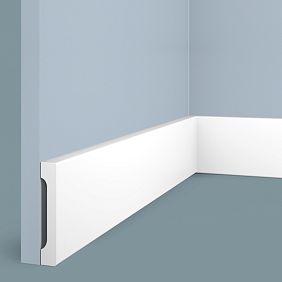
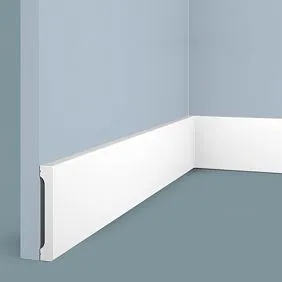
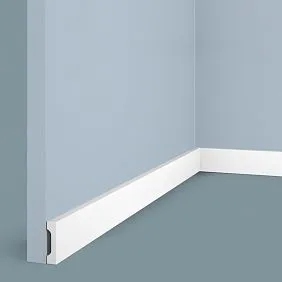
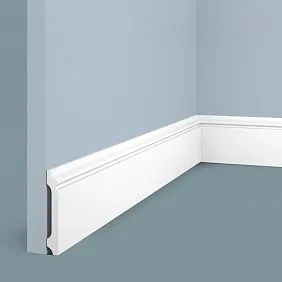
Our factory also produces:

Criteria for selecting a reliable supplier
To avoid falling into the trap of low cost while still getting a quality product, evaluate the supplier based on the following parameters:
- Certificates and standards.
Require the presence of GOST, ecological certificates (E1/E0 for formaldehyde), sanitary-hygienic certificates, and other documents confirming the safety of wood for residential spaces.
- Price list transparency.
Full list of prices for profiles, corner fittings, clips, installation materials, delivery, and installation, without hidden additional charges.
- Showroom and samples.
Physical store with a wide range of samples, where you can check the grain, color, and profile, and also receive a designer’s consultation.
- Reviews and portfolio.
Real photos of completed projects in St. Petersburg, reviews from professional builders and private clients, ratings on independent platforms.
- Warranties and service.
Custom manufacturing lead times, return conditions, availability of service specialists for installation and subsequent maintenance.
Get Consultation
Step-by-Step Installation Guide
Despite its apparent simplicity, installing baseboard requires attention and strict adherence to technology:
- Surface preparation.
Completely remove the old baseboard, clean up any remaining adhesive, mounting foam, and level the wall surface. If deviations exceed 5 mm over 2 meters, fill irregularities or use special leveling strips.
- Marking.
Draw a straight line along the walls using a painter's string, mark mounting points and corners. Lay out all planks "dry" on the floor, check joints, angles, and lengths before final fixation.
- Choice of mounting method.
○ Clips and guides — hidden installation with the option for disassembly and excellent wood ventilation.
○ Adhesive foam or "liquid nails" — reliable rigid fixation, but removal risks damaging the wall and baseboard.
○ Decorative-headed screws — simple and strong fixation, but visible point fasteners.
- Cutting and fitting corners.
Use a miter saw for 45° cuts on straight corners. For non-standard angles, use universal corner pieces or an adjustable saw set to the required angle, then treat the ends with varnish or oil.
- Compensatory gaps.
Leave a 2–3 mm gap between the baseboard edge and the wall, accounting for the thickness of the sealant when using clips.
Master’s tip: photograph each joint’s "dry" fit stage — if needed, you can always return to these photos to identify where inaccuracies occurred.
Design techniques: making the baseboard a striking accent
Traditionally, baseboard is seen as an inconspicuous finish, but a thoughtful approach turns it into a striking interior element:
● Contrasting baseboard. Dark wood on a light floor creates clear graphic lines and emphasizes room geometry, adding drama and structure to the interior.
● Monochromatic palette. Baseboard in the same tone as walls or flooring "melts" into the space, visually expanding the room and creating a sense of seamless surfaces.
● Combination of wood species. Use different species for zoning: oak in the living room, beech in the bedroom, ash in the hallway — a unified aesthetic with smooth transitions.
● Hidden lighting. A thin LED strip behind a thick baseboard creates a "floating" floor effect, adding dynamism and soft nighttime lighting to the interior.
Care and extending service life
To ensure your wooden baseboard lasts long and retains its attractive appearance:
- Daily cleaning. Wipe with a soft dry or slightly damp cloth, avoiding abrasive and aggressive chemical cleaners.
- Annual inspection. Once a year, inspect the surface for minor scratches and cracks, and reapply varnish in those areas if necessary.
- Restoring finish. When the first signs of dullness appear, apply a new layer of varnish or oil according to the manufacturer’s instructions.
- Microclimate control. Maintain humidity at 40–60% and temperature at +18…+24°C to prevent wood cracking and warping.
Frequently Asked Questions
Can baseboard be installed on a 'warm floor'?
Yes. The key is to ensure the selected profile is certified for use with underfloor heating systems and rated for temperatures up to +27°C.
Do I need to renew the varnish layer?
Recommended: an additional layer of varnish or oil extends the lifespan, preserves color vibrancy, and enhances water resistance.
How to hide cables?
For neat wiring and cable installation, use models with an integrated cable channel or install a separate cable channel that attaches to the inside of the baseboard.
What tools will be required?
Level, painter's line, circular saw, mounting clips or construction adhesive, screws and caps, tape measure, pencil, and protective gloves.
Conclusion
A quality wooden baseboard is not just decorative trim, but an essential part of the engineering solution, providing aesthetic completion, protection, and longevity of the flooring. It harmoniously combines functionality and design, making your interior cozier and more practical. ToBuy wooden skirting boards for floors in St. Petersburg with quality assurance, delivery, and professional installation, choose reputable sellers with full certification packages and genuine reviews from satisfied customers. Let your home speak through natural wood tones — through every texture, every joint, and every perfectly fitted detail!