Article Contents:
- What is Wooden Furniture Molding
- Where is Molding Used in Furniture
- Kitchen fronts
- Cabinets and case furniture
- Commodes and cabinets
- Display Cases and Sideboards
- Custom Furniture and Restoration
- Why Wooden Furniture Molding is Particularly in Demand
- Natural Texture That Cannot Be Copied
- Visual Depth and Play of Light and Shadow
- Compatibility with Solid Wood Furniture
- Possibility of Any Finish Treatment
- Suitability in classic, neoclassical, art deco, and modern classic styles
- How to choose molding for furniture
- By Profile Width
- By profile thickness
- By pattern (cross-sectional shape)
- By furniture style
- By room type
- By facade size
- Which furniture fronts pair best with moldings
- Smooth fronts
- Paneled fronts
- Painting-ready fronts
- Cabinet fronts
- Kitchen unit fronts
- Chest of drawers facades
- Wooden furniture molding for classic and modern interiors
- Classic and neoclassic
- Modern classic and neoclassic
- Art Deco
- Eclecticism
- Modern minimalism
- How molding differs from other furniture decor elements
- Molding vs overlays
- Molding vs layout
- Molding vs baguette
- Molding vs handles
- Molding vs legs and supports
- Where to buy wooden furniture molding
- Mistakes when choosing furniture molding
- Too massive profile
- Mismatch with facade style
- Poor frame proportion
- Random decor selection without overall composition
- Mixing molding with unsuitable elements
- Choosing decor without considering all furniture
- FAQ: everything you need to know about wooden furniture molding
- STAVROS: wooden furniture molding from the manufacturer
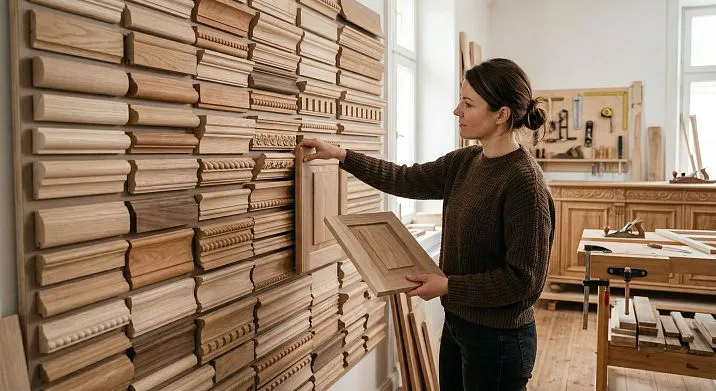
There are things in an interior you don't notice immediately but feel instantly. A wardrobe looks more expensive than it costs. A kitchen seems custom-designed. A chest of drawers appears antique though recently purchased. The secret is in the details. And one of the main such details isfurniture moldings: thin decorative wooden profiles that transform mass-produced furniture into something bespoke, precise, and alive.
This article is a practical guide to wooden moldings for furniture. We'll cover everything: what they are, where they're used, how to choose a profile for a specific facade, which mistakes cost the most, and why natural wood remains unrivaled among all alternatives.


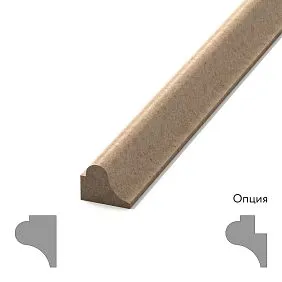
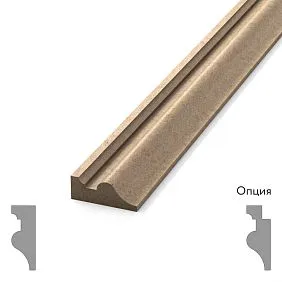
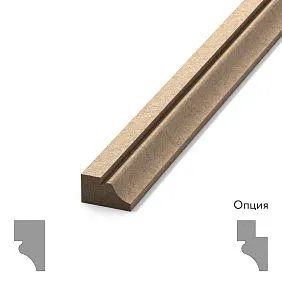
What is wooden furniture molding?
Let's start with a definition, but not a dry dictionary one—rather a living one that immediately gives an understanding of the essence.
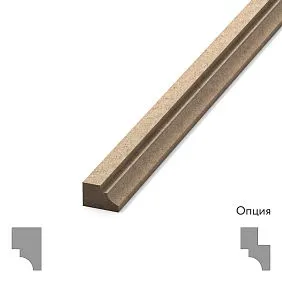
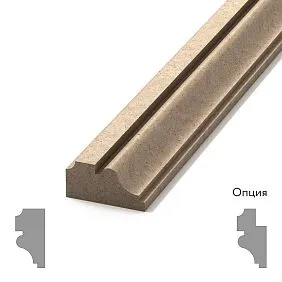
Molding is a profiled decorative strip. The word comes from the English 'moulding'—'forming,' which accurately reflects the essence: the strip is given a specific cross-section—flat, convex, concave, stepped, composite. It is this cross-section, this profile, that creates the play of light and shadow, making the surface three-dimensional and lively.
Furniture molding is a type of linear profile adapted to the scale of furniture. Unlike architectural cornices and baseboards, which are measured in tens of centimeters, furniture profiles are usually more modest: width 10–50 mm, thickness 6–25 mm. But it is this small size that requires special manufacturing precision—the front molding is viewed from arm's length, meaning any inaccuracy immediately catches the eye.
What is it for? Here is a specific list of tasks it solves:Decorative Molding for Furniture:
-
Creates a framing effect on a smooth front—turns a flat slab into a paneled door.
-
Adds visual depth—even a thin 8–12 mm profile changes the perception of the surface.
-
Defines the style—the shape of the cross-section immediately indicates belonging to classic, neoclassical, art deco, or minimalism.
-
Hides joints—molding on MDF edges, at the connection points of elements, masks technological seams.
-
Increases perceived value—even an inexpensive front with molding is perceived as more expensive.
Why wood specifically? Because wood is the only material that provides a living texture. PVC molding imitates wood, polyurethane also imitates it. But only natural woodwood molding for furniturecarries a unique pattern, tactile warmth, depth of toning that cannot be reproduced synthetically. This is a fundamental difference that everyone feels who has ever held a solid wood product in their hands.




Where is molding used in furniture
The scope of application of furniture molding is broader than it seems at first glance. It's not just kitchen sets and cabinets — although they certainly take first place. Let's break it down by specific objects.
Our factory also produces:


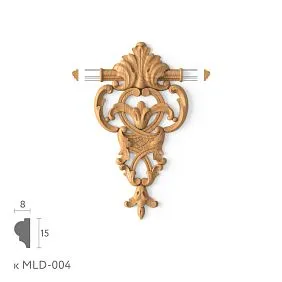
Kitchen fronts
The kitchen is the main consumer of furniture moldings. Molding for kitchen fronts performs several functions at once: it frames the front, creates stylistic unity of the set, and masks the joints of the front panels with the frame structure. For a kitchen in a classic style, wooden molding is simply indispensable — it is what creates the feeling of a handmade carpentry product, not a set of serial parts.
Important nuance: for the kitchen in areas where exposure to steam and moisture is possible, choose oak molding with varnish or oil coating. Oak is a species with high natural resistance to moisture, density of 670–720 kg/m³ makes it an optimal choice for kitchen molding.
Get Consultation
Cabinets and case furniture
Wooden molding for a cabinet is a classic of furniture production. The horizontal profile under the top lid imitates a cornice. The vertical one along the edges of the door creates a frame structure. A small profile in the middle of the front divides it into zones, adding visual rhythm. All together — the cabinet ceases to be just a box with doors and turns into a piece of furniture with character.
Molding for furniture frontsfor cabinets is usually chosen in the width range of 20–45 mm — enough to be readable on vertical planes, but not so large as to overload the front.
Chests of drawers and cabinets
Molding for a chest of drawers and molding for a cabinet is a special genre. A chest of drawers often stands in a bedroom or hallway, that is, in areas where furniture is perceived in intimate proximity. Delicate profiles with soft relief work here: cavetto, quarter round, scotia. They add volume without weighing it down.
TV stands, bedside tables, dressing tables — for all this furniture, wood molding creates a sense of completeness and thoughtfulness. A small 12–25 mm profile along the perimeter of the facade or along the end of the drawer — and the piece of furniture acquires an architectural silhouette.
Display cabinets and buffets
Display cabinets, sideboards, serving tables — furniture that is the central object in the dining area or living room. More expressive profiles are appropriate for it: composite moldings 30–60 mm wide, carved elements, cornice profiles. Wooden moldings for furniture here work for maximum decorativeness: after all, it is with this furniture that the formal life of the house is associated.
Custom furniture and restoration
A separate story. Molding for furniture restoration is an opportunity to give an old item a second life. A Soviet chipboard cabinet with correctly selected and applied moldings turns into a stylized retro object. Antique furniture that has lost its original parts is restored using solid wood molding of the same species.
Custom furniture — here molding is an element of design. Furniture makers working in classical and neoclassical styles purchase linear profiles from specialized manufacturers, adapt them to a specific project, and combine several standard sizes in one product.
Why wooden molding for furniture is especially in demand
This is a rhetorical question only at first glance. In fact, there are quite specific and measurable reasons whyWooden moldings for furniturecontinue to occupy a leading position in the furniture decor market.
Natural texture that cannot be copied
When wood is processed with a profile tool, the grain pattern becomes visible on the surface. Each species has its own pattern. Oak features characteristic medullary rays that create a shimmering effect on the radial cut. Beech has a fine, uniform grain with a delicate pearlescent sheen. Ash displays a large, wavy pattern that looks especially expressive on wide profiles.
This pattern cannot be reproduced in PVC or polyurethane—only imitated. This is why solid wood furniture moldings remain the preferred choice for projects where material authenticity is important.
Visual depth and play of light and shadow
Wooden profile interacts with light differently than synthetic ones. Wood pores, the finest surface irregularities, the micro-relief of the grain—all of this scatters light, creating a soft, living shadow. Synthetic profile reflects light evenly, sometimes producing an unpleasant plastic shine.
It is precisely this effect that makes solid wood furniture molding indispensable for classic interiors, where the quality of light and shadow is one of the main criteria.
Compatibility with solid wood furniture
If the main furniture is made of solid wood—an oak wardrobe, a beech kitchen, an ash chest of drawers—the molding should be made from the same species. This is not just a matter of aesthetics, it's a matter of physical logic: different species exhibit different movement with changes in humidity, and if molding from one species is glued to a facade made of another, delamination and deformation may occur over time.
Molding for solid wood furnitureof oak, beech, or another species must be of the same drying, the same humidity—then the system works as a single whole.
Possibility of any finishing treatment
Wood accepts any finish: clear varnish, tint, stain, wax oil, patina, white enamel, colored paint. MDF or solid wood molding for painting is first primed, then painted—and the result is indistinguishable from factory paint. Synthetic profiles do not offer such flexibility: they are either pre-painted or require special primers.
Appropriate for classic, neoclassical, art deco, and modern classic styles
Wooden molding for furniture in a classic style is an organic choice, dictated by the very nature of the style. Classic does not tolerate synthetics. Neither does neoclassicism or art deco. Modern classic, balancing historical references and contemporary proportions, also prefers natural materials.
How to choose furniture molding
A practical section for those making a decision right now. We'll break it down by parameters—clearly, without fluff.
By profile width
Molding width is the main proportional parameter. A profile that is too narrow gets lost on the facade. One that is too wide feels oppressive and overloads.
Practical rule: the molding width should be approximately 1/15–1/20 of the facade width.
-
Facade width 300 mm — molding 15–20 mm
-
Facade width 450–600 mm — molding 25–40 mm
-
Facade width 600–900 mm — molding 35–50 mm
For kitchen sections with 300–400 mm fronts, a narrow 15–25 mm furniture molding is optimal. For cabinet wardrobes with wide 600–900 mm fronts — 35–55 mm.
By profile thickness
Thickness (relief height) determines shadow expressiveness. For furniture in modern interiors — 6–12 mm. For classic styles — 12–22 mm. For carved moldings with rich profiles — up to 30–35 mm.
Important: molding thickness should be proportional to its width. A thin and wide profile looks cheap. A narrow and deep one — too aggressive.
By pattern (cross-section shape)
Cross-section shape is the molding's 'voice,' its stylistic affiliation:
-
Rectangular — minimalism, Scandinavian style, modern classic
-
Semicircular (bead) — neoclassical, transitional styles
-
Ogee — classic, Baroque, Rococo
-
Scotia (groove) — Renaissance, Classicism
-
Goose egg — classicism, empire
-
Carved composite — baroque, rococo, historicism, elite furniture
By furniture style
How to choose wooden molding for furniture — the most common question. The answer is simple: the profile should belong to the same historical vocabulary as the furniture style.
You shouldn't put carved baroque molding on a minimalist facade. And vice versa — a flat rectangular profile on classic furniture will give a feeling of incompleteness and stylistic conflict.
By room type
Kitchen — requirements for moisture resistance are the highest. Oak or MDF with high-quality lacquer coating is preferred.
Bedroom — no material restrictions, but scale is important: the bedroom is perceived intimately, so the molding is delicate.
Living room — a more representative profile is appropriate here, especially on large furniture items: sideboards, shelves, TV stands.
Hallway — strength is important because furniture in the hallway is used intensively.
Based on facade size
This is a direct continuation of the width parameter. Let's add the frame proportion parameter to it: for a facade 700 mm high and 400 mm wide — molding around the perimeter creates a rectangle with an indentation from the edge of 30–50 mm. If the indentation is less than 20 mm — the frame looks cramped. If more than 80 mm — the panel effect is lost.
Which furniture facades go best with moldings
Not every facade accepts molding equally well. Knowing about compatibility will save both time and money.
Smooth facades
The ideal surface for molding. It is the smooth facade—white, solid-colored, or veneered—that gives molding the most expressive role. The profile on a smooth plane reads clearly, shadows work correctly, and the framing effect is fully visible.
Paneled facades
Molding on a paneled facade is either additional framing for an existing insert or decorative complication of the frame. Here, it's important not to overload: if the facade already has developed relief, adding overly complex molding creates visual noise.
Painting-ready facades
Molding for painting-ready furniture is one of the best options. A uniform color neutralizes material differences and creates a monolithic sculptural effect. All STAVROS profiles made of MDF and solid wood are adapted for painting: the sanded surface is ready for primer application without additional preparation.
Cabinet facades
Molding for cabinet facades is most often installed according to several scenarios: around the door perimeter as a frame, horizontally in the upper and lower zones as an accent strip, or in the center of the facade as a symmetrical decorative element. The choice of scenario depends on the cabinet height and style.
Kitchen unit facades
Molding for kitchen fronts is the primary commercial request in the world of furniture decor. It combines requirements for moisture resistance, proportions (kitchen fronts are standardized by height: 716 mm, 560 mm, 296 mm), and style (classic, neoclassic, Provence, country). An oak wood profile with varnish or oil is the optimal solution for a kitchen in natural materials.
Chest of drawers fronts
Molding for chest of drawers fronts is a thin, delicate decor. A chest of drawers is perceived as a piece of furniture with high detail, so profiles with soft relief work here: ovolo, quarter round, scotia, a small torus. A wide, massive profile on a chest of drawers looks disproportionate.
Wooden molding for furniture in classic and contemporary interiors
Molding is an element with historical memory. And it is precisely this memory that makes it such a multifaceted tool in the hands of a designer.
Classicism and neoclassicism
Classic Furniturewithout molding is like an order without a ribbon. Profiled battens are an organic part of the furniture language of classicism since the 17th century. Strict rectangular frames with a torus or ogee, symmetry, proportionality, precise offsets — this is a visual code that conveys solidity and stability.
Forcollection of furniture in classic styleprofiles of medium complexity are preferred: not too flat, but not overloaded with carving. Oak, walnut, or beech with a dark wood stain is the perfect combination of material and style.
Modern Classicism and Neoclassicism
Contemporary classic is classic with a lighter profile and a restrained color palette. White enamel, light stains, slightly simplified profiles without complex carving. Wooden molding in the classic style adapts here: the same torus or ogee, but in a flatter, less deep version.
Furniture moldings for classic in this variant are often painted to match the color of the front — creating a monochrome relief, in which the shape of the profile is guessed only in the play of shadows.
Art Deco
The Art Deco style loves straight lines, geometry, contrast. Decorative molding for furniture in Art Deco is rectangular profiles with clear horizontal divisions, sometimes with gilding or contrasting stain. No complex curves — only confident geometry.
Eclecticism
Eclecticism is a style that intentionally mixes historical references. Here, molding works as a stylistic 'anchor': if the facade is eclectic, the profile must carry a clear historical identity—classical or Art Deco—otherwise the furniture will lose focus.
Modern minimalism
Smooth furniture molding—a narrow rectangular or beveled profile of 10–20 mm—is appropriate even in a minimalist interior. It doesn't create decoration in the classical sense, but adds a tactile accent, marks the boundary of the facade, and provides a subtle shadow. This is almost invisible decor—for those who appreciate nuances.
How molding differs from other furniture decor elements
Furniture decor is a broad category. Molding is just one of its elements. It's important to understand how it differs from related solutions to avoid confusing tasks and tools.
Molding vs overlays
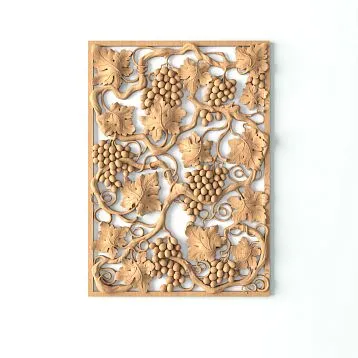
decor for furnitureOverlays are three-dimensional decorative elements: rosettes, cartouches, medallions, corner overlays. They create a point accent and act as independent decor.
Molding is a linear element. It works as framing, as a boundary, as a rhythmic line. Overlays and molding do not compete but complement each other: molding creates a frame, overlays create an accent inside or at the intersection of profiles.
Furniture decorWooden decorative overlays STAVROS combine well with moldings in a single facade design system. Overlays in the center of a molding frame are a classic technique for Baroque and Rococo.
Molding vs glazing bars
Glazing bars are a simplified version of molding. Usually, it's a rectangular strip without a complex profile, used to hold glass or a decorative insert in a framed facade. Glazing bars do not carry decorative weight on their own—they are functional. Molding is primarily decor, although it can also serve a function.
Molding vs. baguette
Wooden trimincludes baguette — a profile strip traditionally used for framing mirrors and paintings. Baguette is closer to architectural elements, its profile is larger and often more decorative. Furniture molding is more restrained in scale, specifically designed for furniture fronts.
Molding vs. handles
Furniture Handles— functional decor. They serve as a grip point and simultaneously as a visual accent.wooden furniture handlescombined with wooden molding create a system of natural decor: a single wood species, a single finish — and the front works as a cohesive story.
Molding vs. legs and supports
furniture legsis both a load-bearing and decorative element.wooden furniture legsset the stylistic tone of the item from below, molding works on the front planes. Together — legs, handles, and moldings form a comprehensive decorative system for solid wood furniture.
Comparison table:
| Element | Shape | Function | Style |
|---|---|---|---|
| Molding | Linear rail | Framing, rhythm, frame | Classic, neoclassicism, art deco |
| Overlay | Volumetric decor | Spot accent, rosette | Baroque, rococo, classic |
| Layout | Rectangular rail | Glass retention, inserts | All styles |
| Molding | Profile rail | Mirror framing, picture framing | Classic, empire |
| Handle | Volumetric grip | Function + decor | All styles |
Where to buy wooden furniture molding
So, you've decided on the profile, material, and style. The next step is purchasing. And here it's important not to make a mistake with the source, because furniture molding is a product with strict geometric tolerances. A deviation in the profile of even 0.3–0.5 mm results in a visible defect on adjacent parts, especially at corners.
buy furniture moldingBuying from the manufacturer means getting a guarantee of stable geometry across the entire batch, correct wood moisture content, and the ability to order a custom profile for a specific project.
What's important to know about STAVROS's offer:
-
Materials — oak, beech, high-density MDF (750–850 kg/m³)
-
Range — over 40 standard profiles, from 10 to 80 mm wide
-
Wood moisture content — stabilized in chamber drying to 8–12%
-
Profile accuracy — tolerance ±0.1 mm per linear meter
-
Surface — sanded blanks, ready for painting, tinting, or varnishing
-
Minimum order — from one linear meter, which is convenient for both retail customers and furniture manufacturers.
incatalog of furniture moldingsSTAVROS offers profiles for all styles and applications: from thin frame strips for modern classics to expressive composite profiles for classic facades.
To calculate the required linear meters: each facade × frame perimeter + 15–20% for reserve and corner joints. STAVROS managers will help calculate the needed quantity and select complementary trim: cornices, baseboards, wooden trim for comprehensive project design.
For those working with furniture professionally — furniture manufacturers, carpentry workshops, designers — STAVROS offers custom molding production according to individual profiles. This is especially relevant for authorial furniture collections and restoration projects where the standard range does not meet the task.
For a wide selection of complementary trim — profiles, cornices, baseboards for comprehensive room design — there is a full trim section:solid wood millworkHere you can select complementary profiles in a unified stylistic and material key with furniture moldings.
Mistakes when choosing furniture molding
The experience of hundreds of completed projects allows us to speak about typical mistakes. Knowing about them is real resource savings.
Too massive profile
The first and most common mistake. A wide molding of 60–80 mm on a kitchen facade of 300 mm looks like an attempt to dress a kitchen worker in a formal frock coat. The scale of the profile must correspond to the scale of the facade. A guideline is 1/15 of the facade width.
Mismatch with facade style
A carved Baroque molding on a strict minimalist facade is a stylistic contradiction. Choosing a molding for furniture means first determining the furniture's style and selecting a profile from the same historical vocabulary.
Poor frame proportion
A molding frame should have harmonious proportions: the margin from the edge, the width-to-height ratio. If the margin is too small, the frame 'suffocates.' If it's too large, the panel effect is lost.
Random selection of decor without an overall composition
Molding is part of a decorative system. If one cabinet has moldings of different profiles, different widths, with different margins—it's not decor, it's chaos. Rule: one type of profile per furniture piece, one type of system per furniture set.
Mixing molding with unsuitable elements
Classical molding with ultra-modern chrome handles is a conflict that ruins the style. Decorative elements should work in the same vein. For classical molding—wooden handles, bronze hardware, wooden legs. For minimalist profiles—matte metal handles, laconic supports.
Choosing decor without considering all the furniture
Molding does not exist separately from the other items in the room. If you're decorating a kitchen with molding, ensure the style and material coordinate with the rest of the furniture in the open layout—dining table, chairs, possibly a sideboard. Otherwise, the kitchen will look like an insert from another interior.
FAQ: Everything you need to know about wooden furniture molding
Which wooden molding is best for furniture?
It depends on the task. For classic and neoclassical styles — oak with a 'cabochon' or 'gusek' profile, width 25–50 mm. For modern classic — MDF for painting or beech with white enamel, width 15–30 mm. For premium furniture — oak or walnut with a composite carved profile.
Where to buy furniture molding?
inin the STAVROS molding catalog— over 40 profiles made from solid oak, beech, and MDF. Custom orders for individual profiles are available for furniture manufacturers and restoration projects.
Is molding suitable for kitchen fronts?
Yes. For kitchens, oak molding with a varnish or oil finish is optimal — the wood species is moisture-resistant. Profile width — 20–40 mm for standard fronts 300–600 mm. MDF is also suitable provided it is painted with high-quality, water-resistant enamel.
How to use molding on cabinets and dressers?
On cabinets — around the perimeter of the front as a frame, horizontally in the top and bottom zones, vertically on the uprights. On dressers — around the perimeter of drawers, at the top of the body as a cornice, on the side edges as a trim.
How does molding differ from overlays and layout strips?
Molding is a linear profile for framing and rhythm. Overlay is a three-dimensional decor for a point accent. Layout strip is a functional rectangular batten without a decorative profile. They perform different tasks and are often used together.
Which moldings are suitable for classic furniture?
Forclassic furniture— profiles with historical forms: ovolo, cyma, scotia, astragal. Material — oak or beech with a finish to resemble dark wood or with patina. Width — from 25 to 60 mm depending on the scale of the furniture.
Can molding be used for furniture restoration?
Yes, and it is one of the best application scenarios. Solid wood molding from the same species allows you to restore lost decorative elements, update the appearance of outdated facades, and style simple case furniture to look classic.
Which furniture moldings to choose for solid wood facades?
For solid wood facades — molding from the same wood species. Oak to oak, beech to beech. This ensures not only stylistic unity but also physical compatibility: identical thermal expansion, identical movement with changes in humidity.
STAVROS: wooden furniture molding from the manufacturer
Furniture lives a long time — and the decor should live with it. That is why choosing molding is an investment, not an expense. And that is why it is important to choose a manufacturer who understands the material more deeply than just 'wood'.
STAVROS is a Russian manufacturer of wooden architectural elements and furniture decor made from solid oak, beech, and high-quality MDF. Full production cycle: chamber drying to 8–12% humidity, profile processing on precision equipment with a tolerance of ±0.1 mm, sanding for painting and varnishing.
In the STAVROS catalog, you will find:
-
Solid wood furniture moldings— over 40 profiles for classic, neoclassical, art deco, and modern classic styles
-
Furniture decor: overlays— wooden overlays for pinpoint decoration of facades
-
wooden furniture handles— combined with moldings, they create a unified system of natural decor
-
wooden furniture legs— wooden supports for comprehensive styling of classic furniture
-
Wooden trim— accompanying profiles for architectural interior framing
-
Classic Furniture— ready-made solid wood products for those seeking not just components, but a finished item
STAVROS works with private clients, furniture manufacturers, designers, and architects. Custom profile manufacturing, project outfitting of any scale, material samples for evaluation — all available within a single order.
If your furniture deserves real wood — start with the catalog. And let every front tell its story with the right profile.