Article Contents:
- Historical Heritage of Wooden Columns in Architecture
- From Antiquity to Modernity: Evolution of Wooden Supports
- Symbolic Meaning of Columns in Various Cultures
- Functional Features of Wooden Posts and Columns
- Structural Role in Building Architecture
- Decorative Possibilities in Interior and Exterior Design
- Ergonomics and Practicality of Wooden Supports
- Variety of Forms and Styles of Wooden Columns
- Classical Orders Columns: Doric, Ionic, Corinthian Styles
- Modern Minimalist Solutions
- Carved and Decorative Variants
- Technical Specifications and Materials of Manufacture
- Wood Species for Manufacturing Posts and Columns
- Wood Treatment and Protection Technologies
- Sizes and Proportions: From Miniature to Monumental
- Application of Wooden Posts and Columns in Modern Design
- Staircase Posts: Functionality and Aesthetics
- Decorative Role: Creating Focal Points and Accents
- Decorative Columns in Facade and Interior Design
- Process of Choosing and Installing Wooden Posts
- Criteria for Choosing a Quality Product
- Technical Aspects of Installation and Fastening
- Maintenance and Care of Wooden Elements
- Economic Aspects of Choosing Wooden Posts
- Price Range and Factors Affecting Cost
- Investment Appeal of Wooden Elements
- Comparison with alternative materials
- Trends and Innovations in Wooden Column Production
- Modern manufacturing technologies
- Ecological Aspects and Sustainable Production

Grand, elegant, monumental — wooden posts and columns transform space, giving it a unique character and distinctive style. In the world of modern design, where technologies rapidly evolve and materials become increasingly artificial, natural wood remains a symbol of authentic luxury and impeccable taste. Choosing to buy a wooden post/column is a choice in favor of natural beauty, eco-friendliness, and durability.
What makes wooden posts and columns so popular in modern interiors? Why are architects and designers increasingly turning to these classic elements? What possibilities do they offer for transforming space? Let's dive into the world of architectural perfection and uncover all the secrets of these amazing decorative elements.


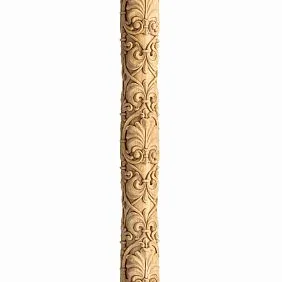

Historical legacy of wooden columns in architecture




From antiquity to modernity: evolution of wooden supports
The history of wooden columns and posts goes back to deep antiquity. In ancient Greece, wooden columns preceded stone ones, setting the canon of architectural orders later embodied in marble. In ancient Egypt, wooden columns adorned pharaohs' palaces, while in ancient Rome, they became part of the luxurious villas of patricians.
Medieval Europe gifted the world with magnificent half-timbered houses, where wooden posts not only performed a structural function but also shaped the unique appearance of buildings. Russian wooden architecture created a unique tradition of carved columns that adorned tsars' palaces and churches, turning them into true works of art.
The Renaissance revived interest in classical forms, and wooden columns once again gained popularity as interior elements of palaces and mansions. Baroque and Rococo added opulence and ornamentation to them, while Classicism brought strictness and nobility of lines.
Modern architecture reinterprets traditional forms, creating new interpretations of classical elements. Wooden posts and columns today are not merely a nod to tradition but also a current trend responding to demands for eco-friendliness, naturalness, and unique design.
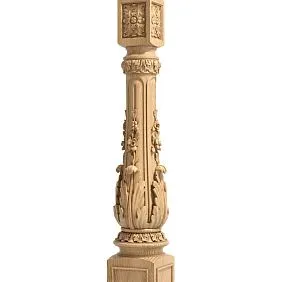
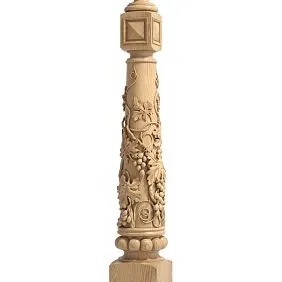
Our factory also produces:



Symbolic meaning of columns in various cultures
In various cultures, columns always had deep symbolic meaning. In ancient Greece, they symbolized the connection between earth and sky, between the world of humans and the world of gods. In Christian tradition, columns symbolized the apostles supporting the church.
In Eastern cultures, wooden posts were often associated with the World Tree — the central element of the cosmos, connecting the underworld, earth, and heavens. In Japanese architecture, wooden columns became an embodiment of the philosophy of harmony with nature, emphasizing the natural beauty of the material.
Today, when deciding to buy a wooden post/columnwe unconsciously continue this multi-century tradition, introducing into our home an element imbued with deep cultural meaning. A wooden column in a modern interior is not merely a decorative element but also a kind of bridge between the past and the present, between tradition and innovation.
Get Consultation
Functional features of wooden posts and columns
Structural role in building architecture
Wooden posts and columns are not only decorative elements but also important structural components. In frame construction, they serve as support elements, bearing vertical loads and transferring them to the foundation. Thanks to the high compressive strength of wood, wooden posts can support significant weight while remaining relatively lightweight.
In modern construction, wooden columns are often used in combination with other materials — concrete, steel, glass — creating hybrid structures that combine the advantages of various materials. This approach allows creating spaces with large spans and minimal number of supports, while preserving the aesthetics of natural wood.
Wooden posts play a special role in staircase construction. Support posts for staircases not only support treads and landings but also serve as a base for attaching balusters and handrails. Choosing to buy a wooden post/column for a staircase is a choice in favor of reliability, durability, and aesthetic appeal.
Decorative possibilities in interior and exterior design
In addition to their structural function, wooden posts and columns play an important decorative role. They become central design elements, setting the tone for the entire interior or exterior. Carved columns with capitals in classical style, minimalist posts in minimalist style, rustic supports made of weathered wood — the variety of forms and finishes allows selecting the ideal solution for any stylistic direction.
In interiors, wooden columns can be used for zoning space, creating architectural portals, decorating openings and niches. They bring a sense of solidity and stability to a room while simultaneously softening the interior with the warmth of natural material.
In exteriors, wooden posts often become elements of verandas, terraces, gazebos, creating a sense of connection with nature and traditional architecture. They can be simple and functional or richly decorated, becoming true adornments of the facade.
Ergonomics and practicality of wooden supports
Wooden posts and columns have several practical advantages, making them an ideal choice for modern construction. Above all, this is the eco-friendliness of the material — natural wood does not emit harmful substances and creates a favorable microclimate in the room.
Wood has excellent thermal insulation properties, which is especially important for regions with cold climates. Wooden posts do not create cold bridges, typical of metal structures, and help maintain a comfortable temperature in the room.
The acoustic properties of wood also deserve attention — wooden elements contribute to natural sound absorption, reducing noise levels and creating a more comfortable acoustic environment. This is especially valuable in living spaces, where it is important to ensure quietness and coziness.
Finally, wooden posts and columns are easy to process and modify. They can be adjusted to size directly at the installation site, simplifying installation and allowing standard items to be adapted to specific conditions. When you decide to buy a wooden post/columnyou get not just a decorative element, but a practical solution for your interior.
Variety of forms and styles of wooden columns
Classical order columns: Doric, Ionic, Corinthian styles
Classical order columns, inherited from ancient architecture, remain an epitome of elegance and proportionality. The Doric order - the most strict and minimalist, with a simple capital and fluted shaft - is ideally suited for creating an atmosphere of noble restraint.
The Ionic order, distinguished by more slender proportions and characteristic volutes on the capital, brings elegance and refinement to interiors. The Corinthian order, the most decorative of the classical orders, with its lush acanthus leaf capital, becomes a true work of art and a central element of luxurious interiors.
Modern manufacturers offer wooden columns in all classical orders, adapted to contemporary interiors. They can be crafted either strictly according to historical canons or in a stylized, simplified version, preserving recognizable features of the order while being more minimalist and modern.
Modern minimalist solutions
In modern architecture and design, minimalist wooden posts and columns are gaining increasing popularity. They are characterized by clean lines, absence of excessive ornamentation, and an emphasis on the natural beauty of wood. Such columns may have a simple square, rectangular, or round shape, with minimal surface treatment that highlights the wood's texture and grain.
Minimalist wooden posts integrate perfectly into modern interiors in loft, Scandinavian, and Japanese minimalist styles. They create a sense of space, light, and air, while simultaneously bringing warmth through the use of natural material.
A recent trend involves wooden columns with unprocessed, rough surfaces that retain traces of handwork or even the natural shape of the trunk. Such elements become striking accents in interiors, creating an interesting contrast with smooth, modern surfaces.
Carved and decorative variants
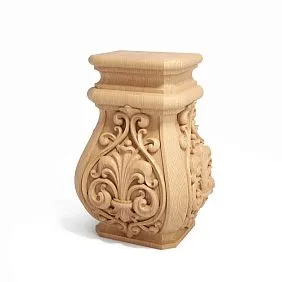
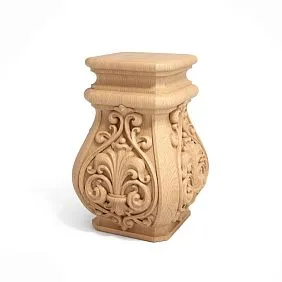
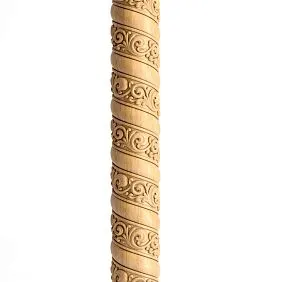
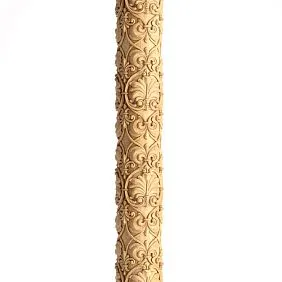
For those who appreciate luxury and uniqueness, manufacturers offer richly decorated carved columns. These may include traditional ornaments - botanical, geometric, or zoomorphic - or modern original compositions. Carving may cover the entire column shaft or concentrate on specific elements - the capital, base, or central section.
A special category comprises columns with inlays - inserts of other wood species creating contrasting patterns, or even elements made of other materials - metal, stone, glass. Such combined solutions allow creating unique, one-of-a-kind elements that become true works of art.
For those who appreciate classical luxury, columns with gilding, patination, or aging techniques are available - methods that give wood a noble, vintage appearance. Solution to buy a wooden post/column with such decoration - is a choice in favor of luxury and sophistication that never goes out of style.
Technical specifications and manufacturing materials
Wood species for manufacturing posts and columns
Choosing the wood species for manufacturing posts and columns is crucial for their longevity, strength, and appearance. Traditionally, hardwoods with high density and resistance to mechanical impacts are used for these purposes.
Oak is one of the most popular materials for manufacturing columns. It is distinguished by exceptional strength, durability, and beautiful grain with distinct growth rings. Oak columns can serve for centuries, acquiring a noble patinated appearance over time. Oak color ranges from light golden to dark brown, allowing selection of a shade ideally matching the interior.
Beech is another popular wood species for manufacturing wooden posts. It has a uniform structure, high density, and is easy to work with, allowing the creation of complex carved elements. Beech color - from light cream to pinkish-brown - gives interiors a warm, cozy feel.
Ash is valued for its beautiful wavy grain and high strength. It is easily bent, allowing the creation of columns with complex shapes. Ash color ranges from nearly white to light brown with characteristic pink or olive tones.
For creating contrasting, striking columns, dark species such as walnut, wenge, or merbau are used. They give interiors a luxurious, noble appearance and become striking accents in light spaces.
In the budget segment, coniferous species such as pine, spruce, and larch are often used. They have sufficient strength for most decorative applications, are easy to process, and have an attractive appearance. Larch is especially valued for its resistance to moisture and decay, making it an ideal choice for columns in humid rooms or for exterior use.
Wood Processing and Protection Technologies
Modern wood processing technologies allow significantly enhancing the durability and performance characteristics of wooden posts and columns. The process begins with proper drying - either natural or kiln-dried - which reduces wood moisture to an optimal level (8-12%), preventing further deformation and cracking.
To protect against biological threats - fungi, mold, insects - wood is treated with special antiseptic compounds. Modern antiseptics not only effectively protect the material but are also environmentally safe, not releasing harmful substances during use.
To enhance fire resistance, special impregnations are applied, which form a protective layer upon heating, preventing oxygen access to the wood and slowing the combustion process. This is especially important for columns serving a structural function in buildings.
Surface finishing may include sanding, polishing, staining, or varnishing. Modern wood varnishes and oils not only protect the surface from moisture and contaminants but also enhance the natural beauty of the grain, deepening and enriching the color.
For columns installed outdoors or in humid rooms, additional protective methods are applied - thermal treatment, acetylation, or polymer-based treatments. These technologies significantly increase wood resistance to atmospheric effects and extend the lifespan of the products.
Sizes and proportions: from miniature to monumental
Wooden posts and columns are manufactured in a wide range of sizes - from miniature decorative elements several dozen centimeters high to monumental structures several meters tall. The choice of size depends on the column's functional purpose, architectural features of the room, and interior stylistic solution.
For classical order columns, canonical proportions exist, defining the relationship between the shaft diameter and height, as well as the sizes of the capital and base. For example, the Doric order typically has a 1:8 ratio (diameter to height), the Ionic order 1:9, and the Corinthian order 1:10. Modern manufacturers often adapt these proportions to specific conditions while maintaining the columns' harmony and visual appeal.
For staircase posts, the typical height ranges from 900 to 1200 mm, depending on the height of the handrails and overall staircase proportions. The diameter or cross-section of the post is selected based on the load it must bear and aesthetic considerations. Standard cross-section sizes range from 80x80 mm to 200x200 mm for square posts, and from 80 to 200 mm in diameter for round posts.
For decorative columns that do not bear structural loads, dimensions can be any size, based on the designer's concept. Miniature columns 30-50 cm high can be used as bases for sculptures, planters, or lamps. Half-columns and pilasters attached to walls typically have a height from floor to ceiling and a width proportional to the room's height.
When you decide to buy a wooden post/columnIt is important to precisely determine the required dimensions based on specific installation conditions and the functional purpose of the element. Many manufacturers offer custom manufacturing services for columns according to specified parameters, allowing the creation of an element perfectly suited to your interior.
Application of wooden posts and columns in modern design
Staircase Posts: Functionality and Aesthetics
Staircase posts are one of the most common types of wooden supports in modern interiors. They perform an important structural function, supporting handrails and balusters, and simultaneously become key decorative elements of the staircase.
The starting post, installed at the bottom of the staircase, usually has more imposing dimensions and a complex design, becoming the visual focal point of the entire structure. It may be adorned with carvings, applied elements, decorative inserts. Intermediate posts, installed at turns and landings of the staircase, usually have more modest dimensions but support the overall design style.
Modern manufacturers offer a wide range of staircase posts — from classic turned posts with rich ornamentation to minimalist ones with clear geometric forms. A special category includes posts in the modern style with smooth, flowing lines, and art deco-style posts with characteristic geometric patterns.
A significant trend in recent years has been the use of combined materials — wooden posts with metal, glass, or stone elements. Such combinations allow creating unique, modern staircase structures that meet the most refined tastes.
Solution to buy a wooden post/column For stairs — it is an investment in the safety, functionality, and aesthetic appeal of your home. Quality staircase posts will serve for decades, maintaining their strength and beauty.
Zoning space with columns
In modern interiors with open floor plans, wooden columns become an ideal tool for zoning space. They allow visually dividing a room into functional zones without erecting solid walls that might disrupt the sense of openness and freedom.
Colonnades, arches with columns, freestanding posts — all these elements help structure space, creating smooth transitions between different zones. For example, columns between the living room and dining room mark the boundary between zones while simultaneously preserving spatial unity and ensuring visual continuity.
Especially effective is the use of columns in combination with other zoning elements — platforms, changes in floor level, variations in ceiling or wall finishes. Such a comprehensive approach allows creating a clearly structured yet unified and harmonious space.
An interesting solution is using wooden columns as part of furniture structures — for example, as supports for a bar counter separating the kitchen and dining area, or as part of a bookshelf dividing the work area from the relaxation zone. This approach allows maximizing the functional use of every interior element.
Decorative columns in facade and interior design
Decorative wooden columns become striking accents in both exterior and interior design. On facades, they are used to decorate entrance groups, porticos, verandas, giving the building a classic, respectable appearance. In interiors, they can frame doorways, niches, fireplaces, creating architectural compositions that attract attention.
Wooden columns play a special role in decorating public spaces — restaurants, hotels, conference halls. Here, they not only serve a decorative function but also create a certain atmosphere corresponding to the establishment’s concept. Thus, massive carved columns in a restaurant with traditional cuisine emphasize authenticity and respect for traditions, while minimalist modern columns in a business center create a sense of reliability and progressiveness.
In residential interiors, decorative columns often become central design elements around which the entire room composition is built. They can be used as standalone accents or in combination with other architectural elements — arches, niches, cornices, moldings — creating cohesive architectural ensembles.
Modern technologies allow creating lightweight decorative columns that can be installed even in rooms with limited load-bearing capacity of the ceiling. Such columns are made from hollow structures clad with veneer or thin solid wood layers, and visually indistinguishable from monolithic ones.
Process of selecting and installing wooden posts
Criteria for selecting a quality product
When selecting wooden posts and columns, attention should be paid to a number of key parameters determining the quality and longevity of the product. First and foremost, this is the quality of the raw material — the wood should be well-dried (moisture content no more than 8-12%), free of visible defects — large knots, cracks, signs of insect or fungal damage.
An important criterion is the manufacturing technology. Preference should be given to products made from solid wood or glued laminated timber, which have high strength and dimensional stability. Glued laminated structures are especially suitable for large columns, as they are less prone to deformation under changes in humidity and temperature.
The quality of surface treatment is also very important. The surface should be smooth, free of burrs and roughness, with evenly applied protective coating. All carved elements should have clear, well-defined contours, without blurred or incomplete details.
For columns performing a structural function, the strength and reliability of fastening elements are critically important. They should be made from high-quality materials resistant to corrosion and mechanical loads. The ideal option is when the manufacturer offers a complete solution, including not only the columns themselves but also all necessary fastening elements.
Finally, do not forget about the manufacturer’s reputation and warranty obligations. Reliable companies value their reputation and provide warranties on their products, which is additional confirmation of their quality. Before to buy a wooden post/columnit is advisable to review reviews of the manufacturer and examples of their work.
Technical aspects of installation and mounting
Installing wooden posts and columns requires certain technical knowledge and skills. The process begins with preparing the foundation — it must be level, strong, and capable of supporting the load from the column and the forces transmitted through it. For columns installed on the floor, often reinforcement of the foundation or creation of a special foundation is required.
The attachment of the column to the foundation can be done in various ways, depending on its functional purpose and structural features. For load-bearing columns, metal anchors, embedded parts, and special brackets are typically used, ensuring secure fixation and load transfer. For decorative columns, simpler fasteners — screws, dowels, adhesive compounds — may be used.
Special attention should be paid to the vertical alignment of the column installation. Even a slight deviation from verticality can lead to uneven load distribution and, consequently, deformation or structural failure. Vertical alignment is controlled using construction levels, plumb bobs, and laser levels.
When installing columns in rooms with high humidity or temperature fluctuations, compensatory gaps must be provided to allow the wood to naturally expand and contract without generating stresses or deformations. These gaps can be concealed by decorative elements — capitals, bases, moldings.
For staircase posts, it is especially important to ensure secure attachment to steps or landings. Usually, special metal fasteners are used, partially embedded in the post body and securely fixed to the base. All fastening elements should be concealed by decorative covers that do not compromise the aesthetic of the structure.
Proper care of wooden posts and columns significantly extends their service life and preserves their attractive appearance. Key principles of care include maintaining optimal indoor humidity (40-60%), protecting from direct sunlight which can cause fading and cracking of wood, and regular cleaning of dust and dirt.
For cleaning wooden surfaces, it is recommended to use soft cloths and specialized wood care products that do not contain aggressive chemical components. Abrasive materials and solvents may damage the protective coating and the wood itself.
Periodically (typically every 3-5 years, depending on usage conditions) the protective coating may need to be renewed. This is especially important for columns installed outdoors or in rooms with high humidity. The process includes lightly sanding the surface to remove the old coating layer and applying a new protective compound.
In case of minor damage — scratches, chips, scuffs — these can be repaired using special wax pencils or mastics matched to the wood color. More serious damage may require professional repair or even replacement of the element.
It is important to remember that wood is a living material that can change its properties under the influence of the surrounding environment. Minor color changes, the appearance of microcracks, slight deformations — these are natural processes that do not affect the strength and durability of the structure, but give it a unique, authentic character.
Economic Aspects of Choosing Wooden Posts
Price Range and Factors Influencing Cost
The cost of wooden posts and columns can vary widely depending on several factors. Primarily, the type of wood affects the price. Solid pieces made from valuable hardwoods — oak, ash, walnut — will cost significantly more than similar items made from pine or spruce. This is explained not only by the higher cost of the material itself but also by its superior performance characteristics.
Size and complexity of the structure also significantly affect the price. Large columns with a large trunk diameter, complex capitals and bases will cost more than simple small-section posts. The presence of carved decoration, inlays, complex profiling significantly increases manufacturing labor intensity and, accordingly, the cost of the item.
Manufacturing technology is another important factor in pricing. Solid wood columns are usually more expensive than those made from glued laminated timber or hollow structures with veneer cladding. However, glued laminated structures may offer better shape stability and longevity, making them a more cost-effective investment in the long term.
Finally, the manufacturer's reputation, presence of quality certificates, warranty obligations affect the cost. Products from well-known brands with a long history and impeccable reputation usually cost more, but they also guarantee higher quality and reliability.
Overall, the price range for wooden posts and columns is very wide — from several thousand rubles for simple pine posts to hundreds of thousands for exclusive carved columns made from valuable hardwoods. When choosing, it is important to balance cost with functional purpose and aesthetic requirements for the item.
Investment Appeal of Wooden Elements
This is not just a purchase of a decorative element, but a long-term investment that can increase the value of your property. High-quality wooden elements, harmoniously integrated into the architecture and design of the room, create a sense of luxury and exclusivity, positively affecting the market value of the property.
Solution to buy a wooden post/column Historical authentic elements or their high-quality replicas, made using traditional techniques, are especially valued. Such details give interiors individuality and character, distinguishing them from standard solutions. In historic buildings, preserving or restoring original wooden elements can significantly increase the historical and cultural value of the property.
It is important to note that the investment appeal of wooden elements depends directly on their quality and compatibility with the overall style of the room. Random, mismatched details may, on the contrary, reduce the value of the property. Therefore, when choosing wooden posts and columns, it is recommended to consult with professional designers and architects.
From the perspective of long-term investments, wooden elements have another advantage — they are restorable and upgradable. Unlike many modern materials that require complete replacement upon damage, wooden structures can be restored while preserving their historical and artistic value.
When choosing posts and columns for interior or exterior use, a common question arises regarding the comparative advantages of different materials. In addition to natural wood, today's market offers products made from polyurethane, gypsum, composite materials, metal, and stone. Each material has its own advantages and disadvantages.
Comparison with alternative materials
Polyurethane and gypsum columns differ in lightness, ease of installation, and relatively low cost. They can imitate the texture and color of various materials, including wood. However, they lack the strength and durability of natural wood, are more susceptible to mechanical damage, and do not provide the sense of solidity and authenticity that real wood offers.
Metal columns surpass wooden ones in strength and fire resistance, but they are inferior in thermal insulation and ecological properties. They can create cold bridges in building structures and do not possess the natural beauty and warmth characteristic of wood.
Stone columns — marble, granite, limestone — are distinguished by exceptional durability and monumentality. However, they are significantly heavier than wooden ones, requiring reinforced foundations, more complex processing and installation, and higher cost.
Composite materials combining wood fibers with polymer binders represent a modern alternative to natural wood. They are more resistant to moisture and biological threats, but cannot fully replicate the aesthetic qualities and tactile sensations of natural wood.
Ultimately, material selection should be based on specific usage conditions, functional requirements, and aesthetic preferences. Natural wood remains the optimal choice for those who value ecological safety, natural beauty, and authenticity, and are willing to provide proper care for the items.
Trends and Innovations in Wooden Column Production
In recent years, the production of wooden posts and columns has undergone significant changes due to the adoption of modern technologies. Computer-aided design (CAD) allows creating complex three-dimensional models with high precision, taking into account all nuances of construction and decoration.
Modern manufacturing technologies
Numerical control machines (CNC) ensure precise reproduction of these models in the material. They allow performing complex carving, precise profiling, perfectly flat surfaces, which would be extremely labor-intensive with manual processing. At the same time, modern equipment ensures high production speed and minimal waste.
Laser cutting and engraving open new possibilities for creating delicate decorative elements and inlays. This technology allows applying complex patterns, texts, images onto the wood surface with micron-level precision, creating unique, personalized items.
Innovative wood drying methods, including vacuum and microwave drying, allow achieving optimal material moisture levels in significantly shorter time compared to traditional methods. This not only accelerates the production process but also ensures more uniform drying, reducing the risk of internal stresses and deformations.
New adhesive compositions for producing glued laminated timber are characterized by increased strength, moisture resistance, and ecological safety. They allow creating structures of practically any size and shape, maintaining stability under various operating conditions.
New adhesive compositions for producing glued laminated timber feature enhanced strength, moisture resistance, and environmental safety. They allow creating structures of virtually any size and shape, maintaining stability under various operating conditions.
Ecological aspects and sustainable production
In the modern world, ecological aspects of production are gaining increasing importance. Responsible manufacturers of wooden posts and columns pay special attention to sustainable forestry, using wood from certified forests where new trees are planted in place of those felled.
FSC (Forest Stewardship Council) and PEFC (Programme for the Endorsement of Forest Certification) certification guarantees that the wood is obtained in accordance with the principles of sustainable forestry, taking into account ecological, social, and economic aspects. Choosing products with such certifications, the consumer contributes to the preservation of global forest resources.
Modern wood processing technologies allow for the most efficient use of material, minimizing waste. Wood residues can be recycled into fuel pellets, particleboard, compost, without creating environmental impact.
Ecologically safe water-based or natural oil and wax-based varnishes, paints, and stains do not emit harmful substances during use, which is especially important for products used in living spaces. They provide reliable protection for wood, preserving its natural beauty and not harming human health or the environment.