Article Contents:
- Wooden Wall Panels: What They Are and Why You Need Them
- What Types of Wooden Wall Panels Exist
- Wall Slatted Panels
- Smooth Wooden Panels
- Wood Panels for Painting
- Veneered Solutions
- Solid Wood Panels
- Materials for Wooden Wall Panels: In-Depth Analysis
- MDF: Geometry, Color, Modernity
- Solid Oak: Durability, Naturalness, Character
- Veneer: natural aesthetics with a stable base
- Where to use wooden wall panels: room-by-room scenarios
- Living room: accent, TV zone, zoning
- Bedroom: coziness, quiet, focus on the headboard
- Hallway and corridor: first impression and practicality
- Study and office: concentration and status
- Niches, columns, arches: radius surfaces
- Commercial spaces: restaurants, boutiques, showrooms
- Formats and constructions: how to navigate the assortment
- Ready-made panel or separate slat: what's the difference
- Rigid substrate or fabric base
- Panels for walls, ceilings, or furniture
- How to choose wooden wall panels by size
- Installation of wooden wall panels: from preparation to finish
- Foundation Preparation
- Mounting with adhesive
- Installation on a frame
- Seamless joining
- Corners, outlets, adjacencies
- Color and finish of wooden wall panels: how to avoid mistakes
- For enamel: color freedom and modernity
- For varnish: protection with texture preservation
- For oil: naturalness from within
- Natural oak shades
- Wooden wall panels and interior style
- How to combine wooden wall panels with other materials and elements
- Wooden panels for space zoning
- Acoustic effect of wooden wall panels
- 12 mistakes when choosing wooden wall panels
- What to choose for a specific task: practical guide
- Accent wall in living room or bedroom
- Painting in interior color
- Natural texture, natural look
- Column, arch, or rounded corner
- Furniture front in a unified style with the wall
- Commercial space with high traffic
- Care for wooden wall panels
- FAQ: answers to the most popular questions about wooden wall panels
- About the Company STAVROS

A wall is not just a boundary of space. It is a surface that either enhances the interior or hinders it. One flat painted wall is neutral. The same wall covered with textured wooden panels is already a statement. This is precisely the secret of their growing popularity:wooden wall panelsthey transform the architectural shell of a room into its main artistic element.
But behind the phrase 'wooden wall panels' lies an entire universe of solutions. Solid wood or MDF? Smooth or slatted? For painting or with natural veneer? A finished panel or an individual slat? When asking these questions, most people get lost at the first step. This article is a detailed map of this universe: with landmarks, forks, and clear recommendations for each application scenario.
Wooden wall panels: what they are and why they are needed
Let's start with a definition that many overlook. A wooden wall panel is not just a sheet of wood nailed to a wall. It is an architectural element that simultaneously plays a decorative, functional, and spatial role.
Wooden wall panels differ from standard smooth finishes in several key parameters:
-
Volume and relief. Any panel protrudes from the wall plane. It is this relief that creates the play of light and shadow, making the surface visually rich and expressive.
-
Materiality. Wood is a warm, tactilely rich material. Even from across the room, wooden panels are perceived differently than paint or wallpaper.
-
Structure. Wooden wall panels establish rhythm, order, and a graphic quality on the surface. They introduce architectural structure where there was none.
What tasks do they solve in an interior?
Accentuation. One wall with wooden panels amidst neutral surfaces is a powerful focal element that organizes the entire space around itself.
Zoning. In open-plan layouts, studios, and combined kitchen-living rooms, a wooden wall or part of a wall becomes a visual boundary between zones—without partitions or loss of space.
Improving acoustics. Textured wooden surfaces scatter sound waves and reduce reverberation levels. This is not just a decorative bonus—it is a real improvement in the quality of life in the room.
Visual transformation of proportions. The vertical rhythm of panels visually 'lifts' the room upward. Horizontal rhythm widens it. This is a tool that a skilled designer uses as consciously as choosing furniture.




What types of wooden wall panels exist
The market offers several fundamentally different formats that users often confuse. Let's break down each one.
Our factory also produces:


Slatted wall panels
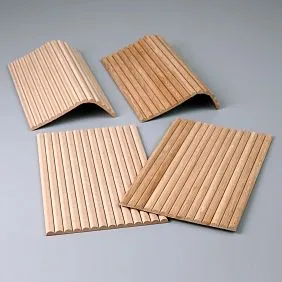
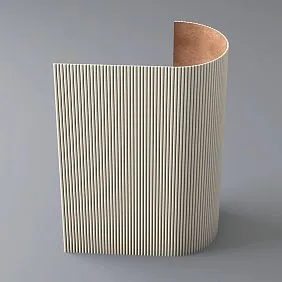
This is a structure of parallel wooden or MDF slats with equal or variable spacing, mounted on a substrate—an MDF sheet or fabric base.Slatted wall panels—this has been the dominant trend in modern interior design in recent years, and its position is only strengthening.
Why have slatted panels become so popular? It's all about a unique property: they come alive under any lighting. Daylight falls at an angle—one facet is illuminated, another is in shadow. An accent spotlight turns on—sculptural graphics appear on the surface. Even an ordinary ceiling lamp gives the slats a depth that no painted wall can provide.
Slatted panels come in two structural types:
-
Rigid (on MDF substrate)—for flat walls, ceilings, furniture fronts. Maximum geometric precision, seamless joining.
-
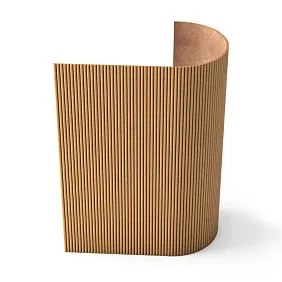
Flexible (on fabric base)—for columns, arches, curved surfaces, rounded corners. A unique solution that is literally impossible to achieve in any other way.
Get Consultation
Smooth wooden panels
Solid flat panels or boards made of solid wood, MDF, or veneer without a relief pattern. Used in classic and neoclassical interiors, in boiserie, and in the finishing of studies, libraries, and executive meeting rooms. They are less relevant for contemporary minimalism—without relief, wood loses some of its expressiveness.
Wooden panels for painting
A separate and very strong category.Wooden panels for painting— these are MDF products with a pre-prepared, primed surface, onto which the final enamel is applied without additional processing. The main advantage is absolute freedom in color choice. Want the slatted panels to blend with the wall in a monochrome concept? No problem. Want a contrasting dark accent? Easy. White slats on a white background for a laconic art effect? One coat of paint solves the task.
Veneered solutions
MDF base with a thin slice of natural wood on the surface. Oak, ash, walnut, birch veneer — each species provides its own texture and grain pattern. Veneered panels are a reasonable compromise: you get a living natural texture with the stable geometry of an MDF base and a lower cost than solid wood.
Solid wood panels
Solid or joined natural wood. Oak, beech, ash, walnut — each species has its own character. Massivewooden panels made of oak— this is a premium choice that only increases in value over time. The only natural texture that cannot be reproduced by veneer, digital printing, or thermal film.
Materials for wooden wall panels: an in-depth analysis
Choosing the material is choosing the character of your interior. There is no universally correct answer here: there is a task, and the material is selected to fit the task.
MDF: Geometry, Color, Modernity
MDF (Medium Density Fiberboard) is a medium-density fiberboard produced by hot pressing with the addition of binders. For wall panels, MDF with a density of 750–850 kg/m³ is used.
Key properties of MDF as applied to wall panels:
Perfect geometry. MDF has no knots, resin pockets, or natural defects. Each slat in a batch is identical to the next. This is critically important for slatted panels: only with precise spacing between the planks does the surface look like a single, smooth system.
Surface for painting. MDF can be sanded to a mirror-smooth finish with ease. The primed surface accepts any paint coating without primers or additional work. This makes MDF panels indispensable for projects with a clear color scheme.
Stability. Unlike solid wood, MDF hardly reacts to fluctuations in humidity and temperature. It does not warp or crack under proper use.
Limitations of MDF. Heavier than solid wood for the same volume. Does not allow resanding of the surface without risking damage to the coating. Not suitable for rooms with constantly high humidity without special protective treatment.
MDF is the ideal material when precision, color, and geometric perfection are important.
Solid oak: Durability, naturalness, character
Oak is one of the most valuable species for interior applications. A density of 700–750 kg/m³ ensures high mechanical strength. The open fiber structure creates an expressive natural grain. High tannin content provides natural resistance to moisture, fungus, and pests.
What oak offers as a material for wall panels:
-
Living unique texture — each slat is one-of-a-kind
-
Durability of 30–50 years with proper care
-
Ability to repeatedly renew the surface by sanding and re-oiling
-
Wide range of tints: from natural honey-golden to Scandinavian gray and deep graphite
Solid oak — a choice for interiors where naturalness, depth, and long-term value are more important than color freedom.
Veneer: natural aesthetics on a stable base
Veneered panels — MDF backing plus a thin (0.6–3 mm) slice of natural wood. The best of both worlds: the stability and precision of MDF with the natural texture of wood on the surface.
Oak veneer on MDF is one of the most common and sought-after solutions for wooden wall panels in modern residential and commercial design. Limitation: veneer cannot be arbitrarily repainted — it exists within the natural palette with tinting.
Where to use wooden wall panels: scenarios by room
One of the most common questions is: 'Will this suit my room?' The correct answer is almost always yes. But each space requires its own approach.
Living room: accent wall, TV zone, zoning
The living room is the most popular space for wooden wall panels. Here they work in several scenarios.
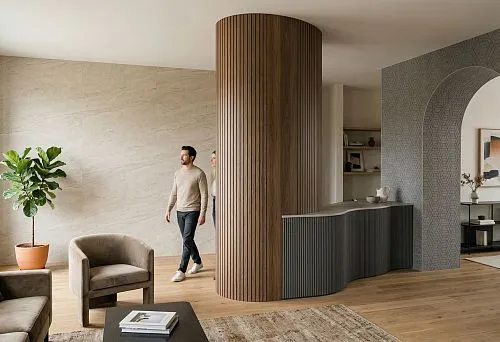
Accent wall. The area behind the sofa, the wall between windows, the wall by the entrance—any of these elements with wooden slat panels becomes a focal point of the interior. With vertical slats, the wall visually grows taller; horizontal slats give the space breadth and horizontal dynamism.
TV zone.wooden wall panelsThe wall behind the TV is one of the most in-demand scenarios. Slats create an expressive backdrop for the screen, hide cable runs in the cavity between the slats and the backing, and work well with LED strip lighting. Dark colors—anthracite, graphite, dark blue—create a cinematic atmosphere and visually deepen the wall.
Zoning. In studios and apartments with open floor plans, a strip of slat panels serves as a visual boundary between zones without physical separation.
Bedroom: coziness, quiet, focus on the headboard
In the bedroom, wooden wall panels are primarily used behind the bed headboard. This solution works more powerfully than any store-bought headboard: a slat wall from floor to ceiling creates an architectural alcove that forms a sense of a protected, cozy sleeping area.
For the bedroom, it's better to choose calm shades: natural oak, powder and beige tones of paintable MDF, soft gray. Active contrast solutions in the bedroom are only for those who are intentionally creating an intense modern look.
Hallway and Corridor: First Impression and Practicality
The hallway is the face of the apartment. The first seconds after entering shape the impression of the entire home.Wooden wall panelsin the hallway solve two tasks at once: they create a striking first impression and protect the walls from scuffs and mechanical wear, which is inevitable with heavy traffic.
In a narrow corridor, vertical slatted panels along the entire length of the wall provide a powerful optical effect: the corridor 'grows' upward and feels more spacious. This is one of the few techniques that truly works in a confined space.
Study and Office: Concentration and Status
The study is a space for focused work and representation. Wooden wall panels here serve a dual function: they create an environment conducive to thinking (acoustics, warmth of the material) and convey status—businesslike, yet not sterile.
For offices and meeting rooms, solid oak or veneer works best—materials that are perceived as expensive and substantial even on a subconscious level. MDF panels for painting in dark tones provide a more modern and graphic look.
Niches, Columns, Arches: Curved Surfaces
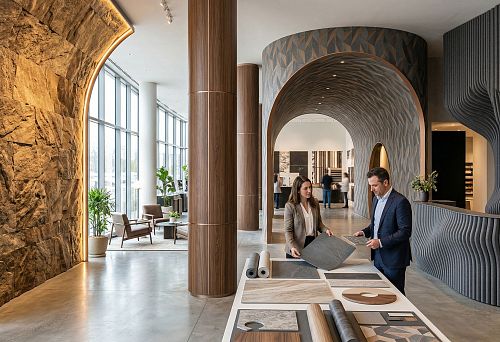
This is where wooden panels reveal a unique advantage that most other finishing materials lack. Flexible slatted panels on a fabric base effortlessly wrap around columns, arches, and rounded corners—without cuts, without fitting, while preserving a seamless rhythm. This is fundamentally impossible to achieve with sheet materials without significant geometric compromises.
Commercial spaces: restaurants, boutiques, showrooms
In commercial designwooden wall panels for interiors— is a first-rate atmosphere-shaping tool. A restaurant with slatted walls is perceived as a conceptual establishment with a designer approach. A boutique or showroom with natural oak on the walls — as a place where details matter. Wood texture evokes associations with warmth, quality, and authenticity — exactly what a commercial interior needs.
Formats and constructions: how to navigate the assortment
Ready-made panel or separate slat: what's the difference
This is one of the main questions people often don't get a clear answer to. Let's break it down fundamentally.
A ready-made slatted panel is a module where slats are already fixed with a set spacing on a backing. You mount the entire module, join it with the adjacent one — and get a seamless surface with precise rhythm. It's fast, accurate, convenient for large planes.
A separate interior slat is a single plank of a given profile and length. From it, you can create any layout, set arbitrary spacing, create a non-standard pattern, use it as a decorative element on furniture or in a ceiling structure. It's a tool for custom tasks.
Rule: large flat walls — ready-made panel. Non-standard constructions, furniture facades, creative solutions — separateInterior Rail.
Rigid backing or fabric base
Rigid MDF backing — for strictly flat surfaces. Flexible fabric base — for curved surfaces. No compromises: if the surface has a curve, the only correct choice is a flexible module.
Panels for walls, ceilings, or furniture
Wooden slat panels work in all three planes, but with different fastening requirements. On the ceiling — rigid attachment to the load-bearing structure, without adhesive. On the wall — adhesive or framing. On furniture fronts — adhesive with additional point fasteners. Plan ahead for which surface the panels are intended.
How to choose wooden wall panels by size
Size matters. Incorrectly chosen slat scale or panel spacing can ruin the space you wanted to decorate.
Slat width and spacing. Narrow slats (15–20 mm) create a light, almost lace-like graphic pattern. Wide slats (40–60 mm) — a monumental, architectural rhythm. For small rooms, narrow and medium-wide slats with moderate spacing are the optimal choice. In spacious living rooms and offices, you can afford a wider rhythm.
The optimal ratio of slat width to spacing is 1:1 or 1:1.5. Too wide spacing makes the surface look 'holey'; too dense — heavy and monolithic.
Module length. For rooms with a ceiling height of 2.7–3.0 m, the optimal panel length is 2700 mm: this allows it to be mounted from floor to ceiling without a horizontal joint. A joint disrupts the vertical rhythm and devalues the entire effect.
Quantity calculation. Wall width (in mm) ÷ module width = number of whole modules. Add 8–12% extra for cutting and fitting. For walls with niches, door openings, and outlets, create a layout plan in advance.
Installation of Wooden Wall Panels: From Preparation to Finish
Installation is not the place to skimp on time and attention. Even the most expensive and beautiful wooden wall panels will lead to disappointment if not installed correctly.
Foundation Preparation
This is the zero step, without which any installation is unreliable.
-
Wall moisture: no more than 12%. Fresh plaster must cure for at least 4 weeks.
-
The surface is cleaned of dust, grease, and loose layers.
-
Apply a deep-penetration primer—it improves the adhesion of the adhesive.
-
Check the plane deviation with a straightedge: allowable deviation for adhesive installation is 3–5 mm over 2 m.
Mounting with adhesive
For rigid panels on MDF backing, apply mounting adhesive in a zigzag pattern over the entire backing area. Press the panel against the wall, align it with a level, and secure it until the adhesive sets (usually 20–40 minutes). The method is fast and clean; requires a flat, prepared base.
Installation on a Frame
If the wall has significant unevenness (deviation over 5 mm per 2 m), a metal profile frame is needed. It allows leveling the plane, running electrical cables, and optionally adding sound-absorbing material. The structure depth increases by 50–80 mm.
Seamless joining
The main requirement for a quality slatted panel is precise alignment of the slat spacing across all modules from the same batch. When adjacent modules are correctly joined, the seam between them should be visually indistinguishable from the regular gap between slats. Insist on panels from the same batch and check the spacing before installation.
Corners, outlets, junctions
-
Internal corners: decorative corner trim or miter cut at 45°
-
External corners: miter cut at 45° with reinforced fastening or metal profile
-
Sockets and switches: outlet boxes are set to a depth matching the panel thickness plus underlayment
-
Baseboards and ceiling cornices: plan the junction of panels with the baseboard and cornice in advance — this affects the final length to be ordered
Color and finish of wooden wall panels: how to avoid mistakes
The finish is the final layer that defines the character of the panels. But the decision about the finish must be made at the very beginning — because it influences the choice of material.
For enamel: color freedom and modernity
Matte, satin, or semi-gloss enamel on MDF panels offers absolute freedom. White slats on a white wall, anthracite wall in a dark interior, powder pink in a Scandinavian bedroom — all are possible from the same material.Panels for painting— the main tool for a designer working with color.
Matte enamel is the most advantageous finish for slatted panels: it prevents glare and maximally reveals the relief.
Under varnish: protection with texture preservation
Transparent or tinting varnish for solid wood and veneer is a standard solution in residential and commercial spaces. Varnish creates a hard protective film and preserves the natural wood grain. Glossy varnish gives active highlights (popular in classic interiors), matte varnish retains the natural appearance of the material.
Under oil: naturalness from within
Deep-penetrating oil nourishes the wood structure, giving the surface a soft matte appearance and tactile warmth. Oil coating is the most eco-friendly option for living spaces. It is renewed every few years without dismantling: simply apply a new layer.
Natural oak shades
Tinting oils and stains open a wide spectrum for oak: natural honey-golden, cognac, tobacco, cold Scandinavian gray, ash, graphite. Each shade changes the perception of the entire space — warm tones create coziness, cold ones — modernity and conciseness.
Wooden wall panels and interior style
One of the main fears when choosing is 'it won't fit in'. Let's look at the main styles and how wooden panels work in each of them.
Minimalism. Slatted panels on an MDF base, painted the same color as the wall. A monochrome technique completely removes the emphasis from the panels themselves, leaving only the relief. This is a refined, restrained solution.
Scandinavian style. Natural oak or light gray tint, medium-density slatted rhythm. Combined with linen textiles, plants, matte ceramics.
Japandi. A combination of Japanese minimalism and Scandinavian warmth. The key is natural oak in restrained warm tones, a carefully calibrated slat rhythm, and a complete absence of decorative noise.
Modern classic and neoclassicism. Here, moldings, cornices, and pilasters are added to the slatted panels.wooden wall panelsin combination with decor — these are no longer just slats, but a full-fledged wall finishing system.
Loft. Dark tinted oak slats or MDF under rich dark paint — combined with brick fragments, metal, and concrete.
Modern eclecticism. Wooden panels act as an anchor element that holds a heterogeneous environment within a single coordinate system.
How to combine wooden wall panels with other materials and elements
With paint and plaster. A wooden slatted panel as an accent against a painted or plastered wall is an absolute classic. Textured 'Venetian' plaster or rough micro-cement plaster next to wood creates an interesting tactile contrast.
With porcelain stoneware and natural stone. Wood and stone are a natural pairing. A kitchen backsplash made of gray marble next to oak panels; a bathroom with dark slate and light oak — these are convincing, well-balanced combinations.
With metal. Matte brass, chrome, black steel in lighting fixtures, handles, profiles — combined with a wooden texture, they create an expressive contrast of warmth and cold.
With furniture. Wooden panels on the wall should echo the wood of the furniture — they don't have to match exactly but should be within the same temperature and tonal system. Mixing warm and cool shades of wood in one space is one of the most common mistakes.
With textiles. Linen curtains, woolen blankets, cotton pillows — natural textures support the wood grain and create a cohesive natural interior system.
Wooden panels for zoning space
Zoning is one of the functions that isn't always prioritized when choosing wall panels. Meanwhile, this is precisely where they deliver some of the most impressive results.
In a 40 sq. m studio, a strip of slatted wooden panels on the wall divides the living and work areas without a single partition. In a living room with an open kitchen, a wooden accent wall behind the dining table marks the boundaries of the dining area. In a bedroom-office, vertical slats behind the desk separate the workspace from the relaxation zone.
Zoning with panels is not a physical, but a visual and psychological separation. Yet it works because the human brain perceives a change in material and texture as a change in context.
Acoustic effect of wooden wall panels
This aspect rarely makes it into wall panel reviews. Meanwhile, it directly impacts the quality of life.
Smooth hard surfaces — concrete, drywall, plaster — reflect sound mirror-like. This creates 'hollowness' in spacious rooms, trailing sound reflections, and a fatiguing sound background. Textured wooden panels scatter sound waves: the slats act as a diffuser, directing reflections in different directions.
When installed on a frame with sound-absorbing material (50 mm mineral wool or acoustic foam) placed behind the panel backing, the effect becomes significant. This is full-fledged acoustic treatment integrated into decorative finishing.
Most relevant for:
-
Home theaters and living rooms with audio systems
-
Meeting rooms and offices
-
Restaurant halls with high ceilings
-
Bedrooms where sound quietness is important
-
Children's rooms
12 mistakes when choosing wooden wall panels
Mistakes when choosing wall panels are costly — literally. Here are the most typical ones:
-
Choosing based solely on photos—without considering the actual scale of the slats and the depth of shadow in your space
-
Confusing solid wood, MDF, and veneer—three different materials with fundamentally different properties and purposes
-
Not ordering samples—color, texture, and size on a monitor and in hand are different things
-
Not considering the room size—too active a rhythm of narrow slats in a small room creates a cage-like feeling
-
Mixing warm and cool wood tones in one space
-
Not planning module alignment—the joint between panels must match the rhythm, otherwise the boundary is visible
-
Forgetting about outlets and switches—electrical boxes need to be relocated in advance
-
Installing without preparing the base—adhesive doesn't hold on damp or crumbling walls
-
Choosing solid wood where uniform color is needed—the natural texture of wood is incompatible with perfect monochrome painting
-
Not considering the finish when choosing the material—the finish is selected before ordering, not after
-
Ignoring acoustics — a large slatted wall without an absorber in a spacious living room can increase echo
-
Not thinking about maintenance — the hallway needs a wear-resistant varnish, the bedroom needs a breathable oil
What to choose for a specific task: a practical guide
Accent wall in the living room or bedroom
Ready-made slatted panel on an MDF backing. Length — matches the height of the room without seams. Color — contrasting or monochrome, depending on the concept.
Painting in the color of the interior
MDF panels with a primed surface for painting. Matte enamel in any shade from the paint manufacturer's catalog.
Natural texture, natural appearance
Solid oak under oil or varnish. Or MDF/oak veneer — if geometric stability is important with a natural surface texture.
Column, arch, or rounded corner
Only flexible fabric-based slatted panels. No alternatives.
Furniture front in a unified style with the wall
SeparateInterior Railmade from the same material as the wall panels. A unified rhythm and finish will tie the furniture and wall into an integrated system.
Commercial space with high traffic
Solid oak under varnish or MDF under wear-resistant enamel with coating hardness not lower than 3H. The finish must withstand daily wet cleaning.
Caring for wooden wall panels
The question of care is one of the most frequent and one of the simplest. Wooden panels do not require special maintenance.
Daily care. Soft dry or slightly damp cloth. Abrasive sponges, aggressive chemicals — prohibited for any wooden surfaces.
MDF for painting. Matte enamel is renewed with local touch-up when scratches or wear appear. Full renewal — as needed, without dismantling the panels.
Solid wood with oil finish. A fresh coat of oil is applied every 3–5 years. This is 20 minutes of work and minimal cost — no sanding, no dismantling.
Solid wood with lacquer finish. The lacquer film is more demanding: deep scratches require local sanding and re-lacquering. However, it provides maximum surface protection against everyday wear.
Veneer. Care is the same as for solid wood: dry/damp cloth, periodic oil renewal or lacquer refresh.
FAQ: answers to the most popular questions about wooden wall panels
Which wooden wall panels are best to choose for an apartment?
For an apartment, a universal solution is slatted panels made of paintable MDF or solid oak. MDF offers complete color freedom; solid wood offers a living natural texture. For small rooms, it's important to choose a moderate slat spacing and not overuse active dark tones.
What's better: solid wood, veneer, or MDF?
It depends on the task. Solid wood — for naturalness and durability. MDF — for color solutions and precise geometry. Veneer — a balance between wood aesthetics and structural stability.
Are wooden wall panels suitable for a bedroom?
Yes. Especially fitting — behind the bed headboard. For the bedroom, choose calm warm tones and matte finishes.
Can panels be used in the hallway?
Yes, and it's one of the best places for them. Choose a wear-resistant finish—varnish or high-hardness enamel.
How do slatted panels differ from regular wooden panels?
Slatted panels are a structure of parallel slats with spacing on a backing. Regular ones are a solid board or sheet. Slatted panels provide relief, chiaroscuro, and visual rhythm; smooth ones offer a more neutral texture.
Can wooden wall panels be painted?
Yes—if they are MDF with a primed surface. Solid wood and veneer can be tinted but not painted in arbitrary colors.
How are panels attached to the wall?
Two methods: with mounting adhesive (for even walls) or on a metal frame (for uneven walls or when laying utilities is needed).
Are panels suitable for an accent wall behind the TV?
This is one of the most popular scenarios. Slatted panels on an MDF backing are an ideal choice. Length—matching the room height without seams.
How to choose panels for a modern interior?
Slatted panels in neutral or contrasting tones, matte enamel or natural oak, moderate rhythm — a universal formula for a modern interior.
How to care for wooden wall panels?
Dry or slightly damp cloth. Oil — every few years for solid wood. Local repainting — for MDF under enamel.
Can panels be used not only on walls but also on furniture?
Yes. The same slat, mounted on furniture fronts, links furniture and walls into a single architectural system.
Which panels visually increase the height of a room?
Vertically oriented slatted panels. The longer the slats and the narrower the spacing — the stronger the optical effect.
About the company STAVROS
Wooden wall panels are not an area where you should skimp on the manufacturer. The material that will define the look of your interior for years deserves to be backed by production culture and real experience.
STAVROS is a Russian manufacturer of architectural wooden decor and solid wood products, operating since 2003. St. Petersburg production, a 2000 sq. m warehouse, a permanent range of solid oak, beech, and MDF — these are not claims, but facts confirmed by thousands of completed projects in residential and commercial design.
In the STAVROS catalog, you'll find a full range of solutions for decorative wall finishing: rigid and flexible-based slat panels, individual interior slats for non-standard tasks, solid oak and beech panels, primed MDF panels for painting, as well as solid wood moldings — cornices, baseboards — for finishing slat structures. STAVROS implements the full cycle: from on-site measurements and visualization development to production, delivery, and installation in any region of Russia and the CIS.
Selectwooden wall panels, request samples, calculate material quantity for your project, and get specialist consultation on the STAVROS website.Decor ideas and ready-made wall solutions — a separate section featuring completed projects and inspiring interior concepts with wooden wall panels.