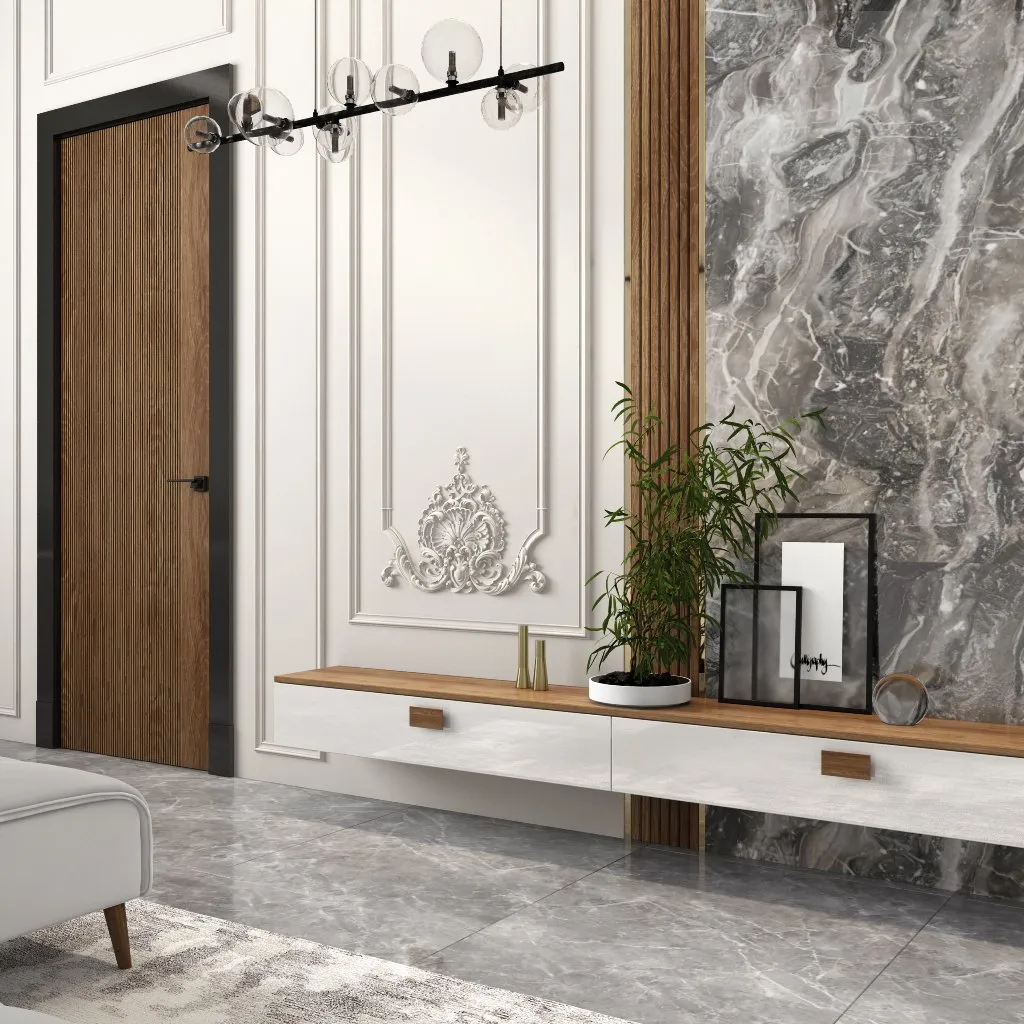
Wooden planks are a universal and attractive decorative element capable of transforming the look of any room. They offer diverse possibilities for creating stylish and functional spaces, such as wall, ceiling, niche, arch, and other interior elements. In this article, we will examine the key advantages wooden strips, their types, and ways of integrating into interior design.
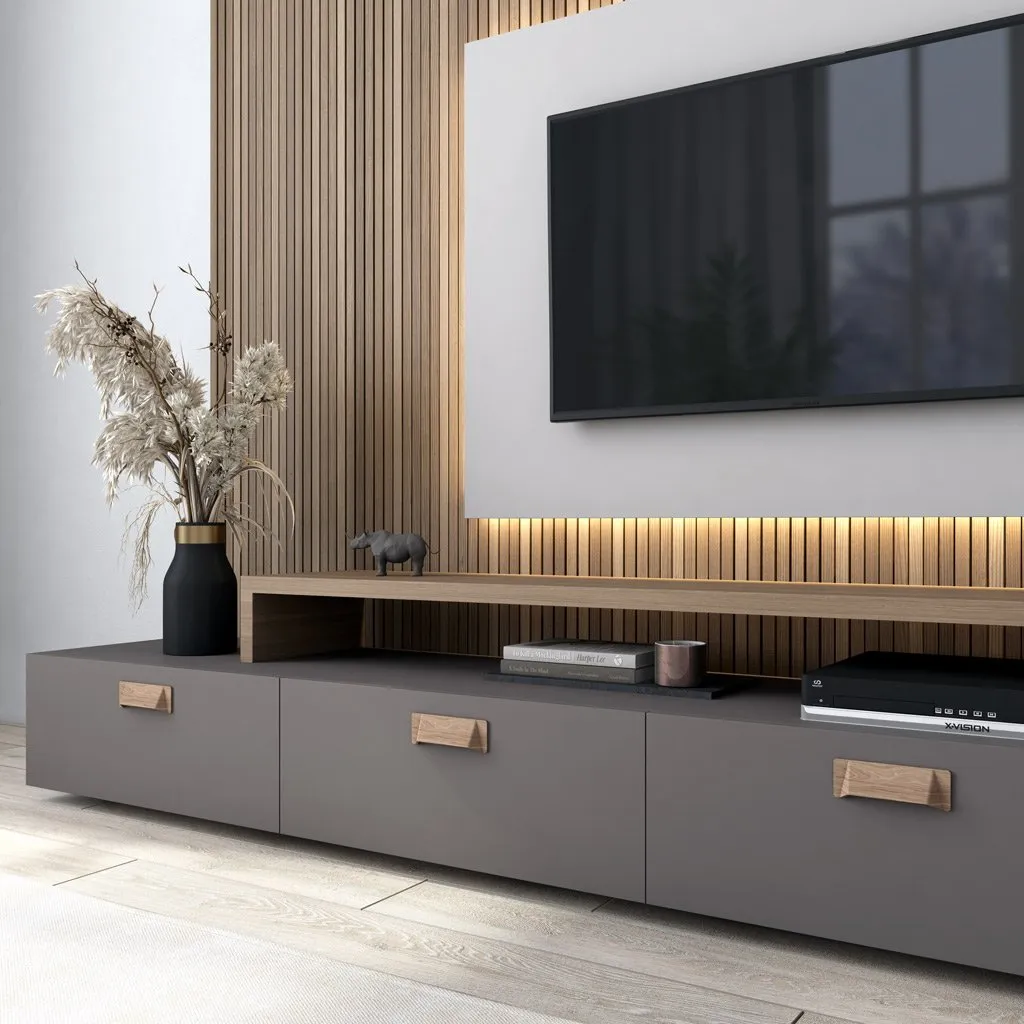
What material to choose for decorative planks:
- Pine — a popular and affordable wood species with a beautiful texture and color, but not overly strong or durable. Therefore, it is better suited for decorative purposes or in rooms with low traffic.
- Oak — the strongest and most durable material, with a beautiful texture and color, resistant to moisture and mechanical damage. However, oak is one of the most expensive materials, so its use may be limited by budget.
- Beech — another strong and beautiful material with a smooth surface and light tone. It is easy to process and can be used to create complex structures. However, beech is also a relatively expensive material.
- Ash — a strong and flexible material, well-suited for creating curved structures. Ash has a beautiful texture and color, and it is also resistant to moisture and decay. However, ash may be more expensive than pine or larch.
Ash is a strong and flexible material that is well-suited for creating curved structures. Ash has a beautiful texture and color, and it is also resistant to moisture and decay. However, ash may be more expensive than spruce or pine.
- Hazel — a soft and lightweight material, easy to process and paint. Hazel has a light color and smooth surface, and is often used for creating decorative elements. However, hazel is not very strong or durable, so it is better not to use it in high-traffic areas.
Go to Catalog
Advantages of using wooden planks:
- Wooden planks They are made from natural materials, making them environmentally safe. They do not emit harmful substances and do not cause allergic reactions.
- High-quality wooden planks have excellent strength and durability. With proper care, they can last for many years while retaining their original beauty.
- Wood has good thermal insulation properties, creating a comfortable microclimate in the room.
- Additionally, wooden planks can serve as an additional sound insulation layer, reducing noise levels in the room.
- The aesthetic appeal of wooden planks lies in their beautiful texture and color, which can become a decoration for any interior. With planks, you can create a unique and stylish design that highlights the individuality of the space.
- Installing wooden planks does not require special skills or tools. This makes them accessible for DIY installation.
- Wooden planks combine well with other natural materials such as stone, brick, or metal. This allows for creating interesting and original compositions.
- Depending on the interior style and its purpose, you can choose planks of different shapes and sizes. This allows experimenting with design and creating unique solutions.
Aesthetic advantages:
- Warmth and texture. Wooden planks bring warmth and natural texture into the interior, creating a cozy and welcoming atmosphere.
- Visual interest. Planks can be used to create various patterns and shapes, adding visual interest and dynamism to the space.
- Zoning and privacy. Planks can be used for zoning the space and creating semi-transparent barriers that provide privacy while preserving natural lighting.