Article Contents:
- Three pillars of wooden baseboards
- Geometry of style
- Height: tool of space transformation
- Wood species: character in the grain
- Finish: protection and beauty
- Classic style: baseboard as architecture
- Application scenarios in different rooms
- Installation: art of invisible connections
- Care and restoration
- Comprehensive approach: baseboard in interior system
- Modern trends
- Ecological and health benefits
- Economics of choice
- Baseboard and flooring
- Regional characteristics and climate
- Design and calculation
- DIY installation or professionals
- Alternative options
- Historical perspective
- Frequently Asked Questions
- Conclusion

When the flooring is laid and walls receive their final finish, the moment arrives that transforms a set of construction tasks into a real interior. This moment — installing the baseboard. It may seem like a minor detail, something many think about last. But precisely this detail can either crown the space with completeness and harmony, or ruin even the most thoughtfully designed layout.wooden baseboards for floor— not a utilitarian plank, but a full-fledged architectural tool for space, capable of setting the mood, emphasizing style, or creating contrast.
— why wood? In an era of synthetic materials, when the market is flooded with plastic and composites, choosing natural wood seems conservative. But this is not conservatism — it is understanding the nature of the material. Wood is alive, it changes along with the house, ages gracefully, acquiring character. It is warm, tactile, capable of filling space with an atmosphere that cannot be bought with money.wooden skirting board purchase— means choosing durability, eco-friendliness, and timeless aesthetics.


Three pillars of wooden baseboards
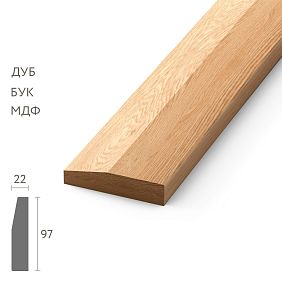
When talking about wooden baseboards, most people imagine a simple pine plank. This is only partially true. The world of floor profiles is much richer and more diverse than it may seem to the uninitiated. Three main types determine not only the price range, but also the performance characteristics and the final visual result.
Solid wood — king among wooden baseboards. Solid wood, milled from a log, dried using technology, processed, and ready for installation. Such a profile possesses all the advantages of natural material: eco-friendliness, strength, ability to serve for decades. Yes, it requires investment. Yes, it needs proper care. But a quality oak or beech with a classic profile creates a sense of solidity, reliability.— is forever. It is a material that will outlive any trends and fashions.
Veneered profile — a smart compromise for those who value aesthetics but are budget-conscious. Base made of affordable coniferous wood, top layer — thin veneer of noble species. Visually, such a baseboard is practically indistinguishable from solid wood. A wide palette allows them to imitate walnut, cherry, or oak grain. If you need beauty without extra cost — this is your choice.
MDF baseboard is conventionally considered wooden, though calling it such is a stretch. Pressed wood-fiber board with protective layer. Budget-friendly, functional, but lacking soul. Such wooden baseboards for flooringsuitable for temporary solutions or office spaces where practicality is important.




Geometry of Style
The shape of the skirting board is not just a technical parameter. It is the language that the interior speaks. A simple rectangular profile can look modern and minimalist in a minimalist environment, but will completely disappear in a classic living room with high ceilings. Profiles with decorative elements, grooves, and transitions can imbue an ordinary space with character and depth.
The classic European profile is distinguished by smooth lines and gentle transitions. It is universal and suitable for most interiors.wooden planks on the walland skirting boards in such an execution create a sense of completion, without drawing attention to themselves.
A massive profile with pronounced architecture — for those who are not afraid of bold solutions. Such a skirting board becomes a standalone decorative element. Especially if you paint it in contrast to the walls. Blackwide wooden baseboardagainst light walls in a room with high ceilings — classic, proven over centuries.
Minimalist flat profile — a trend of recent years. No embellishments, just a clean line defining the boundary between the floor and the wall. Ideal for Scandinavian style, Japanese minimalism, and modern urban spaces.
Our factory also produces:


Height: Tool for Transforming Space
A high skirting board is not a designer’s whim. It is a powerful tool capable of visually altering the proportions of a room. In a room with ceilings higher than three meters, a standard seven-centimeter profile will simply disappear, creating a sense of incompleteness. Here, a completely different scale is required.
Skirting boards 12 to 20 centimeters high radically change the perception of space. They make a room more intimate and cozy, while emphasizing its status. A wide profile is more expensive, but the effect justifies the investment. Especially in classic interiors, where high skirting boards were historically standard.
The color of a high skirting board requires special attention. White is universal, expands the space, especially against pastel walls. Black creates a dramatic contrast, suitable for high ceilings and light surfaces. A skirting board in the same tone as the floor creates unity. A contrasting color is a bold solution requiring a sense of proportion.
It is important to remember: a high skirting board requires corresponding proportions in other elements.wooden corniceIt must match in scale, doors — in the width of the casings, ceiling elements — in expressiveness. All of this creates a harmonious system, where each detail complements the other.
Get Consultation
Wood Species: Character in the Grain
Choosing a wood species is not only a matter of budget, but also of the interior’s character. Each species has a unique texture, color, density, and properties.
Spruce — the most affordable option. Soft, easy to work with, with an amber tone and pronounced texture. Spruce profiles suit most interiors, especially in country, Provence, and Scandinavian styles. They are well-suited for staining and tinting. The only drawback — relative softness, which may result in marks from impacts.
Oak — the aristocrat among woods. Hard, dense, with noble texture and wide color range from light gold to dark brown. Oak skirting boards are practically indestructible, resistant to moisture, mechanical damage, and temperature fluctuations. It is precisely oakFurniture legsand skirting boards that are chosen for respectable interiors.
Ash resembles oak in hardness, but differs with a lighter, cooler tone and distinctly pronounced texture. Ideal choice for modern interiors where the natural beauty of wood is appreciated without excessive ornamentation.
Beech — warm, dense wood with fine grain. Beech profiles stain well, take patina, and look great in classic interiors.Beech balustersand skirting boards create a sense of reliability and durability.
Larch — a coniferous species with unique properties. It does not fear moisture and becomes even harder over time. Larch skirting boards can be installed even in rooms with high humidity. Color — from golden-yellow to reddish-brown.
Finish: Protection and Beauty
Even the highest qualityWooden baseboardrequires proper finishing. It determines not only the appearance, but also the longevity of the product.
Varnish — the classic choice for wooden surfaces. Transparent finish preserves the natural texture and color, while protecting against moisture, dirt, and mechanical impacts. There are matte, semi-gloss, and glossy finishes — the choice depends on the style. Gloss is suitable for classic interiors, matte finish — for modern spaces.
Wax-oil — a natural finish that penetrates the wood structure, emphasizing texture and imparting a silk-like feel. Such treatment preserves the tactile qualities of wood — the skirting board remains warm and pleasant to the touch. The downside — the need for periodic renewal.
Paint offers unlimited possibilities for color experiments. Whiteand paint it to the desired shade — standard practice in modern design. It is important to use special wood finishes that allow the material to breathe.Patina — artificial aging that gives wood the appearance of an antique. Patination is especially effective on carved elements, where dark pigment accumulates in recesses, emphasizing the relief. This treatment is ideal for classical interiors, Provence, and vintage styles.
Classic style: skirting board as architecture
A classical interior is unthinkable without proper skirting boards. Here, this element ceases to be utilitarian and becomes part of the architectural composition. Height, profile, color — everything matters.
In classicism, empire, and baroque, skirting boards were always high — from 15 to 25 centimeters. They created a sense of monumentality and scale. The profile must be ornamental, with clearly defined lines. Color — most often white or matching the walls, visually increasing the room’s height.
and neglect appropriate skirting boards — a gross mistake. Classical furniture requires classical spatial framing. It is important to maintain stylistic unity across all decorative elements:
buy classic style furnitureornamental moldingsWooden cornices, — everything must correspond to the chosen era., Balusters for staircaseEnglish classicism implies a more restrained approach. Skirting boards are high but without excessive ornamentation. Color — most often natural wood, finished with dark lacquer or painted in deep tones. This creates a sense of respectability and solidity. Oak or walnut profiles with noble patina look great.
French classicism — lightness and elegance. Skirting boards are high, often white or light, with delicate profile detailing. They create a sense of airiness and spaciousness. Patination in light tones — silver, ivory, pearl — is a typical technique for French interiors.
Application scenarios in different rooms
Living room — the formal space of the home, where wooden skirting boards show off in all their glory. Here, tall profiles from 12 to 20 centimeters are appropriate, especially if ceilings allow. Color choice depends on the overall concept: light walls and dark floor — skirting boards can be either matching the floor or contrasting white.
The living room is the formal space of the house, where wooden skirting boards showcase their beauty. Here, tall profiles from 12 to 20 centimeters are appropriate, especially if the ceilings allow. The color choice depends on the overall concept: light walls and dark floor — the skirting board can be either matching the floor or contrasting white.Moldings decorationon the ceiling and walls requires a skirting board of appropriate scale.
Bedroom — an intimate space requiring a more delicate approach. Here, medium-height skirting boards — 10–12 centimeters — work well. Choose a calm, non-contrasting color. Natural wood with matte lacquer finish creates a feeling of warmth and coziness.White classic furnituregoes well with white skirting boards or light-toned ones — ash, bleached oak.
Kitchen — an area with high demands for materials. Here, wood resistant to moisture and temperature fluctuations is needed. Larch, oak — the best options. High-quality lacquer finish is mandatory. Skirting board height may be standard — 7–10 centimeters.Wooden wall decoron the kitchen should harmonize with skirting boards.
Children’s room requires special attention to material eco-friendliness. Solid wood skirting boards without synthetic additives — ideal choice. Painting — only with safe water-based paints. Height can be any, but finish must be highly resistant to mechanical impacts.
Hallway — a high-traffic area with maximum loads. Here, skirting boards must be made of hardwood with durable finish. Dark colors are more practical than light — dirt is less visible on them.Wooden skirting board purchaseand skirting boards from the same wood species with identical finish — the guarantee of a harmonious hallway interior.
Office — a space requiring seriousness and respectability. Here, skirting boards from noble wood species — oak, walnut, ash — are appropriate. Height — above standard, 10–15 centimeters. Color — natural, with deep lacquer finish or painted in dark tones.Classic furniture pricesmatch the quality, and skirting boards should be commensurate.
Installation: the art of invisible joints
Correct installation of skirting boards is no less important than their selection. Even the most expensive profile will look cheap if corners are poorly cut and joints are visible.
There are several ways to install wooden skirting boards. Traditional — with nails or self-tapping screws. Reliable, but requires care to ensure fastener heads are not visible. Either they are countersunk into the skirting board and filled with putty, or covered with decorative caps.
Clips mounting — a more modern method. Special brackets are mounted to the wall, and then the skirting board clicks into place. Advantage — the ability to remove without damaging the profile. Disadvantage — requires perfectly flat walls.
Adhesive mounting — the fastest, but irreversible. The skirting board is glued using a special wood adhesive. Suitable only for perfectly flat walls. Removal is possible only with damage to the profile.installing polyurethane moldingand wooden skirting boards share similar principles, but wood requires more delicate handling.
Angle trimming — the most critical moment. External and internal angles require precise fitting at 45 degrees. A miter box or a circular saw is used for this. Even a small error will result in noticeable gaps. Professionals recommend first making a dry fit, adjusting the joints, and only then permanently installing the skirting board.
Maintenance and restoration
Wooden skirting boards require care, but not as complex as it may seem. Regular dry or slightly damp cleaning is all that is needed to maintain their appearance. It is important to avoid excessive moisture and aggressive cleaning agents.
Scratches and chips on lacquered surfaces can be fixed with local sanding and reapplication of lacquer. On painted skirting boards — touch-up painting. Oil finish requires periodic renewal — every few years, the surface must be cleaned and a new layer of oil applied.
Patinated skirting boards may lose contrast over time. This can be easily corrected by reapplying patina in areas where the effect has faded. Such restoration does not require special skills and can be done at home.
If a wooden skirting board has deformed due to moisture, it can be attempted to be straightened by dismantling, drying, and reinstalling it. However, it is better not to reach this point and use only moisture-resistant wood species in rooms with high humidity.
Comprehensive approach: skirting board as part of interior system
Skirting board does not exist in isolation — it is part of a larger system of decorative elements that together create a complete interior.Wooden boards in interior, Wooden molding, Decorative brackets for shelves, Furniture HandlesAll these elements must correspond to each other in style, color, and material.
If there is a staircase in the house, itsWooden balusters priceand style should match the skirting boards. One type of wood, identical finish, similar profile — this creates a sense of thoughtful and cohesive interior design.
Ceiling corniceSkirting boards and baseboards are often made from the same material and style. This is a classic technique that visually unifies space, creating a harmonious frame for walls. In high rooms, you can add an additional horizontal molding at one-third or half the wall height — this breaks up the space, making it more intimate.
Doors and their frames — another important element. The width of the door casing should match the height of the skirting board. A too narrow casing against a massive skirting board will look disproportionate.Door Decorationshould harmonize with the overall style of the space.
Modern Trends
Modern interior design is experiencing an interesting period, when classic techniques are reinterpreted and adapted to new aesthetic demands. Wooden skirting boards remain relevant, but the approach to their use has changed.
Hidden skirting board — one of the main trends. This is a special profile mounted flush with the wall, creating a thin shadow line instead of a traditional protrusion. Such a solution visually lightens the space, making it more modern. However, a hidden skirting board requires perfectly flat walls and professional installation.
Contrasting solutions are gaining popularity. Dark floor, white walls, and black skirting board — such a combination looks graphic and modern. Or vice versa — light floor, dark walls, and skirting board matching the wall color to visually increase their height.
Painted wood instead of natural texture — another trend. Wooden skirting boards are painted in saturated colors — blue, green, terracotta. This allows using the advantages of natural material while adapting it to modern color palettes.
Combining materials — when the baseboard is wooden, and the ceiling moldingmade of polyurethaneThis is a practical solution: wood at the bottom provides warmth and tactile quality, while lightweight polyurethane at the top does not overload the space.
Ecological and Health Benefits
In an era when eco-friendliness becomes a conscious choice, natural materials in interior design gain special value. A wooden skirting board made from solid wood — is not just a decorative element, but a contribution to the healthy microclimate of the room.
Wood breathes, regulates humidity, does not emit toxic substances. Unlike plastic analogs, wooden skirting boards do not generate static electricity, do not attract dust. They are hypoallergenic and suitable for children's rooms, bedrooms, and spaces where people with sensitivity to chemical compounds live.
It is important to choose skirting boards with eco-friendly finishes. Water-based varnishes and paints, natural oils and waxes — these compositions have no odor, dry quickly, and do not emit harmful substances. Safety certificates must confirm that the product complies with sanitary standards.
Economics of choice
Wooden skirting boards cost more than plastic or MDF, but this is an investment, not an expense. A quality solid wood profile lasts for decades, can be restored, repainted, or renewed. A plastic skirting board will require replacement after five years.
Price depends on many factors: wood species, profile complexity, processing method, presence of finish.buy wooden skirting boardMade from pine can be purchased affordably, oak will cost more. Veneered profiles — a middle option.
But it's not only about the cost of the skirting board itself. You need to consider fasteners, corners, caps, and installation costs. Professional installation will cost a certain amount depending on the complexity of the work and the region.
Bulk purchases can significantly reduce costs. If you are renovating the entire apartment or house, it makes sense to order the full volume at once. Many manufacturers offer discounts for large volumes.molding wholesaleand skirting boards are often purchased simultaneously to create a unified style.
Skirting board and floor covering
Choosing a skirting board is inseparably linked to the type of floor covering. Each floor material dictates its own rules for selecting trim.
Parquet and solid wood planks — natural materials that require appropriate trim.wooden baseboards for floormade from the same species as the floor — a classic solution. You can choose a skirting board one tone lighter or darker to create a subtle contrast. It's important that the grain direction and texture match.
Laminate pairs well with both wooden and MDF skirting boards. If the laminate imitates natural wood, it makes sense to choose a wooden or veneered skirting board of a similar shade. For modern laminate that mimics concrete or stone, use painted wooden profiles in neutral colors.
Tile and ceramic granite — materials traditionally requiring ceramic skirting boards. However, in living areas, wooden skirting creates an interesting contrast, adding warmth to cold ceramic. This works well in loft, industrial, and eclectic interiors.
Linoleum — an affordable covering that doesn't always require expensive trim. But if you want to add elegance to the room, a wooden skirting board can handle this task. A pine profile, painted in the desired color, can transform even the simplest interior.
Regional characteristics and climate
Climate conditions in the region affect the choice of wood species and type of covering. In dry climates, wood may crack, while in humid areas — swell. This must be considered when choosing.
For the middle belt of Russia, most wood species are suitable provided they are properly finished. Coniferous species — pine, spruce — work well. Oak and ash are even more reliable, but more expensive.
In southern regions with hot and dry climates, wood stability is crucial. Oak and larch are the best choices. They react less to humidity fluctuations. High-quality lacquer coating is mandatory to protect the wood from drying out.
In northern regions with cold winters and significant humidity fluctuations, material stability is also important. Larch is the ideal option. It is not afraid of either moisture or dryness.components for wooden staircasesand larch skirting boards serve for decades even under harsh conditions.
Coastal regions with high humidity require moisture-resistant species. Larch, teak, and oak with mandatory treatment using water-repellent compounds. The lacquer coating must be especially high quality.
Design and calculation
Before purchasing skirting boards, you need to correctly calculate the required amount. This seems simple, but there are nuances.
The perimeter of the room — the basic figure. Measure the length of all walls and add them up to get the square meters. But from this figure, subtract the width of doorways — skirting boards are not installed there. Then add 10-15% for cutting corners and possible errors.
Standard skirting board length — 2 or 2.5 meters. Calculate how many whole boards you will need. Remember: it's better to buy one extra board than to discover a shortage during installation and search for an exact match.
Corner elements, connectors, caps — additional components that must be considered. Each internal and external corner requires precise cutting. If you are using a system with pre-made corner elements, calculate their quantity in advance.
DIY or professionals
Installing wooden skirting boards — a task that can be done independently with a minimal set of tools and basic skills. But there are cases when it's better to consult professionals.
DIY installation saves money. Labor costs constitute a significant portion of the material price. If your budget is limited, it makes sense to do everything yourself. You will need: a miter saw or a miter gauge, a tape measure, a level, a drill or impact driver, fasteners.
Against — risk of damaging expensive material. A wooden skirting board made of oak is not cheap, and incorrectly cut corners mean ruined boards. If you lack experience, it's better to practice on inexpensive material or hire professionals.
Complex room geometry — bay windows, columns, curved walls — requires a professional approach. Here, experience and special tools are needed.Wooden beamThe skirting board and the ceiling trim must be installed perfectly level, especially in classic interiors where any imperfections are noticeable.
Alternative Options
There are situations when wooden skirting boards are not optimal. Rooms with consistently high humidity — swimming pools, saunas, bathrooms without good ventilation — require other materials.
Polyurethane molding photoPolyurethane skirting boards show how well modern materials imitate natural ones. Polyurethane skirting boards do not fear water, do not rot, do not deform. They are lighter than wood and easier to install. In rooms where wood risks damage from moisture, polyurethane is a sensible alternative.
Metal skirting boards are used in industrial interiors, loft, and high-tech styles. They are more expensive than wood but have a unique aesthetic. Stainless steel, brass, bronze — such skirting boards become interior accents.
Combined solutions — when different materials are used in one room. For example, wooden skirting in living rooms, and polyurethane or ceramic in bathrooms and kitchens. The key is to maintain stylistic unity and proportions.
Historical Perspective
Skirting boards did not exist all the time. In antiquity and the Middle Ages, the function of skirting was performed by the lower parts of wall panels or simply by thickening the wall at the base. The skirting board as a separate element appeared during the Renaissance.
In Classicism and Baroque, skirting boards became an important part of architectural decoration. They were tall, massive, often with carving or painting. In wealthy homes, skirting boards were gilded or painted to resemble marble.Buy Baroque furnitureand not to take care of appropriate skirting boards was unthinkable.
Modernism brought new forms — smooth, organic lines, plant motifs. Skirting boards became lower and more elegant. In Constructivism and Functionalism of the 20th century, decorative skirting boards were almost abandoned in favor of simple geometric profiles.
Postmodernism revived interest in classical forms, but with irony and reinterpretation. Today we observe the coexistence of all styles: from minimalist to hyper-decorative. The choice depends only on taste and interior concept.
Frequently asked questions
Can wooden skirting boards be used in a bathroom?
Wooden skirting boards can be used in a bathroom, but with reservations. Choose moisture-resistant species — oak, larch. Essential is quality lacquer or oil finish, which protects wood from direct contact with water. Good room ventilation is important. If the bathroom is small, without windows, and prone to condensation, it’s better to choose a polyurethane skirting board.
What height is optimal for skirting boards in a standard apartment with 2.7-meter ceilings?
For standard ceilings of 2.6–2.8 meters, the optimal skirting board height is 7–10 centimeters. This is a classic proportion that does not overload the space. If you want to make the interior more expressive, you can choose a 10–12 centimeter high skirting board. Higher profiles will look disproportionate in rooms with standard ceilings.
Should wooden skirting boards be painted or better left natural?
It depends on the interior concept. Natural wood with lacquer or oil finish emphasizes eco-friendliness and creates warmth. Painted skirting boards offer more color options, especially in modern interiors. Both options are valid. The quality of the finish is important — it protects wood from moisture and dirt.
How often should the finish on wooden skirting boards be renewed?
With quality lacquer finish, renewal is needed every 10–15 years or when visible damage appears. Oil finish requires more frequent renewal — every 3–5 years. Painted skirting boards last 5–7 years until the next repaint. Much depends on usage conditions: in high-traffic areas, wear occurs faster.
Can wooden skirting boards be installed on uneven walls?
Yes, but with limitations. Minor unevenness up to 3–5 mm will be concealed. With larger discrepancies, gaps will remain between the skirting board and the wall. Solutions: level the walls, use flexible skirting, fill gaps with sealant or decorative trim. Perfectly flat walls are the key to quality installation.
Which is more expensive: solid or veneered skirting boards, and by how much?
Solid oak skirting boards cost 2–3 times more than veneered ones with oak finish. Visually, they are almost indistinguishable, but solid wood is more durable and can be restored multiple times. Veneered skirting boards are a compromise between price and quality.
Should skirting boards match the floor or the walls?
There is no strict rule. Skirting boards matching the floor visually expand the floor area. Matching the walls increases the perceived height of the walls. Contrasting skirting boards create graphic effect and emphasize architecture. In classic interiors, white skirting boards are often used regardless of floor or wall color. The choice depends on the desired effect.
How to choose skirting boards if different floor coverings are used in different rooms?
There are two approaches: one uniform skirting board throughout the apartment or different ones depending on the flooring. The first option creates a sense of spatial unity — a neutral color is chosen that matches all floorings. The second emphasizes zoning — in each room, the skirting board is selected to match the specific floor. Both options are valid.
Can floor skirting boards be used on ceilings?
Technically possible, but not always advisable. Floor skirting boards are often heavier than ceiling ones and require more secure mounting. The profile of a floor skirting board is usually simpler than that of a ceiling cornice. For ceilings, it’s better to choose a specially designedBuy wooden crownor ceiling element made of polyurethane.
What to do with skirting boards when installing a heated floor?
A heated floor requires a compensatory gap between the floor covering and the wall. The skirting board must cover this gap, but not hinder the thermal expansion of the floor. Mount the skirting board only to the wall, never to the floor. This will allow the covering to expand freely when heated.
Conclusion
Choosing wooden skirting boards is not just purchasing a utilitarian decorative element. It is a decision that affects the perception of the entire interior, the atmosphere of the home, and that sense of completion which distinguishes professionally designed space from a collection of furniture in a room. Wooden skirting boards are an investment in quality of life, aesthetics of everyday life, and those small details that together create the concept of home.
Wood as a material will outlast any trends. In ten years, plastic will look hopelessly outdated, while quality oak skirting boards will still appear noble and modern. It is a timeless material, one that ages beautifully, acquiring patina and character. That is why choosing wooden skirting boards means choosing durability, eco-friendliness, and beauty that is immune to fashion.
STAVROS company offers a full range of wooden skirting boards for any interior solutions. From budget pine profiles to exclusive items made of noble wood species. In-house production allows controlling quality at every stage, from raw material selection to final finishing. In the STAVROS catalog, you will find not only skirting boards, but also all accompanying elements: cornices, moldings,Buy decorative elements, staircase components, furniture legsand much more to create a harmonious and thoughtfully designed interior.
By choosing STAVROS products, you are choosing a professional approach, years of experience, and quality guarantee. The company’s consultants will help you select the optimal solution for your project, calculate the required amount of material, recommend installation and maintenance methods. Create interiors that will delight you for years—choose natural materials and trust professionals.