Article Contents:
- Durability as a function of wood species
- Softwoods: pine, spruce — accessibility and compromises
- Medium woods: birch, beech — balance of characteristics
- Hardwoods: oak, larch — maximum strength
- Sanding: surface restoration technology
- When sanding is needed
- Tools for sanding baseboards
- Sanding stages
- Limitations of sanding
- Repainting: color change and protection restoration
- Types of coatings and their repaintability
- Changing the type of coating
- Repainting technology
- Local repair: when you don't need to replace the entire baseboard
- Scratches and scuffs: sanding and touch-up
- Dents: steaming or filling
- Cracks: filling and clamping
- Detached pieces: gluing and restoration
- Joint with casing: a structural joint, not a coincidence
- Types of joints: trimming vs. end-matching
- Gap or flush: thermal compensations
- Fastening in the joint area: joint strength
- Visual unity: color and texture
- Economics of durability: why wood is more cost-effective than cheap alternatives
- Service life and cost per year of use
- Repair cost vs. replacement cost
- Value when selling real estate
- Caring for wooden baseboards: minimal effort for maximum durability
- Regular dry cleaning
- Wet cleaning with care
- Scratch and impact protection
- Control of indoor humidity
- Finish renewal: prevention of wear
- Conclusion: wood as a strategy, not an expense

Plastic skirting boards last about ten years, then yellow, crack, lose shape — and the only option is replacement. A wooden skirting board, after ten years of use, can be sanded and re-coated with varnish or oil — and it looks new. Repeat the procedure after twenty years. Repeat again after thirty. Theoretically, a wooden skirting board can last as long as the house itself, because wood does not age irreversibly — it wears superficially, and the surface can be restored. This is a fundamental difference between natural material and imitation: plastic, MDF with film coating, polyurethane — all have a finite lifespan, after which only disposal is possible. Wood can be locally repaired: if the skirting board is scratched by furniture — sand the area and repaint. If a corner breaks off from an impact — glue a splinter or fill with wood putty, sand, and repaint. If a section darkens from water leakage — dry, sand, and restore the finish.wooden baseboards for floorThis is not a consumable material that is replaced after a certain period with a new one — it is an interior element that lives with the house, adapts, restores itself, and ages gracefully. But this repairability is not magic — it is the result of understanding the material and technologies. In this article, we will not discuss general words about the beauty of wood, but the specific mechanics: how proper sanding restores worn surfaces, which finishes allow repainting skirting boards multiple times without loss of quality, how to perform local repairs of damage without replacing the entire element, and why the joint between a wooden skirting board and a wooden casing is not just a visual connection, but a structural joint that determines the longevity of the entire finish.


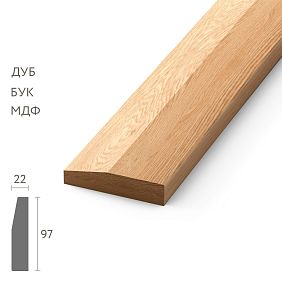


Longevity as a function of wood species
Not all wooden skirting boards are equally durable. A pine skirting board and an oak skirting board — these are different stories of use, different mechanical strength, different resistance to abrasion, different reaction to humidity.




Softwoods: pine, spruce — accessibility and compromises
Pine is the most common species for skirting boards, because it is accessible, easy to work with, and has a beautiful texture with distinct growth rings. A pine skirting board costs 2-3 times less than an oak one, making it a popular choice for budget projects.
Durability of pine: with proper installation and care, a pine skirting board lasts 20-30 years. This is a good lifespan, but there are nuances. Pine is a softwood, with a density of about 500 kg/m³. This means it is easily scratched, dents under impact (if something heavy hits the skirting board — a dent remains), and wears in contact areas (if the skirting board touches a frequently moved furniture leg, after several years, wear will appear).
Reaction to humidity: pine is sensitive to changes in humidity. At high humidity, it swells (expands), at low humidity — it dries (contracts). This is a natural property of wood, but for softwoods, the amplitude is greater. If the skirting board is installed in a room with unstable humidity (for example, a cottage with irregular heating), gaps may appear at the joints or, conversely, swelling may occur.
Repairability of pine is high: it is precisely the softness that makes it convenient for repair. It sands easily, scratches are quickly removed, dents can be heated (moisten with water, place a hot iron over a cloth — wood fibers swell, and the dent partially levels out), and it is easily filled with putty.
Our factory also produces:


Medium hardwoods: birch, beech — balanced characteristics
Birch and beech are medium-hardwoods (density around 650-700 kg/m³). They are stronger than pine, less prone to scratches, better retain their shape under humidity changes, but cost 40-60% more.
Durability: 30-40 years under normal conditions of use. A birch skirting board withstands more mechanical loads than pine — you can move furniture without fear of serious damage. Beech is even stronger than birch, its texture is more pronounced (large pores, contrasting layers).
Stability: birch and beech are less sensitive to humidity than pine, but still require stable conditions. With sharp changes in humidity, cracks may appear, especially if the skirting board is wide (more than 10 cm).
Repairability is moderate: sanding is more difficult than pine (material is denser, abrasive wears out faster, requires more time), but the result is higher quality — the surface becomes smoother. Heating dents is harder, usually filled with putty.
Get Consultation
Hardwoods: oak, larch — maximum strength
Oak and larch are hardwoods (density 700-800 kg/m³ and above). Skirting boards from these species are chosen for durability and strength, but cost 3-4 times more than pine.
Durability of oak: 50 years and more. An oak skirting board is practically not worn, scratches are superficial, and dents from everyday impacts do not remain. Oak contains tannins that make it resistant to rot, mold, and insects. Even at high humidity (kitchen, entryway, where floors are frequently washed), an oak skirting board retains its shape and properties.
Larch is even more resistant to moisture than oak. Its resin creates a natural hydrophobic protection, and the wood hardly swells. Larch can be installed even in bathrooms (if ventilation is provided), although this is rare for skirting boards.
Dimensional stability: oak and larch react least to changes in humidity. The shrinkage coefficient is low, cracks appear rarely, usually only under extreme conditions (sudden overheating, over-drying).
Repairability is low in the sense that repairs are rarely needed (the material is so strong that damage is minimal), but the difficulty is high: sanding oak is difficult, requires powerful tools and quality abrasives. However, the result lasts for decades.
Sanding: surface restoration technology
Sanding is the primary method for restoring a worn wooden skirting board. Over time, the surface wears, scratches, scuffs appear, and the varnish or oil finish dulls. Sanding removes a thin layer of wood (usually 0.3-1 mm), revealing a fresh, undamaged surface.
When sanding is needed
The skirting board was installed 10-15 years ago and is coated with varnish. The varnish has dulled, and in some places it has worn off (especially where feet or vacuum cleaners scratched it), and micro-cracks have appeared in the finish. The skirting board looks old, although the wood itself is fine. This is the ideal case for sanding.
Deep scratches that do not affect the wood structure. If the scratch only affects the varnish and the top layer of wood (up to 0.5 mm deep), sanding will completely remove it.
Darkening of areas due to moisture, dirt, mold (surface-level). If the stain has not penetrated deeply into the wood, sanding will remove it.
Preparation for changing the finish type. If the skirting board was previously varnished and you wish to switch to oil (or vice versa), sanding is required to remove the old finish and prepare the surface.
Tools for sanding skirting boards
Sanding skirting boards without removing them from the wall is possible but difficult. It is more convenient to remove them (if the mounting allows), sand them on a workbench or floor, then reinstall them.
Manual sanding (sandpaper block): suitable for small areas and local repairs. Labor-intensive and slow, but offers maximum control. Use sandpaper of different grits: coarse (P80-P100) for removing old finish and deep scratches, medium (P120-P150) for leveling, fine (P180-P220) for final sanding.
Orbital sander: a universal tool for sanding flat and slightly curved surfaces. Skirting boards usually have profiles (protrusions, recesses), so orbital sanders are suitable only for flat sections. Profiled areas require attachments or manual sanding.
Delta sander (triangular base): convenient for corners and narrow areas. If the skirting board has a complex profile, a delta sander can reach areas an orbital sander cannot.
Manual sanding of profiled sections: for complex profiles (bosses, rounded edges, grooves), use a sanding pad (flexible, conforms to the relief) or sandpaper wrapped around a wooden block of the required shape.
Sanding stages
Removing old finish (if present): use coarse sandpaper (P80-P100) to remove varnish, oil, wax, and the top layer of wood with contaminants. Sand along the grain, not across it (cross-grain sanding leaves visible scratches).
Surface leveling: use medium-grit sandpaper (P120-P150) to remove marks from coarse sanding and smooth irregularities. Check by hand — the surface should be smooth, without steps or pits.
Final sanding: use fine-grit sandpaper (P180-P220) to bring the surface to a state ready for finish application. After this stage, the wood is smooth and silky to the touch.
Dust removal: after sanding, wood dust remains on the surface, clogging pores. Vacuum it, then wipe with a slightly damp cloth (not wet, to prevent swelling), and let it dry.
Sanding limitations
Sanding removes material. Each sanding removes 0.3–1 mm of wood. Solid wood skirting boards are 15–25 mm thick; theoretically, they can be sanded dozens of times, but if already sanded multiple times, they thin out and may lose strength.
Sanding does not correct deformations. If the skirting board has warped (due to moisture), sanding will not fix it. Either mechanically straighten it (steam, clamp, dry flat) or replace it.
Sanding does not remove deep defects. If the skirting board is rotten, cracked through, or has a broken piece, sanding will not help — local repair or replacement is needed.
Repainting: changing color and restoring protection
Repainting wooden skirting boards is not only an aesthetic refresh but also restoring the protective layer that prevents wood wear, dirt, and moisture damage.
Types of finishes and their repaintability
Varnish (polyurethane, acrylic): creates a hard, transparent or tinted film on the wood surface. Varnish protects against moisture and scratches, but over time (7–15 years depending on load) it wears, dulls, and cracks. Repainting with varnish is possible unlimited times, but each time requires sanding to remove old varnish and prepare the surface.
Oil (linseed, tung, specialized wood oils): penetrates wood without forming a film. Oil enhances texture and gives a matte or silky sheen, is easy to maintain (scratches are almost invisible because there is no film that peels off). Repainting with oil is simple: clean the surface of dirt, lightly sand (abrasive P220-P320 to open pores), apply new oil. Frequency — every 3–5 years, procedure takes 1–2 hours per room.
Wax: provides a soft sheen and pleasant tactile feel, but protection is weak, wax wears quickly. Wax coating renewal is needed every 1–2 years, procedure is simple: clean, apply wax, polish with a cloth. Repaintability is unlimited, but labor-intensive.
Enamel (opaque paint): hides wood texture and provides a dense color coating. Used when you want to radically change the skirting board color (e.g., paint white) or hide wood defects. Enamel can be repainted multiple times, but each layer adds thickness, over time small profile details may become clogged. Periodic sanding is needed to remove old layers.
Changing the finish type
Can a varnished skirting board be coated with oil? Yes, but only after complete removal of varnish. Oil does not adhere to varnish film — it must penetrate into the wood. Procedure: sand to bare wood, remove dust, apply oil.
Can an oil-coated skirting board be varnished? More difficult. Oil in wood pores prevents varnish from adhering. Either deeply sand (remove 1–2 mm of oil-soaked wood layer) or use a special primer compatible with oil. It is easier to switch from varnish to oil than vice versa.
Can a tinted skirting board be repainted in a lighter color? Difficult. Tinting is pigment that has penetrated into the wood. Sanding removes only the surface layer, but pigment may penetrate deeper. To lighten, either deeply sand (removing several millimeters) or cover the dark color with dense light enamel (but then texture is lost).
Repainting technology
Surface cleaning: remove dirt, grease, dust. Use mild detergent (soap water), wipe, let dry. For heavy contamination — use white spirit or specialized wood cleaners.
Sanding (if needed): to remove old finish or to dull (create texture so the new finish adheres better). If the old finish is in good condition (not peeling or cracking), light sanding with P220-P320 abrasive is sufficient.
Primer (for enamel): if painting the skirting board with enamel, especially light color on dark wood, primer is needed. It seals pores, equalizes absorption, prevents resin (in coniferous species) and tannins (in oak) from showing through the enamel.
Applying finish: varnish, oil, or enamel is applied with a brush (for complex profiles) or roller (for flat surfaces). Oil is applied in a thin layer, excess is wiped off with a cloth after 10-15 minutes. Varnish and enamel are applied in 2-3 coats with intermediate drying (time indicated on packaging, usually 4-12 hours).
Intermediate sanding (for varnish and enamel): after the first coat of varnish/enamel dries, the surface is lightly sanded with fine abrasive (P320-P400) to remove raised fibers and create adhesion for the next layer. Dust is removed, then the second layer is applied.
Local repair: when you can avoid replacing the entire skirting board
One of the main advantages of wooden skirting boards is the possibility of local repair. If a section is damaged, you repair it without touching the rest. With plastic or MDF skirting boards, this is not possible: a damaged section usually means replacing the entire strip.
Scratches and scuffs: sanding and touch-up
Shallow scratches (up to 0.5 mm): locally sanded with fine abrasive (P220-P320), then the area is covered with the same finish as the entire skirting board (varnish, oil). If the finish is varnish, after applying varnish to the repaired area, the boundary may be noticeable (difference in gloss). Solution — lightly sand the entire skirting board (dull it), then apply a final coat of varnish to the entire board. This is not a full repaint, but a refresh.
Deep scratches (more than 0.5 mm): filled with wood filler matched to the tone. Filler is applied with a putty knife, pressed into the scratch, excess is removed. After drying, it is sanded flush with the surface, then covered with varnish or oil.
Scuffs (worn finish): usually in areas frequently stepped on or vacuumed. If the wood is not damaged, light sanding of the area and reapplying the finish is sufficient. If the wood is worn (a dent has formed), filler is needed.
Dents: steam treatment or filling
Dent from impact (wood fibers compressed but not broken): try steam treatment. Wet the dent with water (a drop or damp cloth), place a hot iron over it through a dry cloth. Under the effect of heat and moisture, fibers swell, and the dent partially or fully levels out. Works well for softwoods (pine, spruce), less effective for hardwoods. After steam treatment, let it dry, sand, and finish.
Dent with fiber damage (wood cracked, piece broken off): steam treatment won't help. Fill with wood filler or epoxy filler (for larger dents, epoxy is stronger). Filler is matched to the wood tone. After drying, sand and finish.
Filling vs wooden insert: for large damages (dent diameter over 2-3 cm, deep) filler may shrink or peel off. More reliable: cut out the damaged section with a chisel (make a properly shaped recess — square or rectangular), insert a wooden insert (piece of the same species and grain), sized to fit. After the glue dries, the insert is sanded flush, toned (if needed to match color), and finished. This is carpentry repair, requires skill, but the result is stronger.
Cracks: filling and clamping
Small shrinkage cracks (hairline, up to 1 mm wide): filled with liquid filler or sawdust mixed with PVA glue. Mixture is pressed into the crack, excess is removed, then sanded after drying.
Wide cracks (over 1 mm, through the entire thickness of the skirting board): more complex. The crack may widen with humidity changes. Solutions:
Fill with elastic filler (acrylic sealant, matched to wood tone). Elastic material compensates for wood movement, does not crack.
Clamp the crack (if skirting board can be removed): drill a hole across the crack (through the skirting board), insert a wooden dowel (shank) with glue, clamp the skirting board parts with clamps, let the glue dry. The dowel holds the skirting board, preventing the crack from widening. The hole with dowel is sanded flush or covered with a wooden overlay.
Detached pieces: gluing and restoration
Detached piece of skirting board (corner, part of profile): if the piece is available, it can be glued back. Clean both surfaces of dust, apply wood glue (PVA or polyurethane), align, clamp with clamps or heavy weight, let the glue dry (usually 24 hours). The glue line will be visible, but strength will be restored. The line can be masked with toning or filler.
Piece lost: restore with epoxy filler (it molds, holds shape, becomes strong after drying) or cut and glue in a wooden insert. For complex profiles (carving, ornament) restoration is difficult and may require wood carving or molding with epoxy resin.
Joint with casing: a structural joint, not a coincidence
Skirting board meets the door opening and joins with the casing (vertical board framing the door). This joint is not just a meeting point of two elements — it is a joint that determines the visual cleanliness of the finish and its durability.
Types of joints: mitering vs butt joint
Mitered joint at 45 degrees: skirting board and casing are mitered at 45 degrees and joined 'in a V'. This is a classic carpentry technique, creating a visually light and elegant joint. The joint line runs diagonally, less noticeable than a straight butt joint.
Condition: skirting board and casing profiles must match or be close in width and shape. If skirting board is 10 cm and casing is 7 cm, a 45-degree miter will be uneven (a protrusion will remain). In this case, either select skirting board and casing from the same collection (manufacturers design them for jointing) or use a butt joint.
Butt joint (90-degree joint): skirting board meets the casing and butts against it. The end of the skirting board is sanded and finished (to avoid unfinished wood), then the skirting board is tightly attached to the casing. The joint is straight, more noticeable, but easier to install (no need for precise mitering).
Used when profiles don't match, or when you lack experience with precise mitering. Visually simpler, but less elegant.
Gap or flush: thermal compensation
The wood expands and contracts with changes in humidity. If the skirting board and the architrave are rigidly joined with no gap, they may press against each other when expanding, leading to deformation, cracks, or detachment from the wall.
It is recommended to leave a micro-gap (0.5–1 mm) between the skirting board and the architrave. The gap is not visible to the eye (especially if the joint is at a 45-degree angle), but it allows for movement. The gap can be filled with elastic sealant (acrylic, matched to the wood tone) or left empty (if the joint is at a 45-degree angle and very precise, the gap is simply not noticeable).
Rigid jointing (without gap): possible if the skirting board and architrave are from the same plank (e.g., both milled from a single piece of wood, which is rare) or if both elements are very stable (oak, dry wood, stable humidity in the room).
Joint area fastening: joint strength
The skirting board joint area — where stresses concentrate (humidity changes, mechanical impacts). If the skirting board is poorly secured near the joint, it may detach from the wall, the gap will widen, and the joint will separate.
Recommendation: additional fastening of the skirting board 5–10 cm away from the architrave joint. If glued, apply more glue in this zone. If using nails/screws — install additional fasteners. If using clips — ensure the clip is close to the joint.
The architrave must also be securely fastened at the bottom (at floor level), otherwise it may detach, and the joint will separate.
Visual unity: color and texture
Wooden baseboardandwooden casingmust be made from the same type of wood and have identical finishes to ensure the joint is not noticeable. If the skirting board is oak stained to walnut and the architrave is pine painted in light oak, the joint will be very noticeable (different colors, different textures).
It is better to purchase skirting boards and architraves from the same manufacturer, from the same collection. The manufacturer selects the wood, stain, and finish so that the elements match.
If the skirting board and architrave are already installed and the colors do not match, you can try to match them: repaint both elements with the same color (using enamel) or tone the lighter one to match the darker one. However, it is simpler and more reliable to plan for unity in advance.
Economics of longevity: why wood is more cost-effective than cheap alternatives
Wooden skirting board is 3–5 times more expensive than plastic, and 2–3 times more expensive than MDF. Initial cost is higher. But if you consider total ownership cost (purchase + installation + maintenance + repair + replacement), wooden skirting board proves to be more cost-effective.
Service life and annual cost
Plastic skirting board: cost 100–200 rubles per linear meter, service life 10–15 years (then yellows, cracks, non-repairable). Annual cost: 150 rubles / 12 years = 12.5 rubles per year per meter.
MDF skirting board: cost 200–300 rubles per meter, service life 10–15 years (film coating wears off, MDF swells from moisture, non-repairable). Annual cost: 250 / 12 = 21 rubles per year per meter.
Wooden skirting board from pine: cost 300–500 rubles per meter, service life 25–30 years (with sanding and repainting every 10 years). Annual cost: 400 / 28 = 14 rubles per year.
Wooden skirting board from oak: cost 800–1200 rubles per meter, service life 50+ years. Annual cost: 1000 / 50 = 20 rubles per year.
It turns out that pine skirting board is comparable in annual cost to plastic, but offers incomparably higher quality (natural material, beautiful texture, repairability). Oak is more expensive, but its service life is 3–5 times longer than alternatives.
Repair cost vs. replacement cost
Scratched plastic skirting board: repair is impossible, replacement is required. Remove, buy a new piece (may not be available in the same model/color in a few years), install. Cost: price of new skirting board + installer’s labor.
Scratched wooden skirting board: local sanding and touch-up. If you do it yourself — cost of sandpaper and can of lacquer/oil (500–1000 rubles for the entire repair, enough for many times). If hiring — 500–1500 rubles for labor (depending on region). The skirting board remains in place, color and texture unchanged.
Repair savings are multiplicative.
Value when selling real estate
Natural wood finishes (parquet, wooden skirting boards, architraves) increase the perceived value of real estate. Buyers perceive such finishes as premium, eco-friendly, and long-lasting. Plastic skirting boards are associated with budget renovations.
When selling an apartment with wooden skirting boards, you can either include their value in the price or use them as a negotiation argument ("quality finish with natural materials").
Care for wooden skirting board: minimal effort for maximum longevity
Proper care extends the service life of wooden skirting board and delays the need for repair.
Regular dry cleaning
Dust and dirt on the skirting board are not only unsightly but also harmful: dust particles are abrasive, and when rubbed (e.g., when wiping with a cloth), they scratch the finish. Regular (weekly) dry vacuuming with a soft brush attachment or dry microfiber cloth removes dust before it settles and wears down the surface.
Wet cleaning with caution
You can wipe the wooden skirting board with a damp (not wet!) cloth. Excess water is the enemy of wood, even if it is coated with varnish. Water can penetrate into joints, mounting points, and under the finish through micro-cracks, causing swelling, darkening, and mold.
Correct damp cleaning: the cloth is soaked in water (can have a drop of mild detergent), well wrung out (almost dry), wipes the skirting board, then immediately wiped with a dry cloth. The skirting board must dry within a few minutes, not remain wet.
Avoid aggressive cleaning agents (with chlorine, acetone, solvents) — they damage the finish.
Scratch and impact protection
Furniture placed against the wall often rubs against the skirting board. Solution: soft protective pads on furniture legs (wool or rubber), which prevent scratches. When moving furniture, do not drag it along the floor next to the wall — lift or place protective pads underneath.
A vacuum cleaner with a hard brush can scratch the skirting board if used carelessly. Use a soft brush or be careful.
Control of room humidity
Wood is sensitive to humidity. The optimal air humidity for wooden items is 40-60%. Below 40% (dry air in winter due to heating), wood dries out and cracks may appear. Above 70% (high humidity, poor ventilation), wood swells and mold may appear.
Monitor humidity with a hygrometer. If the air is too dry — use a humidifier. If too humid — use a dehumidifier or improve ventilation.
Finish renewal: prevention of wear
Oil finish is recommended to be renewed every 3-5 years (depending on usage). The procedure is simple: clean the skirting board, lightly sand with fine abrasive (P220-P320), apply a thin layer of oil, rub with a cloth. This takes a couple of hours per room, but the finish remains fresh and protective.
Varnish finish lasts longer (7-15 years), but when it begins to wear, full repainting (sanding, applying several layers of varnish) is required. This is labor-intensive, but done rarely.
Conclusion: wood as a strategy, not an expense
Wooden skirting boards are not one-time purchases for the duration of a repair, but a strategic decision that defines the character of the interior for decades. A plastic skirting board serves until it breaks and then is discarded. A wooden skirting board lives with the house: it is sanded when the surface wears, repainted when you want to change the color, locally repaired when damage occurs. It is not a consumable material, but an element that adapts, restores, and ages gracefully.
The longevity of a wooden skirting board depends on the type of wood, manufacturing quality, usage conditions, and maintenance. A pine skirting board lasts 20-30 years with minimal care, 30-40 years with regular finish renewal. An oak skirting board lasts 50 years and more, practically indefinitely, because oak is so strong and stable that damage is minimal and repairs are rarely needed.
Repairability is a key advantage of wood. Sanding restores worn surfaces by removing a thin layer (0.3-1 mm) and revealing fresh wood. Theoretically, a skirting board can be sanded dozens of times until it becomes critically thin, but practically, 2-3 sandings over half a century of use are sufficient.
Repainting allows changing the color, renewing the protective finish, and adapting the skirting board to a changed interior. A varnished skirting board can be repainted with white enamel after 10 years, and after another 10 years — remove the enamel, sand down to the wood, and apply oil. This flexibility is unavailable to imitations — plastic, MDF with film cannot be repainted properly; they either serve as-is or are replaced entirely.
Local repair saves money and time. A scratch, dent, crack, or detached piece can be repaired on-site, without dismantling the entire strip, without searching for the same model 10 years later (when it’s no longer available for sale). Sanding the area, filling with putty, and touch-up — skills that can be learned in an hour, tools cost pennies.
The junction with the casing is a detail often overlooked but determines the visual cleanliness of the finish. A 45-degree miter cut creates an elegant, inconspicuous joint, but requires precision and profile alignment. Butt jointing is simpler but less elegant. A micro-gap (0.5-1 mm) between the skirting board and casing compensates for wood movement, preventing deformation. Visual unity (same species, color, finish) makes the joint part of the whole, not a point of conflict.
The economics of longevity show that despite the high initial cost, a wooden skirting board is more cost-effective than cheaper alternatives in the long run. The annual cost of maintaining a wooden skirting board is comparable or lower than plastic, while quality, aesthetics, and repairability are incomparable. Repair costs for wooden skirting boards (sanding, finishing) are significantly lower than replacing plastic ones, especially if you perform the repairs yourself.
Caring for a wooden skirting board is simple: regular dry cleaning, careful damp cleaning, scratch and impact protection, humidity control, periodic finish renewal. This is minimal effort that pays off with maximum longevity.
Company STAVROS has been working with solid wood for more than 23 years, creatingWooden Skirting Boardsfrom pine, oak, beech, and ash. Each skirting board undergoes a technological cycle that guarantees stability: drying wood to 8-10% humidity (preventing shrinkage deformation and cracks), profiling on high-precision equipment, sanding (standard machine or prestige — detailed hand sanding), optional finish with varnish, oil, or enamel.
STAVROS understands that wooden skirting boards are purchased for decades and offers solutions for longevity: wood sorting (for tinting — with texture and color selection, for enamel — without selection but without defects), finish selection (varnish, oil, wax, enamel) with consultation on the pros and cons of each for specific usage conditions, compatibility of skirting boards with casings from the same collection (profiles designed for 45-degree joints, identical species and finish).
STAVROS masters are ready to consult not only on selection but also on repair: how to sand correctly, what to finish with, how to perform local repairs. Because selling a skirting board is the beginning of a relationship, not the end. A wooden skirting board serves for decades, and during this time questions may arise, the need for renewal or repair. STAVROS remains a partner throughout this entire journey.
Wooden skirting boards for floorsWooden skirting boards from STAVROS — an investment in quality that does not depreciate over time. A plastic skirting board after 10 years is worth nothing — it is worn out, needs replacement, and has no secondary value. A wooden skirting board after 10 years is worth as much as new, if properly maintained: sanded, repainted, it is indistinguishable from a newly installed one. After 20, 30, or 50 years — the same. It is not a consumable, but an asset that retains value as long as the house remains.