Article Contents:
- Introduction
- 1. Advantages of using natural wood
- Ecological and health benefits
- Strength and durability
- Natural beauty and uniqueness
- 2.1 Molding, cornices, baseboards
- 2.2 Wooden beam
- 2.3 Wooden strip
- 2.4 Wooden corner
- Modern processing methods
- Protective Coatings
- Interior design
- Exterior Solutions
- Where to buy wooden finishing materials
- Key selection factors
- Investment in quality
- Technological Innovations
- Ecological Trend
- Design solutions
Natural wood has always been a symbol of warmth, comfort, and eco-friendliness. In modern interior design, wooden finishing materials remain indispensable elements capable of transforming a space, giving it a unique charm and individuality. Using high-quality wooden products allows creating interiors where every detail contributes to achieving harmony and style. In this article, we will thoroughly examine the types of wooden finishing materials, their advantages, and modern processing technologies, as well as practical recommendations for selection. Special attention will be given to such key elements asmolding, cornices, baseboards, as well as additional key phrases: "wooden beam", "wooden strip", "wooden corner", "wooden baseboard", and "wooden cornice".


Introduction
Wooden finishing materials play an important role in interior design, providing not only aesthetic appeal but also durability, functionality, and ecological safety. Natural wood possesses a unique texture, natural tones, and the ability to create a warm atmosphere in a room. The use of modern processing technologies allows obtaining products capable of meeting the highest requirements for quality and design.
When selecting finishing materials, it is important to consider not only the type of wood but also the processing technology, protective coatings, and design of the products. High-quality materials ensure the longevity of the structure, give the interior individuality, and contribute to creating a healthy environment.
In this article, we will explain how to choose and where to buy wooden finishing materials, what advantages they offer, and examine the main types of finishing products.




1. Advantages of using natural wood
Our factory also produces:


Ecological and Health
Natural wood is an eco-friendly material, free of synthetic additives and harmful substances. Thanks to its natural properties, wood contributes to creating a favorable microclimate in a room. It "breathes", regulates humidity levels, and helps maintain a healthy atmosphere in the home. This is especially important for living spaces, where the health of the occupants is of primary importance.
Get Consultation
Strength and durability
High-quality wood is characterized by high strength and resistance to wear. With proper processing and maintenance, wooden products can last for decades, preserving their aesthetic and functional properties. The durability of natural wood is confirmed by centuries of its use in historical buildings, making it a reliable choice for modern interiors.
Natural beauty and uniqueness
Each wooden finishing element possesses its individuality due to unique textures, shades, and wood grain patterns. Natural wood always attracts attention with its warm palette and organic nature, making the interior cozy and harmonious. Using wooden finishing materials allows creating an atmosphere in which nature becomes an inseparable part of the space.
2. Main types of wooden finishing materials
Modern designers have a wide range of wooden finishing products at their disposal. Let's consider the main types, which are most often used to create stylish interiors.
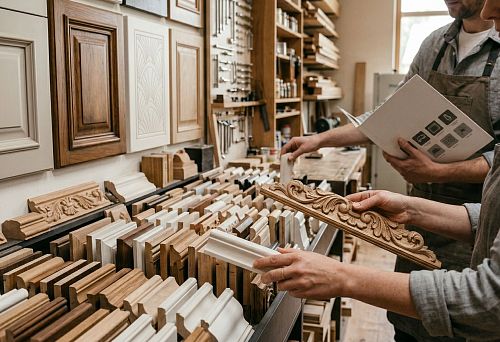
2.1 moldings, cornices, baseboards
This group of products is key to creating a complete interior look. They are used for finishing joints, creating smooth transitions between surfaces, as well as decorative elements.
● Wooden molding: Used for finishing joints between walls, ceilings, and furniture. Molding can have a complex decorative profile, emphasizing the classic or modern aesthetic of the interior.
● Wooden cornice: Used for decorating windows and ceilings, concealing technical seams and creating an effect of a unified space. Cornices also serve to attach textile elements such as valances and curtains.
Wooden skirting board: Completes the finish, concealing the junction between wall and floor, protecting the lower part of walls from dirt and damage.
You can find each of these elements at the link:molding, cornices, baseboardsThey are an essential part of any finishing, allowing to create a harmonious and cohesive space.
2.2 Wooden beam
A wooden beam is a primary structural element often used to create frames, trusses, and other load-bearing structures. Beams have high strength and stability, making them indispensable in constructing both interiors and exteriors.
● Structural use: Beams are used to create sturdy wall, floor, and ceiling frames. They ensure structural stability and even load distribution.
● Decorative use: In decorative applications, beams can be used to create accent elements, decorative frames, and finishing details.
When purchasing, pay attention to the quality of beam processing — uniform dimensions, absence of defects, and protective coating.
2.3 Wooden strip
A wooden strip is a thin decorative element used to clad walls, ceilings, and furniture. Strips allow creating elegant lines, structuring space, and adding additional depth to the interior.
● Decorative functions: Strips can be used to create decorative inserts, panels, and elements that highlight the natural wood texture.
● Structural functions: Due to their flexibility and lightness, strips are used to form complex compositions that help visually divide space.
When choosing wooden strips, pay attention to the smoothness of processing and the quality of protective coating, ensuring the longevity of the products.
2.4 Wooden corner
A wooden corner is an element designed to reinforce structures and protect joints from damage. It serves both functional and decorative roles, helping to create neat and strong connections.
● Functional use: Corners are used at junctions of structural elements, preventing cracks and deformations.
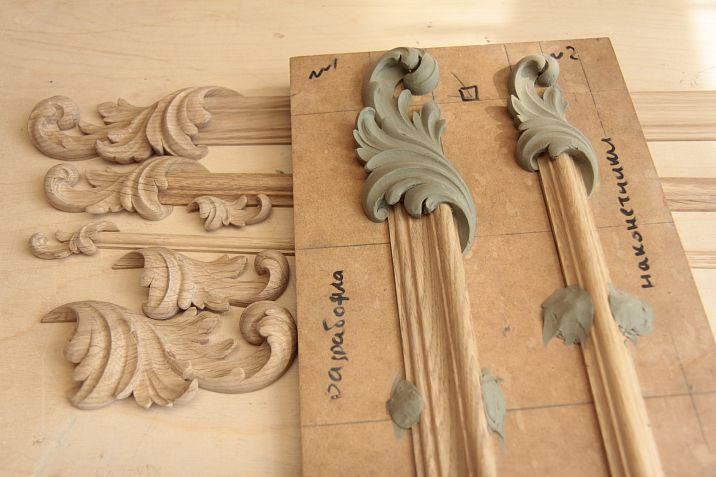
● Decorative finish: In decorative applications, corners may have an elegant profile or carving, highlighting high craftsmanship and adding elegance to the interior.
When selecting corners, pay attention to the precision of processing and the quality of connecting elements.
3. Wood processing and finishing technologies
Modern processing methods
Modern wood processing technologies allow creating finishing products with the highest precision and quality. Among the main methods are:
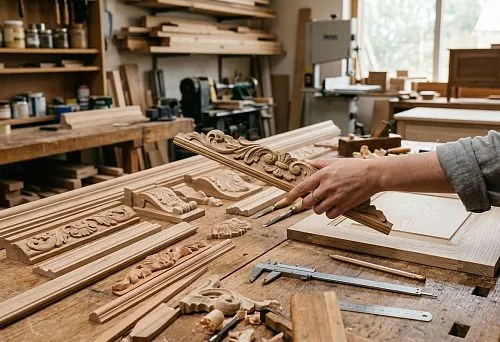
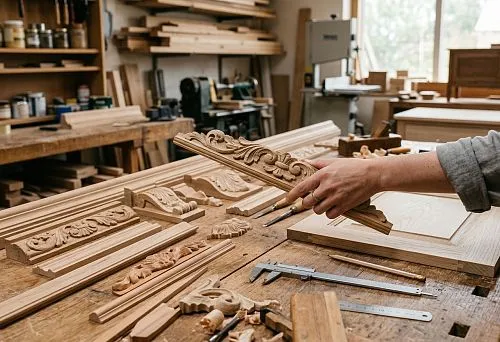
● CNC machines: Allow creating complex decorative patterns and profiles, ensuring precise execution of all design concepts.
● Laser cutting: Used to create thin and detailed elements, such as moldings and decorative inserts.
● Multi-stage sanding and polishing: These processes ensure an ideal surface smoothness, which is especially important for products that will be visible for many years.
Protective Coatings
For the longevity of products made from natural wood, protective treatments are extremely important. They help:
● Protect wood from moisture, ultraviolet rays, and mechanical damage.
● Preserve the natural texture and color of the material.
● Ensure ease of maintenance: Protective coatings allow easy cleaning of products and prevent scratches.
Modern technologies use eco-friendly varnishes, oils, and waxes that not only protect wood but also emphasize its natural beauty.
4. Application of wooden finishing materials in interior and exterior
Interior finishing
Wooden finishing materials play a key role in creating a warm, cozy, and eco-friendly interior. They are used to finish walls, ceilings, floors, and furniture, creating a harmonious space where every detail contributes to the overall concept.
● Walls and ceilings: Using natural panels, planks, moldings, cornices, and baseboards helps create a cohesive and finished interior look. These elements highlight the natural beauty of wood and give the space a unique charm.
● Furniture: Finishing furniture with natural wood makes it exclusive and durable. Wooden items have high strength and resistance to wear, which is especially important for items subjected to daily use.
● Decorative elements: Moldings, cornices, and baseboards, such asWooden baseboard, become not only functional elements but also important accents in interior design.
Exterior Solutions
Wooden finishing materials are widely used not only in interiors but also for decorating exterior structures:
● Facades: Cladding facades with natural wooden panels creates a harmonious blend with the surrounding nature and gives the building a unique appearance.
● Landscape design: Wooden elements are used to create gazebos, verandas, decorative fences, and other architectural solutions that emphasize eco-friendliness and natural aesthetics.
● Protective elements: Decorative baseboards and cornices help protect facade structures from mechanical damage and adverse weather conditions, preserving their original appearance.
5. Practical recommendations for selection and purchase
Where to buy wooden finishing materials
When purchasing wooden finishing materials, it is important to choose a reliable supplier who guarantees high product quality and offers a wide range of items. Companies such asStavros, specialize in the production and sale of products made from natural wood. Here you will find:
● moldings, cornices, baseboards
Key selection factors
When selecting finishing materials, pay attention to the following aspects:
● Raw material quality: Natural wood should be uniform, free of visible defects, knots, and cracks.
● Processing methods: Items that have undergone multi-stage sanding, polishing, and treatment with protective coatings guarantee longevity and high aesthetic value.
● Design and style: Choose materials that harmoniously fit into the overall interior or exterior concept. Modern technologies allow creating items in the most diverse styles – from classic to ultra-modern.
● Supplier reviews and reputation: A reliable supplier with good reviews is a guarantee that you will receive quality products and timely delivery.
Investment in Quality
Purchasing high-quality wooden finishing materials is an investment in the longevity and aesthetic appeal of your space. Although initial costs may be higher, the durability and eco-friendliness of natural wood pay off through reduced future expenses on repairs and finishes.
6. Modern trends and development prospects
Technological Innovations
Modern wood processing technologies continue to evolve, opening new opportunities for designers and architects:
● Digital modeling and CNC: Allow creating items with highly accurate and complex decorative elements.
● Laser cutting: Provides high detail, which is especially important for creating moldings and decorative inserts.
● Eco-friendly coatings: New compositions free of harmful substances protect wood and preserve its natural appearance.
Eco-trend
Modern consumers increasingly value eco-friendly materials. Natural wood is a renewable resource, making it an attractive choice for those concerned about the environment. Eco-friendly finishing materials contribute to creating a healthy microclimate in the home and reduce environmental impact.
Design solutions
Wooden finishing materials continue to be a source of inspiration for designers:
● Combining with other materials: Wood harmoniously combines with glass, metal, and stone, allowing the creation of unique interiors with rich textures and dynamic compositions.
● Individual style: Natural wood is easily customizable, enabling the realization of the boldest design ideas and highlighting the uniqueness of the space.
● Tradition and modernity: Preserving artisanal traditions in combination with innovative technologies allows creating products that reflect cultural heritage and meet modern requirements.
Conclusion
Wooden finishing materials are the ideal choice for creating an interior filled with warmth, ecological purity, and aesthetic expressiveness. Natural wood, thanks to its unique properties, can transform any space, giving it individuality and coziness. Using high-quality products such asmolding, cornices, baseboards, as well asWooden beam, Wooden plank, andWooden corneryou will be able to create a harmonious space where every detail reflects a commitment to quality, durability, and natural beauty.
When choosing wooden finishing materials, it is important to consider the quality of raw materials, processing methods, protective coatings, and product design. Modern technologies allow achieving the highest precision and durability, while the ecological component of natural wood makes it the best choice for creating a healthy and cozy interior.
Choose quality materials, trust proven suppliers, and use innovative solutions to make your home shine with new colors. Natural wood not only gives a room a unique style but also becomes a guarantee of its durability and ecological purity. Let every element—fromSolid Wood Skirting Board towooden cornice - become your source of inspiration and guarantee of quality, creating an interior filled with natural beauty and harmony.