Article Contents:
- History of Wooden Mouldings
- Functionality of Wooden Mouldings
- Features of Wooden Mouldings
Wooden mouldings are not just a decorative element and an indispensable part of any traditional interior. They not only adorn windows but also give the house expressiveness and individual characteristics, highlighting its architectural style.
These decorative elements serve not only to decorate door and window openings, but also perform important practical functions — they protect walls from the destructive effects of moisture, prevent heat loss, and visually correct imperfections of the building.
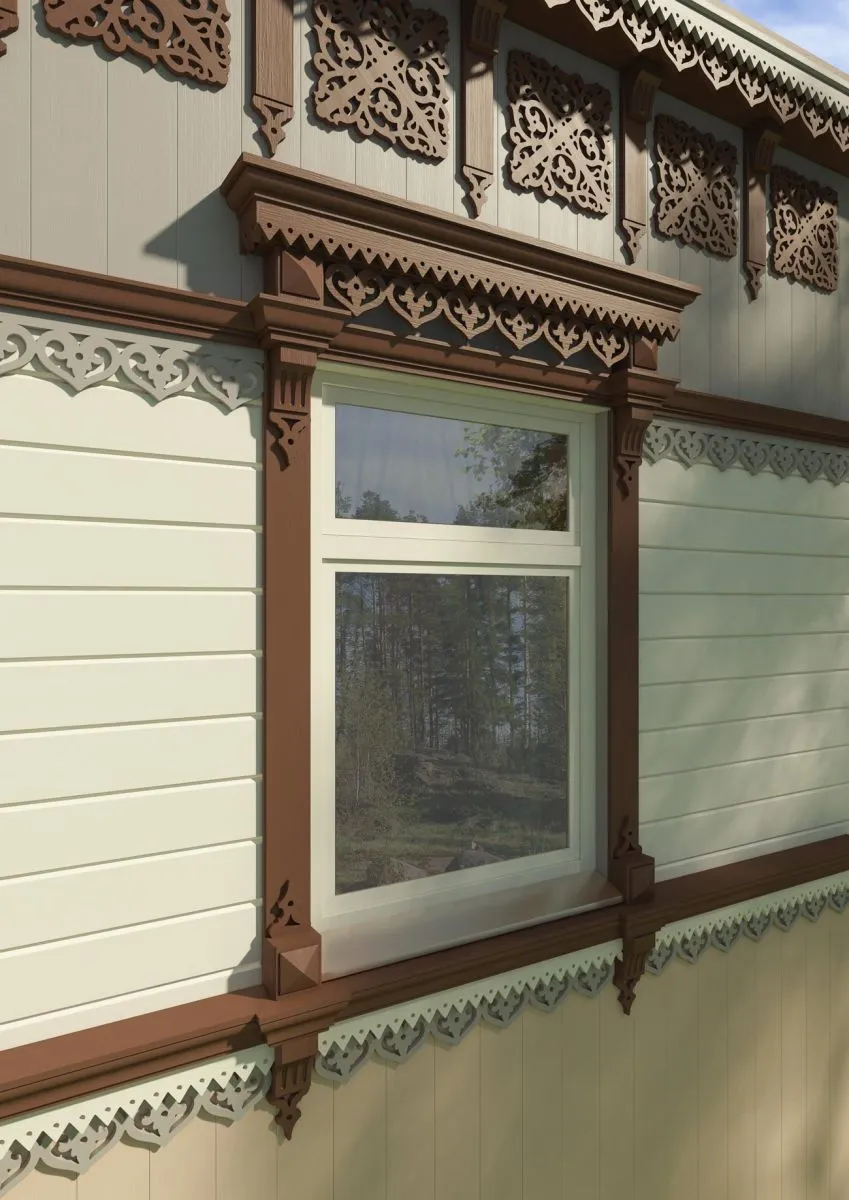
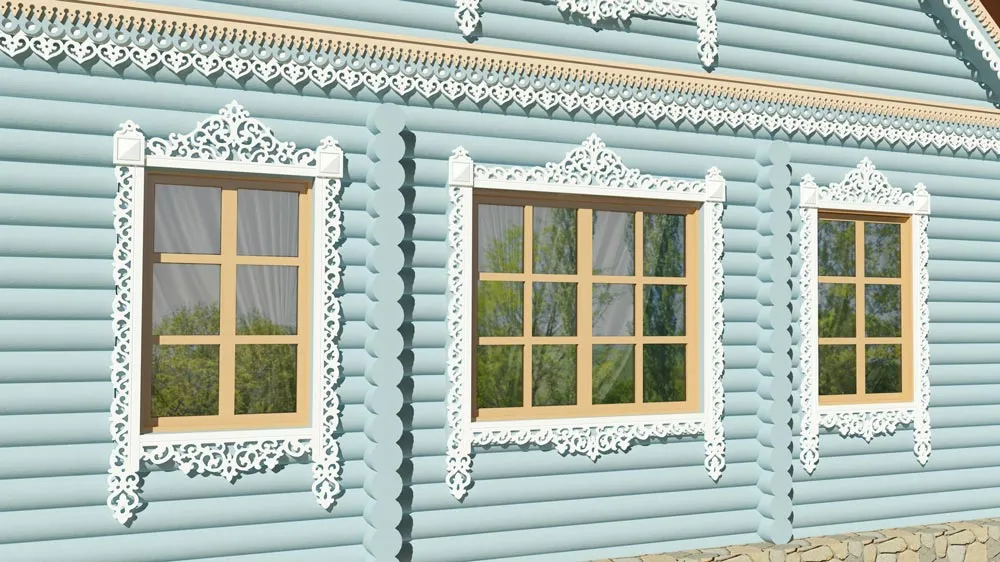
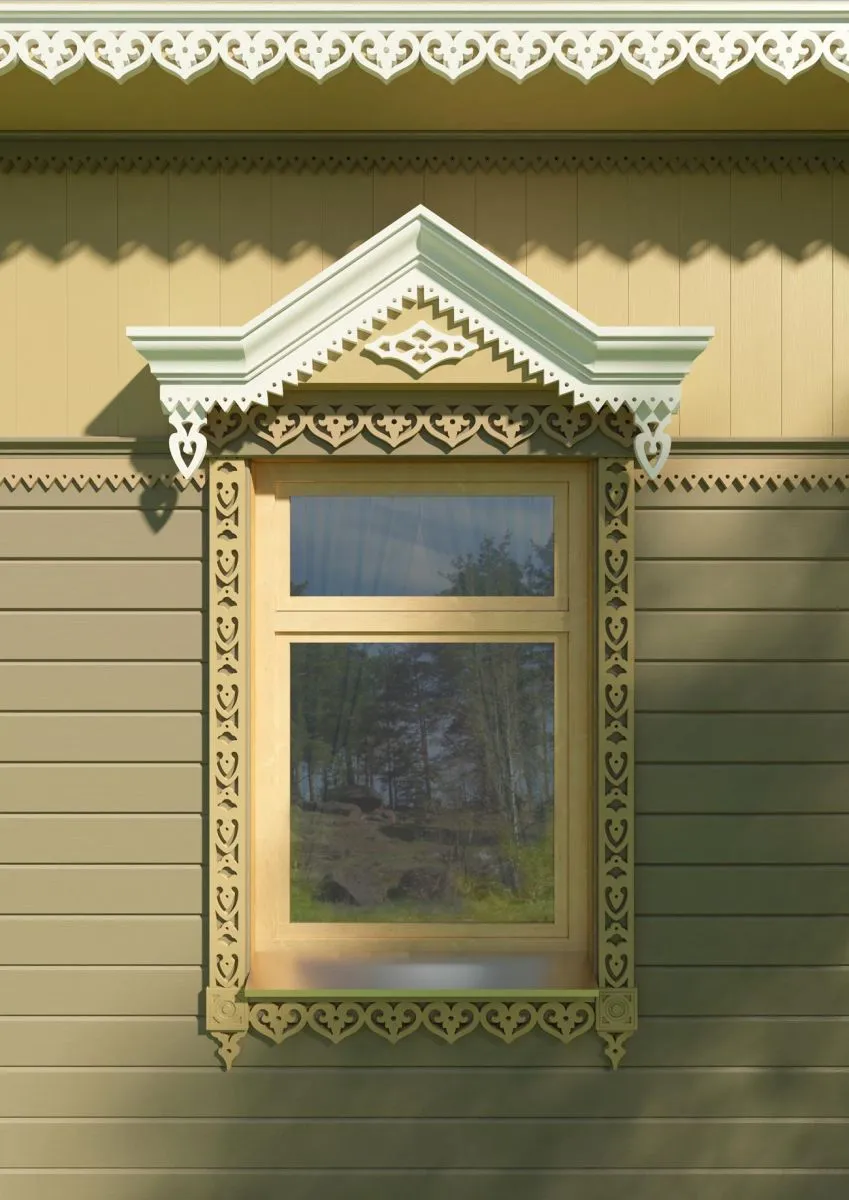
Wooden mouldings are decorative strips with a repeating pattern, installed around window and door openings, used to conceal gaps between the frame and the house wall, and to create a finished and aesthetic look. Traditionally, mouldings are made of wood, although today models made of other materials are also common.
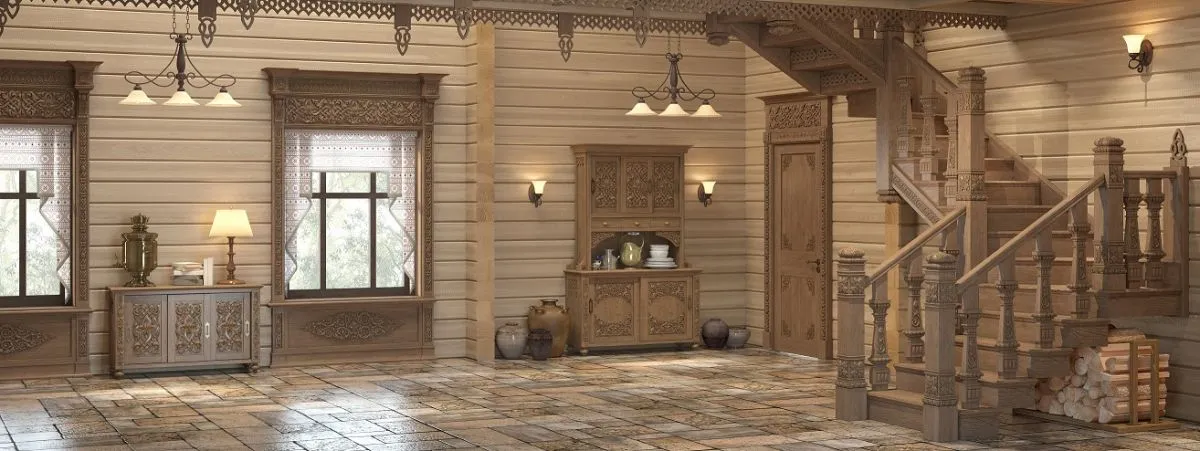
Considering the installation location, mouldings are divided into:


History of Wooden Mouldings
Wooden mouldings appeared even in ancient times. Their emergence and use are linked to the development of architecture and art, as well as to the traditions of different peoples. The earliest references to them date back to the era of Ancient Egypt, where they were used to decorate building facades. However, mouldings gained the widest popularity during the Middle Ages. During this period, they became an indispensable part of the architecture of many European countries, including Russia.
In Russia Wooden casings appeared due to the influence of Byzantine culture. Byzantine masters brought new construction and decoration technologies, which were adapted to local conditions. For example, instead of marble, wood began to be used, which was a more accessible material.
Over time, wooden mouldings were used not only for decorating buildings, but also for protection against cold and wind. In Russia, they were especially actively used in northern regions, where climatic conditions required additional insulation of windows.




Functionality of Wooden Mouldings
Wooden mouldings perform a dual function: they protect the window opening from adverse weather conditions such as wind, rain, and snow, and as a decorative element, they adorn the building facade, making it unique and memorable.
In the modern world Wooden casings they continue to be used for decorating window openings in private homes and cottages. They also create a cozy atmosphere inside the room and emphasize its architectural style.
Thus, mouldings:
- Conceal gaps and irregularities in the opening.
- Prevent dust, drafts, and moisture from entering.
- Give the interior a finished, neat appearance.
- Become part of the overall room design.
Our factory also produces:


Features of Wooden Mouldings
Wooden mouldings are characterized by high strength and durability. They are practically not susceptible to deformation and easily withstand daily mechanical loads. Wood has good thermal insulation properties, which helps retain heat in the room.