Article Contents:
- History and evolution of wooden columns in architecture
- From antiquity to the present day: the journey of the wooden column
- Cultural significance of columns in various civilizations
- Advantages of round wooden columns in modern design
- Aesthetic value and universal applicability
- Ecological and durability of wooden structures
- Technical Specifications and Structural Features
- Technology of manufacturing round wooden columns
- Material selection and preparatory stages
- Modern processing and production methods
- Final finishing and protective coatings
- Application of round wooden columns in various architectural styles
- Classic interiors and exteriors
- Modern Design Solutions
- Combination with various materials and decorative elements
- Practical aspects of using wooden columns
- Installation and mounting: technical nuances
- Maintenance and care of wooden structures
- Restoration and rehabilitation of historical columns
- Innovations and trends in wooden column production
- New technologies and materials
- Ecological aspects and sustainable development
- Industry Development Prospects
- Selecting and ordering round wooden columns
- Criteria for Choosing Quality Products
- Custom order vs. standard solutions
- Cooperation with professional manufacturers
- Conclusion: timeless elegance of wooden columns
- Synthesis of tradition and modernity
- Investment in beauty and longevity
- Company STAVROS: craftsmanship in every detail

In the world of architectural design, there are elements that, having passed through centuries, not only have not lost their relevance, but have also acquired a new sound in modern interiors and exteriors. Round wooden columns — precisely such an element, embodying the grandeur of classical architecture and the practicality of modern solutions. These refined structures are capable of transforming any space, giving it a unique charm and elegance. Today, we will delve into the wonderful world of wooden columns, uncover their potential and unique characteristics that make them indispensable in architectural design.


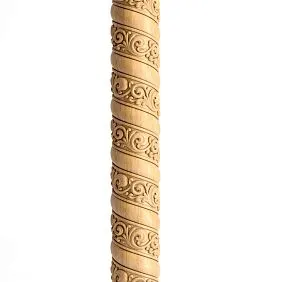
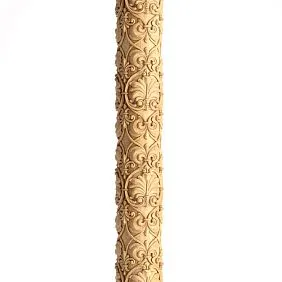
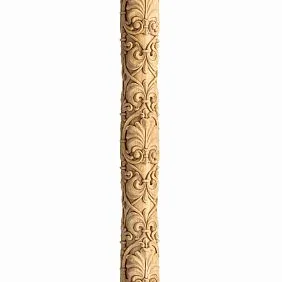

History and Evolution of Wooden Columns in Architecture




From antiquity to our days: the path of wooden columns
History wooden round columns counted in millennia. Even in ancient Greece and Rome, columns were not merely structural elements but symbols of greatness, power, and aesthetic perfection. Initially created from stone, they had wooden prototypes used in less significant buildings or as temporary solutions.
During the Renaissance, wooden columns experience a new flourishing. Masters of that time, inspired by ancient models, created refined wooden structures that became an indispensable part of palaces and temples. Special attention was paid to proportions, which were required to conform to classical canons.
Baroque and Rococo introduce opulence and ornamentation into column design. Wooden items from this period are distinguished by rich carving, gilding, and complex capitals. Columns become not merely supports but true works of art.
In Classicism, there is a return to strict forms and proportions. Round wooden columns Items from this period are distinguished by elegance and restraint, making them universal elements for various architectural solutions.
The modern era is characterized by the synthesis of traditions and innovations. Wooden columns today are not only homage to classicism but also an opportunity to create a unique space that meets individual preferences and functional requirements.
Our factory also produces:


Cultural significance of columns in various civilizations
It is interesting to trace how columns acquired special symbolic meaning in different cultures. In ancient Egypt, they were associated with the plant world, often imitating reed or lotus stems. In Greek tradition, different orders of columns (Doric, Ionic, Corinthian) reflected certain aesthetic and philosophical concepts.
In Eastern cultures, especially in China and Japan, wooden columns were not only structural elements but also embodiments of harmony between man and nature. They were often left uncolored to emphasize the natural beauty of wood.
In Russian architecture, wooden columns occupy a special place. From carved posts in peasant houses to majestic columns in noble estates — this element has always been an important part of the national architectural style. Master carvers created unique patterns, transforming functional elements into true works of art.
Get Consultation
Advantages of wooden round columns in modern design
Aesthetic value and universality of application
Round wooden columns possess unique aesthetic value, making them popular in the most diverse interiors. The natural texture of wood, its warm tone, and its natural energy create a special atmosphere of coziness and nobility. Unlike columns made of artificial materials, wooden items have a 'living' character that changes and enriches over time.
Universality of application is another indisputable advantage of wooden columns. They fit organically into both classical interiors and modern minimalist spaces. Depending on processing and finishing, columns can acquire different characteristics: from luxurious and solemn to restrained and minimalist.
It is important to note that wooden columns can be used not only as structural elements but also as decorative accents. They are capable of zoning space, creating visual boundaries between functional zones, while preserving the feeling of unity and spaciousness.
Ecological friendliness and durability of wooden structures
In an era of growing ecological awareness, wooden items acquire special value. Wood is a renewable resource, and with proper forest management, the production of wooden columns does not cause irreversible harm to the environment. Moreover, wooden structures are capable of 'sequestering' carbon, making them ecologically preferable compared to plastic or metal items.
With proper treatment and maintenance, wooden columns can last for decades, sometimes even centuries. Modern wood processing technologies allow significantly extending the service life of items, protecting them from moisture, insects, mold, and other adverse factors.
Wooden columns also possess excellent thermal insulation properties. They do not create 'cold bridges,' which is especially important when used in residential spaces. Moreover, wood is capable of regulating humidity in a room, creating a more comfortable microclimate.
Technical characteristics and structural features
Modern Round wooden columns They are not merely decorative elements, but technically perfect constructions. They are manufactured taking into account all requirements for load-bearing capacity, resistance to deformation, and durability.
For producing columns, various types of wood are used, each possessing its own unique characteristics:
- Oak — distinguished by exceptional strength and durability, has a striking texture and noble tone.
- Spruce — a more affordable option, possesses good technical characteristics and a pleasant light tone.
- Larch — one of the strongest and most moisture-resistant species, making it ideal for columns used outdoors.
- Ash — distinguished by beautiful wood grain pattern and high strength.
- Beech — has a uniform structure and is easy to process.
Structurally, wooden columns can be solid or glued. Glued columns have greater resistance to deformation and can have significantly larger diameters than solid ones. They are created by bonding individual laminates under high pressure, ensuring high strength and shape stability.
Technology of manufacturing wooden round columns
Material selection and preparatory stages
The process of creating a high-quality wooden column begins with careful material selection. Only high-quality wood, naturally dried and free of significant defects, is used for production. Special attention is paid to the wood's moisture content — it must correspond to the conditions in which the finished product will be used.
The preparatory stage includes sawing logs into boards or beams, their initial processing, and drying. Drying can be natural (outdoors) or kiln-dried (in specialized drying chambers with controlled parameters). Kiln drying allows achieving optimal wood moisture and minimizing the risk of future deformations.
Modern processing and production methods
Modern Processing and Manufacturing Methods
Modern Production wooden round columns This is a high-tech process combining traditional woodworking methods with innovative technologies. To create an ideally smooth cylindrical shape, specialized CNC (computer numerical control) lathes are used, ensuring high-precision processing.
The process of manufacturing glued columns includes several stages:
- Lamella preparation — boards of specific thickness and quality.
- Application of adhesive compound, which must ensure strong bonding while being environmentally safe.
- Pressing in special forms under high pressure.
- Turning for achieving an ideal cylindrical shape.
- Surface sanding to the required degree of smoothness.
For solid columns, the process differs slightly:
- Selection of a suitable log or beam of the required diameter.
- Initial processing to achieve an approximate shape.
- Turning for creating precise geometry.
- Sanding and final finishing.
Special attention is paid to creating capitals and bases for columns — decorative elements located at the top and bottom. These elements may have complex shapes and require high craftsmanship. Hand carving is often used for their creation, although modern technologies allow automating this process using CNC milling machines.
Finishing and protective coatings
Final finishing of wooden columns is no less important than their manufacturing. The quality of finishing affects not only the appearance of the product but also its durability and resistance to external influences.
The final finishing process includes several stages:
- Thorough sanding of the surface to eliminate all irregularities and create a perfectly smooth surface.
- Dust removal — elimination of all particles of dust that may affect the quality of the subsequent coating.
- Application of primer, which ensures better adhesion of the final coating to the wood and additional protection.
- Application of final coating, which may be transparent (varnish, oil, wax) or opaque (paint, enamel).
The choice of final coating depends on many factors: the location of column installation (interior or exterior), desired appearance, requirements for protective properties. For columns installed outdoors, special compositions are used, providing protection against UV radiation, moisture, and temperature fluctuations.
Modern protective coatings for wooden products have high performance characteristics and remain environmentally safe. They allow preserving the natural beauty of wood, highlighting its texture, while providing reliable protection against adverse factors.
Application of round wooden columns in various architectural styles
Classic interiors and exteriors
Play a special role in classical architectural solutions Round wooden columns They do not merely support ceilings or decorate space — they create a unique atmosphere of grandeur and harmony characteristic of the classical style.
In classical style interiors, columns are often used to decorate doorways, arched openings, and to zone spaces. They can be standalone elements or part of more complex architectural compositions. Classical columns typically have clearly defined parts: base, shaft, and capital, each with its own proportions and decorative elements.
In exterior design, classical wooden columns are used to decorate porticos, verandas, and terraces. They create an imposing and prestigious facade appearance, emphasizing the building's status. Material selection and protective coatings are especially important for exterior solutions, as they must ensure resistance to atmospheric influences.
The color palette of classical columns is usually restrained: white, cream, various shades of beige. However, in some cases, more saturated colors are used, especially in interiors in the Empire or Baroque styles.
Modern Design Solutions
In modern design, wooden columns acquire a new sound. They become not only functional or decorative elements, but also symbolic accents that set the tone for the entire space.
Minimalism, loft, Scandinavian style — in each of these directions, wooden columns find their place. In minimalist interiors, they are often left untreated or have simple finishes that highlight the natural beauty of wood. In lofts, columns can combine with metallic elements, creating an interesting material contrast. In Scandinavian style, preference is given to light wood species and simple forms.
An interesting trend is the use of wooden columns in eco-design. Here, they serve not only as structural or decorative elements, but also as symbols of connection with nature, ecological sustainability, and sustainable development.
Modern designers often experiment with column shapes, moving away from classical proportions and creating unique, original solutions. Columns can be asymmetrical, have unusual cross-sections, or integrate with other interior elements.
Combination with various materials and decorative elements
One of the advantages of wooden columns is their ability to harmoniously combine with various materials. This opens up wide possibilities for creating unique design solutions.
Wood and stone — a classic combination used both in exteriors and interiors. A stone base and wooden shaft create an interesting contrast of textures and colors. This solution is especially appropriate in Mediterranean or country-style interiors.
Wood and metal — a more modern combination, often used in loft, industrial, or high-tech interiors. Metallic elements can be structural (e.g., reinforcing rings) or decorative.
Wood and glass create a light, airy composition. This combination is often used in modern interiors, where it is important to preserve the feeling of space and light.
Regarding decorative elements, wooden columns can be complemented with carving, inlay, or gilding. In classical interiors, columns are often adorned with fluting — vertical grooves that visually lighten the massive structure and create an interesting play of light and shadow.
Practical aspects of using wooden columns
Installation and mounting: technical nuances
Installation wooden round columns A process requiring a professional approach and consideration of many factors. The quality of installation affects not only the aesthetic appearance of the structure but also its durability and safety.
The first stage of installation is preparing the foundation. It must be level, strong, and able to withstand the load of the column and the structures it supports. For load-bearing columns, creating a special foundation or reinforcing the existing base is often required.
Mounting the column to the foundation and upper structures is done using special metal elements: anchors, plates, bolts. These elements must be securely fastened while remaining hidden from view to avoid disrupting the aesthetic of the wooden structure.
Special attention is paid to the vertical alignment of the column installation. Even a slight deviation from verticality can lead to uneven load distribution and, consequently, deformation or even structural failure.
When installing columns indoors, it is important to consider possible changes in humidity and temperature within the room. Wood is a material that reacts to these changes, so compensatory gaps must be provided to allow the column to 'breathe' without risking deformation.
For columns installed outdoors, protection from moisture is especially important. The base of the column should be elevated above ground level to prevent contact between wood and soil moisture. Additionally, proper drainage of rainwater away from the column must be ensured.
Maintenance and care of wooden structures
Wooden columns, like any wooden item, require regular care to maintain their aesthetic and functional qualities. Proper care will extend the service life of the columns and preserve their attractive appearance for many years.
Basic principles of caring for wooden columns:
- Regular cleaning from dust and dirt. Soft cloths and special wood care products are used for this purpose.
- Control of indoor humidity. Too dry air can cause wood to crack, while excessive humidity can lead to mold and mildew growth.
- Protection from direct sunlight, which can cause fading and degradation of protective coatings.
- Periodic renewal of protective coatings. The frequency of this procedure depends on the type of coating and operating conditions. Columns installed outdoors require more frequent coating renewal.
- Regular inspection for damage, cracks, signs of insect or fungal infestation. Early detection of problems will allow them to be resolved at minimal cost and without damage to the structure.
For columns installed outdoors, protection from atmospheric influences is especially important. Modern protective compounds provide reliable protection of wood from moisture, UV radiation, and temperature fluctuations, but require regular renewal according to the manufacturer's recommendations.
Restoration and rehabilitation of historical columns
The restoration of historical wooden columns is a specialized field requiring deep knowledge and skills. The goal of restoration is to preserve the historical value of the object, restoring its functional and aesthetic qualities with minimal intervention in the original structure.
The restoration process includes several stages:
- Research and documentation of the current state of the column, identifying original elements and later additions.
- Development of a restoration plan taking into account the historical value of the object and the extent of its damage.
- Cleaning the surface of contaminants, old coatings, and biological damage.
- Strengthening the wood structure using special compositions.
- Restoration of lost elements using authentic materials and technologies.
- Application of protective coatings corresponding to the historical period of the column's creation.
An important aspect of restoration is adherence to the principle of reversibility: all interventions should be such that they can be removed without damage to the original structure, in case more advanced restoration methods appear in the future.
The restoration of historical columns often requires the use of traditional technologies and tools, making this process not only technical but also, in a certain sense, an art requiring a deep understanding of historical woodworking methods.
Innovations and trends in wooden column production
New technologies and materials
Modern production industry wooden round columns actively integrates innovative technologies and materials that allow creating products with improved characteristics.
One of the key innovation directions is the development of new adhesive compositions for producing glued columns. Modern adhesives provide exceptional bond strength, resistance to moisture and temperature fluctuations, while remaining environmentally safe.
Wood thermomodification technology allows significantly improving dimensional stability and resistance to biological damage without using chemical impregnations. This process involves treating wood with steam at high temperatures, resulting in molecular-level changes to the wood structure.
Composite materials based on wood are also used in column production. They combine the natural beauty of wood with improved technical properties: increased strength, resistance to deformation, and durability.
Digital technologies such as 3D modeling and CNC machining allow creating columns of complex shapes with high precision. This opens new possibilities for designers and architects, enabling them to realize the most daring ideas.
Ecological aspects and sustainable development
In the context of growing attention to ecological and sustainable development issues, wooden columns acquire additional value. Wood is a renewable resource, and when responsibly managed, its production does not cause irreversible harm to the environment.
Modern manufacturers of wooden columns increasingly use wood from certified forests, where for every felled tree, several new ones are planted. Certifications from FSC (Forest Stewardship Council) and PEFC (Programme for the Endorsement of Forest Certification) guarantee that the wood is obtained in accordance with sustainable forestry principles.
Production technologies are also becoming more environmentally friendly. Modern enterprises strive to minimize waste, using it to produce secondary products or as biomass fuel. Water and air emissions are cleaned using efficient filtration systems.
The ecological aspect also applies to protective coatings for wooden columns. Modern manufacturers offer water-based compositions that do not contain harmful volatile organic compounds and yet provide reliable wood protection.
Industry Development Prospects
The wooden column production industry has significant potential for growth. Growing interest in eco-friendly materials, the desire for personalized living spaces, and renewed interest in traditional crafts—all these factors contribute to increased demand for high-quality wooden products.
One promising direction is integrating wooden columns into modern "smart" homes. Columns can serve not only structural and decorative functions but also as elements of a "smart" home system: sensors, lighting elements, and climate control systems can be embedded within them.
Personalization and customization are another important trend. Modern technologies allow creating unique columns according to individual projects, taking into account the specific features of a particular interior and the client's preferences.
International cooperation and exchange of experience among masters from different countries contribute to enriching woodworking traditions and the emergence of new stylistic solutions. This is especially important for preserving and developing traditional woodworking techniques, which are part of the cultural heritage of many nations.
Choosing and ordering wooden round columns
Criteria for selecting quality products
Choosing wooden round columns A responsible process, the outcome of which depends not only on the aesthetic appearance of the interior or exterior but also on the durability and safety of the structure. When selecting, several key criteria should be considered:
- Material quality. The wood must be high-quality, free of significant defects (knots, cracks, signs of insect or fungal damage). It is also important that the wood's moisture content matches the conditions in which the column will be used.
- Manufacturing accuracy. The column must have the correct geometric shape, without warping or irregularities. Precision is especially important at connection points with other structural elements.
- Surface finish quality. The column's surface should be smooth, free of burrs and other processing defects. This is important not only for aesthetic appearance but also for proper application of protective coatings.
- Compliance with stylistic requirements. The column must harmoniously fit into the overall interior or exterior design. This applies to both shape and proportions, as well as color and texture.
- Technical characteristics. If the column will serve a load-bearing function, it is necessary to ensure that it can withstand the expected load. This may require consultation with specialists and calculations.
- Ecological safety. The materials used for manufacturing the column and its finishing must be environmentally safe, especially if the column is installed in a residential space.
Custom Order vs. Standard Solutions
When choosing wooden columns, the question arises: order a custom-made item or choose from standard offerings? Each option has its own advantages and disadvantages.
Custom order allows:
- Create a column exactly to your specified dimensions and proportions.
- Select the wood species that best matches your preferences and usage conditions.
- Develop a unique design that will harmonize with your interior or exterior.
- Take into account all technical specifics of your project.
However, custom orders are usually more expensive and require more time to manufacture.
Standard solutions have the following advantages:
- More affordable price.
- Shorter delivery times (the item may already be in stock or require minimal manufacturing time).
- Opportunity to see the finished product before purchase.
The drawback of standard solutions is limited choice of sizes, shapes, and finishes.
The optimal option is often the 'middle ground': choosing from a standard range with some customization possibilities (e.g., selecting finish, minor size adjustments).
Cooperation with Professional Manufacturers
To obtain high-quality wooden columns, it is crucial to collaborate with professional manufacturers who have experience and reputation in this field. Here are some recommendations for selecting a manufacturer:
- Review the company's portfolio to assess the quality and variety of their work. This will give you an idea of their style and capabilities.
- Check reviews from previous clients. Positive feedback from real customers is a good indicator of the company's reliability and professionalism.
- Learn about the technologies and materials the manufacturer uses. Reputable companies are always ready to provide detailed information about their production processes and materials used.
- Pay attention to warranty terms. A manufacturer confident in the quality of its products usually offers a long warranty period.
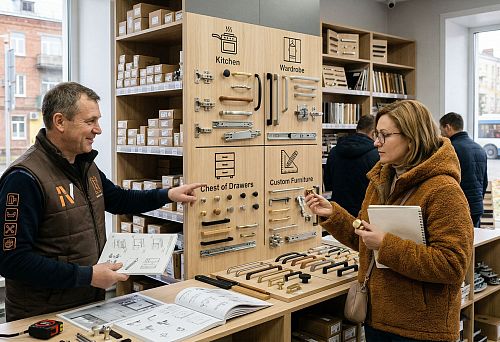
- Assess the level of communication and customer service. A professional manufacturer should be ready to answer all your questions, provide consultation, and assist in choosing the optimal solution.
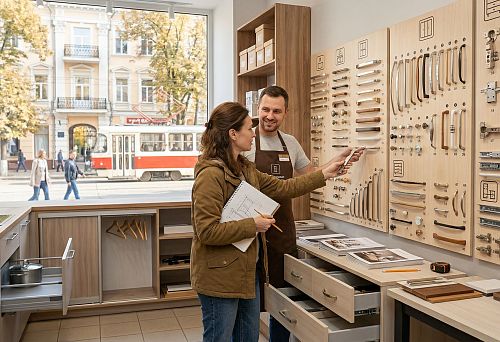
- Learn about additional services such as delivery, installation, and after-sales service. A comprehensive approach to customer service often indicates a high level of professionalism of the company.
Cooperation with professional manufacturers may cost more, but it is an investment in quality, durability, and aesthetic value of your interior or exterior.
Conclusion: Timeless elegance of wooden columns
Synthesis of tradition and modernity
Round wooden columns They represent a unique element of architecture and design, where centuries-old traditions and modern technologies are harmoniously combined. They are a testament to the fact that true beauty and functionality are timeless.
Traditional woodworking techniques, passed down from generation to generation, are enriched by modern manufacturing methods, allowing for the creation of items that combine the authenticity of handcrafted work with the precision of machine processing. This synthesis of tradition and innovation makes wooden columns a universal element that seamlessly integrates into both classical and contemporary interiors.
It is important to note that modern wooden columns are not merely a tribute to tradition or an attempt to recreate historical samples. They are a living, evolving design element that continuously updates, adopts new forms and functions, responding to the challenges of time and changing aesthetic preferences.
Investment in beauty and longevity
Choosing wooden columns for interior or exterior decoration is an investment in the beauty and longevity of your space. High-quality wooden items, with proper care, can serve for decades, preserving their aesthetic appeal and functionality.
Unlike many modern materials, wood does not lose its beauty with age; instead, it gains a unique charm and character. The patina of time makes wooden columns even more valuable and distinctive, adding them history and individuality.
Moreover, wooden columns are an environmentally responsible choice. In an era of growing awareness of the importance of sustainable development and careful stewardship of natural resources, choosing natural, renewable materials becomes not merely an aesthetic preference, but an ethical stance.
Company STAVROS: craftsmanship in every detail
When speaking about manufacturers of high-quality wooden items, one cannot fail to mention the company STAVROS. This company has established itself as a reliable partner, offering a wide range of wooden columns and other architectural elements made from solid wood.
STAVROS offers an individual approach to each order, whether it's a standard item or a unique project. The company's team of professionals is ready to propose the optimal solution for any task, taking into account all technical requirements and aesthetic preferences of the client.
STAVROS pays special attention to the quality of materials and processing. For producing columns, only high-quality wood, carefully selected and prepared, is used. Modern equipment and skilled craftsmen ensure flawless quality of every item.
STAVROS offers not only the production and supply of wooden columns but also comprehensive project support: from consultation and design development to installation and after-sales service. This allows clients to receive the full range of services from one reliable partner.
Choosing wooden columns from STAVROS means choosing not just an architectural element, but a work of art that will delight you with its beauty and serve faithfully for many years.