Article Contents:
- The Magic of Wood: Why Wooden Columns Captivate Designers and Homeowners
- Uniqueness of Each Piece: Natural Pattern is Irreplaceable
- Ecological Safety: Breathe Freely
- Tactile Pleasure: Touching Living Wood
- Variety of Wood Species: Choosing the Ideal Material for Columns
- Oak: symbol of strength and longevity
- Ash: Elegance and Versatility
- Beech: Universality and Versatility
- Walnut: Luxury and Nobility
- Architectural Styles of Wooden Columns: From Antiquity to Modernity
- Classical Orders: Harmony of Proportions
- Doric Order: Rigor and Simplicity
- Ionic Order: Elegance and Grace
- Corinthian Order: Luxury and Ornamentation
- Baroque and Rococo: Opulence and Theatricality
- Modern Interpretations: Minimalism and Functionality
- Technical Specifications and Parameters: Choosing Ideal Columns for Your Interior
- Dimensions and Proportions: The Mathematics of Beauty
- Structural Features: Reliability and Longevity
- Monolithic Columns
- Glued Columns
- Hollow Columns
- Finishing and treatment: protection and beauty
- Sanding and Polishing
- Protective Coatings
- Decorative Finishing
- Functional Use of Wooden Columns in Interior Design
- Space Zoning: Invisible Boundaries
- Concealing Structural Elements: Beauty Instead of Necessity
- Creating Architectural Compositions: Portals, Arches, Niches
- Portals
- Arches and Half-Arches
- Decorative Niches
- Wooden Columns in Various Rooms: Ideas and Solutions
- Living Room: Center of Composition
- Dining Room: Atmosphere of Grandeur
- Bedroom: Romance and Coziness
- Office and Library: Intellectual Atmosphere
- Manufacturing Process of Wooden Columns: From Wood to Art
- Material Selection and Preparation: Foundation of Quality
- Turning Work: Creating the Ideal Shape
- Carving and Decorative Elements: Art in Wood
- Color solutions and decorative finishing
- Installation and Mounting: Professional Approach
- Preparation Work: Precision First
- Mounting Methods: Reliability and Safety
- Load-Bearing Columns
- Decorative Columns
- Finishing Work: Perfection in Details
- Maintenance and Care: Preserving Beauty for Years
- Regular Care: Simple Rules
- Periodic Maintenance: Updating Protection
- Restoration: Returning to Original Beauty
- Custom Manufacturing: Realizing Your Ideas
- Advantages of custom order
- Stages of working on a custom order
- Economic aspects: investment in beauty and status
- Factors Affecting Cost
- Long-term value
- Inspiring Examples of Wooden Column Usage
- Classic living room in a country house
- Modern Dining Room in an Urban Apartment
- Bedroom in Neoclassical Style
- Home Office in English Style
- Conclusion: Create Your Dream Interior with Wooden Columns

Imagine an interior that literally transforms before your eyes. An ordinary room suddenly takes on the characteristics of a palace hall, and a simple space fills with nobility and elegance. What can create such an amazing transformation? The answer is simple and yet unexpected - wooden columnsThese majestic architectural decor elements, crafted from natural wood, are not only able to adorn a space, but can completely change its character, give it a special status and unique charm.
Why wood? In an era of synthetic materials and technological solutions, natural wood remains unmatched in its aesthetic value, ecological properties, and energy. wooden column - it is a unique work of art, where human craftsmanship and the perfection of nature come together.
Let's dive into the wonderful world of wooden columns and discover how these architectural elements can transform your home, give it a special status, and create an atmosphere where classical traditions harmoniously blend with modern trends.


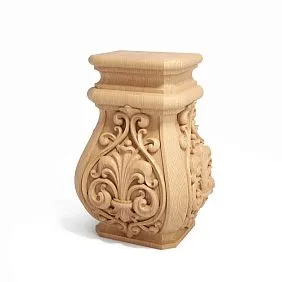
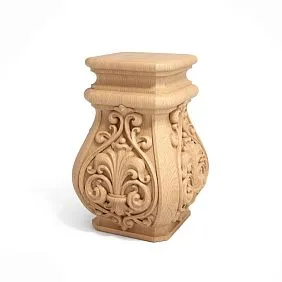
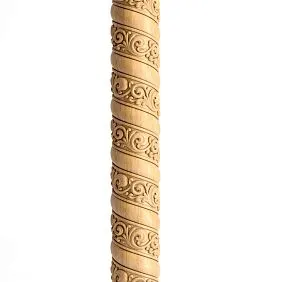
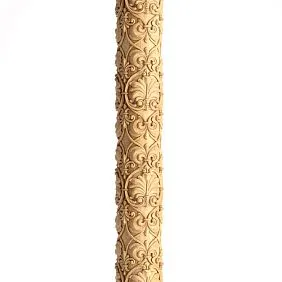
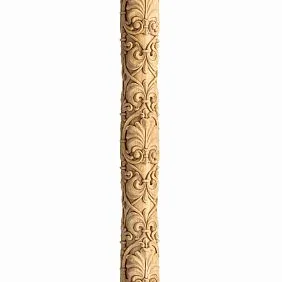

The Magic of Wood: Why Wooden Columns Captivate Designers and Homeowners
Wood is a material with unique energy. It breathes, lives, and changes over time, acquiring an increasingly noble appearance. In a world surrounded by plastic, metal, and glass, natural wood becomes a true treasure, a symbol of connection with nature and traditions.




Uniqueness of each item: natural pattern is unique
Take two wooden columns made from the same type of wood, manufactured according to the same drawing - they will still differ! The unique pattern of growth rings, distinctive texture, and specific features of the wood structure make each column unique. This is not mass production of identical elements - this is the creation of unique works of art.
Imagine: you invite guests, and they stand in awe before the majestic columns in your living room. 'Where did you find such beauty?' they ask. And you proudly reply that such columns do not exist anywhere else in the world - they were created specifically for your home and carry a unique natural pattern.
Our factory also produces:


Ecological safety: breathe freely
In an era of ecological awareness, more and more people pay attention to the naturalness of materials in their homes. Wooden columns made from solid wood - this is not just a beautiful decorative element, but part of a healthy living environment. Wood:
- Does not emit harmful substances
- Naturally regulates humidity in the room
- Creates a special microclimate beneficial for humans
- Has anti-static properties and does not attract dust
Admit it, it's pleasant to realize that interior elements not only decorate your home, but also contribute to creating a healthy atmosphere within it.
Get Consultation
Tactile pleasure: touching living wood
Have you ever run your hand over a perfectly polished wooden surface? It's a special feeling that cannot be obtained from plastic or metal. Wooden columns are pleasant to touch, they retain warmth and create a sense of contact with living nature.
Touching wood calms, reduces stress, creates a feeling of comfort and security. This is not just words - it is a scientifically proven fact. Studies show that contact with wood reduces cortisol levels (stress hormone) and contributes to psychological comfort.
Variety of wood species: choosing the ideal material for columns
Choosing the type of wood for columns is not just a technical question, it is a choice of the character of your interior. Each species has its own color, texture, strength, and processing characteristics.
Oak: symbol of strength and longevity
Oak rightfully is considered the king among trees. Oak columns are an investment for decades, perhaps even centuries. Features of oak columns:
- Exceptional strength and resistance to mechanical impacts
- Expressive texture with visible growth rings
- Noble golden-brown tone that becomes even more beautiful over time
- Resistance to moisture and temperature fluctuations
Oak columns are ideally suited for classic interiors where traditions, solidity, and status are valued. They pair beautifully with leather furniture, natural stone, and heavy drapes.
Ash: elegance and flexibility
Ash is a species with a unique combination of strength and elasticity. Ash columns are characterized by:
- A beautiful light tone with a slight pink or golden undertone
- Expressive texture with a wavy pattern
- Excellent workability, allowing for intricate carved elements
- Resistance to deformation
Ash is perfect for neoclassical or modern classic interiors where elegance and lightness are prized.
Beech: versatility and pliability
Beech is a species that allows for the realization of the boldest design ideas. Beech columns are characterized by:
- Uniform structure with fine pores
- Light, slightly pinkish tone
- Excellent ability to stain and paint
- Good workability and the ability to create complex shapes
Beech is ideal for interiors requiring precise color harmony. This species stains easily to any shade, from light white oak to deep wenge.
Walnut: luxury and nobility
Walnut is one of the most expensive and valuable wood species. Walnut columns are a embodiment of luxury and status:
- Deep brown color with a purple or chocolate tone
- Unique texture with wavy lines and contrasting grain
- Silky surface after polishing
- High dimensional and shape stability
Walnut columns become the central element of the interior, drawing attention and creating an atmosphere of aristocratic luxury.
Architectural styles of wooden columns: from antiquity to modernity
Columns as an architectural element have a multi-century history. Modern wooden columns inherit traditions from various eras and styles, adapting them to contemporary interiors.
Classical orders: harmony of proportions
Ancient architecture created a system of orders — strict proportions and rules for column decoration. Modern wooden columns often follow these classical canons:
Doric order: strictness and simplicity
Doric columns are characterized by:
- Absence of a base (column stands directly on the floor)
- Simple capital in the form of a square slab with minor embellishments
- Fluting (vertical grooves) on the shaft
- Strict proportions (column height is usually 7-8 diameters)
Doric columns create an atmosphere of strict classicism, emphasizing status and solidity.
Ionic order: elegance and refinement
Ionic columns are characterized by:
- Presence of a base with profiled rings
- Capitals with volutes (spiral curls)
- More slender proportions (column height equals 8-9 diameters)
- More frequent and deeper fluting
Ionic columns bring elegance and refinement to the interior without overloading it with excessive ornamentation.
Corinthian order: luxury and ornamentation
Corinthian columns are the most decorative of the classical styles:
- Complex capital decorated with stylized acanthus leaves
- High base with several profiled elements
- Slender proportions (column height equals 9-10 diameters)
- Richly decorated shaft
Corinthian columns become the central element of a luxurious interior, drawing attention and creating an atmosphere of palace opulence.
Baroque and Rococo: opulence and theatricality
Columns in the Baroque and Rococo styles are characterized by:
- Complex shaft forms (twisted, with flutes, with decorative elements)
- Richly decorated capitals with plant and animal motifs
- Abundance of gilding and polychrome painting
- Violation of classical proportions in favor of ornamentation
Such columns create an atmosphere of theatricality and celebration, becoming a striking accent in the interior.
Modern interpretations: minimalism and functionality
Modern designers often reinterpret classical forms, creating:
- Columns with minimalist forms without excessive decoration
- Columns with integrated lighting
- Transformer columns with additional functions (e.g., with built-in niches or shelves)
- Columns with unusual geometry and proportions
Such solutions allow using the classical architectural element in the most modern interiors, creating an interesting contrast between tradition and innovation.
Technical specifications and parameters: choosing the ideal columns for your interior
When selecting wooden columns, it is important to consider not only their aesthetic qualities but also technical parameters that determine their functionality and longevity.
Dimensions and proportions: the mathematics of beauty
Column sizes should match the proportions of the room. Too massive columns in a small space will look heavy, while too thin columns in a spacious hall will disappear and fail to create the desired effect.
Standard sizes of wooden columns:
- Height: from 2.4 to 3.6 meters (for standard ceilings)
- Diameter: from 15 to 40 cm
- Height-to-diameter ratio: from 7:1 to 10:1 (depending on the chosen order)
Manufacturers also offer the possibility of producing columns to individual sizes, taking into account the specific features of the room.
Constructive features: reliability and durability
Modern wooden columns may have different constructions:
Monolithic columns
Made from a single piece of wood. Their advantages:
- Maximum strength and reliability
- Natural beauty of wood without joints or seams
- Durability and resistance to deformation
However, monolithic columns have size limitations and require the use of high-quality wood.
Glued columns
Created from several glued segments. Their features:
- Ability to create columns with large diameter
- High dimensional and shape stability
- Minimal risk of cracking and deformation
- Efficient use of wood
Glued columns are the optimal solution for most modern interiors, combining reliability, aesthetics, and economy.
Hollow columns
Have an internal cavity and consist of glued segments forming a cylinder. Their advantages:
- Lightweight, which simplifies transportation and installation
- Ability to conceal within utilities (wires, pipes)
- Material savings
- Minimal load on ceilings
Hollow columns are ideal for decorative purposes when the column does not bear structural load.
Finishing and surface treatment: protection and beauty
The quality of finishing and surface treatment determines not only the appearance but also the longevity of wooden columns:
Sanding and polishing
Professional sanding creates a perfectly smooth surface, highlighting the beauty of the wood. Multi-stage sanding using abrasive materials of different grits allows achieving a "silk-like" surface, pleasant to the touch.
Protective coatings
Various compositions are used to protect wood from moisture, ultraviolet radiation, and mechanical damage:
- Oils and waxes emphasize the natural beauty of wood, creating a "breathable" finish
- Lacquer - creates a durable protective film with varying degrees of gloss
- Special compositions with UV filters - protect against fading and yellowing
Decorative finishing
Various decorative finishing techniques are used to create special effects:
- Staining - changing the color of wood while preserving the visibility of the texture
- Patina - creates an effect of aging and noble "wear"
- Gilding - applying gold leaf or its imitating compositions
- Painting - creating unique artistic compositions
Functional use of wooden columns in interior design
Wooden columns are not just a decorative element. They perform a number of important functional tasks in the interior.
Space zoning: invisible boundaries
In modern open-plan interiors, columns become an ideal tool for zoning space without building walls. A pair of columns can mark the boundary between the living room and dining room, while still creating the feeling of a single space.
Advantages of this solution:
- Preservation of visual continuity of the space
- Free circulation of air and light
- Possibility of transforming the space as needed
- Creating an architectural accent
Masking structural elements: beauty instead of necessity
Decorative wooden columns transform these necessary but not always aesthetically pleasing elements into interior ornaments.
Moreover, wooden columns can conceal:
- Engineering utilities (pipes, ducts)
- Electrical wiring and outlets
- Structural defects in walls and floors
Creating architectural compositions: portals, arches, niches
In combination with other architectural elements, columns create expressive compositions:
Portals
Two columns with a lintel form a portal — a grand entrance to a room or functional zone. Portals may frame:
- Entrances to the living room or dining room
- Fireplace area
- Home theater zone
- Library or office
Arches and half-arches
Columns combined with arched elements create classical architectural forms that:
- Softens the geometry of the space
- Creates a sense of depth
- Form cozy niches and alcoves
- Emphasizes transitions between rooms
Decorative niches
Pairs of columns may frame niches for placement of:
- Sculptures and art objects
- Collections and antiques
- Aquariums and winter gardens
- Decorative lighting
Wooden columns in various rooms: ideas and solutions
The versatility of wooden columns allows their use in various rooms, each time creating a unique effect.
Living room: center of composition
In the living room, columns can become a central element organizing the entire space:
- Columns framing the fireplace create a classic composition that draws the eye
- Columns around the room perimeter give the space a palace-like character
- Columns separating the lounge area from the dining room create functional zoning without losing spatial unity
Dining room: atmosphere of solemnity
In the dining room, columns create an atmosphere of solemnity and significance:
- Columns framing the dining area highlight it as an important place for family gatherings
- Columns supporting decorative arches create the effect of a separate room within an open space
- Columns with built-in dish niches combine decorative appeal and functionality
Bedroom: romance and coziness
In the bedroom, columns introduce a romantic atmosphere and create a sense of security:
- Columns on either side of the bed form a kind of canopy, creating a cozy space for rest
- Columns framing the dressing table transform it into an elegant boudoir
- Columns with integrated lighting create soft, diffused illumination
Office and library: intellectual atmosphere
In an office or library, columns emphasize an intellectual atmosphere and create a sense of classical scholarship:
- Columns framing bookshelves give them the appearance of an integrated library
- Columns on either side of the desk create the effect of 'an office within an office'
- Columns with integrated bookshelves combine aesthetics and functionality
The process of manufacturing wooden columns: from wood to a work of art
Creating a quality wooden column is a complex technological process requiring skill, experience, and modern equipment.
Material selection and preparation: the foundation of quality
The process begins with careful selection of wood. Only high-quality wood is used for columns:
- Free of knots and other defects
- With uniform structure and beautiful texture
- With optimal moisture content (8-12%)
- Having undergone natural and kiln drying
Turning operations: creating the ideal shape
Creating a cylindrical shape for columns requires high-precision turning equipment and operator skill:
- Special CNC turning machines are used for large columns
- The turning process occurs in stages, gradually approaching the final shape
- Special attention is paid to creating entasis - a slight bulge in the middle of the column, which creates an optical effect of perfectly straight lines
Carving and decorative elements: art in wood
Creating capitals, bases, and other decorative elements is true art:
- For simple elements, CNC machines are used for milling
- Complex elements are crafted by hand by master carvers
- Each element undergoes multi-stage sanding to achieve an ideal surface
Finishing: perfection in details
Final stage of column creation - finishing treatment:
- Multi-stage sanding using abrasive materials of varying grits
- Application of protective and decorative finishes (oils, waxes, varnishes)
- Polishing until the desired effect is achieved (matte, satin, or glossy)
Installation and mounting: professional approach
Correct installation of wooden columns is the key to their longevity and aesthetic appeal.
Preparatory work: precision is paramount
Before installing columns, it is necessary:
- Carefully measure the installation site
- Prepare the floor and ceiling surfaces
- Mark the mounting points
- Check the vertical alignment of the future installation
Mounting methods: reliability and safety
Depending on the type of columns and their functional purpose, various mounting methods are used:
Load-bearing columns
If the column performs a load-bearing function, it is secured using:
- Metal anchor elements in the floor and ceiling
- Special mounting plates
- Anchor bolts
- Reinforced mounting adhesives
Decorative columns
For decorative columns, the following are used:
- Hidden fasteners using dowels and screws
- Special mounting adhesives
- Combined mounting systems
Finishing work: perfection in details
After installing columns, the following finishing work is performed:
- Covering mounting locations
- Adjusting decorative elements
- Final finishing and polishing
- Applying protective compounds to connection points
Maintenance and care: preserving beauty for years
Proper care of wooden columns ensures their longevity and preservation of aesthetic appeal.
Regular care: simple rules
To maintain the beauty of wooden columns, it is sufficient to follow a few simple rules:
- Regularly remove dust with a soft dry cloth
- Avoid direct contact with water
- Do not use abrasive cleaning agents
- Maintain optimal humidity levels in the room (40-60%)
Periodic maintenance: updating protection
Preventive maintenance is recommended every few years:
- Updating protective coatings (oils, waxes, varnishes)
- Check and tighten fastening elements
- Repairing minor damage and scratches
- Professional surface polishing
Restoration: returning to original beauty
Wooden columns can be fully restored if necessary:
- Removal of old coating
- Surface sanding
- Restoration of damaged elements
- Application of new protective and decorative coating
Custom manufacturing: bringing your ideas to life
One of the main advantages wooden columns - possibility of custom manufacturing according to the client's or architect's sketches.
Advantages of custom order
Custom manufacturing of columns allows:
- Create a unique interior element matching your vision of beauty
- Take into account the room's specific features (ceiling height, proportions, style)
- Choose the optimal material and finish
- Implement complex design solutions
Stages of working on a custom order
- Consultation and design - discussing your preferences, creating a sketch and technical specifications
- Material selection - choosing a wood species matching your requirements
- 3D modeling - creating a 3D model of the future column for visualization of the result
- Manufacturing - creating the column according to the approved design
- Finishing - painting, varnishing, or other surface treatments
- Delivery and installation - transportation of the finished product and professional mounting
Economic Aspects: Investment in Beauty and Status
Purchasing quality wooden columns is not just buying an interior item, but an investment in the beauty and status of your home.
Factors Affecting Cost
The cost of wooden columns depends on several factors:
- Wood species (oak and walnut are more expensive than beech or pine)
- Dimensions and complexity of the structure
- Presence of decorative elements and carving
- Type of finish (natural, painted, gilded)
- Individual manufacturing
Long-term value
Quality wooden columns made from solid wood do not lose their appeal over the years, but instead acquire a noble appearance characteristic of natural materials. This makes them a long-term investment that will delight you and your loved ones for many years.
Moreover, the presence of quality architectural details, such as columns, increases the status and value of real estate, making them a financially advantageous investment.
Inspiring examples of using wooden columns
To better illustrate how wooden columns can transform your interior, consider several inspiring examples of their use.
Classic living room in a country house
Imagine a spacious living room with high ceilings in a country house. Four massive Corinthian-order columns made of oak create the effect of a palace hall. The columns have a natural wood color with light gilding on the capitals. They visually divide the space into a lounge area with a fireplace and a guest reception area. Thanks to the columns, an ordinary living room transforms into a luxurious hall, worthy of an aristocratic mansion.
Modern dining room in an apartment
In a modern apartment with an open plan, a pair of minimalist ash columns separates the dining area from the kitchen. The columns have a minimalist design without capitals, but with a slight entasis, which gives them a classic elegance. The light wood color with a matte lacquer finish harmonizes with modern furniture. The columns not only zone the space but also create the effect of higher ceilings, visually 'stretching' the room.
Bedroom in neoclassical style
In a neoclassical style bedroom, two half-columns of the Ionic order made of beech with white patina frame the headboard of the bed. They create the effect of a niche, making the sleeping area more cozy and intimate. The capitals of the columns are adorned with delicate carving and slight gilding, adding a touch of luxury to the interior. The columns visually increase the height of the ceiling and create a focal point in the interior.
Home office in English style
In an office decorated in the English style, four dark walnut columns frame built-in bookshelves. The columns have a Doric order with minimalist capitals. Their dark color contrasts with light walls, creating a sense of depth. The columns not only decorate the interior but also serve as structural elements for the bookshelves, demonstrating the perfect combination of beauty and functionality.
Conclusion: create the interior of your dreams with wooden columns
Wooden columns are not just an architectural element, but also a manifestation of classical beauty, harmony, and proportion. They are capable of transforming any space, giving it a unique character and style, creating an atmosphere of elegance and sophistication.
Choosing wooden columns For your interior, you are not merely following fashion trends, but also embracing a multi-century tradition of creating harmonious and aesthetically perfect spaces. You are investing in the beauty and comfort of your home, creating an interior that will delight you and your loved ones for many years.
Create the interior of your dreams with wooden columns from STAVROS – embodiment of classic beauty and modern quality!
Create the interior of your dreams with wooden columns from STAVROS – embodiment of classic beauty and modern quality!