Article Contents:
- Magic of wood: why wooden items are unmatched
- Ecological Safety: Breathe Freely
- Aesthetics and uniqueness: distinctive character
- Durability and practicality: an investment for generations
- Variety of wooden items: from classic to avant-garde
- Solid wood furniture: foundation of interior
- Decorative items: accents and mood
- Kitchenware: functionality and beauty
- Toys and educational materials: for the youngest
- Where to buy wooden items: market guide
- Specialized stores: quality and assortment
- Online Stores: Convenience and Wide Selection
- Fairs and exhibitions: direct contact with artisans
- Direct from manufacturers: optimal price-to-quality ratio
- How to Choose Quality Wooden Products
- Assessing Material and Manufacturing Quality
- Ecological safety and certification
- Matching Interior Design and Functional Requirements
- Caring for wooden items: preserving beauty for years
- Daily Care and Protection from Damage
- Periodic Maintenance and Restoration
- Care features for different types of items
- Trends and innovations in the world of wooden items
- Modern Design Solutions
- Technological innovations in production
- Eco-trends and Sustainable Production
- Conclusion: a choice that won't disappoint

In an era of plastic, glass, and metal, when technology rapidly transforms the appearance of our world, there is something timeless - the warmth and beauty of natural wood. Wooden items are not merely decorative elements or household objects. They are living history, embodied in a material that breathes, changes, ages alongside us, preserving memories of touches and events.
Touch the wooden surface - and you will feel a unique energy that no artificial material can convey. In every slice, in every growth ring, lies the story of the tree's life: dry and rainy years, frosty winters and warm springs. This uniqueness makes each wooden item unique, like a fingerprint or a snowflake pattern.
But where to buy wooden itemsWhat if you want to buy wooden items that will not only be functional but also true ornaments of your home? How to choose among numerous offers the one that will please the eye and serve for many years? Let's together dive into the wonderful world of wooden items and figure out what to pay attention to when choosing and purchasing them.


Magic of wood: why wooden items are unmatched
Wood is one of the first materials that humans began to use for creating tools, dwellings, household items. Millennia have passed, yet this material has not lost its relevance. On the contrary, in a modern world saturated with synthetics, the value of natural wood only increases. Why are wooden items still unmatched?




Ecological safety: breathe freely
In an era of growing environmental awareness, more and more people pay attention to the naturalness and safety of materials surrounding them. Wooden items are an ideal choice in this regard.
Natural wood does not emit toxic substances, does not cause allergic reactions (with rare exceptions of exotic species) and does not accumulate static electricity that attracts dust. Moreover, many wood species possess natural antibacterial properties.
Wood 'breathes', absorbing excess moisture from the air and releasing it when dry, thus naturally regulating the microclimate in a room. This is especially important for bedrooms and children's rooms, where air quality directly affects health and well-being.
Moreover, wooden items can be treated with natural oils and waxes, completely excluding chemical components from their environment. This creates a truly healthy atmosphere in the home, which is especially valuable for families with young children and people with heightened sensitivity to chemicals.
Our factory also produces:


Aesthetics and Uniqueness: An Irreplaceable Character
Each wooden item is unique, like a fingerprint. Even if a craftsman makes two items of identical shape from the same wood species, their texture, fiber pattern, and shade will differ. This uniqueness gives wooden items special value in the world of mass production.
Wood possesses natural beauty that cannot be precisely reproduced artificially. Warm tones, lively texture, play of light on the surface - all this creates a special atmosphere of coziness and naturalness. Wooden items harmoniously fit into almost any interior, from classic to ultra-modern, adding warmth and individuality.
Over time, wood does not lose its appeal, but rather acquires a noble patina, becoming even more expressive and distinctive. Unlike many modern materials that look worn out and require replacement over time, wooden items often become even more beautiful with age.
Get Consultation
Durability and practicality: an investment for generations
Quality wooden items, with proper care, can serve for decades, sometimes even centuries. These are not just household items, but true family heirlooms passed down from generation to generation, preserving family history and gaining not only material, but also emotional value over time.
Wood is an amazingly strong yet flexible material. It can withstand significant loads without deforming. Moreover, wooden items have excellent shock-absorbing properties, making them comfortable to use.
Another important advantage of wooden items is their repairability. If a plastic or metal item is severely damaged, it is usually discarded, but a wooden item can usually be restored. Scratches and wear are easily removed by sanding, and more serious damage can be fixed by replacing individual parts.
Variety of wooden items: from classic to avant-garde
The world of wooden items is extraordinarily diverse. From simple functional items to complex decorative compositions, wood provides artisans with virtually limitless creative opportunities. Let us consider the main categories of wooden items and their characteristics.
Solid Wood Furniture: The Foundation of Interior Design
Solid wood furniture is a classic that never goes out of style. Tables and chairs, cabinets and chests, beds and nightstands — all these items, made from solid wood, form the foundation of interior design, defining its character and style.
Handcrafted furniture, made using traditional joinery techniques, holds special value. Such items are distinguished not only by high quality and durability, but also by a unique energy infused by the craftsman into their work.
Modern technologies allow creating wooden furniture of the most diverse shapes and styles. From the strict geometry of minimalism to lavish baroque forms, from traditional classicism to bold avant-garde solutions — wooden furniture can satisfy the most discerning taste.
When choosing solid wood furniture, pay attention to the quality of the wood, precision of fitting parts, reliability of joints and hardware. Quality furniture should be made from well-dried wood (moisture 8-12%), have a smooth, carefully sanded surface, and uniform protective coating.
Decorative items: accents and atmosphere
Wooden decorative items can transform any interior, adding individuality and character. Carved panels and sculptures, photo frames, boxes and vases, wall clocks and candlesticks — all these items create a special atmosphere in the home, set accents, and shape the mood.
Among wooden decorative items, wood carving occupies a special place — an ancient art that continues to evolve even today. Carved items can be standalone decorative elements or part of furniture or architectural details.
Modern artisans often combine traditional techniques with new materials and technologies, creating unique works of art. For example, items where wood is combined with epoxy resin, metal, glass, or stone are gaining popularity.
When choosing wooden decorative items, pay attention not only to their aesthetic qualities, but also to compatibility with the overall interior style. Even the most beautiful item may look out of place if it does not harmonize with the surrounding environment.
Kitchenware: functionality and beauty
Wooden kitchenware is not only a tribute to tradition, but also a practical choice for modern kitchens. Cutting boards and rolling pins, spoons and spatulas, salt shakers and spice grinders, bread boxes and stands — all these items are not only functional, but also aesthetically pleasing.
Wood has natural antibacterial properties, making it an ideal material for kitchenware. Additionally, wooden items do not scratch dishes, do not conduct heat (protecting hands during cooking), and do not produce unpleasant noise when touching metalware.
Different wood species have their own characteristics, making them more or less suitable for specific kitchen items. For example, maple, beech, or oak — hard woods resistant to moisture and mechanical damage — are often used for cutting boards. For spoons and spatulas, linden, pear, or cherry are suitable — they do not impart foreign taste or odor to food.
When choosing wooden kitchenware, pay attention to the quality of surface finishing (it should be smooth, without burrs) and type of protective coating. For items in contact with food, it is better to choose those treated with food-grade oils or waxes, rather than varnishes or paints.
Toys and educational materials: for the youngest
Wooden toys are a classic of the child’s world, remaining relevant even in the age of gadgets and high technology. Cubes and pyramids, toy cars and dolls, construction sets and puzzles, musical instruments and games — all these items not only entertain children, but also contribute to their development.
Wooden toys are safe for children (provided they are properly finished and free of small parts for the youngest), pleasant to the touch, durable, and eco-friendly. They develop tactile senses, motor skills, spatial thinking, and creative abilities.
Educational materials created according to Montessori, Waldorf, Froebel, and other pedagogical systems hold special value. These materials are carefully designed from the perspective of child psychology and pedagogy, helping the child naturally acquire knowledge through personal experience and exploration.
When choosing wooden toys, pay attention to safety (absence of sharp edges and small parts for young children), quality of surface finishing, eco-friendliness of paints and coatings. The toy should be sturdy, resistant to children’s use, and easy to clean.
Where to buy wooden items: a market guide
Choosing a place to buy wooden items can significantly affect the quality of the purchased product, its cost, and the level of service. Let us consider the main options and their features.
Specialized stores: quality and assortment
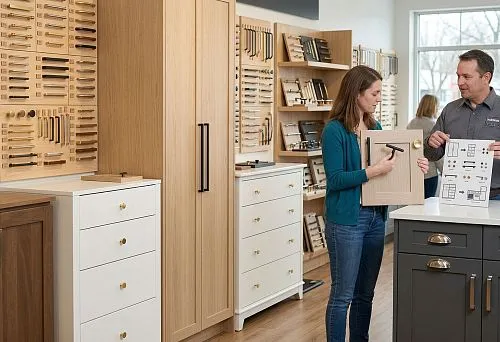
Specialized stores offering wooden items usually have a wide assortment of products across various categories, styles, and price ranges. Here you can find both mass-produced items and exclusive handmade works.
Advantages of specialized stores:
- Opportunity to see and evaluate the product in person before purchase
- Consultations with experienced sales staff who can help you select an item to suit your needs
- Quality guarantee and possibility of return or exchange of the product if defects are found
- Often additional services are offered: delivery, assembly, custom orders
Disadvantages:
- Prices are usually higher than when purchasing directly from the manufacturer or at fairs
- Limited selection in smaller cities
- It is not always possible to learn the history of an item and the specifics of its manufacture.
If you decide to purchase wooden items from a specialized store, pay attention to the store's reputation, customer reviews, and availability of information about manufacturers and materials. A good store is always ready to provide detailed information about its products and their origin.
Online stores: convenience and wide selection
In the era of digital technology, more and more people prefer to shop online, and wooden items are no exception. Online stores offer a vast selection of products across various categories, styles, and price ranges.
Advantages of online stores:
- Convenience of selection and ordering from anywhere and at any time
- Wide assortment, including items from manufacturers in different regions and countries
- Ability to compare prices and characteristics of different products
- Often lower prices due to the absence of physical store maintenance costs
- Home delivery, which is especially convenient for large and heavy items
Disadvantages:
- Inability to see and touch the product before purchase
- Risk of receiving an item that does not meet expectations (color, texture, size may differ from those shown in photos)
- Difficulties with returns or exchanges in case of problems
- Shipping costs, which may be significant for large items
If you decide to purchase wooden items online, choose reputable stores with good reviews and positive feedback. Carefully study the product description, materials, dimensions, and delivery terms. Do not hesitate to ask the seller questions before making a purchase.
Fairs and exhibitions: direct contact with artisans
Craft fairs, sales exhibitions, and folk art festivals are an excellent opportunity to purchase unique wooden items directly from artisans. Such events are regularly held in major cities and tourist centers.
Advantages of purchasing at fairs and exhibitions:
- Opportunity to see the creation process and interact with artisans
- Unique, original works that you won't find in mass retail
- Often lower prices due to the absence of intermediaries
- Opportunity to order a custom-made item according to your preferences
- Special energy and history of each item
Disadvantages:
- Limited selection and temporary nature of events
- Not always possible to deliver large items
- Lack of warranties and after-sales service in some cases
If you decide to purchase wooden items at a fair or exhibition, come at the beginning of the event when the selection is the widest. Do not hesitate to ask artisans questions about materials, manufacturing techniques, and care for the items. Often, it is possible to negotiate a small discount or a custom order.
Direct from manufacturers: optimal price-to-quality ratio
Many wooden item manufacturers today work directly with customers, bypassing intermediaries. This can be a large factory with its own showroom or a small family workshop.
where to buy wooden items Direct from the manufacturer? Information can be found online, on specialized forums, and in social networks. Many artisans and small manufacturers have their own websites or social media pages where they showcase their work and take orders.
Advantages of purchasing directly from the manufacturer:
- Lower prices due to the absence of intermediary markup
- Opportunity to order an item in custom sizes and design
- Complete information about materials, manufacturing technology, and care for the item
- Often higher quality, as the manufacturer values its reputation
- Opportunity to visit the production facility and see the creation process
Disadvantages:
- A deposit may be required and manufacturing lead time may apply
- Limited selection (only products of this manufacturer)
- Not always convenient location of production or showroom
If you decide to purchase wooden items directly from the manufacturer, study reviews about them, view examples of their work, clarify order conditions, manufacturing and delivery timelines. Do not hesitate to ask questions and request additional photos or material samples.
How to choose quality wooden items
Choosing quality wooden items requires certain knowledge and attention to detail. Here’s what to pay attention to, so your purchase will delight you for many years.
Assessment of material and manufacturing quality
The quality of a wooden item begins with the quality of the material itself. Here are several key points to pay attention to:
The wood species should match the item's purpose. For furniture subjected to significant loads, hardwoods such as oak, beech, and ash are preferable. For decorative elements, softer woods like linden, alder, or pine are suitable.
Wood moisture content is a critical parameter. For furniture and interior items, wood with 8-12% moisture is used. Too dry wood may crack, while overly moist wood may deform upon drying. Unfortunately, it’s difficult to assess moisture visually, but you can ask the seller about how and where the wood was dried.
Absence of defects — carefully inspect the item’s surface for cracks, chips, or unevenness. Small knots are acceptable and even add character to the wood, but they must be securely fastened and not fall out.
Surface finish quality — run your hand over the item’s surface. It should be smooth, without rough edges or grit. The varnish or oil finish should be even, without streaks or bubbles.
Structural integrity — for furniture and other functional items, check the strength of joints. A quality item should not wobble or creak. Pay attention to the connections between parts — they should be tight, with no gaps.
Functionality — check the operation of all movable parts: doors should open and close easily, drawers should slide smoothly without sticking. Hardware should be of good quality and securely fastened.
Modern polyurethane compositions meet the strictest ecological standards. The composition contains no formaldehyde, heavy metals, or volatile organic compounds above the third safety class.
In an era of growing environmental awareness, more attention is being paid to the safety of materials used in production. Here’s what to pay attention to:
Quality and environmental safety certificates — reliable manufacturers usually have certificates confirming the safety of their products. Do not hesitate to ask about the presence of such documents.
Used varnishes and paints — they should be non-toxic and safe for health. More and more manufacturers are switching to water-based or oil-wax compositions that do not emit harmful substances.
Origin of the wood — responsible manufacturers use wood from sustainably managed forests, certified by FSC or PEFC. This guarantees that producing items does not harm the environment.
Adhesives and other materials — various adhesives and other auxiliary materials are often used in the production of wooden items. They should also be environmentally safe and not emit harmful substances.
Compatibility with interior design and functional requirements
Even the highest quality wooden item will not please if it does not fit the interior or meet your functional needs. Here are some tips for choosing:
Style compatibility — a wooden item should harmonize with the overall interior style. Heavy carved items made of dark wood look great in classic interiors, but may appear inappropriate in minimalist modern spaces.
Color palette — the color of the wood should match the room’s color scheme. Light woods (birch, maple, beech) visually expand space and create a sense of lightness, while dark woods (walnut, wenge, stained oak) add solidity and weight.
Size and proportions — the item should match the room’s dimensions. Too large items in a small room will create a feeling of crowding, while too small items in a spacious room will look insignificant.
Functionality — the item should meet your practical needs. Consider how you will use each item, whether it has enough storage space, and whether it will be convenient to use.
Ergonomics — especially important for furniture and other items you interact with directly. They should be comfortable and not cause discomfort during use.
Care for wooden items: preserving beauty for years
Wooden items can serve for decades, but only with proper care. A few simple rules will help preserve their beauty and functionality for many years.
Daily care and protection from damage
Regular dust cleaning — use a soft dry cloth or special microfiber cloths. Dust not only damages the appearance of the item but can also act as an abrasive, scratching the surface.
Protection from moisture — immediately wipe up any spilled liquid. Even if the item has a protective coating, prolonged exposure to moisture may cause damage. Use coasters under hot items and drinks.
Protection from sunlight — direct sunlight may cause fading and cracking of the wood. Place wooden items away from windows or use curtains and blinds to protect from intense sunlight.
Maintaining optimal humidity — too dry air may cause wood to crack, while overly humid air may cause it to swell. The optimal humidity for wooden items is 40-60%.
Protection from mechanical damage - use felt pads under furniture legs to avoid scratches on the floor. Do not place heavy items on wooden surfaces, as they may leave dents.
Periodic maintenance and restoration
Updating protective coating - depending on the type of finish (varnish, oil, wax) and the intensity of use, the item should be re-coated every 1-5 years. This protects the wood from moisture, dirt, and mechanical damage.
Polishing - regular polishing with specialized products will help maintain the shine and beauty of the wooden surface. Choose products suitable for the specific type of finish on your item.
Repairing minor damage - small scratches can be concealed using special pencils or wax crayons matched to the wood color. More serious damage may require sanding and re-coating.
Professional restoration - if the item is severely damaged or simply aged, it is advisable to consult professional restorers. They can restore the item to its original appearance or even enhance it while preserving its historical value.
Care specifics for different types of items
Furniture - requires regular care and protection from damage. Pay special attention to frequently used surfaces (countertops, armrests, seats). Periodically check and tighten fasteners to ensure stability and safety.
Decorative items - generally require minimal care: regular dusting and protection from direct sunlight. Carved elements can be cleaned with a soft brush or a hairdryer on a cool setting.
Kitchenware - requires special attention to hygiene. After use, thoroughly wash wooden items with warm water and mild soap, then dry well. Periodically treat them with food-grade oil (linseed, olive, mineral) to protect against moisture and prevent cracking.
Toys - should be regularly cleaned, especially if used by young children. For disinfection, you can use a vinegar solution or hydrogen peroxide, then thoroughly dry. Avoid prolonged soaking of wooden toys in water.
Trends and innovations in the world of wooden items
The world of wooden items is constantly evolving, reflecting changes in design, technology, and societal values. What trends are currently emerging, and what lies ahead for us?
Modern Design Solutions
Minimalism and functionality - modern wooden items often feature sleek, uncluttered forms and lack excessive decoration. Emphasis is placed on material quality, precision of manufacture, and functionality of each element.
Style mixing - designers increasingly combine traditional woodworking techniques with modern forms, or conversely, use classic forms with unconventional finishes and color schemes.
Personalization - demand is growing for unique, customized items that reflect the owner's personality and taste. This can range from fully custom designs to the option of selecting individual elements (wood species, finishes, hardware) within a standard model.
Multifunctionality - in the context of shrinking living spaces, items that serve multiple functions are especially valued: transformable tables, modular storage systems, furniture with built-in technological elements.
Technological innovations in production
3D modeling and CNC machining - modern technologies enable the creation of items with complex shapes and high precision. Computer modeling allows visualizing the future item before production begins, while CNC machines ensure precise realization of the designer's concept.
New wood treatment methods - technologies for thermal and chemical modification of wood are advancing, enhancing its resistance to moisture, rot, and pests without using toxic substances.
Eco-friendly finishes - more and more manufacturers are switching to water-based varnishes, natural oils, and waxes that do not emit harmful substances and are safe for health and the environment.
Combining materials - wood is increasingly combined with other materials: metal, glass, stone, leather, creating interesting contrasts and expanding design possibilities.
Ecological trends and sustainable production
Use of certified wood - more consumers are paying attention to ecological aspects of production and choosing items made from wood sourced from sustainably managed forests.
Recycling and reuse - popularity is growing for items made from recycled or repurposed wood. These can be items made from old wooden structures (beams, floorboards), or furniture made from wood scraps.
Zero-waste production - modern technologies allow for the most efficient use of wood, minimizing waste. Any waste that does form is often recycled into wood panels, fuel briquettes, or used for energy generation.
Local production - more people are valuing items made from local wood species by small, local producers. This not only reduces the carbon footprint associated with transportation but also supports local economies and traditional crafts.
Conclusion: a choice that won't disappoint
Wooden items are not just interior or household objects; they are part of our culture, our connection to nature, our pursuit of beauty and harmony. In a world where individuality, eco-friendliness, and longevity are increasingly valued, wooden items become especially relevant.
where to buy wooden itemsWhat will delight you for years to come? This question has no single answer - it all depends on your preferences, budget, and specific needs. Specialized stores, online platforms, craft fairs, direct contact with manufacturers - each option has its advantages and unique features.
The key is to approach your choice thoughtfully, paying attention to material quality and craftsmanship, ecological safety, suitability for your functional needs and aesthetic preferences. A quality wooden item is an investment that will bring joy and utility for many years, and may even become a family heirloom passed down from generation to generation.
In a world where much becomes disposable and quickly loses value, wooden items remain an island of stability and longevity. They remind us of the importance of traditions, the value of handcrafted work, and the beauty of natural materials. They create a unique atmosphere of warmth and comfort in the home that synthetic materials cannot provide.
May your choice be thoughtful, and the items you acquire bring joy and serve faithfully for many years, becoming not just household objects, but keepers of your stories and memories.