Article Contents:
- What is a wooden beam and its main characteristics
- Main parameters and dimensions
- Wood species for manufacturing beams
- Types of wooden beams by processing method
- Unprocessed (sawn) beam
- Planed beam
- Profiled beam
- Dry and wet beams
- Applications of wooden beams in construction and finishing
- Frame construction
- Installation of finishing materials
- Creating decorative elements
- Landscape Design
- Advantages and disadvantages of wooden beams
- Advantages
- Disadvantages
- Where to buy wooden beams: market overview
- Specialized stores for construction materials
- Online stores
- Lumber Manufacturers
- Pricing policy and factors affecting cost
- Production technologies for wooden beams
- Log preparation and primary wood processing
- Wood drying
- Mechanical processing
- Protective Treatment
- Criteria for selecting quality wooden beams
- Visual Quality Assessment
- Wood moisture
- Wood Grade
- Dimensional and geometric conformity
- Installation and processing technologies for wooden beams
- Preparation for Installation
- Mounting methods
- Protective Treatment and Final Finishing
- Innovative solutions and trends in wooden beam production
- Thermally modified wood
- Composite Materials Based on Wood
- Eco-Trends
- Creative use of wooden beams in design and DIY projects
- Decorative interior elements
- Furniture made from wooden beams
- Wooden toys and educational games
- Handmade souvenirs and gifts
- Ecological aspects of using wooden beams
- Resource Renewability
- Carbon footprint
- Waste disposal and recycling
- Conclusion: the future of wooden beams in modern construction and design

In the world of modern construction materials, wooden beams occupy a special place. This natural, eco-friendly material combines practicality, aesthetic appeal, and wide application possibilities. Whether you are planning large-scale construction or a small repair, wooden beams Becomes an indispensable element in implementing various projects. Let's dive into the world of wooden beams and examine their features, varieties, and application possibilities.


What is a wooden beam and its main characteristics
A wooden beam is a rectangular-section lumber with relatively small dimensions. Unlike solid beams, beams are compact, and their maximum thickness usually does not exceed 100 mm6. This material is obtained by sawing boards along their length, which ensures its correct geometric shape and ease of use.




Main parameters and sizes
Standard sizes of wooden beams vary depending on their intended use. For coniferous species, thickness and width are usually from 16 to 75 mm, and the cross-section can be either rectangular or square6. Beam lengths also vary, but the most common option is 3 meters, making them convenient for transportation and installation.
Our factory also produces:


Wood species for beam production
Various wood species are used to produce beams, each possessing unique properties:
- Coniferous species (pine, spruce, larch) – distinguished by affordable price, good strength, and moisture resistance.
- Broadleaf species (oak, beech, ash) – characterized by increased strength, wear resistance, and aesthetic appeal.
- Exotic species (merbau, zebrawood, padauk) – used for decorative elements and exclusive items5.
The choice of wood species depends on specific project tasks and budget. Coniferous species are typically chosen for load-bearing structures, while decorative elements use broadleaf or exotic species.
Get Consultation
Types of wooden beams by processing method
The modern market offers various types wooden beams, differing by processing method and moisture content. Each type has its advantages and areas of application.
Unprocessed (sawn) beam
An unprocessed beam is the simplest and most accessible option. It does not undergo additional processing after sawing and retains the natural moisture of the wood3. Main characteristics:
- Affordable price
- Natural moisture
- Requires additional processing before use
- Shrinks in cross-section upon drying
Such material is typically used for creating load-bearing structures, roof trusses, and other elements that will later be covered with finishing materials.
Planed beam
A planed beam undergoes additional mechanical processing, resulting in a smooth surface3. Its features:
- Aesthetically pleasing appearance
- Absence of splinters and roughness
- Can be either dried or with natural moisture
- Suitable for visible structures and interior elements
Sawn and dried timber is more expensive than untreated, but has better decorative qualities and does not require additional finishing.
Sawn timber
Sawn timber is a type of sawn timber that has a special profile with grooves and protrusions on its side faces.3Its advantages:
- Improved structural rigidity
- Enhanced thermal insulation properties
- Minimal use of additional fasteners
- Precise fitting of elements to each other
Sawn timber is manufactured only from pre-dried wood, ensuring stability of its dimensions and shape.
Dry and wet timber
by moisture content wooden beams are divided into:
- Raw (natural moisture) – contain natural moisture, cheaper, but prone to shrinkage and deformation upon drying.
- Dry (kiln-dried) – undergo special drying in kilns, maintain dimensional stability, resistant to cracking and rot.6.
Dry timber is more expensive, but provides higher quality and longer-lasting structures.
Application of wooden beams in construction and finishing
Versatility wooden beams makes them indispensable in many areas of construction and finishing. Let's consider the main areas of their application.
Frame construction
In frame construction, wooden beams are used to create the load-bearing frame of a building. They form the basis of walls, floors, and roofs, ensuring the strength and stability of the entire structure. For these purposes, beams with cross-sections of 50x50 mm, 50x100 mm, or 100x100 mm are typically used.
Installation of finishing materials
Wooden beams are widely used in installing various finishing materials:
- Planks and blockhouse
- Facade panels
- Flooring boards
- Gypsum board and other sheet materials2
For these purposes, sawn beams of various cross-sections are suitable, which create a strong base for mounting finishing materials.
Creating Decorative Elements
In interior design wooden beams are used to create various decorative elements:
- Ceiling beams
- Decorative partitions
- Shelves and racks
- Frames for paintings and mirrors
- Furniture elements
For decorative purposes, it is usually recommended to use planed beams made of valuable wood species, which highlight the naturalness and individuality of the interior.
Landscape design
In landscape design, wooden beams are used for creating:
- Garden paths
- Decorative fences
- Raised beds
- Elements of small architectural forms2
For outdoor use, it is recommended to use beams made of moisture-resistant wood species (larch, oak) or treated with special protective compounds.
Advantages and disadvantages of wooden beams
Like any construction material, wooden beams they have their advantages and disadvantages, which must be considered when choosing.
Advantages
- Ecological safety – natural material, does not emit harmful substances.
- Thermal insulation – wood has low thermal conductivity, which helps retain heat in the room.
- Aesthetic appeal – the natural texture and color of wood create a cozy atmosphere.
- Ease of processing – the material is easy to saw, plane, sand, and paint.
- Availability – a wide variety of sizes and wood species at different prices.
- Versatility – suitable for solving various construction and decorative tasks.
Disadvantages
- Susceptibility to moisture – without special treatment, wood may rot and mold.
- Flammability – requires treatment with fire-retardant compounds.
- Shrinkage and deformation – especially in untreated beams with natural moisture content.
- Susceptibility to pests – requires protective treatment against insects.
- Limited service life – without proper care and protection, wood deteriorates faster than other materials.
Where to buy wooden beams: market overview
The modern market offers many options for purchasing wooden beams different types and sizes. Let's consider the main places where you can buy this material.
Specialized stores for building materials
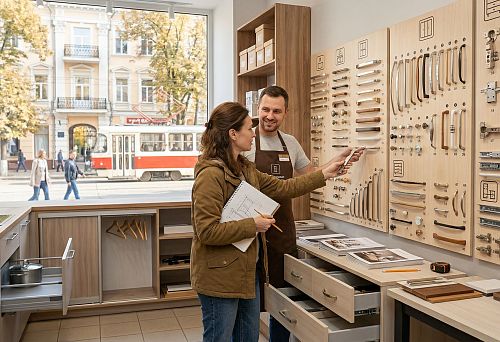
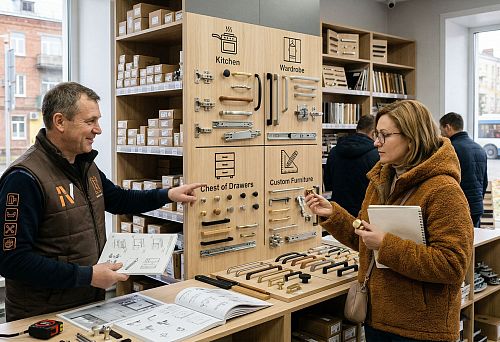
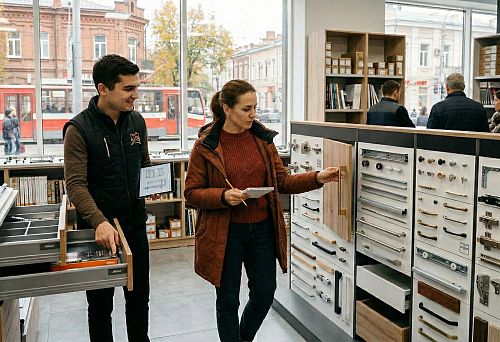
Large construction hypermarkets and specialized sawmill stores offer a wide variety of wooden beams in different sizes and species. Advantages of such stores:
- Ability to visually assess material quality
- Consultations with Specialists
- Sawing and delivery services are often offered
- Availability of complementary products (fasteners, protective coatings)
Online stores
Online platforms are becoming increasingly popular places to buy construction materials, including wooden beams. Their advantages:
- Convenience of selection and ordering
- Often lower prices
- Delivery to home or site
- Ability to compare prices from different sellers
Among popular online stores offering wooden beams, the following can be highlighted:
- Specialized online stores for lumber
- Marketplaces (Yandex Market, OZON)
- Manufacturer websites for lumber
Lumber manufacturers
Purchase wooden beams purchasing directly from the manufacturer has several advantages:
- Lower prices due to absence of intermediaries
- Ability to order non-standard sizes
- Manufacturer's quality guarantee
- Wholesale discounts for large orders
Many lumber manufacturers work with both wholesale and retail clients, offering flexible cooperation terms7.
Pricing policy and factors affecting cost
Cost wooden beams may vary significantly depending on several factors:
- Tree species – coniferous species are cheaper than deciduous, and valuable species may cost several times more.
- Degree of processing – planed and profiled beams are more expensive than unprocessed ones.
- Moisture content – dry beams cost more than wet ones.
- Dimensions – the larger the cross-section, the higher the price.
- Purchase volume – for wholesale purchases, the price per unit is usually lower.
For example, prices for wooden beams may range from 68 rubles per piece for unprocessed beams to several hundred rubles for planed, dry beams made from valuable species7.
Wooden beam production technologies
Production of high-quality wooden beams – is a multi-stage process involving several important technological operations.
Log preparation and primary wood processing
The process begins with log preparation, conducted according to seasonality and specific characteristics of tree species. After felling, logs undergo primary processing:
- Bark removal (de-barking)
- Sawing into boards
- Sorting by quality and dimensions
Wood Drying
Drying is one of the most important stages of producing quality beams. There are two main methods:
- Natural drying – a long process (from several months to a year), during which the wood is left outdoors under cover.
- Kiln drying – an accelerated process in special drying chambers with controlled temperature and humidity parameters.
Proper drying reduces the wood's moisture content to an optimal level (8-12%), preventing subsequent deformation and cracking of the material.
Mechanical processing
After drying, the wood undergoes mechanical processing to produce finished beams:
- Cutting into blanks of the required size
- Planing for a smooth surface
- Profiling (if necessary)
- Sanding to improve surface quality
Protective treatment
to increase durability and resistance to external influences wooden beams may undergo additional protective treatment:
- Antiseptic treatment against rot and mold
- Treatment with fire retardants to increase fire resistance
- Impregnation with oils or varnishes for moisture protection
Criteria for selecting quality wooden beams
Correct choice wooden beams – the guarantee of successful implementation of any project. Let’s consider the main criteria to pay attention to when purchasing.
Visual quality assessment
When visually inspecting beams, pay attention to the following parameters:
- Absence of visible defects – cracks, chips, rot, blue stain
- Uniform color – without sharp color transitions or spots
- Correct geometry – straight angles, flat faces
- Quality of processing – smooth surface without burrs or roughness
Wood Moisture
The optimal moisture content of wooden beams depends on their intended use:
- For indoor use – 8-12%
- For outdoor use – 15-18%
Too dry wood may crack, while overly wet wood may deform upon drying. Moisture content can be measured using a special device – a moisture meter.
Wood Grade
Depending on the presence of defects and wood quality, beams are divided into grades:
- Grade "Extra" – practically free of defects, highest quality
- Grade "A" – minimal number of minor defects
- Grade "AB" – minor defects allowed, not affecting strength
- Grade "B" – allows more significant defects
- Grade "C" – technical grade with noticeable defects
The choice of grade depends on the purpose of the beams: for visible decorative elements, higher grades are preferable, while for hidden structures, lower grades may be used.
Dimension and geometry compliance
Accuracy of dimensions and correct geometry of beams are especially important for construction and finishing work. When selecting, pay attention to:
- Conformity to stated dimensions
- Absence of warping and twisting
- Uniform cross-section along the entire length
Installation and processing technologies for wooden beams
Correct installation and processing wooden beams – important conditions for creating high-quality and durable structures.
Preparation for Installation
Before starting work, it is necessary to:
- Acclimate beams in the room where installation will take place (minimum 48 hours)
- Check the moisture content and quality of the material
- Perform necessary marking
- Prepare tools and fasteners
Methods of mounting
There are several ways to fasten wooden beams:
- Nailing – simple and economical method, suitable for lightly loaded structures
- Screw fastening – provides more secure fixation, allows disassembly if necessary
- Adhesive bonding – creates a monolithic structure, has no visible fasteners
- Combined fastening – combination of different methods to achieve maximum strength
Protective treatment and final finishing
To increase service life wooden beams it is recommended to perform protective treatment:
- Antiseptic treatment – protection against rot, mold, and insects
- Fire-retardant treatment – increases the fire resistance of wood
- Final finishing – coating with varnish, paint, oil, or wax for moisture protection and decorative enhancement
Innovative solutions and trends in wooden beam production
The modern wood processing industry is not standing still, constantly improving production technologies wooden beams and expanding their functional capabilities.
Thermally modified wood
Thermo-modification – innovative wood treatment technology at high temperatures (180–240°C) without oxygen access. As a result of such treatment:
- Increased resistance to rot and mold
- Improved dimensional stability
- Reduced hygroscopicity
- Wood takes on a darker, noble tone
Thermally modified wood beams are ideal for use in humid areas and outdoors.
Wood-polymer composites
Composite materials combine the advantages of wood and modern polymers:
- WPC (wood-polymer composite) – material consisting of wood flour and polymer binders
- Fiber-cement beams – a combination of cement, cellulose fibers, and mineral additives
These materials have enhanced moisture resistance, are not susceptible to rot or insect damage, while retaining the aesthetic of natural wood.
Ecological trends
Modern production trends wooden beams are aimed at increasing eco-friendliness:
- Use of wood from sustainably managed forests (FSC, PEFC certification)
- Application of non-toxic water-based protective coatings
- Zero-waste production with recycling of wood waste
- Use of renewable energy sources in the production process
Creative use of wooden beams in design and DIY projects
wooden beams – it is not only a building material, but also a basis for creativity and self-expression. Let's consider some interesting ideas for their use in interior design and DIY projects.
Decorative interior elements
Wooden beams allow creating unique decorative elements that give the interior individuality and coziness:
- Decorative partitions and screens
- Wall panels and installations
- Three-dimensional wooden maps and panels
- Decorative shelves of unusual shapes
- Mirror and Picture Frames
Furniture made of wooden beams
Furniture made of wooden beams distinguishes itself by simple construction, eco-friendliness, and original design:
- Shelving units and bookshelves
- Coffee and end tables
- Benches and stools
- Beds and sofa frames
- Modular storage systems
Wooden toys and educational games
Wooden blocks – an excellent material for creating eco-friendly toys and educational games:
- Construction sets and building kits
- Puzzles and logic games
- Toy furniture for dollhouses
- Educational sorters and pyramids
- Board games (domino, jenga)
Handmade souvenirs and gifts
From wooden beams you can create original souvenirs and gifts:
- Phone and tablet stands
- Desk organizers
- Candle holders and candlesticks
- Keychains and hooks
- Decorative letters and signs
Ecological aspect of using wooden blocks
In an era of growing attention to ecological issues wooden beams they stand out as one of the most eco-friendly construction materials.
Renewable resource
Wood is a renewable natural resource, making its use more eco-friendly compared to non-renewable materials (metal, plastic). With responsible forestry and reforestation, wooden blocks become truly sustainable material.
Carbon footprint
Wooden products have significantly lower carbon footprint compared to analogs made from other materials:
- Trees absorb carbon dioxide during growth
- Production of wooden blocks requires less energy
- Wood continues to store carbon throughout the product's lifespan
Disposal and recycling
At the end of its life cycle wooden beams can be:
- Recycled into sawdust or shavings for producing MDF, plywood
- Used as biofuel
- Composted (untreated wood)
This makes them more eco-friendly compared to materials that are difficult or impossible to dispose of.
Conclusion: the future of wooden blocks in modern construction and design
wooden beams – is a material with a rich history that successfully adapts to modern requirements and technologies. Their versatility, eco-friendliness, and aesthetic appeal ensure their stable place in construction and design.
Modern trends such as the pursuit of eco-friendliness, naturalness, and individuality contribute to the growing popularity of wooden blocks. Innovative wood processing and protection technologies expand their application possibilities and extend their service life.
In the future, we can expect further development of wood production technologies wooden beamsthe emergence of new composite materials based on wood and expansion of their application areas. At the same time, their main advantages—naturalness, eco-friendliness, and aesthetic appeal—will remain unchanged.
Regardless of whether you plan large-scale construction, renovation, or creative projects, wooden beams offer broad opportunities to realize diverse ideas. The key is to properly select a material matching your goals and ensure its correct processing and installation.