Article Contents:
- Opening as an Architectural Element
- Wooden Finishing: Functions and Aesthetics
- Types of Openings and Framing Options
- Materials and Processing Features
- Framing Styles for Openings
- Installation Practice and Tips
- Architectural Scenarios
- Why Choose High-Quality Wooden Framing
- Conclusion: Framing as the Final Touch of Architectural Composition
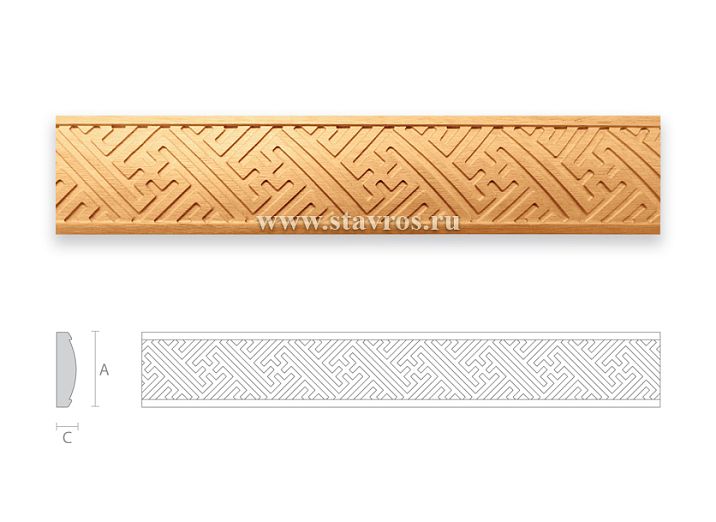
Architectural treatment of openings is not merely a decorative interior element, but a crucial component of the overall spatial composition. Openings in walls — whether door, window, or interior — are special focal points that either harmoniously complement the overall concept of the room or disrupt its unity. Wooden Frame of an Opening It serves as an architectural tool that transforms functional necessity into aesthetic advantage.
Wood as a material for framing openings possesses unique qualities that cannot be fully replicated with synthetic analogs. Natural texture, tactile warmth, ecological safety, and durability make wooden elements indispensable in creating truly harmonious and healthy living spaces.
In today's world, where mass production often leads to standardization and depersonalization of interiors, items created with an understanding of architectural traditions and attention to detail become especially valuable. This approach distinguishes premium-class products, where each element is the result of careful design and high-quality execution.


Opening as an Architectural Element
In architectural theory, an opening is not merely considered a technical hole in a wall, but a significant compositional element, a point of transition between different spaces and meanings. Openings create visual and physical connections between rooms, forming movement and perception scenarios within the interior.
Each opening has its own architectural logic, which must correspond to the overall concept of the space. A door opening is a portal symbolizing transition between different functional zones. A window opening is a frame for the external world, defining the character of interaction between the interior and its surroundings. An interior opening is an element that unites different rooms into a single composition.
Wooden finishing gives the opening a special status in the interior. Thanks to the natural texture and warmth of wood, the opening acquires depth and expressiveness, becoming not just a functional element, but an architectural accent. Wooden framing emphasizes the significance of transition, creating a visual pause necessary for conscious perception of space changes.
Throughout architectural history, framing openings has always played an important role. From ancient porticos to Renaissance portals, from classical moldings to modern framed structures — the treatment of openings reflected not only the stylistic preferences of the era, but also a deep understanding of spatial relationships.
Modern architectural thought returns to the awareness of the importance of detail, to understanding that it is precisely in the refinement of connections and transitions that the architect's skill is revealed. Wooden framing of openings becomes an element that allows the interior to achieve completeness and individuality.




Wooden Finishing: Functions and Aesthetics
Framing openings performs a range of functional tasks far beyond simple decoration. Primarily, it protects the edges of the opening from mechanical damage, which is especially relevant for materials prone to chipping and wear — plaster, drywall, brickwork.
Wooden framing creates a clear visual frame that structures the space. It helps visually organize the interior, set accents, emphasize the architectural hierarchy of rooms. Properly selected framing can visually adjust the proportions of the opening, making it more harmonious.
Another important function is creating a unifying geometry in the interior. Framing of openings can correspond with other wooden elements — baseboards, cornices, furniture — forming a unified stylistic system. This is especially important in open-plan spaces, where visual unity is achieved precisely through repeating architectural details.
From an aesthetic standpoint, wooden framing of openings operates on fundamental compositional principles. Symmetry, inherent in classical framing options, creates a sense of stability and order. The scale of framing determines its visual weight within the overall interior composition — from light, barely noticeable profiles to massive portals that become the main accent of the room.
The principle of balance is manifested in the relationship of framing with other interior elements. An overly massive frame in a small room may create a sense of overcrowding, while a too light frame in a spacious hall will appear unfinished. Mastery lies in finding the right balance.
The rhythm created by repeating framing elements in a sequence of rooms forms the dynamics of spatial perception, sets the pace of movement and visual scanning of the interior. This technique was widely used in palace architecture and remains relevant in modern interiors.
Our factory also produces:


Types of Openings and Framing Options
The diversity of architectural openings requires corresponding diversity in their framing approaches. Door openings are typically framed most elaborately, as they serve as important functional and compositional nodes in interior design. Classical door framing includes vertical posts and a horizontal lintel, often supplemented by decorative elements — capitals, rosettes, and keystones.
Arched openings present particular complexity while simultaneously offering broad opportunities for architectural creativity. Wooden framing of an arch can emphasize its shape or, conversely, create a contrasting rectangular frame into which the arched form is set. In classical tradition, arched openings are often framed with archivolts — profiled arches that replicate the arch’s contour.
Doorless interior openings require a special approach to framing. Here, it is important to create a visual boundary between rooms without disrupting spatial continuity. Light profiles, thin frames, minimalist solutions allow marking transitions while preserving the sense of spatial unity.
Decorative openings — niches, false windows, display openings — offer opportunities for complex compositional solutions. Here, framing may be more richly adorned with decorative elements, since the functional load of such openings is minimal.
The choice of a specific framing variant depends on the opening’s configuration, interior style, and overall architectural concept. Classical interiors feature complex profiles with decorative elements — capitals, pilasters, cornices. In modern interiors, preference is given to more minimalist solutions — simple moldings with clear geometry.
Combined solutions create an interesting effect, when basic framing is supplemented with decorative elements. For example, a simple door opening may be framed with a minimalist frame, above which a decorative cornice or pediment is placed. Such an approach allows creating a unique solution tailored to a specific interior.
Get Consultation
Materials and Processing Characteristics
Material selection for framing openings is crucial for achieving the desired aesthetic and functional result. Solid wood remains the benchmark for quality and durability. Among various species, oak and beech are particularly popular.
Oak is valued for its exceptional strength, expressive grain, and noble color. Oak products can withstand significant mechanical loads, which is especially important for elements located in high-traffic zones — door openings, passageways. Over time, oak develops an even more noble hue, making it an ideal choice for interiors designed for long-term use.
Beech has a more uniform structure and lighter tone. It is easy to work with, allowing the creation of complex-shaped items with fine detailing. Beech accepts staining and painting well, expanding its application possibilities across various stylistic contexts.
Natural wood texture is one of its main aesthetic advantages. Unique wood grain patterns, annual rings, knots (in some styles) create an irreplaceable visual effect that cannot be precisely replicated with artificial materials. Depending on the cutting method — radial, tangential, or mixed — the texture may appear differently, offering additional opportunities for creating individual solutions.
Wood processing for framing openings includes several stages. First, the material undergoes careful drying to achieve optimal moisture content, preventing deformation during use. Then follows mechanical processing — sawing, planing, profiling. At this stage, the basic geometry of the item is formed.
Surface finishing is particularly important. Sanding with various abrasive materials allows achieving perfect smoothness. Then protective and decorative coatings — varnishes, oils, waxes, paints — are applied. The choice of specific coating type depends on the desired aesthetic effect and usage conditions.
Handcraft remains the most important factor in creating truly expressive wooden elements. Despite advancements in machine processing, hand-finishing, individual texture selection, and fine sanding impart the degree of perfection that distinguishes premium products.
The longevity of wooden framing depends not only on material quality and processing, but also on proper installation and usage conditions. When installation technology is followed and optimal microclimate is maintained in the room, wooden elements can retain their aesthetic and functional qualities for decades.
Framing Styles
Architectural history offers a rich arsenal of stylistic solutions for framing openings, each carrying its own semantic and aesthetic load.
Classical framing style traces back to the ancient order system. Here, framing acts as architectural articulation, emphasizing the structural logic of the building. Vertical elements (posts, pilasters, columns) symbolize load-bearing functions, while horizontal elements (architraves, cornices) — spanning functions. Decorative elements — capitals, rosettes, modillions — are not mere ornaments but symbolic components with specific places in the overall hierarchy of forms.
In classical framing, special attention is paid to proportions and rhythm. The relationship between the width and height of the opening, the thickness of the framing, the projection of the cornice — all these parameters adhere to certain canons, ensuring harmonious perception. Classical framing is typically symmetrical, creating a sense of stability and completeness.
Modern framing style is characterized by simplified geometry and minimalism in decorative elements. Here, material quality and precision of execution take precedence. Simple rectangular profiles, clear lines, absence of excessive ornamentation — all this creates an image of restrained elegance.
In a modern context, wooden framing often serves as a warm, natural accent in interiors built on cold materials — concrete, glass, metal. The contrast of textures and temperature sensations creates an interesting visual and tactile effect.
Russian framing traditions have their unique characteristics. Moldings are not merely decorative elements but a kind of cultural code reflecting regional traditions, family history, and the homeowner’s status. Carvings on moldings often contained symbolic motifs related to home protection, fertility, and prosperity.
Modern interpretation of Russian traditions involves using characteristic carvings in a more minimalist, stylized form. This allows creating interiors with national character without excessive ornamentation.
Interesting effects are created by combining wooden framing with various wall finishes. Against a smooth plaster background, wooden elements create expressive relief and play of light and shadow. In combination with wooden panels, framing may either blend into the overall surface, creating a monolithic effect, or stand out due to contrast in species or shades.
Against wallpaper, wooden framing acts as a structuring element, creating clear boundaries for color and texture zones. Particularly striking is the combination of dark wood with light-colored wallpaper or, conversely, light wood with a richly colored background.
In interiors with concrete surfaces, wooden framing softens the visual rigidity of the material, introducing elements of warmth and natural organic texture. The contrast of textures — smooth, polished wood versus rough concrete — creates an interesting tactile and visual effect.
Installation Practice and Tips
Successful implementation of a project with wooden framing requires not only proper material selection and stylistic solutions, but also correct installation approach. Common errors involve violating proportions, incorrect color choice, and overloading the interior with decorative elements.
Disproportions arise when framing does not match the opening size or room scale. Excessively heavy framing in a small space creates a sense of confinement, while overly thin framing in a spacious room appears unfinished. Proper approach requires maintaining proportional relationships between opening width, framing thickness, and overall room dimensions.
Color selection errors often stem from insufficient consideration of the overall interior color palette. Wooden framing should either harmonize with other wooden elements or create a deliberate contrast. It is important to consider how the wood’s color will change over time — many species darken under light exposure, which may significantly alter the initial effect.
Overloading with decorative elements is another common mistake. In striving to create a luxurious interior, some clients choose overly complex profiles rich in carving and ornamentation. This can lead to visual overload, especially in small rooms. The principle 'less is more' often proves to be the most effective approach.
Adapting wooden framing to non-standard openings requires an individual approach. For arched openings, it is necessary to create templates that precisely replicate the arch shape. In cases of irregularly shaped openings, custom-made framing according to individual drawings may be required.
When selecting items, it is important to pay attention to material quality, manufacturing precision, and conformity to stated dimensions. Professional manufacturers offer not only standard solutions but also the possibility of custom-made items, which is especially valuable when working with non-standard interiors.
Installing wooden framing requires certain skills and tools. It is important to ensure precise fitting of elements, especially at corner joints. Fastening must be secure, yet not leave visible traces — nails, screws, or glue stains. Professional craftsmen use special hidden fastening technologies that ensure a perfect appearance of the item.
Before installation, wooden elements must undergo acclimatization in the room where they will be used. This allows the material to adapt to the humidity and temperature levels, preventing deformation after installation.
Architectural scenarios
Let us consider several specific examples of successful application of wooden framing in various interior contexts.
In an urban apartment with high ceilings and spacious rooms, the concept of modern classicism was implemented. Initially, the openings between rooms were simple rectangular holes without any decoration, creating a sense of incompleteness and visual emptiness. The solution was to use wooden framing made of solid oak with a minimalist profile but traditional proportions.
The vertical framing posts were made with small capitals, and the horizontal lintel was fitted with a simple cornice. All elements had a thin profile, creating a play of light and shadow. The wood color was matched to the parquet floor, creating a visual unity of the space.
The result transformed the interior: the openings acquired architectural significance, becoming structural elements organizing the space. Especially striking was the framing in the sequence of rooms, where it created a rhythmic row enhancing the perspective.
In a suburban house with an open-plan first floor, the task was to zone the space without erecting partitions. The solution was to create decorative portal openings separating the living room from the dining room and kitchen. The portals were framed with heavy wooden framing made of beech with carved elements.
Before the project, the space looked amorphous, lacking architectural articulation. After installing the portals, the interior gained structure and expressiveness. The wooden elements, tinted in a warm honey tone, created a cozy atmosphere and became the main accent in the restrained, minimalist space.
A particularly important role was played by the thoughtfully designed lighting system: directional lights emphasized the wood texture, creating expressive light-and-shadow effects. In the evening, the portals, illuminated by warm light, created an atmosphere of intimacy and protection.
In a reconstructed historical building converted into a modern office, the task was to preserve the spirit of the place while adapting the space to new functions. Original door openings with high lintels were preserved but required decoration suitable for the new context.
Wooden framing in the neoclassical style — with clear lines but without excessive ornamentation — was chosen. Solid oak, stained in a deep graphite color, created a striking contrast with the white walls. Simple pilasters on either side of the openings and minimalist cornices above them gave the space a strict elegance.
The transformation was striking: from a faceless space with bare openings, the room became a stylish office with character and individuality. Wooden elements brought warmth and historical depth into the interior, without contradicting the modern functional filling.
Why choose quality wooden framing
Choosing wooden framing from professional manufacturers is determined by a range of factors defining the quality and longevity of the items.
First and foremost, it is the quality of the raw material. Solid wood, properly dried and processed, ensures dimensional stability and longevity of the items. Professional manufacturers use top-grade timber, free of defects, guaranteeing not only aesthetic perfection but also structural strength.
The shape of the items is crucial for their architectural expressiveness. Precision of profiles, cleanliness of lines, correct proportions — all are the result of careful design and high-precision manufacturing. Professional companies use modern equipment ensuring ideal geometry of the items.
Surface treatment determines the tactile qualities and visual perception of wooden elements. Multi-stage sanding, careful application of protective coatings, quality control at every stage — all ensure a flawless appearance and longevity of the items.
Logistical aspects also play an important role. Professional manufacturers provide reliable packaging protecting items during transport and prompt delivery, which is especially important for projects with tight deadlines.
Variability of the offering allows selecting the optimal solution for a specific interior. A wide range of profiles, sizes, and finish options enables implementing virtually any design concept.
The manufacturer's website is an important tool for architects and designers, allowing them to browse the product range, obtain technical information, and view examples of completed projects. A user-friendly interface, detailed descriptions, and the ability to order samples significantly simplify the selection and ordering process.
Conclusion: framing as the final touch of architectural composition
Wooden framing of openings is not merely a decorative element but a crucial component of interior architectural composition. It structures space, sets accents, and creates visual connections between different elements.
Properly selected framing completes the composition, giving it coherence and expressiveness. Like a picture frame, it focuses attention, highlights the significance of the architectural solution, and creates context for perceiving the space.
In today's world, where individuality and authenticity are highly valued, wooden interior elements acquire special significance. They resist standardization and depersonalization, bringing warmth of natural material, tactile variety, and visual depth into space.
Thoughtful use of wooden framing allows creating interiors where functionality and aesthetic expressiveness, tradition and modernity, technological precision and handcrafted skill coexist.
Choosing quality wooden items for interior decoration is an investment not only in the beauty and comfort of your space, but also in its longevity and ecological safety. Wooden framing of openings is an element that does not lose its appeal over time, but rather gains greater depth and character.
Style your interior thoughtfully and expressively using wooden solutions from professional manufacturers, and your space will attain completeness, individuality, and architectural significance.