Article Contents:
- What is a Wooden Board and Why Is It So Popular?
- History of Using Wooden Boards
- Why Wooden Boards Remain Popular in the Age of New Materials
- Variety of Wooden Board Types
- Classification by Wood Species
- Sizes and Cross-Section Shapes
- Degree of processing
- Applications of Wooden Boards
- Construction and Repair
- Interior Finishing
- Furniture manufacturing
- Landscape Design and Gardening
- Creativity and Hobbies
- How to Choose a Quality Wooden Board
- Determining the Quality of Wood
- Wood Grade
- Correct Calculation of Required Quantity
- Matching the Project and Operating Conditions
- Where to Buy Wooden Boards: Overview of Options
- Specialized Lumber Stores
- Construction Hypermarkets
- Lumber Manufacturers
- Online stores and marketplaces
- Carpentry Workshops and Small Production Facilities
- Processing and Preparation Technologies for Wooden Boards
- Wood drying
- Planing and Calibration
- Protective Treatment
- Finishing
- Installation and Fastening of Wooden Boards
- Methods of Attaching Planks
- Tools for Working with Boards
- Installation Technologies for Board Structures
- Common Installation Mistakes and How to Avoid Them
- Maintenance of Wooden Boards and Extending Their Service Life
- Regular Maintenance of Wooden Structures
- Protection from Moisture and UV Radiation
- Combatting Pests and Mold
- Restoration and renewal
- Ecological Aspects of Using Wooden Planks
- Ecological Properties of Wood as a Material
- Responsible forestry and certification
- Secondary Use and Recycling
- Trends and Innovations in the World of Wooden Planks
- Modern Design Solutions
- Technological innovations in production
- The Future of Wooden Planks in Construction and Design
- Conclusion: Why Wooden Planks Remain Unbeatable

In the world of building materials, wooden plank occupies a special place. This seemingly simple element opens up boundless opportunities for creativity, functionality, and aesthetics. Whether it's interior finishing, creating garden structures, or furniture production — wooden plank becomes an indispensable helper for professionals and DIY enthusiasts.
Today, we will dive into the fascinating world of wooden planks: we will explore their types, application specifics, selection criteria, and, of course, tell you about where you can buy wooden planks of high quality at a reasonable price. Ready to embark on this educational journey? Then get comfortable — we are about to dive deeply into a topic that may change your perspective on familiar things.


What is a wooden plank and why is it so popular
A wooden plank is a thin sawn board with a small cross-sectional area, subjected to careful processing. This lumber material differs from others due to its compact dimensions and versatility in application. The plank can have various cross-sectional shapes: rectangular, square, triangular, or figured, which determines its functional purpose.




The history of using wooden planks
The use of wooden planks dates back to ancient times. Our ancestors already appreciated the practicality of this material in building homes, making furniture, and household items. Over time, wood processing technologies improved, but the principle of using thin wooden elements remained unchanged.
In the Middle Ages, planks were actively used in frame construction, as well as for creating decorative elements in architecture. The Renaissance brought new ways of using planks in furniture art, while the Industrial Revolution enabled their mass production.
Today, wooden planks are experiencing a true renaissance, finding applications not only in traditional areas but also in modern interior design, landscape architecture, and even in high-tech eco-friendly construction solutions.
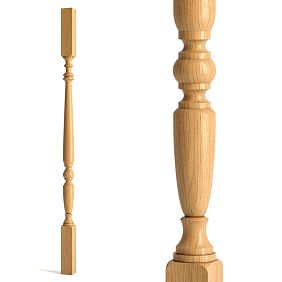
Our factory also produces:



Why wooden planks remain popular in the age of new materials
In the age of plastic, composite materials, and metal structures, wooden planks have not only retained their relevance but have also acquired a new sound. There are several reasons for this:
- Ecological safety — natural wood remains one of the safest materials for human health.
- Aesthetics — the unique texture and warmth of wood create a special atmosphere that cannot be replicated with artificial materials.
- Versatility — planks are easy to process; they can be sawn, planed, sanded, painted, or varnished, giving them the desired shape and appearance.
- Affordability — despite rising prices for lumber, wooden planks remain relatively inexpensive material.
- Tradition and innovation — combining centuries-old woodworking traditions with modern technologies opens up new application horizons.
Get Consultation
Variety of wooden plank types
The world of wooden planks is incredibly diverse. They differ by wood species, dimensions, cross-sectional shape, and degree of processing. Let's explore this variety so you can make the right choice for your project.
Classification by wood species
Choosing the wood species for planks determines their strength, durability, appearance, and cost. Let's consider the most common options:
Coniferous species:
- Spruce — the most popular and economical option. It is characterized by ease of processing, pleasant light color, and distinctive grain. Spruce planks are widely used in construction, finishing, and furniture production.
- Fir — has high strength and resistance to deformation. It has a lighter, almost white color and less pronounced texture compared to spruce.
- Larch — stands out among coniferous species for its exceptional strength and moisture resistance. Larch planks are ideal for outdoor work and rooms with high humidity.
Broadleaf species:
- Oak — symbol of strength and durability. Oak planks have a beautiful texture, high density, and resistance to mechanical impacts. They are used for premium projects.
- Beech — distinguished by uniform structure and pleasant pinkish hue. Beech planks are easy to process and widely used in furniture production.
- Ash is valued for its elasticity and impact resistance. Ash planks are often used in manufacturing sports equipment, musical instruments, and interior elements.
Exotic species:
- Teak has high resistance to moisture and pests. Teak planks are used in producing garden furniture and yacht fittings.
- Wenge is a dark wood with contrasting grain. Wenge planks are used to create exclusive interior solutions.
- Merbau is distinguished by high strength and a beautiful reddish-brown color. Merbau planks are used in high-end design projects.
Sizes and cross-sectional shapes
The variety of wooden plank sizes allows selecting the ideal option for any task:
By thickness and width:
- Thin planks (5-10 mm)
- Medium planks (10-20 mm)
- Thick planks (20-50 mm and more)
By cross-sectional shape:
- Rectangular - most versatile
- Square - for creating lattice structures
- Triangular - for corner joints and decorative elements
- Decorative - with various profiles for special tasks
By length:
- Short (up to 1 meter)
- Medium (1-2 meters)
- Long (2-3 meters and more)
The most common standard plank sizes include:
- 10×20 mm
- 10×30 mm
- 10×40 mm
- 15×30 mm
- 20×20 mm
- 20×40 mm
- 25×50 mm
Degree of processing
The quality of plank processing affects their appearance and application possibilities:
- Sanded planks - have a smooth surface, ready for finishing. Ideal for visible interior elements.
- Unsanded planks - more rough, require additional processing. Used in construction where appearance is not critical.
- Sanded planks - undergo additional processing to achieve a perfectly smooth surface. Used in furniture manufacturing and decorative elements.
- Sawn planks - have precise dimensions along the entire length. Required for projects demanding high accuracy.
Applications of wooden planks
The versatility of wooden planks makes them indispensable in various fields. Let's consider the main application areas of this multifunctional material.
Construction and repair
In construction, wooden planks serve both structural and auxiliary functions:
- Roof sheathing - creating a base for laying roofing material
- Gypsum board frame structures - walls, partitions, ceilings
- Guides for laying floor coverings - leveling the base
- Formwork - creating molds for pouring concrete structures
- Installation of windows and doors - installing frames and casings
In repair work, planks help solve many tasks:
- Surface leveling
- Creating decorative elements
- Lighting as part of the decorative concept
- Installation of suspended systems
Interior finishing
In modern interior design, wooden planks are experiencing a real surge in popularity:
- Plank ceilings - create visually interesting spaces, improve room acoustics
- Wall panels - protect walls and serve as a striking accent in the interior
- Decorative partitions - zone the space without overloading it
- Trimming door and window openings - give the interior a finished look
- Decorative furniture elements - facades, backs, armrests
Plank walls have gained particular popularity in Scandinavian and Japanese styles, as well as in modern minimalist interiors. They create a rhythmic pattern, play with light and shadow, and add depth and texture to the room.
Furniture manufacturing
Wooden planks - an important element in furniture making:
- Frames for soft furniture - sofas, chairs, ottomans
- Bed bases - slats and support elements
- Chair and table elements - legs, aprons, backs
- Shelves and shelving units - both structural and decorative elements
- Cabinet and chest details - drawer guides, decorative grilles
Modern designers actively experiment with boards, creating innovative furniture items where functionality combines with aesthetics.
Landscape design and gardening
In the garden and on the dacha plot, wooden boards find numerous applications:
- Garden trellises and supports - supports for climbing plants
- Decorative fences - low hedges for flower beds and rows
- Garden furniture - benches, tables, chaise lounges
- Pergolas and gazebos - creating shaded resting areas
- Paths and bridges - functional and decorative landscape elements
For garden structures, it is especially important to choose boards made from wood species resistant to moisture and temperature fluctuations, such as larch or thermally treated pine.
Creativity and hobbies
Wooden boards - a favorite material for creative people:
- Picture and photo frames - from simple to complex design solutions
- Decorative panels and installations - three-dimensional compositions for interior decoration
- Children's toys and educational aids - eco-friendly and safe
- Models and mockups - architectural, ship, and aviation modeling
- Musical instruments - components of guitars, harps, xylophones
Working with boards develops fine motor skills, spatial thinking, and creative abilities, so this material is often used in educational programs and workshops.
How to choose quality wooden boards
Choosing the right board is an important stage of any project. The quality of the material affects not only the appearance of the finished product but also its durability. Let's consider key selection criteria.
Determining the quality of wood
When selecting boards, pay attention to the following characteristics:
- Moisture - optimal level 8-12%. Excessively moist wood will warp upon drying.
- Absence of defects - check the board for knots, cracks, resin pockets, blue stain, and mold.
- Density of annual rings - the denser the rings, the stronger the wood.
- Uniformity of structure - even color and texture throughout the board's length.
- Straightness - the board should be flat, without bends or twists.
Wood Grade
Boards, like other lumber materials, are classified by grades:
- Grade "Extra" - highest quality, practically free of defects, ideal for visible interior elements.
- Grade "A" - high quality with minimal defects, suitable for most finishing works.
- Grade "AV" - good quality with allowable minor defects, universal application.
- Grade "B" - average quality with noticeable defects, for structural applications intended for subsequent finishing.
- Grade "C" - economical option with significant defects, for rough work.
Correct calculation of required quantity
To avoid material shortage or excess, it is important to correctly calculate the required amount of boards:
- Determine the coverage area - measure the surface you plan to cover with boards.
- Consider the spacing between boards - if a gap is planned, include it in the calculations.
- Add allowance for trimming - usually 10-15% of the total quantity.
- Consider installation specifics - some mounting methods require additional material.
For accurate calculation, you can use the formula:
Number of boards = (Surface length / (Board width + Gap width)) + 1
Compatibility with project and usage conditions
When selecting boards, consider the specifics of your project:
- For humid areas (bathrooms, pools, saunas), choose species with high moisture resistance: larch, teak, thermally treated wood.
- For outdoor applications, prefer species resistant to atmospheric conditions and UV radiation.
- For high-load structures, choose strong, dense species: oak, beech, ash.
- For decorative elements, aesthetic characteristics are important: attractive grain, uniform color.
where you can buy wooden planksOverview of options
The choice of where to buy wooden boards depends on your needs, budget, and material quality requirements. Let's consider the main options with their advantages and disadvantages.
Specialized lumber stores
Specialized stores offer a wide variety of boards in different species, sizes, and grades:
Advantages:
- Professional consultation during selection
- Opportunity to inspect the product before purchase
- Quality guarantee and compliance with stated characteristics
- Additional services: cutting, planing, delivery
Disadvantages:
- Higher prices compared to wholesale purchases
- Limited selection in small stores
Construction hypermarkets
Large construction networks also offer wooden boards in their assortment:
Advantages:
- Convenience of purchasing together with other construction materials
- Stable availability of standard sizes
- Possibility of return if defects are found
- Promotions and discounts for loyal customers
Disadvantages:
- Limited selection of breeds and sizes
- Not always high material quality
- Lack of individual approach
Lumber manufacturers
Direct supplies from manufacturers - optimal for large projects:
Advantages:
- Minimum prices without middleman markup
- Ability to order non-standard sizes
- Guaranteed quality from the manufacturer
- Favorable terms for bulk purchases
Disadvantages:
- Usually requires minimum order volume
- Need for self-pickup or payment of delivery
- Longer lead times for order fulfillment
Online stores and marketplaces
Modern online platforms offer a convenient way to purchase boards:
Advantages:
- Ability to compare prices and features
- Convenience of ordering anytime
- Delivery to your door
- Customer reviews about product quality
Disadvantages:
- Inability to physically assess quality before purchase
- Risk of receiving a product that does not match the description
- Additional delivery costs
Carpentry workshops and small-scale production
Local manufacturers often offer high-quality boards:
Advantages:
- Individual approach to each order
- Ability to manufacture to your specified dimensions
- High-quality processing
- Support for local manufacturers
Disadvantages:
- Limited production capacity
- Not always competitive prices
- Possible delays with large order volumes
Technologies for processing and preparing wooden boards
The quality of wooden boards largely depends on the technologies used in their production and processing. Understanding these processes will help you make a more informed material choice.
Wood Drying
Proper drying is one of the most important stages of preparing quality boards:
- Natural drying is a long process (from several months to a year), during which wood is kept in well-ventilated rooms. Ensures even drying without internal stresses.
- Kiln drying is an accelerated process in special drying chambers with controlled temperature and humidity. Allows achieving optimal moisture content in 1-2 weeks.
- Vacuum drying is a modern technology in which wood dries in a vacuum at low temperatures. Ensures high quality with minimal risk of deformation.
The optimal moisture content for boards is:
- 8-10% for use in heated rooms
- 12-15% for outdoor use
- 15-18% for use in humid rooms
Planing and Calibration
After drying, boards undergo mechanical processing:
- Rough planing - removal of the top layer and shaping to approximate dimensions
- Fine planing - achieving smooth surface and precise dimensions
- Calibration - ensuring uniform dimensions along the entire length
- Profiling - creating special profiles for decorative or functional purposes
Modern equipment allows achieving high processing accuracy - up to 0.1 mm, which is especially important for complex carpentry items.
Protective treatment
To increase durability, boards may undergo various types of protective treatment:
- Antiseptic treatment - protection against mold, fungi, and insects
- Fire retardants - increasing wood's fire resistance
- Thermo-treatment - altering wood structure to enhance resistance to moisture and biological effects
- Oils and waxes - natural protection that enhances wood texture
- Lacquers and paints - creating a protective layer and achieving desired color
The choice of protective treatment depends on the operating conditions of the boards and requirements for their appearance.
Final finishing
Finish treatment gives boards a finished look and additional protection:
- Sanding - creating an ideally smooth surface with varying grain fineness
- Staining - changing or equalizing the color of wood
- Lacquering - creating a transparent protective layer with varying gloss levels
- Painting - applying opaque pigments to change color
- Patination - creating an aged surface effect
Modern finishing materials can be water-based (eco-friendly, fast-drying) or solvent-based (more durable, moisture-resistant).
Installation and mounting of wooden planks
Correct installation of planks is the key to the longevity and aesthetics of the finished structure. Let's consider the main mounting methods and technologies.
Methods of Rail Fastening
Depending on the type of structure and the material of the base, different mounting methods are used:
- Visible mounting - using screws, nails, and bolts
- Hidden mounting - using clips, brackets, and special profiles
- Adhesive bonding - using various types of glue
- Combined methods - combination of mechanical and adhesive mounting
Each method has its advantages and limitations:
Visible mounting:
- Ease of installation
- High reliability
- Possibility of disassembly
- Visible fasteners (may be a disadvantage or a decorative element)
Hidden mounting:
- Aesthetic appearance
- Complex installation
- Limited possibility of disassembly
- Higher cost
Adhesive bonding:
- No visible fastening elements
- Structural monolithism
- Impossibility of disassembly
- Requirement for surface preparation
Tools for working with planks
For quality installation of planks, the following tools are required:
- Cutting tools - hand saw, jigsaw, circular saw, table saw
- Measuring tools - tape measure, square, level, laser level
- Fastening tools - drill driver, stapler, nail gun
- Auxiliary tools - hammer, mallet, clamps, vices
- Finishing tools - sander, sandpaper, hand plane
The quality of tools directly affects the result of the work, so it is worth investing in reliable professional tools, especially if regular use is planned.
Mounting technologies for plank structures
Let's consider the main mounting technologies for planks for different types of structures:
Plank walls and ceilings:
- Base preparation - leveling, cleaning, priming
- Installing a subframe - creating a frame for mounting planks
- Marking the placement of boards considering spacing and pattern
- Preparing boards - cutting to size, end treatment
- Attaching boards to the subframe using the selected method
- Final finishing - sanding, painting, varnishing
Decorative partitions:
- Creating a load-bearing frame from heavier elements
- Marking the placement of boards according to the design plan
- Preparing boards of required length
- Attaching boards to the frame while maintaining the specified spacing
- Checking vertical and horizontal alignment of elements
- Final finishing of the structure
Garden structures:
- Treating boards with protective compounds for outdoor use
- Creating a strong base or foundation
- Installing load-bearing structural elements
- Attaching boards while accounting for necessary ventilation gaps
- Additional treatment of joints and connections with water-repellent compounds
Common installation errors and how to avoid them
When working with wooden boards, it is important to avoid common mistakes:
- Insufficient consideration of wood expansion - always leave expansion gaps, especially when installing in humid areas or outdoors.
- Ignoring wood grain direction - when attaching, consider the grain direction to avoid splitting the wood.
- Incorrect choice of fasteners - use fasteners appropriate for the type of wood and operating conditions.
- Over-tightening fasteners - this may cause deformation of boards or damage to their surface.
- Failure to pre-drill - especially important for hardwoods and when attaching near the edge of the board.
- Incorrect storage of boards before installation - boards must acclimate in the room where they will be installed for at least 48 hours.
Care for wooden boards and extending their service life
Proper care of wooden structures significantly extends their service life and maintains their attractive appearance. Let's consider the main aspects of caring for boards under various operating conditions.
Regular maintenance of wooden structures
Basic principles of caring for wooden boards include:
- Regular dust cleaning - use a soft brush or vacuum cleaner with a furniture attachment
- Wet cleaning - wipe with a well-wrung cloth, avoiding excessive moisture
- Cleaning contaminants - use special wood cleaning agents
- Periodic renewal of protective coating - depending on the type of coating and usage intensity
Care frequency depends on operating conditions:
- For interior structures - dust cleaning 1-2 times per week, wet cleaning 1-2 times per month
- For exterior structures - inspection and cleaning 2-3 times per year, protective coating renewal every 1-3 years
Protection against moisture and UV radiation
Moisture and ultraviolet radiation - the main enemies of wooden structures:
Protection against moisture:
- Regular renewal of water-repellent coatings
- Ensuring good ventilation of structures
- Timely elimination of leaks and sources of high humidity
- Use of silicone or acrylic sealants to protect joints
Protection against UV radiation:
- Application of coatings with UV filters
- Periodic renewal of protective compounds
- Use of tinting compounds that absorb part of UV radiation
- If possible - protection from direct sunlight
Combatting pests and mold
Biological factors can significantly shorten the service life of wooden planks:
Prevention:
- Regular treatment with antiseptics
- Maintaining optimal humidity levels
- Good ventilation of wooden structures
- Periodic inspection for signs of pests or mold
If a problem is detected:
- Mechanical removal of affected areas
- Treatment with specialized insect or mold control compounds
- In severe cases - replacement of affected elements
- Enhanced preventive treatment of surrounding elements
Restoration and renewal
Even with good care, wooden planks may require restoration over time:
Cosmetic Update:
- Cleaning surface of old coating
- Sanding to remove minor damages
- Treatment with Protective Compounds
- Applying new decorative coating
Structural Restoration:
- Replacement of Damaged Components
- Strengthening weakened joints
- Leveling deformed sections
- Treating cracks and chips with special compounds
Ecological aspects of using wooden planks
In an era of growing attention to ecological issues, wooden planks stand out as one of the most eco-friendly construction and finishing materials. Let's consider the ecological aspects of their production and use.
Ecological properties of wood as a material
Wood possesses several ecological advantages:
- Renewable resource - with proper forest management, wood is a fully renewable material
- Low carbon footprint - trees absorb CO₂ during growth, and wood products continue to store carbon
- Minimal energy consumption in production - compared to metal, plastic, or concrete
- Biodegradability - at the end of its service life, wood naturally decomposes without polluting the environment
- No harmful emissions - natural wood does not emit toxic substances
Responsible forestry and certification
When choosing wooden planks, pay attention to their origin:
- FSC (Forest Stewardship Council) certification - guarantees that the wood comes from responsibly managed forests
- PEFC (Programme for the Endorsement of Forest Certification) certification - confirms compliance with international standards for sustainable forestry
- Legality of origin - documents confirming the legality of wood harvesting
By choosing certified products, you support responsible forestry and contribute to preserving forests for future generations.
Secondary use and recycling
Wooden planks offer wide opportunities for secondary use:
- Reuse - dismantled planks are often usable in new projects
- Processing into sawdust or shavings - for producing particleboard, MDF, OSB
- Use as biomass fuel - an eco-friendly alternative to fossil fuels
- Composting - untreated wood can be composted
Creative approaches to secondary use of planks are not only eco-friendly but also economically beneficial.
Trends and innovations in the world of wooden planks
Despite its multi-century history of use, wooden planks continue to evolve, adapting to modern requirements and technologies. Let's examine current trends and innovations in this field.
Modern Design Solutions
Designers constantly find new ways to use wooden slats:
- Parametric architecture - creating complex curved surfaces from straight elements
- Light integration - embedding LED strips between slats
- Acoustic solutions - using slat structures to improve room acoustics
- Combining with other materials - combining wood with metal, glass, and concrete
- Dynamic structures - movable slat systems that change configuration
These trends are applied in both residential interiors and public spaces, creating a unique atmosphere and solving functional tasks.
Technological innovations in production
Modern technologies significantly expand the possibilities of using wooden slats:
- Thermo-modification - treating wood with high temperatures without oxygen access, enhancing its stability and longevity
- Acetylation - chemical modification of wood, making it resistant to moisture and biological effects
- Composite materials - combining wood with polymers to create materials with improved properties
- 3D milling - creating complex profiles and textures on slat surfaces
- Laser cutting and engraving - precision processing for creating decorative elements
These innovations allow expanding the application scope of wooden slats, enhancing their durability and aesthetic qualities.
The future of wooden slats in construction and design
Analyzing current trends, we can anticipate the following development directions:
- Smart wooden structures - integrating sensors and electronics into slat systems
- Biomimetic solutions - structures mimicking natural forms and processes
- Adaptive systems - slat structures responding to environmental changes
- Carbon-neutral construction - using wood as the primary material to reduce buildings' carbon footprint
- Vertical greening - integrating plants into slat façade and interior structures
Wooden slats, combining ecology, aesthetics, and functionality, will play an increasingly important role in creating a sustainable and harmonious human living environment.
Conclusion: why wooden slats remain unmatched
Summarizing our comprehensive research into the world of wooden slats, we can confidently say that this seemingly simple material possesses remarkable versatility and potential. Despite the emergence of numerous modern synthetic materials, wooden slats retain their relevance and popularity.
Their enduring value is due to a unique combination of qualities:
- Naturalness and eco-friendliness - in an era of growing ecological awareness, this becomes an increasingly important factor
- Aesthetic appeal - the unique texture and warmth of wood create a special atmosphere
- Versatility of application - from structural elements to refined decoration
- Accessibility and ease of processing - the ability to implement projects by hand
- Durability with proper care - wooden structures can last for decades
Knowing, where you can buy wooden planks High-quality, understanding the characteristics of various wood species and processing technologies, you can realize the most daring creative ideas—from simple mirror framing to complex architectural elements.
Wooden planks are a bridge between tradition and innovation, between functionality and aesthetics, between nature and human creativity. They remind us of the importance of maintaining a connection with natural materials in our increasingly technological world.
Choosing wooden planks for your projects, you are not merely acquiring a building material—you become part of a centuries-old tradition of working with wood, a tradition that continues to evolve and enrich itself with new ideas and technologies.
May your projects using wooden planks be successful, long-lasting, and bring joy to you and those around you!