












































































Article Contents:
- Wooden trim: from workshop to interior
- Functions and features of wooden trim
- Why wood?
- Types of wooden trim from STAVROS
- Styles and combinations
- Application in Interior Design
- Installation and maintenance
- Mistakes and their consequences
- STAVROS Advantages
- Conclusion
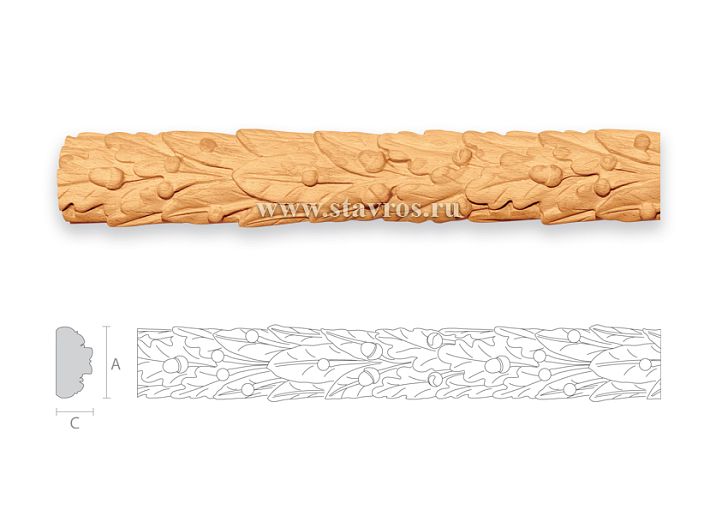
In the world of architecture and interior design, there are elements that, despite their apparent insignificance, can radically transform a space, giving it completeness and character. One such element is wooden trim — a universal tool in the designer's hands, capable of solving numerous tasks: from purely functional to highly artistic.
Wooden trim is not just a construction material; it is an architectural language that allows one to express style, emphasize proportions, create rhythm and accents in space. In today's world, where individuality and attention to detail are so highly valued, wooden trim is experiencing a true renaissance, returning to interiors not only of classical but also ultra-modern spaces.
The value of wooden trim lies in its dual nature. On one hand, it is a functional element, covering joints, protecting corners, masking technical gaps. On the other hand, it is a powerful decorative tool capable of becoming the main accent in space, setting the tone for the entire interior, emphasizing its stylistic affiliation.
The company STAVROS, specializing in the production of solid wood products, offers a wide selection of wooden trim and molding items meeting the highest standards of quality and aesthetics. Each item is the result of combining centuries-old woodworking traditions with modern technologies, enabling the creation of products that meet the demands of the most demanding professionals.


Wooden trim: from workshop to interior
The history of decorative wooden trim goes back to ancient times. In ancient architecture, various profiled elements were used to emphasize the structure of buildings, highlight architectural details, and create play of light and shadow. During the Renaissance, the art of profiling reached incredible heights — masters created complex cornices, moldings, pilasters that turned interiors into true works of art.
In the 17th-18th centuries, with the development of carpentry and the emergence of specialized tools, the production of profiled wooden trim became more technologically advanced. Masters developed entire systems of profiles, each with its own name and purpose. Baroque and Rococo interiors of that time cannot be imagined without an abundance of carved wooden details, creating an effect of luxury and refinement.
The Industrial Revolution of the 19th century brought new technologies and the possibility of mass production, making decorative wooden trim accessible to a broader range of consumers. However, industrialization also had its downside — the gradual loss of individuality and handcraftsmanship.
In the modern world, wooden trim performs numerous tasks. They serve to zone space, creating visual boundaries between different functional zones. As a decorative element, trim can highlight architectural features of a room, create rhythmic compositions on walls and ceilings, and form a unique interior image.
The most important function of wooden trim is finishing. They conceal technological joints and seams between different materials, mask surface irregularities and defects, giving the interior a finished, professional look.
The field of application of wooden trim is extremely wide. They are used to frame door and window openings, creating a transition between walls and structures. On ceilings, trim can form coffers, highlight beams, conceal junctions of suspended systems. On walls, they create panels, frames, decorative inserts, highlight niches and protrusions.
In furniture production, wooden trim is used for finishing facades, creating framed structures, decorative overlays. In building exteriors, they serve to decorate facades, emphasizing architectural elements and protecting structures from atmospheric influences.




Functions and features of wooden trim
The protective function of wooden trim is of primary importance in construction and finishing. Trim covers joints and seams between different materials, preventing moisture, dust, and dirt from penetrating. They protect wall corners from mechanical damage, extending the lifespan of finishes. At junctions of different materials, trim compensates for differences in thermal expansion, preventing cracks and delamination.
The protective function is especially important in rooms with high humidity — bathrooms, kitchens, swimming pools. Here, wooden trim, properly treated with moisture-resistant compounds, prevents moisture from penetrating into seams between walls and sanitary fixtures, between walls and floors, protecting structures from destruction.
The aesthetic function of wooden trim is equally important. They create visual completion of the interior, emphasize its stylistic affiliation, form a cohesive image of space. Profiled trim creates play of light and shadow, adds volume and depth to flat surfaces, introducing an element of handcraftsmanship and individuality into the interior.
Using wooden trim, one can visually adjust the proportions of a room — make it appear higher, wider, or narrower, depending on the task. Horizontal lines visually expand space, vertical lines increase height. Diagonal compositions create dynamism and movement, circular ones evoke a sense of coziness and security.
The constructive function of wooden trim is manifested in their ability to maintain the geometry of the interior, create symmetry and rhythm. Trim can serve as a base for mounting other decorative elements — mirrors, paintings, textiles. They create a visual structure of space, making it more organized and logical.
In classical architecture, wooden trim often serves as elements of the order system — bases, capitals, architraves, cornices. They do not merely decorate space, but express a certain architectural idea, linking the interior with centuries-old tradition.
Our factory also produces:



Why wood?
The choice of material for decorative trim is crucial for achieving the desired aesthetic and functional result. Solid wood possesses a number of unique advantages that make it an ideal material for creating frames and decorative elements.
Above all, it is the unique grain. Each type of wood has its own distinctive wood grain pattern, which cannot be precisely replicated artificially. This natural pattern makes each plank unique, giving it character and depth. The wood grain creates an interesting interplay of light and shadow, changes depending on lighting and viewing angle, making the interior lively and dynamic.
The plasticity of wood allows creating elements of practically any shape and complexity. It easily accepts carving, milling, and turning, enabling the realization of the most daring design ideas. At the same time, wood retains its structural integrity and strength even when creating thin and delicate details.
Elegance is another quality inherent in wooden items. Wood carries the feeling of natural warmth, coziness, and eco-friendliness. It possesses a special energy that positively affects a person's psychological state. Unlike synthetic materials, wood does not lose its appeal over time, but instead acquires a noble patina, becoming even more expressive.
STAVROS Company uses only high-quality solid wood of valuable species for producing its items. The main types of wood used in production are beech, oak, and ash.
Beech is characterized by uniform structure and pleasant light rose color. It is well-suited for mechanical processing, allowing the creation of items with complex profiles and fine detailing. Beech takes stains and varnishes well, enabling a wide range of color solutions.
Oak is a classic in woodworking. Its strong, dense wood with expressive texture is ideal for creating elements that must combine decorative appeal with durability. Oak resists moisture and mechanical impacts well, making it an excellent choice for high-traffic areas.
Ash combines strength and elasticity, allowing the creation of items with complex shapes without the risk of cracking. Its light-colored wood with beautiful ring patterns adds lightness and airiness to the interior.
The process of creating high-quality wooden planks includes several stages. First, the wood undergoes careful drying to optimal moisture content, preventing deformation of the finished product. Then follows primary mechanical processing — sawing, planing, and sizing.
Milling is a key stage where the plank's profile is formed. Modern CNC equipment allows creating profiles of any complexity with high precision and repeatability. For particularly complex or unique items, hand carving may be applied, performed by highly skilled craftsmen.
Sanding gives the plank's surface perfect smoothness, preparing it for final finishing. This process requires special care, as the quality of sanding affects the appearance and tactile properties of the finished product.
Final coating protects the wood from moisture, UV radiation, mechanical impacts, and imparts the desired color and texture. Depending on the item's purpose and design task, various types of coatings may be applied — from transparent varnishes preserving the natural beauty of wood to covering enamels creating a uniform colored surface.
Get Consultation
STAVROS Wooden Planks
The range of wooden planks offered by STAVROS is impressive in its variety. Here you can find solutions for any design task, from classic interiors to ultra-modern spaces.
Straight planks with smooth surfaces are a universal solution suitable for most modern interiors. They can have various cross-sections — rectangular, square, semi-circular, trapezoidal. Such planks create clear, minimalist lines, emphasizing the geometry of the space without overloading it with decorative elements.
Profiled planks have a more complex profile, which may include multiple levels, curved elements, bevels, and recesses. They create a more expressive interplay of light and shadow, adding depth and volume to the interior. Profiled planks are especially suitable for classic and neo-classic interiors, where detail and ornamentation are valued.
The width of the plank significantly affects its visual perception and functionality. Wide planks (from 50 mm) create a sense of solidity and monumentality, working well in spacious rooms with high ceilings. Narrow planks (up to 30 mm) appear more elegant and delicate, suitable for small spaces and for creating complex decorative compositions.
Surface texture also plays an important role. Smooth planks with perfectly polished surfaces create a sense of elegance and refinement. They reflect light, making the interior brighter and more spacious. Carved planks with relief patterns add decorative and unique qualities to the space. They create an interesting interplay of light and shadow, introducing an element of handcrafted artistry.
The application of wooden planks in interior and exterior settings differs significantly. In interiors, planks must harmonize with the overall style of the room, its color palette, scale of furniture and other decorative elements. They can serve as a neutral background or a bold accent, depending on the design task.
In exteriors, planks must be resistant to atmospheric influences — moisture, UV radiation, temperature fluctuations. For outdoor use, it is recommended to use planks made of hardwoods with high density, such as oak or ash, with special protective treatment. The design of exterior planks is usually more minimalist and functional than interior ones.
Choosing the right wooden plank for framing depends on several factors. First and foremost, it is the intended use. For protecting corners and joints, sturdy planks with simple profiles are suitable. For creating decorative panels or frames, more complex and expressive profiles can be selected.
The length of the plank should correspond to the size of the framed element, taking into account allowances for trimming and forming corner joints. Standard plank lengths are usually 2.4 or 3 meters, but for large projects, longer elements may be required.
The cross-section of the plank determines its visual weight and functionality. For framing large elements — doors, windows, panels — planks with wider and more complex cross-sections are suitable. For delicate details — picture frames, mirror frames, small niches — it is better to choose thinner and more elegant profiles.
The profile of the plank should match the overall interior style. For classic spaces, profiles with smooth lines, multi-level designs, and traditional ornament elements are suitable. For modern interiors, it is better to choose more minimalist, geometrically clear profiles.
Styles and Combinations
The classical style in architecture and interior design is characterized by symmetry, proportionality, and the use of traditional order elements. Wooden planks in a classical interior play a crucial role, creating architectural articulation of space.
Trimming elements — moldings, cornices, baseboards — form a clear structure of walls and ceilings, emphasize architectural elements, and create rhythm and order. They often have complex profiles with multiple levels, creating a rich interplay of light and shadow.
Picture frame — a special type of profiled plank used for framing pictures, mirrors, decorative panels. In a classical interior, a picture frame can be very expressive, with carving, gilding, and complex ornamentation. It does not merely frame an image, but is also a standalone decorative element.
The color palette of wooden planks in a classical interior usually includes noble wood tones — from golden oak to dark redwood, often with patina or gilding. Such planks create a sense of luxury and solidity, emphasizing the status of the space.
Minimalism as a style implies the rejection of excessive decoration, emphasis on functionality, purity of lines and forms. Wooden planks in a minimalist interior have a simple, minimalist profile, often with straight angles and minimal relief.
Thin straight lines of planks create a clear geometric structure of space without visually overloading it. They can be almost invisible, blending with the wall surface, or, conversely, create a contrasting accent, standing out by color or texture.
Smooth plank surfaces in a minimalist interior highlight the quality of the material and precision of execution. Matte-finished planks are often used, as they do not create glare and appear more restrained and elegant.
The color palette is usually limited to natural wood tones — from light beech to dark wenge — without patina or artificial aging. It is important that the plank color harmonizes with the overall color scheme of the interior, creating a cohesive, non-contradictory space.
Rustic style draws on rural, folk traditions, values naturalness, simplicity, and connection with nature. Wooden planks in a rustic interior emphasize the natural beauty of wood, its texture, grain, and unique fiber pattern.
In rustic style, wood texture is often accentuated by special finishing techniques — brushing, aging, or burning. These methods highlight the fiber structure, creating a textured, tactile surface that appears authentic and distinctive.
Roughly processed planks — with visible tool marks, unevenness, and chips — create a sense of handcrafted, artisanal work. Such planks appear less formal, more lively and organic, compared to perfectly smooth, machine-finished planks.
The color palette of rustic planks includes natural wood tones, often with a whitewashed effect or, conversely, darkened tones, creating the impression of aged, weathered boards. It is important that the color appears natural, without artificial brightness or gloss.
Eclecticism and individual style imply free mixing of various stylistic elements, creating unique, personalized solutions. Wooden planks in an eclectic interior can combine features of different styles, creating unexpected, original compositions.
Combining different types of planks — classic moldings with minimalist rails, rustic elements with modern profiles — creates an interesting visual contrast, adding dynamism and character to the interior.
Decorative elements in an eclectic style can be very diverse — from traditional carving to modern geometric patterns, from gilding to metallic inserts. It is important that all these elements are unified by a common design concept, creating a cohesive, though multifaceted, composition.
The color palette of eclectic planks can be very wide, including natural wood tones as well as bright, saturated colors, metallic finishes, aging effects, and patinas. The key is that the color solution supports the overall interior concept, creating the desired mood and atmosphere.
Application in interior design
Framing openings and niches — one of the most common applications of wooden planks in interior design. Planks create a clear boundary between different surfaces, highlight architectural elements, and give the space structure and completeness.
Doors framed with wooden planks appear more substantial and architecturally refined. Planks can be simple, with a minimal profile, or complex, with decorative elements — rosettes, capitals, or door stops. They can match the door style or, conversely, create an interesting contrast with it.
Windows framed with wooden planks gain depth and expressiveness. Planks can form a simple frame around the window or create a complex composition with the sill, cornice, and decorative elements. They visually enlarge the window, making it a more significant element of the interior.
Niches framed with wooden planks become accent elements of the space. Planks isolate the niche from the wall plane, creating a frame for it, highlighting its contents — whether artwork, a collection, or decorative item. They can contrast in color and texture or, conversely, blend with the wall, creating a subtle, delicate accent.
Finishing kitchen facades, exhaust hoods, and islands with wooden planks allows creating a unified stylistic ensemble, emphasizing the quality and status of the kitchen space.
Kitchen cabinet facades framed with wooden planks appear more substantial and luxurious. Planks can form a framing structure, within which a panel or glass insert is placed. They can be simple, with a minimal profile, or decorative, with carving, routing, or inlay.
Exhaust hoods decorated with wooden planks become not just a functional element, but an important accent in the kitchen space. Planks can form a framing structure that repeats the hood’s shape or create a decorative box that completely conceals the technical part. They can match the style of kitchen facades or, conversely, stand out, creating an interesting contrast.
Kitchen islands finished with wooden planks acquire a more complete, architecturally refined appearance. Planks can frame the countertop, create decorative panels on side surfaces, form niches for storage or decorative elements. They add volume and expressiveness to the island, making it a central element of the kitchen space.
A wooden plank as a furniture element allows creating items with individual character, emphasizing their stylistic affiliation, and adding decorative and expressive qualities.
Shelves framed with wooden planks appear more substantial and complete. Planks can create a simple frame around the perimeter of the shelf or form a complex structure with decorative elements. They protect the edges of the shelf from damage, add extra rigidity, and create an interesting interplay of light and shadow.
Mirrors in wooden frames become not just a functional item, but an important decorative accent in the interior. The frame can be simple, with a minimal profile, or complex, with carving, gilding, or inlay. It isolates the mirror from the wall plane, creates a frame for it, and emphasizes its shape and size.
Cabinets decorated with wooden planks acquire a more structured, architecturally refined appearance. Planks can frame facades, create decorative panels on side surfaces, form cornices and bases. They add volume and expressiveness to the cabinet, emphasize its stylistic affiliation, and make it a more significant element of the interior.
Transitions between different materials — one of the most important functional tasks solved by wooden planks in interior design. They create a clear boundary between different surfaces, mask technological seams and joints, and ensure an aesthetically pleasing transition.
The junction between tiles and wallpaper — a classic application site for wooden planks. The plank covers the edge of the tile, creates a clear boundary between different materials, and prevents wallpaper damage from moisture. It can be simple, with a minimal profile, or decorative, with routing, carving, or inlay.
The transition between wood and stone also requires proper treatment. A wooden plank creates a soft, organic transition between warm wood and cold stone, masks the technological seam, prevents chipping and damage. It can match the color and texture of wood or, conversely, contrast with it, creating an interesting visual effect.
Installation and Maintenance
Proper installation of wooden planks is the key to their longevity and aesthetic appeal. The installation process includes several stages, each requiring attention and care.
Surface preparation — the first and most important stage. The surface to which the planks will be attached must be clean, dry, flat, free of protrusions, cracks, or flaking areas. If necessary, leveling, priming, and antiseptic treatment are performed.
Marking — the next stage, the accuracy of which determines the final result. Marking locations for plank attachment, corners, joints, cutouts for outlets, switches, and pipes. For complex compositions, it is recommended to first create a mock-up or drawing to avoid errors during installation.
Plank preparation includes acclimating them in the room where they will be installed for 24–48 hours. This allows the wood to adapt to the humidity and temperature levels, preventing deformation after installation. Then, planks are cut to size, taking into account allowances for fitting and forming corner joints.
Planks can be mounted using various methods, depending on their size, weight, and surface type. For lightweight planks on a flat surface, adhesive methods — using special mounting adhesives or double-sided tape — are suitable. For heavier planks or uneven surfaces, mechanical fastening — with nails, screws, or anchors — is recommended.
Finishing includes covering mounting points, fitting joints, sanding irregularities, and applying protective and decorative coatings. At this stage, attention to detail is crucial — line straightness, angle accuracy, and surface quality determine the final result.
Installation features in dry and wet rooms differ significantly. In dry rooms — living rooms, bedrooms, offices — aesthetic aspects are prioritized. Here, thinner, more elegant profiles and more complex profiles can be used, along with more delicate mounting methods.
In wet rooms — bathrooms, kitchens, pools — functional aspects take precedence. The planks must be resistant to moisture, temperature fluctuations, mold, and mildew. They must reliably protect joints and seams from moisture penetration, preventing damage to structures.
For wet areas, it is recommended to use planks made of hardwoods with high density, such as oak or beech, with special moisture-resistant treatment. Mounting must be especially secure, using moisture-resistant adhesives and fasteners. All joints and seams must be carefully sealed with silicone sealant or other moisture-resistant materials.
Recommendations for finishing and caring for wooden planks will help maintain their attractive appearance for many years. Finishing protects wood from moisture, UV radiation, mechanical impacts, and imparts the desired color and texture.
Lacquers form a transparent protective film on the wood surface, protecting it from moisture, dirt, and mechanical damage. They can be glossy, creating a shiny, reflective surface, or matte, more natural and subdued. For wet areas, polyurethane or acrylic lacquers with enhanced moisture resistance are recommended.
Oils penetrate into the wood structure, protecting it from within. They highlight the natural grain and color of the wood, creating a warm, velvety surface. Oils do not form a film on the surface, allowing the wood to "breathe," but require more frequent renewal, especially in areas of heavy use.
Stains change the color of the wood without hiding its texture. They can impart various shades — from light oak to dark wenge, from warm redwood to cool gray. Stains are typically used in combination with lacquers or oils, which provide surface protection.
Regular care of wooden planks includes cleaning dust and dirt with a soft cloth or vacuum cleaner with a soft attachment. For deeper cleaning, a slightly damp cloth with mild detergent can be used, but the surface must be thoroughly dried afterward.
Periodic renewal of protective coatings will help maintain the attractive appearance of wooden planks. The frequency of renewal depends on the type of coating, intensity of use, and environmental conditions. Typically, lacquer coatings require renewal every 3–5 years, while oil-based coatings every 1–2 years.
Errors and Their Consequences
Choosing an inappropriate profile is one of the most common mistakes when using wooden planks in interior design. An unsuitable profile may create a "cheap" effect, destroy the stylistic unity of the space, and make the interior unbalanced and disproportionate.
A too simple, primitive profile in a classical or neoclassical interior will look inappropriate, lowering the overall design level. A too complex, ornate profile in a modern, minimalist space will create visual noise, contradicting the overall concept.
The profile must match not only the interior style but also the room's scale, size of framed elements, and overall color scheme. It must harmonize with other decorative elements, creating a cohesive, non-contradictory composition.
Violating scale is another serious error that can lead to visual imbalance and overload of the interior. Too heavy, wide planks in a small room will appear cumbersome and disproportionate, reducing visual space. Too thin, unremarkable planks in a spacious room with high ceilings will disappear, failing to fulfill their architectural and decorative function.
The scale of planks must correspond to the room size, ceiling height, furniture size, and other interior elements. In small rooms, thinner, lighter profiles are preferable; in spacious rooms, wider and more expressive profiles are better.
It is especially important to observe proportions when creating complex compositions — panels, coffered ceilings, frames. All elements must be proportionate to each other, creating a harmonious, balanced structure.
Incorrect jointing of planks can completely ruin the impression even from the highest quality material and profile. Gaps between planks, uneven angles, visible mounting points create an impression of carelessness and unprofessionalism.
Corner joints are especially complex to execute, requiring precise calculation and careful work. To create perfect corners, special corner elements or "miter" technique — with a 45-degree bevel — are used.
Bending of planks may occur due to improper storage, transportation, or installation. Deformed planks cannot be perfectly joined, creating wavy lines and disrupting spatial geometry. To avoid this, planks must be properly acclimatized before installation, using quality materials and fasteners.
Visible mounting points — nails, screws, adhesive marks — also spoil the appearance of wooden planks. For concealed mounting, use hidden nails or screws with subsequent masking using putty or wooden plugs, special adhesives that leave no residue.
Advantages of STAVROS
Professionals in architecture and design choose wooden planks from STAVROS for a variety of reasons. Primarily, it is the flawless quality of materials and craftsmanship, which ensures not only aesthetic appeal but also the longevity of the products.
STAVROS production is based on combining traditional woodworking technologies with modern equipment. Each stage — from raw material selection to final finishing — is controlled by experienced specialists, ensuring consistently high product quality.
The wood used for producing planks undergoes careful selection and sorting. Only mature trees of valuable species, grown in ecologically clean areas, are used. The material undergoes natural drying and acclimatization, ensuring the stability of shape and dimensions of the finished products.
Mechanical processing is performed on modern CNC equipment, ensuring high precision and repeatability of profiles. For especially complex or unique items, hand carving is applied by highly skilled craftsmen.
Quality control at all production stages — from incoming raw material inspection to final product verification — ensures compliance with the highest standards. Each plank undergoes visual and instrumental inspection, eliminating defective products from reaching the customer.
STAVROS product delivery is organized to minimize the risk of damage during transit. Special packaging protects planks from mechanical impacts, moisture, and contamination. The company’s logistics network enables delivery to any region of Russia within the shortest possible time.
The range of STAVROS wooden planks is impressive in its variety. Solutions for any design task — from classic interiors to ultra-modern spaces — can be found here. The company continuously updates and expands its catalog, following current trends in architecture and design.
Custom work is one of the key activities of STAVROS. The company is ready to develop and manufacture planks according to the customer’s individual sketches, taking into account specific requirements for material, dimensions, profile, and finish. This enables the realization of the most daring and non-standard design ideas.
Assistance in selecting planks is another advantage of working with STAVROS. Experienced consultants will help choose the optimal option based on interior style, functional requirements, and budget. They will provide material samples, technical specifications, and installation and care recommendations.
Long-term solutions are the philosophy of STAVROS. All products are designed with long-term use, resistance to external influences, and preservation of aesthetic qualities over many years. This makes STAVROS products the optimal choice for projects with long-term prospects.
Conclusion
A wooden plank is a small element capable of radically changing the appearance of a space. Like the final touch of an artist completing a painting, it gives the interior a sense of completeness and character, transforming a collection of separate elements into a harmonious composition.
The power of detail in architecture and interior design is undeniable. It is precisely in the small things, in the meticulous refinement of each element, that the designer’s skill, attention to quality, and aesthetic sense are revealed. A wooden plank is not merely a functional element covering joints and seams, but also an important decorative accent capable of setting the tone for the entire space.
An interior without a clear frame, without thoughtfully designed architectural elements — is an unfinished story, an incomplete work. It may be functional, even beautiful, but it will lack the completeness, the attention to detail, which distinguishes truly high-quality design.
Wooden planks create the structure of space, highlight its architectural features, and form visual connections between different elements. They add depth and volume to interiors, create play of light and shadow, and introduce warmth and organic quality of natural material.
In a world where individuality and attention to detail are so highly valued, wooden planks become an important tool for self-expression, a means to create a unique, one-of-a-kind space that reflects the personality and taste of its owner.
Creating a finished, cohesive space is an art that requires not only creative vision but also high-quality materials and professional execution. Wooden planks from STAVROS are the tool that will help bring the boldest design ideas to life, creating an interior where every detail is thoughtfully considered and harmonious.
Start small — with choosing the right wooden plank for framing, and you will see how your space transforms, how it gains completeness and character, how each element finds its place within the overall composition. For it is precisely in the details that the secret of truly magnificent design lies.





