Article Contents:
- Columns in the Architecture of the Ancient World
- Ancient Heritage and Classical Orders
- Wooden Columns in Russian Architecture
- Modern revival of traditions
- Variety of Styles and Types of Wooden Columns
- Classical order columns
- Carved and Decorative Columns
- Structural Variants
- Wood Species for Column Manufacturing: Material Selection
- Fine Hardwoods
- Coniferous species
- Exotic species
- Manufacturing Technologies for Wooden Columns: From Tradition to Innovation
- Traditional manufacturing methods
- Modern Technologies
- Innovative materials and coatings
- Functional Use of Wooden Columns in Modern Interior Design
- Constructive function
- Space zoning
- Decorative application
- Innovative Application
- Classic Style: Grandeur and Harmony
- Classic style
- Neoclassicism and Modern Classicism
- Country and Rustic Style
- Mediterranean Style
- Modern and minimalist style
- Eclecticism and Fusion
- Technical aspects of selecting wooden columns
- Sizes and proportions
- Constructive features
- Wood processing and protection
- Load-bearing characteristics
- Ecological Aspects
- Installation and Mounting Process for Wooden Columns
- Preparatory work
- Methods of mounting and installation
- Finishing Work
- Features of installation under various conditions
- Safety Recommendations
- Maintenance and Care of Wooden Columns
- Regular maintenance
- Preventive measures
- Periodic maintenance

Wooden columns always bring a special atmosphere of coziness, nobility, and elegance to a space. Among the vast variety of decorative elements, wooden columns occupy a special place — classical elements that have been used for centuries to create majestic interiors and facades. Today wooden column They are not just structural elements, but true works of art capable of transforming any space, whether a luxurious mansion, a country house, or an urban apartment.
In modern interior design, wooden columns are experiencing a true renaissance. They become central compositional elements, bringing notes of classical architecture into a room while simultaneously creating a sense of stability and solidity. But where can one find truly high-quality items that will last for decades and delight the eye with their flawless execution? How to choose a column that will perfectly fit your interior and highlight its individuality?
In this article, we will delve into the wonderful world of wooden columns, reveal their potential in modern design, discuss the variety of styles, materials, and manufacturing technologies. You will learn how to properly Buy wooden columnchoose, what to pay attention to when selecting, and how to use this element to create truly impressive interior solutions.



History of Wooden Columns: From Antiquity to the Present Day
Wooden columns have a rich history dating back to ancient times. Long before stone columns appeared, ancient craftsmen used wood to create supporting and decorative elements in their buildings. Archaeological findings indicate that as early as the third millennium BCE, wooden columns were used in ancient Egypt and Mesopotamia to support the roofs of temples and palaces.




Ancient Heritage and Classical Orders
The true heyday of columns as an architectural element occurred in ancient Greece. It was the Greeks who developed the system of architectural orders — Doric, Ionic, and Corinthian — which defined the proportions and decorative features of columns for millennia. Although most surviving ancient columns are made of stone, historical sources indicate that many temples originally had wooden columns, which were later replaced by stone ones.
The Romans, inheriting Greek traditions, added their own orders — Tuscan and Composite — further enriching the architectural language. During the Renaissance, European architects rediscovered ancient heritage, and columns once again became an indispensable part of the architectural language.
Our factory also produces:


Wooden Columns in Russian Architecture
In Russia, wooden columns have a unique history. A country rich in forests traditionally used wood as the primary building material. In Russian wooden architecture, column-posts were an important element both structurally and decoratively. With the arrival of classicism in the 18th century, wooden columns executed according to ancient orders became widely used in estate architecture, creating a unique appearance of Russian noble estates.
Get Consultation
Modern revival of traditions
In the 21st century, we are witnessing a true renaissance of interest in wooden columns. Modern wood processing technologies allow us to create items of unparalleled quality, combining traditional aesthetics with modern requirements for strength and durability. Today Buy wooden column they can be used for a wide range of purposes — from restoring historical buildings to creating ultra-modern interiors with classical accents.
Variety of Styles and Types of Wooden Columns
The modern market offers an impressive variety of wooden columns, differing in style, size, shape, and decorative elements. Understanding the main types will help you make the right choice when you decide to Buy wooden column for your project.
Classical order columns
Columns executed according to the canons of classical orders remain timeless and unfashionable. They are divided into several types:
- Doric columns – the most strict and minimalist, without a base, with a simple capital. They embody masculinity and strength, ideally suited for creating strict, monumental interiors.
- Ionic columns – more elegant, with characteristic volutes (spiral curls) on the capital. They symbolize femininity and grace, bringing elegance and refinement to the interior.
- Corinthian columns – the most decorative, with an ornate capital adorned with stylized acanthus leaves. These columns create an atmosphere of luxury and abundance.
- Tuscan columns – a simplified version of the Doric order, with simpler proportions and a base. They fit perfectly into interiors in the style of Italian villas or Tuscan estates.
- Composite columns – combine elements of Ionic and Corinthian orders, representing the most decorative variant.
Carved and decorative columns
In addition to classical order columns, modern masters create unique decorative items:
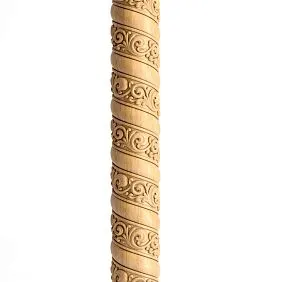
- Twisted columns (Solomon's columns) – with a characteristic spiral stem, creating a dynamic and expressive image.
- Fluted columns – with vertical grooves (flutes) on the stem, which add additional expressiveness and play of light and shadow.
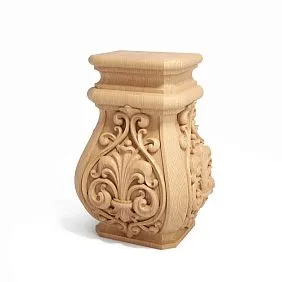
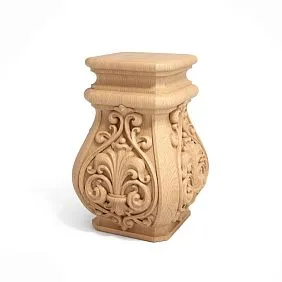
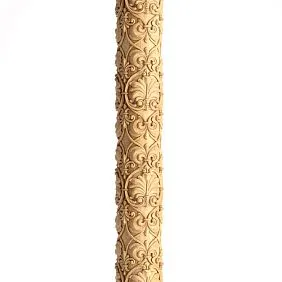
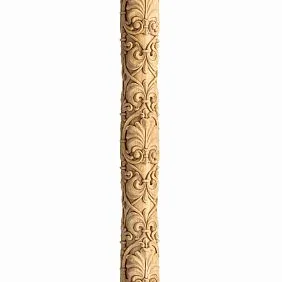
- Carved columns – with rich relief decoration, plant or geometric ornaments, and figurative elements.
- Inlaid columns – adorned with inserts of other wood species, creating expressive patterns and accents.
Construction Variants
Wooden columns can be constructed as:
- Solid – carved from a single block of wood. They are the strongest and most durable, but limited by the size of the original material.
- Composite – assembled from several elements. This construction allows creating columns of great height and complex shapes.
- Hollow – with an internal cavity, making them lighter and more economical.
- Combined – combining wooden elements with details made of other materials (metal, stone, glass).
Choosing which Buy wooden columnis important to consider not only aesthetic preferences, but also functional purpose, room characteristics, and overall interior style.
Wood species for column manufacturing: material selection
Choosing wood species – one of the key factors when deciding Buy wooden column. Each species has unique characteristics that determine not only the appearance, but also the durability, strength, and performance of the finished product.
Fine Hardwoods
- Oak – traditional material for manufacturing premium-class columns. It is distinguished by exceptional strength, durability, and expressive texture. Oak columns can withstand significant loads and serve for centuries. With age, oak develops a noble patina tone, becoming even more valuable.
- Beech – dense, hard wood with uniform structure and light pinkish-yellow hue. It is easy to work with, allowing the creation of columns with fine detailing. Beech is less prone to cracking than oak, but requires more careful protection from moisture.
- Ash – strong, elastic wood with a beautiful grain pattern. It is comparable in hardness to oak, but has a lighter shade. Ash columns are especially suitable for interiors in Scandinavian or modern classic styles.
- Walnut – dark, noble wood with a silky texture. Walnut columns look luxurious and elegant, bringing an aristocratic and refined feel to the interior.
Coniferous species
- Spruce – accessible and widely available wood. It is light, easy to work with, and has a pleasant golden hue. Spruce columns require careful treatment with protective coatings, but with proper care can serve for decades.
- Larch – a unique coniferous species, not inferior in strength to oak. It contains natural resins that make the wood resistant to rot and moisture. Larch columns are especially suitable for rooms with high humidity or for exterior use.
- Cedar – aromatic wood with high content of essential oils, providing natural protection against insects and fungi. Cedar columns are not only beautiful but also create a special microclimate in the room due to their phytoncide properties.
Exotic species
- Redwood (mahogany) – traditional material for manufacturing luxurious furniture and architectural details. It has a rich reddish-brown color and silky sheen. Redwood columns are a symbol of luxury and status.
- Teak – extremely durable and long-lasting wood with high natural oil content. Teak columns are resistant to moisture, temperature fluctuations, and even saltwater, making them ideal for exterior use.
- Wenge – an exotic African wood with a dark brown, almost black color and contrasting grain. Wenge columns create a dramatic, expressive accent in modern interiors.
When selecting a wood species for columns, it is important to consider not only aesthetic preferences but also usage conditions, room humidity, mechanical loads, and project budget. Professional manufacturers will always help you choose the optimal option that meets all your requirements.
Wooden Column Manufacturing Technologies: From Tradition to Innovation
Creating a high-quality wooden column is a complex technological process combining centuries-old woodworking traditions with modern innovative methods. Understanding these technologies will help you assess the quality of the product when you decide Buy wooden column for your project.
Traditional Manufacturing Methods
- Hand carving – the oldest and most valuable method of creating wooden columns. Master carpenters manually carve each detail, creating unique works of art. Such columns possess a special energy and unique character that cannot be reproduced by machine methods.
- Turning – a traditional method in which the blank rotates around its axis, and the craftsman uses special cutters to give it the desired shape. This method allows creating perfectly symmetrical cylindrical and shaped column elements.
- Joinery assembly – a technology for creating composite columns from individual wooden elements. Masters use complex joinery connections that ensure strength and durability of the structure without using metal fasteners.
Modern technologies
- CNC machining (Computer Numerical Control) – a revolutionary technology allowing the creation of columns with perfect accuracy according to a computer model. CNC machines can reproduce the most complex ornaments and reliefs with micron precision, ensuring flawless quality and repeatability of results.
- Laser cutting and engraving – an innovative method allowing the creation of delicate patterns and decorative elements on the surface of columns. Laser technology ensures unparalleled detail and line clarity.
- 3D modeling – before manufacturing a column, an exact digital model is created, allowing visualization of the final result, optimization of proportions, and checking compatibility with other interior elements.
- Vacuum drying – a modern method of wood preparation ensuring even moisture removal from the entire volume of material. This prevents internal stresses and deformations, guaranteeing dimensional stability of the column throughout its service life.
Innovative materials and coatings
- Composite materials – modern manufacturers use combinations of natural wood with high-tech polymers, creating columns with improved performance characteristics.
- Nanocoatings – the latest protective compositions that form a molecular layer on the wood surface, protecting against moisture, UV radiation, mold, and insects, while preserving the natural beauty and texture of the wood.
- Eco-friendly varnishes and paints – modern water-based coatings containing no toxic substances but providing reliable protection and striking appearance.
When choosing a manufacturer of wooden columns, pay attention to the technologies and processing methods used. The best companies combine traditional craftsmanship with innovative approaches, creating products that meet the highest standards of quality and aesthetics.
Functional Use of Wooden Columns in Modern Interiors
Wooden columns are not just decorative elements but also multifunctional interior components capable of solving various design and structural tasks. Consider the main application options that should be taken into account when you plan Buy wooden column for your project.
Constructive function
- Support elements – wooden columns can serve as load-bearing structures supporting floors, beams, or arches. Modern wood processing technologies and engineering solutions allow creating columns capable of withstanding significant loads.
- Frame elements – in frame construction, columns serve as the structural foundation, providing rigidity and stability to the entire building. Wooden columns in such structures combine strength with eco-friendliness and aesthetic appeal.
- Opening reinforcement – columns are often used to decorate and reinforce wide door or arched openings, especially when combining spaces or creating an open floor plan.
Space Zoning
- Visual zoning – columns allow gently dividing functional zones within a room without erecting solid partitions. This is especially relevant for spacious rooms with open floor plans.
- Creating galleries and colonnades – a row of columns can form covered galleries, colonnades, or porticos, creating transitional spaces between rooms or between the house and garden.
- Passage framing – paired columns effectively frame passages between rooms, emphasizing the significance of the transition and creating an architectural accent.
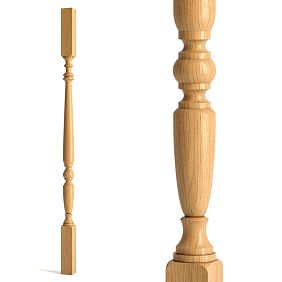
Interior partitions with carved balusters allow zoning of space without compromising its integrity. Such partitions are especially effective in large rooms, where it is necessary to create cozy zones.
- Architectural accents – wooden columns serve as expressive vertical dominants, drawing attention and setting the rhythm of space.
- Niche and fireplace framing – columns are traditionally used to frame fireplace surrounds, decorative niches, or built-in cabinets, giving them a classic finish.
- Pedestals for sculptures or vases – low columns or their fragments can serve as elegant bases for artworks or decorative objects.
- Furniture elements – columns are often integrated into furniture design, for example, as table legs, bar counter supports, or decorative elements of cabinets and chests.
Innovative Applications
- Communication Integration – hollow wooden columns can conceal engineering utilities, electrical wiring, ventilation systems, or acoustic systems.
- Lighting Solutions – columns with built-in lighting create soft, diffused illumination and become a striking element of interior lighting design.
- Interactive Elements – modern technologies allow integrating touch panels, displays, or other interactive elements into wooden columns, combining traditional aesthetics with high-tech functionality.
- Ecological Solutions – columns can be part of "green" architecture systems, for example, serving as supports for vertical greening or as elements of passive cooling systems.
The diverse functional capabilities of wooden columns make them a universal tool for designers and architects. When selecting columns, it is essential to clearly define their purpose in your interior and choose the optimal solution that combines aesthetic appeal with practical functionality.
Wooden Columns in Various Interior Styles
The remarkable versatility of wooden columns allows them to seamlessly fit into interiors of various stylistic directions. Let’s examine how this architectural element adapts to different design concepts and what options to consider when deciding Buy wooden column for a specific stylistic solution.
Classic style
In classical interiors, wooden columns play a key role, embodying ideals of harmony, proportion, and symmetry. Here, the following are appropriate:
- Columns of strict orders – Doric, Ionic, or Corinthian, with canonical proportions and details.
- Fluted columns – with vertical grooves, creating expressive play of light and shadow.
- Columns of noble woods – oak, walnut, or mahogany, with deep patina or polished finish.
- Paired columns – symmetrically placed on both sides of doorways, fireplaces, or niches.
Classic columns are often complemented by corresponding architectural elements – cornices, pilasters, capitals, creating a cohesive architectural ensemble.
Neoclassicism and modern classicism
These styles reinterpret classical traditions, adapting them to modern realities. Here, wooden columns take on a more minimalist, simplified form:
- Columns with simplified capitals – retaining classical proportions but with less detailed ornamentation.
- Columns in light shades – white, cream, light gray, often with a subtle aged effect.
- Columns with modern finishes – for example, with metal inserts or unconventional textures.
In neoclassical interiors, columns often combine with modern materials and technologies, creating an interesting contrast between traditional form and innovative content.
Country and Rustic Style
In country and rustic interiors, wooden columns acquire a more rustic, natural character:
- Columns from unprocessed logs – preserving the natural shape of wood, with bark or traces of handwork.
- Beam columns – massive, square in cross-section, often with visible traces of axe or saw.
- Weathered columns – with patina effect, cracks, and wear marks, emphasizing authenticity and age.
Such columns often serve not only decorative but also structural functions, supporting ceiling beams or mezzanine floors.
Mediterranean Style
Interiors in Mediterranean style use columns inspired by the architecture of Italy, Greece, and Spain:
- Tuscan columns – simple, massive, often with rough plaster or imitation of stone masonry.
- Twisted columns – characteristic of Baroque tradition, adding dynamism and expressiveness.
- Columns with arches – forming arcades and galleries, typical of Mediterranean architecture.
Columns are often painted in warm, earthy tones or white, characteristic of Mediterranean architecture.
Modern and minimalist style
In modern interiors, wooden columns acquire concise, geometrically pure forms:
- Cylindrical columns – without capitals and bases, with a perfectly smooth surface.
- Prism columns – with square, rectangular, or polygonal cross-sections.
- Contrasting columns – for example, dark wood in a light interior or vice versa.
In minimalist spaces, columns often become sculptural objects, drawing attention through their form and material, rather than as decorative details.
Eclecticism and fusion
These styles allow experimenting with column shapes and finishes, creating unexpected combinations:
- Columns with non-standard finishes – for example, with mirrored inserts, metallic elements, or artistic painting.
- Composite columns – combining wood with other materials – glass, concrete, metal.
- Art-object columns – with non-standard shapes, carving, or inlay, becoming a central design element.
In eclectic interiors, columns can serve as a connecting element between different stylistic elements, unifying the space with a single architectural motif.
Choosing which Buy wooden column For your interior, it is important to consider not only the overall style of the room, but also specific architectural features, color palette, space scale, and functional tasks the column must fulfill in your project.
Technical aspects of choosing wooden columns
When choosing wooden columns, it is important to consider not only their aesthetic qualities, but also technical characteristics that determine their durability, reliability, and suitability for specific operating conditions. Let's consider key technical aspects to pay attention to when you decide Buy wooden column for your project.
Dimensions and Proportions
- Column height – should correspond to the room's height and architectural concept. Classical orders prescribe specific proportions between column height and its diameter (module).
- Stem diameter – determines the visual massiveness of the column and its load-bearing capacity. For load-bearing columns, the diameter is calculated based on the expected load.
- Entasis – a slight thickening of the column stem in the lower third, which creates an optical illusion of a perfectly straight line and gives the column visual stability.
- Proportions of the capital and base – strictly regulated in classical orders and determine the stylistic affiliation of the column.
Structural Features
- Type of construction – solid, composite, or hollow. Solid columns are the strongest, but limited by the size of the original material. Composite columns allow creating columns of great height or complex shapes.
- Method of joining elements – in composite columns, various types of connections are used: dowel-and-slot, on pegs, with special fasteners. The quality of connections directly affects the strength and durability of the structure.
- Internal reinforcement – to increase strength and prevent deformation inside the column, a metal rod or frame may be installed.
- Mounting elements – special fasteners for fixing the column to the floor and ceiling, ensuring the stability and safety of the structure.
Wood Processing and Protection
- Wood moisture – optimal moisture for wooden columns is 8-12%. Too dry wood is prone to cracking, too wet wood – to deformation upon drying.
- Protection against biological factors – treatment with antiseptics protecting against mold, mildew, and wood-boring insects.
- Fire-retardant treatment – special compositions that increase the fire resistance of wood, which is especially important for columns performing structural functions.
- Finish coating – varnishes, oils, waxes, or paints protecting the surface from moisture, UV radiation, and mechanical damage. The choice of coating affects not only the appearance but also the operational characteristics of the column.
Load-bearing characteristics
- Load-bearing capacity – maximum vertical load the column can withstand without deformation. Depends on the wood species, column diameter, and structural features.
- Resistance to lateral loads – ability of the column to resist horizontal forces, for example, wind load for exterior columns.
- Deformation characteristics – indicators of changes in size and shape of the column with changes in temperature and humidity. It is important to consider seasonal fluctuations of these parameters.
Ecological aspects
- Wood certification – confirmation of legal origin of material from sustainably managed forests (FSC, PEFC certificates).
- Eco-friendly treatment – use of non-toxic, health-safe compositions for protecting and finishing wood.
- Possibility of reuse – unlike many modern building materials, wooden columns can be recycled or reused at the end of their service life.
When selecting wooden columns, it is important to obtain complete technical information from the manufacturer, including installation, operation, and maintenance recommendations. Quality columns are always accompanied by detailed technical documentation, warranty obligations, and compliance certificates.
Installation and mounting of wooden columns
Correct installation of wooden columns is the key to their longevity, safety, and aesthetic appeal. Whether you plan to install them yourself or hire professionals, understanding the basic stages and nuances of this process will help you achieve the best result once you decide to proceed. Buy wooden column.
Preparation Work
- Design and calculations – determining the exact placement of columns, calculating loads, checking compliance of selected columns with the architectural concept and structural requirements.
- Acclimatization – before installation, wooden columns must be adapted to the room’s microclimate. It is recommended to leave them at the installation site for at least 48–72 hours to stabilize the material’s humidity and temperature.
- Foundation preparation – checking floor levelness and foundation strength. If necessary, surface leveling, waterproofing, or slab reinforcement.
- Marking – precise marking of column installation locations, taking into account vertical alignment, symmetry, and architectural intent.
Mounting methods and installation
- Mounting to floor and ceiling – there are several main methods:
- Using metal anchor bolts pre-installed in the floor and ceiling
- Through special metal bases or brackets, anchored to the foundation with anchor bolts
- Using the "dowel-slot" method, where a dowel is formed on the column and inserted into a corresponding slot in the floor or ceiling beam
- Assembly of composite columns – if the column consists of multiple elements (stump, capital, base), they are assembled sequentially:
- First, install the base or bracket
- Then mount the column stem
- Finally, install the capital
- Elements are connected to each other using dowels, glue, or special fasteners
- Ensuring vertical alignment – a critical stage requiring the use of levels, plumb bobs, or laser plane builders. Even a small deviation from verticality will be noticeable and may lead to uneven load distribution.
- Compensating for unevenness – if necessary, use compensating shims or adjustable fasteners to align the column.
Finishing Work
- Sealing installation joints and holes – all technological holes, joints, and seams are sealed with special compounds matched to the wood’s color and texture.
- Final finishing – after installation, columns may require additional sanding, staining, or varnishing to achieve an ideal appearance and protect the surface.
- Installation of decorative elements – mounting additional decorative details, moldings, rosettes, or other architectural elements that complement the column.
- Final inspection – checking vertical alignment, stability, and reliability of column mounting, as well as quality of final finishing.
Features of installation under various conditions
- Installation in high-humidity rooms – requires additional waterproofing of the foundation and special treatment of the lower part of the column to prevent capillary moisture rise.
- Installation of exterior columns – must account for exposure to atmospheric precipitation, temperature fluctuations, and UV radiation. Requires enhanced wood protection and secure anchoring.
- Installation of structural columns – if columns serve a load-bearing function, installation must be carried out strictly according to design documentation and construction standards, with mandatory supervision by specialists.
- Integration with engineering systems – if wiring, ventilation ducts, or other utilities need to be installed within the columns, preliminary routing preparation and special technical solutions are required.
Safety recommendations
- Compliance with construction norms – all work must be carried out in accordance with current construction norms and rules.
- Use of personal protective equipment – when installing heavy columns, protective clothing, gloves, helmets, and other protective gear must be used.
- Engaging sufficient number of workers – installing large wooden columns requires the participation of several people to safely move and position the item.
- Use of lifting equipment – for columns of large weight, it is recommended to use special lifts or rigging equipment.
Properly installed wooden columns will delight you with their beauty and reliability for many years. If you lack experience in such work, it is recommended to entrust the installation to professionals who will ensure flawless quality and compliance with all technical requirements.
Care and maintenance of wooden columns
Wooden columns are long-lasting architectural elements that, with proper care, can retain their beauty and functionality for many decades. After you have decided Buy wooden columnit is important to know how to ensure proper care and timely maintenance.
Regular Maintenance
- Dust removal – wooden surfaces should be regularly cleaned of dust with a soft, dry cloth or special brushes with natural bristles. For hard-to-reach areas and carved elements, soft brushes or a hairdryer on cold air mode can be used.
- Wet cleaning – permitted only for columns with water-resistant protective coating. Use a well-wrung soft cloth soaked in warm water or a special solution for wooden surfaces. Avoid excessive moisture.
- Special care products – to maintain the beauty of wood, it is recommended to periodically use special polishes or wood conditioners that nourish the wood, prevent drying and cracking.
- Protection from sunlight – direct sunlight can cause fading and uneven color changes in wood. It is recommended to use curtains or blinds to protect columns from intense UV radiation.
Preventive measures
- Humidity control – the optimal relative humidity for wooden items is 40-60%. At lower humidity, wood may dry out and crack; at higher humidity, it may swell and deform. Use humidifiers or dehumidifiers to maintain optimal microclimate.
- Temperature regime – avoid placing wooden columns near heat sources (radiators, fireplaces, heat guns), as well as in areas with sharp temperature fluctuations.
- Protection from mechanical damage – when moving furniture, during repairs, or relocating large items, take measures to prevent impacts, scratches, or other damage to columns.
- Prevention of biological damage – regular inspection of columns for signs of fungal, mold, or insect damage. If such problems are detected, immediate action must be taken to eliminate them.
Periodic maintenance
- Renewal of protective coating – depending on the type of finish and operating conditions, protective coating (varnish, oil, wax) requires periodic renewal. Typical intervals:
- For varnished surfaces – every 5-10 years
- For oil-treated surfaces – every 1-3 years
- For waxed surfaces – every 6-12 months
- Restoration of minor damage – small scratches, chips, or scuffs can be repaired using special wax pencils, putties, or touch-up compounds matched to the wood color.
- Checking fastening elements – periodically check the reliability of column attachment to the floor and ceiling, tightening fasteners as needed or replacing worn parts.
- Antiseptic treatment – for columns installed in rooms with high humidity or risk of biological damage, periodic preventive treatment with antiseptic agents is recommended.