Article Contents:
- Role and Significance of Wooden Hardware in Interior Design
- Advantages of Wooden Hardware
- Impact on Interior Style
- Examples of Application
- Importance of Handles for Furniture
- Types of Wooden Handles
- Application of Wooden Handles for Furniture
- Care for wooden handles
- Importance of Legs in Interior Design
- Types and Application of Legs
- Application and Style
- Types of Wooden Trim
- Advantages of wooden trim
- Application of Wooden Trim
- Significance of Balusters and Posts in Interior Design
- Types of Balusters and Their Use
- Care for Balusters and Posts
- Application of Carcasses in Furniture
- Advantages of Wooden Carcasses
- Uniqueness of Wooden Items in Interior Design
- Advantages of Decorative Appliqués
- Moldings: Creating Accents
- Application of moldings
- Cornices: elegance and completion
- Advantages of Cornices
- Baseboards: Protection and Decoration
- Application of Baseboards
- Rails: functionality and style
- Corners: protection and decoration
- Strips: structural and decorative elements
- Wide range of wooden hardware
- Individual approach and variety of styles
- Applications of Stavros products
- Quality and reliability
Wooden Hardware: Natural Elegance in Every Item
Wooden hardware represents a collection of decorative and functional elements widely used in furnishing and assembling furniture, doors, windows, staircases, and other interior details. In today's world, where natural and eco-friendly materials are valued, wooden products remain in trend, offering aesthetics, durability, and versatility. They beautifully complement interiors in any style — from classic to modern — creating an atmosphere of comfort and luxury.


Role and significance of wooden hardware in interior design
Wooden hardware performs not only utilitarian tasks but also possesses high decorative potential. Its application helps create harmony and accentuate the style of a room. Each element, whether it is furniture handles, furniture legs, decorative inlays, or balusters, brings warmth and uniqueness to the interior thanks to the natural texture of wood. Natural patterns, carving, and the possibility of wood processing make each item unique.




Advantages of wooden hardware
- Aesthetics and naturalness. Decorative inlays and other wooden elements attract attention with their beauty and naturally fit into any interior. View examples here.
- Strength and durability. Wood has high resistance to mechanical damage, which is especially important for furniture legs and other support elements.
- Ecological safety. Using natural wood ensures ecological safety and health, making wooden products especially relevant for those who value a healthy lifestyle.
- Versatility in design. Wooden hardware can be carved or simple, allowing for diverse stylistic solutions. For example, wooden moldings and baseboards can decorate walls, ceilings, and even doorways, adding elegance and completeness to the space.
Our factory also produces:



Influence on interior style
Wooden furniture handles, balusters, and staircase posts often become accent elements that attract attention. In a classic interior, they can be adorned with intricate carving, giving the room grandeur and luxury. At the same time, modern styles value simplicity and minimalism, so handle profiles and chair legs can be designed in a simple yet elegant style. View the range of furniture handles on the Stavros website.
Get Consultation
Examples of Applications
Wooden furniture legs not only ensure stability and longevity of items but also accentuate their style. These elements suit tables, beds, chests, and other furniture, adding lightness and elegance to the space. Learn more about wooden furniture legs here.
It is also worth noting the importance of wooden trim, which includes moldings, cornices, rails, corners, and other elements that add individuality and visual variety to the interior. Such items create a sense of completeness and highlight details, giving the space harmony.
Furniture handles: focus on style and functionality
Furniture handles are an important element of furniture that combines functionality and aesthetic appeal. These small details play a significant role in daily life, ensuring ease of opening and closing cabinets, chests, bedside tables, and other interior items. Wooden furniture handles have special advantages: they are pleasant to touch, eco-friendly, and bring natural warmth and coziness to the space.
Significance of furniture handles
Furniture handles not only perform a practical function but are also an important decorative element. They can emphasize the interior's stylistic solution or add expressiveness to the furniture. Wooden furniture handles are especially valued for their ability to harmoniously combine with various materials and styles. For example, carved and refined handles are suitable for classic interiors, while minimalist and modern designs favor simple forms. View the range on the furniture handles page.
Types of wooden handles
- Inset Handle — installed inside the furniture facade, creating a minimalist and modern look. Inset handles are ideal for modern interiors and minimalist styles, as they do not protrude from the surface and create a sense of continuity.
- Surface Mount Handle — the most common type of handles, mounted on the facade surface. Surface-mounted handles come in various shapes and designs, allowing their use in both classic and modern styles.
- Button Handle — a small and convenient handle, ideal for cabinets, chests, and bedside tables. Button handles add elegance and simplicity to furniture, easily coordinating with other decorative elements.
- Profile Handle — suitable for modern minimalist design. Profile handles look stylish and functional, providing easy opening of doors and drawers without unnecessary decorative elements.
- Shell Handle — a decorative element that gives furniture a vintage and retro charm. Shell handles are especially popular in kitchen sets and antique furniture.
- Bracket Handle — universal option suitable for various types of furniture. Screw handles are distinguished by strength and comfort, making them a sought-after element for both modern and classic interiors.
Application of wooden handles for furniture
Wooden handles for furniture are used to create accents that highlight the style and uniqueness of each piece of furniture. They can be crafted in various styles: from minimalism to intricate carved patterns. Thanks to the natural wood texture, each handle becomes unique and attracts attention. Using such elements allows furniture to achieve a finished and stylish look, creating harmony and comfort.
Care for wooden handles
To ensure wooden handles retain their original appearance and durability, proper care is required. Regular dusting, application of wood protection products, and avoiding moisture exposure are the main care rules. Using soft cloths and special compositions helps preserve the texture and color of handles for many years.
Furniture legs: strength and elegance
Furniture legs play an important role not only in terms of functionality but also as a design element. Wooden legs for furniture provide stability, a stylish appearance, and make interiors more elegant. These elements can be crafted in various styles — from classic carved forms to modern minimalist solutions. Legs can visually lighten furniture or, conversely, make it appear heavy and substantial.
Importance of legs in interior design
Furniture legs often define its style and emphasize the overall interior concept. Properly selected wooden legs can create harmony between furniture and space, highlighting the elegance and beauty of details. Wooden legs made from natural wood are strong and durable, making them an ideal choice for those who value quality and natural materials. More about furniture legs.
Types and application of legs
- — tall and stylish elements that highlight the elegance and sophistication of bar structures. These legs make the bar counter stable and give it a refined look, perfectly suited for kitchens and living rooms with bar-style decor. — high and stylish elements that highlight the sophistication and elegance of bar structures. These legs make the stand stable and give it a refined look, perfectly suited for kitchens and living rooms with bar-style decor.
- Sofa legs — reliable supports that ensure comfort and longevity of upholstered furniture. Wooden legs for sofas can be carved or simple, depending on the furniture style, and create a sense of lightness or, conversely, stability.
- Legs for coffee tables — diverse elements in shape and design that help create an accent in the living room. Legs can be minimalist and strict or elaborately decorated with carving.
- Legs for chests, wardrobes, and side tables — provide not only stability of furniture but also ease of cleaning. These furniture legs emphasize the style of chests, side tables, and wardrobes, making them more noticeable.
- Legs for console tables — refined elements that add elegance and lightness to consoles. Console tables often serve as accents in interiors, and legs help emphasize their grace.
- Legs for chairs — provide comfort and stability for upholstered furniture. These legs can be carved or simple, depending on the chair design, and ensure reliability during use.
- Legs for beds — sturdy and durable elements that guarantee the stability and longevity of the bed. The choice of such legs depends on the bedroom style: classic carved or minimalist options.
- Legs for tables — diverse in shape and style legs for dining and work tables. They provide stability and give the table an aesthetic appearance, suitable for any interior.
- chair legs — reliable and comfortable elements that make chairs stable and comfortable to use.
- Legs for stools and benches — strong and functional elements suitable for various furniture. They provide stability and add an accent to the interior.
Application and style
Wooden furniture legs are available in various styles and sizes, allowing selection of the optimal option for any interior. They can be adorned with carving, have complex shapes, or be simple and minimalist. The choice depends on the furniture style and the designer's objectives.
Wooden trim: a universal decorative element
Wooden trim refers to a whole group of items actively used in decorative and structural interior finishing. This includes moldings, cornices, baseboards, rails, corners, battens, and casings, each contributing to giving space a finished and elegant look. Wood in trim elements emphasizes the room's style, conceals joints, improves sound insulation, and adds nobility and coziness to the interior. Wooden trim is applicable in both classic and modern interiors, highlighting their aesthetics and individuality.
— this is a simple yet universal element that can be used for both structural and decorative purposes. Wooden planks are used to create frame structures, decorate walls and ceilings, and as part of furniture details. Due to their simplicity and functionality, planks are used in many interiors, including modern minimalist solutions and classic styles.
- Block — a decorative element used to adorn the upper part of walls and ceilings. Cornices help conceal the junction between the wall and ceiling and give the space a finished and elegant look. They can be minimalist or ornate with carvings, highlighting the richness and style of the interior.
- Cornice — one of the most popular types of wooden trim, used for decorating walls, ceilings, and furniture. Mouldings help define spaces, creating decorative accents such as mirror, picture, and panel frames. They can be made in various styles and add individuality to the interior.
- Molding — a decorative detail that frames door and window openings, emphasizing their shape and style. Door and window casings help conceal gaps and create a neat, finished look.
- Baseboard — a decorative element used to cover the junction between the floor and wall. Skirting boards add a finished look to the interior and protect corners from damage. They can be used in both classic and modern styles, creating a harmonious transition between the wall and floor.
- Skirting — a universal element that can be used as a decorative element or as part of structural details. Wooden strips are often used to create wall panels, framing, and decorative inserts.
- Rail — used for finishing corners and joints, giving the interior a neat and completed look. Wooden corner pieces can be simple or complex in shape, suitable for various design solutions.
- Angle Advantages of wooden trim
Ecological and safe. Wooden trim is made from natural material that does not emit harmful substances and is safe for use in residential spaces. Wood provides a healthy microclimate in the room.
- Ease of installation. Trim elements are easy to mount, allowing for quick interior transformation. Wooden mouldings, cornices, and skirting boards can be installed independently or with minimal effort from professionals.
- Aesthetic appeal. Decorative elements made of solid wood create a warm and cozy atmosphere. Wood brings natural warmth, making the interior more comfortable and attractive.
- Application of wooden trim
Wooden trim is widely used for decorating wall panels, framing door and window openings, and creating decorative accents. For example, mouldings help define and zone spaces, adding a unique touch. Skirting boards ensure a smooth transition between wall and floor, creating a harmonious and finished look. Cornices conceal joints and add elegance to the ceiling. Learn more about wooden trim
Wooden molding is widely used for decorating wall panels, door and window frames, as well as for creating decorative accents. For example, moldings help to define and zone spaces, adding a unique touch. Baseboards provide a smooth transition between wall and floor, creating a harmonious and finished look. Cornices conceal joints and add elegance to the ceiling. Learn more about wooden molding here.
Balusters and posts for staircases: style and reliability
Balusters and posts for staircases are not only functional elements of staircase structures but also an important part of their decorative design. They create a sense of completion and give the staircase an elegant and stylish appearance. The main task of balusters is to ensure the reliability of handrails, prevent falls, and create overall structural stability. Posts, in turn, serve as primary support points, giving the entire structure strength and stability.
Significance of balusters and posts in interior design
Balusters and posts can become a central accent in the interior of a house. Properly selected elements can emphasize the style of the staircase space, making it elegant or, conversely, restrained and minimalist. Wooden balusters have a special aesthetic due to the texture and natural tones of wood, which create warmth and coziness in the room.
Types of balusters and their use
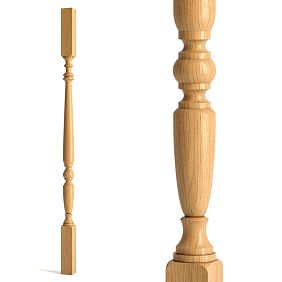
- Classic balusters — carved elements that are ideal for traditional and classic interiors. They can be adorned with intricate patterns and carvings, creating a sense of luxury and grandeur. Such balusters are often used in country houses, mansions, and rooms with classic design.
- Modern balusters — have simple and minimalist shapes suitable for modern and minimalist interiors. They are characterized by strict lines and lack of unnecessary decorative details, making them an ideal choice for modern apartments and houses. Modern balusters combine well with metal and glass elements of the staircase, creating a unique appearance.
- Staircase posts — are massive support elements that ensure the stability of the entire structure. Posts can be made in various styles: from strict minimalist to luxurious carved versions. They often serve as decorative accents, highlighting the individuality and style of the staircase space.
on the Stavros website you can find balusters for staircases и Posts for staircasesuitable for various stylistic solutions. The assortment includes both carved classic elements and minimalist modern shapes.
Care for balusters and posts
To ensure balusters and posts maintain their attractive appearance and serve for a long time, it is necessary to follow the rules for caring for wooden items. First and foremost, it is important to regularly clean the elements from dust and dirt using a soft cloth or brush. To maintain the rich color and texture of the wood, it is recommended to periodically treat them with protective agents: oils, wax coatings, or varnishes. These create a protective layer that prevents moisture and mechanical damage.
Wood is sensitive to changes in humidity, so it is recommended to avoid excessive moisture in the room and protect elements from water exposure. With proper care, balusters and posts will delight you with their flawless appearance for many years.
Carcases: reliability and functionality
Carcases are horizontal elements that play a key role in furniture construction, ensuring its strength and durability. The main task of carcasses is to reinforce the frame and prevent deformation. They are widely used in tables, beds, chests, and other furniture items, giving them the necessary rigidity and stability. Wooden carcasses have undeniable advantages: they are strong, while remaining environmentally friendly and aesthetically pleasing.
Application of carcasses in furniture
- Table aprons — ensure the strength and stability of the tabletop, preventing sagging and deformation. Wooden table aprons can be carved or designed in a minimalist style, suitable for various interior types.
- Bed aprons — are essential elements of the bed frame, ensuring its stability and longevity. Wooden bed aprons not only reinforce the structure but also give it an elegant appearance.
- Cabinet and wardrobe aprons — strengthen the structure and prevent warping. They help furniture withstand weight and maintain its geometry even with prolonged use.
View the selection of aprons here.
Advantages of wooden aprons
Wooden aprons have several advantages over counterparts made from other materials. Natural wood provides structural strength and durability, as well as increased resistance to loads. Solid wood aprons fit seamlessly into any interior, adding aesthetic appeal and style. Due to their versatility, wooden aprons can be used in both classic and modern furniture.
Uniqueness of wooden items in interior design
Wooden hardware, including aprons, possesses a unique texture and natural aesthetics that are difficult to replicate with artificial materials. Each item, whether a furniture handle, baluster, or apron, adds individuality to the interior, creating an atmosphere of warmth and coziness. Wood allows for creating furniture and decorative elements that combine functionality and style. Choosing wooden hardware makes the interior more lively and natural, adding a special charm to the space.
Aprons play an important role in furniture, making it more reliable and durable. They emphasize the overall style of the item and ensure its stability, creating a harmonious blend of strength and aesthetics.
Decorative appliqués: an elegant accent in interior design
Decorative wooden appliqués are elements used to decorate furniture, walls, doors, and other interior objects. These items can be adorned with intricate carved patterns, highlighting luxury and style. Appliqués easily integrate into various interior styles — from classic to minimalism — adding each space its unique charm. They not only give the room an elegant and refined look but also serve a practical function, covering joints and surface defects.
Advantages of decorative appliqués
- Individuality. Each decorative appliqué is created with a unique design, allowing for truly exclusive interiors. Such elements help make every home unique, drawing attention to small but significant details.
- Functionality. Appliqués serve not only as decoration but also perform a practical function — they cover joints, corners, and other imperfections of furniture or walls, making the surface more neat and finished.
- Ease of installation. Decorative appliqués are easy to install and remove, making them a convenient solution for updating interiors. Depending on preferences and style, they can be used in both classic and modern interiors.
View the selection of decorative appliqués on the Stavros website.
Moldings, cornices, and baseboards: details that transform interiors
Moldings, cornices, and baseboards are important elements of decorative finishing that help create a cohesive and finished interior. These items not only visually structure the space but also conceal wall irregularities, joints, and transitions, giving the room an elegant and neat appearance.
Moldings: creating accents
Moldings are decorative wooden strips used for zoning space, decorating walls, and creating accents. In classic interiors, moldings add luxury, while in modern styles — strict geometry and elegance. Learn more about moldings here.
Applications of moldings
- Trimming door and window openings. Moldings help highlight openings, giving them expressiveness and style.
- Creating frames for mirrors and pictures. Decorative moldings add elegance and draw attention to decorative elements.
- Wall and ceiling decoration. Moldings are used to create decorative panels and zone the space.
Cornices: elegance and completion
Cornices are designed to decorate upper parts of walls and ceilings. They help conceal joints and transitions, creating an effect of completion and adding expressiveness to the interior. Wooden cornices give the space nobility, drawing attention to details. Choose suitable cornices here.
Advantages of cornices
- Aesthetic appeal. Cornices decorate ceiling joints and visually increase the height of the room.
- Practicality. They help conceal wall and ceiling irregularities and defects.
- Harmony with any style. Cornices easily fit into both classic and modern interiors, adding elegance and completion.
Baseboards: Protection and Decoration
Baseboards serve both decorative and protective functions. They cover the junction between the floor and the wall, preventing dust and dirt from accumulating in corners. Wooden baseboards can be crafted in various styles, allowing them to harmoniously fit into any interior. Browse the selection baseboards.
Application of baseboards
- Floor trim. Baseboards provide a beautiful transition between the floor and the wall, protecting corners and edges.
- Concealing wiring. Some baseboards have hidden channels for wiring, allowing wires and cables to be neatly placed.
- Decorative finishing. Baseboards give a room a finished and harmonious look, emphasizing the overall interior style.
Planks, corners, and battens: universal elements for finishing
Planks, corners, and battens are universal elements actively used in decor and functional finishing of furniture, walls, and ceilings. They add structure and clarity to interiors, serve as accent details, and reinforce structural elements.
Planks: functionality and style
Planks can be used as decorative panels, trim for furniture, or structural elements. Wooden planks add structure and harmony to interiors, often used to create wall panels and decorative inserts. Learn more about planks.
Corners: protection and decor
Corners are used to finish joints and corners, preventing damage. Decorative wooden corners help create a neat and finished look, emphasizing interior style. They can be used in furniture, doorways, or for finishing wall panels. Learn more about corners.
Battens: structural and decorative elements
Battens are a universal material that can be used for structural purposes as well as decorative finishing. Battens help reinforce furniture structures or serve as bases for decorative panels and frames. Browse the selection beams.
Stavros: quality and variety of wooden hardware
The company Stavros leads in producing high-quality wooden hardware, offering a wide range of products that combine beauty, functionality, and durability. The company's products include all necessary elements for interior and furniture finishing: furniture handles, furniture legs, balustersdecorative inserts, Moldings, Crown Molding, Baseboards, rails, corners, strips и Cargiand more. The Stavros assortment impresses with the variety of models, styles, and applications, allowing each customer to find the perfect solution for their interior.
Wide range of wooden hardware
All wooden hardwareproduced by Stavros, is made from high-quality solid wood, ensuring its durability, eco-friendliness, and unique appearance. The collection features both classic carved elements suitable for traditional interiors and minimalist modern models that perfectly fit into minimalist and contemporary styles. The company continuously updates its assortment, following the latest trends in design and architecture.
Individual approach and variety of styles
Each product produced by the company Stavros is distinguished by attention to detail and flawless processing quality. Thanks to the use of modern technologies and years of experience, Stavros can offer unique decorative inserts, furniture handles, furniture legs and other elements that highlight the style and individuality of the interior. The rich variety of models makes it easy to select hardware for any style — from classic and baroque to modern and minimalism.
Applications of Stavros products
Stavros products open up wide possibilities for use in interiors of varying complexity. Decorative inserts are used to decorate furniture, walls, and doors, adding elegance and uniqueness to the interior. Moldings, Crown Molding и Baseboards help create harmonious and finished spaces, concealing wall imperfections and adding depth. balusters и posts add a luxurious look to staircases, ensuring their stability and safety. All elements from the Stavros assortment are easy to install, durable, and resistant to external influences.
Quality and Reliability
Stavros pays special attention to the quality of its products, from material selection to final processing. Wood undergoes strict quality control, guaranteeing its ecological purity and durability. Stavros products are resistant to moisture, deformation, and mechanical damage, making them ideal for use in any room.
Choosing Stavros products, you get not just wooden hardware, but true works of art that will add comfort, beauty, and harmony to your home. Visit STAVROS website and discover the rich world of wooden hardware that will make your interior unique.