












































































Article Contents:
- When to Use Solid Wood vs Synthetic Material
- Molding: Essence, Classification, Areas of Application
- Comparison of Properties: Weight, Geometric Stability, Moisture Resistance, Repairability
- Oak and Beech Molding: Where Hardwood Species Excel
- Polyurethane Profiles: Where They Win in Installation and Budget
- Decor and Styles: Classic, Neoclassic, Modern Graphics
- Regional Demand: Moscow and Saint Petersburg
- Link Map and Selection Scenarios
- Practical recommendations for selection and use
- Production technologies and quality control
- Project Economics: Calculating Ownership Cost
- Market Innovations and Trends in Molding
- FAQ: Frequently Asked Questions
- Regional Characteristics of Molding Application
- Future Development Prospects of Molding Products Market
- Conclusion

Choice of material formolding productsDetermines not only the interior's appearance but also the practicality of the solution for decades ahead. Natural wood and synthetic polyurethane represent two polar approaches to space design — each with its own advantages, limitations, and ideal application areas. This article reveals the nuances of choosing between tradition and innovation, between solid wood and polymer, between classic aesthetics and modern functionality.
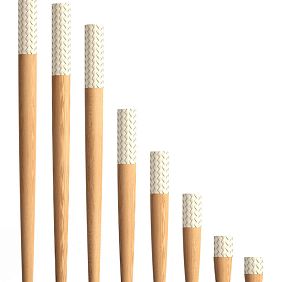


When to Use Natural Solid Wood vs Synthetic Material
Correct choice betweenmolding elements made of woodand polyurethane profiles begins with understanding the project's specifics. Solid wood molding is indispensable where material authenticity, its living texture, and graceful aging are valued. Oak or beech solid wood creates that very fundamental atmosphere impossible to replicate with synthetics. Wood breathes, absorbs and releases moisture, reacts to microclimate changes — this property becomes an advantage in stable conditions and requires attention in humid spaces.
polyurethane profiles excel in situations where weight, water resistance, and budget are critical. Bathrooms, kitchens, unheated verandas, rooms with underfloor heating systems — everywhere where wood requires complex protection,Polyurethane Itemspolyurethane profiles operate without compromise. Installation at height, complex curved sections, the need to conceal communications within the profile — all of this is simplified with lightweight polymer elements. The cost per square meter of finish with polyurethane may be two to three times lower for visually comparable results.
A hybrid approach combines the advantages of both materials.Solid wood baseboards and moldingsin entrance zones combine with polyurethane profiles in humid areas. Solid wood door casings are complemented by lightweight, friezes, rosettes.profiles under the ceiling. Such a combination optimizes the budget without compromising the interior's status.
Regional climate also influences the choice. In continental climates with humidity fluctuations, solid wood requires acclimatization before installation and a stable indoor environment afterward. Polyurethane remains geometrically stable under any temperature and humidity fluctuations. For country homes with intermittent heating, polymer profiles become practically the only viable solution.




Molding: Essence, Classification, Areas of Application
Trimming ItemsMolding elements are elongated profiled components of constant cross-section, measured in linear meters. This category includes baseboards, moldings, cornices, door casings, moldings, wainscoting, skirting boards — everything that forms the architectural graphics of the interior. The profile may be a simple geometric cross-section or a complex multi-step composition with carved details, moldings, rounded elements, and other classic features.
Classification by function divides molding into floor, wall, ceiling, and universal types. Floor baseboards conceal the deformation gap between the finish and the wall, protect the lower part of the wall from damage, and create a visual base for the interior. Ceiling cornices mask the junction between the wall and ceiling, may serve as a base for hidden lighting, and define room proportions. WallWooden moldingsmoldings create panel compositions, frame doors and windows, and separate finishing materials.
By relief, molding is divided into smooth, profiled, and carved. Smooth strips are minimalist, suitable for modern interiors, easily painted in any color. Profiled items have geometrically correct protrusions and recesses — beads, grooves, quarter-circles, shelves. Carved molding is decorated with ornament — plant, geometric, anthropomorphic. The degree of carving complexity varies from simple repeating elements to exclusive handcrafted compositions.
Molding is used in all types of rooms. In residential interiors, it creates a finished look, hides construction imperfections, protects vulnerable zones. In commercial spaces, it forms a brand style, zones large areas, enhances acoustic comfort. Restoration of historical objects requires recreating authentic profiles based on preserved samples.Furniture manufacturinguses miniature molding to frame facades, panels, glass inserts.
Standard lengths of wooden molding are 2400 mm and 2600 mm, corresponding to typical room heights and minimizing the number of joints. Polyurethane profiles are produced up to 2400 mm in length, some models up to 3000 mm. Profile height is selected proportionally to room dimensions — for standard apartments with 2700 mm ceilings, an optimal skirting board height is 80–120 mm, for high halls — 150–200 mm and more.
Our factory also produces:
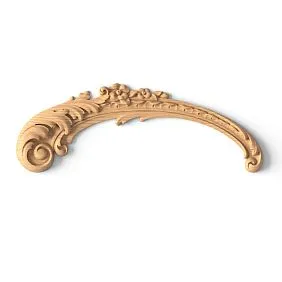


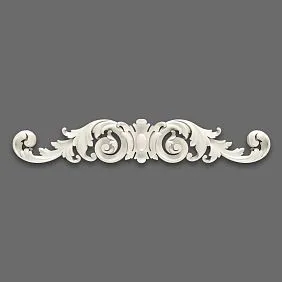
Comparison of properties: weight, geometric stability, moisture resistance, repairability
Material weight differs significantly. Oak density is 750–880 kg/m³, beech — 700–780 kg/m³, while quality polyurethane weighs only 200–300 kg/m³. A meter of wooden skirting board 100 mm high and 20 mm thick weighs about 1200 g, a similar polyurethane one — no more than 400 g. The threefold difference radically simplifies transportation, lifting to upper floors, and installation by one person. For ceiling cornices, the polymer’s low weight is critical — adhesive bonding securely holds the lightweight profile without mechanical fasteners.
Geometric stability is determined by hygroscopicity. Wood absorbs moisture when air humidity increases and releases it when it decreases — linear dimensions change by 0.2–0.8% depending on species and grain direction. Expansion across the grain is greater than along it, requiring consideration when designing panel compositions. Geometric stability is achieved by kiln-drying wood to 8–10% moisture and subsequent acclimatization in the room before installation. Polyurethane does not react to humidity — water absorption coefficient is less than 1%, linear expansion due to temperature is minimal. Installed polymer profiles retain geometry for years without deformation.
Polyurethane’s moisture resistance is absolute.Moldings made of polyurethaneDo not fear direct contact with water, do not swell, do not delaminate, do not lose strength in humid rooms. This makes polymer the only practical choice for bathrooms, toilets, pools, saunas. Wood requires serious protection — multi-layer coatings with water-resistant varnishes, oils, or enamels with end-grain priming. Even protected wood in conditions of constant high humidity risks deformation and loss of coating.
Repairability of solid wood is excellent. Scratches, dents, chips are removed by sanding and re-finishing. Deep damage is filled with wood putty, then the area is sanded and re-coated. The possibility of multiple repainting and restoration makes wooden molding practically eternal. Polyurethane is more difficult to repair mechanically — filling with polymer putty and painting leaves a noticeable repair mark. Serious chips are easier to fix by replacing the damaged section with a new element.
Polymer’s temperature resistance is broader. Working range of quality polyurethane — from minus 40 to plus 80 degrees Celsius without property changes. Wood is sensitive to sharp temperature changes — rapid cooling or heating causes internal stresses and risk of cracking. For rooms with underfloor heating, fireplaces, or south-facing panoramic glazing, polymer profiles are preferable.
The durability of both materials is measured in decades with proper use.Oak MoldingServes 50–100 years, preserving functionality and aesthetics. Polyurethane profiles last 20–30 years without noticeable degradation if made from quality material and protected from direct UV sunlight.
Get Consultation
Oak and beech molding: where the advantages of hardwoods are revealed
Oak MoldingEmbodies fundamentality and prestige. Density of 750–880 kg/m³ and hardness of 3.7–4.0 Brinell units provide exceptional resistance to mechanical impacts. Floor skirting boards made of oak in high-traffic areas — hallways, corridors, public spaces — retain profile clarity for decades. Expressive tangential texture with characteristic medullary rays creates a noble play of light on profiled surfaces. Natural oak shades vary from light straw to rich brown, while modern toning techniques expand the palette to graphite and white tones.
High tannin content in oak wood provides natural resistance to biological damage. Even under high humidity, oak is not prone to rotting or mold formation. This property was historically used in shipbuilding and explains why oak molding is preferable for country homes with intermittent heating. Oak’s geometric stability under humidity fluctuations is higher than that of softer species — radial cuts result in shrinkage of only 0.2–0.3%.
Beech skirting boardsCharacterized by dense, uniform structure without pronounced annual rings. Density of 700–780 kg/m³ combines with excellent workability — beech is easily machined with cutting tools, provides a clean surface without fuzz, holds thin profiles perfectly. Fine-grained texture accepts any finishing materials — from oils to enamels. Uniform structure ensures even coloring along the entire profile length without spots or color variations.
Natural light beech color — from pale pink to cream — creates a universal base for any design solutions. Beech toning yields more predictable results than oak, with its contrasting texture. For Scandinavian, minimalist, or Japanese style interiors, beech molding with transparent finish preserves the natural purity of color. White enamel on beech creates a perfectly even coating without revealing wood structure.
Hardwoods are indispensable for carved molding. Clarity of details, absence of chips during milling, longevity of relief — all this requires dense, uniform wood.carved appliquésOak and beech molding retain the finest ornament details for decades of use. Softwoods like linden or pine in carved molding quickly lose edge sharpness, recesses fill with dust, overall detail blurs.
For classic interiors, where molding serves as a full architectural element, hardwoods create a sense of quality and status.Molding and cornices made of solid woodCombined with parquet of the same species, they form a unified material environment. Tactile sensations from touching warm, dense wood, characteristic light aroma of tannins, visual depth of texture — all this creates an authentic atmosphere that polymers cannot reproduce.
Ecological safety of natural solid wood is important for living spaces. Wood does not emit volatile compounds, regulates air humidity, creates a favorable microclimate. For children’s rooms, bedrooms, and spaces where people spend a lot of time, wooden molding is preferable precisely for ecological reasons. FSC certification guarantees that wood comes from responsibly managed forests, which is important for projects with ecological construction requirements.
Polyurethane profiles: where they win in installation and budget
Installation of polyurethane profiles is fundamentally simpler than wooden ones. Low weight allows working alone even with long ceiling elements.Moldings made of polyurethaneAre attached using polymer adhesive without pre-drilling or mechanical fasteners. The absence of need for specialized tools lowers the entry barrier — basic installation is accessible to non-professionals. Cutting polymer is done with a fine-toothed hacksaw or circular saw without risk of chipping or scratching.
Corner joints are simplified by flexibility of some polyurethane profiles. Soft polymer grades allow slight bending, compensating for wall and ceiling irregularities. Rigid profiles are joined similarly to wood with 45-degree bevels, but due to material uniformity, achieving tight fit is easier. Factory-made corner elements completely eliminate the need for precise trimming — surface-mounted corners are installed over straight sections.
Hidden communications inside hollow polyurethane profiles — a unique advantage. Electrical wiring, low-voltage cables, thin air conditioning tubes are concealed in cornices and skirting boards without wall grooving. LED strip inside a ceiling cornice creates a floating ceiling effect — a popular modern interior technique. For wooden molding, such a solution is unavailable due to the bulky profile cross-section.
Polyurethane's cost-effectiveness is evident at every stage. The cost per meter of polymer profile is two to four times lower than that of a comparable wooden alternative. Transportation is cheaper due to the lightweight nature — delivering a batch of polymer cornices costs several times less than wooden ones. Installation requires less time and does not require highly skilled labor, reducing labor costs by 30-50 percent. The absence of need for finishing for pre-painted profiles saves another 20-30 percent of the budget.
Flexible polyurethane profiles are indispensable for curved sections. Rounded bay windows, arched openings, and complex radii are elegantly finished with flexible molding without the need for complicated manufacturing of glued-laminated wooden elements. The bending technology is simple — the profile is soaked in hot water, bent according to a template, and fixed until it dries. After polymerization, the shape remains stable. For wood, bending requires industrial equipment and costly technology.
The fire resistance of quality polyurethane exceeds that of wood. Self-extinguishing polymer grades do not support combustion once the source of open flame is removed. During a fire, a polyurethane profile chars more slowly than wood and does not emit sparks or burning particles. For projects with heightened fire safety requirements, certified polymer molding is preferable.
The range of shapes and sizes of polyurethane profiles is broader than that of wooden ones. The molding technology allows creating complex multi-level profiles that are either impossible or economically unfeasible to mill from solid wood. High cornices 200-300 millimeters in polymer weigh as much as wooden ones 80-100 millimeters — decorative scale is achieved without adding weight to the structure. This is critical for high-ceiling spaces.
Decor and styles: Classic, Neoclassic, Modern Graphics
Classic style requires authentic materials and historically accurate profiles.Solid oak moldingwith carved details, gilding, and patina, creating the atmosphere of palace interiors. High baseboards 150-200 millimeters with a classic profile — a cove, a shelf, a rounded edge — form the architectural base of the wall. Multi-level cornices with modillions, dentils, and botanical ornamentation transform the junction between wall and ceiling into a full architectural frieze.Moldings create panel compositions— rectangular frames on walls, door and window casings, vertical divisions in high-ceilinged rooms.
In classic interiors, the material is perceived. The texture of oak with medullary rays, natural tones of stained wood, depth of lacquer finish — all this creates authenticity that polymer imitation cannot replace. The touch of wooden surfaces, material temperature, acoustic characteristics — tactile and auditory sensations complement visual perception. For high-end interiors, where every detail matters, natural solid wood is indispensable.
Neoclassicism allows for material synthesis. Simplified profiles without excessive ornamentation, restrained color palette, emphasis on proportions — these principles allow using quality polyurethane alongside wood.Smooth cornices in polymerpainted to match the ceiling visually do not differ from wooden ones at significantly lower cost. For budget projects in neoclassical style, combining wooden baseboards with polymer ceiling elements optimizes costs without compromising aesthetics.
Modern interior styleappreciates minimalism and functionality. Minimalist profiles with simple cross-sections, hidden baseboards with shadow gaps, wall-mounted moldings create graphic architecture of space. Here, polyurethane and wood compete on equal terms — the choice depends on budget and personal preferences. White baseboards in MDF or polymer with enamel finish are visually identical. Scandinavian aesthetics prefer light beech molding with transparent finish — here, material authenticity is essential.
Minimalism excludes decoration for decoration's sake. Every element is functional — baseboards conceal gaps and protect walls, cornices hide curtain hardware or conceal lighting. Profiles are maximally simplified, often using concealed mounting without visible molding. In such interiors, polyurethane with perfect geometry and the ability to be painted any color becomes the optimal choice.
Loft and industrial aesthetics require deliberate simplicity. Rough solid wood beams with minimal processing, metal profiles, exposed utilities create a distinctive atmosphere. Here, solid wood molding fromunprocessed solid woodwith preserved natural wood defects is valued higher than perfectly smooth polymer. Brushed oak baseboards with contrasting staining emphasize texture and add tactile quality.
Eclecticism mixes eras and materials freely. Classic carved cornices coexist with modern smooth baseboards, wooden elements combine with polymer ones. Visual harmony in scale and proportions is crucial — profile height must match room dimensions, molding width must correspond to wall panel area. Thoughtfully designed eclecticism creates interior individuality but requires high design culture.
Regional demand: Moscow and Saint Petersburg
Molding in Moscowreflects high concentration of premium construction segment. Status new developments in central districts, reconstruction of historic residential stock, elite suburban residences form stable demand for quality wooden molding. Oak and beech dominate in luxury projects, where material authenticity is a mandatory requirement from the client. The Moscow market consumes the full spectrum of profiles — from simple baseboards to exclusive hand-carved cornices.
Regional climate characteristics affect material requirements. Continental climate with cold winters and hot summers creates significant humidity fluctuations inside buildings. Quality kiln-drying of wood to 8% moisture and acclimatization before installation are critical for stability of wooden molding. Moscow projects increasingly feature climate control systems, stabilizing indoor environment and reducing material requirements.
The market for polyurethane profiles in Moscow grows faster than for wooden ones. Mass construction of business- and comfort-class housing requires budget solutions without compromising exterior appearance.Polymer moldings and cornicesmeet developers' need for affordable yet presentable finishes. Renovation of secondary housing also shifts toward polymer — faster installation and absence of wet processes shorten renovation timelines.
Saint Petersburg maintains a traditional orientation toward classical aesthetics. The status of cultural capital, abundance of historical architecture, and restoration projects support demand for authentic wooden trim. Petersburg interiors lean toward European classicism — neoclassicism, art deco, Scandinavian tradition. Birch trim, with its light tones and uniform texture, is especially popular in projects with a northern aesthetic.
Saint Petersburg's humid climate imposes higher requirements for protective finishing of wooden trim. Multi-layer lacquering with intermediate sanding, use of water-resistant compounds, and careful end sealing — all of these increase the cost and labor intensity of work. Polyurethane profiles for humid spaces are used more frequently in Petersburg projects than in Moscow projects, precisely due to climatic conditions.
Professional communities in both cities demand high quality. Moscow and St. Petersburg architects, designers, and builders possess high qualifications and do not accept compromise solutions. This encourages manufacturers to maintain product quality and expand their product range.moldings, cornices, baseboardsAvailable in both cities in a wide range of profiles, sizes, wood species, and finishing options.
Regional logistics affects pricing. Proximity to production facilities reduces transportation costs and speeds up delivery. The Moscow region concentrates most wood processing manufacturers, providing a cost advantage. St. Petersburg compensates for distance from some suppliers by proximity to Baltic ports, through which high-quality European timber and polyurethane compounds are imported for production.
Link map and selection scenarios
Practical choice between wood and polyurethane is determined by specific project conditions. The first factor is budget. For projects with limited fundingpolyurethane productsprovide a worthy result at reasonable prices. Visually, high-quality polymer does not fall short of simple-section wooden profiles, especially when painted in opaque tones. Savings reach 50-70 percent compared to oak or beech of similar complexity.
The second factor is usage conditions. Humid areas, unheated spaces, high-traffic zones with risk of mechanical damage — here polyurethane is preferable. Stable climatic conditions, prestigious interiors requiring authenticity, spaces where ecological safety is important — wooden trim is justified.Combined solutionoptimizes costs without compromising functionality.
The third factor is interior style. Classical styles — Baroque, Rococo, Classicism, Empire — require solid wood. Wood texture, the possibility of fine carving, and depth of finish create an authentic atmosphere. Neoclassicism allows high-quality polyurethane for simple-profile elements. Modern styles — minimalism, Scandinavian, loft — do not insist on material; choice is determined by budget and personal preferences.
The fourth factor is implementation timeline. Polyurethane trim is installed faster than wooden trim. No need for acclimatization, ease of cutting and mounting, less labor-intensive finishing reduces time by 30-50 percent. For projects with tight deadlines, polymer is a practical choice. Wooden trim requires time for acclimatization before installation, careful fitting of joints, and multi-layer finishing.
Selection scenario for a standard apartment: baseboards — wood or quality MDF with enamel coating in living rooms, polyurethane in humid zones. Ceiling moldings — polyurethane everywhere for simplified installation. Door casings —wooden to match door colorfor material environment unity. Wall moldings, if present — wood for tactile contact at hand level.
Selection scenario for luxury interiors: maximum use of solid wood from valuable species.Carved trim from oakfor grand areas, beech for private rooms. Polyurethane is limited to technical spaces where aesthetics are secondary. Unity of wood species with parquet, doors, and furniture facades creates a cohesive material composition in the interior.
Selection scenario for commercial spaces: priority on durability and repairability. Baseboards 120-150 mm high from hardwood species in contact zones. Ceiling elements — polyurethane to reduce structural weight and simplify installation at height. Decorative moldings — selection according to design project with consideration of brand style. Enamel coating in corporate colors is possible for both materials.
Selection scenario for restoration: recreating historical profiles requires solid wood. Modern polymers cannot convey the authenticity of vintage interiors. Manufacturing profiles based on preserved samples, hand-carving of complex ornaments, traditional finishing techniques — all of this is possible only with wood.Exclusive carved trimbecomes a piece of decorative-applied art.
Technical installation features also influence the choice. Uneven walls and ceilings are easier to compensate with flexible polyurethane profiles. Well-prepared surfaces allow the advantages of precise wooden trim geometry to be revealed. Concealed utilities require hollow polymer profiles. Open installation allows any material.
Practical recommendations for selection and operation
Quality assessment of wooden trim begins with visual inspection. Surface should be smooth, without fuzz, scratches, or chips. Profile should be clear along the entire length without geometric distortion. Wood moisture is checked with a moisture meter — optimal 8-10 percent for indoor use. Excessive moisture guarantees shrinkage and deformation after installation. Freshly sawn wood smell is natural, without mold or chemical odors.
Texture selection depends on the task. For lacquer finish, wood with expressive grain is chosen — tangential oak sawn with contrasting annual rings. For enamel coating, texture is irrelevant — radial sawn with uniform structure is suitable. Presence of sapwood, knots, resin pockets is evaluated according to project requirements — natural defects are appropriate for rustic interiors, unacceptable for classic styles.
Quality of polyurethane trim is determined by material density and homogeneity. Lightweight porous low-quality polymer crumbles during cutting, easily damaged during installation, quickly loses appearance. Dense high-quality polyurethane cuts cleanly, without ragged edges. Surface is smooth, without voids or irregularities. Profile is clear and repeatable from plank to plank. Factory coating is uniform without streaks or undercoating.
Material storage before installation is critical. Wooden trim must acclimatize in the room for at least 5-7 days in unpacked form. Storage temperature and humidity should approach operational conditions. Vertical storage prevents sagging of long elements. Polyurethane profiles are less demanding, but also require 1-2 days of acclimatization to equalize temperature.
Installation of wooden trim requires skill. 45-degree beveling of corners on a crosscut saw ensures tight joint fit. Installation is done with adhesive and additional fixation using finish nails or screws in hidden locations. Screw heads are filled and sanded flush. Longitudinal joints are beveled at 30-45 degrees for invisibility. Gaps are filled with acrylic sealant in wood tone.
Polyurethane installation is simpler. Installation with polymer adhesive without mechanical fasteners for light profiles. Heavy moldings are additionally secured with screws. Corners are joined by beveling or using ready-made corner elements. Gaps are filled with acrylic sealant and painted to match profile tone. Final coating after installation hides joints and fastener marks.
Final finishing of wooden trim determines longevity. For humid areas — multi-layer water-resistant lacquer with intermediate sanding. For dry living rooms — oil-based wax impregnation preserving wood’s tactile quality. Enamel coating requires priming to prevent texture showing through. Patination, brushing, toning create decorative effects.
Operation of wooden trim requires maintaining a stable microclimate. Air humidity 40-60 percent, temperature 18-24 degrees optimal. Sharp fluctuations are undesirable. Cleaning with dry or slightly damp cloth without aggressive cleaning agents. Renewing protective coating every 5-7 years maintains appearance. Local repair of damage by sanding and re-finishing.
Wooden trim production begins with the selection of raw materials. Logs are sawn into boards using radial or tangential sawing, depending on the profile's purpose. Vacuum or convective drying chambers reduce moisture to 8-10 percent within 10-20 days. Slow drying prevents wood cracking and warping. After drying, boards are left to stabilize in the workshop’s climatic conditions to equalize internal stresses.
Manufacturing technologies and quality control
Profiling is performed on four-sided machines that process the blank from all sides in one pass. Carbide tooling ensures a clean surface without burrs. For complex carved profiles, five-axis CNC milling centers are used. Hand-carved exclusive ornaments are executed by artisans based on designers’ sketches. Grinding with abrasive grits ranging from 80 to 240 provides a smooth surface ready for final finishing.
Quality control is multi-stage. Incoming inspection rejects wood with unacceptable defects — large knots, cracks, rot. Post-drying inspection checks moisture content with a moisture meter — batches deviating from norms are returned for further drying. Operational control during milling detects geometric distortions of the profile. Final inspection before packaging checks surface quality, dimensional accuracy, and absence of defects.
Polyurethane trim production is based on casting technology. Liquid two-component polyurethane is poured into silicone or metal molds. Polymerization occurs at room temperature or with heating in thermal chambers. After curing, the profile is demolded, excess material is trimmed, and joints are sanded to produce the finished profile. Factory painting of polyurethane items is done in painting chambers via spraying or dipping.
Modern technologies allow wood imitation in polyurethane. Oak or beech texture is reproduced by the mold’s relief, and color mimics natural wood tones. The tactile and visual quality of the imitation is convincing from a distance, but close inspection and touch reveal the difference. Such imitation is acceptable for budget projects, but compromises for luxury ones.
Environmental production standards are important for reputation. Wood processing must use raw materials from FSC or PEFC-certified forests. Wood waste is utilized as fuel or raw material for producing wood panels. Volatile organic compounds in coatings are minimized by using water-based compositions. Polyurethane production requires compliance with isocyanate emission norms and formaldehyde content control in finished products.
Environmental production standards are important for reputation. Wood processing must use raw materials from FSC or PEFC-certified forests. Wood waste is utilized as fuel or raw material for producing wood panels. Volatile organic compounds in coatings are minimized by using water-based formulations. Polyurethane production requires compliance with isocyanate emission norms and control of formaldehyde content in finished products.
Project economics: cost of ownership calculation
Direct material costs — the first line of the budget. A linear meter of oak baseboard 100 mm high costs 800-1500 rubles depending on profile complexity and wood quality. Polyurethane equivalent — 200-400 rubles. The difference is three to four times. For a 70 sq. m. apartment with a 40-meter wall perimeter, savings on baseboards amount to 30-50 thousand rubles.
Installation cost accounts for labor intensity. Installation of wooden trim is priced at 300-600 rubles per linear meter depending on region and profile complexity. Polyurethane trim is installed for 150-300 rubles per meter. For the same apartment, labor cost savings amount to 10-15 thousand rubles. Total savings by choosing polymer over wood reach 40-65 thousand rubles solely on baseboards.
Final finishing adds costs for wooden trim. Multi-layer lacquering with intermediate sanding costs 200-400 rubles per linear meter. Enamel painting — 300-500 rubles. Polyurethane profiles are often delivered pre-painted — final finishing is either unnecessary or limited to single-layer painting on-site for 100-150 rubles per meter. Savings of another 10-15 thousand rubles per apartment.
Durability affects long-term ownership cost. Oak wooden trim lasts 50-100 years without replacement, requiring only surface renewal every 5-10 years. Renewal cost — 150-250 rubles per meter. Polyurethane trim lasts 20-30 years, after which full replacement is required. Over a 50-year planning horizon, wooden baseboard is cheaper due to longevity, despite higher initial cost.
Salvage value also matters. High-quality wooden trim from premium species retains value upon removal — it can be resold on the secondary market or reinstalled in another project. Polyurethane profiles are disposed of after removal — salvage value is zero. For temporary interiors with a 5-10 year horizon, this is insignificant; for permanent solutions, it favors wood.
Prestige economics is not obvious but real. Luxury real estate with natural materials is valued higher on the secondary market. Buyers of status properties are willing to pay extra for authentic materials. Oak or beech wooden trim increases property liquidity by 3-5 percent compared to polymer analogs. For a 30 million ruble apartment, this is 900 thousand rubles — more than compensating for the cost of wooden finishing.
Tax aspects are specific. For commercial real estate, finishing costs are included in the depreciable base. Expensive wooden trim increases depreciation allowances, reducing taxable profit. For investment projects, this may be an argument in favor of more expensive materials. For private buyers, this factor does not apply.
Innovation and market trends for trim
Technological innovations are reshaping the wooden trim market. Thermally modified wood gains enhanced geometric stability and water resistance through high-temperature treatment. Thermowood does not rot, is resistant to fungi, and reacts weakly to humidity. This expands the application of wooden trim to humid areas, previously reserved for polyurethane. The 30-50 percent cost increase is offset by expanded functionality.
Composite materials combine the advantages of wood and polymers. Wood-polymer composites based on ground wood and polymer binder combine wood texture with plastic water resistance. DPC trim is lighter than wood, more geometrically stable, and requires no final finishing. Application is currently limited to outdoor use, but material quality is improving, and indoor use is inevitable.
Digital design is changing the approach to profile development. Parametric modeling allows creating complex shapes optimized for specific interiors. CNC milling centers realize any geometry without traditional tool limitations. Custom profiles based on architects’ sketches become more accessible — development costs for small batches decrease.
Environmental trends strengthen the position of natural materials. Conscious consumption, green building standards like LEED, BREEAM, WELL, stimulate the use of renewable raw materials. Wooden trim receives additional points in environmental certification. The carbon footprint of wood production is significantly lower than that of oil-based polymers. For ESG-compliant projects, natural materials are preferable.
Aesthetic trends cyclically return to naturalness. After a decade of dominance by minimalism and synthetic materials, there is a renaissance of interest in natural textures. Unfinished wood, emphasized defects, contrasting staining, and brushing — all these techniques are in demand. Polymer imitations fail to meet the demand for authenticity, reinforcing the position of natural solid wood.
Customization is becoming standard. Consumers want uniqueness and reject standard solutions. The ability to choose wood species, profile, finish, and dimensions creates a sense of individualized approach. Manufacturers expand their lines and offer custom manufacturing services. Flexibility in offerings becomes a competitive advantage.
Online sales are changing distribution channels. Buyers research assortments online, compare features, and read reviews. Delivery of construction materials to sites has become standard. Manufacturers invest in quality content — photos, videos, 3D visualizations of profiles in interiors. Information transparency raises quality expectations — negative reviews spread instantly online.
FAQ: Frequently Asked Questions
Can wooden trim be used in bathrooms?
It is possible with proper protective finishing using multi-layer water-resistant lacquer or oil, with mandatory end treatment. Hardwood species with natural water resistance — such as oak — are preferred. Alternatively, thermally modified wood with enhanced stability is used. Polyurethane trim for bathrooms is more practical and reliable.
How does polyurethane trim differ from polystyrene?
Polyurethane is denser, stronger, and longer-lasting than polystyrene. Mechanical strength of polyurethane allows its use in contact areas — such as baseboards and door casings. Polystyrene is brittle and used only for ceiling cornices without load. Visually, quality polyurethane appears heavier and more convincing.
How to determine the quality of wooden trim when purchasing?
Check moisture content with a moisture meter — it should be 8–10 percent. Inspect the surface — smooth, without fuzz, chips, or cracks. The profile should be clearly defined along the entire length. The smell should be natural wood, without moldy tones. Geometry is checked by fitting two boards together — there should be no gaps.
Which material is more eco-friendly - wood or polyurethane?
Natural wood is more eco-friendly than polymers. Wood is a renewable resource, does not emit volatile compounds, and regulates air humidity. The carbon footprint of producing wooden trim is lower than that of polymer trim. Polyurethane is produced from petroleum products and may release harmful substances when heated. For eco-friendly interiors, solid wood is preferable.
Can polyurethane trim be painted in any color?
Yes, polyurethane can be painted with acrylic or latex water-based paints in any color. Priming improves adhesion. Glossy, matte, and satin finishes are available. Patination and decorative techniques are applied similarly to wood. Factory-painted trim requires only local touch-up at joints.
How long does oak trim last?
With proper use and maintenance, oak trim lasts 50–100 years or more. Protective coating should be renewed every 5–10 years. Mechanical damage is repaired by sanding and re-finishing. Historic buildings demonstrate a century-long durability of oak trim.
How to join polyurethane trim at corners?
Internal and external corners are joined by beveling ends at 45 degrees using a miter saw. Gaps are filled with acrylic sealant. Alternatively, factory-made corner pieces — surface-mounted corners — are installed over straight sections without trimming. The second method is simpler and faster but more expensive.
Is wood trim required to acclimate before installation?
Yes, it is mandatory. Wood trim must remain unpacked in the installation room for 5–7 days to equalize moisture content with the surrounding environment. Without acclimatization, after installation, warping, gaps at joints, and cracking may occur. Polyurethane requires only 1–2 days of acclimatization to equalize temperature.
Which trim is better for heated floors?
For rooms with underfloor heating systems, polyurethane trim is preferable. It does not react to temperature and humidity fluctuations and is geometrically stable. If wooden trim is used, it requires high-quality kiln-dried wood and multi-layer protective finishing. Thermally modified wood is a compromise option with increased stability.
Can wood and polyurethane be combined in one interior?
Yes, and it is often advisable. Wooden baseboards pair well with lightweight polyurethane ceiling moldings. Wooden door casings are complemented by polymer wall moldings. It is important to maintain profile style consistency and height and proportion harmony. Such a combination optimizes budget without visual compromises.
How to care for wooden trim?
Regular dry or slightly damp cleaning with soft cloth. Avoid aggressive cleaning agents and abrasives. Maintain stable air humidity at 40–60 percent. Renew protective coating every 5–7 years depending on usage intensity. Repair local damage by sanding and re-finishing the affected area.
Why is polyurethane trim cheaper than wooden trim?
The production cost of polymer profiles is lower than wooden ones. Casting polyurethane is faster and easier than machining solid wood. Raw material is cheaper than high-quality wood. Lower weight reduces transportation costs. Simple installation without special tools or skills reduces labor costs. No need for complex finishing reduces time and material costs.
Can polyurethane trim be used outdoors?
Quality polyurethane with UV stabilizers can be used for outdoor applications. Protective paint with exterior-grade paints is mandatory to prevent UV degradation. Without protection, the polymer will fade, become brittle, and lose its appearance. Wooden trim for outdoor use requires impregnation with antiseptics and multi-layer protection with lacquer or enamel.
What height of skirting board is optimal for a standard apartment?
For rooms with ceiling heights of 2.7 meters, the optimal baseboard height is 80–120 millimeters. Too low a baseboard visually disappears; too high a baseboard disrupts proportions. For high rooms (3.5–4.5 meters), baseboards 150–200 millimeters are suitable. Room width also affects this — in spacious halls, heavier profiles are appropriate.
Is polyurethane primed before painting?
Priming is recommended to improve paint adhesion. Special primers for polymers ensure reliable coating adhesion. Without priming, paint may peel under mechanical stress. Factory-painted polyurethane does not require additional priming — the factory coating already includes a primer layer.
Regional characteristics of trim application
Climate conditions in Russian regions dictate specific requirements for finishing materials. Northern regions with long heating seasons and low winter air humidity create extreme conditions for wooden trim. Indoor humidity drops to 20–25 percent, causing wood shrinkage and gaps at joints. Humidifiers stabilize the microclimate and extend the service life of wooden finishes.
Southern regions with hot, humid climates require enhanced biological protection for wood. Deep-penetration antiseptic treatments prevent fungal and insect damage. Polyurethane trim is preferable in southern regions for humid spaces and unheated verandas. Coastal areas with salty air are aggressive to unprotected wood — enhanced protection is required.
Far Eastern regions with monsoon climates and sharp humidity fluctuations impose maximum requirements for material stability.Polymer profilesPolymer profiles perform more reliably than wooden ones. For wooden trim, critical factors are high-quality kiln-dried wood and thermal modification, which enhance geometric stability.
Mountainous regions with altitude variations create specific operating conditions. Lower atmospheric pressure accelerates drying of protective coatings on wood. Intense ultraviolet radiation requires UV protection for both wood and polyurethane. High-quality lacquers with UV filters slow down fading and degradation of materials.
Market prospects for trim products
The Russian trim market demonstrates steady annual growth of 8–12 percent. Residential construction, renovation of old housing stock, and rising household incomes stimulate demand for quality finishing materials. The premium wooden trim segment grows at faster rates of 15–18 percent — buyers of luxury real estate are willing to pay for natural materials and uniqueness.
Import substitution strengthens positions of Russian manufacturers. Quality of domestic wooden trim has reached European levels at lower cost. Modern high-precision equipment, quality raw materials, and skilled personnel ensure competitiveness. Logistics advantages of local production — short delivery times, flexibility in working with clients.
Digitalization of sales changes interaction models. Online configurators allow customers to independently select profile, wood species, finish, calculate material quantity and cost. Virtual profile try-on in loaded interior photos helps make decisions. Transparency of information and ease of ordering increase conversion.
Environmental certification is becoming a competitive advantage. Buyers increasingly demand proof of legal timber origin, low formaldehyde content, and safety of finishing materials. Manufacturers invest in obtaining FSC, PEFC, and eco-labels from Russian and international systems.
Customization of mass production is a technological trend for the coming years. Flexible production systems allow manufacturing small batches of individual profiles at prices close to those of serial production. Digital design, CNC machines, and automated finishing operations make individualized approaches economically viable. Consumers get uniqueness without a premium markup.
Integration of manufacturers with design communities is strengthening. Joint development of new profiles with leading architects and designers creates in-demand products. Professional lines of molding for design projects with extended customization options stand out as a separate segment. Manufacturer brands become recognizable, and loyalty from the professional community is formed.
Conclusion
The choice between wooden and polyurethane molding is determined by a complex of factors — project budget, operating conditions, interior style, and the client's personal priorities.wood trim itemsremain the benchmark of quality, naturalness, and prestige for classic and luxury interiors.Polyurethane profilesprovide practicality, economy, and functionality for a wide range of tasks. A thoughtful combination of both materials optimizes the balance between aesthetics and cost.
Technological progress is blurring the boundaries between materials. Thermally modified wood acquires the stability of polymers, while high-quality polyurethane increasingly mimics wood texture. Composite materials combine the best properties of natural and synthetic raw materials. The future of the molding market lies in the diversity of offerings and the freedom to choose the optimal solution for each specific task.
STAVROS offers a full spectrummolding products made from solid oak, beech, and MDF, and also high-qualityPolyurethane profilesfor any interior solutions. Decades of production experience, modern equipment, and strict quality control guarantee reliability and longevity of products. A wide range of profiles, from classic to modern, the option to manufacture to order, and professional technical support help realize projects of any complexity. Choosing STAVROS means choosing proven quality, reasonable prices, and an individual approach to every customer.





