Article Contents:
- Psychological Alchemy of Wall Decor: How Decorations Influence Our Subconscious
- Neuropsychology of Ornament Perception
- Color Psychology in Wall Decor
- Material Philosophy: The Soul of Decorative Elements
- Natural Wood: Living Energy of Centuries
- Polyurethane: Technology Serving Beauty
- Gypsum: Classical Elegance
- Stylistic Navigation: Finding Our Direction
- Classic Directions: Heritage of Centuries
- Historical Styles of Different Peoples
- Modern Directions: New Forms of Beauty
- Technical Mastery: From Concept to Realization
- Design: The Birth of an Idea
- Manufacturing: Alliance of Traditions and Technologies
- Final Finishing: The Last Touches of Perfection
- Design Solutions: Creativity Without Boundaries
- Compositional principles
- Space Zoning Through Decoration
- Installation and Mounting: Technology of Perfection
- Preparation stage
- Joining technologies
- Finishing operations
- Economic aspects: investments in beauty
- Impact on the cost of the object
- Operational costs
- Care and Preservation: Beauty for Centuries
- Regular Maintenance
- Preventive measures
- Restoration and renewal
- Innovations and development prospects
- Digital technologies
- Smart materials
- Ecological innovations
- Psychology of Choice: How to Find Your Style
- Style Preference Test
- Emotional Associations of Styles
- Regional Specificity: Decoration of Different Climate Zones
- Northern Regions
- Southern Regions
- Coastal zones
- Frequently Asked Questions About Wall Decorations
- Conclusion: The Art of Creating Unique Spaces

Do you know the secret that transforms an ordinary home into a true palace? The secret that makes guests stand in awe, while homeowners enjoy the beauty of their space every day? This magical ingredient — Wall decorative ornaments— capable of radically changing the perception of any interior. In a world where walls often remain silent witnesses to our daily lives, decorative elements become their voice, telling the story of taste, style, and understanding of beauty.
The wall is not just a boundary between spaces; it is a canvas for creativity, an opportunity to express individuality and create an atmosphere that will inspire every day. Modern interior design increasingly turns to decorative solutions that transform flat surfaces into three-dimensional, living compositions full of meaning and beauty.


Psychological Alchemy of Wall Decor: How Decorations Influence Our Subconscious
People are constructed in a remarkable way — our brain constantly scans the environment, analyzes shapes, colors, textures, and based on this information forms an emotional state. Decorative wall ornaments work as powerful psychological tools capable of influencing mood, productivity, and comfort level.




Neuropsychology of Ornament Perception
When we contemplate wall decor elements with their detailed patterns and harmonious proportions, our brain begins to produce endorphins — hormones of joy and satisfaction.
Symmetrical compositions soothe the nervous system, creating a sense of order and stability. Asymmetrical elements stimulate creative activity, maintain tone, and prevent the mind from 'falling asleep' in the routine of daily life.
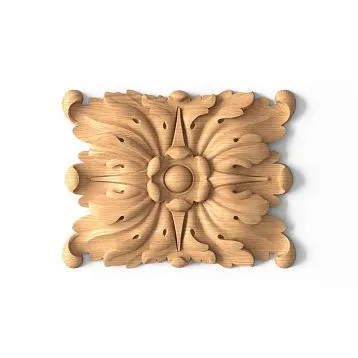
Floral motifs, so popular in classical decorative appliquéssubconsciously connect us with nature, activating ancient instincts of harmony with the surrounding environment. Geometric patterns appeal to our desire for logic and order, creating a sense of control and predictability.
Our factory also produces:


Color Psychology in Wall Decor
The color of decorative elements plays no less important a role than their shape. Warm tones of natural wood — honey, golden, brown — create a sense of security, home comfort, stability. These colors are especially effective in bedrooms, living rooms, and children's rooms.
Cool tones — white, silver, gray-blue — visually expand space, create a sense of freshness, cleanliness, modernity. They are ideal for offices, kitchens, bathrooms.
Contrasting combinations — dark elements on a light background or vice versa — create dynamism, attract attention, become focal points of the interior. Such solutions suit people with a strongly expressed individuality, striving to express themselves through their surroundings.
Get Consultation
Material Philosophy: The Soul of Decorative Ornaments
Choosing a material for wall ornaments is not only an aesthetic question but also a deep philosophical stance. Each material carries a certain energy, history, symbolism.
Natural Wood: Living Energy of Centuries
Wood is a material with a thousand-year history of use in decorative arts. Each species possesses unique properties and character. Wooden decor sets create a special atmosphere of warmth, naturalness, connection with nature.
Oak — the king of decorative species. Its powerful energy symbolizes strength, longevity, reliability. Oak wall ornaments create a sense of stability, protection, high status. The dense wood structure allows creating the finest carving details, which become even more expressive over time, acquiring a noble patina.
Beech attracts with its delicacy and plasticity. Its light, almost cream-colored wood is ideal for creating elegant, refined compositions. Beech ornaments look especially striking when painted, taking on any shade without losing textural expressiveness.
Ash, with its dynamic, contrasting texture, symbolizes movement, development, striving for the new. Its clearly defined annual rings create natural decorative effects, especially valued in modern interiors.
Polyurethane: Technology at the Service of Beauty
Modern molded decoration made of polyurethane opens up boundless possibilities for realizing the most daring design ideas. This material allows reproducing the most complex forms with perfect accuracy and repeatability.
Polyurethane ornaments have several indisputable advantages: absolute water resistance, dimensional stability, ease of installation, ability to be painted in any color. They are not afraid of temperature fluctuations, do not deform over time, and require no special care.
Gypsum: Classical Elegance
Gypsum molding — a traditional material for palace interiors. Its plasticity allows creating ornaments of any complexity, from delicate floral ornaments to monumental reliefs. Gypsum elements create a special atmosphere of aristocracy and refinement.
Stylistic Navigation: Finding Our Direction
The world of decorative ornaments is amazed by the diversity of stylistic directions. Each style has its philosophy, aesthetic principles, historical basis. Understanding these features will help create a harmonious and meaningful composition.
Classic Directions: Heritage of Centuries
Baroque — is a triumph of ornamentation, where every detail strives to impress the imagination with its complexity and opulence. Baroque Wall decorative ornaments Characterized by dynamic forms, abundance of scrolls, leaves, flowers, and angels. This style requires spacious rooms with high ceilings, where its scale will be appropriate.
Gilding is an essential part of baroque decoration. The play of light on gilded surfaces creates an effect of richness and luxury. Baroque elements often combine various materials — wood, plaster, metal — creating complex textured compositions.
Rococo brought French elegance and refinement to decorative arts. While baroque impresses with power, rococo enchants with delicacy. Asymmetric compositions, pastel tones, shell motifs (rocaille), from which the style derives its name, create an atmosphere of boudoir or salon.
Rocaille decorations often include images of amorces, birds, floral garlands. They are especially suitable for women's rooms, boudoirs, and spaces intended for rest and socializing.
Neoclassicism leans toward strict proportions and restrained decoration. Here, the richness of ornamentation is less important than its flawless execution and adherence to canons of beauty. Classical motifs — palmettes, meanders, acanthus, laurel wreaths — form the basis of the neoclassical vocabulary.
Neoclassical elements emphasize the architectural logic of space, creating a sense of monumentality and solemnity. They are ideally suited for formal rooms, libraries, offices.
Historical styles of different nations
Russian woodcarving is a unique phenomenon in world decorative art. Each region of Russia developed its own motifs and techniques, creating an unmistakable stylistic signature. Northern carving is distinguished by geometric strictness, central regions by richness of plant ornamentation, southern regions by vividness and decorativeness.
The symbolism of Russian woodcarving is deeply rooted in folk consciousness. Solar signs — symbols of life energy, rosettes — protection against evil forces, grapevines — fertility and abundance. Modern interpretations of Russian motifs preserve this symbolic depth, adapting forms to contemporary requirements.
Gothic, with its aspiration upward, pointed forms, and stone carving, creates a completely unique atmosphere. Gothic Decor collections includes characteristic elements — trilobes, four-leaf clovers, pointed arches, finials.
Gothic decoration is especially effective in high spaces with large windows. It creates a sense of aspiration, spirituality, and connection with higher powers.
Modern directions: new forms of beauty
Modernism brought revolutionary changes to decorative arts. Abandonment of historical styles, turn to natural forms, use of new materials and technologies created a completely new aesthetic language.
Modernist decorations are characterized by smooth, flowing lines, asymmetric compositions, stylized plant motifs. Especially popular are motifs of irises, lilies, dragonflies, and other natural forms reinterpreted through a modern perspective.
Art Deco combined the luxury of classical styles with the geometry of the machine age. This style is characterized by strict symmetry, geometric ornaments, use of expensive materials. Zigzag lines, stepped forms, solar motifs create dynamic, memorable compositions.
Minimalism uses decorative elements extremely sparingly. Here, the quantitative indicator is less important than the quality of each detail. Simple geometric forms, ideal proportions, absence of excess — these are the principles of minimalist decoration.
Technical craftsmanship: from concept to realization
Creating high-quality decorative ornaments is a complex technological process requiring deep knowledge of materials, modern equipment, and the highest level of craftsmanship from artisans.
Designing: the birth of an idea
Modern design of decorative elements begins with creating a concept. Designers analyze architectural features of the space, stylistic preferences of the client, and functional requirements.
Historical research precedes the creation of elements in classical styles. Museum samples, historical documents, architectural monuments are studied. Every detail must conform to the canons of the chosen style.
Sketching is a creative process of searching for optimal forms and proportions. Numerous variants are worked out on paper, and the most successful solutions are selected.
Computer modeling allows creating accurate three-dimensional models of future products, checking their compatibility with architecture, and evaluating visual effects. Parametric modeling enables quickly generating variations of the basic design.
Manufacturing: union of traditions and technologies
CNC machining ensures the highest precision in manufacturing complex profiles and reliefs. Multi-axis machining centers are capable of producing parts of any complexity with repeatability down to fractions of a millimeter.
Hand finishing remains an important stage in producing high-quality elements. Experienced carvers remove traces of machine processing, adding liveliness and individuality to each piece.
Casting is used for producing polyurethane and plaster elements. Silicone molds allow reproducing the finest details with photographic accuracy.
Final finishing: the last touches of perfection
Polishing is performed in several stages with gradually decreasing abrasive grit. Final finishing provides the surface with ideal smoothness and prepares it for applying coatings.
Priming ensures reliable adhesion of finish coatings. Special primers fill material pores, creating a uniform surface.
Staining and patination allow creating any decorative effects — from imitating noble metals to aging effects. Multi-layer coatings create depth of color and richness of tones.
Design Solutions: Creativity Without Boundaries
Wall decor provides unlimited opportunities for creative self-expression. Properly selected and placed elements can radically change the perception of space.
Compositional Principles
The golden ratio helps create harmonious proportions. Placing decorative elements at golden section points creates visually pleasing compositions.
Rhythmic structures create dynamism in a static architectural environment. Regular repetition of elements creates a calm, measured rhythm. Progressive changes in size add movement. Free rhythm creates a more lively, organic composition.
Scale relationships are critically important for perceiving decor. Large elements require appropriate space; small details may be lost in large rooms.
Zoning Space with Decor
Entrance area — the first impression of the interior. Here, the most representative decorative elements are appropriate. Console tables with carved brackets, mirror frames, decorative panels create a grand atmosphere.
Living room zone provides maximum opportunities for decorating. Here, complex multi-level compositions can be created, uniting various elements into a single artistic whole.
Dining room requires a special approach. Decor should create an atmosphere of hospitality, stimulate appetite, and encourage conversation. Botanical motifs, soft shapes, warm colors are ideal for this zone.
Private zones — bedrooms, offices — allow using more personal, intimate decorative motifs. Here, elements reflecting hobbies, interests, and the owner’s life philosophy are appropriate.
Installation and Mounting: Technology of Perfection
Quality installation is the guarantee of durability and aesthetic appeal of decorative elements. Even the best elements can be ruined by unskilled installation.
Preparation Stage
Surface inspection is the first and most important step. Walls must be flat, strong, and dry. Significant irregularities require preliminary leveling with plaster or drywall.
Marking is performed using laser levels and precise measuring tools. Especially important accuracy when creating symmetrical compositions and extended elements.
Material acclimatization prevents deformation after installation. Wooden elements must remain in the room for at least 48 hours under working temperature and humidity conditions.
Mounting technologies
Adhesive bonding is suitable for lightweight, small-sized elements. Modern polyurethane adhesives provide bond strength comparable to mechanical fastening.
Mechanical fastening is applied for heavy elements. The choice of fasteners depends on the wall material and element weight. Concealed fastening ensures the aesthetic appeal of the finished composition.
Combined fastening combines the reliability of mechanical connections with the aesthetics of adhesive bonding. This approach is especially effective for complex multi-element compositions.
Finishing operations
Joint sealing requires special care. Sealants are selected to match the base material. Properly executed joints should be practically invisible.
Touch-up of damaged areas during installation is performed using materials fully compatible with the base coating.
Final inspection includes checking the reliability of fastening, quality of joints, and compliance with the design solution.
Economic aspects: Investment in beauty
Wall Panels and decorative ornaments — are not only aesthetic pleasure, but also a profitable investment in real estate.
Impact on Property Value
Statistics show that well-decorated interiors sell 20-30% higher than similar properties without decorative finishes. This is especially relevant for luxury real estate, where decor is a key status factor.
Uniqueness is a key factor in the context of oversaturated standard offerings. Individual decorative finishes distinguish a property from competitors and create emotional attachment among potential buyers.
Durability of quality elements ensures long-term investment value. Classic motifs never go out of style, and quality materials last for decades.
Operating Costs
Properly selected and installed decor requires minimal maintenance. Regular dust cleaning and periodic coating refreshment — all that is needed to maintain the original appearance.
Repairability — an important advantage of quality elements. Local damage is easily remedied without replacing the entire composition.
The possibility of modernization allows updating the appearance without major renovations. Repainting, patination, adding new elements give new life to existing decor.
Care and preservation: beauty for centuries
Proper care extends the life of decorative ornaments and preserves their original beauty.
Regular Maintenance
Cleaning from dust is the main care procedure. Accumulation of dust in carved recesses damages the appearance and may lead to coating damage. Use soft brushes, vacuum cleaner with adjustable power.
Humidity control is especially important for wooden elements. Optimal air humidity 45-65% prevents cracking and deformation of wood.
Protection from direct sunlight prevents coating fading and material drying out. UV filters on windows extend the life of decorative elements.
Preventive measures
Periodic inspection allows timely detection of problems. Minor defects are easier to fix in the early stage than waiting for serious damage.
Climate control — an investment in the longevity of decor. Air conditioning and humidification systems maintain optimal conditions for all types of materials.
Restoration and renewal
Cosmetic repair includes filling minor damages, renewing coatings, touch-ups. Such work can be performed independently if skills are available.
Serious restoration requires a professional approach. Restoration of lost carved fragments, replacement of damaged elements must be performed by specialists.
Innovations and development prospects
The industry of decorative ornaments is constantly developing, introducing new technologies and materials.
Digital technologies
3D printing opens new possibilities for creating complex forms. Prototypes can already be printed from various materials to evaluate design.
Virtual reality allows assessing the appearance of future compositions even at the design stage. Clients can "walk through" the future interior, make adjustments before production begins.
Smart Materials
Self-cleaning coatings with photocatalytic properties break down contaminants under light, significantly simplifying care.
Thermochromic materials change color depending on temperature, creating dynamic, interactive compositions.
Ecological Innovations
Bio-composites based on plant fibers are becoming a worthy alternative to traditional materials. They are fully biodegradable and do not harm the environment.
Secondary recycling allows creating new elements from wood processing waste, reducing pressure on forest resources.
Psychology of choice: how to find your style
Choosing decorative ornaments is a deeply personal process, reflecting one's inner world, values, and life priorities.
Style preference test
Answer the following questions:
● What appeals to you more — symmetry or asymmetry?
● Do you prefer complex ornaments or simple forms?
● Which colors evoke positive emotions in you?
● Is historical authenticity or modernity of solutions important to you?
● Are you willing to regularly care for decor?
Analyzing your answers will help determine the stylistic direction most suitable for your personality.
Emotional associations of styles
Baroque is chosen by people with a strongly expressed individuality, striving for luxury and status display. They value theatricality and are not afraid to be in the center of attention.
Classicism appeals to conservative personalities who value traditions, stability, and time-tested values. This is the choice of people with a developed sense of proportion and good upbringing.
Modernists prefer creative natures, open to the new, valuing individuality and self-expression. They are not afraid of experiments and are ready for change.
Minimalism is chosen by practical people who value functionality, order, and efficiency. They prefer quality over quantity, essence over external effects.
Regional specificity: decoration of different climatic zones
Climate conditions of the region influence the choice of materials and manufacturing technologies for decoration.
Northern regions
Low humidity in heated rooms requires special attention to protecting wooden elements from drying out. Special impregnations and coatings are used.
Large temperature fluctuations between outdoors and indoors create additional requirements for material stability. Composite materials with low expansion coefficients are preferred.
Southern regions
High humidity requires the use of moisture-resistant materials and coatings. Special attention is paid to protection against mold and fungi.
Intense UV radiation quickly destroys organic coatings. Special UV stabilizers and light-protective compounds are used.
Coastal zones
Salt air aggressively affects metallic fastening elements. Stainless steel fasteners and additional protective coatings are used.
High humidity combined with temperature fluctuations requires especially careful selection of materials and processing technologies.
Frequently Asked Questions about wall decorative elements
How to determine the optimal size of decorative elements for a specific room?
The size of elements should correspond to the scale of the room. For standard apartments with ceilings 2.5-3 meters, elements 10-20 cm high are suitable. In rooms with high ceilings, larger details can be used. It is important to maintain proportions — too small elements will disappear in a large space, too large ones will overwhelm.
Can elements of different styles be combined in one interior?
Yes, but this requires a professional approach. Successful mixing of styles is possible with unifying factors — common color palette, material, scale. The best results are achieved by combining historical styles of the same era or modern interpretations of classical motifs.
What decorative elements are suitable for small rooms?
In small rooms, it is better to use light, thin elements of simple forms. Vertical details visually increase ceiling height, horizontal ones expand the space. Mirror and metallic surfaces add light and air.
How to care for decorative elements made of different materials?
Wooden elements require regular cleaning with soft brushes, humidity control, and protection from direct sunlight. Polyurethane details can be cleaned with a damp cloth and mild cleaning agents. Gypsum elements are afraid of moisture and can only be cleaned dry. All types of elements require periodic renewal of coatings.
How much does wall decoration cost and what factors affect the price?
The cost depends on the material, complexity of elements, volume of work, and region. Simple polyurethane moldings cost 300-800 rubles per linear meter, complex carved compositions from solid wood may cost 5000-15000 rubles per square meter. Additional costs include design project, delivery, and installation.
Can decorative elements be installed by oneself?
Simple moldings, baseboards, and small inserts can be installed by yourself if you have basic skills and tools. Complex multi-element compositions, heavy details, and high-altitude work are better entrusted to professionals. Incorrect installation may damage expensive elements.
Conclusion: the art of creating unique spaces
Wall decorative ornaments — it is a bridge between functional architecture and a living, breathing space filled with meaning and beauty. In a world of standardization and uniformity, they provide a unique opportunity to create a truly individual living environment.
Properly selected and installed wall decor serves for decades, creating a backdrop for important life events and becoming a silent witness to family history. Investments in quality decorative elements pay off not only through increased property value but also through daily aesthetic enjoyment and improved quality of life.
Modern manufacturing technologies allow us to realize the most daring design ideas, combining traditional craftsmanship with innovative solutions. The richness of materials, styles, and execution techniques provides limitless opportunities for creative self-expression.
Choosing decorative elements is not just buying beautiful things — it is creating a unique atmosphere that reflects your personality, values, and concept of beauty. Each element should find its place in the overall composition, and every detail should contribute to creating a cohesive artistic image.
STAVROS Company — your reliable partner in the world of decorative art. For many years, STAVROS has created unique solutions for the most demanding clients, combining traditional craftsmanship with modern technologies.
STAVROS offers a full range of decorative solutions — from classic carving to modern designer compositions. In-house production, strict quality control, and use of premium materials guarantee flawless results.
STAVROS's team of professional designers will help create a unique project tailored to your interior's features, stylistic preferences, and budget constraints. Individual approach to each client, professional consultations at every stage of the project, and quality after-sales service — these are STAVROS's principles of operation.
STAVROS craftsmen work with a full spectrum of materials — from noble wood species to modern composites. Their proprietary technological developments and continuous improvement of production processes enable them to create items that set new quality standards in the industry.
Choosing STAVROS, you invest in beauty, quality, and longevity. STAVROS is a guarantee that your home will become a work of art, where every detail is thoughtfully and perfectly crafted, where beauty serves not only aesthetic pleasure but also enhances the quality of life.