Article Contents:
- Philosophy of space: why do walls need decorations?
- Emotional architecture of the home
- Social psychology of interior design
- Anatomy of wall decor: understanding the elements
- Moldings as the basis of composition
- Carved Elements: Art in Details
- Material Science of Decorative Elements
- Wood: The Living Soul of Interior Design
- Ecological philosophy of choice
- Stylistic Directions in Wall Decor
- Functional Aesthetics of Decorative Elements
- Baroque: Theatricality and Emotion
- Modernism: nature as a source of inspiration
- Modern minimalism: philosophy of simplicity
- Technological process of creating wall decor
- From Sketch to Finished Product
- Modern manufacturing technologies
- Practical aspects of selection and application
- Space analysis: where to start
- Compositional principles of placement
- Installation and mounting: turning ideas into reality
- Preparatory work
- Technologies of Professional Installation
- Care and maintenance: Preserving beauty for years
- Regular care for wooden elements
- Restoration and renewal
- Technologies of the Future in Decorative Arts
- Investment Appeal of Quality Decoration
- Budget planning for decorative finishing
- Trends and prospects for development
- Modern trends in wall decor
- Future of decorative technologies
- Psychology of color in wall decor
- Emotional impact of different shades
- Stylistic Trends in Modern Decor
- Russian traditions of wooden architecture
- European classical tradition
- European influences in Russian interiors
- Frequently Asked Questions
- Conclusion: STAVROS — your guide to refined decor

Wall. A simple vertical surface dividing space. But what if I told you that this very surface can become a canvas for creating a masterpiece? What exactly lies hidden here, on this seemingly ordinary plane, the potential to create an atmosphere that will inspire, amaze, and delight every day? Buy wall decorations — this is not just a purchase, it is an investment in beauty, in emotions, in quality of life.
Imagine: you enter a room, and your gaze involuntarily stops at an exquisite carved element adorning the wall. The delicate lines of the ornament, the play of light and shadow in deep reliefs, the noble texture of natural wood — all of this creates the feeling that you have entered not an ordinary apartment, but palace chambers or an old mansion.
But how to turn a dream into reality? How to choose from numerous options exactly those decorative elements that will perfectly fit your interior and create precisely the atmosphere you dream of? Let’s embark on an exciting journey into the world of wall decor and uncover the secrets of creating a truly unique space.


Philosophy of space: why do walls need decorations?




Emotional architecture of the home
Have you ever wondered why some interiors are unforgettable, while others fade from memory immediately after leaving the room? The secret lies not in room sizes or furniture cost. It’s all about details, those very elements that create an emotional connection between a person and space.
bare walls are psychologically perceived as incompleteness, emptiness, lack of character. The human brain interprets such surfaces as temporary, uninhabited, soulless. That’s why even in the most luxurious apartment, it may feel uncomfortable if the walls remain 'silent'.
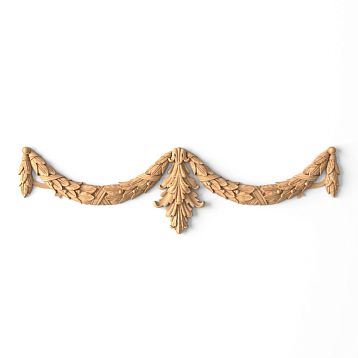
Decorative Inserts transform walls into storytellers. Each element carries its own story, creates a mood, shapes the character of the room. Plant ornament evokes thoughts of nature and harmony. Geometric forms emphasize order and stability. Carved details speak of craftsmanship and respect for traditions.
Our factory also produces:


Social psychology of interior design
Your home is not only a place to live, but also a means of self-expression. How you decorate your walls tells guests about your tastes, values, life experience. Quality decorative elements demonstrate an understanding of beauty, respect for craftsmanship, and a pursuit of perfection.
But this also works in reverse. A beautiful environment influences your own behavior and self-perception. Being in an elegantly decorated space automatically makes you behave more elegantly, think more elevated, and feel more significant.
Get Consultation
Anatomy of Wall Decoration: Understanding the Elements
Moldings as the Basis of Composition
Moldings — this is the architectural grammar of interior design. They create structure, set rhythm, organize space. Without moldings, decorative elements appear chaotic, like words without punctuation.
Horizontal moldings visually expand space, making it more intimate and cozy. Vertical elements raise ceilings and add grandeur. Framed compositions create focal points, drawing attention to the most important areas.
Modern moldings are made from various materials, but wood remains the benchmark of quality and beauty. Natural wood texture creates a sense of warmth and authenticity that cannot be achieved with artificial materials.
Carved Elements: Art in the Details
Wood carving is one of humanity's oldest arts. Each carved element embodies centuries of craftsmanship tradition, understanding of beauty, and pursuit of perfection. Corner decorative elements become precious ornaments of architectural space.
Modern technologies allow creating carved elements of incredible complexity and detail. High-precision milling machines reproduce the finest details, while experienced artisans add unique handcrafted touches.
Choosing ornamentation is not merely an aesthetic decision. Each motif carries its own symbolism and psychological impact. Botanical patterns soothe and harmonize. Geometric ornaments stimulate thought. Historical motifs create a connection to cultural traditions.
Material Science of Decorative Elements
Wood: The Living Soul of Interior Design
Why is wood considered the ideal material for decorative elements? The answer lies in the very nature of this material. Wood is frozen life, conserved growth energy. Each ring in the wood’s structure tells of the years it lived, the weather it endured, and its striving toward light.
Different wood species have unique characteristics. Oak impresses with its powerful, expressive texture and incredible strength. Beech delights with its soft pinkish hues and dense, uniform structure. Walnut captivates with its refined pattern and noble color.
Modern wood processing allows fully revealing its natural beauty. Special finishes highlight texture, protect against external influences, and extend the lifespan of items. Meanwhile, wood retains its ability to 'breathe,' creating a healthy microclimate in the room.
Ecologicalism as a Philosophy of Choice
In the era of ecological awareness, material selection becomes a matter of worldview. Natural wood is a renewable resource that, with proper forest management, does not harm nature. Moreover, wooden items at the end of their service life can be recycled or disposed of without harming the environment.
High-quality wooden decorative elements do not emit harmful substances, do not cause allergic reactions, and create a favorable atmosphere in the home. This is especially important for families with children and individuals concerned about their health.
Stylistic directions in wall decoration
Classicism: eternal values of beauty
Classic decoration style is based on principles developed by ancient masters and refined by Renaissance architects. Symmetry, proportionality, and mathematical precision create a sense of stability and grandeur.
Key elements of classic wall decoration include pilasters, cornices, rosettes, and botanical ornaments. Each element has its place within the strict hierarchy of classical composition. Disrupting this hierarchy instantly destroys harmony.
Buy wall decorations in the classical style — is an investment in timeless beauty. Such interiors do not become outdated, do not go out of fashion, and are passed down as family heirlooms.
Baroque: theatricality and emotion
Baroque decoration is a festival, a carnival, a theatrical performance. Here, the boldest decorative solutions are appropriate: abundance of gilding, complex multi-figure compositions, dynamic forms that create a sense of movement and life.
The hallmark of the baroque style is emotionality. While classicism appeals to reason, baroque appeals to feelings. Baroque interiors are not merely beautiful — they are captivating, thrilling, unforgettable.
Modern interpretations of baroque are more restrained than historical examples. Designers take the best from baroque tradition — the plasticity of forms, richness of ornamentation, theatricality — but adapt them to contemporary life realities.
Modern: nature as a source of inspiration
The modern style revolutionized decorative art by rejecting imitation of historical models. Nature became the sole teacher and source of inspiration. Curves of branches, petals of flowers, silhouettes of insects became the foundation for fundamentally new decorative forms.
Modernist decorative elements are characterized by asymmetry and dynamism. They create a sense of growth, development, and eternal motion of life. Such decoration is especially suitable for creative personalities and people with an active lifestyle.
Botanical motifs of modernism are maximally naturalistic. In the ornament, one can recognize specific plant species, feel the season, and sense the artist’s mood. This creates a deep emotional connection between the decoration and the viewer.
Modern minimalism: philosophy of simplicity
A minimalist approach to decoration may seem paradoxical — how can one decorate while rejecting ornamentation? But this is precisely the depth of minimalism: to find maximum expressiveness in minimal means.
Minimalist decorative elements are based on pure geometric forms, contrast of textures, play of light and shadow. Every line here is significant, every detail is precisely executed. There is no room for chance or approximation.
In minimalism, special attention is paid to the quality of execution. A simple form does not forgive imperfections — any inaccuracy immediately stands out. This requires the highest level of craftsmanship from manufacturers.
The technological process of creating wall decor
From sketch to finished product
Creating a quality decorative element is a complex multi-stage process that begins long before the first touch of a tool to the material. It all starts with an idea, with understanding what function the element will serve and in what context it will be used.
Design includes studying historical analogs, analyzing stylistic features, creating sketches, 3D modeling. Modern computer technologies allow you to see the future element in the interior even before its manufacture.
Special attention is paid to ergonomics and functionality. The decorative element must not only look beautiful but also be easy to install, securely hold, and harmoniously blend with other interior elements.
Modern manufacturing technologies
High-precision CNC machines ensure the ideal geometry of decorative elements. The accuracy of processing is measured in fractions of a millimeter, guaranteeing flawless fitting of parts during installation.
Multi-axis milling centers are capable of creating items of the most complex three-dimensional forms. What previously required months of meticulous handwork by a master carver can now be accomplished in a few hours with unmatched quality.
But technology is merely a tool. The soul of the item still comes from the human being. Final finishing, quality control, imparting unique individual characteristics — all of this remains the domain of experienced craftsmen.
Practical aspects of selection and application
Space Analysis: Where to Start
Before Buy wall decorationsIt is necessary to carefully analyze the space. Room dimensions, ceiling height, natural lighting, existing interior — all of this affects the choice of decorative elements.
In small rooms, large decorative elements may create a feeling of confinement. Conversely, small decor in spacious rooms may become lost and appear unconvincing. The golden rule — the size of the decor should match the scale of the room.
Lighting plays a key role in the perception of relief decorative elements. Under bright, even light, the relief may 'disappear'. Under directional lighting, a dramatic interplay of light and shadow is created, highlighting the beauty of the carving.
Compositional Principles of Placement
The placement of decorative elements on the wall follows compositional laws. Central symmetry creates a sense of solemnity and stability. Asymmetric compositions are more dynamic and modern.
The golden ratio helps find optimal proportions for decorative compositions. Elements placed at golden ratio points are perceived as the most harmonious and natural.
Rhythm and repetition create musicality in the composition. Repeating elements placed at equal intervals create a sense of order and stability. Disruptions to the rhythm should be intentional and justified.
Mounting and Installation: Turning the Idea into Reality
Preparation Work
Quality mounting of decorative elements begins with careful surface preparation. The wall must be perfectly flat, clean, and dry. Even minor irregularities may become visible after installing the decor.
Marking is a critically important stage of mounting. Decorative elements must be placed strictly along symmetry axes, at equal distances, and at the correct height. Laser levels and precise measuring tools are essential assistants for the craftsman.
The choice of mounting materials depends on the type of wall, size, and weight of the decorative elements. Lightweight parts can be mounted using special adhesives. Heavy elements require mechanical mounting using anchors or dowels.
Professional Installation Technologies
Modern adhesive compositions provide reliable connection of decorative elements to various types of surfaces. Polyurethane adhesives are distinguished by high adhesion and ability to compensate for minor irregularities of the base.
Hidden mounting preserves the aesthetic of the decorative element. Mounting holes are placed in areas concealed by the relief and carefully filled after installation. The result — a perfectly smooth surface without any signs of mounting.
Joining elements requires meticulous precision. Even millimeter gaps will be noticeable after painting. Professional installers use special compounds for filling joints and grinding tools to create perfectly smooth transitions.
Care and Maintenance: Preserving Beauty for Years
Regular care for wooden elements
Wooden decorative elements require careful, but not complicated, maintenance. Regular dry cleaning with soft brushes removes dust from relief grooves. This is especially important for complex carved elements with deep recesses.
Wet cleaning is performed using slightly damp cloths without aggressive cleaning agents. Wood does not like excessive moisture — it can cause deformation, cracking, and color changes.
Periodic treatment with protective compositions extends the service life of wooden elements. Special waxes and oils highlight the natural beauty of wood, protect against external influences, and prevent drying out.
Restoration and renewal
Even with the most careful handling, decorative elements may acquire minor damage — chips, scratches, scuffs. Most such defects can be successfully removed by professional restoration.
Modern materials allow even serious damage to be restored. Special wood putties, restorative waxes, and professional tools in the hands of an experienced craftsman create wonders.
The ability to repaint is one of the advantages of wooden decorative elements. Changing the interior concept does not require replacing the decor — simply change its color, and the element will look fresh and new.
Economic aspects of decorative finishing
Investment attractiveness of quality decoration
Quality decorative elements are not an expense, but an investment. Beautiful interiors increase property value, making it more attractive to potential buyers or renters.
The longevity of quality decor makes initial costs economically justified. Wooden elements serve for decades without losing their aesthetic appeal. This is much more cost-effective than frequent replacement of cheap materials.
Exclusivity and uniqueness of decor create additional value. Interiors with original decorative elements are always in demand in the luxury real estate market.
Budget planning for decorative finishing
The budget for decorative wall finishing usually accounts for 10-15% of total renovation costs. This is the optimal proportion that allows creating an expressive interior without excessive expenses.
Priority should be given to quality, not quantity. It is better to use a few expensive but high-quality elements than many cheap, questionable-quality details. Quality decor will last for decades, while cheap decor will require replacement within a few years.
Phased implementation of the project allows distributing costs over time. One can start with basic elements — moldings and large decorative details — and then gradually add accents and small details.
Trends and Development Prospects
Modern trends in wall decor
One of the main trends of modernity is eco-friendliness. Consumers are paying more attention to the origin of materials, production methods, and environmental impact. Natural wood from certified forests is becoming especially valuable.
Personalization is another important trend. People want unique interiors that reflect their individuality. This creates demand for original decorative solutions and custom-made items.
Technological integration opens up new possibilities. Decorative elements may include lighting systems, smart home sensors, and audio systems. Technologies become invisible, serving beauty and comfort.
Future of decorative technologies
The development of digital design technologies allows creating increasingly complex and refined decorative elements. Parametric modeling, ornament generation algorithms, artificial intelligence — all of these are tools of the future designer.
New materials and production technologies expand the boundaries of what is possible. Composite materials combine the advantages of different substances. 3D printing allows creating shapes impossible with traditional processing.
Sustainable development is no longer just a trend, but a necessity. Recycling technologies, renewable materials, resource conservation — all of this defines the future of the decorative industry.
Psychology of color in wall decor
Emotional impact of various shades
The color of decorative elements significantly affects the perception of the interior and the emotional state of people. White elements create a sense of purity, lightness, and visually expand the space. They are universal and suitable for any interior.
Natural wood tones create an atmosphere of warmth and coziness. They are associated with nature, eco-friendliness, and reliability. Such colors are especially suitable for family interiors, children's rooms, and country homes.
Dark shades — black, dark brown — add drama and contrast to the interior. They emphasize the relief of decorative elements, creating expressive accents. However, they should be used carefully — excessive use of dark colors can make the room gloomy.
Color schemes and their application
Monochromatic schemes are based on using various shades of one color. Such interiors look elegant and refined, but require variety in textures and forms to create visual interest.
Contrasting schemes use opposite colors from the color wheel. White decorative elements on dark walls or vice versa create bright, memorable interiors. However, contrast should be moderate — excessive contrast tires the eyes.
Analogous schemes are based on adjacent colors from the color wheel. They create harmonious, calm interiors conducive to rest and relaxation. Such color solutions are especially suitable for bedrooms and living rooms.
Regional characteristics and cultural traditions
European classical tradition
European decorative art has evolved over centuries, absorbing influences from various epochs and styles. Ancient heritage, Gothic traditions, Renaissance revival, Baroque opulence — all of this created a rich palette of decorative motifs.
The French school of decoration is distinguished by elegance and refinement. Rococo, with its pastel tones and graceful forms, is still considered the epitome of elegance. Italian masters gained fame for the monumentality and drama of Baroque compositions.
The English style of decoration is more restrained and practical. Here, the quality of materials, craftsmanship, and functionality are valued. English interiors create an atmosphere of reliability and stability.
Russian traditions of wooden architecture
Russia has unique traditions of wooden decorative art. Carved cornices, richly ornamented pediments, exquisite interiors of wooden mansions — all of this constitutes a national treasure of Russian culture.
Russian masters were virtuosos in the technique of three-dimensional carving. Plant motifs were distinguished by particular plasticity and expressiveness. Geometric motifs created complex rhythmic compositions.
Modern interpretations of Russian traditions combine historical authenticity with contemporary technologies and materials. decorative elements In the Russian style, they create a connection with cultural roots, emphasizing national identity.
Frequently asked questions
How to determine the required number of decorative elements for a room?
The number of decorative elements depends on the size of the room, its purpose, and the chosen stylistic concept. The general rule is: better fewer, but higher quality. Start with one or two central elements and gradually add details, assessing the overall impression. In small rooms, 2-3 accents are sufficient; in spacious rooms, you can use more.
Can decorative elements of different styles be combined?
Combining different styles is possible, but requires a professional approach and good taste. The key to success is finding a unifying element: color, material, scale, or proportions. Eclectic interiors can be very expressive, but it's important not to cross the line between stylish eclecticism and chaos.
How to choose the size of decorative elements for a specific room?
The size of the decor should match the scale of the room. In rooms with high ceilings (3 meters and above), large elements 15-20 cm and taller are appropriate. For standard ceilings (2.5-2.7 m), elements 8-12 cm tall are optimal. In compact rooms, it's better to use small details 5-8 cm tall.
What tools are needed for self-installing decorative elements?
The basic set includes: level (preferably laser), tape measure, marking pencil, drill with a set of drill bits, screwdriver, saw for trimming elements, sandpaper, wood glue, fasteners of the appropriate type. For complex work, a circular saw with a fine-toothed blade may be required.
How long does it take to install decorative elements?
Installation time depends on the complexity of the project and the installer's experience. Simple linear elements can be installed in a few hours. Complex compositions with multiple details may require several days of work. It is important not to rush — the quality of installation is critical to the final result.
How to care for decorative elements in humid rooms?
In humid rooms, ventilation and humidity control are especially important. Regularly ventilate the room, use exhaust fans. For cleaning, use only slightly damp cloth, avoid excess moisture. Periodically treat elements with protective compositions containing antiseptic properties.
Do decorative elements affect the acoustics of a room?
Yes, textured decorative surfaces affect the acoustic properties of a room. They break up sound waves, reduce echo, and create a more comfortable acoustic environment. This is especially noticeable in rooms with high ceilings. Properly placed decor can improve acoustics by 20-30%.
Can decorative elements be repainted?
Wooden decorative elements can be repainted multiple times. This is one of their main advantages — the ability to change the interior's color scheme without replacing the decor. Before painting, the surface must be cleaned, sanded if necessary, primed, and only then apply the final coating.
Conclusion: STAVROS — your guide to exquisite decor
The world of interior decorative design is infinitely rich and diverse. Each element, each detail can become the key to creating a unique space that reflects your individuality and pursuit of beauty. But in this diversity, it is especially important to find a reliable partner who will help bring your boldest ideas to life.
The STAVROS company has been a recognized leader in creating interior decorative elements for many years. Our philosophy is based on the belief that beauty should be accessible, quality — impeccable, and service — professional at every stage of cooperation.
The STAVROS production facility is equipped with the most modern European equipment, allowing us to create decorative elements of any complexity with unparalleled quality of execution. At the same time, we never forget that behind each product is a person — a craftsman who puts not only professional skills but also a part of their soul into their work.
The STAVROS assortment includes thousands of decorative elements of various styles, sizes, and purposes. From classic floral ornaments to modern minimalist forms — everyone will find a solution perfectly suited to their interior and taste.
The STAVROS team is not just manufacturers or sellers. We are consultants, designers, and technologists ready to share our experience and knowledge to achieve the ideal result. Every project is unique for us, and every client is special.
Choosing STAVROS, you choose not just decorative elements. You choose quality proven over time, beauty created by master craftsmen, service oriented toward results. Our products adorn thousands of homes across Russia, and each one is a testament to our professionalism and dedication to our craft.
Let us become your partners in creating the dream interior. Together, we will transform your home into a space that will delight, inspire, and amaze you for many years.