Article Contents:
- What Are Decorative Slats and Where They Work
- Decorative Slats for Walls
- Slats for Furniture and Facades
- Slats for Ceilings, Niches, and Portals
- Slats as a Tool for Accent Decoration
- Why Wooden Decorative Slats Are in Demand in Interior Design
- Natural Texture — Something That Cannot Be Fully Imitated
- Variability of Sizes and Cross-Sections
- Suitable for various styles
- Can be combined with other wooden decor
- What shapes and sizes do decorative battens come in
- Narrow decorative battens: thinness as an artistic technique
- Medium formats: a universal choice
- Wide and massive battens
- How cross-section affects visual impact
- What materials to choose decorative battens from: oak and beech
- Decorative battens made of beech
- Decorative battens made of oak
- What to choose for enamel, and what for tinting
- How material affects the task
- How to choose decorative battens for a specific task
- For an accent wall
- For TV zone
- For the hallway
- for the bedroom
- living room
- For furniture and facades
- How to select the size of decorative batten
- Batten length: 2400 mm — standard for the task
- Thickness and width: how not to make a mistake
- Vertical and horizontal application
- How not to overload the interior
- Decorative battens for different interior styles
- Modern style and minimalism
- Neoclassicism
- Classical and Empire
- Scandinavian style and eco-interior
- Eclecticism and custom projects
- How to combine decorative slats with other interior elements
- With moldings and cornices
- With wall panels
- With furniture fronts
- With doors and portals
- Installation of decorative slats: what to consider in advance
- Foundation Preparation
- Layout and spacing step
- Mounting methods
- Joining and geometric accuracy
- Common Installation Mistakes
- What influences the choice between thin and massive slats
- Room size
- Ceiling height
- Lighting
- Role of the slat: background or accent
- When to buy ready-made decorative battens and when to order custom
- If a standard size fits
- If a specific material and finish are needed
- If a batch is required for a project or interior
- If a non-standard size is needed
- What affects the price of decorative battens
- Material
- Cross-section and material volume
- Finish
- Availability or custom production
- Purchase Volume
- Common mistakes when choosing decorative battens
- Buying without understanding the application scenario
- Choosing a cross-section that is too thin for a large surface
- Ignoring length and layout scheme
- Choosing based only on photos without reference to interior style
- Mismatch between slat material and other wooden decor
- FAQ: answers to popular questions about decorative slats
- Conclusion

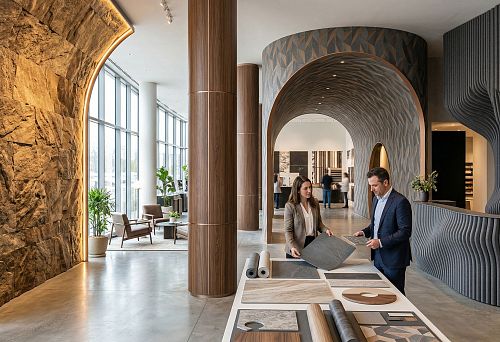
There are details that don't catch the eye immediately—but they are precisely what holds the entire interior together. You enter a room and feel: something here is meticulously calibrated, the space 'breathes,' it has rhythm. And only then do you notice: vertical lines on the wall, smooth relief on a cabinet facade, thin horizontal stripes under the ceiling that add height without molding. This is the work ofform the architecture of walls and ceilings, creating a play of light and shadow.—a detail that is simultaneously a structural element and an artistic tool.
Wooden decorative slats are used more widely than commonly thought. They are not just 'stripes on the wall' from popular design blogs. This is a millwork material that works on walls, ceilings, furniture facades, in niches and portals, in both classic and minimalist interiors simultaneously. They are used by designers, builders, furniture makers, and apartment owners who want results—not expensive renovation for renovation's sake.
In this article—a complete practical breakdown: what decorative slats are, where and how they are used, what sizes and materials to choose for a specific task, how to avoid mistakes when purchasing, and when to order a batch for a project.


What are decorative slats and where do they work
A decorative batten is a longitudinal wooden profile with a rectangular or flat cross-section. Unlike molding with a shaped profile or cornice with complex geometry, the batten is intentionally simple in form. It is this simplicity that is its main advantage: the batten does not impose a style; it creates rhythm, texture, and line.




Decorative wall battens
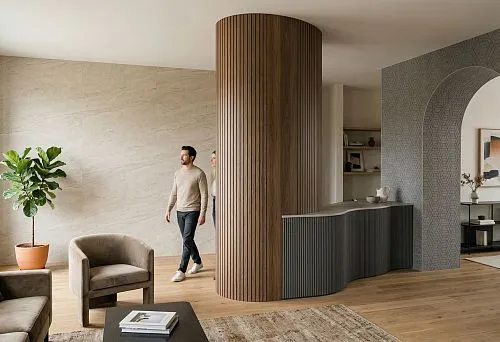
The wall is the main stage for wooden battens. Vertical layout creates a sense of height and strict rhythm. Horizontal layout emphasizes the expanse of space and adds dynamism. Diagonal and checkerboard layouts are already an authorial approach, eclecticism, where battens become graphics.
For walls, wooden decorative battens are more commonly used in cross-sections from thin (15×5 and 24×5 mm) to medium and large (40×5, 70×7, 90×10 mm) — depending on whether a thin graphic line or pronounced relief is needed. They are mounted directly onto the wall surface: on painted surfaces, on panels, on drywall.
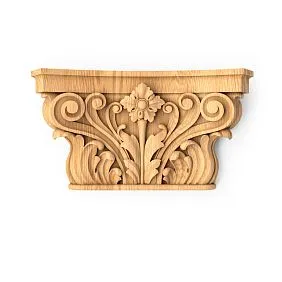
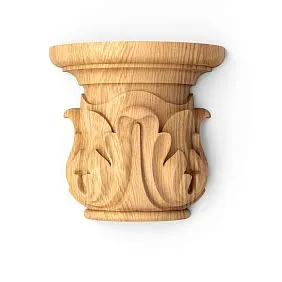
Our factory also produces:





Battens for furniture and facades
A facade with a vertical layout of wooden battens is a fundamentally different product. It looks more expensive, more complex, more interesting. This approach is suitable both in classic furniture (where battens imitate paneling) and in modern design (where they create geometry and texture without excessive decoration).
Battens are attached to an MDF facade or wooden panel with a spacing from 20 to 60 mm depending on the desired pattern density. The result is a product with depth and character.
Get Consultation
Battens for ceilings, niches, and portals
A ceiling with a linear layout of wooden slats is a striking technique, especially with oblique or accent lighting. The slats create a beautiful play of shadows between the stripes. Niches and arches framed with wooden moldings look complete and professional.
For portals and frames, slats are used in larger cross-sections—60×23 mm and 80×23 mm—which provide sufficient volume to be noticeable on the surface.
Slats as a tool for accent decor
One of the main roles of wooden slats in modern interiors is as an accent. Not the entire wall, but a part of it: the area behind the sofa, the area behind the bed, the TV wall. Slats 'highlight' a zone without partitions and without extra materials. This is both a visual technique and a functional detail that conceals utilities, unevenness, and seams.
Why wooden decorative slats are in demand in interiors
Natural texture—something that cannot be fully imitated
Plastic, MDF with film, vinyl panels—all of these try to replicate wood. But the natural texture of oak or beech does not lend itself to complete imitation: living fibers, soft tonal transitions, the unique pattern of each board. In conditions where interiors increasingly gravitate toward authenticity and natural materials, wooden slats occupy a niche that cannot be filled by synthetics.
Variability of sizes and cross-sections
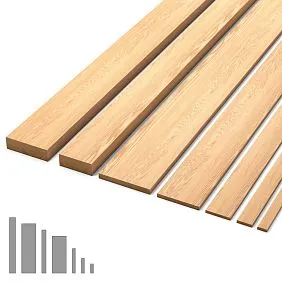
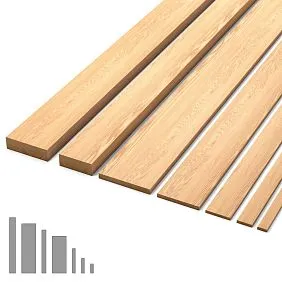
The RK-001 slat from STAVROS is available in the following cross-sections with a uniform working length of 2400 mm:
| Cross-section (mm) | Visual effect |
|---|---|
| 15×5 | The thinnest line, almost graphic |
| 24×5 | Light rhythm, does not overload the plane |
| 40×5 | Noticeable strip, universal format |
| 70×7 | Pronounced relief, good for large planes |
| 90×10 | Volumetric strip, architectural accent |
| 60×23 | Massive profile, for niches and portals |
| 80×23 | Large element, frame, portal, heavy structures |
This allows working with one family of products at different scales: from thin wall graphics to massive framing.
Suitable for different styles
Wooden slat is not tied to one style. In classic — an element with dark walnut stain. In Scandinavian interior — light beech without coating. In loft — oak with dark stain. In minimalism — enamel, white or black. The same shape, different looks.
Ability to combine with other wooden decor
Wooden trim— it's a system. Reiki pairs well with moldings, cornices, and baseboards from the same series: a single wood species, a single finish, a unified visual language. It is this systematic approach that gives an interior that very sense of completeness which is hard to put into words but easy to feel.
What decorative reiki are available in terms of shape and size
Narrow decorative reiki: thinness as an artistic technique
Reiki with cross-sections of 15×5 and 24×5 mm represent the minimum scale at which a wooden element is still discernible on a flat surface. They create a fine vertical or horizontal graphic without overloading the space. Ideal for small rooms, light interiors, Scandinavian and Japanese styles. On a high wall with a frequent spacing (every 30–40 mm), they create an effect of fine tracery. With sparse spacing (every 80–120 mm) — a laconic rhythm.
Medium formats: a universal choice
Cross-sections of 40×5 and 70×7 mm are the workhorses in the world of decorative reiki. Noticeable enough to form a visual structure, yet restrained enough not to compete with furniture. This is the format most often chosen forwall decorationin living rooms, hallways, studies. A length of 2400 mm allows covering a standard room height without joints.
Wide and massive reiki
A cross-section of 90×10 mm is a full-fledged three-dimensional plank with a pronounced profile height. On a wall, it creates deep relief; with side lighting — a beautiful play of shadows. Used in large spaces, high-ceilinged rooms, areas with enhanced accent lighting.
Options of 60×23 and 80×23 mm are massive wooden profiles that serve an architectural function: framing niches, designing portals, panel systems with a pronounced frame.
How cross-section affects visual impact
The rule is simple: the larger the cross-section, the stronger the relief, and the larger the surface area where the battens are applied should be. A thin batten on a small wall is elegant. A wide batten in a small hallway feels oppressive and narrows the space. Conversely, a thin batten on a huge wall gets lost and looks random.
Which materials to choose decorative battens from: oak and beech
Decorative battens made of beech
Beech is softness, uniformity, a warm pinkish tone. Its uniform, fine-grained structure makes beech battens an ideal candidate for enamel painting: the surface becomes smooth, without chips or 'tear-outs,' and the paint applies evenly. It is precisely beechbattens for enamel— the standard choice for white, gray, and pastel interiors in styles like modern classic, Provence, and neoclassical.
Beech responds well to tinting: it's easy to achieve shades like 'ash,' 'alder,' or 'coffee' while preserving the soft, almost silky texture of the surface.
Decorative battens made of oak
Oak is character, grain, status. A pronounced wood grain pattern, warm golden-brown tones, and a rich texture. Oak battens work well under clear varnish or tinting: in both cases, the texture remains vibrant and readable.oak slatsSuitable for classic and neoclassical interiors, Scandinavian style, eco-interiors, studies, and libraries.
Oak is heavier than beech to process but stronger in use. If slats are used on actively used surfaces (on furniture, doors, in children's areas) — oak is more durable.
What to choose for enamel, and what for tinting
A simple rule: for painting and enamel — beech. For open texture and tinting — oak. If you want both naturalness and rich color — beech slat with deep stain.
How material affects the task
| Criterion | Beech | Oak |
|---|---|---|
| Texture | Fine, uniform | Coarse, pronounced |
| For enamel | Excellent | Worse (more open pore) |
| For tinting | Good | Excellent |
| Strength | High | Very High |
| Price | Below | Higher |
| Application | Furniture, facades, light interiors | Walls, classic, natural interiors |
How to choose decorative battens for a specific task
For an accent wall
Accent wall — the most popular application scenario for wooden slats. The correct layout is crucial here: vertical arrangement with uniform spacing, uniform plank height, clear geometry. An error of 1–2 mm in the spacing is immediately noticeable. Use slats with a cross-section of 40×5 or 70×7 mm: they are noticeable enough to define the wall's appearance but do not overload the visual field.
For the TV zone
The TV wall is an area where battens are particularly popular. A vertical or mixed layout around the TV niche turns an ordinary wall into an architectural accent. Medium and large cross-section battens—70×7 or 90×10 mm—are appropriate here. With backlighting under the battens (LED strip in grooves or behind them), an effect of depth and soft glow is created.
For the hallway
The hallway is a small space with high traffic. Here, battens serve a dual role: a decorative accent and practical protection for the lower part of the wall. Thin and medium battens (24×5, 40×5 mm) are mounted in the lower or upper third of the wall, creating a 'belt'—light zoning without heavy molding.
For the bedroom
In the bedroom, decorative slats are a detail that sets the mood. Behind the bed headboard: a vertical layout with narrow slats — this is rhythm, peace, coziness. Wide horizontal slats — horizon, tranquility. For the bedroom, soft shades are recommended: light beech, tinted to a linen or wheat tone.
For the living room
Living room — a space where slats work at full capacity. Accent wall behind the sofa, framing a fireplace or niche, vertical panels covering the entire wall height with lighting — all of this is implemented usingwooden slats for interiorin different cross-sections. More massive formats — 90×10 mm for large surfaces — are appropriate here.
For furniture and facades
On furniture fronts, battens are mounted with a spacing of 15–50 mm depending on the desired visual effect. Fine spacing (15–20 mm) creates a dense geometric pattern—more of a texture than a line. Wide spacing (40–60 mm) gives a 'breathing' geometry.
How to choose the size of a decorative batten
Bat length: 2400 mm — standard for the task
Bat RK-001 is supplied in a standard length of 2400 mm. This is the optimal format for interior application for several reasons:
-
The standard ceiling height in residential premises is 2400–2600 mm. A batten 2400 mm long covers the wall from floor to ceiling almost without waste.
-
The length of 2400 mm is a multiple of 600 mm (standard tile layout and modular furniture systems), which simplifies layout.
-
When applied horizontally, the batten covers a significant part of the wall width, reducing the number of joints.
If the length of the wall or front exceeds 2400 mm — battens are joined. The joint should be neat: ends are cut at 45° for mitered joints or on a guillotine for butt joints.
Thickness and width: how not to make a mistake
Thickness (in cross-section — the second dimension, for example, 5 or 7 mm) determines how much the batten 'protrudes' above the surface. Thin battens (5 mm) give a light relief, almost flat. Battens of 23 mm are already a volumetric element with a pronounced shadow under side lighting.
Width (the first dimension, from 15 to 90 mm) determines how wide a strip is visible on the wall. The higher the ceiling and the larger the wall area, the wider the slat can be. In low rooms, wide slats compress the space.
Vertical and horizontal feed
Vertical slats add height, create strictness and rhythm. Horizontal ones expand the space, add dynamism, and are suitable for long narrow rooms. Diagonal ones are an author's move, requiring precise calculation and installer experience.
How to avoid overloading the interior
Three rules that save you from mistakes:
-
Slats only on one accent wall in the room. If you cover all four walls with slats, the space will 'collapse'.
-
The spacing between slats should be no less than the width of the slat itself. Otherwise, 'stripes' turn into a 'solid wall'.
-
The color of the slats either matches the background (tonal decor) or contrasts with it (accent). The intermediate option 'almost the same, but different' is visual noise.
Decorative slats for different interior styles
Modern style and minimalism
Geometry, clean lines, absence of decor for decor's sake. For a minimalist interior, thin slats in white enamel or natural beech are ideal — with uniform spacing, without mixing formats. Here, slats are rhythm, not decor. They should not 'shout', they should be part of the architecture.
Neoclassicism
Neoclassicism is restrained luxury. Here, slats work in tandem with moldings, cornices, and baseboardsIn a unified series: walnut tint, lacquered surface, gold or bronze accents. Medium-section battens (40×5, 70×7 mm) combined with classic cornices create a panel system — an imitation of wall panels without heavy joinery.
Classic and Empire
Large 90×10 mm battens in a dark tint, paired with molded cornices and pilasters — this is a classic study or library. Here, oak is indispensable: its texture creates that 'old wood' feeling, which is organic precisely in classic interiors.
Scandinavian style and eco-interior
Light beech, minimal finish, clear lacquer or oil — and the batten becomes part of the natural rhythm of the interior. Here naturalness is valued: a slightly uneven texture, live tonal transitions. Sales hitsof modern wooden moldingsfrom STAVROS — are precisely restrained, laconic products for such interiors.
Eclecticism and authorial projects
Here battens are a tool for non-standard solutions: diagonal layouts, mixing sections, unexpected colors, combining wood with metal and concrete. For such projects, a rich assortment is needed, from which different sizes can be taken from one family of materials.
How to combine decorative battens with other interior elements
With moldings and cornices
Battens and moldings are natural partners. Battens set the rhythm on the plane, moldings frame. In wall panels: molding around the perimeter of the frame, inside — vertical battens or just a smooth plane. This is a classic scheme that works at any scale — from a small niche to a huge hall.
In the STAVROS catalog, slats andmoldings, cornices, baseboardsare produced in the same wood species—beech and oak—allowing you to easily create a unified wooden system in the interior.
With wall panels
Slats enhance wall panels by adding vertical relief to a flat surface. Wooden slats are mounted on an MDF panel with a spacing of 30–60 mm, resulting in a 'volumetric' panel with interesting shadow play. This technique works especially well with accent lighting: light and dark areas between the slats create a depth that no paint can achieve.
With furniture fronts
Slats on fronts are one of the most popular techniques in furniture design today. A wardrobe with slatted doors, a chest of drawers with slats on the front, kitchen upper cabinets with vertical slat layout—all of this is easily implemented using the RK-001 slat in the required profile. Choosing the right spacing and profile determines whether the front will look luxurious or cheap.
With doors and portals
Doors with overlay slats are another popular technique. A standard door with vertical wooden slats transforms into a design element. For portals and door reveals, slats with larger profiles—60×23 and 80×23 mm—are used.Wooden interior moldingsavailable in stock in St. Petersburg and Moscow—for urgent projects.
Installation of decorative slats: what is important to consider in advance
Foundation Preparation
Slats are mounted on a solid and level base: concrete, drywall, MDF, plywood, painted plaster. The base must be dry: moisture content above 12–14% will cause the wooden element to warp. The surface must be primed, leveled, and allowed to dry completely.
Marking and layout spacing
Before installation, it is necessary to accurately calculate the spacing—the distance between the slats. Marking is done with a pencil using a level. An error of 1–2 mm accumulates and by the end of the wall results in a noticeable 'floating' spacing. Use a laser level and special spacers/templates of the required size.
Methods of mounting
-
Liquid nails / mounting adhesive—for lightweight thin slats on a level base. Simple and neat.
-
Finish nails / brads from a nailer — fast, almost invisible, reliable. Optimal for industrial installation.
-
Anchor nails—when mounting on concrete or brick.
-
Hidden clips—for demountable structures or when concealed fastening is required.
For larger cross-sections (60×23, 80×23 mm)—only mechanical fastening: adhesive is insufficient.
Joining and geometric accuracy
Joints of battens at wall junctions (corners) are made at a 45° angle — this is standard. Straight joints on long walls are made in a staggered pattern (like brickwork) — so that the joints do not align in a single vertical line. The ends of the battens are sanded and coated with the same compound as the front surface.
Typical installation mistakes
-
Installation on a damp substrate → warping of battens after 2–3 months
-
Uneven spacing due to poor marking → 'floating' pattern
-
Using only adhesive for large battens → delamination after six months
-
Failure to maintain temperature gap at joints → cracks with humidity changes
-
Installation without primer on fresh plaster → loss of adhesion
What influences the choice between thin and massive battens
Room size
In small rooms (up to 15 m²) — thin battens (15×5, 24×5 mm). They do not absorb space but create texture. In large halls, living rooms, lobbies — battens 70×7 and 90×10 mm, which are visible and 'work' on the scale of a large space.
Ceiling height
Standard 2.4 m ceilings — medium format battens. High ceilings (from 3 m) — large formats can be used, they won't feel oppressive. Battens 2400 mm long allow covering standard height without a horizontal joint.
Lighting
With side or accent lighting, thicker battens (7 mm, 10 mm, 23 mm) create pronounced shadows that emphasize relief. Thin battens (5 mm) with side lighting produce a delicate, subtle shadow. With general uniform lighting, the difference in thickness is almost invisible.
Role of the batten: background or accent
If the batten is a background (it's present but not 'shouting'), choose a thin profile and tonal color. If the batten is an accent (it should be noticeable, create character), choose a wide and voluminous profile with contrasting or saturated coating.
When to buy ready-made decorative battens and when to order custom
If a standard size fits
Batten RK-001 is available in seven standard profiles with a length of 2400 mm. This is sufficient for most interior tasks. A range of items are in stock and ready for immediate shipment. Delivery across Russia via SDEK.
If a specific material and coating are needed
Choosing between beech and oak, between 'for enamel' and 'for tinting' is already a level of refinement within the ready-made assortment. There is no need for a custom order here: the required wood species is most likely in stock or produced within 5–10 working days.
If a batch is required for a project or interior
Design and construction projects work with volumes. For such tasks, it's more convenient to order a batch: fixed parameters, guaranteed coating uniformity, a kit prepared for installation. The average production time for a custom order at STAVROS is 5–10 days, delivery is via SDEK across Russia.
If a non-standard size is needed
If none of the seven standard RK-001 sections fit the technical specifications, custom manufacturing to individual parameters is possible. This is relevant for furniture manufacturers, design studios, and large-scale projects.
What affects the price of decorative slats
Material
Oak is more expensive than beech across the entire size range. This is due to the higher density of the wood, the complexity of mechanical processing, and the higher cost of raw materials. The price difference between beech and oak for the same cross-section is typically 40–60%.
For the 15×5×2400 mm format, beech battens start from 410 rubles, oak battens from 610 rubles. For larger cross-sections, the price is correspondingly higher — proportional to the material volume.
Cross-section and material volume
The larger the cross-section, the greater the cubic volume per linear meter. A 90×10 mm batten contains 6 times more material than a 15×5 mm batten of the same length — and costs accordingly.
Finish
Unfinishedslats for tintingare cheaper than products with a finished coating. Tinting, varnishing, patina—add to the price but save time and effort during installation.
Availability or custom production
Items in stock are shipped immediately. Custom production takes 5–10 business days. Urgency does not affect production timelines in the standard mode, but for significant volumes, timelines are agreed upon separately.
Purchase volume
For bulk orders of large quantities, wholesale terms apply. For furniture manufacturers and design projects with high volumes, this is a key argument.
Common mistakes when choosing decorative slats
Purchasing without understanding the application scenario
"I'll buy the slats and figure it out later" is a path to ending up with slats of the wrong format, wrong material, and wrong cross-section. Before purchasing, answer three questions: where will they be used, what finish will be applied, and what visual effect is desired.
Choosing too thin a cross-section for a large surface
A 15×5 mm slat on a 3 m high wall in a spacious hall is a visual loss. Thin elements "get lost" in a large space. For large surfaces, formats from 70×7 mm are needed.
Ignoring length and layout scheme
A batten length of 2400 mm in a room with a height of 2700 mm will require an extension. If the joining scheme is not planned in advance, the joints will end up in random places and will be conspicuous.
Choosing based only on photos without reference to the interior style
Photos online show slats in the context of a specific space. In your particular interior with different proportions, colors, and furniture, the same technique can look completely different. Always relate your slat choice to the real context.
Mismatch between the material of the battens and the rest of the wooden decor
Beech battens with a 'beech' finish next to oak moldings with an 'oak' finish are different species with different grain patterns. They will not match in tone. It is better to use one species throughout the wooden decor system or choose a universal finish—enamel, white, or black, which do not depend on the grain.
FAQ: answers to popular questions about decorative battens
What are decorative slats and where are they used?
Decorative battens are wooden millwork elements with a flat or rectangular cross-section. They are used on walls (accent zones, panels, TV walls), on furniture fronts, ceilings, in niches, portals, and doors. They work in both classic and modern interiors.
Which decorative battens are best to choose for walls?
For small rooms—cross-section 24×5 or 40×5 mm. For large spaces—70×7 or 90×10 mm. The spacing between battens should be no less than the width of the batten.
What is better for interiors—beech or oak?
Beech is better for painting and enamel—smooth surface without open pores. Oak is better for tinting and clear varnish—expressive grain, warm tones. For Scandinavian style and modern interiors—beech. For classic style—oak.
What size of decorative batten to choose for an accent wall?
The optimal choice is 40×5 mm for ceilings up to 2.7 m high or 70×7 mm for ceilings above 3 m. The layout spacing is 40–80 mm, depending on the desired pattern 'density'.
Are decorative slats suitable for furniture?
Yes. Slats are mounted on MDF and wooden facades with a spacing of 20–60 mm. The best format for furniture is 24×5 or 40×5 mm. For a more pronounced relief — 70×7 mm.
Can decorative slats be used in a classic interior?
Yes. Oak slats with a dark walnut tint paired with classic moldings and cornices are a traditional interior technique. They look especially good in wall panel systems.
Which slats are better — thin or voluminous?
Thin slats (15×5, 24×5 mm) — for small spaces and delicate decor. Voluminous ones (90×10, 60×23 mm) — for large planes, architectural accents, and portals. The choice depends on the scale and role of the slat in the space.
Can slats be ordered if the required size is not in stock?
Yes. Custom production is standard practice. The average manufacturing time is 5–10 business days. Delivery across Russia via SDEK.
What lengths are decorative slats RK-001 available in?
The RK-001 slat from STAVROS is available in a standard length of 2400 mm for all cross-sections — from 15×5 to 80×23 mm.
How to combine slats with moldings, cornices, and baseboards?
Use one wood species for all wooden millwork — oak or beech. Slats set the rhythm on the surface, moldings and cornices frame and finish. All products in a unified tone — a systematic approach that delivers a professional result. Full rangemoldings, cornices, and baseboardsfrom the same wood species is available in the STAVROS catalog.
Conclusion
Decorative battens are one of the few materials equally suitable for a classic study and a minimalist living room, in an apartment and in commercial finishing projects. The right choice is determined by three things: size (cross-section and length for the specific task), material (oak or beech for the desired finish), and application scenario (wall, furniture, facade, niche, or portal).
Wooden slats are not a trend that will fade in a season. It is an architectural technique with a centuries-old history, renewed each time through scale, color, and context. And that is precisely why it works again and again — in any style, in any space.
STAVROS is a Russian manufacturer of wooden decorative battens, moldings, cornices, and millwork made from oak and beech. The RK-001 batten is available in seven cross-sections with a length of 2400 mm, in beech and oak versions, in a finish suitable for enamel and for tinting. Custom production — 5–10 business days. Delivery across Russia via SDEK, pickup in Moscow and St. Petersburg. Full range — on the website stavros.ru.