Article Contents:
- Historical heritage and modern embodiment
- Roots of tradition in Russian architecture
- Evolution of technologies and preservation of traditions
- Constructive features and typology
- Anatomy of a flat baluster
- Classification by artistic execution
- Material science: choosing wood for perfection
- Coniferous species: accessibility and practicality
- Hardwood species: elite solutions
- Manufacturing Technologies
- Traditional handcrafting methods
- Modern machine processing technologies
- Design solutions and stylistic directions
- Russian folk style
- Modern minimalism
- Classic European motifs
- Technical Specifications and Standards
- Dimensional parameters and tolerances
- Requirements for Surface Quality
- Installation and mounting
- Preparatory work
- Mounting methods
- Final assembly
- Protective Treatment and Finishing Coatings
- Preparation for finishing
- Types of protective coatings
- Application areas and design solutions
- Interior staircases
- Outdoor structures
- Economic Aspects and Pricing
- Factors Affecting Cost
- Comparison with alternative solutions
- Maintenance and care
- Regular maintenance
- Preventive maintenance
- Modern Trends and Innovations
- Ecological Aspects
- Digital technologies
- Conclusion
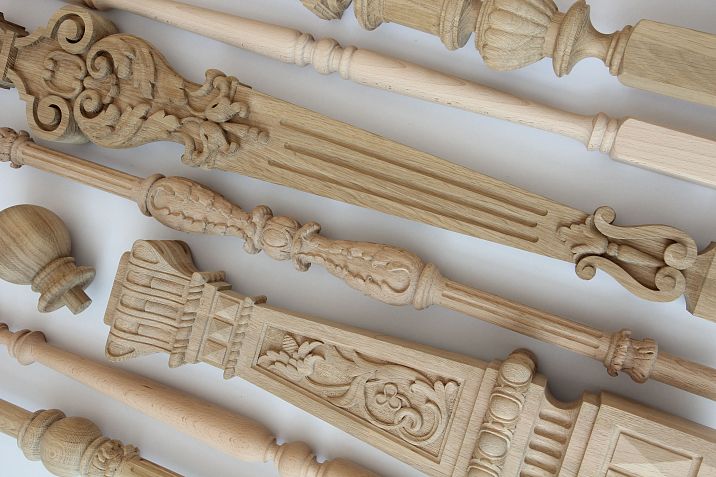
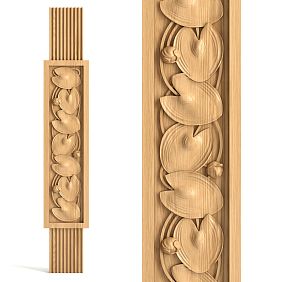
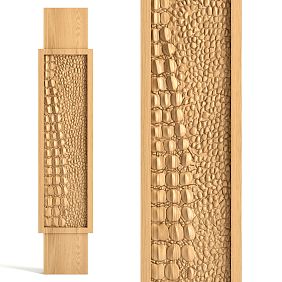
Imagine a staircase where each element tells a story of craftsmanship, and the railing becomes a work of art. Flat wooden balusters They embody centuries-old traditions of Russian architecture, creating a unique atmosphere of warmth and coziness in modern homes. These elegant elements not only serve a safety function but also become a central decorative accent capable of radically transforming the perception of the staircase space.
Unlike their cylindrical counterparts, flat wooden balusters possess a special magic—they work in ensemble, creating continuous compositions where each element complements the adjacent one, forming a unified artistic canvas. This approach opens up boundless opportunities for creative self-expression and allows for truly unique interior solutions.




Historical heritage and modern embodiment




Roots of tradition in Russian architecture
The art of creating flat balusters traces its roots to the deep antiquity of Russian wooden architecture. Initially, these elements appeared as practical solutions for railing balconies and galleries of wooden palaces. Master carpenters, striving not only to ensure safety but also to decorate their creations, began carving various patterns and ornaments into flat boards.
Over time, simple functional elements transformed into true works of decorative-applied art. Each region of Russia developed its own stylistic features: northern masters preferred geometric patterns reminiscent of frost patterns on windows, central regions leaned toward plant motifs, while southern regions created more elaborate and complex compositions.
A distinctive feature of Russian flat balusters was their ability to tell stories. Masters carved scenes from folk tales, images of birds and animals, symbols of fertility and home protection. Each baluster became a page of a wooden book, narrating the life, traditions, and beliefs of its creators.
Our factory also produces:



Evolution of technologies and preservation of traditions
Modern production technologies have allowed preserving the best traditions of the past, significantly expanding creative possibilities. CNC machines ensure perfect reproduction of complex ornaments, while laser cutting opens new horizons for creating intricate, incredibly complex latticework.
However, technological progress has not erased the value of handcrafting. Many masters still prefer to create unique items using traditional methods, employing chisels, gouges, and other tools passed down from generation to generation. Such balusters carry a special energy, the warmth of human hands, and the uniqueness of the artisan's signature.
Modern Flat wooden balusters They combine the best achievements of the past and present: traditional motifs receive new embodiment thanks to modern materials and processing technologies, while ancient symbols and ornaments adapt to the requirements of modern architecture.
Get Consultation
Constructive features and typology
The anatomy of a flat baluster appears simple at first glance. In reality, each element is carefully designed and serves a specific function. The base of the baluster is not merely a mounting platform but an important structural element that ensures even load distribution and secure fixation of the entire structure.
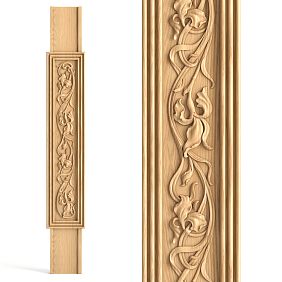
The central part of the baluster serves as a canvas for artistic expression. Here, the main decorative elements are located: carved patterns, pierced ornaments, relief compositions. The thickness of this part is usually 20-25 mm, which ensures sufficient strength while preserving the elegance of the forms.
The upper part — the support for the handrail — requires special precision in manufacturing. It must ensure secure attachment of the rail and even load distribution along the entire length of the railing. Often, this part has special grooves or protrusions for more secure connection with the handrail.
Classification by artistic execution
The world of flat balusters is amazed by the diversity of artistic solutions. Pierced balusters create an effect of lightness and airiness due to their variously shaped perforations. Such items look especially striking under backlighting, when light passing through the openings creates a wonderful play of light and shadow.
Relief balusters are distinguished by volumetric decorative elements protruding above the main surface. Such processing requires high craftsmanship and allows creating true miniature sculptural compositions. Relief elements can be either geometric or figurative.
Combined balusters combine different processing techniques: pierced elements are complemented by relief details, smooth surfaces contrast with textured areas. This approach allows creating especially rich and expressive compositions.
Common spruce remains the most popular material for manufacturing flat balusters due to the optimal combination of price, quality, and workability. Its soft structure allows easily performing complex carving work, and its natural resinous nature provides additional protection against moisture and pests.
Material science: choosing wood for perfection
Coniferous species: accessibility and practicality
A distinctive feature of spruce balusters is their ability to acquire a noble golden hue over time under the influence of light and air. The contrasting texture with alternating light sapwood and darker heartwood creates a natural decorative effect that can be enhanced with appropriately chosen finishes.
Siberian larch represents a more expensive but also more durable option. Its density is significantly higher than that of spruce, ensuring exceptional strength of finished products. Larch’s natural resistance to rot and moisture makes it an ideal choice for outdoor structures — terraces, verandas, gazebos.
Siberian cedar is valued not only for its technical properties but also for its unique medicinal qualities. Essential oils contained in cedar wood create a special microclimate in the room, beneficial to human health. Cedar balusters emit a subtle pleasant aroma that lasts for many years.
Hardwood species: elite solutions
Oak rightfully ranks as the king among materials for manufacturing stair elements. Its exceptional strength, beautiful texture, and noble appearance make oak balusters a symbol of reliability and respectability. The density of oak allows performing delicate carving work while preserving the clarity of details for decades.
A distinctive feature of oak is its ability to patinate — natural color change under the influence of time. Young wood has a light yellow hue, which gradually darkens to noble brown tones. This process can be accelerated with special compounds or, conversely, slowed down with protective coatings.
Ash attracts designers with its contrasting structure and high strength. Clearly defined annual rings create an expressive pattern, especially effective with radial cutting. Ash readily accepts staining, allowing the creation of balusters of practically any color while preserving the natural texture.
Beech is characterized by a uniform fine-pored structure, making it an ideal material for creating balusters with complex carved elements. Its neutral color serves as an excellent base for any type of decorative finish — from natural oils to bright paints.
Traditional handcrafting methods
Manufacturing Technologies
Hand carving remains the unparalleled method for creating unique artistic works. The master carver uses a rich arsenal of specialized tools: flat and semi-circular chisels of various widths, gouges for working in hard-to-reach areas, and compasses for creating geometric ornaments.
The process of creating a carved baluster begins with careful sketch development. An experienced craftsman considers not only aesthetic aspects but also technical limitations: wood grain direction, possible material stresses, and future mounting characteristics. The sketch is transferred to the blank using special templates or directly by hand.
The actual carving is performed in stages: first, the bulk of excess material is removed, then the large ornamental elements are worked on, and only at the end is fine detailing executed. Each stage requires the use of specific tools and sizes, as well as adherence to the correct sequence of operations.
Modern technologies of machine processing
Numerical control machines have revolutionized the production of decorative wooden elements. Modern machining centers are capable of performing the most complex three-dimensional compositions with precision down to fractions of a millimeter. Machine programming is based on three-dimensional models created in specialized CAD systems.
Laser cutting opens new possibilities for creating delicate lace-like elements with fine details. The laser beam allows cutting holes with diameters less than a millimeter, creating smooth curves of any complexity, and performing engraving with photographic quality. In addition, the cut edges are perfectly smooth, requiring no additional finishing.
CNC milling machines ensure high productivity in manufacturing serial products. They allow reproducing complex profiles with absolute accuracy, creating relief elements of various depths, and performing three-dimensional carving according to a given program.
Russian folk style
Design Solutions and Stylistic Directions
Traditional Russian motifs in design
Never go out of fashion. Plant ornaments depicting leaves, flowers, berries create an atmosphere of connection with nature. Motifs of grapevines, symbolizing fertility and abundance, are especially popular. flat wooden balusters Geometric patterns — rhombuses, triangles, zigzags — reflect ancient Slavic cosmogonic concepts. These symbols carry deep sacred meaning and serve not only as decoration but also as protective charms for the home. Modern designers skillfully adapt ancient symbols to meet the requirements of contemporary architecture.
Zoomorphic motifs — images of birds, animals, mythical creatures — add special expressiveness to balusters. Traditional images of the firebird, lion, and unicorn receive new interpretations in the hands of modern masters, preserving their symbolic meaning while acquiring a contemporary sound.
Zoomorphic motifs — images of birds, beasts, mythical creatures — add special expressiveness to balusters. Traditional images of the firebird, lion, unicorn receive a new embodiment in the hands of modern masters, preserving their symbolic meaning while acquiring a contemporary sound.
Modern minimalism
Minimalist flat balusters are characterized by simple forms and the absence of decorative excesses. Beauty is achieved through perfect proportions, surface finish quality, and play of light and shadow. Simple geometric cutouts create a rhythmic pattern that does not overload the space with details.
Asymmetric compositions bring dynamism and modernity to interiors. Balusters can have varying heights, widths of cutouts, and angles of elements. This approach requires careful planning, but the result is striking in expressiveness and originality.
Combining different materials — wood with metal, glass, stone — creates interesting textural contrasts. Wooden elements can be complemented with metal inserts, glass panels, or stone details, creating rich and diverse compositions.
Classic European motifs
Baroque elements, with their opulence and theatricality, find new expression in modern flat balusters. Scrollwork, cartouches, garlands create an atmosphere of luxury and grandeur. Such balusters are especially suitable for interiors of country residences and official buildings.
Gothic motifs, with their upward striving and intricate forms, adapt beautifully to flat constructions. Pointed arches, rosettes, trinity leaves create a sense of lightness and airiness. Gothic balusters look especially striking in high spaces with large windows.
Renaissance elements are distinguished by harmonious proportions and classical beauty. Palmettes, acanthus leaves, meanders create refined compositions that remain relevant over time. Such balusters become true classics, suitable for any interior.
Technical Specifications and Standards
Dimensional parameters and tolerances
Standard dimensions of flat balusters are determined by safety and ergonomic requirements. Height is usually 900 mm, corresponding to the normative height of barriers for residential buildings. Width varies from 70 to 140 mm depending on design and functional requirements.
The thickness of flat balusters is usually 20-25 mm. This parameter ensures sufficient structural strength while preserving the elegance of forms. For heavily loaded elements, thickness may be increased to 30-35 mm.
Tolerances for finished product dimensions must not exceed ±1 mm for linear dimensions and ±0.5 mm for thickness. This precision ensures quality assembly of the barrier and eliminates gaps between elements.
Requirements for surface quality
Surface finish quality of flat balusters is determined by the roughness parameter Ra, which must not exceed 1.25 micrometers for surfaces intended for transparent finishes. For surfaces intended for opaque finishes, roughness up to 2.5 micrometers is permitted.
Carved elements must have sharp edges without chips or scratches. The depth of carving is controlled according to the technical specification, deviations must not exceed ±0.5 mm. Cutout holes must have smooth walls without signs of processing.
The moisture content of finished products must be within the range of 8–12% to ensure dimensional stability during operation. Exceeding these values may lead to deformation and cracking of elements.
Installation and Mounting
Preparation Work
Quality installation of flat balusters begins with careful preparation of the base. The surface of steps or baluster base must be flat, clean, and dry. Any irregularities may lead to poor fitting of elements and gaps between them.
Marking installation locations is performed with high precision. The distance between axes of adjacent balusters must not exceed 120-150 mm to ensure safety. In homes with small children, this distance is recommended to be reduced to 100 mm.
Preparing mounting holes requires using quality tools and following technology. The hole diameter must be 1-2 mm smaller than the fastener diameter to ensure tight fit. Hole depth is controlled by special limiters.
Methods of mounting
Mounting on wooden dowels is a traditional carpentry method of connection. Dowels with diameter 8-12 mm are made from hardwood and installed with adhesive. Such a connection ensures high strength and durability.
Metal dowels with diameter 6-10 mm provide secure mounting with the possibility of adjusting element positions. Dowels are installed into pre-drilled holes using threaded connections or adhesive.
Hidden mounting with self-tapping screws is performed at an angle through the end surfaces of balusters. This method does not compromise the aesthetics of the product but requires high skill from the installer. Screw locations are masked with wooden plugs or putty.
Final assembly
Installing the handrail completes the barrier assembly. The handrail can be mounted directly onto the top ends of balusters or via an intermediate handrail support rail. The second method ensures more even load distribution and simplifies height adjustment of elements.
Joint sealing is performed using special compounds matched to the wood color. Quality sealing prevents moisture ingress into joints and extends the service life of the structure.
Quality control of installation includes checking baluster verticality, joint tightness, absence of play and squeaks. All identified defects must be corrected before final finishing.
Protective Treatment and Final Coatings
Preparation for Finishing
Surface sanding is performed in several stages with gradually decreasing abrasive grit. Initial processing is done with 120-150 grit sandpaper, final processing with 220-280 grit. Special attention is paid to processing carved elements and internal corners.
Surface dust removal is performed using an industrial vacuum cleaner and anti-static cloths. Dust residues may cause coating defects and reduce adhesion to wood. Quality dust removal is essential for the longevity of the final finish.
Priming ensures even absorption of the final finish and improves its adhesion to the surface. For coniferous species, special primers are used that block resin exudation. Primer is applied in a thin, even layer using a brush or spray.
Types of Protective Coatings
Varnish finishes provide maximum wood protection and highlight its natural beauty. Polyurethane varnishes are distinguished by high strength and wear resistance, while acrylics offer ecological safety and quick drying.
Oil finishes penetrate into the wood structure, emphasizing its texture and creating a natural appearance. They are easily repairable for local damage and do not form a film on the surface. Oils look especially effective on wood with pronounced texture.
Wax compositions impart a silk-like finish and pleasant tactile sensations. Wax is applied in a thin layer and polished to achieve a uniform matte sheen. Such a finish requires regular renewal but creates a unique atmosphere of coziness.
Areas of application and design solutions
Interior staircases
In residential homes Flat wooden balusters create a unique atmosphere of warmth and coziness. They look especially striking in homes designed in Russian style, country, Provence. Carved elements add individuality to the interior and highlight the owners' good taste.
Modern minimalist interiors can also be adorned with flat balusters of a laconic design. Simple geometric shapes, clear lines, absence of decorative excesses create a sense of modernity and technology.
Classic interiors require appropriate baluster decoration. Elements with baroque or Renaissance motifs emphasize the respectability and status of the room. Quality carving and noble wood species create an atmosphere of luxury and refinement.
Outdoor structures
Terraces and verandas are ideal for applying flat wooden balusters. Here, they serve not only a decorative function but also provide protection from wind and create a sense of privacy. Balusters with large cut-out elements, creating an interesting play of light and shadow, look especially striking.
Pavilions and gazebos are decorated with balusters according to the overall architectural style. Russian gazebos require traditional motifs, modern structures — laconic geometric forms. Properly selected balusters become a highlight of garden architecture.
Porches and entrance groups — the hallmark of a house. Here, flat balusters must harmonize with the overall architectural solution of the facade. They can repeat motifs of window lintels, cornices, and other decorative elements, creating a unified stylistic ensemble.
Economic aspects and pricing
Factors Affecting Cost
Wood species — the main factor determining the cost of flat balusters. Items made from coniferous species (pine, spruce) are the most affordable, larch is more expensive, and balusters made from oak, ash, beech belong to the premium segment.
The complexity of artistic execution directly affects the price of the items. Simple geometric cutouts are cheaper than complex carved compositions. Handmade work always costs more than machine-made, but ensures uniqueness and the highest quality of execution.
The order volume also affects the price per unit. Mass production allows reducing the cost by saving on preparatory operations. Individual orders require developing a special technology and manufacturing unique fixtures.
Comparison with alternative solutions
Compared to metal analogs, wooden flat balusters have several advantages: they feel warmer to the touch, create a more cozy atmosphere, are easier to process and install. However, metal items surpass wooden ones in durability and resistance to adverse effects.
Stone and concrete balusters differ in exceptional strength and durability, but significantly lag behind wooden ones in terms of processability and decorative possibilities. Moreover, they require a more robust foundation and complicate the staircase structure.
Composite materials combine the advantages of various materials, but still cannot fully replace natural wood in terms of aesthetic qualities and ecological properties. They find application in specific operating conditions where enhanced resistance to moisture and temperature fluctuations is required.
Care and Maintenance
Regular Maintenance
Daily care for flat wooden balusters involves removing dust with a dry soft cloth or vacuum cleaner with a soft attachment. Special attention should be paid to carved elements and recesses, where dust may accumulate.
Weekly wet cleaning is performed with slightly damp cloth without using aggressive cleaning agents. Excessive moisture may lead to wood deformation and damage to the coating. After wet cleaning, the surface should be wiped dry.
Monthly inspection allows identifying possible coating defects, loosening of fasteners, appearance of cracks or other damage. Timely detection of problems allows eliminating them with minimal expenses.
Preventive Maintenance
Renewal of protective coating is performed as needed, usually every 3-5 years depending on operating conditions. Before applying a new coating, the surface must be thoroughly cleaned and sanded if necessary.
Inspection of fastener connections is performed annually. Loose connections are tightened, damaged fasteners are replaced. Special attention is paid to connections subjected to increased loads.
Protection against pests includes regular treatment of wood with special compositions. Modern preparations provide long-term protection against insects and fungal damage with minimal impact on humans and the environment.
Modern trends and innovations
Ecological aspects
Growing attention to ecological issues stimulates the use of wood from sustainably managed forests. FSC certification guarantees that the material is obtained in accordance with strict ecological and social standards.
Non-toxic water-based coatings gradually replace traditional compositions with organic solvents. They do not emit harmful substances, dry quickly, and provide quality protection for wood.
Waste recycling technologies allow using almost all wood received for production. Shavings and sawdust are used to produce fuel briquettes, small offcuts — for manufacturing glued blanks.
Digital technologies
3D modeling allows the customer to see future balusters even before production begins. Interactive programs enable changing shape, size, and decoration in real-time.
Augmented reality technologies allow "trying on" balusters against existing interiors using a mobile app. This significantly simplifies the selection process and reduces the risk of ordering errors.
Automated production control systems ensure high quality and stable characteristics of finished products. Each item receives a unique code, allowing tracking of its entire manufacturing history.
Conclusion
World flat wooden balusters represents a wonderful combination of ancient traditions and modern technologies, where each item becomes a unique work of art. These elements not only perform a safety function — they create a unique atmosphere, reflect the character and tastes of the owners, and become the central decorative accent of the interior.
Choosing quality flat balusters is an investment in the beauty, comfort, and safety of your home for many years. Properly selected and professionally installed items will delight the eye and serve faithfully for generations of residents.
Modern production technologies open up boundless opportunities for realizing the most daring design ideas. From classic Russian motifs to ultra-modern minimalist solutions — everyone can find balusters perfectly matching their vision of beauty and functionality.
The future of flat wooden balusters is linked to the development of eco-friendly technologies, the adoption of digital design and production methods, and the creation of new protective coatings. However, the main advantages of these items remain unchanged — the natural beauty of wood, the warmth of the master’s hands, and the ability to create a unique atmosphere of coziness in the home.
STAVROS Company embodies the best traditions of Russian wooden architecture, enhanced by modern technologies and innovative solutions. Our long-standing experience and deep understanding of client needs enable us to create flat balusters that surpass the highest expectations in terms of quality, beauty, and functionality. Choosing STAVROS products means investing in the future of your home, with a guarantee of quality and professional support at every stage of the project implementation.