






































Article Contents:
- Why decorative wall panels are back at the center of interior solutions
- Types of decorative wall panels
- Slatted wall panels
- MDF panels for painting
- Panels made of solid wood
- Polyurethane and relief panels
- 3D wall panels
- How to choose decorative wall panels by room
- Decorative wall panels for living rooms
- Decorative wall panels for the bedroom
- Decorative wall panels for the hallway
- Decorative wall panels for the kitchen
- Decorative wall panels for the study
- How to choose decorative panels according to interior style
- Modern Interior
- Neoclassicism
- Modern and soft classic
- Comparative table of materials for decorative wall panels
- How to use decorative panels without overloading the interior
- Decorative panels in combination with moldings, cornices and baseboards
- Common mistakes when choosing decorative wall panels
- What's better: decorative panels, wallpaper, plaster, or paint
- Algorithm for choosing decorative wall panels: 5 steps
- FAQ — Answers to popular questions about decorative wall panels
- STAVROS — decorative wall panels with production expertise
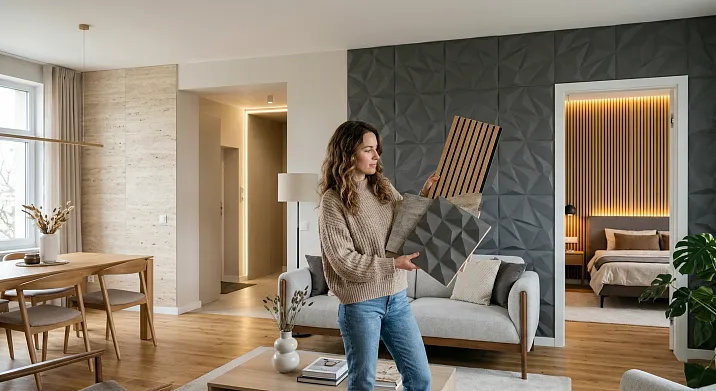
There's a moment in renovation when everything is already done — walls are smooth, floors are laid, furniture is arranged — and suddenly you realize: something is missing. The space is functional, but it doesn't live. There's no depth, no character, no sense of completion that distinguishes mere renovation from a true interior. This is where the conversation aboutdecorative wall panels.
Wall panels are not just cladding. They are a tool that changes room proportions, sets rhythm, creates light and shadow, adds tactile depth and visual value. Properly chosen panels transform square meters into architecturally structured space where every detail contributes to the overall image.
But this is where many make mistakes: choosing panels based on a beautiful catalog photo without considering the actual room size, lighting, wall material, and existing finishing style. The result — visual overload or, conversely, a feeling that panels are 'pasted' into the interior as a foreign element.
This article is written for those who want to understand: what types of decorative wall panels exist, how to choose them for a specific room, how materials differ, and how to avoid typical mistakes. No fluff. Only applied expertise.
Why decorative wall panels are back at the center of interior solutions
Wall panels are not a new phenomenon. Palace halls with wooden boiserie, classic studies with framed wall divisions, modernist living rooms with slats — these are different eras, but one idea: a wall can be not just a background, but a full-fledged element of interior architecture.
Today, interest in decorative wall panels is experiencing a clear upswing—and the reasons for this are quite specific.
A demand for depth. The minimalism of recent years has accustomed us to clean surfaces, but a weariness of sterile emptiness has gradually accumulated. Panels provide what simple paint or wallpaper cannot: texture, shadow, architectural rhythm.
The effectiveness of an accent wall. One properly designed wall section can change the perception of an entire room. Panels are the best tool for creating such an accent: they function as a three-dimensional structure, not just a color spot.
A breadth of solutions. The modern market offers panels for any style, budget, and task: from laconic paintable slat modules to massive oak reliefs stained dark walnut. This makes panels a universal tool—for both an economy-class apartment and a premium country house.
Speed of installation. Compared to decorative plaster or molding, panels are installed significantly faster, which is important for renovations with deadlines.
And finally—practicality. Properly chosen panels protect walls from mechanical damage, conceal unevenness, and last a long time without losing their appearance.




What types of decorative wall panels are there
Before choosing panels by room or style, you need to understand the main types. This is not an academic classification—it's a practical navigator through the materials that are actually used in Russian interiors today.
Our factory also produces:
Slat wall panels
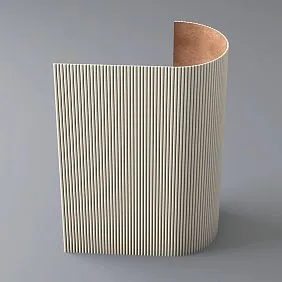
slatted panels for interior wall finishing— one of the most in-demand formats in modern interiors. Their essence: parallel vertical or horizontal slats, creating a rhythmic structure on the wall surface.
What does a slatted panel bring to an interior?
-
Vertical rhythm that visually raises the ceiling—especially important in apartments with low ceilings
-
Play of light and shadow: with side lighting, the slats create expressive volume effortlessly
-
Simplicity: the slatted structure works equally well in minimalism, Scandinavian style, modern classic, and loft
-
Installation flexibility: slats can be combined with niches, lighting, decorative inserts from other materials
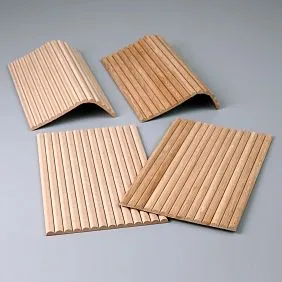
Slatted panel formats are diverse. Standard modules are 2400 × 120 mm, 2400 × 150 mm, 2700 × 120 mm, 3000 × 150 mm. Longer formats (2700 and 3000 mm) create fewer horizontal joints and improve the visual result on large surfaces.
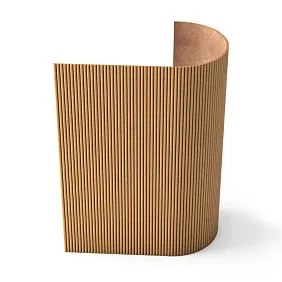
Slatted panels are made from MDF for painting, from solid oak and ash, from DPC (for wet areas), and as flexible modules for non-standard surfaces.
Get Consultation
MDF panels for painting
This is a basic, functional, very flexible format. MDF panels for painting provide a smooth or textured surface that can be painted in any color from a catalog—NCS, RAL, or a specific shade selected by a designer.
The main advantage is freedom in color choice. You are not tied to a factory palette: whether you want dusty pink, anthracite, or a complex gray-green—all can be achieved through painting. This is why MDF panels for painting are in demand in design projects where color combination accuracy is important.
Who it suits: those who want maximum color flexibility; those creating complex multicolor wall compositions; those planning an interior in a single color scheme from floor to ceiling.
Solid wood panels
Solid oak slat panels— this is a different aesthetic. Here, the main things are the natural texture, the living texture of wood, the warmth that cannot be reproduced synthetically.
Solid oak provides maximum density and durability. Beech offers a more even, uniform texture that takes well to tinting. Ash has a pronounced grain pattern, impressive even without additional processing.
Solid wood finishing: oil (preserves the liveliness of the texture), varnish (a more durable coating), tinting (allows changing the color while preserving the pattern), custom painting.
Where they look best: in living rooms and studies of premium projects, in country houses, in interiors where the naturalness of materials is a fundamental value.
Polyurethane and relief panels
Polyurethane wall panels— a separate story. High-density polyurethane (130–200 kg/m³) allows reproducing complex relief with high detail accuracy at minimal weight: 5–7 times lighter than plaster with comparable strength.
This means: rich relief surfaces can be installed without reinforcing walls and complex fastening. Polyurethane is cut with a regular wood saw, doesn't crumble, and is glued with acrylic mounting adhesive. Under mechanical impact, it deforms rather than shatters—which is important for long-term use.
Polyurethane panels are indispensable where expressive stucco decor, volumetric relief, classical architectural articulation is needed—without monumental labor costs and without enormous weight.
3D wall panels
3D panels are about geometry, depth, and modern graphic appeal. Deep relief creates a pronounced play of light and shadow, making the wall visually active even in a monochromatic finish.
3D solutions work where you need to create an accent wall with maximum expressiveness: the TV area in the living room, the wall behind the sofa, unconventional hallway decor. In large spaces, they create a sense of scale and architectural complexity. In small rooms, 3D panels should be used with caution: deep relief can overwhelm the space.
How to choose decorative wall panels by room
This is the key section of the article. The same solution works differently in different rooms—that's why choosing decorative wall panels should always start with the question: 'for which room and what task should they solve?'
Decorative wall panels for the living room
The living room is the main representative space of the apartment. Here, there are the most scenarios for using panels and the most opportunities for expressive solutions.
TV area. The wall behind the television is a classic spot for accent panel decor. Slatted panels work especially well here: vertical slats set a rhythm, create background depth, and built-in lighting behind the slats (if provided) adds a soft glow that turns the wall into a full-fledged element of the visual environment.
Wall behind the sofa. A softer task: here, panels create a 'frame' for the relaxation zone, add coziness, and psychologically distinguish the sofa area from the overall room volume.
Accent wall. One wall fully finished withwall panels, against three neutral ones—a working strategy for any living room. It allows you to add expressiveness without overwhelming the space.
For a modern-style living room — MDF or oak slats with a vertical rhythm, neutral shades. For neoclassicism — framed panels with moldings, white or cream tones with gold accents. For loft — dark tinted slats, rough texture, contrast with brick or concrete.
Decorative wall panels for the bedroom
The bedroom is a space of a different character. Here, sharp accents are not needed, but rather a calm, enveloping atmosphere. Wall panels in the bedroom primarily serve as a background element that creates a sense of coziness and visual completeness.
The wall behind the bed headboard. The most in-demand task for panels in the bedroom. The design of this wall:
-
visually structures the space, 'placing' the bed in its spot;
-
creates a soft architectural accent without aggression;
-
replaces the need for a headboard — when the panels extend behind the bed, the background becomes an independent design element.
slatted panels in the bedroomwork especially well: a quiet vertical rhythm, neutral or warm shades, natural wood texture. This creates a calm visual environment — exactly what is needed for full rest.
For the bedroom, it's better to avoid: overly active relief, contrasting colors, 3D panels with deep geometry. Soft textures, natural materials, and a restrained palette are more appropriate here.
Decorative wall panels for the hallway
The hallway is the most 'functional' room in an apartment in terms of wall load. Corners get bumped, people lean against walls, and items are hung. Decorative panels in the hallway solve two tasks simultaneously: they protect the surface and create a worthy first visual accent for the apartment.
Practical requirements for hallway panels:
-
Resistance to mechanical impact — MDF and solid oak meet this requirement
-
Ease of maintenance — smooth surfaces for painting or with a lacquer finish are preferable to open wood with oil
-
Height: it's not necessary to cover the entire wall — a panel zone from the floor to shoulder level (130–150 cm) protects the most vulnerable part of the wall and creates a finished horizon
Visual tasks in the hallway:
-
Vertical slats visually increase the height — important in corridors with non-standard layouts
-
Light shades expand the space
-
Mirror inserts combined with panels — a classic technique for small hallways
Decorative wall panels for the kitchen
The kitchen is a special environment with high humidity, temperature fluctuations, and grease vapors. Classic wood panels require careful application here: they are suitable in areas away from the stove and sink—for example, on the wall of the dining area or on the end wall of a kitchen-living room.
Where decorative panels work well in the kitchen:
-
Dining area combined with the living room
-
Accent wall behind the table
-
Lower part of the wall in the dishwasher area (if using WPC or lacquered MDF)
Where to use with caution:
-
Directly behind the cooktop—tile or tempered glass is better
-
Above the sink—too aggressive an environment for wood even with protective coating
WPC (wood-polymer composite) is the optimal material for kitchen areas with high humidity. It retains a wooden aesthetic while being fully waterproof.
Decorative wall panels for the study
A home office or library is the perfect place for solid wood panels or classic frame solutions. A more serious, strict aesthetic is appropriate here: dark tinted oak slats, deep neutral shades, architectural symmetry.
Panels in the office create an effect of 'weight'—the space gains solidity, calmness, and concentration. This is the mood that promotes work and creative focus.
How to choose decorative panels to match the interior style
This is a question often asked in the context of 'will the slats suit my classic style' or 'won't frame panels be excessive in a modern interior'. The answer always lies in the details—material, color, proportions, and compatibility with other elements.
Modern interior
For modern styles—minimalism, Scandinavian aesthetic, Japandi, modern loft—Rafter panelsin the basic version, they work perfectly. Key principles:
-
Concise geometry, clear rhythm
-
Neutral colors: white, gray, graphite, natural wood, black
-
Absence of decorative overload—the panels themselves are expressive enough
-
Combination with metallic accents (steel, matte brass) and minimalist furniture
Neoclassicism
Neoclassicism is a style where architectural precision is no less important than decorativeness. Here, framedwall panels with moldingsare the definitive choice. Principles:
-
Framed wall division: clear symmetry, uniform rhythm of panels
-
Combination of panels with moldings, cornices, baseboards made of polyurethane or solid wood
-
White, cream, pearl gray are the base tones; gold accents to highlight details
-
Unity of scale: panels must be proportionate to the room's height and furniture size
The company STAVROS produces a complete line of decorative elements for such a system: framed moldings, corner overlays, cornices, baseboards — all this forms a unified architectural composition, where the wall becomes a truly finished element.
Modern and soft classic
Here, a combination of a relief surface with soft, warm tones is appropriate. Polyurethane relief panels with smooth lines, volume without heaviness, warm shades of cream, cappuccino, taupe. Such a solution creates an atmosphere of coziness and sophistication without the academic strictness of classicism.
Comparison table of decorative wall panel materials
| Parameter | Slatted (MDF) | Slatted (solid oak) | Polyurethane | 3D MDF panels |
|---|---|---|---|---|
| Appearance | Laconic, modern | Natural texture | Rich relief | Graphic, volumetric |
| Paintability | Yes, any color | Tinting/varnish/oil | Yes, paintable | Yes |
| Naturalness | No | Yes | No | No |
| Weight | Lightweight | Medium | Lightweight | Lightweight |
| Care | Simple | Requires maintenance | Simple | Simple |
| Moisture resistance | Medium | Medium (with processing) | High | Medium |
| Best use | Living room, bedroom, study | Premium projects | Classic, neoclassic | Accent walls |
| Style | Modern, Scandinavian | Classic, eclectic | Classic, neoclassic | Modern, loft |
How to use decorative panels without overloading the interior
This is one of the most important practical tips that is often overlooked during the selection stage. Panels are a powerful tool. Like any powerful tool, they require precise application.
One accent wall instead of full coverage. A classic design rule: if all four walls are decorated with panels, the effect turns into 'pressure.' One accent wall against three neutral ones is a working proportion. It creates a focus without overloading the space.
Scale of relief to room size. The deep relief of 3D panels is appropriate in large spaces, where it creates a sense of scale. In a small room, the same relief will 'eat up' space and create a claustrophobic feeling. For small rooms, use concise slats, smooth surfaces, and vertical rhythm.
Working with color. Dark panels in a dark hallway is a mistake. Dark panels on the only accent wall in a bright living room is a strong, expressive technique. Context decides everything.
Combination with monochrome surfaces. Panels work best when the remaining walls remain calm — painted in a neutral tone or finished with a smooth texture. Competition between the relief of the panels and the pronounced texture of other walls creates visual chaos.
Lighting as an amplifier. Built-in lighting behind slatted panels or directional light emphasizing the relief — this is a technique that doubles the visual effect of panels at minimal cost. It works especially expressively in the evening.
Decorative panels in combination with moldings, cornices, and baseboards
This is a topic that is often overlooked — yet it is precisely this that determines the difference between 'beautiful' and 'truly beautiful'.
Panels on a wall installed without a logical continuation in the cornice and baseboard look unfinished. A wall exists in an architectural context: it is completed at the bottom by a baseboard, at the top by a cornice or ceiling molding, and around doors by trims. When all these elements are executed in a unified style and proportion — the result is not just decor, but an architectural system.
This is why manufacturers seriously working in this direction offer comprehensive solutions: panels + moldings + cornices + baseboards + corner overlays — all as a single designer organism. This approach allows creating interiors where walls look like the result of an architect's work, not separate random decisions.
Common mistakes when choosing decorative wall panels
The list is not theoretical — it is a concentrate of real miscalculations encountered in finished interiors.
Too active relief in a small room. 3D panels with a depth of 3–5 cm in a room of 12 square meters create a feeling of 'walls closing in'. For small spaces — concise slats or smooth panels for painting.
Incorrect panel scale. A wide slat (150–200 mm) in a narrow corridor looks heavy. A narrow slat (40–60 mm) in a large hall — goes unnoticed. The scale of the panel must correspond to the scale of the room.
Dark material in a narrow hallway. Dark tinted slats create coziness in a spacious office and pressure in a small hallway. For limited spaces — light shades, vertical rhythm.
The same solution for all rooms. The mistake of 'package design': buying one type of panels and installing them everywhere. Each room has its own tasks and its own mood — and the panels should correspond to that.
Choosing only by photo without reference to the actual room. Panels in professional studio photography look different than in a real interior with specific lighting, wall color, and furniture. Always request samples and check them on-site before ordering.
Lack of logic between panels and the rest of the finish. Oak panels with dark tinting and white laminate 'under maple' on the floor create visual dissonance that cannot be solved by any decor. The style should be unified from floor to ceiling.
What's better: decorative panels, wallpaper, plaster, or painting
A practical question that everyone asks themselves when faced with the choice of wall finishing. We'll give an honest answer without advertising bias.
When panels win:
-
Architectural depth and relief are needed — painting and wallpaper don't provide that
-
An accent wall with a pronounced structure is needed
-
Durability and surface protection are important (hallways, areas with mechanical load)
-
Need to hide wall imperfections
-
Premium project where surfaces must have 'weight' and tactile value
When painting is sufficient:
-
Concise minimalism where any texture is excessive
-
Limited budget
-
Temporary solution
When decorative plaster is better:
-
Need organic, 'living' texture without clear geometry
-
Style - Provence, Mediterranean, eco-directions
When combination is optimal:
-
One wall — panels, three — paint or neutral wallpaper: this is the most balanced strategy for most apartments
Algorithm for choosing decorative wall panels: 5 steps
Step 1: Determine the room and task. Living room — accent or background? Bedroom — headboard or full wall? Entryway — protection or visual expansion?
Step 2: Choose the degree of relief. Concise slats → moderate rhythm → rich relief. The smaller the room — the more restrained the relief.
Step 3: Select the material. MDF for painting — color flexibility. Solid oak — naturalness and status. Polyurethane — relief with minimal weight. WPC — wet areas.
Step 4: Check compatibility with style. Slats → modern interior. Frame panels with moldings → neoclassical. Relief polyurethane → classic and modern.
Step 5: Consider installation and maintenance. Clarify: how are the panels attached in your case? Is priming needed? How to care for the coating? This affects the long-term result.
FAQ — Answers to popular questions about decorative wall panels
Which decorative wall panels are best to choose for an apartment?
Depends on the room and style. For modern interiors — slatted panels made of MDF or solid wood. For classic and neoclassical — frame panels with moldings. For accent walls with expressive relief — polyurethane or 3D options.
How do MDF, solid oak, and polyurethane panels differ?
MDF is lightweight, flexible in color, with no natural texture. Solid oak has a live texture, high density, prestige, and requires maintenance. Polyurethane offers rich relief, low weight, easy installation, and easy painting.
Which panels are suitable for the living room?
For the TV zone and accent wall — slatted panels. For a neoclassical living room — framed panels with moldings. For a premium project — solid oak with tinting.
Which panels are appropriate in the bedroom?
Slatted panels made of natural wood or MDF in warm neutral tones. Accent — the wall behind the headboard. Relief — restrained, texture — warm.
Can decorative panels be used in the kitchen?
Yes, in areas away from the stove and sink. For kitchen zones with humidity — DPC or lacquered MDF.
What to choose for the hallway to be practical?
MDF for painting with a lacquer coating or solid oak with protective oil. The paneled area from the floor to 130–150 cm protects the walls and creates a finished horizon.
Are panels suitable for small spaces?
Yes, but with caveats. For small rooms - concise slats, light tones, vertical rhythm. Deep relief and dark tones - only on one accent wall.
Which panels are easier to maintain?
MDF for painting with varnish or polyurethane coating. Wipe with a damp cloth, no special products needed. Solid wood with oil coating requires periodic renewal of the protective layer.
What is better for an accent wall?
Slatted panels with vertical rhythm - for modern interiors. 3D panels with deep relief - for maximum graphic effect. Framed with moldings - for a classic accent wall.
Can panels be combined with moldings, cornices, and baseboards?
Not just can - should. It is precisely the comprehensive solution (panels + moldings + cornices + baseboards in a unified style) that transforms wall finishing into an architectural system. This is the fundamental difference between a professional interior and an amateur one.
Decorative panels or wallpaper - what to choose?
Panels - if you need depth, relief, durability, and architectural expressiveness. Wallpaper - if you need a quick and inexpensive way to add texture or a print. Often the optimal option is a combination: wallpaper on three walls, panels on the accent one.
STAVROS — decorative wall panels with manufacturing expertise
When it comes to findingdecorative wall panels for interior designthat combine manufacturing precision, depth of assortment, and real design expertise — professionals often choose STAVROS.
STAVROS has been on the market since 2002. The company produces slatted panels from solid oak, beech, and ash,MDF slatted panels for paintingflexible modular panels for non-standard surfaces, as well as a full range of polyurethane decor: cornices, moldings, frame profiles, rosettes, architectural overlays. Everything — as a single coordinated system designed for comprehensive wall design.
STAVROS offers solutions for modern interiors and classic projects, for residential apartments and commercial facilities, for serial application and individual design tasks. In-house production with a cutting tolerance of ±0.1 mm guarantees geometric accuracy and batch repeatability.
STAVROS is not just a panel supplier. It is a partner that helps build interior architecture from wall to ceiling.