






































Article Contents:
- Why decorative wall panels have become one of the most expressive interior solutions
- Which decorative wall panels look modern
- Slatted panels
- Relief panels
- Wood-look panels
- Paint-ready panels
- Decorative wall panel ideas for the living room
- Accent wall behind the sofa
- Panels in the TV area
- Combining panels and lighting in the living room
- Vertical panels for visual height enhancement
- Dark panels as a contrasting accent in the living room
- Decorative wall panel ideas for the bedroom
- Panels behind the bed headboard
- Soft-visual panels in calm shades
- Slatted panels with warm lighting in the bedroom
- Symmetrical wall design behind the bed
- Combination of panels and solid paint in the bedroom
- Decorative wall panel ideas for the hallway and corridor
- Narrow vertical panels for elongated spaces
- Practical solutions for the entryway
- Light panels for a small hallway
- Panels as a way to make a corridor not boring
- Ideas for decorative wall panels in the kitchen and dining area
- Panels in the dining area
- Accent wall near the dining table
- Combining panels with smooth kitchen fronts
- Where panels are appropriate and where it's better to choose another finish
- Ideas for decorative wall panels by interior styles
- Modern minimalism and Scandinavian
- Neoclassicism and Modern Classicism
- Loft and Industrial Style
- Soft classic and modern premium
- Ideas for combining decorative panels with other materials
- Panels and paint
- Panels and moldings
- Panels and decorative plaster
- Panels and lighting
- Panels and wood-look furniture
- Quick ideas: 15 solutions with decorative panels
- Room-by-room idea table
- How to choose a decorative panel idea to fit your room size
- For small spaces
- For spacious rooms
- For narrow and elongated rooms
- How to avoid overloading the interior with decorative panels
- Common mistakes when choosing decorative wall panels
- Algorithm for choosing decorative panel ideas: 5 steps
- FAQ — Answers to popular questions about decorative wall panel ideas
- STAVROS — decorative wall panel ideas brought to life in material
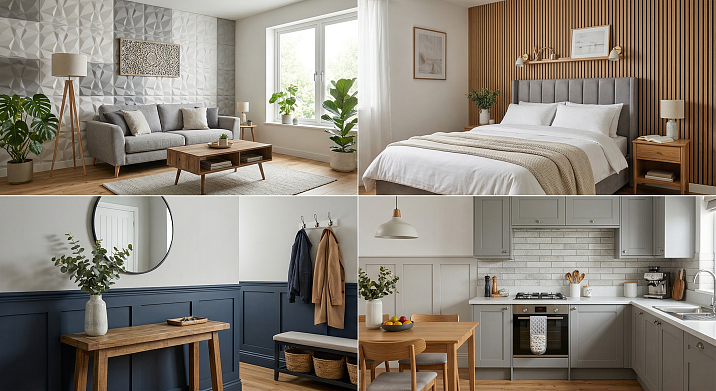
A wall is not a background. It is an architectural element that either works for the interior or quietly undermines it with its lack of expression. When everything in a room is in place, but something is still missing — the problem is most often with the walls. They are too neutral, too empty, too 'nothing'.
This is where the conversation about Decorative wall panel ideas— one of the most dynamic, flexible, and visually expressive tools in contemporary design. Not just cladding, but a way to structure the architecture of space, create rhythm, add tactile depth, and turn an ordinary apartment into an interior with character.
But 'decorative panels' is a broad concept. Slatted, textured, framed, wood-look, paintable, with backlighting — each solution lives by its own rules and requires its own context. This article contains only specific ideas: by room, by style, by material, and by application scenario. No theoretical fluff, only what really works.
Why decorative wall panels have become one of the most expressive solutions in interior design
There's something almost magical about how a properly chosen panel changes the feel of a room. It doesn't just add a 'decorative element' — it completely transforms the perception of the space.
Why do panels work where other solutions fall short?
First, they create texture and chiaroscuro. Any surface with volume reacts differently to light: it's one thing in the morning, and quite another in the evening. This is a liveliness that cannot be achieved with paint or wallpaper.
Second, they provide architectural rhythm. Vertical slats, horizontal frames, geometric modules — all of this structures the wall, making it not just a plane, but an element with internal logic.
Third, versatility. The same slatted panels look equally organic in a minimalist living room and a Scandinavian-style bedroom, in a classic study and a modern hallway. Change the scale, material, shade — and the panels adapt to any interior.
And finally — accessibility of implementation. Panels are installed significantly faster than moldings or decorative plaster, while delivering results comparable in expressiveness to much more labor-intensive solutions.




Which decorative wall panels look modern
Before moving on to room ideas, let's understand the formats. Each type of panel creates a fundamentally different visual effect.
Our factory also produces:
Rack panels
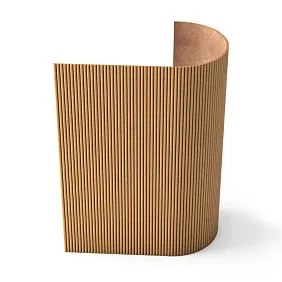
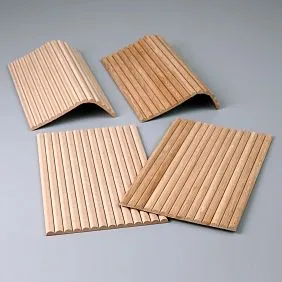
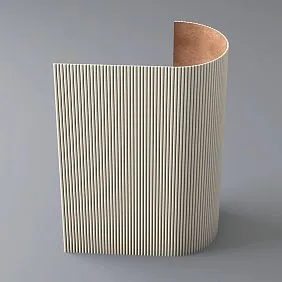
slatted panels for walls— the undisputed leader in modern interiors. Vertical or horizontal slats create an ordered rhythm that works for the space in several directions at once: they stretch the ceiling upward, add depth to the plane, and create a play of shadow with side lighting.
Formats: standard slat width — from 40 to 150 mm, panel height — 2400, 2700, or 3000 mm. Longer formats create fewer horizontal joints and give a more cohesive visual effect on high walls.
What makes slatted panels especially versatile is that they work well in both monochrome and contrasting solutions. White slats on a dark background, natural oak on a light gray wall, tinted dark green slats on a neutral background — each of these options reads as modern and appropriate.
Get Consultation
Relief panels
Relief and polyurethane wall panels— are about surface richness. Deep relief creates a pronounced play of light and shadow, making the wall visually active even in a solid color. With directional lighting, the relief becomes even more expressive: every protrusion and every recess contributes to the final image.
Relief panels made of high-density polyurethane weigh 5–7 times less than plaster, are easy to cut and install with adhesive — while reproducing complex decor with precision down to the smallest details.
Wood-look panels
Natural texture is something that cannot be fully replicated.Solid oak slat panelsor ash create a feeling of living warmth in the interior, which is unattainable with synthetic materials. The living pattern of the fibers, natural variations in shade, and tactile depth of the surface—all of this transforms a wall into a material value.
Suitable for studies, living rooms, and bedrooms in the styles of modern classic, Japandi, eco-style, and premium minimalism.
Panels for painting
MDF panels with a smooth or textured surface for painting offer maximum color freedom. Here, you are not tied to a factory palette: you can paint them any color from NCS, RAL, or a specific designer shade. This makes paintable MDF panels indispensable in projects with precise color concepts, where matching the exact nuance of a shade is crucial.
Ideas for decorative wall panels in the living room
The living room is the central space where panels can fully express themselves. Here, there are more walls, more light, and more opportunities for design scenarios.
Accent wall behind the sofa
The most 'functional' idea in the living room is to decorate the wall behind the sofa. It is always in view, often appears in photos, and its visual quality determines the overall impression of the room.
What works here:
-
Vertical slats in a neutral or toned color create a rhythmic background without aggression.
-
Dark oak slats contrasting with light walls—a striking, 'mature' accent
-
Frame panels with moldings in a neoclassical style—if the living room has an architectural classical aesthetic
Key principle: an accent wall works precisely when it's the only one. Three neutral walls and one expressive one—the perfect proportion for a living room of any size
Panels in the TV area
The TV area is perhaps the most popular scenario for usingdecorative wall panels in the living room. The wall behind the TV calls for decoration: a simply painted surface with a 'hanging' screen looks unfinished
Ideas for the TV area:
-
Floor-to-ceiling slats behind the TV—a classic of modern interior design. Slats create an expressive vertical backdrop, making the TV 'integrated' into the wall's architecture rather than just attached to it
-
Slats with backlighting behind the TV—a light strip between or behind the slats provides soft glow, reducing eye strain during viewing and creating an atmospheric effect in the evening
-
Dark tinted slats create a graphic, contrasting background that 'switches off' the TV from the interior when the screen is dark in standby mode.
-
Frame panels with a TV niche are an architectural, finished solution that integrates the appliance into the wall as part of a system.
Combination of panels and lighting in the living room.
Lighting changes everything. Panels with lighting offer two levels of perception: during daylight, the accent is created by relief and texture; in the evening, it's the light that reveals the volume.
Working combinations:
-
LED strip in the groove behind the slats provides soft, even light between the slats.
-
Directional spotlights illuminating the relief surface from the side maximize the expressiveness of the relief.
-
Built-in recessed lights in the upper part of the panel structure combine functional and decorative lighting.
Vertical panels for visually increasing height.
One of the most useful techniques for apartments with standard ceilings of 2.6–2.7 m: vertical slats running uninterrupted from floor to ceiling create a visual stretching effect, making the space feel taller.
The width of the slats matters here: narrow slats (40–60 mm) create a more dynamic rhythm and draw the eye upward more strongly. Wide slats (120–150 mm) give a calmer, 'heavier' rhythm — better for large rooms.
Dark panels as a contrasting accent in the living room
A dark accent wall in the living room is one of the most expressive and yet 'mature' techniques. It's not aggression, but depth. Dark blue, dark green, graphite, almost black tinted oak slats create a sense of volume and spatial depth that cannot be achieved with light shades.
Important condition: a dark accent wall requires sufficient light in the room. In a living room without a window or with a small window, dark panels will create a feeling of space 'collapsing'.
Ideas for decorative wall panels in the bedroom
The bedroom is a different story. Active accents and graphic contrasts are not needed here. What's needed here is atmosphere. Peace. A feeling that the space embraces, not excites.
Panels behind the bed headboard
slatted panels in the bedroom— a classic and flawlessly working solution. The wall behind the headboard is the most important visual accent of the bedroom. It's the first thing seen when entering the room, and it sets the mood for the entire space.
Ideas for this zone:
-
Slats from floor to ceiling in a warm natural shade — create a calm vertical rhythm that 'places' the bed without excessive decorativeness
-
Slats only across the width of the bed plus a small offset on the sides — a more intimate, cozy solution that emphasizes the sleeping area specifically
-
A frame panel with moldings in a classic bedroom — an architectural frame that accommodates the headboard inside
-
Slats with niches for built-in wall lights — functional and beautiful at the same time
Soft-looking panels in calm shades
For the bedroom, the color of the panels is of particular importance. Here, the following work:
-
Warm neutral shades — cashmere, taupe, warm gray, cappuccino
-
Shades of natural wood — light oak, ash, birch with minimal tinting
-
Soft muted tones for painting — dusty pink, warm white, smoky blue
What to avoid: bright contrasts, cold gray-blue shades without warm accents, aggressive relief of 3D panels.
Slatted panels with warm lighting in the bedroom
A light strip behind slats in the bedroom is one of the most atmospheric techniques. Warm light (2700–3000 K) between the slats creates a 'glowing wall' effect—soft, enveloping, and calm. It's an ideal replacement for bedside reading lamps, while also creating an evening atmosphere unattainable with ordinary light sources.
Symmetrical wall design behind the bed
Symmetry is a special design tool in the bedroom. Slats arranged symmetrically relative to the center of the bed create a sense of order, completeness, and psychological calm. This works both with the symmetrical placement of two wall sconces and with the symmetrical division of a framed panel.
Combination of panels and solid paint in the bedroom
An interesting and often underrated technique is not to cover the entire wall behind the bed with panels, but to create a 'panel insert': slats or a framed panel in the lower or central part of the wall, with the upper part in solid paint of the same tone or with slight contrast. This creates a horizontal 'anchor' for the headboard and adds volume without fully covering the wall.
Ideas for decorative wall panels in the hallway and corridor
The hallway is the first thing a guest sees. And the last thing you see when leaving home. This space sets the tone for the entire apartment. Decorative panels here serve a dual purpose: they create a visual impression and protect the walls from mechanical damage.
Narrow vertical panels for elongated spaces
The corridor is almost always narrow and long—a classic of standard layouts. Vertical slats here work in several directions at once:
-
Visually raise the ceiling—which is especially important in a narrow space
-
Create a directional rhythm that guides movement along the corridor
-
Add an interesting surface, transforming a 'pass-through' space into a full-fledged interior element
The optimal slat width for a corridor is 60–80 mm: narrow enough to create an active rhythm, and wide enough so the surface doesn't look 'nervous'
Practical solutions for the entryway area
The area directly by the entrance door is the most vulnerable to mechanical damage. Bags, jackets, shoes — all of this puts stress on the walls at a height of 80–150 cm from the floor
Solutions:
-
A panel zone from the floor to a height of 130–150 cm made of MDF with a lacquer finish — protection for the most vulnerable part of the wall
-
Solid oak slats with an oil finish — a durable, easily restorable solution
-
Full-height panels — if the hallway allows in terms of area
Light panels for a small hallway
A small hallway is not the place for experiments with dark tones. Light panels for painting in shades of white, cream, or warm gray create a sense of more space. The vertical rhythm of the slats additionally 'pushes apart' the walls
If you want to add character without losing the sense of space — a mirror in a slat frame or a small dark accent surface on the far end wall of the hallway.
Panels as a way to make a hallway not boring
The hallway is a 'service' space that is often forgotten during renovation. Meanwhile, it offers an interesting opportunity: since there is no furniture blocking the walls in the hallway, panels work at full height and create maximum visual impact with minimal area.
Ideas:
-
Contrasting dark slats on one end wall of the hallway — create depth and an 'end of perspective,' making the hallway visually interesting
-
Checkerboard layout of frame panels — a rhythmic, almost graphic effect
-
Combination of slats and mirror inserts — for narrow hallways, this is a classic technique for expanding space
Ideas for decorative wall panels in the kitchen and dining area
The kitchen imposes special requirements on wall materials. But this doesn't mean that interesting ideas with decorative panels can't be implemented here — you just need to understand where and how.
Panels in the dining area
The dining area of a kitchen-living room or a separate dining room is a place where panels work excellently. There is no aggressive moisture, no direct exposure to grease and heat from the stove. The wall next to the dining table is an opportunity to create an interior center for the dining zone.
Ideas:
-
Warm-toned slats on the wall behind the dining table create a cozy backdrop for shared lunches and dinners
-
Frame panels with moldings in a classic kitchen form an architectural accent that makes the dining area a separate 'hall' within the shared space
-
Dark slats in the dining area create a contrasting, 'restaurant-like' effect, especially relevant in modern interiors with a dark interior style
Accent wall next to the dining table
The wall behind the dining table is a 'canvas' that's always in view during meals and conversations. It shapes the atmosphere of the dining experience. A beautiful accent panel here is justified not only aesthetically but also psychologically: a beautiful environment makes time at the table more enjoyable.
Design recommendations:
-
One accent wall with slats or relief panels
-
Design height - from floor to ceiling to create a full backdrop
-
Combination with proper lighting above the table - a chandelier or pendant lights above the table and a paneled wall behind it create a complete visual scene
Combination of panels with smooth kitchen fronts
When the kitchen set is laconic—with smooth matte fronts, without handles or with minimalist rail handles—a textured panel on the wall creates the necessary contrast. Smooth fronts + wall rails = a combination that works effortlessly: texture appears where it is appropriate and does not compete with the main functional area.
Where panels are appropriate and where it's better to choose another finish
Honest answer for the kitchen: not everywhere.
-
Directly behind the hob—no. Here, tile, tempered glass, or stainless steel
-
Above the sink—no, even with protective coatings. Daily exposure to moisture will inevitably lead to deterioration
-
Dining area in an open plan—yes
-
End wall of a studio kitchen—yes, especially if this wall is not involved in the work process
-
Lower part of the wall in the dining area—yes, when using WPC or lacquered MDF
Ideas for decorative wall panels by interior styles
The same type of panel can organically fit into different styles—if you choose the right color, proportions, and combinations.
Modern minimalism and Scandi
Here, conciseness rules.Rafter panelsmade of light oak or MDF in shades of white and warm gray is the perfect choice.
Principles:
-
No unnecessary details
-
Rhythm is more important than ornament
-
Natural materials and neutral tones
-
One accent surface against several neutral ones
Light ash or birch with minimal processing, white slats on a light gray background, natural oak on a pure white wall — each of these options fits perfectly into the aesthetic of a modern minimalist interior.
Neoclassicism and modern classicism
Neoclassicism is a style where details carry semantic weight. Here, panels work in a system with moldings, cornices, and baseboards — as part of the architectural wall division.
Frame panels with symmetrical layout, perimeter moldings, clear horizontal and vertical lines — this is the language of neoclassicism. White, cream, or pearl-gray tones with gold or brass accents complete the look.
Key principle: all elements — panels, moldings, cornices, baseboards — must be executed in a unified style and scale. Only then does the wall transform into an architectural system, not a collection of separate elements.
Loft and industrial style
In a loft, panels work through contrast. Dark tinted slats against a brick wall background, rough solid wood texture, metal inclusions — all this creates a characteristic 'unpolished' aesthetic.
Ideas for loft:
-
Dark (almost black or dark brown) slats made of tinted oak
-
Combination of slatted panels with an exposed brick or concrete wall
-
Horizontal slats as an alternative to vertical ones — create a more 'earthy', grounded rhythm
Soft classic and modern premium
Here, relief polyurethane panels in warm neutral tones work. Volume without heaviness, decorativeness without overload, warm materials — it is precisely this combination that creates the atmosphere of an expensive, yet not pompous interior.
Ideas for combining decorative panels with other materials
Panels are an element of a system. Their beauty is revealed in combination with the right surroundings.
Panels and Paint
The simplest and most effective combination. Three walls in a neutral paint tone + one accent wall with panels. Or: the lower third of the wall is panels, the upper part is solid paint. This creates a horizontal rhythm and corrects the room's proportions.
The paint color on adjacent walls is best chosen to match the panels exactly or be two to three shades lighter/darker. The contrast should be intentional, not accidental.
Panels and Moldings
Wall panels combined with moldings and cornices— this is a transition from 'decoration' to 'architecture'. When frame panels are complemented by perimeter moldings, a ceiling cornice, and a baseboard in a unified style, the wall becomes a complete system.
STAVROS produces the full necessary set: frame moldings, corner elements, cornices, baseboards made of high-density polyurethane — all with precise stylistic and scale matching.
Panels and Decorative Plaster
An interesting technique for eclectic and 'lively' interiors: one wall with slatted panels, adjacent walls with textured decorative plaster. The slats and plaster create textures of different characters, which, when shades are properly selected, complement each other.
Important: the shades should be from the same color family. Warm oak slats + warm Venetian plaster — harmonious. Warm slats + cool gray plaster — dissonance.
Panels and Lighting
It has already been mentioned in relation to the living room and bedroom — but this is such an important principle that it deserves a separate section.
Lighting in combination with panels:
-
LED strip behind the slats — soft diffused light, 'glowing' from the depth of the wall
-
Directional spotlights on a textured surface — maximally pronounced play of light and shadow
-
Recessed spotlights in the upper part of the panel structure — combining function and decor
-
Floor lamp or floor light next to a paneled wall — not direct, but effective delivery: side light 'enlivens' the texture
Panels and wood-look furniture
When natural oak slatted panels are combined with furniture in the same material or the same tone — an effect of a 'unified environment' arises. The space ceases to be perceived as a collection of objects and becomes a cohesive interior.
It is not necessary to achieve an exact match of shades: a slight difference in the wood tone on the wall and furniture creates depth, not contradiction. The main thing is that the color family should be unified.
Quick Ideas: 15 Solutions with Decorative Panels
Sometimes you just need to get inspired. Here's a concentrated list of ideas, each feasible in a regular apartment:
-
Vertical slats behind the TV from floor to ceiling
-
Panels behind the bed in the bedroom with warm lighting
-
Dark accent wall with slats in the living room
-
Wood-look panels in a home office
-
Light vertical slats in a narrow hallway
-
Relief polyurethane panels in a classic living room
-
Frame panels with moldings in the bedroom behind the headboard
-
Panel zone in the lower part of the corridor for wall protection
-
Slats with contrasting dark tone in the dining area
-
Horizontal slats on one wall of the office
-
Combination of slatted panels with mirror inserts in the hallway
-
Panels in the TV zone niche as a built-in element
-
Panels behind the sofa in a symmetrical solution with two wall sconces
-
Contrasting dark slats on the end wall of the corridor
-
White framed panels in a children's or youth room in a modern classic style
Ideas table by rooms
| Room | Recommended idea | Visual effect |
|---|---|---|
| Living room (TV zone) | Vertical slats from floor to ceiling with lighting | Depth of background, expressiveness without overload |
| Living room (sofa area) | Accent wall with dark slats | Cozy 'focus' of the relaxation zone |
| Bedroom (headboard) | Slats in the width of the bed in a warm tone | Calm vertical rhythm |
| Hallway | Light vertical slats, narrow format | Visual expansion and ceiling elevation |
| Corridor | Dark accent on the end wall | Depth and completeness of perspective |
| Kitchen (dining area) | Reiki or relief panels behind the table | Interior center of the dining area |
| Office | Dark solid oak rails | Strictness, solidity, concentration |
| Dining room | Frame panels with moldings | Architectural completeness of space |
How to choose an idea for decorative panels to fit the room size
Room size is not just square meters. It's proportions, ceiling height, amount of natural light, wall configuration. All of this affects which idea will work and which will create the opposite effect.
For small spaces
A small room is not a limitation but a challenge. It can be solved by choosing the right panels:
-
Less relief — deep 3D panel relief in a small room reduces visual space. Choose: minimalist slats or smooth MDF panels for painting
-
Lighter shades — a dark accent wall in a small room is only acceptable with good lighting and only on one wall
-
Vertical rhythm — slats or vertical frames visually raise the ceiling
-
One accent surface — in a small room, panels are appropriate only on one wall. All other finishes should be neutral
For spacious rooms
A large room allows more:
-
Large relief, deep 3D panels — in a large space, they create scale, not pressure
-
Dark accent surfaces — work if there is sufficient lighting
-
Complex compositions — multiple elements (panels + moldings + niches + lighting) read as a unified solution in a large room
For narrow and elongated rooms
Geometry matters:
-
Vertical slats on the end wall visually 'shift' it, shortening the elongated space
-
Horizontal slats on the long side wall create a horizontal rhythm that 'expands' the wall and adds proportionality
-
Light-colored end wall with a mirrored insert and perimeter slats — maximum expansion effect
How to avoid overloading the interior with decorative panels
Overload is the main mistake when working with panels. Here are specific principles to help avoid it.
Rule of one accent wall. One wall with panels + three neutral walls = balanced interior. Two walls with different panels = chaos.
Scale of relief to the room. 3D panel relief 5 cm deep — for a large room. Concise slats 8 mm thick — for any room.
Do not mix too many active textures. Shiplap + textured plaster + decorative stone on three different walls — this is no longer an interior, but a warehouse of textures.
Leave 'air' next to the panels. If a wall with panels is saturated with decor, adjacent walls and the ceiling should be calm — clean, monochromatic, without unnecessary details.
Think about lighting in advance. A good idea with panels under poor lighting turns into a dark spot. Before choosing panels — assess the lighting and plan how to supplement it.
Common mistakes when choosing decorative wall panels
Too active a pattern in a small room. 3D relief in a 12 m² room — visual pressure, not an accent.
Dark panels without sufficient light. A dark accent wall requires either a large window or well-planned artificial lighting. Without this — just a dark wall.
Panels without connection to furniture and style. Classic framed panels with moldings and loft-style furniture — a conflict that cannot be resolved by any transitional elements.
Copying someone else's idea without considering room dimensions. An idea that works in an 80 m² designer studio with 3.2 m ceilings will not necessarily work in a standard apartment with 2.6 m ceilings.
Overloading one wall. Panels + backlighting + shelves + TV + decor — this is not more expressiveness, it is less. The fewer elements on an accent wall, the stronger each of them works.
Algorithm for choosing an idea for decorative panels: 5 steps
Step 1. Identify the room and specific wall — which wall requires decoration and why.
Step 2. Answer the question: is an accent wall or a subtle background solution needed? This determines the panel's degree of expressiveness.
Step 3. Choose the material and relief. MDF for painting → color freedom. Solid oak → naturalness. Polyurethane → rich relief with low weight. Slats → vertical rhythm.
Step 4. Check compatibility with wall color, floor, and furniture. Shades should be from the same color family or built into a deliberate contrast.
Step 5. Evaluate how the panels will look under your lighting. Request samples and view them in the actual room conditions, not in professional catalog photos.
FAQ — Answers to popular questions about decorative wall panel ideas
What decorative wall panels are currently in fashion?
Slatted panels made of natural wood and MDF are an undeniable trend. Framed panels in neoclassical interiors and relief polyurethane solutions in classic and modern styles are also in demand. Monochrome dark accent walls with slats are a strong request in contemporary premium interiors.
Which panels to choose for the living room?
For the TV zone — vertical slatted panels with the possibility of backlighting. For the wall behind the sofa — oak or MDF slats for painting in an accent tone. For a classic living room — framed panels with moldings in white or cream tone.
Which panels are suitable for a bedroom?
Natural wood slats in warm shades or paintable MDF in soft neutral tones. Accent — the wall behind the headboard. Relief — minimal. Atmosphere — more important than expressiveness.
What is better for a TV zone?
Vertical slats from floor to ceiling. Ideally — with the possibility to integrate lighting behind the slats. A dark tone creates a deep, graphic background. Natural oak — warm and organic.
Are panels suitable for a small hallway?
Yes, but with rules: light tones, narrow slats, vertical rhythm. No deep relief. One accent wall, the rest — neutral.
Can panels and moldings be combined?
Not just possible — this is exactly the solution that turns decor into architecture. Panels + moldings + cornice + baseboard in a unified style — this is the system that defines the difference between a 'beautiful renovation' and a 'real interior'.
Which panels are better for a wood-like look?
Slatted panels made of solid oak, ash, or beech — for natural texture. If a specific tint is needed — treatment with oil or varnish with tinting. MDF with textured embossing under wood — a budget alternative that looks convincing with proper painting.
How to choose panel colors?
Determine the base tone of the interior and build from there. Neutral walls + natural wood = a safe, always-working combination. A monochrome solution (walls and panels in close shades of one tone) is elegant and timeless. A contrasting accent (dark panels on light walls) requires confidence but delivers maximum impact.
How to use panels with lighting?
LED strip behind the slats in the groove is the softest and most atmospheric method. Directed spotlights on a textured surface are for maximum volume revelation. A combination of both types is for complex, multi-level solutions.
What to do if you want an accent wall without overload?
Choose one material and one type of solution. Slats—without adding relief inserts, moldings, and decorative elements all at once. An accent wall works precisely because it is clear and concentrated, not because it has a lot going on.
STAVROS — ideas for decorative wall panels realized in material
All the ideas discussed in this article are achievable. And STAVROS helps bring them to life with production precision and professional expertise.
STAVROS producesslatted panels for wallsmade from natural solid oak, beech, and ash, as well as paintable MDF—in several formats, with precise cutting tolerances of ±0.1 mm, and the possibility of custom sizes. Simultaneously, the company offers a full range of polyurethane decor: moldings, cornices, frame profiles, baseboards—all as a unified architectural system.
Forfor wall design in interiorsSTAVROS offers both ready-made solutions from the catalog and custom project development — for residential apartments, country houses, and commercial properties.
STAVROS is a company that understands: decorative wall panels are not just a material. They are an idea that should live in your specific space. And it is this understanding that distinguishes a true production partner from an ordinary supplier.