Article Contents:
- Anatomy of wooden decor: materials science for connoisseurs
- Coniferous species: accessibility and charm
- Luxurious Hardwood Species
- Typology of wooden ornaments: from function to form
- Exotic species: exclusivity and luxury
- Molding items: rhythm and structure
- Applied Elements: Universality of Use
- Three-dimensional compositions: sculpture in interior
- Panel systems: texture and color
- Stylistic palette: from history to modernity
- Modern trends: search for new forms
- Historical Styles: Heritage of Centuries
- National Traditions: Preserving Identity
- Creation technologies: from craft to art
- Hand carving: art of personalization
- Application in interior: art of composition
- Machine processing: precision and productivity
- Combined technologies: the best of both worlds
- Living spaces: creating atmosphere
- Functional spaces: beauty and practicality
- Public spaces: representativeness and style
- Care and preservation: art of longevity
- Economic aspects: investments in lasting beauty
- Pricing factors
- Impact on property value
- Operational costs
- Trends and development prospects
- Ecological trends
- Technological Innovations
- Design Trends
- Church decor: sacred art
- Preventive measures
- Restoration work
- Special application areas
- Restoration of monuments
- Frequently asked questions about wooden decorative items
- Conclusion: wooden symphony of the modern home
- Conclusion: wooden symphony of the modern home
There is something magical in touching living wood — a material that once reached for the sun, absorbed rain, and preserved the story of seasons in its rings. Wooden decorative items for decorating the house They transform this natural wonder into artworks capable of radically transforming any living space. In an era of synthetic materials and mass production, wooden decor remains an oasis of authenticity, warmth, and unique energy that cannot be artificially reproduced.
Why, entering a home adorned with wooden elements, do we instinctively feel protected and calm? Wood is not merely a building material — it is a living substance preserving memory of its organic origin. Every texture, every fiber tells a story of growth, struggle for survival, and aspiration toward light. Modern neurobiology confirms: gazing upon wooden surfaces reduces stress, normalizes blood pressure, and stimulates serotonin production — the happiness hormone.
In the world of interior design, wooden ornaments occupy a special place. They do not merely follow fashion trends — they create them. Wood is universal: it fits organically into strict minimalism and luxurious baroque, cozy country style and futuristic high-tech. The secret to this universality lies in the natural harmony of proportions, which humanity intuitively perceives as beautiful.


Philosophy of wooden decor: between tradition and innovation
The history of decorating homes with wooden elements spans millennia. From primitive totem poles of ancient Slavs to exquisite marquetry of French artisans of the Rococo era — wood has always been a companion to humanity in its pursuit of beauty and comfort. Each culture developed its own traditions of working with wood, created unique ornaments and techniques, passed down from generation to generation as a precious heritage.
Russian wooden carving is a unique phenomenon in world art. Northern masters created harsh, minimalist forms reflecting the character of the land of eternal ice. Central provinces gave birth to lavish, baroque carving with abundant floral motifs. Southern regions gifted the world vibrant, joyful ornaments full of solar energy. This regional specificity persists today, enriching modern design with authentic motifs.
The revolution of the 20th century radically changed approaches to interior decoration. Modernism proclaimed the slogan 'form follows function,' temporarily relegating decoration to the background. But by the end of the century, it became clear: humans need beauty no less than functionality. Postmodernism revived interest in ornament, texture, and the emotional quality of space.
The 21st century has brought a new synthesis of traditions and technologies. Modern Solid wood products are created using high-precision equipment but retain the soul of handcraft. CAD systems allow reproducing historical ornaments with museum-level accuracy, while laser technologies enable creating intricate compositions of unprecedented complexity.
Modern philosophy of wooden decoration is based on several principles. First, sustainable development — using wood from managed forests, secondary processing, and minimizing waste. Second, personalization — each project must reflect the client's individuality. Third, integration — wooden elements should not exist in isolation; they become part of a cohesive interior concept.
The psychological aspect also plays an important role. Wooden decoration creates a sense of stability, reliability, and connection with nature. In an urban environment, where people are disconnected from natural rhythms, wooden elements restore this lost connection. The texture of wood is tactile — one wants to touch, stroke, and feel the warmth of the material.




Anatomy of wooden decoration: material science for connoisseurs
Choosing wood species for decorative elements is an art requiring deep knowledge of the properties of various types of wood. Each species has its own character, advantages and limitations, and its optimal area of application.
Our factory also produces:


Fine Hardwoods
Oak — the king of decorative species, material for those who value solidity and prestige. Its exceptional hardness (density up to 700 kg/m³) allows creating the finest carving details, which retain sharp contours for decades. Oak wood has an expressive radial texture with clearly visible medullary rays, creating a characteristic "tiger" pattern on radial cuts.
Oak contains a significant amount of tannins, providing it with natural protection against rot and pests. Over time, oak develops a noble patina — the surface darkens and becomes more saturated in color. This feature makes oak Decorative Inserts particularly valuable for creating antique-style designs.
Beech attracts craftsmen with its uniformity and plasticity. Its wood has a fine-pored structure, ensuring a perfectly smooth surface after processing. Beech easily accepts staining and painting, opening up wide possibilities for color design. The light, almost cream-colored natural beech creates a sense of freshness and lightness in interiors.
High dimensional stability makes beech ideal for precise joints and complex geometric compositions. Beech elements practically do not deform with changes in humidity, which is especially important for central heating in Russian apartments.
Ash, with its expressive, contrasting texture, is ideal for modern interiors. Clearly defined annual rings create natural decorative effects, emphasizing the organic origin of the material. Ash combines beautifully with metallic and glass elements in contemporary style.
Ash has high impact toughness (twice that of oak), making it indispensable for elements subjected to mechanical loads. Ash products hardly break, only slightly bending under load.
Get Consultation
Coniferous species: accessibility and charm
Spruce — the most accessible and widespread species for decorative work. Its softness facilitates processing, allowing to create intricate carvings even with limited budgets. High resin content provides natural protection against moisture and pests.
Spruce wood has a distinct texture with contrasting annual rings and numerous knots. When properly processed, knots become decorative elements, creating a unique pattern for each item.
Larch combines the beauty of coniferous species with the hardness of deciduous. Its density is comparable to oak, yet it retains the characteristic coniferous texture. High resin content makes larch practically an eternal material — items made from it serve for centuries.
Exotic species: exclusivity and luxury
Wenge, pada, teak — species for special projects where uniqueness and prestige matter. Their exotic texture and color create unique decorative effects. However, working with exotics requires special skills and knowledge of the specific properties of each species.
Ecological considerations limit the use of exotic species. Many species are protected under international conventions, and their harvesting is strictly regulated. Alternatives are local species treated thermally or chemically to imitate exotic colors and textures.
Typology of wooden ornaments: from function to form
The variety of wooden decorative elements is breathtaking. Each type has its own purpose, area of application, technical requirements, and aesthetic possibilities.
Applied elements: versatility of use
Decorative Inserts constitute the largest group of wooden ornaments. Their versatility allows using the same elements to decorate furniture, walls, ceilings, doors. Appliqués are attached mechanically or with adhesive, requiring no cutting or complex carpentry operations.
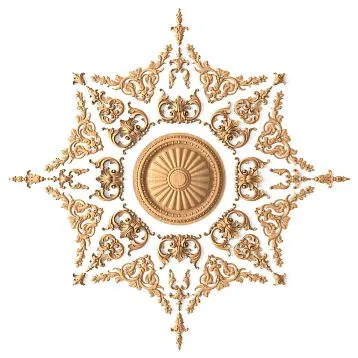
Rosettes — a classic decorative element used by humanity for millennia. Round, oval, multi-petal — they serve as compositional centers, attract attention, and create focal points. Rosettes can be standalone ornaments or part of more complex compositions.
Cartouches — decorative frames intended for placing coats of arms, monograms, commemorative inscriptions. In modern interiors, they are used to frame mirrors, paintings, and lamps. Cartouches always have a clearly defined central axis of symmetry.
Corner elements solve the practical problem of decorating corners and joints. They mask technological gaps and create smooth transitions between different surfaces. Corner appliqués are especially important when creating panel compositions.
Trimming items: rhythm and structure
Moldings — profiled strips of various cross-sections, used for framing panels, creating transitions between materials, and masking joints. Classical moldings have complex profiles combining convex and concave surfaces, creating play of light and shadow.
Baseboards not only cover the junction between wall and floor, but also influence the perception of room proportions. High baseboards visually reduce ceiling height, making the interior more intimate. Low baseboards, on the contrary, create a sense of spaciousness.
Casing — frames around door and window openings, giving them completeness and stylistic unity with the overall interior decor. Wide casings create grandeur, narrow ones — elegance.
Three-dimensional compositions: sculpture in interior
Brackets not only perform a structural function supporting shelves and consoles, but also become independent decorative elements. Carved brackets in the Baroque style transform a simple shelf into a work of art.
Columns and pilasters introduce architectural scale into the interior, create rhythm, and emphasize ceiling height. Half-columns and pilasters are less voluminous but retain architectural expressiveness.
Balusters — elements of stair railings — are used as independent decorative objects in modern design. Turned or carved balusters create rhythmic compositions and add vertical accents.
Panel systems: texture and color
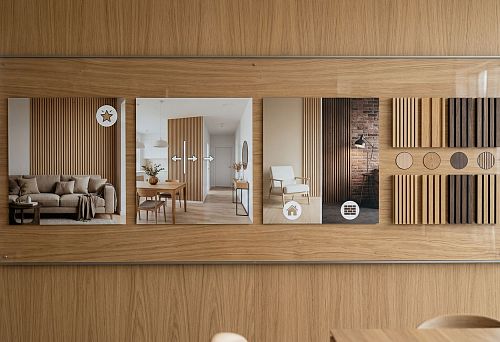
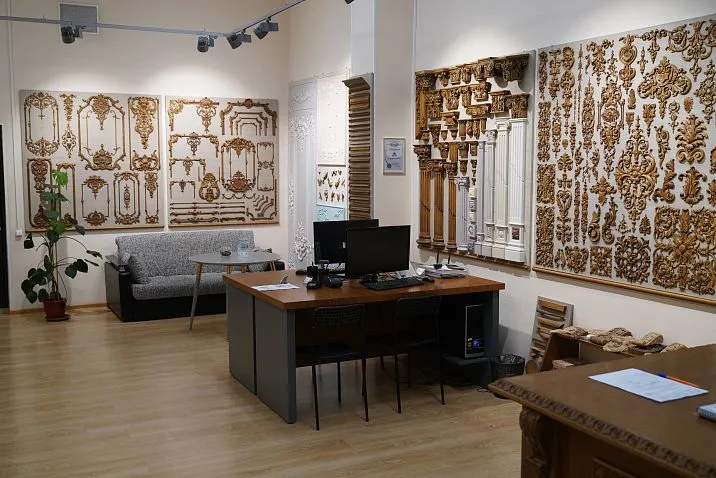
Wooden panels radically change the perception of walls, creating a new texture, warmth, and acoustic comfort. Wooden decoration set allows creating a stylistically unified composition for the entire room.
Lattice panels — the classic of the genre, tested over centuries. The combination of frames and lattices creates a structured surface with pronounced relief. Lattices can be flat, convex, with various frame profiles.
Slatted panels create a modern, dynamic image. Vertical slats visually increase the height of the room, horizontal slats — expand the space. Different intervals between slats create various visual effects.
Stylistic palette: from history to modernity
The world of wooden decoration impresses with the diversity of stylistic directions. Each style has its own history, philosophy, distinctive features, and principles of application.
Historical styles: heritage of centuries
Gothic, with its upward-reaching forms, pointed arches, and delicate carving, creates a unique atmosphere of mysticism and spirituality. Gothic hand-carved items distinguished by complexity of execution and deep symbolism of each element.
Trifurcations symbolize the Trinity, four-leaf clovers — the four elements, roses — the Virgin Mary. Each ornament carries theological meaning, creating not just decoration, but a spiritual message.
Renaissance brought ancient motifs, strict proportions, and mathematical harmony into decorative arts. Renaissance elements are characterized by noble restraint, classical proportions, and use of the order system.
Baroque impresses with opulence, theatricality, and dynamism of forms. Complex multi-level compositions, abundance of gilding, play of light and shadow create a sense of movement, celebration, and festivity. Baroque decoration requires appropriate scale — spacious rooms with high ceilings.
Rococo introduced French refinement and lightness. Asymmetric compositions, pastel tones, elegant botanical motifs create the atmosphere of an 18th-century boudoir. Rocaille elements (from French rocaille — shell) often include marine motifs.
National traditions: preserving identity
Russian style in wooden decoration is not a single direction, but a whole palette of regional traditions. Northern carving is characterized by geometry, strictness, and monumentality. Central Russia gifted the world with rich botanical ornaments, complex compositions of intertwined stems, leaves, and flowers.
Symbolism of Russian carving is deeply rooted in folk consciousness. Solar signs — symbols of life energy and fertility. Rosettes — protective signs, warding off evil forces. Grapevines — symbols of abundance, prosperity, and family well-being.
Scandinavian style is characterized by simplicity of forms, functionality, and use of light wood species. Minimal decoration, maximum quality of processing, emphasizing the natural beauty of the material — principles of northern design.
Alpine style (chalet) uses roughly processed wood, massive beams, simple but expressive forms. This style creates a sense of reliability, protection, and connection with mountain nature.
Modern directions: search for new forms
Modernism revolutionized the understanding of decorative art. Abandonment of historical styles, turn to natural forms, use of new materials and technologies created a unique style of the era.
Botanical motifs of modernism are stylized but recognizable. Irises, lilies, climbing plants create dynamic, flowing compositions. Asymmetry of compositions, smooth lines, organic forms — characteristic features of the style.
Art Deco combined luxury of materials with geometric stylization. Zigzag lines, stepped forms, solar motifs create an atmosphere of dynamic 20th century. Gilding, inlay, contrasting material combinations — characteristic techniques.
Minimalism uses wooden decoration extremely sparingly. Each element must be functionally justified and impeccably executed. Simple geometric forms, ideal surfaces, absence of excess transform minimalism into a philosophy of life.
Technologies of creation: from craft to art
Modern production of wooden decoration represents a synthesis of traditional craftsmanship and high-tech processes. Each method has its advantages and areas of application.
Hand carving: art of personalization
Hand carving remains the pinnacle of craftsmanship in creating wooden decoration. Each item is unique, bearing the imprint of the craftsman's individuality, his understanding of form, proportions, and beauty.
The process of hand carving begins with selecting the blank. An experienced craftsman sees the future item in a piece of wood, taking into account the grain direction, knot placement, and natural wood defects. Marking is done considering the material's structure.
A carver's tools are an extension of their hands. Chisels of various profiles, gouges, and skew chisels — each tool is designed for specific operations. Tool sharpening is a special art, the quality of which determines the cleanliness of the cut and the speed of work.
Carving proceeds in a specific sequence: first, the overall volume is created, then the large details are worked on, and only at the end is fine detailing performed. Each movement of the chisel must be precise — errors are practically impossible to correct.
Machine processing: precision and productivity
Modern CNC routers provide unprecedented accuracy in reproducing complex shapes. Multi-axis machining centers can create three-dimensional elements in a single setup, eliminating repositioning errors.
Programming CNC machines is a special art requiring understanding of both woodworking technology and equipment capabilities. CAM systems automatically generate control programs, but an experienced technician always makes adjustments, considering the specific characteristics of the material.
The quality of CNC machining depends on many factors: tool condition, cutting parameters, workpiece clamping system, equipment stability. Modern machines are equipped with active control systems that automatically adjust the machining process.
Combined technologies: the best of both worlds
The highest quality items are created by combining machine processing with hand finishing. Machines perform rough machining, forming basic contours, while craftsmen add individuality, remove traces of mechanical processing, and emphasize the most expressive details.
This approach allows combining the cost-effectiveness of mass production with the quality of individual work. Items become affordable but retain the soul of handcrafted work.
Application in interior design: the art of composition
Successful use of wooden ornaments in interior design requires understanding of composition principles, scale, and stylistic unity. Each room has specific requirements for the type and character of decorative elements.
Living spaces: creating an atmosphere
The hallway is the first impression of the house. Here, representative but not overloaded with details elements are appropriate. Wooden panels create a sense of reliability and security. Mirrors in carved frames visually expand a cramped space.
The living room offers maximum opportunities for decoration. A fireplace can become a compositional center, adorned with a portal and mantel. Ceiling beams (even decorative ones) create a sense of solidity and stability.
Wall panels in the living room must correspond to the room's scale. Tall panels (up to the middle of the wall) create grandeur, while low ones (up to one-third of the height) create coziness and intimacy.
The bedroom requires a more delicate approach. The atmosphere of peace, relaxation, and intimacy is important. The headboard of the bed is the main object for decoration. Carved appliqués and soft panels create a focal point without disrupting the overall calm.
Nightstands and chests of drawers can be adorned with small elements that create a sense of elegance without excessive ornamentation. The color palette should promote relaxation — warm, muted tones.
The children's room allows using brighter, more cheerful motifs. Safety is the main criterion: all elements must be securely fastened, free of sharp edges or small parts. Thematic decor stimulates the child's imagination and creates a fairy-tale atmosphere.
Functional spaces: beauty and practicality
The kitchen imposes special requirements on decoration. Humidity, temperature fluctuations, and contamination demand the use of durable materials and coatings. Wooden elements must be protected with water-resistant varnishes or impregnations.
Cabinet facades are the primary area for decorative application. Router-cut panels and appliqués transform standard furniture into a unique project. It is important not to overdo it — the kitchen must remain functional.
The bathroom is the most challenging place for applying wooden decor. High humidity and direct contact with water require special wood treatment or use of water-resistant species (teak, larch).
Modern protective coatings allow using wood even in shower cabins. Yacht varnishes and special impregnations create a reliable barrier against moisture while preserving the material's natural beauty.
The office requires restrained but rich decoration. Bookcases with carved elements and inlaid desks create an atmosphere conducive to intellectual activity. Dark wood species (walnut, mahogany) emphasize the seriousness of the room's purpose.
Public spaces: representativeness and style
Offices use wooden decor to create an image of reliability, stability, and success. Strict geometric forms, quality materials, and minimal distracting details create a professional atmosphere.
Conference rooms require special attention to acoustics. Wooden panels not only decorate but also improve sound insulation, creating comfortable conditions for communication.
Restaurants and cafes allow using more emotional decor. Thematic elements help create the desired atmosphere — from a cozy family café to an upscale restaurant. wooden interior decorations must correspond to the concept of the establishment.
Economic aspects: investments in long-lasting beauty
Wooden decor is a serious investment that should be considered in the long term. Properly selected and well-made elements serve for decades, paying for the initial costs.
Pricing Factors
Material is the primary pricing factor. Items made from solid wood of valuable species cost significantly more than composite alternatives, but offer incomparably higher quality and durability.
Manufacturing complexity directly affects cost. Simple profiles produced on automated lines are cheaper than intricate carved compositions requiring manual processing.
Size and order volume also affect price. Large elements require high-quality wood without defects, increasing material cost. Small-batch production is more expensive than mass production.
Finishing and coating can significantly alter the item's cost. Simple sanding under transparent lacquer is the most economical option. Patination, gilding, and inlay substantially increase cost.
Impact on property value
Quality wooden decor significantly increases the market value of real estate. Unique decorative solutions become competitive advantages when selling or renting.
Historical stylizations are especially valued in appropriate architectural contexts. An apartment in a Stalin-era building with authentic decor may cost 30-50% more than a similar property without decorative finishing.
Operating Costs
Quality wooden decor requires minimal maintenance. Regular dust cleaning and periodic coating renewal are all that is needed to maintain its original appearance.
Restorability and repairability are important advantages of wooden decor. Local damage is easily remedied, and worn elements can be renewed without replacing the entire composition.
Trends and development prospects
The industry of wooden decor is constantly evolving, adapting to changing market needs and incorporating new technologies.
Ecological trends
FSC certification is becoming standard for responsible manufacturers. Consumers are increasingly interested in the origin of wood and the environmental impact of production.
Secondary processing of wood waste allows creating composite materials with unique properties. Pressed wood can imitate rare species while possessing improved performance characteristics.
Bio-based coatings using natural oils and waxes replace synthetic lacquers. They preserve the natural wood grain, allow the material to 'breathe', but require more careful maintenance.
Technological Innovations
Wood 3D printing is a promising technology enabling the creation of complex shapes from wood dust with binders. The technology is still in development but already shows interesting results.
Laser engraving opens new possibilities for creating fine textures, inscriptions, and small details. Laser allows working with precision down to fractions of a millimeter, creating effects unattainable by traditional methods.
Thermal modification of wood changes its properties without using chemicals. Thermally modified wood gains enhanced stability, moisture resistance, and an attractive color.
Design trends
Style mixing has become the norm. Modern interiors naturally combine elements from different eras and cultures, creating unique compositions.
Personalization is a key trend of modernity. Consumers want unique solutions reflecting their individuality, hobbies, and life philosophy.
Integration with technology transforms decorative elements into functional ones. Built-in lighting, wireless charging, and hidden communication systems make decor not only beautiful but also useful.
Care and preservation: the art of longevity
Proper care of wooden decor is an art requiring knowledge of material properties, understanding of aging processes, and the ability to anticipate and prevent problems.
Preventive measures
Controlling the microclimate is the foundation of wooden decor longevity. Sudden temperature and humidity fluctuations are the main enemies of wood. Ideal conditions: temperature 18-22°C, humidity 45-65%.
Protection from sunlight prevents fading and drying. Ultraviolet radiation destroys lignin — the substance binding wood fibers. UV filters on windows and periodic shading preserve the color and structure of wood.
Regular cleaning must be performed according to the characteristics of the finish. Wax requires special formulations, lacquer can be wiped with a damp cloth, and oil-based finishes require periodic renewal.
Restoration work
Diagnosis of condition precedes any restoration work. It is important to determine the causes of damage, assess the volume of required work, and select the optimal restoration strategy.
Conservation halts destructive processes. Stabilizing impregnations stabilize wood and prevent further damage. Antifungal treatments eliminate biological pests.
Restoration returns the item to its original appearance. Missing fragments are recreated using similar materials and techniques. It is important to preserve historical authenticity.
Special areas of application
Church decor: sacred art
Wooden church decor — a special field of wooden art requiring deep understanding of Orthodox symbolism, canonical requirements, and liturgical specifics.
Iconostases, carved royal doors, and choir screens are created according to strict canons developed over centuries. Each element carries theological meaning and contributes to the creation of sacred space. Masters working in this field must possess not only technical skills but also deep knowledge of Orthodox tradition.
Materials for church decoration are selected with particular care. Traditionally, local wood species are used — lime for carving, pine for main structures, oak for load-bearing elements. Finishes must be eco-friendly and not emit harmful substances when heated by candles.
Restoration of Monuments
Restoration of wooden architectural monument decoration requires a special approach. It is important not only to restore the appearance but also to preserve historical authenticity, using materials and technologies appropriate to the era of creation.
Before beginning work, a thorough study is conducted: analysis of condition, study of historical documents, laboratory research of materials and finishes. Every intervention must be reversible and not harm the original structure.
Modern restorers use both traditional tools and techniques and the latest technologies. Laser cleaning allows removing dirt without damaging the wood. X-ray reveals hidden defects. Chromatography determines the composition of historical finishes.
Frequently Asked Questions about Wooden Decorative Items
Which wood species are best suited for making decorative elements?
The choice of wood depends on the item's purpose, interior style, and project budget. For carved elements, lime (soft, easy to work with), oak (hard, durable), and beech (uniform, stable) are ideal. For modern interiors, ash with its expressive texture is excellent. Coniferous species (pine, larch) are economical and suitable for large, simple-shaped elements.
How to properly care for wooden decorative elements?
Regular dusting with soft brushes or vacuum cleaners with attachments is the basis of care. It is important to maintain a stable microclimate: temperature 18–22°C, humidity 45–65%. Avoid direct sunlight, sharp temperature and humidity fluctuations. Renew finishes according to manufacturer recommendations — typically every 3–5 years.
How long do quality wooden ornaments last?
With proper care, quality items made from hardwoods last 50–100 years or more. Oak elements can last centuries, as evidenced by architectural monuments. Coniferous species last 30–50 years. Modern protective finishes significantly extend the lifespan of any item.
Can wooden decor be used in humid rooms?
Yes, but special preparation is required. Use moisture-resistant species (teak, larch) or treated wood. Moisture-resistant finishes — yacht varnishes, special impregnations — are mandatory. Ensure good ventilation and avoid direct contact with water.
How to determine the quality of wooden decorative items?
Pay attention to the absence of wood defects (knots, cracks, sap stains), precision of geometric dimensions, quality of surface finishing. Check wood moisture content (should be 8–12%), presence of quality certificates. Quality items have uniform finishes without streaks or inclusions.
Is it worth ordering custom decorative elements?
Custom elements allow creating a unique interior that precisely matches your needs and tastes. They are more expensive than mass-produced items but ensure full stylistic harmony. Especially recommended for non-standard sizes, special stylistic requirements, and restoration projects.
How to combine wooden decor with modern materials?
Wood combines beautifully with most modern materials. With metal, it creates stylish contrasts; with glass — light, airy compositions; with stone — solid, respectable interiors. It is important to observe proportions and avoid stylistic conflicts.
Conclusion: The Wooden Symphony of the Modern Home
Wooden decorative items for decorating the house These are not just decorative elements, but living works of art capable of radically transforming any space. In an era of high-tech and synthetic materials, wood remains a symbol of authenticity, connection to nature, and intergenerational continuity.
Each wooden ornament carries a story — the story of the tree that grew under sun and rain, the story of the craftsman who breathed new life into the material, the story of the home that these elements will adorn for many years. This is a material embodiment of time, frozen in beautiful forms.
Modern technologies open up boundless creative possibilities. Computer modeling allows creating complex compositions, laser technologies enable realizing the most daring fantasies, and new protective finishes ensure the longevity of items under any conditions of use.
However, technology is merely a tool. The essence of wooden decoration lies in understanding beauty, a sense of proportion, respect for the material and craftsmanship traditions. The best items will always be born from a creative dialogue between the craftsman and the wood, between tradition and innovation, between function and beauty.
Choosing wooden ornaments for your home is choosing in favor of quality of life, aesthetic perfection, and connection to cultural roots. We create a space that will not only be beautiful but also spiritually rich, emotionally comfortable, and energetically positive.
Investing in quality wooden decor is investing in the future. These items will serve not only us but also our children and grandchildren, becoming part of family history and passing down as a precious heritage. In a world of disposable items, wooden ornaments affirm values of permanence, solidity, and responsibility toward future generations.
STAVROS embodies the best traditions of woodworking, combining centuries of experience with modern technologies. For decades, STAVROS has created items that adorn homes throughout Russia and beyond, setting new standards of quality and beauty.
STAVROS understands that every home is unique, and each family has its own traditions and preferences. Therefore, the company offers not only a wide range of ready-made solutions but also services for creating custom projects that take into account specific requirements and wishes of clients.
STAVROS’s production facility is equipped with the most modern equipment — from precision machining centers to traditional chisels of master carpenters. This enables producing products of any complexity, from simple moldings to intricate carved compositions worthy of palace interiors.
STAVROS works exclusively with certified materials, uses wood from ecologically responsible sources, and applies safe finishes and impregnations. The ecological nature of the products is confirmed by appropriate certificates and years of safe usage experience.
The STAVROS team is a community of professionals united by a love for wood and a pursuit of perfection. Experienced masters pass on their knowledge to younger specialists, preserving traditions while developing new techniques. The company’s designers follow global trends, adapting them to Russian realities and traditions.
The STAVROS service is built around client needs. Professional consultations help make the right choice, design services allow creating a cohesive interior concept, and logistics ensure timely delivery to any point in the country.
STAVROS continuously invests in development — modernizes equipment, adopts