Article Contents:
- Types of carved decorative elements for the home
- Wall-mounted decorative elements
- Carved trim items
- Architectural carved elements
- Carved decor for furniture
- Materials for making carved decor
- Solid natural wood
- MDF: a technological alternative
- Combined Solutions
- Styles of carved decor for interior
- Classic historical styles
- Ethnic Styles
- Modern styles
- Application of carved decor in interior
- Living room: representative space
- Bedroom: private space
- Office: Work Space
- Dining Room: Space for Meals
- Entryway: First Impression
- Technologies for making carved decor
- CNC milling: precision and productivity
- Hand carving: liveliness and uniqueness
- Turning processing
- Final finishing
- Installation of carved decor
- Surface Preparation
- Mounting methods
- Joint sealing
- Care for carved decor
- Frequently Asked Questions
- How much does carved decor for the home cost?
- Can carved decor be used in modern interior?
- Which material is better: solid wood or MDF?
- Is it difficult to install carved inserts yourself?
- How to choose a style of carved decor for your home?
- Where is carved decor applied besides furniture?
- Which wood species are better for carved decor?
- Is special treatment needed for carved decor?
- How does carved decor affect the perception of interior?
- How long does carved wooden decor last?
- Conclusion: STAVROS — masters of home decor

Home interior is a reflection of the owner's personality, taste, cultural preferences, and life philosophy. Ordinary furniture and standard finishes create a functional space, but do not make it unique.Home interior decortransforms an indifferent space into a unique living area filled with character, warmth, and aesthetic pleasure. Among the many decoration options, carved elements made of natural wood and MDF occupy a special place, combining artistic expressiveness, durability, and universal applicability.
Carved decor possesses a unique property — it works on multiple levels of perception simultaneously. Visually, carving creates a play of light and shadow, volume, and textured richness. Tactilely, natural wood provides pleasant sensations and material warmth. Psychologically, the presence of handcrafted work, natural materials, and traditional craftsmanship evokes a sense of coziness, stability, and connection to cultural roots. A modern person, surrounded by synthetic materials and mass production, instinctively gravitates toward natural, unique, soulful creations.
Carved elements for homeare available in an enormous variety of forms, styles, and sizes. From miniature appliqués on furniture facades to monumental carved panels, from classical ornaments to modern abstract compositions — everyone will find a solution that matches their personal preferences and interior style. Carved decor is universal: it seamlessly integrates into classical interiors, adding aristocracy and luxury, enriches modern spaces by creating texture contrasts, and lends authenticity and depth to ethnic interiors.


Types of carved decorative elements for home
Carved decor is classified by application location, functional purpose, size, and execution technique. Understanding the typology helps correctly select elements for specific interior design tasks.




Wall-mounted decorative elements
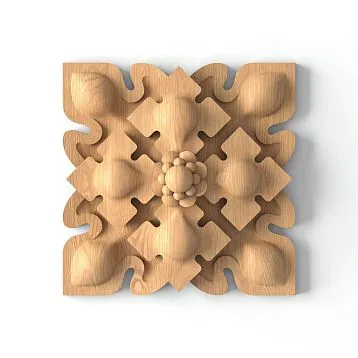
Decorative appliqués for furniture— the most common type of carved decor. Appliqués are carved elements of various shapes and sizes, attached to a base surface, enriching it with decorative details.
Carved rosettes — circular or polygonal elements with central symmetry. Rosettes decorate panel centers, cornice intersections, furniture corners, and handle attachment points. Rosette diameters range from miniature 30–50 mm to large 200–300 mm. Rosette patterns may be botanical (leaves, flowers, fruits), geometric (stars, polygons, spirals), or fantasy (abstract compositions).
Decorative appliqués of arbitrary shape — elements that replicate furniture facade contours or form independent compositions. Oval, rectangular, teardrop, leaf, flower, scroll shapes — the variety of forms is limited only by the designer’s imagination. Appliqués are mounted on cabinet doors, commode facades, bed headboards, chair backs, and cabinet cornices.
Corner elements — specialized appliqués for corner decoration. A corner appliqué visually softens the rectangular shape of furniture, creates a framing effect, and adds elegance. Corners may be symmetrical (identical pattern on both sides) or asymmetrical (composition with directional orientation).
Central compositions — large appliqués occupying a significant portion of the facade. Such elements become the visual focal point of furniture. A carved panel on a cabinet door, bed back, or commode facade transforms furniture into applied art.
Our factory also produces:


Carved trim elements
Trim decor — elements measured in linear meters, intended for decorating perimeters, linear surfaces, and creating frames.
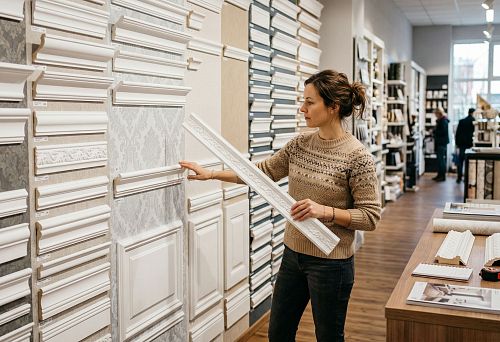
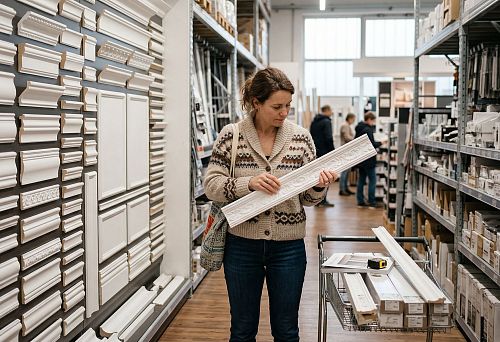
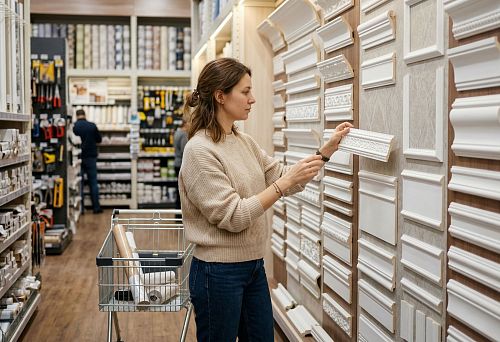
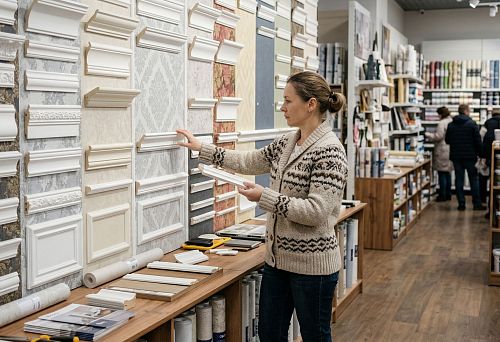
Carved moldings — profiled strips with relief patterns. Moldings are used to frame walls, ceilings, panels, mirrors, and paintings. They create visual divisions of planes, add architectural character, and provide completion. The molding profile may be simple (grooves, scrolls) or complex (combination of multiple profiles with carved ornamentation).
Carved baseboards — floor and ceiling baseboards with carved decor. A baseboard not only covers the junction between wall and floor (or ceiling), but also becomes a decorative element framing the room. Carved baseboards are especially suitable for classical interiors, where every detail matters.
Carved casings — frames for door and window openings. A casing with carved decor transforms a functional element into an artistic detail. Traditional Russian casings with pierced carving and botanical ornamentation are classics of wooden architecture. Modern interpretations use more minimalist forms but retain the expressiveness of carving.
Carved cornices — horizontal projecting elements crowning walls, cabinets, shelves. A cornice creates an architectural finish to vertical planes. A carved cornice with modillions (brackets), ornamentation, or teeth adds monumentality, classical strictness, or baroque opulence depending on the carving style.
Get Consultation
Architectural carved elements
Large-format elements forming the architectural environment of the interior.
Carved panels — large flat elements with relief decor, covering walls fully or partially. Wall panels with carving create luxurious interiors characteristic of classical styles. Panels may be made of solid wood (expensive option, maximum quality) or MDF with router-relief (more affordable, but visually impressive).
Carved columns and pilasters — vertical architectural elements. A column is round and volumetric; a pilaster is flat and projects from the wall. Carved column shafts, carved capitals (tops), and carved bases (foundations) create a classical architectural environment within the interior. Column use is appropriate in spacious rooms with high ceilings.
Carved brackets and consoles — projecting elements supporting (real or decorative) shelves, cornices, balconies. A carved bracket with botanical or zoomorphic motifs is a classic element of historical interiors.
Carved beams — decorative or structural elements on ceilings. In modern interiors, beam imitations are often used — lightweight structures made of MDF or solid wood with carved decor, creating an atmosphere of a country house, chalet, or country style.
Carved decor for furniture
Specialized elements developed to enrich furniture.
Furniture legs — carved supports for tables, chairs, beds, commodes. Turned legs with carved decor, cabriole (S-shaped), columns, and balusters transform ordinary furniture into designer pieces. The quality of legs largely determines the overall perception of the furniture item.
Carved pediments — decorative elements crowning cabinets, bookshelves, buffets. A pediment creates an architectural finish for furniture, adding monumentality and a classic character.
Carved panels — central inserts in doors and facades. A panel can be flat with surface carving or relief, where the panel itself is carved with three-dimensional decoration.
Carved handles and handle overlays — functional and decorative elements. A wooden carved handle or carved plate, to which a metal handle is attached, adds individuality and links furniture with interior style.
Materials for making carved decoration
Material selection determines visual qualities, durability, manufacturability, and cost of decorative elements.Home interior decorMade from various materials, each with its own characteristics.
Solid natural wood
Natural wood — a classic and most valuable material for carved decoration. Solid wood possesses unique qualities: natural texture, warmth of material, ability to undergo deep artistic processing, durability, and repairability.
Oak — a hard, strong wood with a distinctive texture. Oak decoration is durable, long-lasting, and prestigious. Oak's texture is recognizable, creating a sense of solidity and stability. Oak is used for large load-bearing elements: carved beams, brackets, furniture legs, panels. Oak color varies from light golden to dark brown depending on treatment.
Beech — a hard, uniform wood, easy to cut and hold details. Beech decoration is cheaper than oak but does not lag behind in strength. Beech texture is fine and unobtrusive; after toning, beech imitates valuable species. Beech is used for furniture legs, turned elements, moldings, overlays.
Ash — a strong, elastic wood with beautiful texture. Ash is lighter than oak, with contrasting, expressive texture. Ash decoration combines strength and aesthetics, suitable for modern interiors where material naturalness is valued.
Linden — a soft, uniform wood, ideal for carving. Linden is easy to cut, provides clean lines, and allows creating delicate details. Linden is used to carve decorative overlays, rosettes, panels with complex relief. Linden's drawback is its relative softness, making it unsuitable for load-bearing elements.
Walnut — a valuable wood with rich texture and noble color. Walnut decoration is prestigious, beautiful, and long-lasting. Walnut is easy to cut and polish to a mirror finish. Used for exclusive elements and premium-class furniture.
Birch — an affordable domestic wood, light in color with fine texture. Birch is easy to turn, mill, and paint. Birch decoration is cost-effective and suitable for mass use. After toning, birch imitates valuable species.
MDF: a technological alternative
MDF (fine particle) — compressed wood dust bonded with binders. MDF is a uniform material without knots, voids, or cracks. The main advantage of MDF is its ideal machinability.Carved elements for homeMDF is produced on CNC machines with high precision, reproducing the most complex reliefs.
Advantages of MDF:
-
Stability — does not warp or crack
-
Uniformity — relief is clean, without knots
-
Cost — cheaper than solid wood
-
Ability to make large sizes — panels up to 3×2 meters
-
Paintability — MDF accepts paint perfectly
Limitations of MDF:
-
Absence of natural texture — MDF is uniform
-
Fear of moisture — swells irreversibly when wet
-
Less prestige — MDF is perceived as a substitute
MDF is optimal for large relief panels, trim elements, and paintable overlays. For elements where natural wood texture is important, solid wood is preferable.
Combined Solutions
Rational approach — combination of materials, where each is used for its purpose. Basic MDF structures are supplemented with surface-carved elements made of solid wood. This optimizes cost while preserving aesthetics. For example, an MDF panel with a milled background relief is supplemented with carved overlays made of linden or oak solid wood. Visually, the result does not fall short of a solid wood panel, but costs less.
Styles of carved decoration for interiors
Selection of carved decoration style is determined by the overall interior concept, owner's personal preferences, and architectural features of the space.
Classical historical styles
Baroque — opulence, dynamism, abundance of decoration. Baroque carving is rich with plant motifs: acanthus leaves, grape clusters, floral garlands. Forms are dynamic and curved, creating a sense of movement. Baroque decoration is suitable for grand interiors where luxury impression is required.
Rococo — lightness, elegance, asymmetry. Rocaille carving uses marine motifs: shells, waves, seaweed. Forms are smooth, playful, and capricious. Rococo is more feminine than Baroque, creating an atmosphere of boudoir, intimate space.
Classicism — strictness, symmetry, noble restraint. Classical carving is geometric: meanders, palmettes, ovals, denticles (tooth-like patterns). Forms are regular, proportions mathematically precise. Classicism creates an impression of order, rationality, aristocracy.
Empire — imperial grandeur, monumentality. Empire carving uses military symbolism: laurel wreaths, trophies, eagles, fasces. Forms are massive, geometrically clear. Empire creates an atmosphere of triumph, power, greatness.
Modern — flowing lines, stylized plant forms, asymmetry. Modern carving depicts climbing stems, stylized flowers, fluid shapes. Modern creates an elegant, artistic atmosphere.
Ethnic styles
Russian style — house carving, pierced cornices, plant and geometric ornaments of Russian wooden architecture. Russian carving can be flat (relief) or pierced (openwork). Motifs: solar symbols, birds, plants, geometric patterns. Russian carved decoration creates an atmosphere of a traditional home, a connection to cultural roots.
Scandinavian style — minimalism, functionality, natural motifs. Scandinavian carving is restrained, shallow, with simple geometric and plant patterns. Colors are natural: light wood, white, gray. Scandinavian decor creates a calm, cozy atmosphere.
Eastern styles — Arabic, Indian, Chinese, Japanese carving have distinctive features. Arabesque — complex geometric patterns of Islamic art. Indian carving — abundance of plant forms, depictions of gods and animals. Chinese carving — dragons, clouds, characters. Japanese carving — minimalism, symbolism, natural motifs.
Modern Styles
Minimalism — extreme minimalism. Minimalist carved decoration uses simple geometric forms: straight lines, circles, squares. Relief is shallow, compositions are graphic. Minimalist decor creates accents in a restrained interior without overcrowding space.
Loft — industrial aesthetics. In a loft, carved decoration may seem inappropriate, but thoughtful use creates a contrast of textures. Rough carving on aged wood against brick and concrete creates an interesting contrast.
Eclecticism — mixing styles. An eclectic interior allows combining carved decorations from different eras and cultures. Baroque rosettes coexist with minimalist moldings, Russian cornices with modernist panels. Eclecticism requires a refined sense of proportion, but when properly applied, it creates a layered, rich interior.
Application of carved decoration in interior design
Decorative appliqués for furnitureand other carved elements are applied in various zones of the house, fulfilling both functional and aesthetic tasks.
Living room: representative space
Living room — a formal room in the house where guests are received, family evenings are held, and holidays are celebrated. Carved decoration in the living room creates an atmosphere appropriate to the room’s status.
Wall decoration — carved panels, moldings, rosettes. Wall panels with carving cover walls fully or partially, creating accent zones. Moldings divide walls into sections, creating a classical division. Corner rosettes emphasize the room’s perimeter.
Ceiling — carved cornices, beams, rosettes for chandeliers. Ceiling cornices frame the room around its perimeter, creating an architectural finish. Decorative beams add volume and coziness. Ceiling rosettes frame chandeliers, creating a visual center.
Fireplace — carved portal, framing, appliqués. The fireplace is a traditional center of the living room. A carved fireplace portal turns the fireplace into a work of art. Columns, pilasters, cornices, applied ornaments create a monumental frame around the hearth.
Furniture — carved cabinet facades, coffee tables with carved legs, chairs with carved decoration. Furniture with carving sets the style of the living room, creating a sense of individuality and exclusivity.
Bedroom: private space
Bedroom — an intimate space where the atmosphere of comfort, calm, and harmony is important. Carved decoration in the bedroom creates a cozy, intimate environment.
Headboard — carved panel, appliqués, central composition. The headboard is the visual center of the bedroom. Carved headboards add individuality and luxury. Carving can be symmetrical (classic approach) or asymmetrical (modern interpretation).
Nightstands — carved facades, appliqués, carved legs. Nightstands with carving support the style established by the bed’s headboard.
Cabinets — carved facades, pediments, appliqués. Cabinets occupy a significant portion of the wall. Carved decoration enhances cabinets, transforming them from functional elements into decorative ones.
Dressing table — carved legs, carved mirror, appliqués on facades. A dressing table is a feminine element in the bedroom. Carved decoration adds femininity and elegance.
Office: Work Space
Office — a place for work requiring concentration, but also creating a representative atmosphere for business meetings. Carved decoration in the office creates solidity and reliability.
Wall panels — carved panels from dark wood (oak, walnut) create a classic office interior. Panels up to 1–1.5 meters high (boiserie) — a traditional solution.
Work desk — carved legs, carved appliqués on drawer fronts, carved tabletop. A heavy desk with carving symbolizes stability and solidity.
Bookcase — carved columns, pediment, carved glazing. A library bookcase with carving is a classic element of office interiors.
Doors — carved cornices, carved door panels. The entrance door to the office sets the status of the room.
Dining room: space for meals
Dining room — a place for family gatherings and receiving guests during meals. Carved decoration creates a festive yet cozy atmosphere.
Dining table — carved legs, carved apron (construction under the tabletop). The table is the center of the dining room; its quality determines the overall impression.
Chairs — carved backs, carved legs. A set of chairs with a unified carved decoration creates an ensemble around the table.
Buffet — carved facades, pediment, carved columns. A buffet is a traditional element of the dining room, used for storing tableware. A carved buffet is a source of pride for the homeowners.
Wall decor — carved panels, moldings, carved shelves for decorative dishes.
Entryway: first impression
Entryway — the first space seen by those entering. Carved decor creates an impression of the home from the threshold.
Entrance door — carved casings, carved panels. The quality of the entrance design determines the first impression.
Console table — carved legs, carved frieze. A small carved table in the entryway creates an accent.
Mirror — carved frame. A mirror in the entryway is functionally necessary; a carved frame turns it into a decorative element.
Hook — carved brackets, carved base panel. Even a functional hook can be a work of art.
Manufacturing technologies for carved decor
Qualitydecor for home interiorsis determined by manufacturing technologies, master qualifications, and equipment used.
CNC milling: precision and productivity
CNC milling — the main technology of modern carved decor production. CNC milling machine — a machine where the cutter moves along a trajectory defined by a computer program, creating relief with precision down to tenths of a millimeter.
The process begins with a 3D model. The designer creates the element model in a 3D modeling program. The model is converted into a control program, which is loaded into the machine. The cutter removes material layer by layer, reproducing the desired shape.
Advantages of CNC: precision, repeatability (series of identical elements), speed, ability to create complex shapes unattainable by hand. Limitations: minimum cutter diameter (usually 3–6 mm) does not allow creating finer details; cutter marks require final sanding.
Hand carving: liveliness and uniqueness
Despite automation, hand carving retains a place in the production of exclusivecarved elements for the homeitems. A master carver, virtuoso with the tool, creates details unattainable by machine: delicate chamfers, lively non-repeating forms, individual nuances.
Hand carving requires time and high skill, so it is expensive. But the result possesses the liveliness and soul that automation cannot create. Often, a combination is used: rough shaping on CNC, final finishing by hand.
Turning Processing
Turning machine creates rotational parts: balusters, columns, furniture legs, round inlays. The blank rotates, the cutter removes material, forming the profile. Copying or CNC turning machines ensure consistency of serial parts.
Final finishing
The quality of finishing determines the final perception of the item. Sanding removes tool marks, creating smoothness. Priming prepares the surface for painting. Coloring, toning, patination create color and effects. Lacquering protects and highlights texture.
Natural finish — transparent oils or varnishes preserving wood texture. Natural finish highlights the beauty of the material, creating warmth and naturalness.
Toning — imparting desired shade to wood while preserving texture visibility. Stains and pigmented oils allow light wood to darken, imitating valuable species.
Coloring — opaque paint covering texture. Enamels and acrylics provide any color. Coloring is used for MDF decor and to create color accents.
Patination — creating an aging effect. Dark patina is applied to recesses of relief, imitating dirt accumulation and oxidation. Patina adds depth, nobility, vintage character.
Gilding — application of gold leaf or sheet gold. Gilding creates luxury characteristic of classical styles. Used for elements of formal interiors.
Installation of carved decor
Installationdecorative inlays on furnitureand other carved elements require care and proper technology.
Surface preparation
Surface must be clean, dry, and degreased. Dust, dirt, oil stains reduce adhesive bond. Surface is sanded with fine sandpaper to improve adhesion.
Methods of mounting
Adhesive bonding — primary method for mounted elements. Wood glue PVA is used for bonding wood to wood. Polyurethane glue suits dissimilar materials. Epoxy glue ensures maximum strength. Glue is applied to both surfaces, elements are pressed and held until drying.
Nailing — for large elements subjected to load. Use thin finish nails without heads or with concealed heads. Nails are driven in, heads are pressed down, holes are filled with putty.
Screw fastening — for disassemblable structures. Screws are driven in from the reverse side or pressed down, holes are covered with wooden plugs (shanks) or filled with putty.
Mechanical fastening — clips and clamps for trim elements (moldings, baseboards). Hidden fasteners ensure an aesthetic appearance.
Joint sealing
Joints between elements are sealed with acrylic sealant in wood color or filled with wood putty. After drying, the joints are sanded and touched up.
Care for carved decoration
Proper care extends the life of carved elements and preserves their appearance.
Regular cleaning — dust is removed with a dry soft cloth or vacuum cleaner with a soft attachment. Difficult-to-reach recesses are cleaned with a soft brush.
Wet cleaning — slightly damp (not wet) cloth is acceptable if necessary. Avoid excessive wetting, especially for MDF.
Polishing — lacquered surfaces are periodically polished with special polishes to restore shine. Oil finishes are refreshed with oil every 1-2 years.
Protection from moisture — avoid installing carved decoration near moisture sources (above sinks, near shower cabins). Moisture deforms wood and peels off finishes.
Protection from direct sunlight — UV rays fade paints and dry out wood. Carved decoration on windows exposed to direct sunlight requires UV-protective coatings.
Repair of damage — scratches are touched up with touch-up markers or paints. Chips are filled with putty, sanded, and touched up. Detached elements are reattached.
Frequently asked questions
How much does carved decoration for home cost?
Prices vary widely. Simple MDF overlays cost from 300-500 rubles per piece. Carved wooden rosettes — from 800-2000 rubles. Trim items (moldings, baseboards) — from 1500-3000 rubles per meter. Large carved panels — from 8000-15000 rubles per square meter. Handmade exclusive elements — individual assessment. Exact cost depends on material, size, complexity of carving, and manufacturing method.
Can carved decoration be used in a modern interior?
Yes, carved decoration fits seamlessly into modern interiors with the right approach. For minimalist spaces, choose simple geometric patterns, shallow relief, natural wood colors. Carved decoration adds textural contrast, warmth of natural material, and individuality. The key is moderation — avoid overloading the space.
Which material is better: solid wood or MDF?
Solid wood — premium choice: natural texture, prestige, longevity, repairability. MDF — practical choice: stability, precision of milling, affordable price. For elements where natural texture matters (furniture with transparent finish), choose solid wood. For large panels to be painted or trim items, MDF is optimal. Combination of materials offers the best price/quality ratio.
Is it difficult to install carved overlays yourself?
Installation of simple overlays is accessible to a DIY enthusiast. Required: clean the surface, apply adhesive, press the element, and secure until dry. Complex elements (panels, moldings with mitered corners) require carpentry skills. Without experience, it’s better to hire professionals — improper installation will damage expensive elements.
How to choose a style of carved decoration for your home?
Base your choice on the overall interior style. Classic interiors require traditional ornaments (Baroque, Classicism). Modern interiors — simple geometric forms. Ethnic interiors — corresponding folk motifs. Consider the house’s architecture: high ceilings allow monumental decoration, low ceilings require restraint. Base your choice on personal preferences: decoration should please you personally and create comfort.
Where is carved decoration applied besides furniture?
Carved decoration is versatile: wall panels, ceiling moldings and beams, door and window casings, fireplace surrounds, staircase balusters and railings, carved frames for mirrors and paintings, decorative shelves, architectural elements (columns, pilasters, brackets), carved appliqués for household appliances, carved radiator caps. Any interior element can be enriched with carving.
Which wood species are best for carved decoration?
For carving, softer, uniform woods are best: linden (classic carving wood), birch (affordable, easy to cut), aspen (soft, stable). For load-bearing elements: oak (maximum strength), beech (strong, more affordable than oak), ash (strong, beautiful). For exclusive items: walnut (prestigious, beautiful), redwood (exotic luxury). Choice depends on the element’s purpose and budget.
Is special treatment needed for carved decoration?
Yes, a finish is mandatory. Unprotected wood absorbs dirt, darkens, and deforms from moisture. Minimum — oil or wax coating (for natural appearance). Optimal — primer and lacquering (long-lasting protection, highlighting texture). For colored finishes — enamel or acrylic painting. Treatment is performed by the manufacturer or by the user after installation of uncoated elements.
How does carved decoration affect the perception of an interior?
Carved decoration works on multiple levels. Visually: creates volume, texture, play of light and shadow, enriches space. Psychologically: natural wood creates coziness, a sense of stability, connection to nature. Culturally: historical ornaments activate cultural memory, evoke associations with eras. Status-wise: quality carved decoration demonstrates taste, material resources, and the owner’s cultural level.
How long does wooden carved decoration last?
With proper care and use, solid wood carved decoration lasts for decades. Examples: carved elements in historic interiors have survived for centuries. MDF decoration is less durable (15-25 years), but with careful handling, it lasts the entire interior’s lifespan. Longevity depends on: material and manufacturing quality, finish coating, usage conditions (humidity, temperature), regular maintenance.
Conclusion: STAVROS — masters of home decor
Creating High-Qualitydecor for home interiorsRequires a combination of artistic taste, technical skills, understanding of materials, and craftsmanship. The market offers numerous options — from inexpensive stamped overlays to exclusive hand-carved elements. Choice is determined not only by budget but also by understanding the value of quality, durability, and aesthetic perfection.
The STAVROS company occupies a unique position in the market of carved decor. It is not a mass producer of standard products, but a workshop where each item is created with an understanding of its role in the interior, its artistic function, and its impact on the atmosphere of the home.
STAVROS specializes in manufacturingcarved elements for the homefrom solid natural wood and high-quality MDF. The extensive assortment includes: decorative overlays of all sizes and shapes, carved rosettes from miniature to monumental, trim elements (moldings, baseboards, cornices, casings), architectural elements (columns, pilasters, brackets, consoles), relief panels, furniture elements (legs, pediments, panels, handles), and custom-made items according to the client’s sketches.
STAVROS’s production facility is equipped with modern equipment. CNC routers of the latest generation create relief elements of any complexity with precision down to tenths of a millimeter. Multi-axis machining centers perform three-dimensional processing unattainable on conventional machines. CNC lathes produce ideal round parts. Laser systems cut delicate elements with jewel-like precision.
But STAVROS’s greatest wealth is its master craftsmen. Carpenters with decades of experience who intuitively feel wood. Carvers who master tools virtuosically, capable of creating the finest handcrafted details. Technologists who control quality at every stage. For all of them, work is not merely a job, but an opportunity to create something beautiful and contribute to the beauty of living spaces.
STAVROS works with the best materials. Solid oak, beech, ash, walnut, and linden — each species is selected according to the element’s purpose. Wood undergoes kiln drying to a moisture content of 8–10%, ensuring stability. High-grade MDF is used for elements where precision milling and geometric stability are crucial.
The finishing quality at STAVROS is at the highest level. Sanding is performed sequentially with progressively finer grits until achieving perfect smoothness. Priming prepares the surface. Coloring, toning, and patination are done manually by specialists skilled in all classic techniques. Multi-layer lacquering with intermediate sanding creates a durable protective finish.
STAVROS’s assortment includes ready-made solutions and the option for custom manufacturing. Incataloghundreds of carved decor items of various styles, sizes, and levels of complexity are presented. Standard elements are available from stock or manufactured within short timeframes. For unique tasks, STAVROS develops and produces custom elements according to the client’s or designer’s sketches.
STAVROS understands thatDecorative appliqués for furnitureand other carved elements are not merely decorations, but a means of self-expression for the homeowner. Through the choice of decor, a person conveys their taste, cultural preferences, and life philosophy. Therefore, STAVROS treats every order with respect, understanding its importance to the client.
STAVROS’s pricing policy is transparent and honest. The cost is calculated based on real expenses: materials, labor intensity, and processing complexity. No hidden markups or unexpected additional charges. The client receives a detailed estimate, understanding exactly what they are paying for. STAVROS’s prices correspond to quality — it is not the cheapest offer on the market, but the price-to-quality ratio is optimal. An investment in decor from STAVROS pays off through durability, visual perfection, and the pleasure of appreciating beauty.
STAVROS’s service is at a high level. Managers are competent, polite, and ready to consult on all questions regarding selection, application, and care of carved decor. Delivery is arranged to any point in Russia, with packaging ensuring protection during transport. If assistance with installation is required, STAVROS recommends trusted specialists or performs installation themselves for large projects.
STAVROS is not merely a manufacturer, but a partner in creating the beauty of your home. The company’s specialists are genuinely invested in the outcome, rejoice in successful projects, and take pride when STAVROS’s decor transforms interiors, creating the atmosphere the client dreamed of.
STAVROS’s ecological responsibility is demonstrated through the use of wood from responsible sources, application of water-based paints and varnishes, minimization of waste, and disposal of production residues. By purchasing decor from STAVROS, you make not only an aesthetic but also an ecologically responsible choice.
STAVROS’s reputation is based on real achievements. The company’s products adorn private interiors, restaurants, hotels, and public spaces throughout Russia. Satisfied clients recommend STAVROS to friends and acquaintances. Interior designers entrust STAVROS with important projects, knowing that the quality will be flawless.
Choosing STAVROS for decorating your home means choosing quality, reliability, and beauty. You choose a company for which creating decor is not a business, but a calling. A company where every element is crafted with soul, understanding its importance in creating the home of your dreams.
carved decor catalog
STAVROS — Catalog of carved decorwhere each element is created to make your home a unique space filled with beauty, warmth of natural wood, harmony of classic forms. A home where it’s pleasant to live, where you want to return, and which you can be proud of.
STAVROS — mastersdecorative elements for homecreating beauty for your life. Entrust us with decorating your interior, and we will create decor that will delight you for years, serve generations, become a family treasure.
Contact STAVROS — and let your home attain the uniqueness and beauty it deserves!