Article Contents:
- Chapter 1. Understanding the value of wooden elements in interior design
- 1.1. Historical context
- 1.2. Natural wood and its psychological impact
- Chapter 2. What are decorative wooden wall planks?
- 2.1. Definition and characteristics
- 2.2. Types and main varieties
- Chapter 3. Advantages and areas of application
- 3.1. Aesthetic appeal
- 3.2. Stylistic versatility
- 3.3. Improved acoustics
- 3.4. Concealing imperfections and utilities
- 3.5. Space zoning
- Chapter 4. Material selection and preparation nuances
- 4.1. Wood species
- 4.2. Wood moisture content
- 4.3. Preliminary treatment
- 4.4. Calculating required quantity
- Chapter 5. Installation methods
- 5.1. Adhesive mounting
- 5.2. Clamps and hidden fasteners
- 5.3. Mechanical method (screws, nails)
- 5.4. Mounting on a grid
- Chapter 6. Decorative techniques and stylistic solutions
- 6.1. Contrasts and color combinations
- 6.2. Playing with directions
- 6.3. Lighting and light play
- 6.4. Combination with other materials
- Chapter 7. Care and maintenance of planks
- 7.1. Regular cleaning
- 7.2. Protective coatings
- 7.3. Fixing Minor Defects
- Chapter 8. Practical Examples and Inspiration
- 8.1. Scandinavian-Style Bedroom Decor
- 8.2. Zoning Living Room and Kitchen in a Studio
- 8.3. Loft-Style Office
- 8.4. Accent Ceiling in a Narrow Corridor
- 9.1. Responsible Forestry
- 9.2. Waste Management and Recycling
- 9.3. Minimizing Chemical Substances
- Chapter 11. Conclusions and Prospects
- Conclusion
In today's world of design and interior solutions, it is difficult to overestimate the role of natural materials. They not only give space a special warmth and coziness, but also reflect humanity's desire for harmony with nature. Among the wide variety of wooden details, decorative wooden planks have recently gained particular popularitydecorative wooden planks on the wallAnd although their role may seem secondary compared to main interior elements, in reality, these 'small details' can completely change the perception of space, emphasize aesthetics, and create a unique character of the room.
Below you will find a detailed and comprehensive analysis of what decorative planks are, their advantages, areas of application, installation methods, and much more. This article is aimed at a broad audience — from professional designers to those who have decided to transform their homes independently, using the possibilities of wood.


Chapter 1. Understanding the Value of Wooden Elements in Interior Design




1.1. Historical Context
Wood has long been considered a universal building material. Throughout different eras, it was used both in construction (beams, joists, boards) and in decorative arts (carved panels, relief, inlays). The value of wooden items was reflected in the architecture and traditions of many peoples: they were used to decorate homes, churches, castles.
Today, wood gradually shifted toward aesthetics: it complements modern design styles and creates a unique atmosphere. A special place in this evolution is occupied bydecorative wooden planks on the wallsince they can perform several functions:
● Zone the space;
● Serve as a design accent;
● Create an interesting light-and-shadow pattern;
● Emphasize or soften architectural features of the room.
Our factory also produces:


1.2. Natural Wood and Its Psychological Impact
Studies show that natural materials positively affect a person's emotional state: they reduce stress levels, promote relaxation, and create a sense of coziness. Moreover, wood is associated with warmth and nature, which is especially relevant in urban environments, where contact with the natural world is not always sufficient.
Using decorative planks helps emphasize the overall style of the room, introducing an element of 'naturalness.' This becomes especially important in an era when the ecological trend has become an integral part of design.
Get Consultation
Chapter 2. What are decorative wooden strips for walls?
2.1. Definition and characteristics
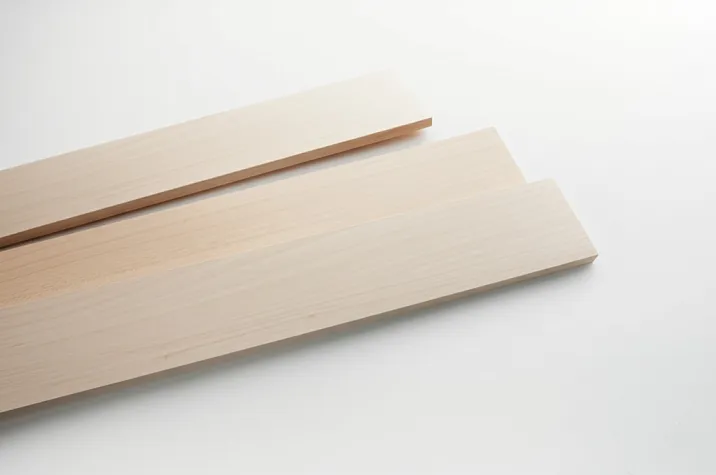
Under the term "decorative wooden strips" are usually understood narrow elements made of natural wood (or sometimes engineered board), primarily intended for vertical or horizontal mounting on walls. Their main purpose is the aesthetic decoration of interiors. Unlike solid boards or standard wainscoting, decorative strips have:
● Relatively narrow width (from 2 to 10 cm, depending on the project);
Thin profile (sometimes up to 10–12 mm);
Option for hidden or semi-hidden mounting;
Minimal load on load-bearing walls (due to its light weight).
2.2. Types and main varieties
- Solid planks
These planks are laid without gaps or with a minimal joint. Result — a smooth surface without clearly visible gaps. Suitable for accent walls in bedrooms, living rooms, and offices.
- Grooved planks with gaps
A more 'airy' variant, where gaps are left between planks. This allows light to highlight the wood's relief and structure. Often used for zoning in studios or large rooms.
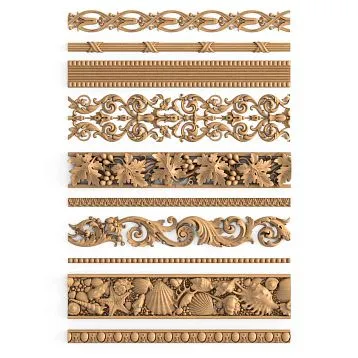
- Decorative planks
Have a non-standard profile (concave, convex, with bevels or patterns), used to create 3D effects.
- Engineered (laminated) planks
Represent a multi-layered construction, where the top layer is made of premium wood species (oak, ash, beech, wenge, etc.), and the inner layers are made of a cheaper but more stable material (plywood, HDF). Advantages — less deformation under humidity changes and increased strength.
Chapter 3. Advantages and areas of application
3.1. Aesthetic appeal
Decorative planks offer a unique opportunity to highlight the texture and color of natural wood. Small but numerous elements create an unmistakable 'ribbed' rhythm that 'animates' monotonous walls.
Artistic solutions can be the most diverse:
● Classic horizontal layout;
● 'V' shape;
● Diagonal patterns;
● Arbitrary panels in eclectic style.
3.2. Stylistic versatility
decorative wooden planks on the wall Suitable for most interior design styles:
- Classic: use of expensive species (oak, walnut) with rich finishes.
- Minimalism: thin planks of light-colored pine or birch, laid strictly and without unnecessary details.
- Loft: rough texture, possibly aged wood, combined with concrete or brickwork.
- Scandinavian style: light tones, lightness and simplicity of forms.
- Eco-style: pronounced naturalness, minimal coating, preservation of annual ring patterns.
3.3. Improved acoustics
Few consider that wooden planks can serve as sound-absorbing elements. A small air gap forms between the planks and the wall, partially dampening sound vibrations. This is especially relevant for recording studios, concert halls, home theaters, and other spaces where acoustics matter.
3.4. Concealing irregularities and utilities
If there are defects on the walls—cracks, unevenness, traces of old fixtures—planks can solve the problem without full-scale renovation. Additionally, with a certain mounting method, you can hide wires and cables, leaving access through small gaps.
3.5. Zoning the Space
In open-plan layouts (e.g., studios), there is a need to divide the space into functional zones. Here, planks become an excellent tool:
● Vertical planks define boundaries and preserve the sense of continuity;
● Horizontal orientation sets accents and visually expands the space.
Chapter 4. Material Selection and Preparation Nuances
4.1. Wood Species
- Coniferous (pine, spruce, larch)
Softer, but more budget-friendly and accessible. They have a pleasant aroma. Require additional protection against moisture, resin, and mechanical damage.
- Deciduous (oak, beech, ash)
More durable, wear-resistant, with a distinct grain. Suitable for high-traffic zones (entrances, offices, hallways).
- Exotic (wenge, merbau, teak)
Have a unique pattern and color, often enhanced moisture resistance. However, the cost of such wood is high, and their use is reasonable in premium interiors.
4.2. Wood Moisture Content
For most residential spaces, the recommended moisture content is 8–12%. If the wood is overly dry, it may crack over time; if excessively moist, it may warp.
4.3. Preliminary Treatment
Before installing decorative planks, you can perform:
● Sanding: for smoothness and preparation for finishing;
● Staining or painting: to achieve the desired shade and highlight the texture;
● Lacquering or waxing: for protection against moisture and damage.
It is most convenient to purchase pre-finished planks with factory-applied coatings, but all operations can be performed manually if desired.
4.4. Calculating Required Quantity
It is important not to forget about the technological allowance. Professionals usually recommend taking 10–15% more material than calculated by area to compensate for defects, trimming, and possible errors.
Chapter 5. Installation Methods
5.1. Adhesive Mounting
Suitable for flat surfaces without significant height variations. The principle is simple:
- The wall is primed.
- Special adhesive (acrylic or polyurethane) is applied to the back of the plank.
- The plank is pressed firmly against the wall.
- Temporary supports or painter’s tape can be used to secure the plank until the adhesive dries.
Pros: absence of visible fasteners. Cons: difficult to dismantle without damaging the wall.
5.2. Clamps and hidden fasteners
Often used when installing boards with a tongue-and-groove joint. Clamps are mounted to the wall (via anchors or screws), and the boards are slipped over them. This results in a neat finish without protruding screw heads.
5.3. Mechanical method (screws, nails)
In classic interiors, visible nail or screw heads are sometimes left exposed — this adds additional character (e.g., vintage, industrial, rustic). However, more often, heads are concealed using caps or painted to match the wood color.
5.4. Installation on a subframe
In cases where the wall has significant irregularities, it is advisable to first install a wooden or metal subframe, and then mount decorative boards onto it. This provides additional options:
● Lay an insulation or soundproofing layer;
● Run concealed wiring;
● Maintain a ventilation gap between the wall and the boards.
Chapter 6. Decorative techniques and stylistic solutions
6.1. Contrasts and color combinations
Bold move — using boards of different shades, not only natural but also painted. For example:
● Alternating light and dark boards in a checkerboard pattern;
● Creating a 'gradient' from one side of the wall to the other;
● A bright accent stripe in the middle of a monochromatic panel.
6.2. Playing with directions
● Vertical: adds height, making the room appear taller.
● Horizontal: expands the space, giving a sense of calm and stability.
● Diagonal: adds dynamism and originality.
● Mixed patterns: form complex geometric designs that attract special attention.
6.3. Lighting and playing with light
Embedded LED strips placed between boards create a 'floating' board effect. This approach especially impresses at night, adding depth and charm. An important point — correctly plan cable and power supply placement before beginning installation.
6.4. Combination with other materials
Wood pairs well with:
● Stone: the warm texture of wood softens the harshness of stone;
● Glass: the transparency and lightness of glass elements highlight the naturalness of wood;
● Metal: the contrast between cool metal and warm wood species looks stylish, especially in industrial interiors.
Chapter 7. Care and maintaining the beauty of boards
7.1. Regular cleaning
Regularly wipe decorative boards with a slightly damp, soft cloth. Avoid abrasive sponges and aggressive chemical cleaners. If gaps are present (board installation), dust can be removed with a vacuum cleaner using a narrow nozzle.
7.2. Protective Coatings
If the boards are not coated with varnish or oil during production, it is recommended to renew the coating every 2–3 years (depending on usage conditions). This is especially relevant for rooms with high humidity (bathrooms, kitchens) or areas with frequent contact (hallways, offices).
7.3. Fixing Minor Defects
Small scratches and chips can be masked with special furniture putty or wax pencil. If the damage is significant, it is sometimes easier to replace one or several boards.
Chapter 8. Practical Examples and Inspiration
8.1. Bedroom Decor in Scandinavian Style
Idea: Usedecorative wooden planks on the wall behind the headboard, arranging them vertically. Use light-colored pine or birch coated with transparent varnish to preserve the natural grain. Paint the side walls white. Result — a soft, calm atmosphere where warm wood becomes the main accent.
8.2. Zoning Living Room and Kitchen in a Studio
Idea: Create a light partition using vertical boards (oak or beech), spaced 2–3 cm apart. This allows partial separation of the kitchen from the relaxation zone without blocking light or air circulation. Additionally, you can install LED lighting to highlight the graphic nature of the structure.
8.3. Loft-Style Office
Idea: Leave one wall 'naked' brick or concrete, and decorate the adjacent wall with weathered oak (or even wood stained to look weathered). A few uneven strokes of white paint on some boards will add an artistic touch. This interior 'play' highlights the creativity of the office space.
8.4. Accent Ceiling in a Narrow Corridor
Idea: Use narrow spruce boards, mounting them along the corridor. This creates a 'gallery' effect, visually elongating the space. If the room is dark, install warm-toned lights between the boards to achieve atmospheric lighting.
Chapter 9. Ecological Aspects
9.1. Responsible Forestry
Modern manufacturers increasingly adhere to FSC (Forest Stewardship Council) or PEFC (Program for Recognition of Forest Management Systems) principles, ensuring ecological standards are met during timber harvesting. By purchasing certifieddecorative wooden planks on the wall, you support responsible forestry practices and biodiversity conservation.
9.2. Disposal and Recycling
Unlike plastic and some other materials, wood is easily recyclable and does not cause significant harm to the environment. If boards become unnecessary or it’s time for renovation, they can be reused (e.g., in workshops for crafts) or disposed of safely.
9.3. Minimizing Chemical Substances
Choose boards with natural finishes — oils, waxes, water-based, without aggressive solvents. This positively affects everyone’s health, as harmful vapors will be minimized.
Chapter 10. Frequently Asked Questions
- Can decorative boards be installed in a bathroom?
Yes, but you should choose species with high moisture resistance (spruce, teak) or engineered products with reliable coatings. It is also important to ensure good ventilation and protection from direct water exposure.
- How to mount boards to drywall?
For lightweight boards, adhesive or small self-tapping screws with butterfly anchors are sufficient. If the boards are heavier, it is advisable to mount them on a frame or at least secure them to drywall frame profiles.
- Are boards suitable for ceilings in wooden houses?
Yes, but you should consider possible building shrinkage and movement. It is better to use floating or compensating mounts, allowing some 'freedom' of movement for the wood.
- Is additional sound insulation needed behind the boards?
If sound insulation is required, the space between the boards and the wall can be filled with specialized soundproofing materials (mineral wool, acoustic panels). The boards will serve both decorative and protective functions.
- Can you paint the planks in bright colors?
Of course! If you want to move away from traditional wood tones, choose special wood paints. Experimenting with color can reveal new interesting design solutions.
Chapter 11. Conclusions and Prospects
Decorative wooden planks have proven themselves as one of the most versatile and expressive ways to decorate walls. They open up vast possibilities for designers and homeowners in terms of decoration, functionality, and even acoustic comfort. Thanks to their naturalness and 'warm' energy, such planks create an atmosphere of coziness and harmony in rooms, promoting relaxation and aesthetic enjoyment.
Moreover, in a world where ecological safety is becoming an increasingly pressing issue, wood serves as a renewable material, making its use a justified and responsible choice. With the advancement of wood processing technologies, the range of colors, textures, and forms expands, meaning everyone will find a solution that suits them: from classicism and minimalism to high-tech and loft styles.
In an era when interior design is becoming increasingly oriented toward individuality and personalization,decorative wooden planks on the wall — they are not just decorative elements, but a true tool for self-expression. They can highlight the character of the home, reflect the tastes of the owners, and remain in perfect condition for many years — simply by following basic care rules.
Conclusion
Wood is a material that has served humanity for centuries, helping to build, decorate, and inspire. And today, despite technological progress, it remains in demand and relevant. Decorative wooden planks allow us to fill our homes with warmth and naturalness, creating comfortable and stylish interiors.
If you are looking for a way to add a unique touch to a room, elevate your design, highlight a specific wall, or solve the zoning problem, pay attention to this format:decorative wooden planks on the wall deserve your attention. Starting from the variety of wood species and installation methods, to the ability to conceal wires and improve acoustics — they possess a unique set of advantages that no other material can offer.
It is only important to properly select the wood species, type of fastening, and method of treatment, as well as consider the characteristics of the room. Then the result will inevitably exceed expectations and turn your home into a place where you want to spend time, relax, entertain guests, and draw inspiration day by day.