Article Contents:
- Ceiling Rosettes: Classic in the Spotlight
- Functional Aesthetics of Rosettes
- Materials and production technologies
- Stylistic Diversity
- Ceiling Cornices and Moldings: The Perimeter of Perfection
- The Role of Cornices in Interior Architecture
- Profiles and Their Visual Effects
- Material Solutions
- Coffered Ceilings: The Architecture of Volume
- The History and Modernity of Coffers
- Structural Solutions
- Materials and Installation Technologies
- Integrating Lighting into Ceiling Decor
- Cove Lighting: The Floating Effect
- Spotlights in Coffered Ceilings
- Accent Lighting for Rosettes
- Installing Heavy Ceiling Elements: A Professional Approach
- Assessing the Load-Bearing Capacity of the Base
- Joining technologies
- Structural Reinforcement
- Stylistic Solutions for Ceilings
- Classic Interiors
- Neoclassicism and art deco
- Modern and Minimalist Interiors
- Rustic, Country, Chalet
- Practical Questions: From Selection to Operation
- How to Determine the Optimal Rosette Size?
- Which Material to Choose for Coffers?
- How to Care for Ceiling Decor?
- How Much Does Decorative Ceiling Finishing Cost?
- Can you install decorative elements yourself?
- STAVROS — The Gold Standard of Ceiling Decor

The ceiling is the fifth wall of a room, often undeservedly overlooked when creating an interior. Yet it is preciselyCeiling decorationthat can completely transform the perception of space, adding depth, aristocracy, visual height, or conversely, creating an intimate, cozy atmosphere. Professional designers know: an expressive ceiling works as an architectural dominant, organizing the entire interior around itself. From a minimalist ceiling rosette under a chandelier to large-scale coffered systems — everydecorative ornamentation elementtells its own story about style, taste, and attention to detail.


Ceiling Rosettes: Classic in the Spotlight




Functional Aesthetics of Rosettes
What is the purpose of a ceiling rosette in the first place? Initially, this element served a purely practical function — it concealed the mounting point of a heavy chandelier to the ceiling structure, hid electrical wiring, and created a neat visual transition from the ceiling plane to the pendant light fixture. But already in Baroque and Rococo...ceiling rosettes...they evolved into independent works of art, where carved acanthus leaves, intricate floral patterns, and mythological scenes created three-dimensional sculptures right overhead.
Modern rosettes have retained this dual nature. On one hand, they still serve utilitarian purposes: they distribute the visual weight of a massive chandelier, create a compositional focal point on the ceiling, and conceal technical components. On the other hand, they function as pure decoration, especially when used not in the center of the ceiling but in groups, creating rhythmic accents in complex multi-level compositions.
The diameter of a rosette is chosen based on the size of the room and the light fixture. The classic formula: the rosette's diameter should be half or two-thirds of the chandelier's diameter, but no less than thirty centimeters and no more than a meter for standard living spaces. In grand halls with ceilings over four meters high, giant rosettes up to two meters in diameter are appropriate, which are perceived as an independent architectural form even without being tied to lighting fixtures.
Our factory also produces:


Materials and production technologies
Polyurethane ceiling rosettes......have conquered the market thanks to the optimal combination of lightness, strength, detail, and affordable price. The density of high-quality decorative polyurethane is 280-320 kilograms per cubic meter — this is four times lighter than plaster with comparable strength. An eighty-centimeter diameter polyurethane rosette weighs about one kilogram, whereas a plaster equivalent would weigh five to six kilograms, creating a serious load on the ceiling structure.
Injection molding technology allows reproducing the finest details of an ornament with micron precision. A mold created from a reference sample — an antique rosette or an author's sculptural model — conveys every convexity, every shadow of the carving. This means that visually, a polyurethane rosette is indistinguishable from handcrafted plaster, but it is installed dozens of times easier and lasts for decades without the risk of cracking.
Wooden carved rosettes are the domain of exclusivity and handcraft. Creating such......a decorative element......from solid oak or beech requires many hours of work by a highly skilled carver. Each petal, each curl of an acanthus leaf is carved by hand, acquiring a subtle individuality that creates the feeling of a living, handcrafted work. A wooden rosette fifty centimeters in diameter can weigh three to four kilograms, but the visual and tactile luxury of natural wood justifies both the weight and the price for premium projects.
Get Consultation
Stylistic diversity
Classical rosettes with acanthus leaves, garlands of laurel and oak, symmetrical scrolls — this is the choice for interiors in the spirit of Classicism, Empire, and Neoclassicism. The deep relief of such rosettes creates an expressive play of light and shadow, especially effective when using dimmable chandeliers that allow changing the lighting intensity and, accordingly, the drama of the chiaroscuro.
Baroque rosettes are characterized by dynamism, asymmetry within symmetry, and an abundance of small details. Here you find images of cupids, rocaille, cartouches, intertwined ribbons, and floral garlands. Such rosettes require an appropriate setting — richly decorated walls, molded cornices, heavy drapes. In a minimalist interior, a Baroque rosette will look like a foreign element, disrupting the concept.
Geometric rosettes with concentric circles, radial ribs, and strict meanders are suitable for Art Nouveau and contemporary interiors. The absence of floral motifs, clarity of lines, and emphasis on rhythm and proportions make such rosettes compatible even with industrial aesthetics. Painted in a color contrasting with the ceiling — black on white, bronze on gray — they function as graphic accents.
Minimalist flat rosettes with barely protruding relief are the choice for those who value a hint rather than a statement. Such a rosette, forty centimeters in diameter with a relief depth of only five millimeters, creates a delicate frame for the chandelier, without drawing excessive attention to itself, but organizing the ceiling composition.
Ceiling cornices and moldings: the perimeter of perfection
The role of cornice in interior architecture
A ceiling cornice is the boundary between the vertical of the walls and the horizontal of the ceiling, the point of architectural transition that requires special attention. A correctly chosen and installed...Wooden ceiling cornice...transforms a simple room into an architecturally meaningful space, where every line matters.
Visually, a cornice can increase the height of a room if painted the same color as the ceiling and contrasts with the walls — the eye follows the light band upward, creating an illusion of extra centimeters. Or, conversely, lower an excessively high ceiling if the cornice is wide, dark, and lowered fifteen to twenty centimeters from the actual ceiling level.
The functional role of a cornice includes masking the joint between the wall and ceiling, concealing possible cracks in the plaster, and creating a niche for cove lighting. The latter solution is especially popular in contemporary interiors: an LED strip mounted behind the cornice creates soft, diffused illumination, visually separating the ceiling from the walls and creating a floating effect.
Profiles and their visual effects
A simple quarter-round cornice is minimalism in its pure form. A smooth arc without additional divisions is suitable for contemporary interiors where conciseness is important. The height of such a cornice is usually 50-80 millimeters, which is sufficient to create an expressive line without overloading the space.
A cavetto — a classic profile with a characteristic S-shaped cross-section. The upper part smoothly departs from the ceiling, creating a shadow groove, then the profile protrudes forward like a heel and recedes back to the wall. Such a cornice creates expressive chiaroscuro even with diffused lighting and works in classical and neoclassical interiors.
Multi-step cornices with several projections and recesses are the territory of formal interiors. Here, the height can reach 150-200 millimeters, and the complexity of the profile creates a rich chiaroscuro pattern. Each projection casts its own shadow, each recess functions as a light trap, collecting reflected light.
Carved cornices with floral or geometric ornamentation are the pinnacle of decorativeness. Such cornices are made from solid wood on CNC milling machines or by hand. They require an appropriate setting and budget but create an atmosphere of palatial luxury unattainable with simple profiles.
Material Solutions
Wooden ceiling cornices......made from solid oak, beech, or ash — the choice for interiors where the naturalness of the material is valued. Wood is warm in appearance and to the touch; its texture creates an additional decorative layer even with a simple profile. An oak cornice finished with oil, with emphasized texture, becomes an independent decoration that requires no additional decor.
Polyurethane cornices provide freedom of form with minimal weight. The most complex profiles with deep relief, which in wood would require multi-stage processing and be very heavy, are easily realized in polyurethane and weigh mere grams. This allows installing wide decorative cornices even on drywall ceilings without reinforcing the structure.
Plaster cornices are the traditional material for classical interiors. Plaster allows creating the finest details, accepts any paint, can be patinated, gilded, creating effects of antique stucco. However, the weight of plaster cornices is significant, installation requires professional skills, and the fragility of the material makes transportation and installation risky.
Combined solutions unite the advantages of different materials. For example, a main cornice made of polyurethane is complemented by wooden carved inserts at key points — in corners, in the center of long walls. This creates visual richness with a controlled budget.
Coffered Ceilings: The Architecture of Volume
The History and Modernity of Coffers
Coffers originated from structural necessity. In ancient temples and medieval cathedrals, intersecting beams created a cellular ceiling structure, reducing its weight and allowing for significant spans. Gradually, functionality took a back seat, and decorativeness came to the forefront.Coffered Ceilingbecame a symbol of aristocracy, a sign of a wealthy home where no expense is spared on details.
Modern coffers are most often decorative imitations, bearing no structural load. But the visual effect remains the same: the three-dimensional ceiling structure creates depth, rhythm, and scale. A room with a coffered ceiling is perceived as taller, more spacious, and more formal, even if the actual height is a standard 2.7 meters.
In 2026 interiors, coffers are experiencing a renaissance. Designers are moving away from literal copying of historical models, creating modern interpretations. Asymmetric coffers, where cells of different sizes create a dynamic composition. Minimalist coffers with thin slats and large cells, playing on the contrast of mass and void. Coffers with integrated lighting, turning the ceiling into a luminous sculpture.
Constructive Solutions
Classical coffers are created from wooden beams or their imitations, forming a regular grid. The grid spacing is determined by the room's dimensions and the desired decorative scale. For living rooms, cells of 60x60 or 80x80 centimeters are optimal. For formal halls — 100x100 or 120x120 centimeters. A smaller spacing creates a fragmented look, a larger one can appear empty.
Coffer depth is a critical parameter. Shallow coffers with a depth of 30-50 millimeters create a delicate relief, suitable for rooms with standard ceiling heights. Deep coffers of 80-120 millimeters provide a dramatic effect but require a ceiling height of at least 3.2 meters, otherwise they will begin to feel oppressive, visually lowering the room.
Coffer beams can be massive wooden — for interiors in country, chalet, rustic styles. Or thin, elegant polyurethane — for classical and neoclassical spaces. The beam width is typically 80-150 millimeters, creating an expressive line without excessive heaviness.
Cell infill is solved in different ways. A cell can simply be painted the same color as the ceiling or a contrasting one. It can be wallpapered with a pattern — this technique creates rich decorativeness. It can be recessed an additional 20-30 millimeters relative to the main ceiling level, enhancing the volumetric effect. A decorative rosette can be placed in the center of each cell, turning the coffer into a complex multi-layered composition.
Materials and Installation Technologies
Massive wooden beams — the choice for those creating an interior for centuries.Wooden beamsmade of oak, beech, ash with a cross-section of 100x100 or 150x150 millimeters are attached to the ceiling slab via metal brackets. This is a serious structure requiring load calculations, especially if the beams are not hollow but solid.
Hollow U-shaped beams — a compromise between visual massiveness and actual weight. Such a beam looks like a timber with a 120x120 millimeter cross-section but weighs many times less, as it is a three-sided box that fits over a mounting batten installed on the ceiling. This simplifies installation and reduces the load on the slab.
Polyurethane imitation beams are visually indistinguishable from wooden ones thanks to a realistic texture imitating wood grain. At the same time, the weight of one two-meter-long beam is only one to one and a half kilograms. Such beams are mounted with ordinary polymer adhesive, requiring no mechanical fasteners. This makes creating a coffered ceiling accessible even for DIY implementation.
Drywall boxes — a modern technology allowing the creation of coffers of any configuration. A metal profile frame is covered with drywall, plastered, and painted. This approach offers freedom of form — you can create not only rectangular but also round, polygonal, curvilinear coffers. However, it requires highly skilled installers to achieve perfect geometry.
Integrating Lighting into Ceiling Decor
Cove Lighting: The Floating Effect
An LED strip hidden behind a ceiling cornice creates one of the most effective techniques in modern lighting design. Light is directed upwards onto the ceiling, reflected from it, and softly diffused into the space. The light source remains invisible, creating the impression that the ceiling glows by itself or floats above the room, not touching the walls.
To achieve this effect, the cornice must be set back from the ceiling by at least 50 millimeters — this distance is necessary to accommodate the LED strip and ensure free light propagation. The optimal setback is 80-100 millimeters, providing soft, even glow without obvious light spots.
The color temperature of the light is chosen based on the overall interior concept. Warm light 2700-3000K creates a cozy, intimate atmosphere, suitable for bedrooms and living rooms. Neutral white 4000K is universal, good for kitchens and studies. Cold 5000-6000K is rarely used, creating a sterile hospital atmosphere, but can be appropriate in modern minimalist interiors.
Brightness control via a dimmer allows changing the room's mood. During the day, the lighting can be off or operating at minimum brightness as accent lighting. In the evening, brightness increases, and cove lighting becomes the main or supplementary light source alongside the chandelier. At night, minimum brightness creates delicate night lighting.
Spotlights in coffers
Placing recessed spotlights in the cells of a coffered ceiling solves both functional and aesthetic tasks simultaneously. Each cell gets its own light source, creating uniform illumination of the entire room without dark corners. At the same time, the fixtures emphasize the geometry of the coffers, reveal the depth of the cells, and create a rhythmic light pattern.
The number of fixtures per cell is determined by its size. A small 60x60 centimeter cell is sufficient for one fixture in the center. A large 100x100 centimeter cell can accommodate four fixtures at the corners or five — four at the corners and one in the center. The latter option provides the most uniform illumination.
Fixture wattage is calculated based on illumination standards. For residential rooms, the standard is 150-200 lux, which corresponds to approximately 15-20 watts of LED light per square meter. For a 20-square-meter room, a total power of 300-400 watts is required. If twenty fixtures are placed in the coffers, each should have a power of 15-20 watts.
The type of fixtures influences the overall aesthetic. Miniature recessed spots with a diameter of 60-80 millimeters are inconspicuous, not distracting from the coffered architecture. Decorative fixtures with crystal or glass diffusers themselves become decorative elements, complementing the overall ceiling composition.
Accent Lighting of Rosettes
Traditionally, a rosette is illuminated by the chandelier it frames. But there is also a reverse technique: lighting the rosette itself to reveal its relief and create an independent light accent. This is achieved with hidden fixtures directed at the rosette from the ceiling perimeter or from the cornice.
Narrow-beam spots with a 15-30 degree dispersion angle create dramatic side lighting, emphasizing every convexity, every shadow of the carved ornament. The rosette turns into a three-dimensional sculpture that changes its character depending on the lighting angle. This technique is especially effective for rosettes with deep relief — Baroque-style, with an abundance of fine details.
Colored lighting is a bold solution for modern interiors. RGB fixtures allow you to change the color of the outlet's backlight, creating various lighting scenarios. An evening reception - golden glow, creating an atmosphere of luxury. A romantic dinner - soft pink or purple. A workday - neutral white. The 'smart home' control system automates the switching of scenarios.
Installation of heavy ceiling elements: a professional approach
Assessment of the load-bearing capacity of the base
Before installing a massive wooden rosette weighing five kilograms or heavy coffered ceiling beams, it is necessary to assess whether the ceiling slab can withstand the additional load. Reinforced concrete floor slabs can withstand almost any decor - the safety margin is multiple. Problems arise with suspended and stretch ceilings, and drywall constructions.
A drywall ceiling on a metal frame can bear a distributed load of up to 15 kilograms per square meter. This means that lightweight polyurethane decor can be installed without restrictions. Heavy wooden elements require reinforcement: additional metal profiles are installed at the attachment points, transferring the load to the load-bearing slab, not to the drywall sheet.
A stretch ceiling is not intended for attaching decor at all. Any element must be attached to the base ceiling slab through embedded elements installed before the fabric is mounted. This requires precise planning at the design stage. Changing the location of the decor after installing the stretch ceiling is impossible without dismantling it.
Wooden floors in old houses require special attention. If the floor beams have sagged over time, cracked, are affected by fungus or woodworm, the additional load can become critical. An inspection of the structure by a specialist is required, possibly reinforcement or repair of the floor before installing the decor.
Mounting technologies
Lightweight polyurethane elements weighing up to a kilogram are mounted using specialized polymer adhesives based on MS polymers. The adhesive is applied in dots or strips to the back of the element, then the element is pressed against the ceiling and fixed with props or painter's tape until the adhesive sets. Setting time ranges from thirty minutes to several hours depending on the type of adhesive and conditions.
Medium-weight elements of 1-3 kilograms require combined fastening: adhesive plus mechanical fasteners. Self-tapping screws or anchor screws are screwed through the element into the ceiling slab. The fastener heads are countersunk into the material, the resulting recesses are filled and painted to match the color of the decor. This fastening guarantees that the element will not fall off even if the adhesive partially loses adhesion.
Heavy wooden elements weighing more than three kilograms are mounted primarily mechanically. Special hidden fastening systems are used - metal brackets glued into the back of the element and screwed to the ceiling. Or traditional fastening with self-tapping screws followed by masking the attachment points with wooden plugs matched to the color.
Large-scale structures like coffered ceilings are assembled element by element with intermediate fastening of each beam. First, a grid of future coffers is marked on the ceiling with millimeter precision - the geometry of the entire composition depends on the quality of the marking. Then the longitudinal beams are mounted, followed by the transverse ones. Each joint is carefully fitted to avoid gaps and steps.
Reinforcement of structures
When the load-bearing capacity of the ceiling is insufficient, various reinforcement techniques are used. For drywall ceilings, this involves installing additional metal profiles at the points where heavy elements are attached. The profiles are mounted perpendicular to the main ones with a pitch of 300-400 millimeters, creating a reinforced zone.
For suspended ceilings made of mineral slabs, special embedded plates made of metal or plywood are used, which are laid on top of the floor slab before installing the suspended system. The decor is then attached to these embedded plates, transferring the load to the load-bearing slab, bypassing the suspended structure.
In the case of stretch ceilings, embedded elements for heavy elements are a mandatory condition. These can be wooden blocks, plywood platforms, or metal profiles fixed to the base ceiling at the required height. The stretch ceiling fabric then goes around these embedded elements, holes are cut in it, reinforced with thermal rings, through which the decorative elements are attached to the embedded elements.
For particularly heavy structures, attachment to the walls, not the ceiling, is used. Coffered beams can rest on console brackets embedded in the walls around the perimeter of the room. This completely removes the load from the ceiling slab but requires strong load-bearing walls capable of withstanding the distributed load.
Stylistic solutions for ceilings
Classic Interiors
Classicism requires symmetry, proportionality, richness of detail while maintaining overall harmony.Ceiling moldingHere it works to create an atmosphere of palace luxury. A central rosette with a diameter of 80-100 centimeters with a rich acanthus ornament becomes the compositional center. It is framed byCeiling cornicea cornice of complex profile with a height of 120-150 millimeters.
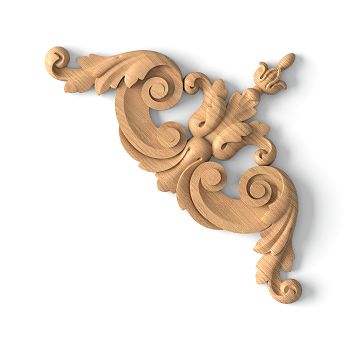
The corners of the ceiling are accentuated with corner decorative elements - these can be floral compositions, cartouches, fans, continuing the motifs of the rosette and cornice. If the area and height of the room allow, an additional molding is run along the perimeter at a distance of 80-100 centimeters from the walls, creating an inner frame. The space between the cornice and the inner molding can be painted in a contrasting color or wallpapered with a delicate pattern.
The color palette of classical ceiling decor tends towards light shades. A snow-white ceiling with white stucco, differing only in relief, is an exquisite monochrome, working on the play of light and shadow. An alternative is a cream, light beige, pale golden ceiling with white stucco or vice versa. Accents of gilding on protruding elements of carving add luxury but require a sense of proportion.
Neoclassicism and Art Deco
Neoclassicism takes the forms of classicism but simplifies them, makes them more laconic, and adapts them to modern perception. The rosette here can be 60-70 centimeters in diameter with a geometricized ornament - concentric circles, radial ribs, meander. A cornice of simple profile with a height of 80-100 millimeters without excessive detailing. The color scheme is restrained: white, gray, beige.
Art Deco introduces dynamics, geometry, contrasts. Rosettes with fan-shaped motifs, zigzags, stylized sun rays. Cornices with a stepped profile, creating clear shadow graphics. Color contrasts: a black cornice on a white ceiling, a bronze rosette on a gray background. Inlay with mirror elements creating highlights and reflections is possible.
Lighting in Neoclassicism and Art Deco plays a key role. In addition to the central chandelier framed by the rosette, cornice lighting, spotlights are actively used, creating a multi-layered light picture. In Art Deco, colored lighting accents are appropriate - amber, emerald, sapphire, emphasizing the geometry of the decor.
Modern and minimalist interiors
Can ceiling decor be used in minimalism? Yes, but differently. Here the principle of 'one bright accent is better than many small ones' works. This can be a single geometric rosette with a diameter of 40 centimeters with a laconic concentric pattern, painted the color of the ceiling and differing only in relief.
Or a system of parallel slats on the ceiling, creating a rhythmic structure without excessive decorativeness. The slats can be wooden in a natural color, contrasting with the white ceiling, or painted to match the ceiling color and working only to create shadows. The pitch between the slats is 30-50 centimeters, the thickness of the slat is 20-40 millimeters, the height is 50-80 millimeters.
Ceiling decorationIn modern interiors, it is often combined with functionality. Ventilation equipment, acoustic panels, and lighting fixtures are hidden behind the slats or in niches. The decor ceases to be pure ornamentation and becomes part of the room's technological infrastructure.
Rustic, country, chalet
Rustic and country styles require massive wooden beams that create the atmosphere of an old house.Solid wood beamsof oak or pine with a cross-section of 150x150 or 200x200 millimeters are mounted parallel with a spacing of 80-120 centimeters. The beams can be of a natural wood color, accentuated with oil, or artificially aged — brushing, patination, and tinting create the effect of centuries-old wood.
Between the beams, the ceiling can be paneled with wooden cladding, creating a completely wooden surface. Or plastered and painted white, creating a contrast of dark wood and a light surface. The third option is to leave the beams exposed and stretch fabric — linen, burlap — between them, creating a textile ceiling.
Lighting in rustic interiors is deliberately simple. Wrought-iron chandeliers with candle imitations, hung from the beams on chains. Lamps made of wood and wrought metal. No rosettes — they are replaced by the solid wood of the beams, no elegant cornices — their role is played by the same beams transitioning onto the walls.
Practical questions: from selection to operation
How to determine the optimal size of a rosette?
The size of the rosette depends on three factors: room size, chandelier size, ceiling height. The basic rule: the diameter of the rosette should be half or two-thirds of the chandelier's diameter, but not less than thirty centimeters. For a standard room of 20 square meters with a chandelier 60 centimeters in diameter, a rosette 40-50 centimeters in diameter is optimal.
In large rooms over 40 square meters, large rosettes 80-100 centimeters in diameter are appropriate. They create the necessary scale corresponding to the volume of the space. A small rosette in a large hall will get lost and won't be perceived as a full-fledged element of the composition.
Ceiling height also influences the choice. With a standard height of 2.7 meters, a rosette with very deep relief, protruding 50-80 millimeters, can visually lower the ceiling. Here, flat rosettes with relief depth of 20-30 millimeters are preferable. In rooms with high ceilings from 3.5 meters and above, deep relief is not only appropriate but necessary — it creates expressiveness visible from a great distance.
What material to choose for coffers?
Material selection is determined by budget, interior style, and installation skills. Massive wooden beams are the most expensive but also the most expressive solution. This is a choice for premium-class interiors, for country houses where material authenticity is important. The cost of one linear meter of an oak beam with a cross-section of 120x120 millimeters starts from three thousand rubles, and 20-40 linear meters are required for a room.
Hollow U-shaped wooden beams are a compromise of price and quality. They look like solid wood but weigh less and cost less — from one and a half thousand rubles per linear meter. Installation is simpler, the load on the floor is lower. For most projects, this is the optimal solution.
Polyurethane imitation beams are a budget option for those who want the visual effect of a coffered ceiling at minimal cost. The cost per linear meter is from five hundred rubles, weight is minimal, installation is suitable for DIY. However, upon close inspection, the imitation is noticeable — there is no living wood texture, tactile sensations are different.
How to care for ceiling decor?
Polyurethane decor is low-maintenance. Dust is removed with a dry soft brush or a vacuum with a soft attachment. Once a year, it can be wiped with a damp cloth and mild detergent. Painted elements can be repainted if necessary — light sanding with fine sandpaper to remove gloss and a new layer of acrylic paint is sufficient.
Wooden decor requires more attention. Wet cleaning is acceptable, but without excess water — wood does not like over-wetting. Every few years, it is advisable to renew the protective coating: oil, wax, or varnish is applied in a thin layer, refreshing the color and restoring protection. Direct sunlight can change the wood's shade, so in rooms with large windows, curtains or blinds are desirable.
Plaster stucco is the most fragile. Mechanical damage — chips, cracks — requires restoration by specialists. Wet cleaning is undesirable unless the plaster is coated with moisture-resistant paint. The main care is dry cleaning with soft brushes. When repainting, it is important to use breathable paints — oil and alkyd paints create a film that does not allow moisture to pass through, which can lead to peeling.
How much does decorative ceiling finishing cost?
The cost consists of the price of materials and labor. A simple solution — a polyurethane rosette 50 centimeters in diameter and a cornice around the perimeter of a 20-square-meter room — will cost 15-25 thousand rubles for materials plus 10-15 thousand for labor. Total: 25-40 thousand rubles.
Mid-level — a rosette made of solid wood, a wooden cornice, additional decorative elements in the corners — will require 50-80 thousand rubles for materials and 30-50 thousand for labor. Total: 80-130 thousand rubles for the same room.
A coffered ceiling made of wooden beams is a premium-class project. Materials: 150-250 thousand rubles, labor: 100-150 thousand. Final cost: 250-400 thousand rubles for a room of 30-40 square meters. However, the result is a unique ceiling that will last for decades and become the main decoration of the interior.
Can decorative elements be installed by oneself?
Simple polyurethane elements — rosettes, lightweight cornices — are quite suitable for DIY installation. Carefulness, precise marking, and adherence to technology are required. Minimal tools are needed: a miter box for cutting cornices at an angle, a tape measure, a level, a spatula for applying adhesive. Work time for a 20-square-meter room is one to two days.
Heavy wooden elements require experience. Improper fastening can lead to the decor falling, which is dangerous. If you are not confident in your abilities, it is better to hire professionals. The cost of labor will be offset by peace of mind and a quality guarantee.
Coffered ceilings are the territory of professionals. Precise marking, perfect geometry, reliable fastening of heavy beams require experience and specialized tools. An error in marking by a millimeter at the beginning will turn into centimeters of discrepancy at the end, which cannot be corrected without a complete redo.
STAVROS — the benchmark for quality in ceiling decor
For three decades, the company STAVROS has been creating decorative elements that turn ordinary ceilings into works of architectural art. Frompolyurethane rosetteswith exquisite detailing to massiveof wooden beamsfor coffered ceilings — the assortment covers the entire spectrum of solutions for creating an expressivedecorative ceiling ornamentation.
In-house full-cycle production guarantees quality control at every stage. Polyurethane is supplied from leading European manufacturers, casting molds are created with museum precision, each product is inspected before shipment. Polyurethane density of 280-320 kilograms per cubic meter, relief clarity down to fractions of a millimeter, snow-white primer of European quality — STAVROS standards exceed the market average.
Wooden decorationIt is crafted from selected solid oak and beech. Chamber drying to 8-10% moisture content prevents deformation of finished products. Processing on modern CNC machines ensures geometric precision. Hand-finishing of carved elements by highly skilled craftsmen creates that living individuality unattainable by machine production.
The STAVROS catalog includes hundreds of rosette models — from minimalist geometric to luxurious Baroque, dozens of cornice profiles andceiling skirting boards, elements for coffered ceilingsof various configurations. This allows for the implementation of projects of any complexity and style — from classic palace interiors to contemporary minimalism.
Professional consulting support helps select elements for a specific project. STAVROS specialists will calculate the required amount of materials, suggest optimal element sizes for your spaces, and recommend installation technology. For designers and architects, 3D models of all catalog elements are available for use in visualizations.
Custom manufacturing allows for the creation of unique elements based on original sketches. If the catalog lacks a rosette of the required diameter or a cornice profile needs modification — the STAVROS design bureau will develop and manufacture the product exactly to your requirements. This transforms the company from a mere material supplier into a partner in creating unique interiors.