Article Contents:
- Philosophy of sacred decoration: when beauty serves the spirit
- Theology through ornament
- Hierarchy of sacred space
- Historical legacy of church decoration
- Byzantine traditions: the foundation of foundations
- Russian tradition: from imitation to creativity
- Materials and technologies of sacred decoration
- Wood: living material for divine forms
- Gilding: reflection of divine light
- Polychromy: the language of color in the church
- Symbolism of church ornaments
- Plant motifs: the heavenly garden
- Geometric symbols: divine order
- Modern challenges of church decoration
- Tradition and innovation: seeking balance
- Ecology and spirituality
- Regional characteristics of church decoration
- Northern traditions: harsh beauty
- Southern Russian traditions: warm opulence
- Technologies for manufacturing modern church decoration
- Design using computer technologies
- High-Precision Mechanical Processing
- Restoration and preservation of heritage
- Scientific approach to restoration
- Documentation and archiving
- Training of church decoration artisans
- Traditional apprenticeship in modern conditions
- International experience and cooperation
- Modern trends in church decoration
- Return to the Roots
- Individual Approach to Each Church
- Frequently Asked Questions
- Conclusion: STAVROS – Keeper of Sacred Traditions
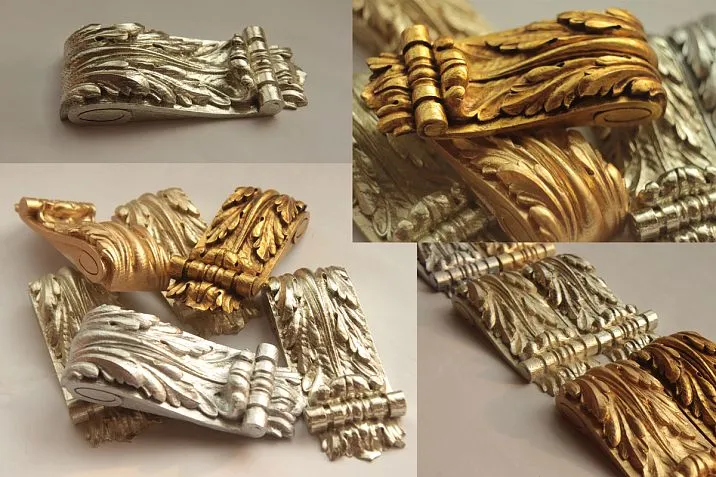
In ancient times, when the first masters took up the chisel and began to adorn simple objects with intricate patterns, something greater than mere craftsmanship was born. It was the art of transforming the mundane into the sacred, the material into the spiritual. Decorative embellishment of the object became the language by which humanity speaks to eternity.
But why precisely in churches and temples did decorative art reach its highest peaks? Why is it here that every swirl, every ornament carries profound meaning? The answer lies in the very nature of sacred space, where beauty becomes prayer, and decoration becomes a path to the divine.
Today, as the world changes rapidly and technology permeates all spheres of life, ancient church decorative art is experiencing a remarkable rebirth. Modern masters do not merely copy historical patterns—they creatively reinterpret them, creating works that speak the language of the 21st century while preserving the depth and spirituality of traditions.


Philosophy of Sacred Decoration: When Beauty Serves the Spirit




Theology Through Ornament
What distinguishes church decorative art from secular art? Primarily—it is its profound meaning. Every element ceiling moldings in the church carries symbolic significance, every ornament tells of eternal truths, every detail guides the thoughts of the worshippers toward the divine.
The vine symbolizes Christ and his disciples. Wheat ears remind us of the bread of life. Lilies embody the purity of the Virgin Mary. Oak leaves speak of the strength of faith. Palm branches signify victory over death. Each motif is carefully considered and validated by theological tradition.
Modern masters creating church decoration must deeply understand this symbolism. It is not enough to merely copy the form—it is necessary to imbibe its spirit, to feel its inner content. Only then does decorative embellishment become not merely an aesthetic element, but a conduit between the earthly and the heavenly.
Our factory also produces:


Hierarchy of Sacred Space
The church is not merely a building—it is a model of the cosmos, where each part has its own place and purpose. The altar is the holiest of holy places, the site of God’s special presence. The sanctuary is the boundary between the sacred and the secular. The central part of the church is the gathering place for the faithful. And each zone requires its own level of decorative treatment.
In the altar area Decorative ornaments patterns reaches its maximum complexity and richness. Here, gilding, intricate floral compositions, and depictions of seraphim and cherubim are appropriate. Every element must testify to the glory and majesty of God.
In the central part of the church, decoration becomes more restrained, yet no less thoughtfully designed. Here, it is important to create an atmosphere of prayerful concentration, avoiding excessive ornamentation. Corner decorative elements Here, subtle accents play a role, creating rhythm and structure in the space.
Get Consultation
Historical Heritage of Church Decoration
Byzantine Traditions: The Foundation of Foundations
The roots of modern Orthodox decorative art trace back to Byzantium. It was there that the canon was formed, which still determines the principles of Orthodox church decoration. Byzantine masters created a language of symbols that became universal for the entire Orthodox world.
Byzantine ornamentation is characterized by strictness and geometric precision. Plant motifs here are highly stylized, governed by mathematical logic of composition. This reflects the theological idea that the divine order permeates the entire universe, from its greatest to its smallest manifestations.
The color symbolism of Byzantine art is also deeply considered. Gold symbolizes divine light. Purple signifies Christ’s royal dignity. White represents purity and sanctity. Blue denotes the heavenly sphere. Each color has its theological justification.
Russian Tradition: From Imitation to Creativity
Having adopted Christianity from Byzantium, Rus initially followed Byzantine models in church art. But gradually, a distinct tradition emerged, absorbing local aesthetic preferences and technical capabilities.
Russian church art is distinguished by greater softness and humanity compared to Byzantine art. Plant ornaments here are more naturalistic, forms more plastic. This reflects the distinctive features of Russian Orthodox piety, in which the earthly and the heavenly are not opposed, but harmoniously combined.
Ceiling molding for chandelier In Russian churches, motifs of local flora are often used—oak leaves, pine branches, field flowers. This is not a violation of the canon, but rather its creative development, adapted to local conditions and traditions.
In a world where speed often prevails over quality, and commercial gain over spiritual values, it is especially important to find a partner who understands the full responsibility of creating church decoration. The company STAVROS has long been recognized as a leader in manufacturing decorative elements for churches, combining deep respect for church traditions with the use of the most modern technologies.
Tree: living matter for divine forms
The tree remains the primary material for creating church decoration in Russian tradition. This is not accidental — wood symbolizes life, growth, the connection between earth and heaven. In a church context, wooden decoration acquires a special warmth and spiritual vitality.
The choice of wood species for church decoration is not only a technical but also a symbolic decision. Oak embodies the strength of faith and the durability of the church. Lime, soft and easy to work with, is traditionally used for delicate icon and decorative carving. Pine, fragrant and light, symbolizes the aspiration toward light.
Modern woodworking technologies allow creating Decorative embellishment of the object any complexity. High-precision milling machines reproduce the finest details of historical samples, while skilled artisans add unique touches of handcrafting.
Gilding: reflection of divine light
Gilding church decoration is not luxury, but a theological necessity. Gold in church art symbolizes the uncreated divine light, which knows no shadow or decay. Gilded elements seem to glow from within, creating a special atmosphere of prayerful presence.
Traditional gilding technique with leaf gold requires the highest level of craftsmanship. The finest gold leaves are applied to specially prepared surfaces, each leaf must lie perfectly flat, without bubbles or wrinkles. This is meticulous work requiring not only technical skills but also a special spiritual disposition.
Modern materials allow creating gilding indistinguishable from traditional, yet more resistant to external influences. Special compositions protect gilded surfaces from tarnishing and mechanical damage, extending the service life of decorative elements.
Polychromy: the language of color in the church
Colorful decorative finishing of church items requires a deep understanding of Orthodox symbolism. Each color has its meaning, each color combination carries a specific theological message.
Red in church decoration symbolizes God's love, Christ's blood, the martyrdom of saints. Blue represents the heavenly sphere, the purity of the Virgin Mary, divine wisdom. Green symbolizes life, resurrection, hope. White represents holiness, purity, divine light.
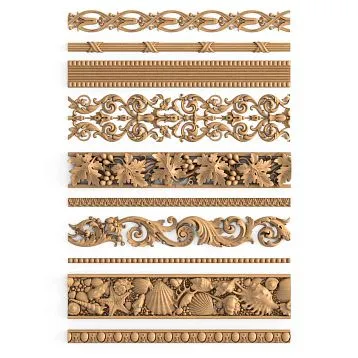
Ceiling molding elements In churches, these are often executed in polychromatic technique, where different colors emphasize the symbolic meaning of ornamental motifs. Grape clusters are highlighted in purple, leaves in green, flowers in white or pink.
Symbolism of church ornaments
Plant motifs: the heavenly garden
Plant ornaments form the basis of church decorative art. But this is not merely decoration — it is a symbolic language, telling of paradise, of new life in Christ, of spiritual fruits.
The grapevine is the central motif of Christian symbolism. 'I am the vine, you are the branches,' says Christ in the Gospel of John. Grape clusters symbolize communion, the Eucharistic wine that becomes Christ's blood. Grape leaves represent believers nourished by the heavenly vine.
Wheat ears remind us of the Eucharistic bread, of spiritual nourishment given by the church to its children. Lilies symbolize the purity of the Virgin Mary, her immaculate conception, heavenly beauty. Roses symbolize martyrdom, love, the beauty of divine creation.
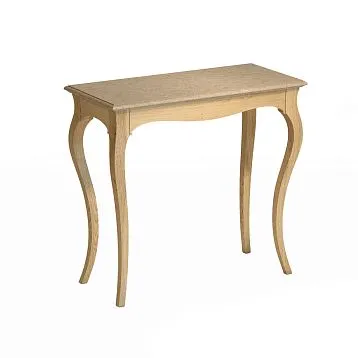
Decorative Accents for Furniture In church context, these often include these symbolic plant motifs. Church furniture — throne, altar, ambo — is adorned with ornaments that are not merely beautiful, but theologically meaningful.
Geometric symbols: divine order
Geometric ornaments in church art reflect the idea of divine order permeating all creation. The circle symbolizes eternity, God's infinity. The triangle represents the Trinity. The square represents earth, the four cardinal directions, the material world.
The eight-pointed star holds special significance — symbol of the Star of Bethlehem, the guiding star of salvation. The six-pointed star recalls the six days of creation. The cross in all its forms — the central symbol of Christianity.
Interlacing geometric patterns create an impression of infinity, eternal motion, divine energy permeating the cosmos. Such ornaments are often used in the decoration of ceiling rose moldingcreating a focal point for prayerful contemplation.
Modern challenges of church decoration
Tradition and innovation: seeking balance
Modern creators of church decoration face a complex task: how to preserve fidelity to centuries-old tradition without becoming museum curators, how to use new materials and technologies without compromising spiritual authenticity.
The answer lies in a deep understanding of the essence of tradition. Tradition is not a static form, but a living current capable of absorbing the new without losing its essence. Byzantine masters were also innovators of their time, creatively reinterpreting the ancient heritage.
Modern materials — high-quality MDF, polyurethane, composite compositions — allow creating church decoration that matches historical samples in beauty but surpasses them in durability and practicality. The key is that new technologies serve spiritual purposes, not replace them.
Ecology and spirituality
In the era of ecological awareness, the question of materials for church decoration acquires special importance. The church is a place where people seek purity and sanctity. Therefore, the materials used in church construction must also be pure and safe.
Natural wood remains an ideal material from an ecological standpoint. However, modern composite materials can also meet high ecological standards. It is important to choose materials of class E1, free of harmful emissions, and use water-based paints and varnishes.
The ecological nature of church decoration is not only about caring for the health of parishioners, but also expresses a Christian attitude toward creation — a careful and responsible use of nature's gifts.
Regional characteristics of church decoration
Northern traditions: harsh beauty
Church art of the Russian North is distinguished by a particular harsh beauty. Here, in the land of white nights and long winters, a unique style of church decoration has formed — more ascetic, yet no less expressive.
Northern masters were virtuosos in wood carving techniques. Wooden iconostases impress with the complexity and elegance of their ornamentation. Plant motifs here are more stylized, geometric elements play a greater role. The color palette is restrained — natural wood tones dominate, with accents of gilding.
Southern Russian traditions: warm opulence
Church art of southern regions of Russia is characterized by greater opulence and ornamentation. The fertile climate, rich soil, and trade links with Byzantium contributed to the development of a more ornate decorative style.
Here decorative interior ornaments churches are distinguished by an abundance of gilding, complexity of plant ornamentation, and use of polychromy. Grape motifs, so characteristic of southern regions, find rich embodiment in church decoration.
Technologies for manufacturing modern church decoration
Design using computer technologies
Modern church decoration begins with computer design. 3D modeling allows one to see the future church as a whole, evaluate how decorative elements will combine with each other and with the architecture.
This is especially important in the restoration of historical churches, where new elements must organically fit into the existing ensemble. Computer technologies allow creating exact copies of lost elements, restoring them from fragments and archival photographs.
A database of historical ornaments, created based on the study of numerous monuments, becomes an invaluable resource for modern craftsmen. They can draw inspiration from the entire richness of church art, not limited to one era or region.
High-Precision Mechanical Processing
Modern CNC routers are capable of reproducing the most complex ornaments with precision down to fractions of a millimeter. This opens incredible possibilities for creating church decoration.
Multi-axis processing allows creating volumetric compositions of any complexity. Reliefs, which previously required months of work by an experienced carver, can now be completed in a few days. At the same time, the quality and precision of execution increase significantly.
But technology does not replace the craftsman. The machine performs rough work, while final refinement, imbuing the item with soul and individuality, remains the prerogative of the human being. An experienced carver can add those subtle touches that transform a technical product into a work of art.
Restoration and preservation of heritage
Scientific approach to restoration
Restoration of church decoration is not merely repair, but a scientific endeavor requiring deep knowledge of history, technology, and theology. Each historical monument is unique, and the approach to its restoration must be individual.
Modern research methods allow accurately determining the composition of materials, manufacturing technology, and sequence of creating decorative elements. Radiography, spectral analysis, microscopy — all these methods help uncover the secrets of ancient masters.
The principle of minimal intervention requires preserving as much original material as possible, supplementing losses only in cases of extreme necessity. In this case, all additions must be reversible and clearly distinguishable from the original.
Documentation and archiving
Every restoration must be accompanied by careful documentation. Photographic documentation, measurement drawings, descriptions of technological processes — all this creates an archive that will become a valuable resource for future researchers.
Digital technologies allow creating highly accurate 3D models of historical monuments. This is not only a safeguard against loss, but also the possibility of virtually studying the object without risking damage to it.
Training of church decoration craftsmen
Traditional apprenticeship in modern conditions
Creating church decoration is an art that cannot be mastered solely through books. Here, it is necessary to pass on tradition from master to apprentice, live communication, practical work under the guidance of an experienced mentor.
Modern churches of church art revive the traditions of medieval workshops. Students study not only technical skills but also the theological foundations of church art, history, and symbolism of ornaments.
Special attention is given to the spiritual preparation of future masters. Creating church decoration is not merely a craft, but a service requiring the appropriate spiritual attitude. Many masters undergo special training in monasteries, studying the fundamentals of Orthodox theology.
International experience and cooperation
Orthodox church art develops in many countries around the world. The exchange of experience among masters of different Orthodox traditions enriches the art without compromising its canonical integrity.
Greek masters have preserved many Byzantine traditions in their original form. Romanian and Bulgarian artists develop their regional schools. Serbian church art is distinguished by particular expressiveness. All these traditions can mutually enrich each other.
Modern trends in church decoration
Return to the roots
One of the notable trends in modern church art is the striving for authenticity, returning to canonical models. After a period of simplification and modernization, many masters turn to studying ancient monuments, striving to understand their deeper meaning.
This is not blind copying, but creative appropriation of tradition. Modern masters study not only the forms of ancient ornaments but also the technologies of their creation, symbolic meaning, and theological justification.
Individual approach to each church
Each church is unique – it has its own history, its own relics, its own parish. Decorative decoration must reflect this uniqueness without violating general church canons.
Buy decorative ornaments Purchasing decorative ornaments for a church is not merely a commercial transaction, but a responsible decision requiring deep understanding of the specific characteristics of a particular church. Professional masters always begin work by studying the church’s history, architectural features, and local traditions.
Frequently asked questions
Can modern materials be used for church decoration?
The Orthodox Church does not prohibit the use of modern materials provided they are safe, durable, and allow for the creation of canonically correct images. It is important that new technologies serve spiritual purposes, not replace them. High-quality MDF and polyurethane are acceptable for church decoration.
How to choose ornaments for a specific church?
The selection of ornaments must be based on the canon of Orthodox church art, architectural features of the church, and local traditions. Consultation with clergy and specialists in church art is mandatory. Each element must have theological justification.
How long does it take to manufacture church decoration?
The timeframe depends on the complexity and volume of work. Simple elements can be manufactured within a few weeks. Complex compositions with hand-finishing require months of work. Full decorative decoration of a church may take a year or more. It is important not to rush – quality is more important than speed in church art.
How to care for church decoration?
Church decoration requires careful maintenance. Regular dry cleaning with soft brushes removes dust. Gilded surfaces require especially delicate handling. Wet cleaning is permissible only with special cleaning agents. Any restoration work must be performed by specialists.
Can I order a unique church decoration project?
Yes, modern workshops offer individual design of church decoration. This must always comply with canonical requirements and be coordinated with the clergy. A unique project allows for maximum consideration of the specific features of a particular church and the parish’s wishes.
What documents are needed to order church decoration?
To order church decoration, a blessing from the church’s rector is usually required, along with architectural drawings or measurements, and a technical specification indicating material and execution requirements. For historical churches, approval from monument protection authorities may be required.
How to control the quality of church decoration manufacturing?
Quality is controlled at all stages: material inspection, intermediate control during manufacturing, final acceptance of finished items. It is important to work only with proven workshops with experience in church commissions. It is useful to review portfolios and recommendations.
Is it possible to pay for church decoration in installments?
Most workshops offer flexible payment schemes for church commissions, understanding the specific financial nature of church projects. Installment payments can be arranged as work progresses, advance payments for materials, or deferred payment. Terms are negotiated individually in each case.
Conclusion: STAVROS – keeper of sacred traditions
Our team includes not only experienced technicians and designers, but also specialists in church art who deeply understand the canons and symbolism of Orthodox decoration. Each project for us is not just a commercial order, but an opportunity to contribute to the creation of a space for prayer and worship.
STAVROS has a modern production facility equipped with high-precision equipment, enabling the creation of decorative elements of any complexity. At the same time, we never forget that technology must serve tradition, not replace it. Each item undergoes careful quality control and receives final hand finishing by experienced masters.
We understand that church projects require a special approach — here, technical quality and adherence to deadlines are important, but so is the spiritual dimension of the work. Therefore, our craftsmen undergo special training, studying the basics of Orthodox theology and the symbolism of church art.
Choosing STAVROS for creating church decoration, you get a reliable partner who shares responsibility for creating a sacred space. Our items adorn dozens of churches, and each one is a testament to our professionalism and dedication to preserving church traditions in the modern world.
Decorative embellishment of items: sacred art in the modern world | Company STAVROS