












































































Article Contents:
- Origins of architectural framing: from antiquity to modernity
- Evolution of openings decoration through epochs
- From functionality to aesthetics
- Minimalism and the necessity of framing
- Aesthetics and logic of decoration
- Opening as a point of entry into style
- Functional aspects of decorative framing
- Influence on Perception of Proportions
- Materials and forms
- Advantages of solid wood
- STAVROS product overview
- Profiles, dimensions, decorations
- Styles and approaches
- Classic: framing as ornament
- Modern: smooth lines, functionality
- Loft: texture contrasts
- Combination with Other Interior Elements
- Practical tips for selection
- How to choose framing by height, width, style
- Typical mistakes of beginners
- Working with non-standard openings
- Examples of decoration with STAVROS products
- From city apartments to suburban estates
- Transforming space with framing
- Visual scenarios: before and after
- Advantages of cooperation with STAVROS
- High-quality natural wood
- Variety of forms and perfect fit
- Architectural precision and individual approach
- Delivery across Russia and service support
- Conclusion: framing as the grammar of space
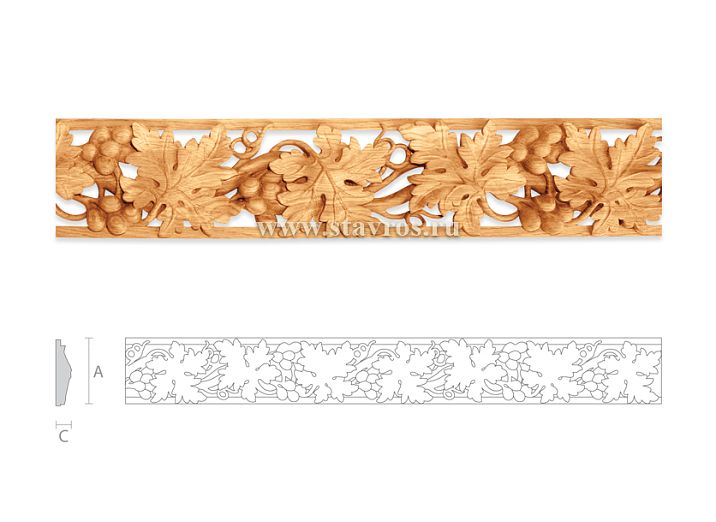
In architecture and design, there are elements that, like punctuation in literature, give space meaning, rhythm, and expressiveness. Window or door opening decorative trim This is precisely such an element, an architectural accent that transforms a simple functional passage or light opening into a significant statement, a focal point of attention, a portal between interior worlds.
Imagine a picture without a frame — it loses its boundaries, dissolving into the surrounding space. Similarly, an opening without trim appears unfinished, like an incomplete phrase. Decorative trim does not merely adorn — it structures space, sets the tone for the entire interior, becoming a tuning fork upon which other design elements are calibrated.
The company STAVROS, with its long experience working with wood, offers solutions where architectural precision combines with the warmth and lively energy of natural material. This is not merely the production of decorative elements — it is the creation of architectural poetry, where each line and each profile curve has its own sound and meaning.


Origins of architectural trim: from antiquity to modernity




Evolution of opening decoration through epochs
The history of decorative trim for openings spans millennia. In ancient architecture, door and window openings were framed by columns, pilasters, and lintels that not only adorned the building but also emphasized its structure, revealing its constructive logic. Ancient Greek and Roman architects understood that an opening is not merely a hole in a wall, but an important architectural element requiring special attention and treatment.
During the Renaissance, framing openings becomes even more refined. Complex compositions with sills, pediments, brackets, and keystone stones emerge. Each element had its own significance and place within the overall composition. Baroque and Rococo introduced opulence, dynamism, and theatricality into opening decoration. Classicism returned to strictness and symmetry, yet retained attention to detail and proportion.
In the 19th century, during the era of historicism, architects freely combined elements from various styles, creating eclectic yet harmonious compositions. Early 20th-century Modernism proposed a new approach to opening decoration, inspired by natural forms and national motifs. Constructivism and functionalism of the mid-century practically abandoned decorative trim, focusing instead on line purity and functionality.
Our factory also produces:


From functionality to aesthetics
Initially, opening trim was purely practical. Lintels protected joints between frames and walls from cold air, moisture, and dust. Sills diverted rainwater away from window openings. Brackets supported projecting structural elements.
However, over time, functional elements acquired decorative qualities. Masters began embellishing them with carving, stucco, and painting. Opening trim began to reflect not only technical requirements but also the aesthetic preferences of the era, the social status of the owner, and regional traditions.
In Russian architecture, lintels became true masterpieces of folk art. Each region had its own distinctive carving styles — Tomsk, Kostroma, Yaroslavl, and Vologda lintels are easily recognizable due to their unique ornamental motifs and execution techniques. These traditions, passed down from generation to generation, formed a rich cultural heritage that today serves as an inspiration for contemporary masters.
Get Consultation
Minimalism and the necessity of framing
Interestingly, even in minimalist interiors, where one might expect to reject all decoration, opening trim remains relevant. It simply takes on different, more concise forms. Instead of ornate carved lintels — clear geometric lines; instead of complex profiles — simple shapes that emphasize spatial structure.
Why, then, does even minimalism not fully abandon framing? The reason is that human perception requires boundaries and reference points. An opening without trim appears unfinished, as if something is missing. Even the simplest framing creates the necessary frame that helps the eye structure space and understand its organization.
Moreover, in minimalism, framing often performs an important accentuating function. In a monochromatic, minimalist interior, even a small accent such as a thin framing line can become the element that gives the space character and individuality.
Aesthetics and logic of decoration
Opening as a point of entry into style
Window and door openings are not merely functional holes in walls — they are key architectural elements that shape the first impression of space. They serve as sort of portals through which we enter the world of a particular style and atmosphere.
Window or door opening decorative trim It acts as a visual marker that immediately conveys the stylistic key of the interior. Classical carved lintels and sills suggest a traditional, possibly historical approach. Minimalist, geometrically clear framing indicates a modern, minimalist style. Smooth, organic forms may indicate the influence of modernism or Scandinavian design.
Thus, framing openings becomes a sort of language through which the interior speaks to us, telling us about its character, history, and the preferences of its owners. This is not merely a decorative element, but an important semantic accent that sets the tone for the entire space.
Functional aspects of decorative framing
In addition to its aesthetic function, decorative framing performs several important practical tasks. One of them is spatial zoning. In modern interiors, where open floor plans are often used, framing openings helps visually divide space into functional zones without erecting walls.
Another important function is creating compositional accents. Decorative framing can emphasize the significance of a particular opening, making it the focal point of the interior. This is especially important in large spaces, where visual anchors are needed to help structure the space.
Finally, framing openings ensures compositional completeness of the interior. It links various decorative elements — baseboards, cornices, moldings — into a unified system, creating a sense of wholeness and harmony. Without this unifying element, the interior may appear fragmented and incomplete.
Influence on perception of proportions
One of the most interesting properties of decorative framing is its ability to influence the perception of spatial proportions. With the right framing, one can visually alter the size and shape of an opening — and consequently, the entire room.
Vertical framing elements, such as pilasters or tall lintels, visually increase the height of the opening and ceiling. This is especially useful in rooms with low ceilings, where the goal is to create a sense of spaciousness.
Horizontal elements, on the contrary, visually expand the space, making it feel more substantial and stable. They work well in narrow, elongated rooms, helping to balance proportions.
Complex, multi-level framing creates a sense of depth, adding volume and expressiveness to the interior. They are especially suitable for spacious rooms with high ceilings, where their beauty and complexity can be fully appreciated.
Materials and Forms
Advantages of Solid Wood
Among all materials used for decorative openings framing, solid wood occupies a special place. Its advantages are numerous and indisputable. First of all, it is natural beauty and uniqueness. Each piece of wood has its own unique grain pattern, texture, character. This makes solid wood items not just decorative elements, but true works of art created by nature itself.
The tactile qualities of wood also play an important role in perceiving the interior. The warm, living surface of solid wood creates a feeling of coziness and comfort that cannot be achieved with artificial materials. Touching wood evokes positive emotions associated with our deep connection to nature.
Ecological safety is another important advantage of solid wood. Unlike many modern materials, wood does not emit harmful substances, does not accumulate static electricity, does not cause allergic reactions. It creates a healthy microclimate in the room, regulating humidity and temperature.
Finally, durability and the possibility of restoration make solid wood items a worthwhile long-term investment. With proper care, wooden framing can serve for decades without losing its beauty and functionality. And if damage appears over time, it can be restored, returning the item to its original appearance.
STAVROS Product Overview
STAVROS offers a wide range of solid wood products for decorative openings framing. The catalog features moldings, cornices, skirting boards in various shapes and sizes, allowing you to create framing of any complexity and style.
Moldings are profiled strips used to create framed structures, decorative panels, and openings framing. They can have various profiles — from simple rectangular to complex shaped with multi-level relief. STAVROS moldings are made from high-quality solid oak and beech, ensuring their strength, dimensional stability, and longevity.
Cornices are used to frame the upper part of openings, create decorative compositions on walls and ceilings. They can be simple, with minimal relief, or complex, with rich ornamentation. STAVROS cornices are distinguished by precision execution, clean lines, and high-quality finishing.
Skirting boards complete the composition, creating a smooth transition between the wall and floor or ceiling. They not only serve a decorative function but also protect joints from dirt and damage. STAVROS skirting boards are manufactured according to all technical requirements, ensuring perfect fit to surfaces and long service life.
Profiles, Dimensions, Decorations
Choosing a profile for decorative framing is not just an aesthetic question — it is an important architectural decision that affects the perception of the entire space. STAVROS offers various types of profiles, from classical to modern, allowing you to create framing perfectly matching the interior style.
Classical profiles with smooth lines and gentle transitions create a sense of elegance and tradition. They are well-suited for interiors in classical, neoclassical, and Victorian styles.
Modern profiles with clear geometric forms and minimal decoration are characterized by simplicity and functionality. They fit perfectly into modern, minimalist, Scandinavian interiors.
Decorative profiles with carving, ornamentation, and relief elements add luxury and individuality to the interior. They are suitable for Baroque, Rococo, Empire styles, as well as eclectic spaces where the expressiveness of details is important.
Dimensions of framing also play an important role in creating a harmonious composition. STAVROS offers products of various sizes, allowing you to select framing appropriate to the scale of the room and size of the opening. It is important to observe proportions: overly massive framing in a small room will look bulky, while too thin framing in a spacious hall will appear unexpressive.
Decorations are the finishing touches on products, determining their color, texture, and degree of gloss. STAVROS offers various decoration options, from natural wood tones to complex color solutions with patina, gilding, or aging. This allows you to select framing that perfectly fits the color palette of the interior and highlights its stylistic features.
Styles and Approaches
Classicism: Framing as Ornament
In a Classic Interior Window or door opening decorative trim It plays not just a decorative role, but an important architectural detail that emphasizes the structure and proportions of the space. Classical framing is characterized by strict lines, symmetry, and attention to detail.
Main elements of classical framing are casings, pilasters, sashings, pediments, brackets. They can be adorned with carving, stucco, gilding, but always within a certain canon, maintaining proportions and symmetry.
The color palette of classical framing is usually restrained and noble. This can be natural wood tones, white, gold, beige. It is important that the framing color harmonizes with the overall color palette of the interior, emphasizing its elegance and respectability.
In a classical interior, framing of openings often becomes part of a unified decorative system, which also includes skirting boards, cornices, moldings, and rosettes. All these elements should be executed in a unified style, using similar motifs and proportions, to create a sense of wholeness and harmony.
Modern: Smooth Lines, Functionality
The modern style, emerging at the turn of the 19th and 20th centuries, proposed a new approach to decorative framing of openings. Instead of strict geometric forms and symmetry — smooth, flowing lines inspired by natural motifs. Instead of canonical proportions — free, organic composition, subordinate to functionality and aesthetic impression.
Framing in the modern style often includes plant motifs — stylized flowers, leaves, stems. They can be executed in carving, inlay, or painting techniques. It is important that the decoration is not overloaded, so that it emphasizes rather than hides the main lines and forms.
The color palette of modern style is more diverse than in classicism. It can include muted pastel tones as well as bright, saturated colors. Often contrasting combinations are used, which emphasize the dynamism and expressiveness of forms.
Functionality is an important aspect of the modern style. Decorative framing should not only decorate, but also serve a specific purpose — structure space, guide movement, create a certain atmosphere. In this sense, modernism anticipated many principles of contemporary design, where form follows function.
Loft: Texture Contrasts
The loft style, which emerged in the mid-20th century in industrial areas of New York, offers a completely different approach to decorative door and window framing. Here, elegance of form or richness of decoration takes a back seat to the expressiveness of materials, contrasts of textures, and industrial aesthetics.
In a loft, door and window framing is often made from rough, unprocessed materials — aged wood, metal, concrete. It may have deliberately simple, even primitive shapes, but still possesses strong visual impact due to texture and color.
Contrast is a key technique in the loft style. This can be the contrast between a smooth wall surface and a rough frame, between a dark opening and a light surrounding, between the geometric clarity of lines and the irregularity, 'accidental' forms.
The color palette of a loft is usually restrained, dominated by natural tones of materials — gray concrete, brown wood, black metal. However, bright accents are also possible, which create dynamism and draw attention to specific areas of space.
Combination with Other Interior Elements
Decorative framing does not exist in a vacuum; it always interacts with other interior elements — furniture, textiles, lighting, decor. This interaction can be built on the principles of harmony or contrast, but it must always be intentional and purposeful.
In a classic interior, door and window framing usually harmonizes with furniture, repeating its forms, materials, and colors. For example, carved elements of framing may echo carvings on furniture, creating a sense of unity and wholeness.
In a modern interior, framing can create an interesting contrast with minimalist furniture, adding depth and character to the space. For example, wooden framing with expressive texture can look striking against smooth, monochromatic surfaces.
Lighting plays an important role in perceiving decorative framing. Properly placed fixtures can highlight relief, reveal texture, and create interesting light-and-shadow effects. This is especially important for framing with carving, relief elements, or complex textures.
Textiles — curtains, draperies, upholstery — also interact with door and window framing. They can support its style, complement the color palette, or create a soft contrast with hard surfaces. For example, heavy curtains with valances pair well with rich, carved framing in a classic style, while light, sheer curtains complement minimalist, modern framing.
Practical Tips for Selection
How to choose framing by height, width, and style
Choosing decorative framing is a responsible process that requires consideration of many factors: the size of the opening, the proportions of the room, the interior style, and personal preferences. Let’s consider the main principles that will help you make the right choice.
The height of the framing should correspond to the height of the opening and ceiling. In rooms with high ceilings, it is appropriate to use more substantial, vertically oriented framing, which emphasizes the grandeur of the space. In rooms with low ceilings, it is better to choose more restrained, horizontally oriented framing, which visually expands the space.
The width of the framing depends on the size of the opening and the overall scale of the room. Too narrow framing on a large opening will look unexpressive, while too wide framing on a small opening will appear bulky. It is important to find a balance where the framing is proportionate to the opening and harmoniously fits into the overall interior composition.
The style of framing should match the overall interior style. Classical framing with carving and complex profiles is appropriate for traditional interiors — classicism, baroque, empire. Minimalist, geometrically clear framing suits modern styles — minimalism, high-tech, Scandinavian. Framing with smooth, organic forms fits well into interiors in the modern, art deco, or eco styles.
The color and texture of framing also play an important role in creating a harmonious interior. They can either match the wall color, creating a monochromatic and unified effect, or contrast with it, becoming a bright accent. When choosing color, it is important to consider not only aesthetic preferences but also practical aspects — light framing visually increases space but gets dirty faster, while dark framing creates a sense of coziness and solidity but may visually reduce the room.
Typical mistakes of beginners
When choosing and installing decorative framing, errors are often made that can spoil the impression of the entire interior. Let’s consider the most common ones so you can avoid them.
Mismatch with interior style is one of the most common mistakes. Classical framing with carving and gilding will look inappropriate in a minimalist interior, while minimalist, geometric framing will look out of place in a rich, traditional interior. It is important that the framing supports the overall stylistic concept, rather than contradicting it.
Incorrect proportions are another common mistake. Too bulky framing in a small room creates a sense of heaviness and visually reduces space. Too thin and unexpressive framing in a large hall disappears and fails to perform its decorative function. It is important to observe proportions and consider the room’s scale when choosing framing dimensions.
Ignoring functional aspects can also lead to problems. For example, overly protruding framing may interfere with opening doors or windows, while overly fragile and thin framing may quickly break under heavy use. It is important that decorative elements not only look good but are also practical and durable.
Saving on material quality and workmanship is another mistake that can cost you dearly in the future. Cheap materials quickly lose their appearance, deform, and require replacement. Poor installation leads to misalignment, gaps, and peeling. It is better to invest once in high-quality materials and professional installation than to constantly spend on repairs and replacements.
Working with non-standard openings
Non-standard openings — arched, trapezoidal, round — require a special approach to decorative framing. They can be both a problem and an opportunity to create a unique, memorable interior.
Arched openings can be framed with special flexible moldings that follow the arch shape. Such framing emphasizes the smoothness of lines and adds elegance to the interior. Arched framing looks especially effective in classic, Mediterranean, and oriental interiors.
Trapezoidal openings present a certain challenge for framing, as they require custom-made elements. However, with a thoughtful approach, they can become an interesting architectural accent. For example, you can use contrasting framing to highlight the unusual shape of the opening and turn it into a focal point of the interior.
Round and oval openings are rare in modern architecture, but if they exist, they should be emphasized with appropriate framing. This can be concentric circular moldings, radial elements imitating sun rays, or simply a clear circular frame that highlights the opening against the wall.
When working with non-standard openings, it is especially important to consult professionals who have experience in creating custom solutions. STAVROS offers services for manufacturing framing to custom sizes and sketches, allowing you to realize the most daring design ideas.
Examples of framing with STAVROS products
From city apartments to country estates
STAVROS products are successfully used for decorative framing of openings in various types of spaces — from compact city apartments to spacious country homes and estates. Let’s consider several specific examples that demonstrate the capabilities and advantages of this product.
In a city apartment in the neoclassical style, STAVROS moldings and cornices were used to create elegant door openings. The white framing against light-gray walls creates a clear but not overpowering contrast, which structures the space and adds depth. Profiled elements with fine relief emphasize the classical character of the interior without overloading it with excessive decoration.
In the chalet-style country house, STAVROS wooden moldings and baseboards were used to create window frame accents. The natural wood color with expressive texture harmonizes with the wooden ceiling beams and furniture, creating a sense of warmth and coziness. The simple yet expressive profile of the frame accentuates the rustic character of the interior, its connection to nature and traditions.
In the historic estate undergoing restoration, carved cornices and moldings STAVROS were used to recreate authentic door and window frame accents. The intricate profile with carving, gilded elements, and rich texture create a sense of historical authenticity and luxury that matches the status and character of the building.
Space transformation through framing
Window or door opening decorative trim Can radically change the perception of space, transforming an ordinary room into an elegant, stylish interior. Let's see how this happens with specific examples.
In a small living room with low ceilings, vertical elements — pilasters — were used in the framing to visually increase the height of the room. The white framing against light blue walls creates a sense of lightness and airiness. The delicate relief of the profile adds elegance to the interior without overloading it with details.
In a spacious dining room with high ceilings, a massive framing with rich decoration — carving, gilding, complex profile — was used. It emphasizes the scale and status of the room, creating a sense of luxury and grandeur. The dark color of the framing against light walls creates a dramatic contrast, adding depth and expressiveness to the interior.
In a modern kitchen-living room, a minimalist framing with clear geometric shapes was used. It helps to zone the space, separating the kitchen area from the living room, while maintaining a sense of unity and openness. The natural wood color adds warmth and coziness to the interior, softening the rigidity of modern forms.
Visual scenarios: before and after
To visually demonstrate the impact of decorative framing on the perception of space, let's consider several 'before and after' examples — how the room looks without framing and with it.
Before: A standard door opening without framing appears unfinished, as if something is missing. The wall around the opening is bare, lacking accents. The transition between rooms is abrupt, without preparation.
After: The same opening with decorative STAVROS framing gains completeness and expressiveness. The framing creates a smooth transition between rooms, preparing for a change in ambiance. The wall around the opening becomes interesting, gaining depth and character.
Before: A window opening without framing disappears against the wall, failing to attract attention. The light entering through the window is unevenly distributed, creating sharp contrasts.
After: The same opening with decorative framing becomes a focal point of the interior, drawing the eye. The framing helps distribute light more evenly, softening contrasts. The window acquires the status of an important architectural element, rather than just a hole in the wall.
Before: An arched opening without framing appears incomplete, its shape not emphasized. The arch disappears against the wall, failing to fulfill its decorative function.
After: The same opening with decorative framing, repeating the arch shape, becomes an expressive architectural element. The framing emphasizes the smoothness of lines, creating play of light and shadow. The arch acquires significance and character, becoming an important element of interior design.
Advantages of cooperation with STAVROS
Natural high-quality wood
One of the main advantages of STAVROS products is the use of natural high-quality wood. All items are made from solid oak and beech, grown in ecologically clean regions and carefully selected.
Solid wood has several undeniable advantages over artificial materials. This includes natural beauty and uniqueness of texture, ecological safety and health benefits, durability and restorability, tactile comfort, and positive impact on the room's microclimate.
STAVROS uses only mature wood that has undergone proper drying and acclimatization. This guarantees dimensional and shape stability of the items, absence of deformation and cracks during use. Each batch of wood undergoes strict quality control, eliminating the use of defective materials.
Special attention is paid to the ecological safety of production. STAVROS does not use harmful chemicals in wood processing; all varnishes and paints meet the strictest ecological standards. This makes the product safe for health, which is especially important for families with children and allergy sufferers.
Variety of shapes and perfect fit
STAVROS offers a wide range of items in various shapes and sizes, allowing to select decorative framing for any opening and any interior style. The catalog includes both classic and modern profiles, as well as simple and complex decorative elements.
Special attention is paid to manufacturing accuracy and perfect element fitting. All items have precise, verified dimensions, ensuring their ideal connection with each other. This is especially important when creating complex compositions, where even the slightest mismatch can spoil the overall impression.
STAVROS uses modern CNC equipment, ensuring high processing accuracy and repeatability of results. At the same time, each item undergoes final finishing by hand, allowing to achieve ideal surface quality and eliminate even minor defects.
Connection system developed by STAVROS specialists ensures reliable and aesthetic connection of elements. This allows creating complex compositions without visible joints or gaps, which is especially important for decorative framing, always visible.
Architectural precision and individual approach
STAVROS does not merely produce decorative elements, but creates architectural solutions that take into account all specifics of a particular project. The company offers services for developing individual framing projects that consider the building's architecture, interior style, and client's preferences.
Architectural precision is not only about adhering to dimensions and proportions, but also understanding stylistic features, historical traditions, and modern trends. STAVROS specialists possess deep knowledge in architecture and design, enabling them to create solutions that are not only beautiful but also architecturally sound.
Individual approach is evident at every stage of cooperation — from consultation and project development to production and installation. STAVROS is ready to consider all client preferences, propose optimal solutions for specific situations, and adapt standard items to non-standard conditions.
Delivery across Russia and after-sales service
Delivery across Russia and after-sales service
STAVROS ensures delivery of its products throughout Russia, making them accessible to customers from any region. The company has an established logistics system that guarantees timely and safe delivery of items to any point in the country.
Special attention is paid to product packaging, which ensures its preservation during transportation. Each item is individually packaged, taking into account its specific features, thereby eliminating the possibility of damage during transit.
STAVROS offers a full range of services for the installation and mounting of decorative moldings. The company’s experienced specialists will carry out all work with quality and on time, adhering to all technical requirements. This is especially important for complex projects where high precision and professional approach are required.
After installation, STAVROS provides after-sales service for its products. The company offers warranty coverage for all items and is ready to provide assistance in case of any issues. This provides additional assurance for customers and confirms the high quality of STAVROS products.
Conclusion: Molding as the grammar of space
Window or door opening decorative trim — it is not merely a decorative element, but an important architectural detail that shapes the character and style of the entire space. Much like grammar structures language, molding structures interior design, giving it meaning and expressiveness.
Properly selected molding highlights the architectural features of a room, creates visual accents, directs the viewer’s gaze, and establishes a specific mood and atmosphere. It can visually alter the proportions of space, making it more harmonious and complete.
STAVROS offers a wide selection of solid wood products for creating decorative moldings of any complexity and style. High-quality materials, precise manufacturing, and architectural soundness of solutions — all of this makes STAVROS products the optimal choice for those who value beauty, quality, and individuality.
Design your interior thoughtfully — choose STAVROS. Click the link to select Window or door opening decorative trim and give space an expressive character. Transform ordinary openings into architectural accents that will delight the eye and create a unique atmosphere in your home.


