Article Contents:
- Phenomenology of Architectural Beauty
- Psychology of Visual Impact
- Cultural Archetypes and Symbolism
- Anatomy of Decorative Craftsmanship
- Structural Components of Framing
- Material Embodiment of Ideas
- Stylistic Kaleidoscope
- Classical Harmony
- Baroque Theatricality
- Modernism: nature as a source of inspiration
- Modern Interpretations and Innovations
- Minimalism: beauty of simplicity
- High-Tech: Technological Aesthetics
- Technological Aspects of Creation
- Design and Computer Modeling
- High-Precision Mechanical Processing
- Artistic Handcrafted Processing
- Installation and Integration into the Interior
- Preparatory work
- Mounting systems
- Finishing
- Aesthetic and Functional Solutions
- Color Harmony
- Lighting and Visual Effects
- Economic Aspects of the Project
- Budget Planning
- Long-Term Efficiency
- Trends and prospects for development
- Ecological responsibility
- Technological Innovations
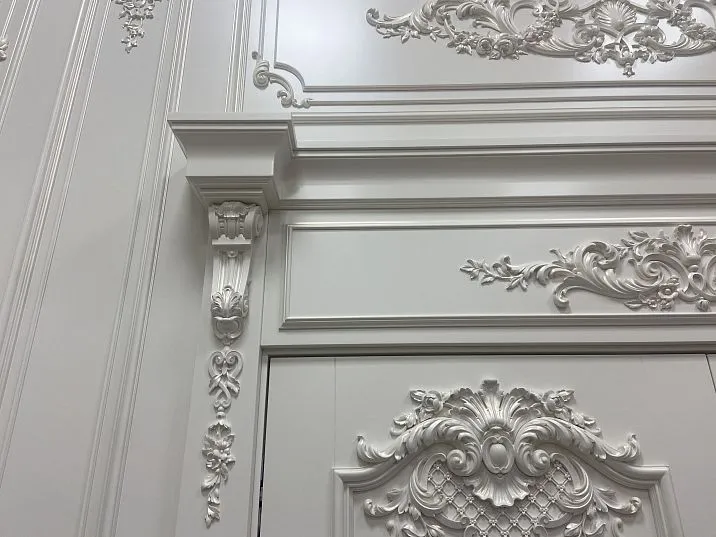
Have you ever wondered why some interiors remain unforgettable for a lifetime, while others are forgotten instantly? The secret lies in the details, and decorative doorway framing plays a key role in this magic. It is not merely a functional element — it is architectural poetry capable of transforming an ordinary transition between rooms into a majestic portal worthy of palace halls.


Phenomenology of Architectural Beauty
Human perception is remarkably structured: we can instantly evaluate the beauty of an architectural solution, even without understanding the principles behind its creation. Each decorative doorway framing carries encoded information about the status, taste, and cultural level of the space’s owner. Isn’t it astonishing how a few meters of carved wood or elegant molding can radically alter the atmosphere of an entire house?




Psychology of Visual Impact
Modern neuroaesthetics proves: beauty is not subjective. There exist universal principles by which the human brain evaluates visual information. Symmetry, the golden ratio, rhythm, contrast — all these elements activate pleasure centers in our brain, evoking positive emotions.
door frame trim serves as a kind of focal point in the architectural composition of the interior. It is precisely through it that our gaze flows from one space to another, and it is here that the first impression of what lies beyond the threshold is formed. Properly designed framing creates a sense of order, harmony, and compositional completeness.
Studies show that people spend 23% more time in rooms with high-quality architectural decor compared to similar spaces without decorative treatment. This is not coincidence — beauty attracts, creating a sense of comfort and security.
Our factory also produces:


Cultural Archetypes and Symbolism
Each culture has developed its own traditions for decorating transitions between spaces. In Christian symbolism, the church portal symbolizes the transition from earthly to heavenly, from profane to sacred. Islamic architecture created exquisite geometric ornaments, transforming every doorway into a kaleidoscope of mathematical beauty.
Russian architectural tradition gave rise to a unique art of carved decoration, where each element carried not only an aesthetic but also a protective function. Traditional motifs — grapevine, oak leaves, birds of happiness — are still used in modern decorative framing of the door opening, connecting us with the cultural roots of our ancestors.
Get Consultation
Anatomy of Decorative Craftsmanship
Structural Components of Framing
Professional decorative framing consists of numerous interconnected elements, each performing its function within the overall composition. The foundation is formed by vertical jambs — casings — that define the opening's boundaries and establish its geometry. The crowning element — the frieze or cornice — completes the composition, lending it weight and significance.
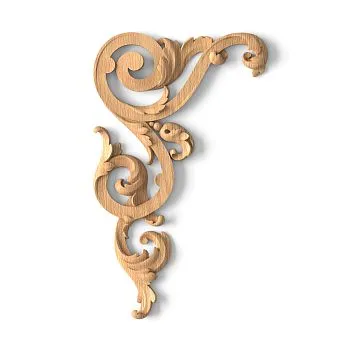
Corner decorative elements Play a special role — they ensure a smooth transition between vertical and horizontal elements, creating visual unity in the composition. Rosettes, medallions, carved inserts add richness of detail, transforming a utilitarian element into a work of decorative art.
Proportional relationships between elements are determined by classical architectural canons. The width of the casing is typically 1/12 to 1/8 of the opening's width, while the height of the crowning element is 1/10 to 1/6 of the opening's height. These proportions create a harmonious perception of the entire composition.
Material embodiment of ideas
Material selection profoundly affects the character of decorative framing. Natural hardwoods — oak, walnut, mahogany — evoke a sense of aristocracy and timeless elegance. Each species has its own character: oak is strict and monumental, walnut is warm and cozy, mahogany is luxurious and exotic.
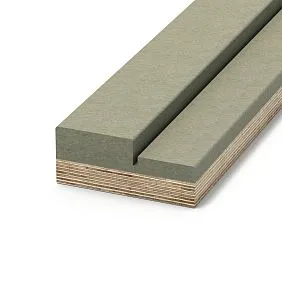
Modern composite materials open new horizons for creativity. Moldings for painting High-density MDF allows creating perfectly smooth surfaces that accept any lacquer coatings. This gives designers freedom in choosing color schemes, enables creating unique textures and effects.
Polyurethane compositions revolutionized architectural decor production. They enable reproducing the finest details of historical samples, creating complex multi-level compositions inaccessible with traditional materials. Meanwhile, polyurethane possesses outstanding performance characteristics — moisture resistance, strength, dimensional stability.
Stylistic kaleidoscope
Classical harmony
Classic style in decorative framing of the door opening is based on principles of ancient architecture, reinterpreted through the prism of European tradition. Here, each element has its place and purpose, every detail adheres to strict rules of proportioning.
Doric order is characterized by strictness and simplicity of forms. Its distinctive elements — fluted columns, triglyphs, dentils — create a sense of monumentality and reliability. Ionic order is more elegant and decorative, its volutes and ovals add lightness and elegance to the composition. Corinthian order is the most luxurious, its acanthus leaves and rosettes create a rich interplay of light and shadow.
Modern reinterpretation of classical forms allows adapting historical samples to the needs of contemporary life. Simplification of details, use of modern materials, adaptation to existing spatial solutions — all this helps create classical interiors that meet modern comfort standards.
Baroque theatricality
Baroque transformed architectural decoration into theatrical art, where each element plays its role in a grand spectacle of beauty. Baroque frames impress with ornamental richness, dynamism of forms, and emotional expressiveness.
Characteristic baroque motifs — twisting ribbons, garlands of flowers, putti, cartouches — create a sense of continuous movement, vital energy. and frames create a home atmosphere, making it truly cozy and individual. This is an investment in beauty, which pays off every day through aesthetic pleasure from admiring the beautiful. In baroque style, forms are characterized by plasticity, richness of textures, and masterful use of chiaroscuro effects.
Color schemes of baroque interiors impress with their opulence. Gold, ochre, deep red, emerald green — these colors create an atmosphere of royal palaces. Modern technologies allow reproducing traditional baroque finishes — gilding, patination, multi-layer painting — with the highest quality.
Modern: nature as a source of inspiration
The modern style revolutionized the understanding of architectural beauty, turning to natural forms as a source of inspiration. Modern frames are characterized by smooth lines, asymmetrical compositions, and botanical motifs.
Characteristic elements of modernism — stylized flowers, leaves, stems — create a sense of organic, natural authenticity. Modern lines are fluid and dynamic, never straight or rigid. This creates a unique poetic, romantic quality in architectural solutions.
Door Frame Trim In modern style, framing may be asymmetrical, with casings of different widths on different sides, and crowning elements of irregular shape. This creates a sense of liveliness, naturalness, contrasting natural organic forms against the geometric rigidity of classical styles.
Modern interpretations and innovations
Minimalism: beauty of simplicity
Minimalist approach to decorative framing is based on the principle 'less is more'. There is no room for decorative excesses — every line must be functionally justified, every surface — perfectly refined.
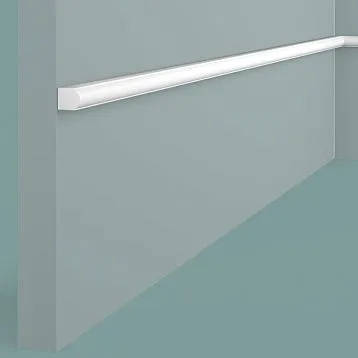
Minimalist frames often take the form of simple geometric shapes — rectangles, squares, rarely — circles or ellipses. The absence of decorative elements is compensated by material quality, impeccable proportions, and craftsmanship.
The color palette of minimalism is limited to neutral tones. White, gray, black — the primary colors of the style. Sometimes a single bright accent is added, but it must be extremely restrained and precisely dosed. Textures are also restrained — smooth surfaces, matte finishes, minimal relief.
High-tech: technological aesthetics
The high-tech style has introduced the aesthetics of advanced technology into architectural decoration. Metal, glass, composite materials — the foundation of the technological style. High-tech frames are characterized by an emphasized modernity, use of innovative materials and technologies.
Characteristic elements of high-tech — chrome surfaces, LED lighting, built-in electronics — transform the frame into a high-tech interface. Such solutions are especially effective in modern office interiors, exhibition spaces, and avant-garde residential projects.
Integration of smart technologies opens up new possibilities for functionality. Motion sensors, automatic lighting, access control systems can be seamlessly integrated into the frame structure, creating a new level of comfort and security.
Technological aspects of creation
Design and computer modeling
Modern production of decorative frames begins with detailed design using advanced CAD systems. Three-dimensional modeling allows visualizing the future product, assessing its proportions, and checking compatibility with the room's architecture.
Parametric design automates the process of adapting the base design to specific opening dimensions. Changing one parameter automatically recalculates all related dimensions, preserving the correct proportions of the entire composition. This is especially important for serial projects, where frames of various sizes are required in a unified style.
Photorealistic visualization allows the client to see the future frame within the context of a real interior, evaluate different color solutions, and make design adjustments before production begins.
High-precision mechanical processing
Numerical control machines have revolutionized the production of architectural decoration. Modern machining centers can create items of any complexity with precision down to tenths of a millimeter, which is critically important for quality element fitting.
Multi-axis processing allows creating complex three-dimensional surfaces in a single setup. Five-axis milling centers can process elements of virtually any geometric complexity, including recesses that cannot be achieved with conventional equipment.
Automatic tool change and adaptive control systems ensure optimal processing modes for each material and type of operation. Modern machines operate continuously with minimal operator involvement, ensuring consistent product quality.
Artistic handcrafting
Despite the high level of automation, handcrafting remains indispensable for creating truly artistic pieces. Experienced master carvers impart vitality and individuality to machine-made blanks, which cannot be achieved mechanically.
Traditional carving techniques — relief, cut-out, three-dimensional — each has its own application area and artistic possibilities. Modern tools significantly speed up the process without reducing the artistic value of the items.
Authorial elements are created exclusively by hand and represent unique works of decorative-applied art. Each such item is unique and adds special artistic value to the interior.
Installation and Integration into Interior
Preparatory Work
Quality installation of decorative frames begins with careful preparation of the opening. Walls must be leveled, cleaned of old finishes, and treated with primers. The accuracy of the opening's geometry is critically important — even minor deviations can lead to problems during installation.
Marking mounting locations is performed using professional measuring tools — laser levels, theodolites, electronic tape measures. Each mounting point must be calculated considering the loads the frame will bear.
Pre-assembling elements in the workshop allows identifying and eliminating potential issues before installation on-site. This saves time and guarantees high-quality final assembly.
Mounting systems
Modern technologies offer various systems for mounting decorative elements, each with its own advantages. Mechanical fasteners — anchors, dowels, self-tapping screws — provide maximum reliability for heavy elements.
Adhesive systems are ideal for lightweight polymer elements. Modern construction adhesives have high adhesion to various materials, allowing the creation of virtually invisible joints.
Combined systems combine mechanical and adhesive connections, ensuring an optimal balance of reliability and aesthetics. buy door frames With a well-thought-out mounting system — it means ensuring the longevity and beauty of the interior.
Final Finishing
The quality of the final finish determines the final impression of the decorative frame. Surface preparation includes filling joints, sanding, and dust removal. Each stage must be performed with maximum care.
Priming ensures strong adhesion of the final coating to the substrate and equalizes the absorbency of different surface areas. Modern primers contain special additives — UV filters, antiseptics, plasticizers.
Applying the final coating — the final stage, which determines the durability and appearance of the frame. Modern paint systems allow creating museum-quality coatings capable of serving for decades without losing decorative properties.
Aesthetic and functional solutions
Color harmony
Choosing a color solution for decorative framing is a complex design task requiring consideration of multiple factors. The color must harmonize with the overall color scheme of the interior, highlight the architectural features of the space, and create the appropriate psychological effect.
Contrasting solutions attract attention and emphasize the architectural structure of the space. White framing on a dark wall is a classic solution, creating an effect of solemnity and grandeur. Dark framing on a light background appears more modern and graphic.
Subtle color solutions create a more calm, integrated impression. Similar shades, differing in saturation or lightness, create delicate tonal transitions, especially effective under proper lighting.
Lighting and Visual Effects
Proper lighting can dramatically change the perception of decorative framing. Directional light highlights the relief of carved elements, creating an effective play of light and shadow. Diffused lighting, on the contrary, softens contrasts, creating a more serene perception.
Integrated lighting systems transform framing into a glowing architectural element. Hidden LED strips, spotlights, and backlighting of decorative elements create striking light compositions, especially impressive at night.
Colored lighting opens new possibilities for creating mood. Warm light creates a cozy, home-like atmosphere, while cool light emphasizes modernity and technological sophistication. Dynamic lighting, changing throughout the day, creates a lively, ever-changing interior.
Project cost considerations
Budget Planning
The cost of decorative framing consists of multiple components: design project, materials, manufacturing, transportation, installation, finishing. Each item requires careful analysis to optimize overall costs.
Material selection significantly affects the project budget. Premium wood species, natural stone, original carving—all of these increase cost but also ensure exceptional quality and uniqueness. to buy door frame trim Modern composite materials may be more economically advantageous while maintaining high aesthetic quality.
Manufacturing complexity directly affects cost. Simple geometric shapes are produced faster and cheaper than intricate carved compositions. Mass production reduces unit cost, while custom orders require greater investment.
Long-Term Efficiency
Investments in quality decorative framing pay off not only aesthetically but also through real increases in property value. Properties with thoughtful architectural decoration enjoy steady demand, sell faster, and rent more easily.
Quality materials and proper installation ensure the longevity of framing. Modern protective coatings allow maintaining the original appearance for decades with minimal maintenance. This makes initial investments economically justified.
decorative interior ornaments High-quality pieces become family heirlooms, passed down from generation to generation. Their cultural and material value only increases over time.
Trends and prospects for development
Ecological responsibility
Modern architectural decor production increasingly focuses on ecological aspects. Use of renewable materials, waste minimization, and application of non-toxic coatings have become important consumer criteria.
Certified wood from sustainably managed forests guarantees no harm to nature. Composite materials based on recycled raw materials combine ecological properties with high performance characteristics.
Energy-efficient production technologies, use of renewable energy sources, and local production to reduce transportation costs—all contribute to creating a more sustainable future.
Technological Innovations
Digital technologies radically transform the process of creating decorative framing. 3D scanning of historical samples allows creating precise digital copies that can be reproduced with any level of detail.
Artificial intelligence optimizes design processes, offering solution options based on analysis of thousands of successful projects. Machine learning allows predicting material behavior, optimizing processing modes, and preventing defects.
Additive technologies open new possibilities for creating complex geometric forms inaccessible through traditional processing methods. 3D printing with large-format printers allows producing ready-made framing elements without assembly operations.
A Journey Around the World decorative framing of door openings It convinces us that beauty is not luxury, but necessity. In a world where technology develops at dizzying speed, quality architectural decoration remains an island of stability and harmony.
Modern possibilities allow realizing any designer fantasies—from historical reconstructions to futuristic concepts. The key is to find the right balance between tradition and innovation, functionality and aesthetics, individuality and universality.
Investing in quality decorative framing is investing in quality of life, creating a space that will delight the eyes and soul for many years. It is a choice in favor of beauty, culture, harmony—values that will never go out of style.
STAVROS Company embodies the philosophy of perfection in every created item. Our team combines masters of traditional crafts and specialists in modern technologies, creating unique works of architectural art. We understand that each project is unique, and we are ready to offer individual solutions surpassing even the most daring expectations of our clients. Entrusting us with the creation of decorative framing means choosing quality, beauty, and durability—values that will serve you and your descendants for many years.