Article Contents:
- Aesthetic philosophy of decorative elements
- Historical heritage in a modern context
- Symbolism and cultural codes
- Technological innovations in creating decor
- Revolution in material processing
- Material science achievements
- Stylistic diversity of decorative solutions
- Classic Traditions in Modern Interpretation
- Baroque opulence and theatricality
- Modern and Art Deco: geometry and nature
- Technical aspects of decorative finishing
- Wood carving: traditions and innovations
- Turning and profiling
- Finishing and Protective Coatings
- Application in various interior styles
- Classic Interiors
- Modern spaces
- Ethnic and regional styles
- Installation and mounting technology
- Preparatory work
- Mounting methods
- Quality Control
- Conclusion: STAVROS — Workshop of Beauty and Perfection
- Wooden items
- Stone and composite materials
- Modern Trends and Innovations
- Eco-Friendly Materials
- Smart technologies
- Personalization and customization
- Conclusion
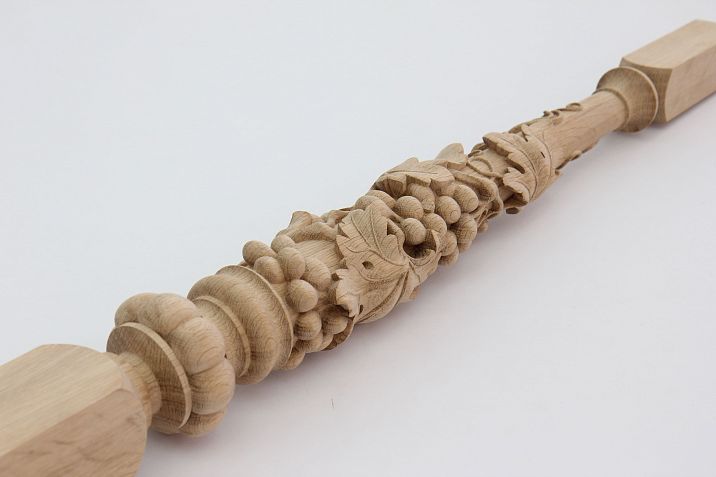
What distinguishes an ordinary staircase from a work of architectural art? The answer lies in details capable of transforming a functional structure into an element of interior luxury. A decorative newel post is not merely a supporting element of a railing—it is the embodiment of centuries-old craftsmanship, where every line and curve tells a story of beauty created by human hands.
In the world of modern design, where technology rapidly changes our perception of space, decorative newel posts remain an island of stability and eternal beauty. They connect the past with the present, classical traditions with modern needs, functionality with aesthetic perfection.
Each decorative newel post is a miniature sculpture capable of becoming a central element of interior composition. The choice of these elements not only affects the safety of the staircase structure but also the overall impression of the entire home space.


Aesthetic philosophy of decorative elements
Understanding the role of decorative newel posts in architectural space requires deep immersion in the history and philosophy of ornamental art. These elements were never merely functional details—they always carried symbolic meaning, reflecting cultural values and aesthetic ideals of their time.




Historical heritage in a modern context
The origins of decorative newel post art trace back to antiquity, where ancient Greek and Roman masters created the first examples of these architectural elements. The term 'newel post' comes from the Greek word 'balaustion,' meaning pomegranate flower—a symbol of fertility and prosperity.
During the Renaissance, decorative newel posts reached unprecedented heights of artistic perfection. Italian masters of the 15th-16th centuries created works that amazed with their perfection of proportions and refinement of decoration. Each newel post was a complete architectural composition with a base, decorative body, and capital.
Baroque introduced theatricality and dynamism into newel post design. Masters of this era were not afraid to experiment with forms, creating pieces resembling frozen dance movements in stone or wood. Spiral scrolls, floral ornaments, and complex geometric patterns became characteristic features of the Baroque style.
Our factory also produces:



Symbolism and Cultural Codes
Decorative elements of newel posts always carried deep symbolic meaning. Floral ornaments symbolized a connection with nature and the cyclical nature of life. Geometric patterns reflected a striving for order and harmony. Anthropomorphic motifs emphasized the significance of the human being in architectural space.
In Russian wooden architecture tradition, newel posts were often adorned with solar symbols, representing fertility and protection from evil forces. These ancient motifs were organically woven into Christian symbolism, creating a unique synthesis of pagan and Orthodox traditions.
Modern designers, creating decorative newel posts, often turn to this rich symbolic heritage, adapting ancient motifs to the requirements of contemporary interiors.
Get Consultation
Technological innovations in creating decor
Modern production of decorative newel posts represents a unique synthesis of traditional craftsmanship and high-tech solutions. Each stage of creation requires not only technical knowledge but also artistic intuition.
Revolution in material processing
The advent of computer numerical control machines radically changed the possibilities of creating complex decorative elements. Modern milling centers can reproduce the finest ornament details with precision down to fractions of a millimeter, ensuring consistency in mass-produced items while preserving the handcrafted character of work.
Laser technologies have opened new horizons in creating delicate decorative elements. Laser engraving allows applying ornaments inaccessible through traditional processing methods, creating depth and volume effects previously achievable only through hand carving.
Three-dimensional modeling and prototyping allow designers to create virtual models of future products, experiment with shapes and proportions, without wasting material on producing physical samples.
Material Science Achievements
Modern decorative balusters can be manufactured from a wide range of materials, each offering unique opportunities for artistic expression.
Composite materials based on wood fibers combine the beauty of natural wood with improved performance characteristics. They are not susceptible to drying or swelling, enabling the creation of more complex and delicate decorative elements.
New-generation polymer compositions enable the creation of balusters with imitation of various materials — from marble to precious woods. The resulting products are significantly lighter and cheaper than natural counterparts.
Hybrid technologies combining different materials in a single item allow creating unique effects. For example, wooden bases with metal inserts or stone elements with wooden decorative overlays.
Stylistic Diversity of Decorative Solutions
The modern market offers decorative balusters in a wide range of stylistic solutions — from strict classicism to avant-garde forms. Each style has its distinctive features and area of application.
Classical Traditions in Modern Interpretation
The classical style remains one of the most popular directions in decorative baluster design. It is characterized by strict proportions, symmetrical forms, and restrained yet refined decoration.
The foundation of classical composition consists of architectural elements: flutes, beads, astragals, ovals. These details, borrowed from classical architecture, give balusters a noble and majestic appearance.
The color palette of classical items is traditionally restrained: natural wood tones, white, cream, gray. Such balusters are versatile and suitable for most interiors, not drawing attention to themselves but creating a sense of stability and respectability.
Baroque opulence and theatricality
Baroque decorative balusters are a triumph of ornamental art. They are characterized by complex curved profiles, abundance of decorative elements, and dynamic composition.
Typical elements of Baroque decoration include spiral scrolls, plant ornaments, cartouches, and mascarons. Baroque masters were not afraid to experiment with forms, creating items reminiscent of frozen dance movements in material.
Modern interpretations of Baroque style are more restrained, yet retain key characteristics: plasticity of forms, richness of decoration, theatricality of composition.
Modern and Art Deco: Geometry and Nature
The modern style brought natural motifs and asymmetrical compositions into baluster design. Typical elements include plant ornaments, depictions of flowers, leaves, stems. Forms become more free, moving away from the strict geometry of classicism.
Art Deco, on the contrary, leans toward geometric forms, but interprets them in a modern context. Key features: stepped profiles, zigzag ornaments, contrasting material and color combinations.
Modern balusters in the styles of modern and Art Deco often combine wood with metal, glass, stone, creating unique compositions.
Technical Aspects of Decorative Processing
Creating a quality decorative baluster requires deep understanding of technological processes and material properties. Each type of decorative processing has its own characteristics and limitations.
Wood Carving: Traditions and Innovations
Hand carving remains the pinnacle of craftsmanship in creating decorative balusters. An experienced carver can create a unique work of art, where every detail bears the imprint of individual skill.
Main types of carving include relief, pierced, sculptural, and combined. Each type requires special tools and execution techniques.
Machine carving using CNC milling machines allows creating complex repeating ornaments with high precision. Modern multi-axis machines can process items of complex shapes, creating three-dimensional reliefs and patterns.
Turning and Profiling
Turning is the primary method for creating the basic shape of decorative balusters. Modern CNC turning machines allow reproducing the most complex profiles with high precision and repeatability.
Programming turning machines requires deep understanding of the specifics of processing various materials. Cutting speed, tool feed, cutting depth — all these parameters must be optimized for each specific case.
Combining turning and milling processes allows creating items with unique decorative elements not achievable using only one type of equipment.
Finishing and protective coatings
Finishing plays a key role in creating high-quality decorative balusters. Proper finishing not only highlights the beauty of the material and decor but also ensures the longevity of the item.
Polishing is performed in several stages with gradually decreasing abrasive grit. The quality of polishing is critically important for subsequent finishing — any scratches will be visible under a transparent coating.
Staining allows highlighting the wood grain or creating imitation of valuable species. Modern stains provide even coloring and do not obscure the natural wood pattern.
Coatings protect wood from moisture, ultraviolet radiation, and mechanical damage. The choice of coating type depends on usage conditions and aesthetic requirements.
Application in various interior styles
Decorative balusters have an amazing ability to adapt to various interior styles, becoming an organic part of the overall composition.
Classic Interiors
In classical interiors, decorative balusters play the role of a connecting element between various architectural components. They must harmonize with columns, pilasters, and cornices, creating a unified stylistic composition.
Preferred materials are natural: oak, beech, ash for wooden items, marble or granite for stone. The color palette is restrained, emphasizing the nobility of the material.
Decorative elements are borrowed from classical orders: Doric, Ionic, Corinthian. Proportions must conform to classical architectural canons.
Modern spaces
In modern interiors, decorative balusters often become the sole ornament of a minimalist space. They must be sufficiently expressive to attract attention, but not disrupt the overall minimalist concept.
Preferred forms are simple, with clear lines and minimal decorative elements. Materials can be traditional or modern: metal, glass, composites.
Color solutions are often contrasting: white balusters on a dark background or vice versa. Bright accent colors may be used to create a dynamic composition.
Ethnic and regional styles
Ethnic styles offer rich opportunities for creating unique decorative balusters. Each culture has its traditional motifs and material processing techniques.
Russian style is characterized by an abundance of carved decoration with floral and geometric ornaments. Traditional motifs include solar symbols, bird and animal images, stylized plants.
Eastern styles are distinguished by refinement and symbolism. Chinese motifs include dragon images, lotus flowers, and ideographic characters. Japanese style leans toward minimalism and natural forms.
Installation and mounting technology
Correct installation of decorative balusters is critically important for ensuring not only aesthetic effect but also structural safety. The process requires precision, care, and knowledge of working with different materials.
Preparation Work
Installation begins with careful marking of baluster mounting locations. The distance between axes of adjacent elements must comply with project requirements and safety standards.
Foundation geometry check includes verifying step levelness, stringer parallelism, and absence of local deformations. Detected deviations must be corrected before mounting begins.
Tool preparation includes checking its functionality and accuracy. High-quality tools are essential for precise and careful mounting.
Methods of mounting
The choice of mounting method depends on the baluster material, staircase construction, and aesthetic requirements. Common methods include threaded connections, dowel joints, and adhesive joints.
Threaded connections provide maximum strength and allow for disassembly. Metal bolts are inserted into pre-drilled holes and secured with adhesive or mechanical elements.
Dowel joints represent a traditional carpentry solution valued for its ecological and aesthetic qualities. Wooden dowels create a strong and durable connection when properly executed.
Quality control
After completion of installation, thorough quality control of all connections is required. Verticality of balusters, strength of mounting, absence of play and deformations are checked.
Functional tests include applying test loads to each baluster. The structure must withstand specified loads without deformation or damage.
Aesthetic inspection includes verifying compliance of installed items with project requirements, finish quality, and absence of visible defects.
Care and maintenance of decorative elements
Proper care of decorative balusters ensures their beauty and functionality for many years. Different materials require specific maintenance approaches.
Wooden items
Wooden decorative balusters require regular but simple care. The basis of care is protection from moisture, temperature fluctuations, and mechanical damage.
Daily care includes removing dust with a soft dry cloth. Wet cleaning is performed with a well-wrung cloth using specialized wood cleaning agents.
Periodic maintenance includes updating the protective coating, checking the condition of fasteners, and addressing minor defects. The frequency of maintenance depends on operating conditions.
Stone and composite materials
Stone balusters are highly durable but require special care to maintain their appearance. Porous materials require protection from dirt and moisture.
Cleaning is performed using specialized agents selected according to the type of stone. Abrasive materials may damage polished surfaces.
Composite materials typically do not require special care but need protection from ultraviolet radiation and extreme temperatures.
Modern trends and innovations
Advancements in technology and changing aesthetic preferences lead to the emergence of new directions in decorative baluster design. Modern trends combine traditional forms with innovative solutions.
Eco-Friendly Materials
Growing attention to environmental issues encourages the use of renewable and recycled materials. Certified wood from sustainably managed forests is becoming a standard for responsible manufacturers.
Bio-composites based on plant fibers offer an eco-friendly alternative to traditional materials. They combine the strength of synthetic materials with the environmental safety of natural materials.
Smart Technologies
Integrating electronic components into baluster construction opens new possibilities for functional expansion. Built-in lighting, motion sensors, and security systems transform decorative elements into high-tech devices.
Wireless technologies simplify the integration of smart systems into existing structures without the need to lay additional communications.
Personalization and Customization
Modern consumers increasingly demand customized solutions. Mass customization technologies allow creating unique items with the economic efficiency of serial production.
Interactive design systems allow customers to create baluster designs themselves, selecting shapes, sizes, and decorative elements from extensive component libraries.
Conclusion
A decorative baluster represents a unique combination of functionality, aesthetics, and cultural heritage. These elements can transform an ordinary staircase into an architectural masterpiece, creating an atmosphere of elegance and comfort in any interior.
Modern manufacturing technologies allow creating balusters of any complexity, embodying the most daring design concepts in the material. At the same time, the best traditional craftsmanship, passed down from generation to generation, is preserved.
Choosing decorative balusters is an investment in beauty, quality, and longevity. These elements not only perform their functional role but also become works of art capable of enhancing any interior.
Proper care and timely maintenance ensure a long life for decorative balusters. These items can retain their beauty and functionality for decades, delighting owners and their guests.
For those who appreciate true quality and beauty, we recommend exploring the collection decorative balusters, where the best examples of modern woodworking craftsmanship are presented.
For many years, STAVROS has been a recognized leader in creating exclusive wooden items. Our craftsmen combine centuries-old traditions with modern technologies, creating artworks that will enhance any interior and become a source of pride for owners.