Article Contents:
- Chemical Poetry: Molecular Secrets of Beauty
- Polymer revolution in architectural decoration
- Technology of Transforming Ideas into Form
- Alchemy of Mixing and Transformation
- Architectural Palette: Diversity of Forms and Solutions
- Classical canons in modern execution
- Stylistic Directions and Their Interpretation
- Modern Design Trends
- Functional Aesthetics: Where Beauty Meets Practicality
- Constructive Features and Load Characteristics
- Climate resistance and durability
- Ease of Maintenance and Repairability
- Technological innovations: looking toward the future
- Additive Technologies in Decor Production
- Integration of digital technologies
- Ecological Innovations and Sustainable Development
- Economic justification of choice
- Investment Appeal of Quality Decoration
- Comparative Analysis of Alternative Solutions
- Application areas and specific solutions
- Residential Interiors of Various Styles
- Commercial and Public Spaces
- Restoration and Recreation of Historical Objects
- Conclusion: Choosing Masters of Their Craft
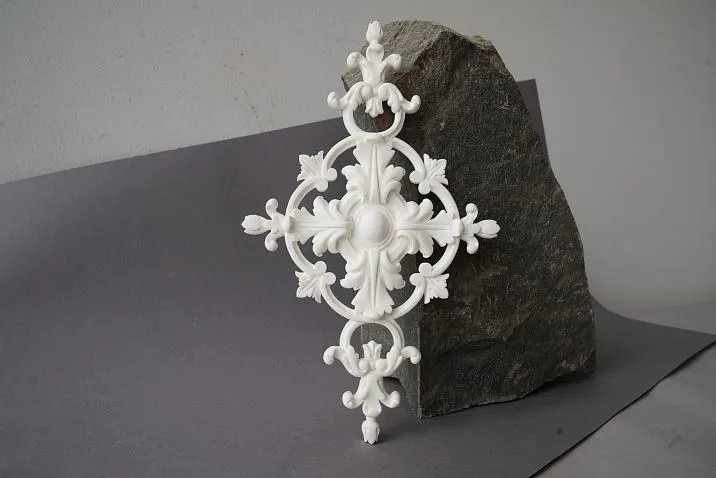
Have you ever stood before a work of architectural art, feeling your heart beat in unison with the rhythm of stone arches and sculpted ornaments? Such magical effect is capable of producing Polyurethane Decor – material that combines centuries-old craftsmanship traditions with revolutionary possibilities of modern chemistry.
In an era when the boundaries between the possible and the impossible blur every day, polyurethane decor has become a revelation for designers and architects. Forget heavy plaster constructions requiring wall reinforcement, capricious natural stone afraid of moisture, or wood that warps with temperature changes. A new era of decorative art began with the emergence of a material lighter than paper, stronger than steel, and more pliable than clay in the hands of the master.



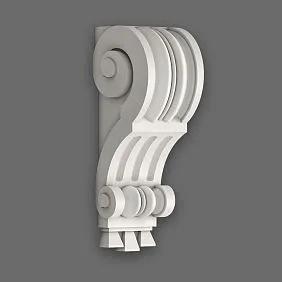
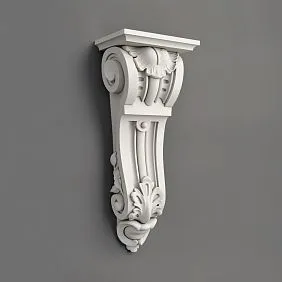
Chemical Poetry: Molecular Secrets of Beauty




Polymer revolution in architectural decoration
What happens when science meets art? A material is born capable of changing perceptions of decorative design possibilities. Polyurethane as a base for creating architectural elements is a high-tech thermosetting polymer possessing a unique combination of physical and mechanical properties.
The molecular structure of this material resembles a complex three-dimensional web, where each thread – a polymer chain – is connected to neighboring ones by multiple cross-links. Such architecture provides the material with exceptional strength under tension and compression while retaining remarkable lightness.
Modern polyurethane compositions contain up to thirty different components, each performing a strictly defined function. Catalysts control the polymerization reaction speed, stabilizers protect against destructive UV effects, plasticizers ensure necessary elasticity, and fillers form the required density and surface texture.
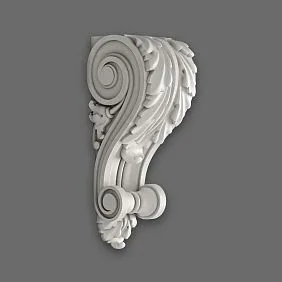
Our factory also produces:

Technology of Transforming Ideas into Form
Production Process polyurethane decor It begins long before mixing chemical components. Everything starts with an idea – an artistic concept that must materialize into a specific form. Designers and sculptors create initial sketches, refine details, and consider technological specifics of future production.
The master model is made from materials allowing creation of a perfectly smooth surface with precise detailing of all elements. This may be hardwood processed with jewel-like precision, or special modeling plastics enabling realization of the most complex geometric forms.
Creating a silicone mold is a critically important stage determining the quality of future products. Silicone must possess certain characteristics of hardness, elasticity, and heat resistance. Too soft material will not ensure detail clarity, while overly rigid material may damage fragile elements during removal of the finished product.
Get Consultation
Alchemy of Mixing and Transformation
The moment of combining components of the polyurethane system can be compared to the birth of a star – an exothermic reaction occurs, accompanied by heat release and transformation of liquid components into a solid material with specified properties.
The temperature regime of the process is controlled with precision down to fractions of a degree. Elevated temperature accelerates the reaction but may lead to internal stresses and deformation of the finished product. Lowered temperature slows polymerization, potentially resulting in incomplete material curing.
Injection pressure ensures complete filling of all mold recesses and eliminates air inclusions. Modern injection machines are capable of creating and maintaining pressure up to 150 atmospheres, guaranteeing products with flawless surface quality.
Architectural Palette: Diversity of Forms and Solutions
Classical canons in modern execution
Ancient architecture gifted the world with a system of proportions and forms that remains relevant for millennia. Corinthian capitals with their lush acanthus leaves, Doric friezes with triglyphs and metopes, Ionic volutes – all these elements find new embodiment in polyurethane decor.
The advantage of modern material lies in its ability to reproduce the finest details of ancient samples without loss of quality during mass production. Each leaf, each vein, each swirl is transferred with precision unattainable even by skilled craftsmen of past eras.
The mathematical precision of proportions, laid down in the foundations of classical orders, is fully preserved in polyurethane products. The ratio of height to width, the rhythm of repeating elements, the modularity of the system – all these principles are strictly observed in the design of modern polyurethane decor.
Stylistic directions and their interpretation
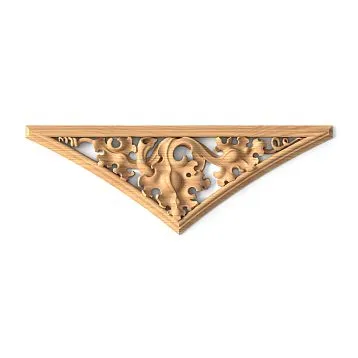
Gothic architecture, with its aspiration upward and intricate stone carving, demands special craftsmanship for reproduction. Delicate elements, pointed arches, complex interweavings of vegetal and geometric motifs – all this becomes accessible thanks to the flexibility of polyurethane and the precision of modern molding.
Renaissance motifs are distinguished by harmonious proportions and refined details. Cartouches, mascarons, garlands – these elements create an atmosphere of elegance and cultural continuity. Polyurethane allows reproducing the finest nuances of Renaissance sculpture while preserving all artistic merits of the originals.
Baroque opulence finds its ideal embodiment in modern materials. Complex scrolls and counter-scrolls, playing on contrasts of light and shadow, create dynamic compositions that enliven static architecture. Polyurethane allows creating such complex forms without the risk of their destruction under their own weight.
Modern design trends
Minimalism as a philosophy of space requires a special approach to decorative elements. Every line must be justified functionally or compositionally. Polyurethane Decor In minimalist style, it is characterized by purity of forms and absence of excessive detailing.
High-tech aesthetics dictates the use of forms reminiscent of technical structures. Imitation of metallic profiles, industrial elements, geometric abstractions creates a sense of high technological sophistication of space. At the same time, polyurethane remains warm to the touch, unlike real metal.
Eco-style implies the use of natural motifs in decor. Stylized plant forms, imitation of natural textures, organic lines – all this can be embodied in polyurethane decor while preserving the ecological safety of the material.
Functional aesthetics: where beauty meets practicality
Constructive features and load-bearing characteristics
Modern polyurethane decor is not only beautiful forms, but also functional elements capable of bearing certain loads. Cornices can support heavy drapes, brackets – shelves with books, sockets – heavy chandeliers.
Calculations of permissible loads take into account not only the strength of the material itself, but also the specifics of its attachment to load-bearing structures. Polyurethane has high specific strength – the ratio of strength to material density – enabling the creation of light yet strong structures.
Fatigue characteristics of the material ensure the longevity of products even under cyclic loads. Vibrations from passing traffic, wind impacts on facade elements, temperature deformations of buildings – all these factors are considered when designing decorative elements.
Climate Resistance and Durability
Russian climatic conditions impose special requirements on building materials. Temperature range from -40°C to +40°C, high humidity, ultraviolet radiation, atmospheric precipitation – all these factors must be considered when selecting material for decorative elements.
Polyurethane compositions contain special additives ensuring resistance to climatic influences. UV stabilizers prevent degradation of the polymer matrix under sunlight, hydrophobic additives reduce water absorption, antioxidants slow down aging processes.
Freeze-thaw cycles – especially severe test for building materials. Water entering the material's micropores expands upon freezing and may destroy the structure. Polyurethane Decor Due to its closed cellular structure, it absorbs practically no moisture, ensuring its frost resistance.
Ease of maintenance and repairability
One of the key advantages of polyurethane decor is its ease of maintenance. The material does not require special cleaning agents – ordinary wet cleaning with neutral detergents is sufficient.
The possibility of restoring damaged areas without dismantling the entire element significantly reduces operational costs. Minor chips and scratches are easily removed using special repair compounds, while more serious damage can be corrected by locally replacing the damaged section.
Polyurethane's paintability opens up limitless possibilities for changing interior color schemes without replacing decorative elements. The material holds paint well, does not require special surface preparation, and allows applying coatings of any type – from matte to glossy, from single-color to multi-colored.
Technological innovations: looking toward the future
Additive technologies in decor production
3D printing opens up fundamentally new possibilities for creating decorative elements. The technology allows manufacturing items of any complexity without limitations associated with removal from a mold. Internal cavities, recesses, complex interweavings – all this becomes possible.
Polyurethane-based 3D printing materials are constantly improving. Modern photopolymers provide high surface quality and detail reproduction accuracy comparable to traditional molding.
Personalization of decorative elements becomes accessible thanks to digital technologies. Each customer can obtain unique elements, created specifically for their interior, taking into account the architectural features of the room and personal preferences.
Integration of Digital Technologies
Smart home systems find application even in decorative elements. Hidden LED lighting integrated into cornices and moldings creates an impressive lighting effect and highlights architectural details. Control systems allow creating various lighting scenarios for different times of day and various events.
Sensors embedded in decorative elements can control lighting or security systems. Wireless technologies allow integrating such systems without laying additional cables.
Climate sensors placed in decorative elements can control temperature and humidity in a room, ensuring an optimal microclimate for residents and preserving the interior.
Ecological innovations and sustainable development
Biodegradable polymers based on renewable resources represent the future of environmentally responsible construction. These materials retain all the positive properties of traditional polyurethane, yet fully degrade under natural conditions after their service life.
Polyurethane recycling technologies are constantly improving. Chemical depolymerization allows decomposing used products into original monomers, which can be used to synthesize new polymers. This creates a closed production cycle, minimizing environmental impact.
Energy consumption during production is reduced through the use of more efficient catalysts and optimization of technological processes. Modern production lines consume 30-40% less energy compared to equipment of the previous generation.
Economic justification of the choice
Investment attractiveness of quality decoration
Costs for decorative interior finishing should be viewed not as expenses, but as long-term investments in quality of life and property value. A well-executed Polyurethane Decor can increase the market value of real estate by 15-25%.
The payback period for investments in decorative finishing is 5-7 years, taking into account savings on maintenance and increased property value. At the same time, the owner receives daily enjoyment from residing in a beautifully designed space.
The rental attractiveness of spaces with quality decorative finishing is significantly higher. Tenants are willing to pay 20-30% more for spaces with individual design and quality finishing.
Comparative analysis of alternative solutions
Gypsum molding costs 2-3 times more than polyurethane at comparable quality. It is also significantly heavier, requires reinforcement of load-bearing structures, and demands more complex installation. The brittleness of gypsum increases the risk of damage during transportation and use.
Natural wood exceeds polyurethane in initial cost and requires constant maintenance. Protective coatings must be renewed every 3-5 years, creating additional operational expenses.
Natural stone has a prestigious appearance, but its cost is 5-10 times higher than polyurethane. Its heavy weight requires special fastenings and may limit its use in certain types of buildings.
Areas of application and specific solutions
Residential interiors of various styles
Classic interiors achieve completeness through the use of traditional decorative elements. Cornices, moldings, rosettes, pilasters create a sense of connection with cultural tradition and give the space a respectable appearance.
Modern interiors use decorative elements as accent details, highlighting architectural features of the space. Minimalist forms, clear lines, minimal details — such an approach requires special design skill.
Eclectic interiors allow bold combinations of elements from different styles and eras. Polyurethane Decor enables creating unique compositions that combine classical and modern motifs.
Commercial and public spaces
Office interiors gain additional solidity and prestige through the use of quality decorative elements. Clients subconsciously trust companies more whose offices are tastefully designed and pay attention to details.
The restaurant industry actively uses decorative elements to create a unique atmosphere. Thematic interiors, historical period styling, creating a recognizable brand style — all of this is achieved through thoughtful use of decor.
The hospitality industry considers quality decorative finishing an investment in competitiveness. Guests are willing to pay more for accommodation in spaces with individual design and quality finishing.
Restoration and recreation of historical objects
Restoring historical interiors requires precise adherence to original samples. Polyurethane allows creating exact copies of lost elements based on preserved fragments or historical documents.
Museum exhibitions use polyurethane decor to recreate historical interiors. The material’s safety for exhibits, ease of maintenance, and precision of reproduction make it an ideal choice for museum projects.
Polyurethane theatrical decorations combine visual authenticity with practicality. The material’s lightness simplifies installation and changing of decorations, while its strength ensures durability under intensive use.
Conclusion: choosing masters of their craft
The world changes at an incredible speed, but the human need for beauty remains an unchanged constant. In this rapidly transforming world, polyurethane decor has become a bridge between the past and the future, between traditions and innovations.
Each decorative element is not just decoration, but a part of the soul of the space, its individuality and character. A properly selected and well-executed decor can transform not only the interior, but also the mood of people living or working in it.
In an era of mass production and standardization, items made with soul and attention to detail acquire special value. Polyurethane decor provides the opportunity to create unique interiors without sacrificing practicality and durability.
Investing in quality decorative finishing is an investment in the future, in quality of life, in emotional well-being. Beauty is not luxury, but necessity — the human soul’s need for harmony and perfection in the surrounding space.
Choosing modern materials and technologies is choosing for those who keep pace with time, yet remember the eternal values of beauty and harmony. This is the choice of those who understand that true quality has no expiration date.
Polyurethane Decor: Symphony of Forms and Functions in Modern Design | STAVROS Company