Article Contents:
- What is polyurethane decor and why is it ordered for interiors
- What elements are included in polyurethane decor
- Which rooms are suitable for polyurethane decor
- Why the 'custom-made' format is in demand in Moscow
- What types of polyurethane decor can be ordered in Moscow
- Polyurethane moldings
- Polyurethane cornices
- Polyurethane skirting boards
- Polyurethane ceiling rosettes
- Decorative polyurethane overlays
- Wall Decor
- Ceiling decor
- Comprehensive decorative solutions for interiors
- In what cases is custom polyurethane decor chosen
- When decor is needed for a specific interior
- When it is important to assemble elements in a unified style
- When decor needs to be selected to fit room dimensions
- When a solution is needed for an apartment, house, or commercial property
- When you need not just one element, but an entire composition
- How to choose polyurethane decor for your task
- For walls
- For ceilings
- For an accent wall
- For framing openings
- For interior panels
- For decorative finishing of space
- How to choose decor by room
- living room
- for the bedroom
- For the hallway
- For Office
- For Kitchen
- For Country Houses
- How to choose polyurethane decor by interior style
- Classic
- Neoclassicism
- Modern Interior
- Restrained interior with decorative accents
- How not to overload space with decor
- What to order: moldings, cornices, baseboards, rosettes or overlays
- How to order polyurethane decor in Moscow without mistakes
- Step 1. First, determine the application location
- Step 2. Then select the product type
- Step 3. Choose the dimensions and proportions
- Step 4. Agree on the decorative saturation
- Step 5. Check how the elements combine with each other
- Step 6. Think through the overall interior composition
- Common mistakes when ordering polyurethane decor
- Choosing overly complex decor for a small room
- Purchasing individual elements without an overall composition
- Ignoring ceiling height
- Choosing only by photo without considering dimensions
- Mixing different style solutions
- Overloading walls and ceiling simultaneously
- Lack of logic between moldings, cornices, and baseboards
- "More decor" without understanding scale
- For which projects in Moscow is polyurethane decor most often ordered
- For Apartments
- For Country Houses
- For commercial interiors
- For a design project
- For renovation with a decorative accent
- How to assemble a cohesive interior from several types of decor
- Moldings + Cornices
- Cornices + ceiling rosettes
- Baseboards + moldings
- Overlays + wall decor
- How to combine decorative elements without visual noise
- FAQ: answers to questions about custom polyurethane decor in Moscow
- What is included in polyurethane interior decor?
- What does 'custom polyurethane decor' mean?
- What is Better for Walls: Moldings or Overlays?
- What to Use for Ceilings: Cornices or Rosettes?
- Can I order several types of decor for one room?
- How to choose decorative elements to match the interior style?
- How to choose polyurethane decor for an apartment in Moscow?
- How to avoid mistakes with dimensions when ordering?
- What to buy first: individual elements or a room solution?
- Is polyurethane decor suitable for a modern interior?
- Conclusion
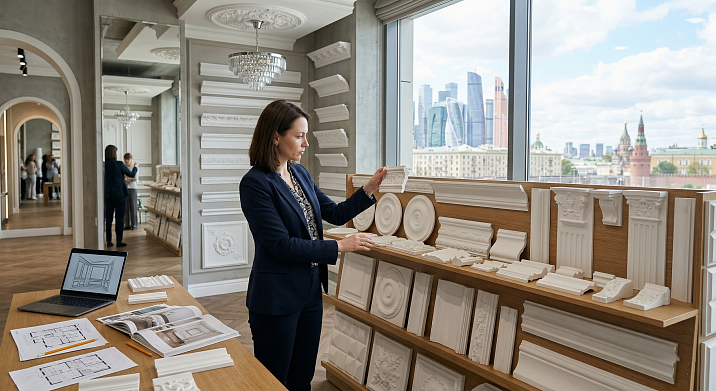
There is one thing that distinguishes a good interior from just good finishing. It's not expensive materials, trendy furniture, or designer lighting. It's the details. Those very horizontal lines that hold the space together. Wall frames that turn a flat surface into architecture. A ceiling medallion under the chandelier that defines the center of the room. All of this is custom polyurethane decor in Moscow, and it's exactly what those who want not just to renovate, but to build an interior, are choosing today.
Under this query, people usually look for moldings, cornices, baseboards, ceiling rosettes, decorative overlays, and other interior elements—everything that creates a sense of wholeness and thoughtfulness in a space. The key word here is 'custom.' It's not 'walk in and take the first thing you see.' It's about selecting for a specific interior, for the ceiling height, for the style, and for the overall decorative logic of the room.
To order polyurethane decor without mistakes, it's important to understand three things: where exactly the element will be used, what task it solves, and how it relates to the scale and style of the room. This article is dedicated to just that — a detailed practical guide to selecting and ordering decorative elements made of polyurethane in Moscow.
Full catalog of products — in the sectionPolyurethane moldingsSTAVROS. Here are all the main categories: moldings, cornices, baseboards, rosettes, overlays, trim, and comprehensive solutions. Go directly to the desired section or read the guide below — to first understand what exactly to look for.


What is polyurethane decor and why it is ordered for interiors




Which elements are included in polyurethane decor
Polyurethane decor is an extensive group of architectural and interior products manufactured by injection molding from high-density foamed polyurethane. It is not a separate type of product, but a whole decorative arsenal, including:
-
Moldings — linear profiled strips for walls and ceilings
-
Cornices — profiles for decorating the transition between wall and ceiling
-
Baseboards — lower horizontal elements that complete the wall plane
-
Ceiling rosettes — medallions for the center of the ceiling under a chandelier
-
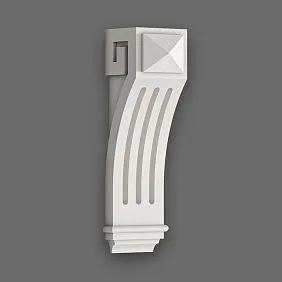
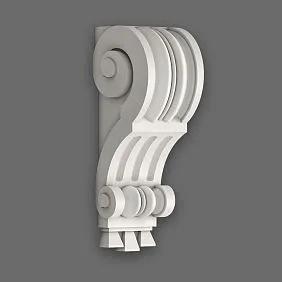
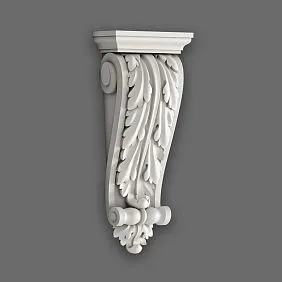
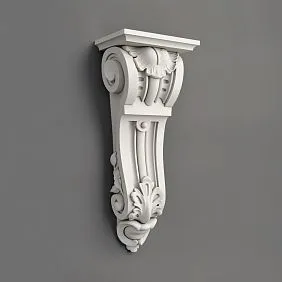
Decorative overlays — three-dimensional ornamental inserts for walls, furniture, and portals
-
Molding — additional profiles for finishing and refining interior solutions
-
Pilasters, panels, friezes — for complex architectural and wall compositions
Material — expanded polyurethane with a density from 150 to 420 kg/m³. Externally, the products accurately replicate classic plaster stucco: clear ornamentation, smooth edges, and a glossy surface. At the same time, they weigh 5–8 times less than plaster, are moisture-resistant, and are installed using standard construction adhesive.
Our factory also produces:
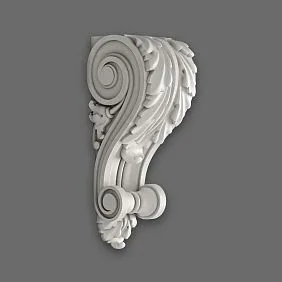

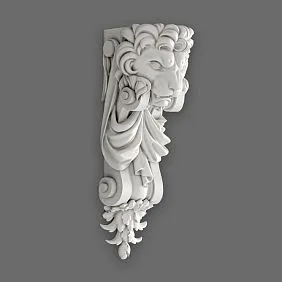


For which rooms is polyurethane decor suitable?
The scope of application for polyurethane interior decor is practically unlimited:
-
City apartments in Moscow — living rooms, bedrooms, studies, hallways
-
Country houses and cottages — halls, stairwell areas, living rooms with high ceilings
-
Commercial interiors — offices, restaurants, hotels, showrooms, meeting rooms
-
Designer projects — where precision of details, stylistic unity, and the ability to select elements for a specific concept are important
Polyurethane is resistant to temperature fluctuations and humidity, does not crack due to building movement, and does not swell or rot. This makes it a universal material for decor in a wide variety of operating conditions.
Get Consultation
Why the 'Custom Order' Format is in Demand in Moscow
It's important to clarify right away: 'custom polyurethane decor' does not necessarily mean creating non-standard items from scratch. In most cases, it means precisely selecting a solution for a specific project: to fit given dimensions, style, color palette, decorative intensity, and the arrangement of elements in space.
Why is this in demand in Moscow? Because Moscow interiors are distinguished by their diversity:
-
Apartments in Stalin-era buildings with ceilings of 3.2–3.5 m require different proportions than new builds with 2.7 m ceilings.
-
Country houses in the Moscow region with various style concepts — from modern classic to pure neoclassicism.
-
Commercial projects with strict requirements for details and installation within short deadlines.
That is precisely why the competent selection of decor for a specific task is what a 'custom order' truly means.
What types of polyurethane decor can be ordered in Moscow
Polyurethane moldings
Polyurethane moldings— the most universal category of decorative elements. These are linear strips with a profiled cross-section, used on both walls and ceilings. The main task of molding is to create structure: frames, dividers, geometric panels, decorative rhythms.
Moldings are divided by profile shape:
-
Smooth — without ornament, pure geometry. For modern, minimalist, and Scandinavian interiors.
-
With ornament — leaves, volutes, geometric motifs. For neoclassical and classic styles.
-
Corner and filler — for completing frames in corners, joining elements at 45 and 90 degrees.
Molding width in residential apartments — from 20 to 80 mm. In spacious country houses with high ceilings — up to 120–150 mm. The choice of width is determined by the scale of the wall and the height of the room.
Application in Interior Design:
-
Frame panels around the TV area, mirrors, bed headboards.
-
Horizontal division of the wall into upper and lower zones
-
Geometric grids and coffers on the ceiling
-
Framing of door and window openings
-
Decorative frames as independent interior accents.
Polyurethane cornices
Polyurethane ceiling cornices— the basic element of any decorative ceiling design. The cornice is mounted at the transition zone between the wall and ceiling, solving several tasks at once: it masks uneven joints, sets a perimeter line, and creates an architectural frame for the entire room.
Types of cornices by design:
Smooth — without decorative relief, with clear geometric lines. Relevant for modern interiors and minimalism. They create structure through form, not through ornament.
With ornament — plant motifs, geometric patterns, classic curls. For neoclassicism, classic, and art deco. The richer the relief, the higher the requirements for the other elements of the space.
Multi-level — complex profile consisting of several planes. Creates a pronounced play of shadows with side or directional lighting. Suitable for formal spaces and rooms with ceiling heights from 3 m.
Lighting (recessed) — hollow profile for installing LED strips. Creates perimeter contour lighting on the ceiling. One of the most popular lighting techniques in modern Moscow apartments.
The cornice width is selected strictly in relation to the ceiling height:
-
Up to 2.5 m → cornice 40–60 mm
-
2.5–2.7 m → cornice 60–90 mm
-
2.7–3 m → cornice 90–130 mm
-
From 3 m → cornice 130 mm and above
Polyurethane skirting boards
polyurethane baseboards— the lower horizontal point of the wall system. The baseboard completes the lower line of the wall and creates a sense of completeness in the interior from below. This is one of those details that receives little attention during design — and is well noticed when executed correctly.
Polyurethane baseboards are resistant to impacts, wet cleaning, and humidity fluctuations — which is why they perform well in hallways, kitchens, and other high-traffic areas.
The baseboard height is scaled according to the room:
-
Ceiling up to 2.6 m → baseboard 70–90 mm
-
Ceiling 2.6–3 m → baseboard 90–130 mm
-
Ceiling from 3 m → baseboard from 140 mm and higher
The baseboard profile should coordinate with the cornice style: they form the upper and lower horizontal lines of a single wall system, and a mismatch between them immediately catches the eye.
Ceiling rosettes made of polyurethane
ceiling rosettes— the central accent of the ceiling composition. It is a round (less often oval or shaped) medallion with ornamental relief, which is mounted in the center of the ceiling under the chandelier. The rosette transforms the light source from a technical element into an architectural one.
The rosette diameter is selected based on three parameters:
-
Room area — the larger the room, the larger the rosette can be
-
Chandelier size — the rosette diameter should be comparable to or slightly larger than the base of the chandelier
-
Ceiling height — with a ceiling up to 2.7 m, a large rosette visually reduces the space
Practical guidelines:
-
Room 15–20 m², ceiling 2.7 m → rosette 30–45 cm
-
Living room 25–35 m², ceiling 2.8–3 m → rosette 50–65 cm
-
Spacious hall 40–55 m², ceiling from 3 m → socket 65–90 cm
-
Country house hall, ceiling 3.5 m+ → socket 80–120 cm
A socket without a chandelier is an independent decorative element. In spaces with track or recessed lighting, it serves as a relief medallion in the center of the ceiling. This adds architectural logic without a light source.
Polyurethane decorative overlays
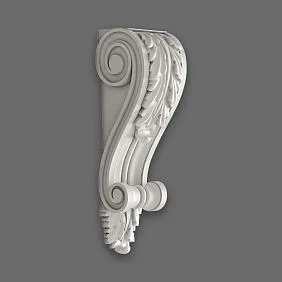
Decorative Inserts— a pinpoint tool for creating local ornamental accents. Unlike linear moldings, overlays are three-dimensional elements without a specific length. They are mounted on walls, furniture fronts, door panels, fireplace portals, and interior panels.
This is a powerful tool for updating an interior without completely replacing finishes or furniture. A few overlays on cabinet door fronts, painted to match with patina — and the case furniture becomes 'classical'. Overlays in the centers of wall frames add multi-level relief, which can otherwise only be achieved through manual work.
Sizes — from 30 mm to 40 cm. Patterns — from strict geometry to developed floral and acanthus motifs. Depending on the task, you can choose an insert-socket, a corner element, a garland, or a three-dimensional decorative plaque.
Wall decor
In the sectionWall Decorcontains all elements for wall decoration: moldings, overlays, panels, pilasters, friezes, corner elements. This is a complete wall system — from a simple frame to a developed multi-layered composition.
Feature of the section: STAVROS collections are formed according to a stylistic principle. Within one collection, all elements — cornices, moldings, overlays, and baseboards — are stylistically coordinated in terms of pattern scale and profile character. This significantly simplifies selection when ordering.
Ceiling decor
Sectionceiling decorunites cornices, sockets, coffered profiles, light niches, linear elements, and decorative inserts for horizontal surfaces. Convenient for those designing a ceiling system 'from scratch' — here you can immediately select compatible elements for the entire ceiling zone.
Comprehensive decorative solutions for interiors
For those ordering decor for an entire room — walls, ceiling, perimeter — it's optimal to start with the full catalog.Polyurethane moldingsThe sectionTrimandOutletscomplements the main system with additional and accent elements.
When to choose custom polyurethane decor
When decor is needed for a specific interior
This is the most common scenario. The interior is already designed — there is finishing, furniture, colors. It's necessary to find decorative elements that will fit into this system in terms of style, scale, and decorative richness. Not 'anything,' but exactly what will become part of the already established concept.
Ordering custom polyurethane decor in Moscow for a specific interior means choosing elements that align with the ceiling height, furniture style, character of the finishing, and the overall feel of the space.
When it's important to assemble elements in a unified style
The requirement for 'unified style' is one of the main ones in serious design projects. You can't take a cornice from a classical collection and moldings from a minimalist one — they will create a visual conflict. Therefore, when ordering, it's always checked: do the selected elements correspond to the same stylistic direction, the same scale of ornament, the same character of the profile.
When decor needs to be selected to fit the dimensions of the room
This is a technical scenario. Ceiling height is 3.1 m, cornice width should be proportional — a 130–150 mm profile is needed. The room is non-standard, with niches and protrusions — corner elements and extension profiles are required. Wall decor with frames — a modular grid needs to be calculated for the specific wall width and height.
Such selection is precisely 'custom' work: not just choosing a beautiful element, but selecting a technically correct solution for specific parameters.
When a solution is needed for an apartment, house, or commercial property
Each type of property has its own logic for decor:
-
Apartment — a balance between expressiveness and appropriateness, selection for standard ceiling heights
-
Country house — scale, resistance to temperature fluctuations, possibility of rich solutions
-
Commercial property — durability, ease of maintenance, creating a representative atmosphere
When not just one element is needed, but an entire composition
The most complex and most interesting scenario. Not 'buy a cornice,' but assemble a ceiling system: cornice + rosette + coffers from moldings. Or create a wall system: high skirting board + horizontal divider + framed panels + overlays in the centers of frames.
It is precisely in this case that 'custom' is not just a transaction, but work with a holistic interior concept. The result is a space with character, not a set of purchased parts.
How to choose polyurethane decor for your task
For walls
The wall is the main vertical plane of the interior. Decorative wall design begins with the question: is structure or accent needed?
Structure — moldings that create frames, horizontal lines, geometric rhythm. This works in living rooms, bedrooms, and studies — anywhere architectural order is important.
Accent — overlays, decorative panels, pilasters. One ornamental element on an accent wall creates a focus without systematic geometry.
Go to the section Wall Decor— here the entire STAVROS wall line is structured by style collections.
For ceilings
Ceiling decor is built on three levels:
-
Cornice — perimeter (base level)
-
Rosette — center (second level)
-
Moldings for coffers or frames — plane geometry (third level)
Start with the cornice — it provides maximum visual effect with minimal investment. Add a rosette — if there is a chandelier or you want to create a central accent. Add moldings for coffers when there is space (ceiling from 2.8–3 m) and a desire to create rich ceiling architecture.
All ceiling elements - in the sectionceiling decor.
For an accent wall
An accent wall is the main decorative surface in a room. Typically, it is the wall behind the sofa in the living room, behind the headboard in the bedroom, or behind the desk in the study.
For an accent wall, the following work well:
-
Frame panels made of moldings with an overlay in the center
-
Vertical dividers that create rhythm
-
Decorative panels with a relief background
-
A large overlay-medallion as a standalone accent
For framing openings
Door and window openings are areas that benefit from decorative framing. Moldings around the opening create a casing, enhance the architectural character, and turn the door from just a hole in the wall into an element of the interior composition.
For interior panels
Panel design for the lower part of the wall (up to 90–100 cm from the floor) with a horizontal divider is a classic technique that works in any style. Polyurethane moldings and baseboards from the same collection create a neat panel system that can be painted in a separate color.
For decorative finishing of the space
Trims and additional profiles are elements that 'close' the interior: they refine transitions, mask joints, and create additional decorative horizontals where the main profiles are already installed. The full range is available in the section.Polyurethane trim.
How to choose decor by room
For the living room
The living room is the main stage for full decor. Rich solutions are justified here: a cornice with an expressive profile, a ceiling medallion for a chandelier, framed panels on an accent wall, tall baseboards.
For a Moscow living room of 20–30 m² with a 2.7 m ceiling: cornice 80–100 mm + medallion 45–55 cm + moldings for frames 40–60 mm + baseboards 100–120 mm. All elements are from the same collection.
For a country living room of 40–50 m² with a 3 m ceiling: cornice from 120 mm, medallion 65–80 cm, coffered ceilings are possible, full wall panels with overlays.
For the bedroom
In the bedroom, harmony is important, not richness. The main focus is the wall behind the headboard. A framed panel made of moldings with vertical dividers or a central overlay creates an architectural backdrop for the bed.
Cornice — neat, with a soft profile. Medallion — if there is a chandelier, small in diameter. Baseboards — proportional, without excessive ornamentation.
For the hallway
Hallways in most Moscow apartments are small. The principle is 'one strong element.' A thin cornice around the perimeter and a neat baseboard create completeness without pressure. Vertical moldings on the walls visually stretch the space upward, creating a sense of greater height.
For an office
Study — a space for concentration and representativeness. Framed panels made of moldings on the walls, a cornice with a slightly more expressive profile, tall baseboards. Especially effective in studies of country houses with ceilings of 3 m and higher.
For Kitchen
In the kitchen, polyurethane decor works primarily through practicality: it is resistant to steam, wet cleaning, and temperature fluctuations. A cornice around the perimeter + neat baseboards are the basic set. Decor is placed mainly in areas away from the stove and sink.
For a country house
Country houses in the Moscow region offer complete freedom: high ceilings from 3 m, spacious living rooms and halls, fireplace portals, staircase areas. Here, the potential for rich classical solutions opens up — cornices with multi-step profiles, large rosettes, full-fledged coffered ceilings, pilasters.
How to choose polyurethane decor according to interior style
Classic
Classical interiors are built on the richness of ornamentation with strict symmetry and unity of the decorative family. All elements are from one collection with coordinated relief.
Characteristics of decor for classic style:
-
Cornices: multi-step profile, floral ornament, width from 130 mm with ceilings from 3 m
-
Rosettes: large, diameter from 65 cm, motifs of acanthus, leaves, flowers
-
Moldings: relief ornament, width 60–100 mm
-
Baseboards: high, from 130 mm, with expressive profile
Neoclassicism
Neoclassicism is the most popular style for ordering polyurethane decor in Moscow. It combines classical form with modern restraint: less ornamentation, more precise proportions, cleaner lines.
-
Cornices: moderate profile with a readable but not overloaded ornament
-
Rosettes: medium diameter, neat motifs — volutes, geometric leaves
-
Moldings: smooth or with light relief
-
Baseboards: pronounced profile without excessive ornamentation
Modern interior
Modern interiors accept polyurethane decor through the principle of minimalism. Smooth profiles, clean geometry, shadows instead of ornament.
-
Cornices: smooth, without relief, possible light niche models
-
Rosettes: geometric, with thin concentric lines
-
Moldings: narrow, smooth, only for structure — without decoration
-
Baseboards: low, smooth
Restrained interior with decorative accents
An intermediate style between modern and neoclassical. Principle: one strong decorative accent—a rosette or a frame made of moldings on an accent wall—with overall neutrality for the rest. Everything else is concise.
How to avoid overloading the space with decor
Three working principles:
-
One element plays the main role—the others follow its scale and character
-
Ornamentation is coordinated throughout the interior—there is no mixing of smooth and richly ornamented in one space
-
The scale of decor corresponds to the area and height: large decor in large spaces, small in compact ones
What to order: moldings, cornices, baseboards, rosettes, or overlays
Here is the most specific table for decision-making.
| Element | Where it is used | Task | Catalog section |
|---|---|---|---|
| Molding | Walls and ceiling | Frames, geometry, zoning | Moldings |
| Cornice | Wall and ceiling transition | Perimeter line, joint masking | Cornices |
| Skirting | Wall bottom line | Wall plane finishing | Baseboards |
| Rosette | Center of the ceiling | Chandelier accent, central medallion | Ceiling rosettes |
| Applique | Walls, furniture, portals | Local ornamental accent | Overlays |
| Wall Decor | Walls | Complete Wall Design | Decor for Walls |
| Ceiling decoration | Ceiling | Complete Ceiling Design | Decor for Ceilings |
| Trim | Joints and Transitions | Completion, Clarification | Molding |
How to Order Polyurethane Decor in Moscow Without Mistakes
Let's get straight to the point: mistakes when ordering decor almost always occur because decisions are made based on photographs rather than the actual parameters of the room. Let's avoid that.
Step 1. First, Determine the Application Area
Where will the decor be used: wall, ceiling, baseboard line, furniture? This is the starting point. Without it, any choice is random.
Step 2. Then select the product type
Based on the table above: cornice for ceiling perimeter, moldings for wall frames, baseboards for the lower line, rosettes for ceiling center, overlays for point accents.
Step 3. Select sizes and proportions
Measure ceiling height, room perimeter, area of the wall to be decorated. For linear elements — order with a 10–15% margin for trimming. For rosettes — match the diameter to the room area and chandelier size.
Step 4. Coordinate decorative intensity
The ornamentation of selected elements should match the interior style. Rich ornamentation — in classic. Moderate — in neoclassical. Smooth profiles — in contemporary interior. Mismatch creates visual conflict even with good proportions.
Step 5. Check how elements combine with each other
Compare cornice, moldings, baseboard, and rosette by style and ornament scale. Ideally — all from the same STAVROS collection. If from different ones — ensure they belong to the same stylistic direction.
Step 6. Consider the overall interior composition
Sketch a layout of the elements. Where will the cornice go? Where will the outlet be placed? How will the molding frames be arranged? This allows for calculating the exact amount of material and avoiding shortages at the end.
Common mistakes when ordering polyurethane decor
Mistakes are what those who have already gone through the wrong choice share. Let's break down the main ones.
Choosing overly complex decor for a small room
A lavish classic cornice in a 5 m² hallway creates a feeling of a theatrical set, not an interior. The scale of the decor should match the scale of the space. In a small room, rich decor feels oppressive—in a large hall, it unfolds.
Purchasing individual elements without an overall composition
"I'll buy the cornice now, and the moldings later"—a logic that leads to incompatible elements in one interior. If decor is ordered in stages, make sure in advance that all planned elements belong to the same stylistic family.
Ignoring ceiling height
Ceiling height is the main technical parameter. A cornice chosen without reference to height can create a feeling of an overhanging mass (if it's too wide) or remain unnoticeable (if it's too narrow). Always: measure first—then choose.
Choosing only by photo without considering dimensions
A photograph doesn't convey scale. An outlet that looks elegant in a catalog may turn out to be 80 cm in diameter. Always check the dimensions in the product card and try them against the real space.
Mixing different stylistic solutions
Classical cornice + geometric modern rosette + art deco ornament moldings = three different interiors in one. The result is visual noise instead of decor.
Overloading walls and ceiling simultaneously
When both the ceiling and all four walls are saturated with decor of different scales, the space loses air. Optimal: one accent (an elaborate ceiling with minimalist walls or vice versa). Two accents simultaneously must be coordinated in style and scale.
Lack of logic between moldings, cornices, and baseboards
Three horizontal elements — top (cornice), middle (separator molding), and bottom (baseboard) — should belong to the same decorative family. Otherwise, the interior falls apart into fragments.
"More decor" without understanding scale
The desire to "add one more element" is understandable, but the result can be the opposite of what is expected. In design, the principle works: each added element should enhance the system, not compete with it.
For which projects in Moscow polyurethane decor is most often ordered
For apartments
City apartment — the most common segment. Cornice around the perimeter of the living room, moldings on an accent wall in the bedroom, rosette for the chandelier, baseboards — a basic set that changes the perception of the finish. Easy installation, light weight, and the ability to work without a construction crew make polyurethane decor accessible even for DIY renovation.
For a country house
Country houses in the Moscow region — a space for rich decorative solutions. High ceilings, spacious living rooms, fireplace halls, staircase areas. The material is resistant to temperature fluctuations and irregular heating — a critical advantage for a country property.
For commercial interiors
Offices, restaurants, hotels, and showrooms in Moscow use polyurethane decor to create a representative atmosphere. Durability, ease of maintenance, and the possibility of repainting when updating the concept are key advantages for commercial properties.
For a design project
Design projects value precision detailing, a wide range of collections, stylistic unity of elements, and the ability to select a complete decor system for walls, ceilings, and furniture within a single stylistic solution.
For renovation with a decorative accent
More and more Moscow clients consider decorative finishing as a conscious choice, not an optional extra. Polyurethane decor allows for an interior with character without significantly increasing the finishing budget.
How to assemble a cohesive interior from several types of decor
Moldings + cornices
This combination creates the basis of a decorative system: the cornice sets the top line, moldings create rhythm below. For harmony, it is important: both elements must match in style and scale of ornament.
Popular solution: cornice with a moderate profile + moldings for frames matching the wall color + horizontal divider molding in the middle of the wall. A multi-level wall system with rhythm and geometry.
Cornices + ceiling rosettes
Classical ceiling combination. Cornice — perimeter, rosette — center. Between them — a clean ceiling plane. This is a foolproof solution that works in any style with the correct scale selection.
For a modern interior: smooth cornice + geometric rosette. For neoclassicism: cornice with moderate ornament + rosette with neat leaves. For classic style: developed cornice profile + large ornamented rosette.
Baseboards + moldings
Lower and middle horizontal lines of the wall. High baseboard (130–180 mm) + horizontal molding at a height of 90–100 cm from the floor create a 'panel' design. The lower zone is painted separately — and the wall acquires architectural character.
Overlays + Wall Decor
Overlays enhance the wall system by adding a focal ornamental accent within frames. Moldings create structure → the overlay forms the center of the frame → together they create a multi-layered composition with depth.
How to combine decorative elements without visual noise
Systematic approach:
-
Cornice → sets the style and scale
-
Baseboard → supports the style from below
-
Moldings → create wall structure according to the established style
-
Ceiling rose → centers the ceiling within the stylistic logic of the cornice
-
Overlays → add focal accents within the system
Everything reads as a unified statement: one style, coordinated scale, unified color scheme.
FAQ: Answers to Questions About Custom Polyurethane Decor in Moscow
What is included in polyurethane decor for interiors?
It includes a wide range: moldings, cornices, baseboards, ceiling rosettes, decorative overlays, panels, pilasters, trim, and profiles. All products are made of expanded polyurethane and are designed for decorating walls, ceilings, furniture, and accent areas. The full catalog is in the section Polyurethane moldings.
What does 'custom polyurethane decor' mean?
It primarily involves selecting decorative elements for a specific interior, room, style, and task—not just choosing 'what you like.' In most cases, it means choosing from a ready-made assortment while considering the object's parameters: ceiling height, area, and stylistic concept.
What's better for walls: moldings or appliqués?
Moldings are for linear solutions, frames, and geometry. Overlays are for point ornamental accents. In a full wall system, they work together: moldings create structure, overlays add a decorative layer.Moldingsandapplique— in the corresponding sections.
What to use for ceilings: cornices or rosettes?
The cornice frames the ceiling perimeter, the rosette creates a central accent under the chandelier. They complement each other. If choosing one element, start with the cornice: it provides the maximum visual effect.
Can I order several types of decor for one room?
Yes. This is the correct strategy: cornice + baseboard + moldings + rosette form a system, not a random set of parts. The main thing is the stylistic unity of all elements.
How to choose decorative elements to match the interior style?
The key parameter is ornamentation. Smooth profile for modern, moderate ornament for neoclassical, rich relief for classic. Within one style, all elements should belong to the same decorative family.
How to choose polyurethane decor for an apartment in Moscow?
Start with the ceiling height and task: wall, ceiling, or both. Select the cornice width proportional to the height. Choose moldings to match the style. Add a rosette if necessary. All sections are in the catalog.Polyurethane moldings.
How to avoid mistakes with dimensions when ordering?
Measure the ceiling height, area, and perimeter of the room. Check the product dimensions in the item card. Add 10–15% reserve for linear elements for trimming. For a rosette, match the diameter to the room area and chandelier size.
What to buy first: individual elements or a solution for the room?
If the project is well thought out — order the set immediately. If choosing step by step — start with the cornice: it sets the scale and style, to which all other elements are then matched.
Is polyurethane decor suitable for a modern interior?
Yes. Through the principle of minimalism: smooth profiles, thin moldings for frames, a light niche cornice, a geometric rosette. This organically fits into a modern space without stylistic contradiction.
Conclusion
When a person searches for 'custom polyurethane decor in Moscow,' they are not looking for just another beautiful picture. They are looking for an answer to a specific question: what should I choose for my space, my style, my task. That is why the right approach to ordering is not 'choose what you like,' but 'choose what works.'
Molding